Anton Kosheliev

1.7K posts

Anton Kosheliev banner
Anton Kosheliev

Anton Kosheliev

@levtone

Entrepreneur/adventurer

Ukraine เข้าร่วม Eylül 2020
339 กำลังติดตาม425 ผู้ติดตาม
Anton Kosheliev
Anton Kosheliev@levtone·
@PannonianMantis The guy who invented the short-form videos once gonna say: “I am become death, destroyer of worlds”
English
0
0
0
717
Balázs Doryphoros 🌴
Balázs Doryphoros 🌴@PannonianMantis·
It doesn’t matter how hard things get, never start scrolling short form videos
English
46
298
4.9K
157K
Anton Kosheliev
Anton Kosheliev@levtone·
@realEstateTrent The host asked how your social presence affects capital raising. Brilliant question! It could be of great interest to your followers, as it is to me. It appears that your transparency in work ethics and business principles pays off well. Thanks for sharing!
English
0
0
2
479
StripMallGuy
StripMallGuy@realEstateTrent·
As interest in the strip center asset class continues to surge, a group of thirteen owners flew to Atlanta last week. With over 1,000 unanchored strip centers owned among them, they sat down for a very candid conversation. Curbline was there (the first publicly traded unanchored-strip REIT), as were Crow Holdings, CenterSquare, etc. Given how much the unanchored strip center world has changed over the last several years, and who the groups were that participated, I believe this was among the most important discussions in the history of the space. If you're involved in the unanchored strip center world in any way (whether a small or large institution, current owner, potential investor, broker, or tenant in the space), you are going to want to listen to the entire conversation. We covered what capital raising looks like right now, what the biggest challenges are, how the investor type has changed, what markets people are focusing on, what the sector looks like in five years, etc. HUGE congrats to Jeff Enck of Matthews Real Estate Investment Services for hosting such an incredible event. Enjoy!
StripMallGuy tweet mediaStripMallGuy tweet media
English
9
7
98
131K
Anton Kosheliev
Anton Kosheliev@levtone·
@molzer First of its kind. Bus bus stop 🚏Looking forward to seeing it!
English
0
0
1
213
Zach Molzer
Zach Molzer@molzer·
I just bought a bus.
English
34
4
283
40.7K
Anton Kosheliev
Anton Kosheliev@levtone·
Just finished The Glass Palace — absolute masterpiece. Ghosh takes you from the fall of Burma’s last king all the way to the post-WWII junta, and somehow you feel like you lived through it too. Brutal, beautiful, and packed with the kind of history that hits you in the chest.
Anton Kosheliev tweet media
English
1
0
4
109
Anton Kosheliev
Anton Kosheliev@levtone·
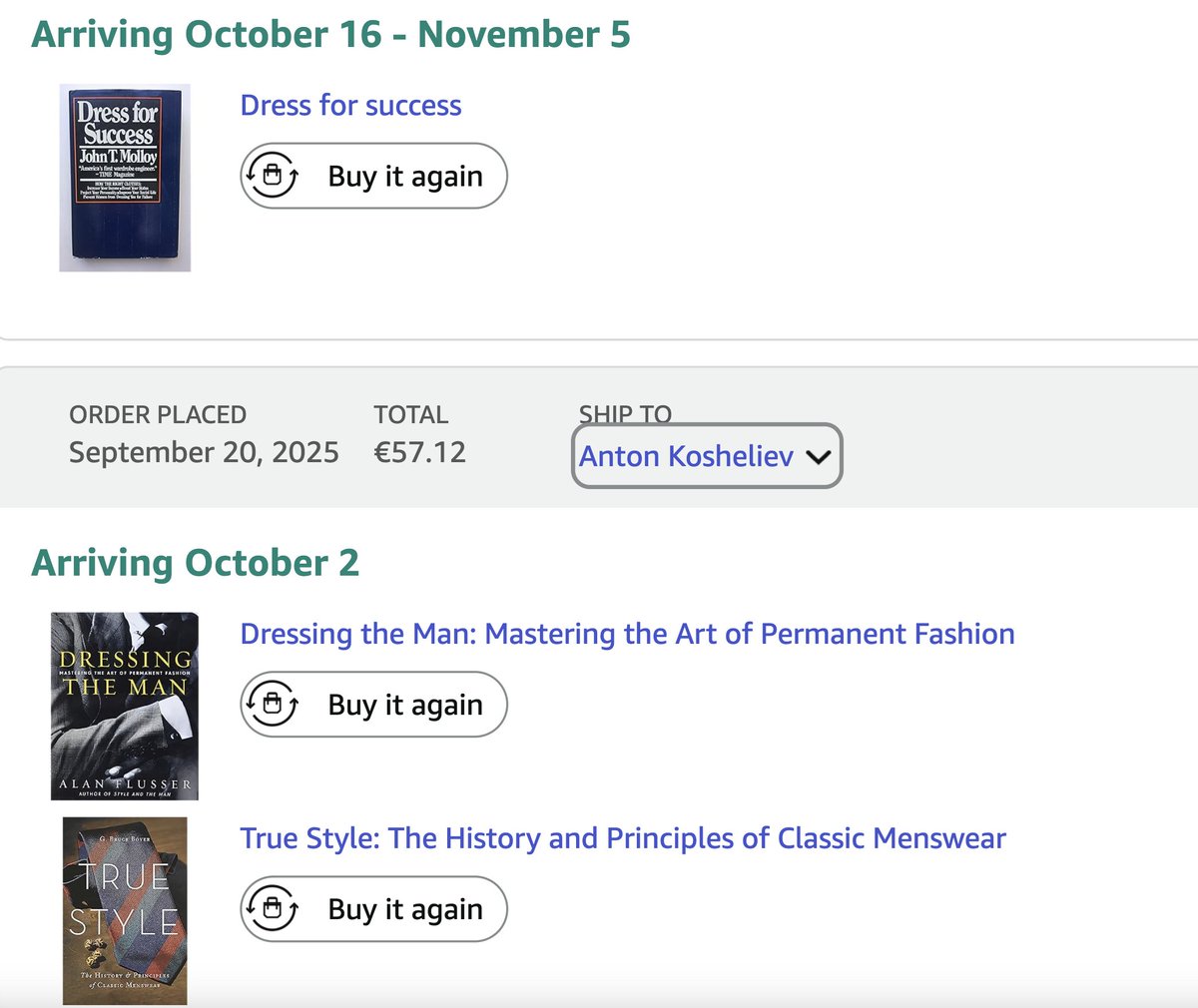
How much prep is needed before buying your first custom-tailored suit? What I have done so far: ✅Read the four-part series on "How to develop good taste" by @dieworkwear ✅Ordered 3 books to get more theoretical knowledge. ✅Shortlisted two Milanese tailors. To be continued.
Anton Kosheliev tweet mediaAnton Kosheliev tweet media
English
2
0
9
190
Anton Kosheliev
Anton Kosheliev@levtone·
@ShaanVP From a guy who professionally tells stories it sounds like a phrase “I’m amazed how bad almost everyone is at basketball” from Lebron.
English
0
0
0
58
Shaan Puri
Shaan Puri@ShaanVP·
i'm amazed how bad almost everyone is at storytelling
English
171
19
961
88.6K
Anton Kosheliev
Anton Kosheliev@levtone·
@AdamRy_n And on top of that, he shared the financial data with no permission from the owners of the project.
English
0
0
1
143
Adam Ryan 🤝
Adam Ryan 🤝@AdamRy_n·
@levtone There are a lot of people who worked at the companies he claims to have “built” that think he drastically over states his role. Personally, I see something once a week from him that screams he clearly has never actually run a media businesses.
English
1
0
2
190
Adam Ryan 🤝
Adam Ryan 🤝@AdamRy_n·
Gurus don’t like real operators.
Adam Ryan 🤝 tweet media
English
2
0
17
1.8K
Sam Parr
Sam Parr@thesamparr·
Top comment from today’s new mfm is episode. What did you guys think?
Sam Parr tweet mediaSam Parr tweet media
English
15
0
61
12.3K
Anton Kosheliev
Anton Kosheliev@levtone·
@david_perell Lately, I prefer to listen to podcasts through Spotify or Apple Podcasts. But it feels like a crime to skip the video part because the setup is amazing, as is the overall video production.
English
2
0
1
131
David Perell
David Perell@david_perell·
Dean Koontz has published more than 140 novels, 74 works of short fiction, and sold more than 500 million books. Simply put, he’s one of the most prolific writers alive today. Some highlights from our chat: 1. Dare to love the English language. 2. Characters come alive when they're given free will. Instead of constraining them in an outline, let them go where they want. You know they’re alive once they start surprising you. He says: “I give the characters free will like God gave it to us.” 3. Everything a writer believes about life and death, culture and society, relationships and the self, God and nature will wind up in their books. A writer’s body of work, therefore, reveals the intellectual and emotional progress of its creator, and over time, becomes a map of their soul. 4. To think you understand the world is to be foolish in the extreme. The world is too complex for us to understand it. To see reality clearly is to be utterly enchanted by its staggering complexity. 5. Where should you look? Well, the supernatural enters the world in mundane ways, and rarely the great and glorious flashes of drama. 6. Dean writes his novels page-by-page, and doesn’t move onto the next page until he nails the existing one. There’s no messy first draft. Because of that, he’s basically done with his novels once he finishes the final page. 7. Where does a unique writing voice come from? Three places: style, perspective, and a philosophy of life. 8. Be skeptical of conventional wisdom. There’s an encyclopedia of common wisdom in publishing. All of it is common and none of it is wise. You have to become aware of that, go your own way, and just stick with it because there are so many ways you can be sent wrong based on "that's the way we always do it." 9. The aesthetic plainness of contemporary writing (and culture at large) is crushing our souls. 10. Contemporary fiction is suffering from plainness in particular. It started when writers started imitating Hemingway (who stripped his prose down but kept the mystery and underlying strangeness of the world by implication). But the imitations that came later stripped the prose down while also removing the underlying depth that made Hemingway so great. 11. Koontz Law of Writing #1: Never go inside more than one character's mind in a scene. Each one should come from a singular viewpoint. 12. Koontz Law of Writing #2: Metaphors aren't meant to dazzle readers, but to seduce them into a more intimate relationship with the story. 13. Koontz Law of Writing #3: Metaphors and similes describe a scene more colorfully than a chain of adjectives — while reinforcing the mood. The point is that you can create depth by describing things metaphorically instead of using blunt adjectives. That’s what poetry does: it uses words to say more than the word itself says, which creates a mood. 14. Great prose doesn't come from piling on adjectives. It comes from finding the perfect metaphor that does triple duty: describes the scene, reinforces the mood, and reveals something about the character. 15. The goal is for metaphors not to pop out like showmanship, but to flow into the music of the language. 16. Develop an ear for the musicality of language. 17. A book can succeed with a mediocre plot if the characters are compelling. Character is the center of good fiction. If the characters work, the story works. 18. From the afterword of his book, Watchers: “We have within us the ability to change for the better and to find dignity as individuals rather than as drones in one mass movement or another. We have the ability to love, the need to be loved, and the willingness to put our own lives on the line to protect those we love, and it is in these aspects of ourselves that we can glimpse the face of God; and through the exercise of these qualities, we come closest to a Godlike state.” I've shared the full conversation with @deankoontz below. The YouTube video link is in the replies, and so are the links to Apple and Spotify.
English
16
22
164
75K
Sam Parr
Sam Parr@thesamparr·
This is incredible. @polinapompliano did a profile on @RyanSerhant. Very in depth, she talked to dozens of people, and original photos. “ Serhant lives by what he calls the “1,000-minute rule.” The logic is simple: We all have 1,440 minutes in a day. Subtract sleep, meals, and basic hygiene, and you're left with about 1,000 usable minutes. Serhant wakes at 4:23 a.m, trains at the gym by 5 a.m, arrives at the office by 7:30 a.m, goes home around 9 p.m, and works late into the night. A full-time driver, three personal assistants, and a dedicated media team ensure every minute is maximized” readtheprofile.com/p/ryan-serhant…
English
30
7
238
48.2K
Anton Kosheliev
Anton Kosheliev@levtone·
@will_mannon The story of WoP is short-lived, but it was cool. Best of luck with the Act Two!
English
1
0
1
74
Will Mannon
Will Mannon@will_mannon·
I was immensely proud of what we’d built. Then suddenly it was gone. This is the story of how the end of Write of Passage led to the launch of Act Two. But let’s start at the beginning… December 16, 2019. Delta, 29F. A window seat so I can wave goodbye to my stable tech job in Marina Del Rey as I depart LAX for a new life. Destination: Mexico City. I’m meeting David Perell and Tiago Forte to spend a week planning two upstart online courses: Write of Passage + Building a Second Brain. Neither can afford someone full-time. I’m their first co-hire. Soon, 114 sticky notes cover the Airbnb walls. Four categories: Student Experience, Community, Operations, Marketing. The first three are on me. I relish the challenge. I’ve been uncaged. I design curriculum, live sessions, assignments, and feedback systems. Mistakes, learn, repeat. Lots of sleepless nights. The first few cohorts run smoothly. March 15, 2020: We land in Mexico City for our second retreat. Tom Hanks gets sick. The world grinds to a halt. Thanks to Covid, online courses explode. Within a year, Write of Passage revenue quadruples, then doubles again. Second Brain doubles too, to seven figures and 1,600 students. Each course hires an assistant. Otherwise I run everything. July 26, 2021: Last combined team retreat. We’ve grown enough and decide to separate. I go full-time with David. Tiago hires his own team. I’m officially declared Write of Passage co-founder. David and I run our biggest cohort yet (220+ students, $4k price point). January 4, 2024: The past 2.5 years have been a blur. We took money, built a team of 20 full-time (plus dozens of exceptional part-time mentors and editors), tried – and failed – to launch a high school writing program, all while continuing to deliver, in our opinion, the best learning experience on the Internet. We’ve made seven figure revenue each year with 2,500+ students. Countless alums describe the program as life-changing. But things have changed. We’re split on the future of the business. The landscape has shifted. Different priorities call. I believe deeply in the program and community we’ve built. But ultimately, I’m the minority owner. It’s out of my hands. I leave the company, not by choice. By Thanksgiving, the company will no longer exist. March 1st, 2024: I arrive in Kunming, China. I’ve decided to take a gap year to study Chinese full-time. My part-time obsession becomes a full-time calling. 1:1 Chinese class, six hours per day, for ten months. Pure bliss. My last day in December, I discover a comedy club has opened up two blocks from my school….. February 10th, 2025: Back in Kunming. My first open mic standup performance in Mandarin. Instantly, I’m hooked. As of today, I’ve performed 80 times in less than three months, including paid shows for hundreds. I’m officially a professional standup comedian in China. April 25th, 2025: Dan Sleeman and I launch Act Two, a six-week program designed to help people complete and share a creative project to kickstart their Second Act. Early traffic numbers and sign-ups are promising…. How it all connects: - Write of Passage was a thriving community of thousands creative, curious, driven, enthusiastic, generous people from around the world. The feeling of a Write of Passage cohort is indescribable. If you know, you know. - Suddenly, it was gone. Instead of sulking, I dove headfirst into a creative project (standup comedy in Chinese) to kickstart my next act. - 18 months later, the team that built the Write of Passage experience (Dan Sleeman and me) have launched Act Two. Our thesis: a completed creative project, shared with the world, can launch anyone into a thrilling next act, whether professional or personal. We’re here to help you take that first bold step. If we succeed, we’ll recreate the thriving global community we once had – reinvented for the Golden Age of Creativity that’s upon us.
English
19
6
130
115.5K
Anton Kosheliev
Anton Kosheliev@levtone·
@yishan @Andercot The dedication of Chinese people in the execution of long-term projects has always amazed me. Now it makes all the sense.
English
0
0
30
3.3K
Yishan
Yishan@yishan·
There's a perspective that most people in the West don't realize about China. Every kid in China grows up knowing that they're part of a 5000-year-old civilization. You hear this a lot but it's not obvious the effect it has on you. What it means is that even if you're a bunch of peasants right NOW, your people have always had civilization. The civilizations aren't perfect or eternal - they rise and fall when the rulers get corrupt and stupid - but civilization is part of the fate of your people, almost the natural default state of things. Even when it's fallen, it's always come back, because that's how your people DO things. It's like knowing your family has been rich for generations and you're just in one of the down periods. That's different from having been poor and primitive from the beginning of time. It means that Chinese people internalize a default notion of "yeah, we have a civilization, it's just a down period right now, but eventually another strong leader will come about, we'll all work hard, and our civilization will rise again as it has dozens and dozens of times throughout history." Westerners looked at China in the past 100-200 years as a primitive society like all the others, having always been primitive. But no, for most Chinese history, China was the world-leading civilization and Chinese people know that. So any emergence of a leader (like Mao, who unified the country) was a thing Chinese people expected, because that's happened before. And then once it transitioned to Deng, and material conditions started to improve, it was a familiar pattern, like "oh look, China is rising again, if we work hard and educate our youth, we will be a top-tier civilization, we just had some bad times for a while." It is a matter of society-wide inherent expectations. Chinese people don't think of their current trajectory as "rising," they think of it was "getting back up" because they've been here dozens of times before. The distinction is important. Now to answer the direct question: Inherent in this "we're getting back up" is the idea that "all we have to do" is work hard at long-term plans. It's not communism or American manufacturing - those are surface elements - it's Chinese history and culture. One thing I've learned over my own life is that if you have never witnessed or successfully executed a long-term plan, you are likely to not have the motivation to work on one, because you don't have the same kind of hands-on faith that it will succeed. I was lucky in my youth to work for a boss who was executing a long-term project plan (years long) and watched that as I and other students executed his long list of tasks one by one that the whole thing actually came together. It helped me understand very early in my career that you can make a big plan, break it down, and then patiently execute each portion and see it eventually come to fruition. The West has less experience like that (on a generational scale). In the 1970s and 80s, China embarked on the long road to industrializing itself. It realized that to regain national strength, it would have to slowly, in sequence, acquire the skills and industrial capabilities needed to produce and develop technologically advanced industries that underpin and support a modern nation. So they started doing it, entrusting the ongoing task to each generation of leaders who also understood what it took. These days, people often say, "it'll take 20 years to get manufacturing started again in the US." And the inherent unspoken response to that is, "oh man, that's too long, I guess we're sunk." But the Chinese response is, "Okay, better start working on it then and we'll have it in 20 years." Because every Chinese person has internalized the idea that that's just how it goes! That's how civilization always rises again after it fell. Chinese people in 1980 were not primitives who needed to be "led" to advancement, they knew what a civilization looks like. They know how governance works, how a civil service needed to administer a huge country works, and they knew that you educate your people, work hard, build industry, and then you can build everything else - and this works at any time in history, at any level of technology. I'm trying to express this deep idea of "they always knew it was in their blood, because it was part of their history." There is a deep sense of historical inevitability which enables China to simply get to work and know that it'll get where it's going. The closest analog to this in Western culture is something like the Roman Empire, and that's why "men always think about the Roman Empire." But the direct linkage is weaker, because there isn't a direct linguistic or cultural line from the Roman Empire (except for Italians specifically). There is enough of one that the West thinks of its ancient predecessor as Rome, then European empires up to the UK, and then the US. But in China, the historical linkage is stronger - it's always been China. China rises and falls, sometimes it collapses and falls, or get invaded and beaten up, but leaders always re-emerge to unite the people and rebuild their civilization. And this is why, in the 1980s, China's leaders said, "Oh, I guess we're going to need a modern navy if we're to keep other nations from bullying us, so I guess we're going to have to learn to build modern ships, and that's going to take decades, so I guess we'll have to start the first step and learn to make steel." The Chinese people are not submissive fools being kept down by authoritarian dictators (like the West thinks), they are people who know that that's how it always goes, and what it takes, and what the ultimate rewards are for their children, and that's why the country is going the way it is.
English
156
438
2.5K
497.1K
Anton Kosheliev
Anton Kosheliev@levtone·
@GeorgeBlackman_ Nice one! Public speakers use this technique: give each part of your speech its own emotion.
English
0
0
0
89
George Blackman
George Blackman@GeorgeBlackman_·
Quick hack to make YouTube scripts more engaging - label your “phases”. Within each segment (topic), you have 3 phases: “Setup”, “tension”, and “payoff”. Setups and payoffs should be short. If you’re taking 4-5 sentences to set up a new segment, your audience will get impatient. If the payoff lingers for too long, your audience will get bored. Tension should be longer. It’s the phase where you deliver the most information, and gradually build towards your payoff. If this phase only lasts 3-4 sentences, you won’t have built any tension. By labelling each phase, it’s easy to see (at a glance) if each phase is the right length:
George Blackman tweet media
English
6
0
78
4.7K
Robert Greene
Robert Greene@RobertGreene·
In order to master a field, you must love the subject and feel a profound connection to it. Your interest must transcend the field itself and border on the religious.
English
89
691
4.8K
129.3K
Anton Kosheliev
Anton Kosheliev@levtone·
@geoheaton Sick challenge! Incredible team! Enjoyed every second of an episode.
English
0
0
1
127
Marcos
Marcos@itsmarcosruiz·
Your account isn't 'throttled'... you just failed to adapt
English
7
0
14
1.3K
StripMallGuy
StripMallGuy@realEstateTrent·
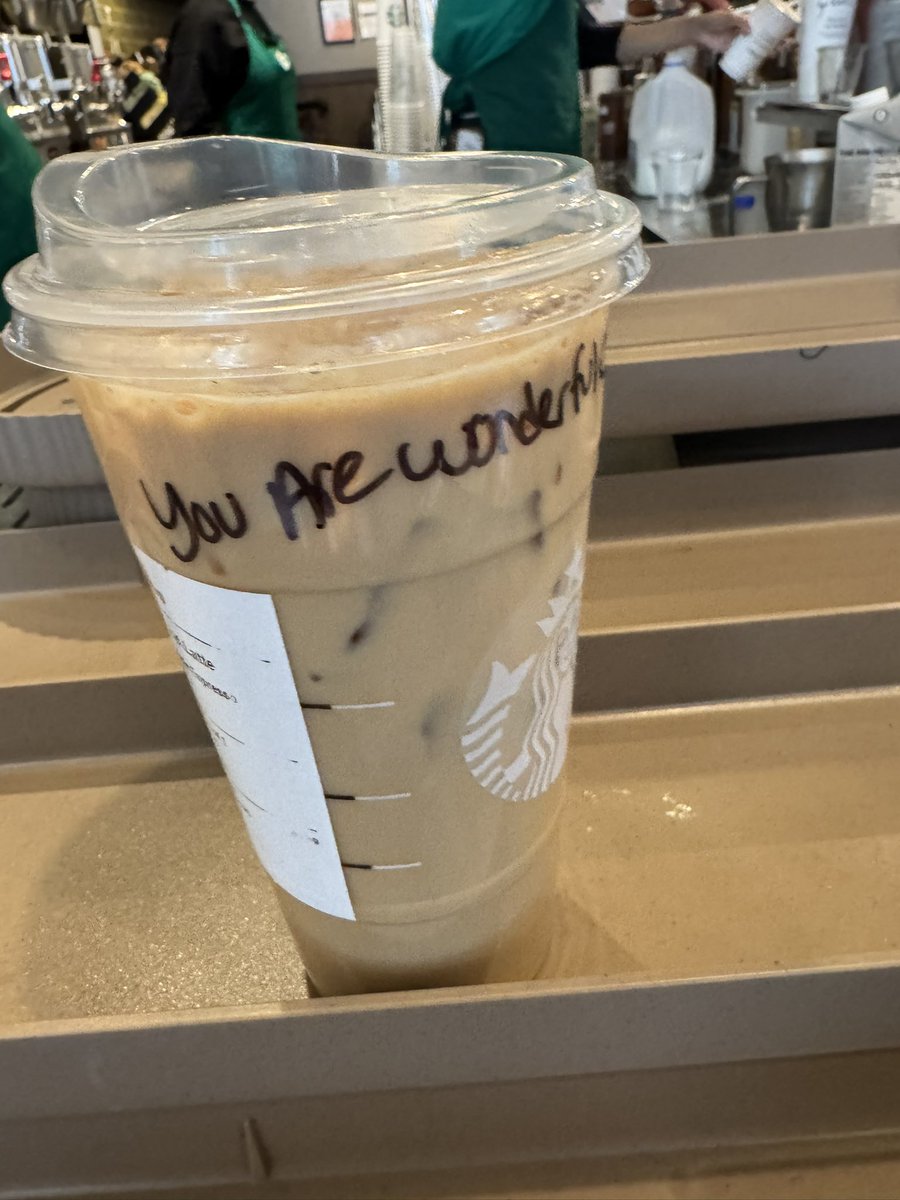
What do we think of the new handwritten notes at Starbucks?
StripMallGuy tweet media
English
97
4
152
44.8K
Anton Kosheliev
Anton Kosheliev@levtone·
Every founder’s Monday morning ritual: “What the hell do I post this week?”
English
0
0
9
189