
Phillip Herring รีทวีตแล้ว
Phillip Herring
968 posts

Phillip Herring
@pherring416
Follower of Jesus, Husband of one lovely wife, and Father of three sons!
Chesapeake, VA เข้าร่วม Nisan 2009
575 กำลังติดตาม423 ผู้ติดตาม


@TheOptimisticC3 That is an excellent list for new publishers. I think you know this, but first time authors have to be strong self-promoters. No one cares about your book’s first run nearly as much as you. No one else has it as his/her top priority. Congrats on the book. Look forward to it
English
I am thrilled to see this announcement. @richardaross taught me to believe in students- that includes my own kids. Way to go Dr. Joshua Herring
The Optimistic Curmudgeon@TheOptimisticC3
I promised news… here it is! 3/20 - paperback available 4/30 - hardback available Both via @DavenantInst. God is good. This book will have a story, and it’s going to see the light of day.
English
@richardaross I appreciate your words of inspiration. I especially like “someday”
English

Full retirement is coming. Someday. But not now.
Sat&Sun—Walnut Street Baptist, Jonesboro, AR
Mon—Shane Pruitt’s Coaching Network
Wed—Prestonwood North
Fri&Sat—Burleson DNow
Sun—Preach at Wedgwood Baptist
English
@ricklance Congratulations to you and Pam as you head into this new season. Thanks for your leadership and longevity as a model for so many of us! Thanks for taking a chance on a 19 year old college student and opening a huge door of opportunity for me 40+ years ago in Cullman. Grateful
English

Today, I announced my upcoming retirement from your State Board of Missions. My statement to your SBOM trustees is posted at: ricklance.com/a-new-chapter-…
English
@TheOptimisticC3 Wow. Well written. Your words are kind and generous. Thanks for sharing this message
English
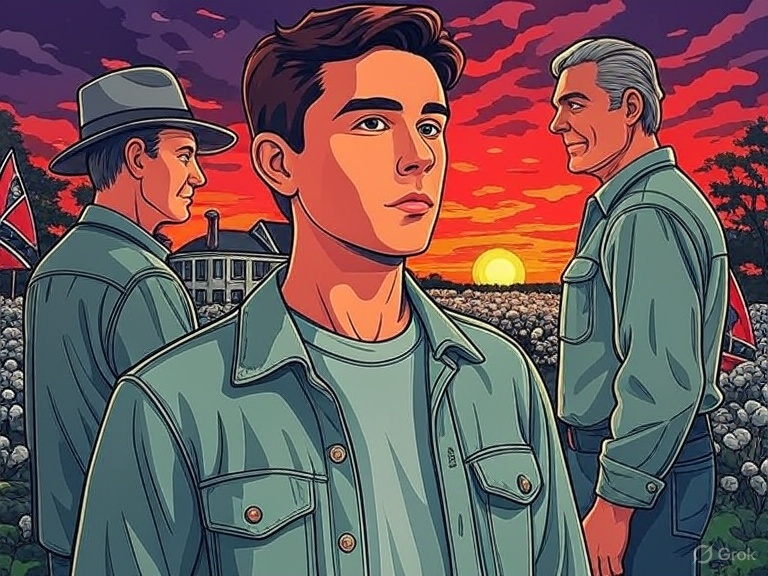
Sunday Reflection #6 - William Faulkner, Absalom, Absalom!, Southern Identity, and Father’s Day
Faulkner is an author fixated on Southern identity, and over the course of Absalom, Absalom!, he develops a clear articulation of the South. He also fits a Father’s Day meditation.
It is appropriate to reflect on this novel on Father’s Day, since this novel is about a young man discerning his identity through the stories of his forebears. We are, Quentin learns, the sum of our fathers complicated by our choices. Absalom is also relevant on a personal note because my father is a son of the South. Born in Tupelo, Mississippi, my dad maintained a love of the South my whole childhood. Through him, and through the atmosphere first in central Tennessee and later in Tidewater, I gained a love of my section. As a teenager I found myself sympathetic to state’s rights, historical nuance, and settling constitutional interpretation on the battlefield. As an undergraduate at @Hillsdale, I was one of very few Confederate sympathizers. I recall many discussions - did I affirm slavery? No. That was not the core issue issue—the War of Northern Agression was really a struggle of competing definitions of the good life, and the route to get there; that struggle paired with an economic system that in the eyes of each generation to inherit it could not be overcome, surpassed, or ended without sacrificing the way of life their fathers had handed on to them.
The South is different today; migration and immigration have changed the composition of major metropolitan areas to the point where it’s hard to explain Old Raleigh to those who moved here to attend UNC Chapel Hill and then settled. But if you get twenty miles outside of Raleigh, something shifts. Last Monday night, I attended a Town Commissioners’ Meeting to voice my opposition to a new development. Turns out when it is in my backyard, I become a NIMBY. I also learned that I live within two miles of one family that has lived in Wake County for over 250 years, and another family that has been farming this land for five generations. Faulkner’s South is not gone—it’s just beneath the shiny veneer of growth, development, and walkable density.
The clearest articulation of Southern identity comes through Shreeve, Quentin Compson’s college roommate.
‘I just want to understand it if I can and I don’t know how to say it better. Because it’s something my people haven’t got. Or if we have got it, it all happened long ago across the water and so now there aint anything to look at everyday to remind us of it. We don’t live among defeated grandfathers and freed slaves…and bullets in the dining room table and such, to be always reminding us to never forget. What is it? something you live and breathe in like air? a kind of vacuum filled with wraithlike and indomitable anger and pride and glory at and in happenings that occurred and ceased fifty years ago? a kind of entailed birthright father and son and father and son of never forgiving General Sherman, so that forever more so long as your childrens’ children produce children you won’t be anything but a descendant of a long line of colonels killed at Pickett’s charge at Manassass?’ ‘Gettysburg,’ Quentin said. ‘You can’t understand it. You would have to be born there’ (Faulkner, Absalom, Absolom!, 377).
Southern identity, Quentin realizes, is formed through a gestalt wherein the rising generation experiences the past as present. Such a moment requires being born a Southerner. By this point in the story, Quentin is consumed with figuring out and reconstructing the story of Thomas Sutpen and his children. Rather than leaving the past in some philosophical, metaphysical space, Quentin’s efforts raise the presence of past deeds that haunt him. For the South, the past remains present for the rising generation. It is also a region defined by irrational, unprovable, yet inescapable prejudices. Racial prejudice and the incest taboo are set in tandem; multiple characters reject incest is a relatively minor sin; the true crime is “miscegenation,” the mixing of races. Faulkner positions this prejudice as irrational. No character rises to explain why racial prejudice makes sense; it is not a rational proposition to be defended, but a deep-seated pre-judgement upon which later actions are taken or justified. This too belongs to Faulkner’s South.
Cleanth Brooks reads Absalom, Absalom! as a tragedy whereby Faulkner seeks to explain the grandeur, pain, and suffering of the South as a tragic exploration of the human condition. “What is it that Quentin as a Southerner has that Shreeve does not have? It is a sense of the presence of the past, and with it, and through it, a personal access to a tragic vision.” Brooks draws parallels between Thomas Sutpen and Oedipus, in Sophocles’ Oedipus Rex, noting that Absalom, Absalom! is also a great detective novel. If read as a tragedy, the lack of hope offered fits the genre. It also highlights a key element missing from Sutpen’s Hundred: God.
Cultural Christian elements exist throughout Absalom, Absalom!: whether or not weddings happen, and then in church or not; Christian burial; a mention of an unbroken line of Methodists. But none of the characters take their faith seriously. In Yoknapatawpha County, Christianity is a measure of social respectability. And in that sense, Thomas Sutpen needs to be seen as Christian to accomplish his Design. Yet, his faith has nothing to say about his beliefs about blacks, his view of marriage, any sense of stewarding property for God, or even how to die well. The tragic South cannot be redeemed because God is absent. There is no force big enough, powerful enough, to atone for generational evil; no sovereignty extends far enough to weave men's choices into a tapestry that emerges in eternity.
Absalom, Absalom! as a title recalls David’s cry upon the death of his rebellious son: “Absalom, Absalom! My son, my son!” Absalom led an armed revolt against his father, took the kingdom,chased his aged father away from Jerusalem, and publicly slept with his father’s wives on the palace rooftop. And yet, David weeps upon hearing of his son’s death. The title orients the reader to consider the love of a father for his wayward son, and perhaps pushes against the absence of God throughout the novel. Read in this light, the South is Absalom, and God weeps for the evil done by his children. At the same time, this 393-page novel is defined by the absence of God. There is no hope offered, no redemption planned. The tragic form is respected. And yet, that very absence recalls the difference between Faulkner’s mythologized form, and the reality we inhabit.
In this world, the God who moved heaven and earth to effect our redemption loves sinners and longs to comfort the broken-hearted; He has made clear what the good life looks like (“the Law of the Lord is good, making wise the simple”), and calls His people to live together in the Church universal and militant. In His coming wedding feast, he insists that all wear wedding garments befitting the marriage of His Son. He offers those wedding garments free of charge to those who will take them. He is the Author taking our human tragedies, inviting us to see the fictional image of a life without His grace, and then saying, “If you knew who was speaking with you, you would ask Him for Living Water” and “Come to me, all who are heavy-laden, and I will give you rest. For my yoke is easy, and my burden is light.”
I am blessed to have a father who is the opposite of Thomas Sutpen. My father is marked by his integrity, wisdom, patience, and diligence. He is determined to leave a legacy, an inheritance, of both physical means and spiritual graces. He believes that success lies in helping others succeed; his grand ambition in life is to multiply discipleship so that all might know the God who redeems our addictions, evils, choices for his glory and our good. My father has been faithful to the wife of his youth, and he illustrates the value of building over time. Quick success is fleeting, but the one who builds over a lifetime may see his efforts endure. His favorite Proverb proclaims that “He who walks with the wise will be wise, but a companion of fools suffers harm.” My father is an icon of the God who lives patiently, wisely, and completely; through him, I see the love of God clearly.
I remain a son of the South. I prefer a slower pace of life connected in some indescribable way with rhythms and seasons; my neighborhood, my county, and my state are all more important and more real than the abstractions of nation or “global citizen.” I’m sure I too have irrational prejudices that determine my course more often than they ought. But I also have a God who has redeemed me and continues to conform me into the image and likeness of Jesus. And He makes all the difference.
This is the day that the LORD has made; let us rejoice and be glad in it! Do not forsake the assembly of believers—today, if you hear His voice, do not harden your hearts. Run to the king who gives himself away, the one who tells you “This is my body, broken for you. This is my blood, shed for you.”
Happy Father’s Day.
English
See you tomorrow! Looking forward to seeing you.
Richard Ross@richardaross
Going to SBC in Dallas? I would love to connect with you. I will be in the Southwestern Seminary booth all day on Wednesday—except for the SWBTS Alumni & Friends Luncheon. See you Wednesday!
English
@AmericanAir how do I speak with a human about baggage resolution? 800-433-7300 does not help. That is the number I was told to call for luggage to be delivered. Airport staff did not mention a QR code that the aa.com webpage says I need. Please advise
English
If you like thinking and ideas then the Optimistic Curmudgeon is for you!
The Optimistic Curmudgeon@TheOptimisticC3
Woke up to about fifty new followers, so I thought it might be a good day to post about what exactly The Optimistic Curmudgeon is. My opening tagline explains that "this is a podcast all about ideas." I mean that seriously. The mind feeds on ideas, and rich discussion of ideas on their own terms are hard to find. These covnersations feed the mind, and help recall the importance of the soul. Logistically, the OC is a podcast that runs 2 seasons a year on both audio (@podbean, @Spotify, Apple Podcasts) and video (Youtube) channels. Essentially, the goal is two fold. First, create a space where interesting ideas can be discussed. All guests meet one of three criteria: hold a terminal degree, lead an organization, or have authored a book. Usually, I follow these rules. Occasionally, I meet someone so interesting that it's worth the conversation regardless of criteria. But my interviews are always seeking to draw interesting ideas out of guests, and through that conversation push the audience towards truth, goodness, and beauty. Secondly, I want to show that conservatism is a vital intallectual tradition. Once upon a time, a friend told me that "There are no intellectuals on the conservative side." All the intelligent people are leftists, he thought. Such a view is both false, and ignorant. Conservatism has a lengthy history of robust thought: Edumund Burke, T.S. Elliot, Russell Kirk, W.F. Buckley, Irving Babbitt, Paul Elmer More, to name just five. But the modern American political scene associates "Conservative" with the "GOP," and that association brands "conservative" as lacking a robust intellectual foundation. I think such a view is false, and want my show to demonstrate that conservatism is a tradition alive with ideas. Season 7 is ongoing. If you like the show, work through the back catelogue! I'll close this post highlighting episodes published so far in Season 7: @nukebarbarian came on episode 7x7, arguing that America's electrical grid is failing, and the solution is a unified national energy policy. Bob Luddy joined me for episode 7x6, explaining the nature of #Entrepreneurship and its role in leadership. He think a #liberalarts education is the best preperation one can get for being a #CEO. @Tyler2ONeil of the @DailySignal discussed his new book in 7x5, "The Woketopus" - Tyler traces the money through a series of dark money connections to show how #leftists influence the #deepstate through their web of non-profits. (@DOGE - this episodes points to a bunch of places for you to slash!) @emilyjashinsky had a fabulous interview discussing the connections between p*rn, #bigtech, and #MentalHealth. Great conversation! @hadleyonfire brought the heat in his discussion of 10 books that shape the moral imagination Sean thinks everyone - teachers, students, school leaders, parents - should read these book. Don'r miss episode 7x3! I learned a lot about the armor of God passage in Ephesians from @uribrito! He came on to discuss ministry in the #NegativeWorld, and how he as a pastor relates to secular political speaking opportunities. 7x2 was a wonderful conversation. Season 7 opened with Dr. Mike Young on #aesthetics from Sir Roger Scruton's book Beauty: A Very Short Introduction. Absolutely delightful conversation. Still to come in Season 7 - @CRPakaluk on #hannahsChildren, @SpencerKlavan on his newest book "Light of the World, Light of the Mind," and @jtworr on the legacy fo Sir Roger Scruton! #Scruton will be our inclusio topic, which I think fits because he is our most recent giant of intellectual conservatism. I also do occasional bonus episodes. After the presidential debate (Trump v. Biden), I had six previous guests back on to discuss the debate. Most recently, I did a livestream discussion of the article "Great Books is for Losers." At some point I'll publish those as stand alone episodes. Click the link below, and subscribe! We've got even more incredible conversations lined up for Season 8. (The image is Grok's vision of my podcast based on my tweets). @theoptimisticcurmudgeon89" target="_blank" rel="nofollow noopener">youtube.com/@theoptimistic…
English
@sethaschwab @ericjohnthomas @firstnorfolk Only some people can truly appreciate this post. I am one of them!
English

My LaJuana’s doctors thought she would be in heaven by now.
Instead, we are both on earth to celebrate our 51st Anniversary!
If she were literally dancing before the throne today, by the Spirit I would trust and adore my King. But I am so grateful we have more days together.
English

My son Clayton had to interrupt his studies because he became very ill. He was bedfast 24/7 for ten years.
When he improved some, he was only well enough to take one or two classes a semester. This Friday, after 17 years, he graduates!
Mighty God! And courageous son!
English
@PastorMikeStone Mark Twain once said, “the difference between the right word and the almost right word is like to difference between lightning and a lightening bug!”
English

Discernment has been defined as the ability to tell the difference between right and *almost* right.
It’s also the ability to see where a wrong road leads without traveling to the end of it and hitting a brick wall.
English
@richardaross @D6Family Love this tool from two amazing men! Thanks for this post! Sharing with my student pastor NOW!
English
What if you distilled hundreds of pages of books for believing parents . . . and created a few pages of powerful insights . . . and provided that to all the parents of your church . . . for FREE?
A free gift from @D6Family, David Booth, and me:
store.randallhouse.com/parenting-teen…
English
English

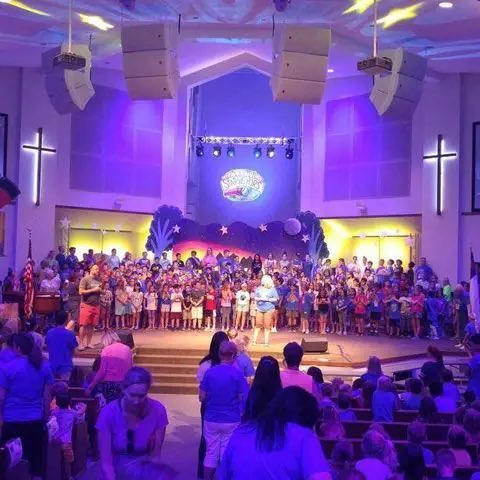
Barrineau Family Update: I have accepted the call to serve as the Family Pastor @FruitCoveBC We are excited about God calling our family to a new place of ministry. However, it is bittersweet as we have to say goodbye to our church family at @FBCEnterprise

English
@chuckkelleyjr Praying for your family this morning Dr Kelly.
English
Many thanks to those of you praying for Rhonda in her cancer battle. It progressed to the point of being untreatable. She is now in hospice care in our cozy cottage in Fairhope. On Monday night her Mother passed gently into her eternal home. Please pray for Rhonda & sister Mitzi.
English
@richardaross Yes they do. Such a gift to get to hear those words decades later! I am thankful for how God used you to shape so much of my philosophy of ministry that extends well into my adult ministry years. Principles of students ministry work amazingly well with adults 🤓
English
LaJuana and I had dinner with one our teenagers from the 1970s. She said, “Christ through you changed the entire direction of my life.”
In middle school she was lost, with no spiritual influence at home. Now she is involved in international evangelism.
Student pastors matter.
English