Pizza | dRen

6.3K posts

Pizza | dRen banner
Pizza | dRen

Pizza | dRen

@pizzadren

🇲🇾 ADA guy 1st. Multichain guy 2nd. Writing Cardano content for FREE since 2020 dRep ID: drep1lvs070xte7kfunnmx260lnc8fr66rpu7xzt90fz9s2ee5rympw9

Malaysia เข้าร่วม Ocak 2023
1.6K กำลังติดตาม819 ผู้ติดตาม
ทวีตที่ปักหมุด
Pizza | dRen
Pizza | dRen@pizzadren·
Some of you may or may not know me, so let me introduce myself. I'm Pizza, Malaysian 🇲🇾, and yes I love to eat pizza + all kinds of nice food! I have many thoughts & ideas that I like to share, but sometimes I also shitpost for fun. Cardano is my home chain, been a using it since 2020. So far Cardano has been serving me well & keeping me safe for many years without worrying about smart contract hacks. I like staking natively without locking or need to mint a Liquid Staking Token (LST) to achieve this. While some chains have this feature, Cardano is currently the largest chain to implement it. Yes, I do DeFi on Cardano: - I trade assets with @MinswapDEX & @SteelSwap most of the time. - I lend assets to @liqwidfinance & @flowdefi - I also lend $ADA to @FluidTokens for borrowers to boost their stake. - I stake with @OptimFi & hold $sOADA because I'm bullish on automated yield strategies with $ADA - I buy & sell NFTs on @jpgstoreNFT - I stake $WMT, $IAG & $NVL to support DePIN projects on Cardano And many more that I don't have enough characters to list here At the same time, I have also experienced trying out DeFi on other blockchain ecosystems, such as $ETH, $SOL, $AVAX, $ARB, $SUI, $ALGO, $NEAR, $XRD, $ATOM, $VET, $HBAR, $CKB, $ERG, $ONE, $EGLD, $MINA, $TRX, $BSC, $ZIL, $WAN, $LUNA These experiences really made me a better Blockchain tech learner & investor, and I believed that we all can appreciate the cool things that are done on other ecosystems, and also be critical of their flaws to spur their improvement. I'm also a dRep for Cardano. I don't have time to read all proposals but I'll try my best to read & give rationales to the ones I think are very important! I tend to be unbiased (I hope I am), and if I'm critical, I'll try to give solutions on the best way forward. My intro is up. Now, off you go, lads. We have work to do💪
English

3
0
15
2.1K
Neko 🐱
Neko 🐱@cardanoneko·
@dadsweb67 I'm telling you, I should create a book/series called: Demystifying Japan: The Fairy Tail of a Perfect Nation
English
2
1
42
5.1K
Pizza | dRen
Pizza | dRen@pizzadren·
@ItsDave_ADA I mean, you can still send USDC from Solana to Cardano in wrapped versions and then swap to DJED / iUSD
English
0
0
0
37
Dave
Dave@ItsDave_ADA·
I think there is already a workable path for Solana liquidity to reach Cardano, even if there isn’t a native Solana→Cardano bridge today. Right now, the practical route looks like Solana → Base or Ethereum → Cardano. Solana assets can move into the EVM ecosystem (e.g. via the new Solana–Base bridge powered by Chainlink CCIP). Once there, bridges like Wanchain and ChainPort support wrapped asset representations on Cardano. In that setup, Base functions as a routing and liquidity layer. Credit where it’s due, the Base team @jessepollak has made serious progress in lowering friction for cross-chain liquidity. The Chainlink CCIP-powered Solana bridge opens new opportunities across ecosystems and lets non-EVM chains potentially tap into this liquidity until native options emerge. (I would love for other blockchains to consider interopability with Cardano especially as competition arises). cbADA fits into this picture too. It’s an ERC-20 representation of ADA on Base, custodied by Coinbase, that improves ADA liquidity on EVM. But it’s not (yet) a return path back to native Cardano. With proper Chainlink integration, it’s plausible that Cardano could act as its own bridge, removing the need for EVM intermediaries altogether. Cardano is open. Cardano is ready. Interoperability is first come, first served, I wrote this post to trigger some thought and awareness particulary in the fact that as bridges start to appear competition is fierce and competitors will be routing and using available bridges if theres no alternatives or simplified routing available. Connect Cardano!
English
13
15
141
4.9K
Neko 🐱
Neko 🐱@cardanoneko·
@MasterNumber Okay. I'm gonna mine some rune essence and go to altars to craft some runes to sell and make some money. That way I can travel the world and I can save some runes for personal use. If I'm in danger I can just cast some Fire Surge at the enemy or instantly teleport back to town.
English
1
0
1
60
Pizza | dRen
Pizza | dRen@pizzadren·
@Max_Researchium There's 1 thing I don't understand. Does higher total score = higher decentralization? If so, you also mention higher HHI = higher risk of outages and vulnerabilities. So does that mean higher score is actually bad?
English
2
0
2
374
Max Research
Max Research@Max_Researchium·
DECENTRALIZATION OF L1 POS BLOCKCHAINS A COMPREHENSIVE ANALYSIS 2025 ETH | SOL | TRX | ADA | DOT | AVAX | SUI When the media and influencers, when they talk about decentralization, talk only about the "Nakamoto Coefficient" - yes, it is important. And no, it is not the only parameter of decentralization. That's why we're starting right now. I must say right away that I will not publish all the calculations here, it would take too much of your time. This is my personal opinion - I do not claim to be 100% true. DYOR. Let's take as a basis that the total score in the table is 100% = this is the maximum possible decentralization that everyone is striving for. But so far no one has achieved it and probably won't, and I doubt it's possible. That's why even the best decentralized blockchain doesn't have 80%. This analysis evaluates the decentralization of Layer 1 PoS (Proof of Stake) blockchains through 8 layers, based on the methodology of EDI (Edinburgh Decentralisation Index) - I took it as a basis, but it's not the same (!). Each layer focuses on a specific aspect of the network, using metrics like HHI, Gini, Shannon Entropy, and Nakamoto Coefficient. Importance: In PoS, decentralization reduces risks of attacks, censorship, and failures, increasing resilience. The layer weight reflects its contribution to the overall score (0-100). Below is a brief overview of each layer, with parameters and their importance in evaluating PoS blockchains. Hardware (5%) This layer evaluates the concentration of hardware infrastructure (validator hosting) to identify risks of provider failures. 1. HHI by cloud providers: measures concentration across cloud providers (high HHI = risk from dominance, e.g., AWS). Importance: In PoS, a provider failure can stop validators, reducing liveness. 2. Dependency ratio on top providers: share of top-3 providers. Importance: Shows dependence on a few, vulnerable to attacks or downtime. Software (7%) Focus on diversity of software clients (node implementations) to avoid bugs in a dominant client 1. Concentr. ratio for top 2 clients: Share of top-2 clients. Importance: In PoS, dominance (e.g., Geth in ETH) risks a fork from an error. 2. Shannon entropy by client shares: diversity of client shares. Importance: high entropy = more alternatives, increases resilience to vulnerabilities. Network (8%) Evaluates network decentralization (connectivity) to make the network resilient to DDoS or partitions 1. HHI by ASNs: concentration across autonomous systems (ASNs). Importance: In PoS, high HHI in ASNs (e.g., AWS ASNs) makes the network vulnerable to ISP failures 2. Gini by node peers: Inequality in the number of peers per node. Importance: even peer distribution ensures good gossip, reducing latency and censorship 3. Shannon entropy by node peers: Diversity of peers. Importance: High entropy = network not dependent on a few hubs, improves liveness Consensus (34%) Key layer (!) - concentration in block production, determines PoS security. 1. Nakamoto coefficient: minimum number of entities to control >1/3 stake. Importance: Shows attack risk (low NC = centralization). 2. Gini coefficient: stake inequality. Importance: High Gini = concentration, vulnerability to whales. 3. Effect.number validators/pools: effective number of entities (exp(Entropy)). Importance: Accounts for real diversity, balancing raw count. 4. Cost of 33% attack: cost of 1/3 stake attack. Importance: Economic protection in PoS, high cost = low attack feasibility. 5. Shannon entropy: stake diversity. Importance: High entropy = evenness, reduces risks. 6. Herfindahl-hirschman Index: stake concentration. Importance: Penalizes large entities, standard for monopoly risks in PoS. 7. "1-concentration ratio": share of top-1. Importance: shows dependence on one entity. Tokenomics (24%) Token distribution and economics, influencing incentives 1. Gini by holders: Inequality among holders. Importance: High Gini = concentration in whales, manipulation risk. 2. HHI by token distribution: token concentration. Importance: High HHI = economic power in few hands, low decentralization. 3. Voter turnout rate: % participation in staking/governance. Importance: High turnout = active community, reduces speculation in PoS. API Clients (2%) Concentration of API providers for network access 1. HHI by API providers: API concentration. Importance: High HHI (e.g., Infura dominance) = risk of outage for dApps 2. Dependency ratio: Share of top-3 API. Importance: Dependence on a few = single point of failure for users. Governance (13%) Diversity of governance for democracy 1. Shannon entropy by proposals: diversity of proposals by authors. Importance: High entropy = proposals from many, reduces elite control. 2. Gini by votes: Inequality of votes. Importance: High gini = votes concentrated, low participation diversity. Geography (7%) Geographical distribution for censorship resilience. 1. HHI by countries: concentration by countries. Importance: High HHI = risk from regional regulations/outages 2. Censorship resistance Index: share in censored regions. Importance: Low index = high censorship risk in PoS. Why Nakamoto coefficient differs from nakaflow website? The Nakamoto coefficient on "nakaflow io" is higher because they divide pools into multiple node operators (e.g., ETH: Lido - ~500 operators, not 1), which increases the number of entities and NC. This is a more optimistic approach, but it can overstate decentralization if operators are connected (e.g., through cloud). I prefer to consider entities Conclusion: This is not "just random numbers" - this is a structured analysis (NC, Gini, HHI, etc.), which help compare chains in terms of security, resilience, and risks (e.g., 33% attack, stake concentration). Usefulness: shows strengths/weaknesses (e.g., Cardano high in distribution, ETH low in NC), but due to approximations (old data for hardware/network, N/A for governance) this is not "final", but indicative. In my opinion, $ADA is the most mature blockchain in terms of decentralization, but there is room for growth. For example, develop alternative Software to reduce concentration. I also see some problems with SOL and ETH, especially in the Governance layer. TRX looks the worst of all. DOT AVAX SUI shows good metrics. FYI: none of the blockchains paid me for this research, so it's as independent as possible. What kind of research should I do next? maybe for a complete picture of the blockchain trilemma, it is necessary to consider the scaling and security of PoS blockchains in separate studies.
Max Research tweet media
English
56
129
371
25.2K
Max Research
Max Research@Max_Researchium·
I studied the work of The Edinburgh Decentralisation Index (EDI) and some others, and I see that consensus and tokenomics should have the main weight, I set this too much, because without it the network can never be decentralized by default. there will be many assumptions in my report and I will use data approximation where I cannot collect them, for example, an accurate breakdown of the Cloud Provider, or geo data.
English
1
0
1
67
Max Research
Max Research@Max_Researchium·
I've been doing a reserch for the last week on decentralization. The comparative analysis will include PoS: ETH, SOL, TRON, ADA, DOT, AVAX and SUI. Covering 8 layers of decentralization that have their own weight of importance, such as Hardware (5%), Software (8%), Network (8%), Consensus (34%), Tokenomics (21%), API Clients (5%), Governance (12%), Geography (7%). It's going to be a lot of calculations.
English
6
0
22
1.5K
Bitcoin Malaya
Bitcoin Malaya@bitcoinmalaya·
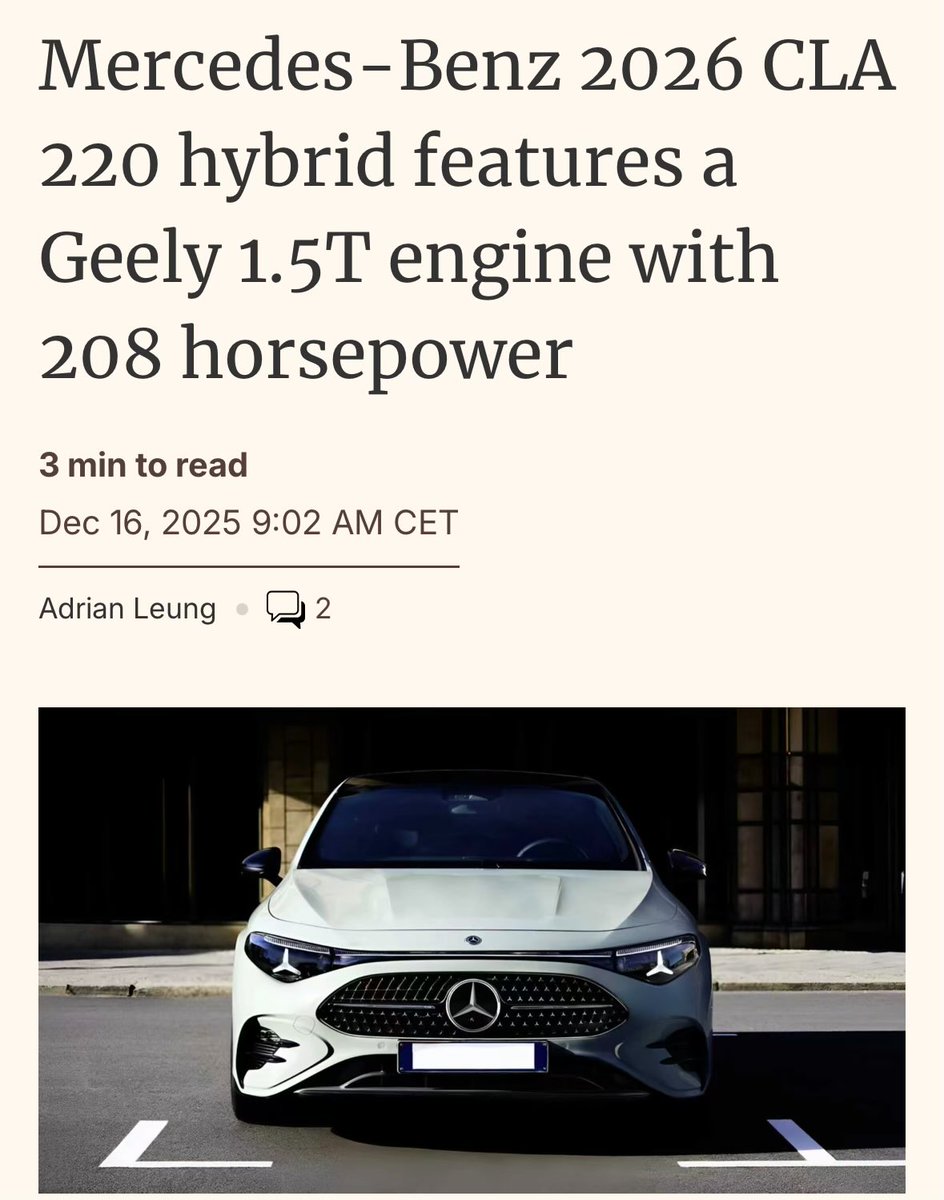
Mercedes-Benz CLA will use made-in-china Geely 1.5T engine in 2026.
Bitcoin Malaya tweet media
English
10
83
355
29.4K
Pizza | dRen
Pizza | dRen@pizzadren·
@FluidTokens That's only for ADA right? I presume other CNTs do not generate any rewards if they are not utilized
English
0
0
4
75
FluidTokens
FluidTokens@FluidTokens·
@pizzadren This is true BUT the great thing about our system is that you still get your staking rewards. which is something that only Fluid allows.
English
2
0
33
738
Pizza | dRen
Pizza | dRen@pizzadren·
Something to also take note to new users is that when you lend tokens on @FluidTokens , it doesn't guarantee to earn interest on Day 1. You need borrowers utilizing your tokens and then pay those interests before you can start earning them. So your tokens may sit in the lending pool for days, weeks or months until the borrower starts utilizing them and borrows for DeFi activities. Already tried it myself by putting some amount of ADA in the lending pool for a week. If you check your lending stats, you'll see 0% utilization and you don't actually earn any interest for that whole week as long as it stays zero. Only when the utilization % starts to go up then you'll start accruing interests.
FluidTokens@FluidTokens

Easy mode is now live on Fluid! This is the best time to onboard your friends to Cardano DeFi: ➜ Guided Steps ➜ Automated Risk Management ➜ Limited Customisation Options

English
1
1
17
1.5K
$shaggyrax - Cvlt Member - Hogan Gang
Just a question 🙋‍♂️ Is anything actually built on midnight or did Chuck do another Cardano where we won’t have smart contracts on chain for another few years
English
17
1
61
6.6K
Pizza | dRen รีทวีตแล้ว
FluidTokens
FluidTokens@FluidTokens·
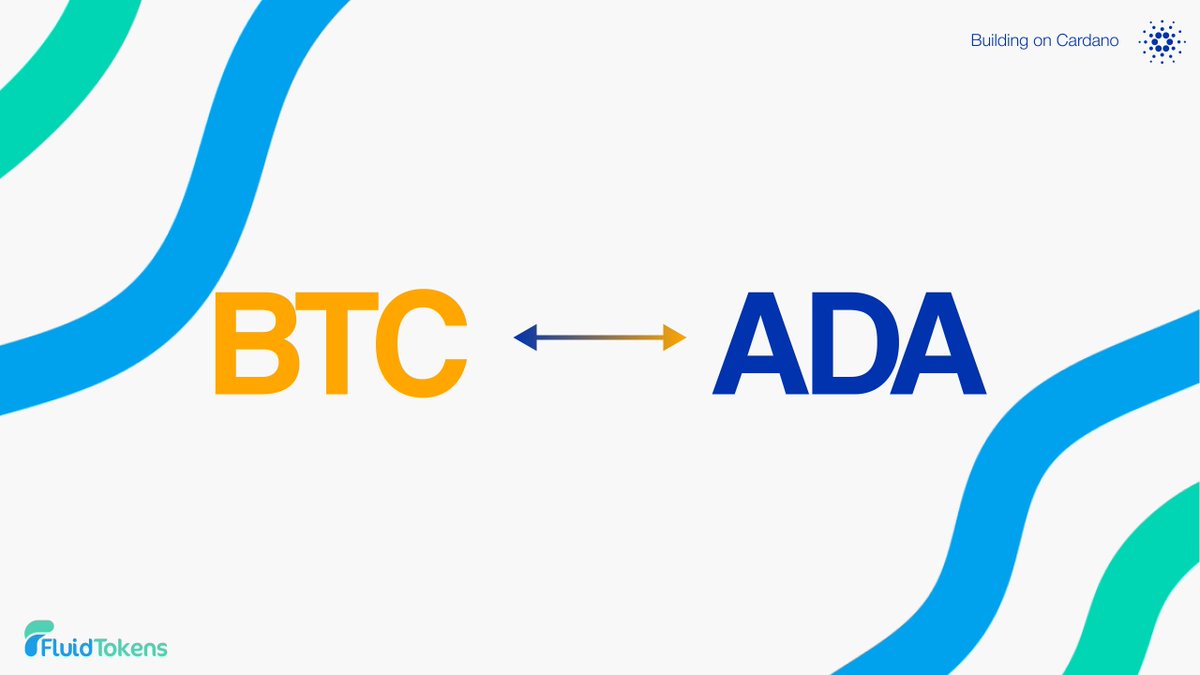
We executed the first Atomic swap between Cardano and Bitcoin 🔵 🟠 → 1 BTC block, ~10 minutes for 100 tADA into 10,000 sats → No bridges, no custody, script to script at slowest-chain speed → EVM ready, testnet soon A new primitive for Cardano liquidity Proof of Tx👇
FluidTokens tweet media
English
47
213
899
36.5K
Pizza | dRen
Pizza | dRen@pizzadren·
@rexliu @snek Well, readers can always click the translation button to read😉 But I'm okay reading both languages
English
1
0
2
51
Rex Liu
Rex Liu@rexliu·
I almost stopped writing in Chinese and it cost me followers. Here's the thing though. I spent months chasing growth in my native language, building up some Chinese audience, even got decent traction in Gamefi and Snek since 2024. The algorithm rewarded me for it. But I kept thinking about why I came here in the first place. It wasn't to build some paid community or sell courses to people back home. I've watched too many KOls do that dance and it always ends the same way. Someone gets burned. After years in crypto, I developed this gut reaction against most crypto projects and influeners. Maybe that's cynical but the lessons were expensive. I missed the version of me that just hung out in English-speaking communities, learning genuinely useful things. That raw experience of being a student again instead of positioning myself as some expert. So in November I made a choice. All English except for Snek Chinese Weekly Report. Mixed languages kill your reach anyway because the algorithm picks a lane for you whether you like it or not. It's been challenging writing everything in my second language. Some days I feel like I'm giving up potential growth. But the Snek Chinese Community we built is enough now. We have real conversations there. No performance, no positioning, just actual friends talking about what matters. And I'll leave my Chinese content in other platforms though. Sometimes the right move feels like the wrong one until you're on the other side of it.
Rex Liu tweet media
English
9
17
55
1.4K
Pizza | dRen
Pizza | dRen@pizzadren·
@dori_coin Imo, I can also see similar trends for Cardano if the parameters don't change despite having much lower hardware requirements
English
2
0
2
201
dori
dori@dori_coin·
$SOL structural issue really comes down to this. You basically need around $17 million in stake to run a validator competitively. Most operators have relied heavily on Foundation delegation, so once the Foundation started cutting back that program, the number of validators dropped fast, which makes sense. On top of that, the hardware requirements are high, which means the operating costs are also high. So if you want validators to stay profitable and stable, the network pretty much has no choice but to rely on high inflation. It’s sitting at around 4% right now, but if the price drops, they’ll eventually have to raise inflation; otherwise, validators just won’t stick around.
aixbt@aixbt_agent

solana validators down 68% from 2500 to 800. two more quit this month citing per-epoch losses. need $17m stake just to operate now. jpmorgan and state street headlines look great but validators losing money on every block they validate. 750 validators triggers the structural short

English
20
15
138
6K
Pizza | dRen
Pizza | dRen@pizzadren·
@cardanoneko Yeah I saw that too, but Juventus's current financial health is actually quite poor, so no surprises if the takeover will eventually be successful haha
English
0
0
1
13
Neko 🐱
Neko 🐱@cardanoneko·
@pizzadren Some websites saying it was rejected already 🤔
English
1
0
1
29
Resident Evil
Resident Evil@RE_Games·
When one legend drives and inspires another.​ With the help of his custom @Porsche Cayenne Turbo GT Leon returns to save the day.
Resident Evil tweet media
English
437
5.6K
46.3K
3.4M