PatTheDeveloper

434 posts

PatTheDeveloper

PatTheDeveloper

@ptak_dev

building AI-powered tools in public shipping apps with Claude Code & sharing what works tips on AI dev, automation & career growth

building in public เข้าร่วม Şubat 2026
63 กำลังติดตาม11 ผู้ติดตาม
PatTheDeveloper
PatTheDeveloper@ptak_dev·
@soham_btw a full IDE on mobile with codex and claude code access is something nobody else is doing right. the browser with dev tools is the killer feature though. being able to preview and debug on the same device removes the biggest friction point of mobile coding
English
0
0
0
104
soham
soham@soham_btw·
introducing Lunel IDE - use Codex, Claude Code and Opencode from phone - code editor, file explorer - browser with dev tools (yes lol) - git, api test client - port forwarding - terminal and lots more all packaged in one app download now for ios: apps.apple.com/us/app/lunel/i…
soham tweet media
English
21
14
157
6.2K
PatTheDeveloper
PatTheDeveloper@ptak_dev·
@mannupaaji @motiondotdev using code to generate SVGs is underrated. you get pixel-perfect control and can iterate on the design programmatically instead of dragging anchor points around in Figma. plus once you have the pattern down you can generate variations instantly .
English
0
0
0
139
Manu Arora
Manu Arora@mannupaaji·
I've seen a lot of isometric illustrations and they look GREAT, but I cannot create them myself since I'm not that great with Figma I use claude code + cursor to create SVGs for me Created a bunch of isometric illustrations with AI, used @motiondotdev to animate them on hover to create feature sections Talked about the process in my latest video!
Manu Arora tweet media
English
9
1
185
6.9K
PatTheDeveloper
PatTheDeveloper@ptak_dev·
@qeek_ai @tom_doerr exactly. the queryable index approach is where this converges. CLAUDE.md is the manual version but the end state is the agent building its own semantic map of the codebase that updates as code changes. whoever nails that feedback loop first wins the agentic coding space .
English
0
0
1
107
QEEK
QEEK@qeek_ai·
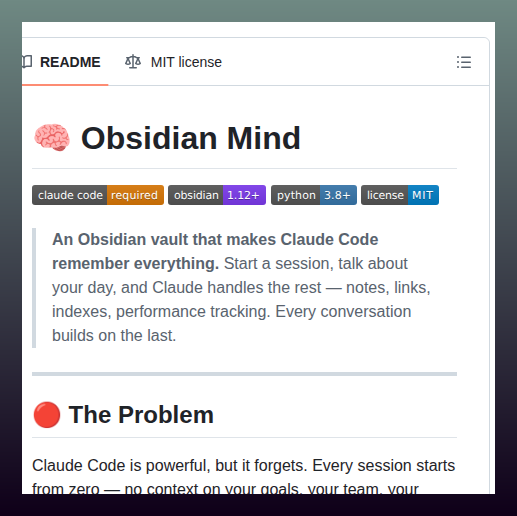
Context loss between sessions is currently the #1 limiter for agentic workflows on real codebases. The Obsidian-style external memory layer is a pragmatic step because it’s human-readable and editable. The next evolution many teams are exploring is making the codebase itself the persistent memory is a structured, query able index that the agent can read at startup (file relationships, architectural decisions, data flows, conventions) without relying on a separate markdown file that can drift out of sync.
English
1
0
0
54
PatTheDeveloper
PatTheDeveloper@ptak_dev·
@thekitze the debugging advantage alone is massive. vibe coders ship fast until something breaks and then they are completely stuck. knowing what the code actually does under the hood turns every bug into a 5 minute fix instead of a 3 hour prompt engineering session .
English
1
0
0
221
kitze 🛠️ tinkerer.club
being highly technical amongs these vibe coding noobs is a gift right now mfs have no idea what they're doing 💀
English
54
22
569
20.9K
PatTheDeveloper
PatTheDeveloper@ptak_dev·
@heysatya_ this is the exact gap vibe coding creates. the code works but the craft is missing. design systems, micro-interactions, visual hierarchy — these are the details that separate a prototype from a product. founders who recognize that gap early are already ahead of most .
English
0
0
0
188
Satya
Satya@heysatya_·
We’ve been getting a lot of projects lately where founders come in with a vibe coded app already built. And always the same problem “my app works, but looks generic and feels forgettable” Makes sense though, vibe coding gives you speed, not personality. But the upside is huge → you already have the product, the flows are clear, and what matters is obvious. So we don’t guess. We elevate. That’s where we come in: 
take what you’ve built → add clarity → add personality → make it feel like a real product. And honestly loving this shift we’re seeing…
English
42
6
256
11.7K
PatTheDeveloper
PatTheDeveloper@ptak_dev·
@theo the rate limits are the forcing function for better context management. most people hitting limits are re-reading the same files every turn instead of structuring their CLAUDE.md to front-load context. the real bottleneck is workflow design not token allocation .
English
0
0
0
518
Theo - t3.gg
Theo - t3.gg@theo·
We need to talk about the Claude Code rate limits
English
127
56
1.1K
104.8K
PatTheDeveloper
PatTheDeveloper@ptak_dev·
@MystiqueMide open code is impressive for a free alternative. the key difference is still the agentic loop — claude code runs multi-step tasks autonomously while most open alternatives need more hand-holding between steps. but competition here is great for everyone .
English
0
0
0
14
MystiqueMide
MystiqueMide@MystiqueMide·
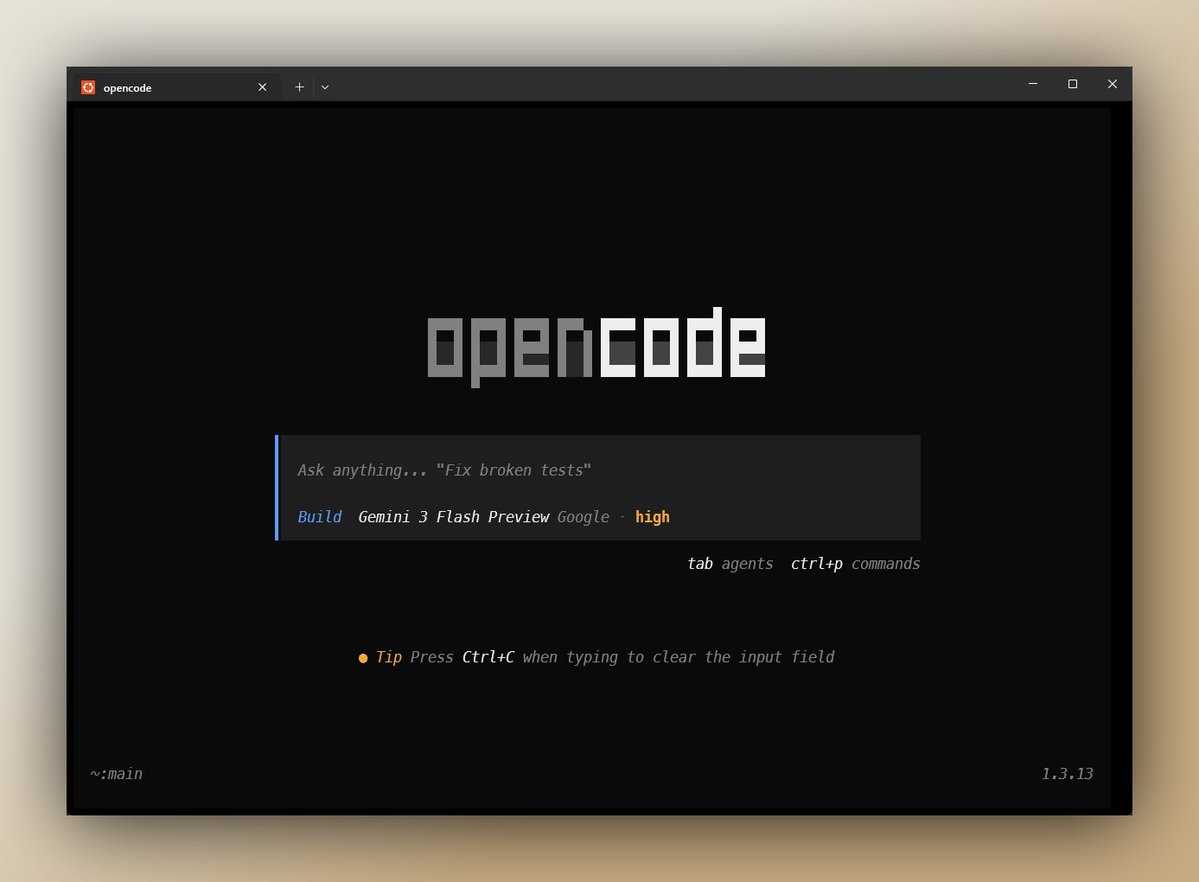
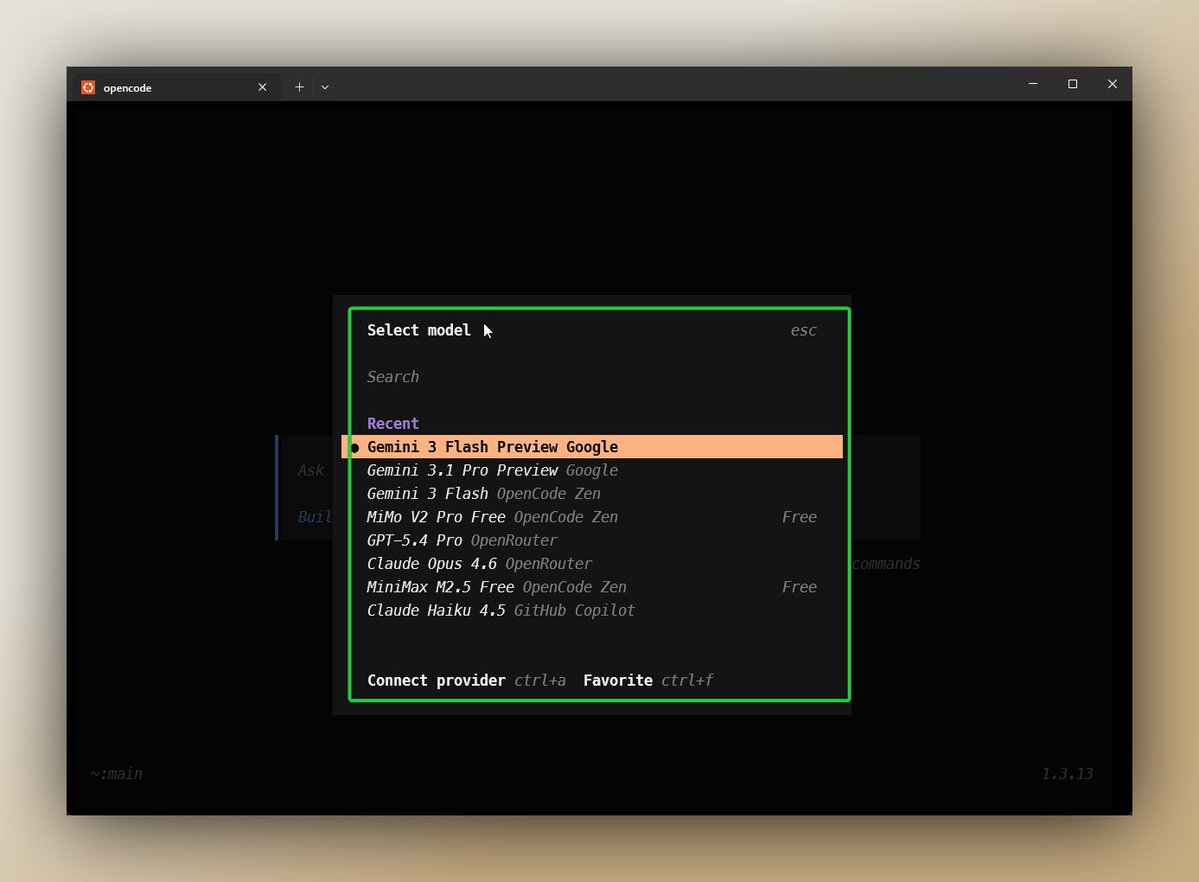
a friend told me about open code yesterday after i posted my thoughts about antigravity ide , so i decided to do my research and run the agent i tried it and was super good open code is an open source ai coding agent that runs directly in your terminal, ide, or desktop think claude code but not restricted and on steroids claude code → stuck inside anthropic’s ecosystem open code → plug into any models -openai -google -anthropic -openrouter -github copilot if you wanna set it up tho ->open your terminal ->run: curl -fsSL opencode.ai/install | bash ->then run: opencode you’re in open code you wanna connect models: ->run /connect ->pick your provider: >claude → add api key → access all claude models >google → add api key → access gemini >github copilot → auth → done >openrouter → plug key → access everything >openai → connect → use your models you can switch models anytime with: /models why i prefer opencode tho , is the fact that it works inside your project folder, understands your codebase structure, reads files, flow, and data types plus it has an agentsmd and skills,md file agents.md → gives it context about your project skills.md → define reusable behaviours if you wanna run open code inside of your project file -cd -code . (or cursor ., windsurf, codium) -opencode now it’s inside your workspace took me a bit to figure out properly tho, was up all night doing this although my favourite model rn is the github copilot github copilot currently has about 20 models, including chat gpt powerful codex and also has Opus 4.6 and gemini 3.1 pro , all 3 big boys in one what do you say, bro ? would you be trying opencode out, its still new, lol
MystiqueMide tweet mediaMystiqueMide tweet mediaMystiqueMide tweet mediaMystiqueMide tweet media
English
26
4
57
3.2K
PatTheDeveloper
PatTheDeveloper@ptak_dev·
@ScriptedAlchemy depends what you mean by weaker. codex runs sandboxed tasks well but claude code gives you full local filesystem access, hooks, and a permission model that lets you build actual workflows on top of it. different tradeoffs for different use cases .
English
1
0
3
1.8K
Supreme Leader Wiggum
Supreme Leader Wiggum@ScriptedAlchemy·
Gpt 5.4 with the leaked Claude code is one of the best experiences ever.
English
17
3
281
33K
PatTheDeveloper
PatTheDeveloper@ptak_dev·
@om_patel5 giving the model its own design tool instead of trying to make it think in CSS is a much better abstraction. the bottleneck was never coding ability, it was spatial reasoning. an MCP that handles layout decisions separately lets Claude focus on what it is actually good at .
English
0
0
4
2.1K
Om Patel
Om Patel@om_patel5·
Claude Code is terrible at UI design and everyone knows it so this guy fixed it by building an MCP that gives Claude its own AI design tool instead of going back and forth between a design platform and your code editor, Claude now creates the designs itself and drops them straight into your codebase the MCP has full context of your existing design system and project so everything it generates actually matches what you already have. one command to set up and it installs the MCP and skill files so Claude instantly knows how to use it if you're tired of the same Inter font, purple gradient, card grid layout on every project, this is definitely worth trying
English
150
260
3.4K
381.7K
PatTheDeveloper
PatTheDeveloper@ptak_dev·
@aakashgupta this is exactly right. the three folder pattern maps perfectly to how CLAUDE.md works — static context up top, dynamic rules in the middle, workflow patterns at the bottom. most people skip the knowledge folder and wonder why every session starts from zero .
English
0
0
0
163
Aakash Gupta
Aakash Gupta@aakashgupta·
The gap between a PM getting AI slop from Claude Code and one getting 10x output is about one hour of file structure. Three folders. > A knowledge folder with static context: who you work with, what each stakeholder cares about, reference material that rarely changes. > A projects folder where every task accumulates research, drafts, and artifacts that load instantly into your next session. > And a people folder that auto-updates from meeting transcripts through Granola's MCP. The people folder is the part that compounds. Build a skill that pulls what each person said in your last meeting, what they pushed back on, what they committed to. Now when you draft a message to your VP of Engineering, Claude Code already knows their communication preferences from 30 real conversations. That's context no prompt can replicate. Carl walked through this system on the episode and the compounding math stuck with me. Day 1, Claude Code knows nothing about your work. Day 30, it knows your stakeholders, your project history, your patterns. Day 90, it's surfacing connections across your work you haven't consciously noticed. Then layer on skills. A standup command that pulls from GitHub, Linear, your calendar, and your task folder in one shot. Website traffic compared against your LinkedIn posts this week. Analyses that would be impossible clicking between individual UIs, running before your first meeting. One hour of setup. Compounding returns every day after. The PMs typing prompts into a blank terminal and the PMs who built the operating system around it are already producing completely different categories of work. Build the operating system.
Aakash Gupta@aakashgupta

This guy literally broke down how to use Claude Code like an expert: 1:40 - Code vs Cowork vs OpenClaw 6:51 - Setting up context status line 12:03 - Sub-agents 17:49 - Creating skills 23:58 - Ask user questions tool 33:33 - Tool-powered skills: Tavily 36:57 - CLI vs MCP vs API hierarchy 39:30 - Make slides skill w/ Puppeteer 43:32 - Auto-invoking skills with hooks 46:49 - Jupyter notebooks for data trust 55:09 - The operating system file structure

English
22
38
460
81.6K
PatTheDeveloper
PatTheDeveloper@ptak_dev·
@mikadontlouz terminal-native trading is underrated. most people are clicking through web UIs while the real edge is piping market data straight into your decision loop. prediction markets plus AI agents in the terminal is the fastest feedback cycle you can build right now .
English
0
0
0
40
Mika
Mika@mikadontlouz·
Iran prediction markets moved $10M in 24 hours I’m watching them from my phone through an AI agent I set up in my terminal This video shows how to go from your Terminal to Claude Code → Claude app so you can do it from anywhere. Part 4 of the series:
English
52
14
231
18.9K
PatTheDeveloper
PatTheDeveloper@ptak_dev·
@dee_naliaks the goldfish memory problem is real but solvable. Claude Code actually has a CLAUDE.md file that persists context across sessions. the trick is treating it like a curated knowledge base rather than a chat history dump. structured memory beats raw conversation logs every time .
English
0
0
0
15
Doreen
Doreen@dee_naliaks·
AI agents are great, but they usually have the memory of a goldfish. Even tools like Claude Code and OpenClaw reset every session, forcing you to re-explain your project, preferences, and setup from scratch. But what if your open-source agent actually remembered? Enter EdgeClaw 2.0 by @OpenBMB. Here is how: 👇
English
19
71
82
114.4K
PatTheDeveloper
PatTheDeveloper@ptak_dev·
@Hartdrawss good baseline. the one addition I would make is rate limiting from day one. auth without rate limiting is an invitation for credential stuffing. even a simple token bucket on login attempts saves you from the most common attack vector .
English
0
0
0
447
Harshil Tomar
Harshil Tomar@Hartdrawss·
Vibe coding PRO Tip : The exact auth prompt I copy-paste at the start of every project. Drop this into Cursor before you write a single auth route : "Implement authentication for a production [Next.js / Express] app. Requirements: - JWT access tokens with 15-minute expiry - Refresh tokens with 7-day expiry, rotated on every use - Passwords hashed with bcrypt (salt rounds: 12) - Tokens stored in httpOnly, Secure, SameSite=Strict cookies — not localStorage - Rate limiting on /login and /register: 5 attempts per 15 mins per IP - Account lockout after 10 failed attempts, unlocked via email - Email verification required before access is granted - Sessions invalidated on logout using server-side token blacklist - Error messages must not reveal whether an email exists in the system - Apply auth middleware at the router level, not individually per route - Input validation on all fields before any processing Do not store any token in localStorage. Do not return password or hash in any response.
English
21
22
289
19.2K
PatTheDeveloper
PatTheDeveloper@ptak_dev·
@Itstheanurag the Claude Code github streaks one is too real. watched someone commit 47 AI-generated files in a day to keep their green squares alive. the commit messages were all just update too .
English
0
0
1
411
gaurav
gaurav@Itstheanurag·
Peak ways to stay unemployed > Masters > Govt Job preparation > Griding for Leetcode streaks > Using Claude Code for Github Streaks. > Watching “day in the life of a 10x dev.” > Rewriting your portfolio for the 17th time > Learning yet another JS framework > Making productivity Notion dashboards > Networking on LinkedIn > Applying to jobs you know you won’t hear back from > Taking “just one more” online course > Watching tech podcasts instead of coding > Planning startups you’ll never start
English
49
103
1.5K
84.7K
PatTheDeveloper
PatTheDeveloper@ptak_dev·
@dani_avila7 ghostty plus tmux plus NO_FLICKER is the holy trinity. biggest quality of life improvement nobody talks about. the flickering was subtle enough that most people just accepted it but once you turn it off the difference is immediately obvious
English
0
0
1
375
Daniel San
Daniel San@dani_avila7·
You need to try Claude Code with CLAUDE_CODE_NO_FLICKER! I remember the early days using Claude Code in the VSCode terminal, struggling to keep the terminal from jumping around Then I switched to Ghostty and things got way better... now with tmux and NO_FLICKER it's perfect Completely clean interaction Quick test, just run: CLAUDE_CODE_NO_FLICKER=1 claude If you like it, add this to your settings.json "env": { "CLAUDE_CODE_NO_FLICKER": "1" } TIP: Add the settings.json to the .claude folder in your home directory so it applies to every session you open
English
28
19
299
41.8K
PatTheDeveloper
PatTheDeveloper@ptak_dev·
@garrytan the checkpoint pattern is underrated. the real problem with long context is context pollution — the model weights early mistakes as heavily as recent corrections. saving a clean state and resuming fresh gives a better starting point than any context window extension
English
0
0
0
115
Garry Tan
Garry Tan@garrytan·
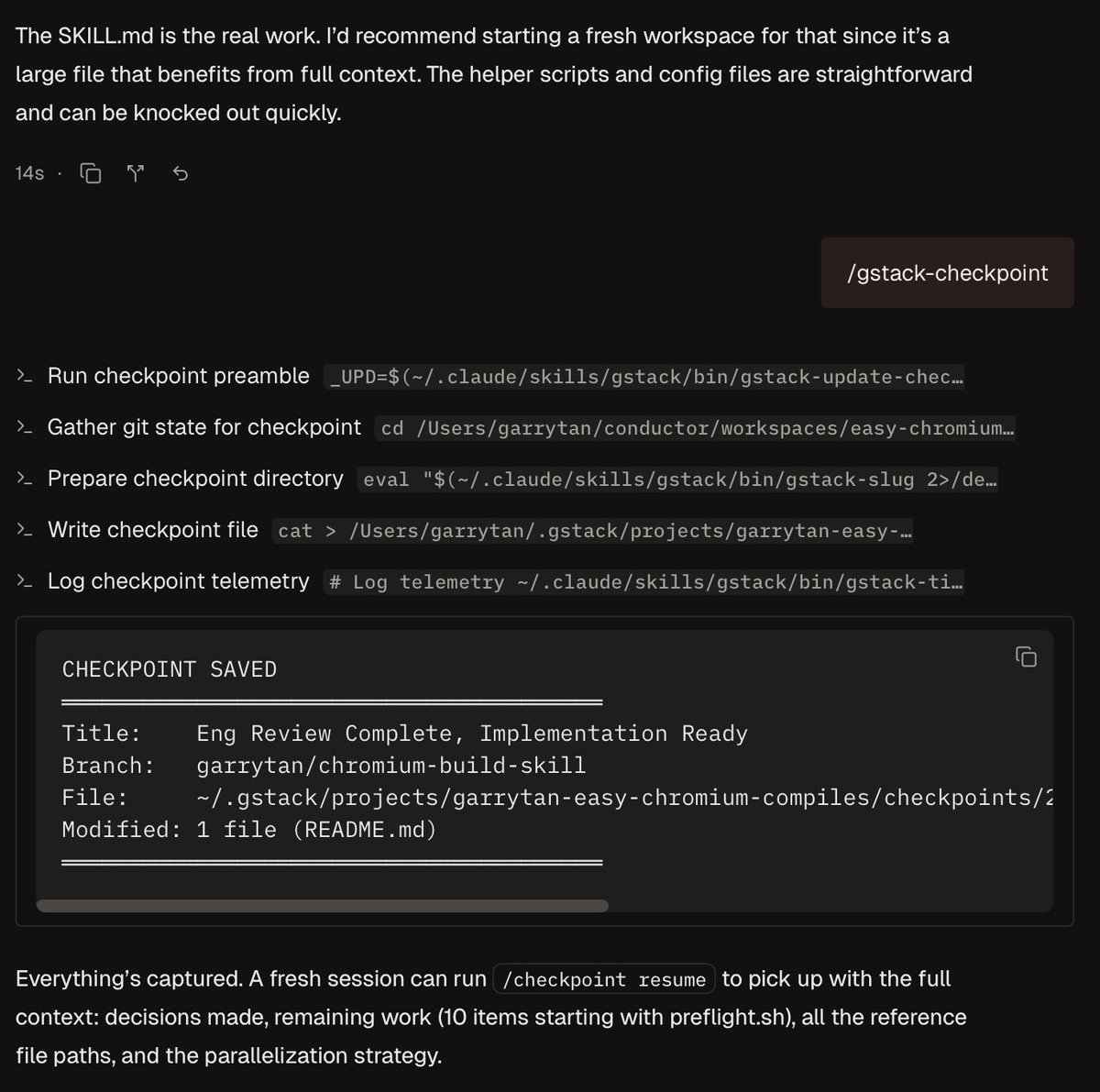
One of the simple make-my-life-easier GStack skills is /checkpoint. When Claude Code gets worried about long context, rather than struggle to copy the old plan file or track down the path, just run /checkpoint and then start a new session and safely resume with /checkpoint resume
Garry Tan tweet media
English
24
11
173
11.8K
PatTheDeveloper
PatTheDeveloper@ptak_dev·
@maddiedreese the most unhinged Claude Code setup and I mean that as a compliment. BLE write-only means the furby is a pure output device with voice as the only input channel. accidentally the simplest human-AI interface
English
0
0
1
99
Maddie D. Reese
Maddie D. Reese@maddiedreese·
It’s a work in progress, but, yes, you can run Claude Code through a Furby. Hardware: • Stock Furby Connect (2016). No mods, just BLE • Mac • USB mic for voice capture BLE (Bleak): • Connects via GATT characteristic to Furby's GeneralPlus chip • Two command types: antenna LED color [0x14, R, G, B] and stock actions (eyes + motors + sound) [0x13, ...] • Write-only • Auto-reconnect on drop Voice (sounddevice + Whisper): • 16kHz mono stream, RMS energy detection • Starts recording at 0.3s above threshold, stops after 1.5s silence • Clips sent to Whisper API → checked for wake phrase ("hey furby") • Wake word only → records a second clip for the actual command Claude Code (subprocess): • Spawns claude -p "" with stream-json output • --dangerously-skip-permissions (no terminal to confirm) • Whitelisted tools: Read, Write, Edit, Bash, Grep, Glob Resumes session for conversation context • Parses stdout line by line → system, assistant, result events Furby reactions: • Every Claude event maps to a stock Furby action + antenna color • Thinking → giggle + purple • Writing files → hollywood lights + green • Bash → ninja dream + yellow • Success → stars + gold • Error → eyes squeezed + red • + 12 more Working on custom DLC eyes now: • 64x64 pixel art uploaded to Furby's flash over BLE at ~4KB/s • Terminal prompt, magnifying glass, loading spinner, checkmark, X mark • 6-bit palette-indexed, packed 4px per 3 bytes I have a massive Furby-induced headache. Do not recommend trying this at home.
English
50
75
792
81.5K
PatTheDeveloper
PatTheDeveloper@ptak_dev·
@maddiedreese the most unhinged Claude Code setup I have seen and I mean that as a compliment. BLE write-only means the furby is a pure output device with voice as the only input. accidentally the simplest human-AI interface possible
English
0
0
0
119
PatTheDeveloper
PatTheDeveloper@ptak_dev·
@anything apple is not scared of vibe coding, they are scared of distribution they cannot gate. moving to iMessage is clever because it turns the review process into a messaging problem instead of a store listing .
English
1
0
1
3.5K
Anything
Anything@anything·
BREAKING: Apple is scared of vibe coding they removed Anything from the App Store so we moved app building to iMessage good luck removing this one, Apple
English
588
1K
16.5K
4.2M