

upliftmeplz
54 posts

I'm lucky enough to have a great doctor and access to excellent Bay Area medical care. I've taken lots of standard screening tests over the years and have tried lots of "health tech" devices and tools.
With all this said, by far the most useful preventative medical advice that I've ever received has come from unleashing coding agents on my genome, having them investigate my specific mutations, and having them recommend specific follow-on tests and treatments.
Population averages are population averages, but we ourselves are not averages. For example, it turns out that I probably have a 30x(!) higher-than-average predisposition to melanoma. Fortunately, there are both specific supplements that help counteract the particular mutations I have, and of course I can significantly dial up my screening frequency. So, this is very useful to know.
I don't know exactly how much the analysis cost, but probably less than $100. Sequencing my genome cost a few hundred dollars.
(One often sees papers and articles claiming that models aren't very good at medical reasoning. These analyses are usually based on employing several-year-old models, which is a kind of ludicrous malpractice. It is true that you still have to carefully monitor the agents' reasoning, and they do on occasion jump to conclusions or skip steps, requiring some nudging and re-steering. But, overall, they are almost literally infinitely better for this kind of work than what one can otherwise obtain today.)
There are still lots of questions about how this will diffuse and get adopted, but it seems very clear that medical practice is about to improve enormously. Exciting times!
English
@thomasfbloom And in three months it’s $1000 and then $100 and then $10 in compute
English

An aspect of using AI to solve maths problems, rarely discussed, is the monetary cost of running these AIs. For example say an Erdős problem is solved by an AI, and the cost of this run is $10,000.
1/
English


One year into our AI Continent Action Plan, we are delivering on our promise to work for a sovereign, trustworthy digital future.
We have deployed 19 AI factories, simplified rules, and launched the Data Union Strategy to unlock the potential of shared data ↓
link.europa.eu/nj3VH9

English
@kevg1412 So much makes sense after reading the first chapters.
English


One of the biggest misconceptions people have about intelligence is seeing it as some kind of unbounded scalar stat, like height. "Future AI will have 10,000 IQ", that sort of thing. Intelligence is a conversion ratio, with an optimality bound. Increasing intelligence is not so much like "making the tower taller", it's more like "making the ball rounder". At some point it's already pretty damn spherical and any improvement is marginal.
Now of course smart humans aren't quite at the optimal bound yet on an individual level, and machines will have many advantages besides intelligence -- mostly the removal of biological bottlenecks: greater processing speed, unlimited working memory, unlimited memory with perfect recall... but these are mostly things humans can also access through externalized cognitive tools.
English
@atelicinvest Calm down ai can never do Y that is impossible , and if it can then it can never do X
English

BREAKING NEWS HUGE LEAK OMG DID YOU GUYS KNOW THAT ANTHROPIC WAS TRAINING A BETTER MODEL THIS WHOLE TIME THIS IS SHOCKING
English
@chatgpt21 You don’t brutally dump Disney for a 3 point swe bench improvement
English

Sam Altman tonight:
Approximately he just said “We’re routing GPUS toward spud.”

Chris@chatgpt21
@StormslayerDev What’s funny is these people don’t know they’re routing compute toward a new model because of how good it is
English
[2/3] The scaling evidence is not subtle. Molecular FMs for chemistry: more data, better models, no ceiling yet (ChemFM). Single-cell biology: same pattern up to 27B parameters (C2S-Scale). We are not in a regime where more data stops helping. We're in a regime where the data doesn't exist.
English
[1/3] Protein folding worked with ~250K PDB structures because the problem is degenerate. Most problems in nature aren't. Scaling laws hold broadly but the data doesn't exist yet. That's the infrastructure problem nobody is solving at scale. Evidence + links in thread 🧵
English

@petergyang Yep, 4.5 - 4.6 was a big jump 256 - 1 mill big jump .
English

1M context window feels like an upgrade from Opus 4.6 to 4.7
English


@redtachyon Bullish on AI I love the friction and resistance it gets because I equate that with optimal environment to grow. Bullish and utterly critical at the same time = maximum progress
English


Very well put!
AI is real. It needs data. LLMs have access to all our writing etc.
Biology does not have an equivalent corpus of high-quality data that spans the dynamics we're proposing to solve.
Diseases and aging occur at the level of organs and organisms, and we need data there to simulate it. Status quo won't get us there in a few years. But we can act!
Identify the most important data that can't be accelerated, and start collecting it now so we can leverage AI for longevity as early as possible.
We are setting up an @impetusgrants focus on AI-enabling datasets specifically.
Geoffrey Miller@gmiller
A mini-rant abut AI and longevity. They say "Artificial Superintelligence would take only a few years to cure cancer, solve longevity, and defeat death itself'. This is a common claim by pro-AI lobbyists, accelerationists, and naive tech-fetishists. But the claim makes no sense. The recent success of LLMs does NOT suggest that ASIs could easily cure diseases or solve longevity, for at least two reasons. 1) The data problem. Generative AI for art, music, and language succeeded mostly because AI companies could steal billions of examples of art, music, and language from the internet, to build their base models. They weren't just trained on academic papers _about_ art, music, and language. They were trained on real _examples_ of art, music, and language. There are no analogous biomedical data sets with billions of data points that would allow accurate modelling of every biochemical detail of human physiology, disease, and aging. ASIs can't just read academic papers about human biology to solve longevity. They'd need direct access to vast quantities of biomedical data that simply don't exist in any easy-to-access forms. And they'd need very detailed, reliable, validated data about a wide range of people across different ages, sexes, ethnicities, genotypes, and medical conditions. Moreover, medical privacy laws would make it extremely difficult and wildly unethical to collect such a vast data set from real humans about every molecular-level detail of their bodies. 2) The feedback problem. LLMs also work well because the AI companies could refine their output with additional feedback from human brains (through Reinforcement Learning from Human Feedback, RLHF). But there is nothing analogous to that for modeling human bodies, biochemistry, and disease processes. There are no known methods of Reinforcement Learning from Physiological Feedback. And the physiological feedback would have to be long-term, over spans of years to decades, taking into account thousands of possible side-effects for any given intervention. There's no way to rush animal and human clinical trials -- however clever ASI might become at 'drug discovery'. More generally, there would be no fast feedback loops from users about model performance. GenAI and LLMs succeeded partly because developers within companies, and customers outside companies, could give very fast feedback about how well the models were functioning. They could just look at the output (images, songs, text), and then tweak, refine, test, and interpret models very quickly, based on how good they were at generating art, music, and language. In biomedical research, there would be no fast feedback loops from human bodies about how well ASI-suggested interventions are actually affecting human bodies, over the long term, across different lifestyles, including all the tradeoffs and side-effects. It's interesting that most of the people arguing that 'ASI would cure all diseases and aging' are young tech bros who know a lot about computers, but almost nothing about organic chemistry, human genomics, biomedical research, drug discovery, clinical trials, the evolutionary biology of senescence, evolutionary medicine, medical ethics, or the decades of frustrations and failures in longevity research. They think that 'fixing the human body' would be as simple as debugging a few thousand lines of code. Look, I'm all for curing diseases and promoting longevity. If we took the hundreds of billions of dollars per year that are currently spent on trying to build ASI, and we devoted that money instead to longevity research, that would increase the amount of funding in the longevity space by at least 100-fold. And we'd probably solve longevity much faster by targeting it directly than by trying to summon ASI as a magical cure-all. ASIs has some potential benefits (and many grievous risks and downsides). But it's totally irresponsible of pro-AI lobbyists to argue that ASIs could magically & quickly cure all human diseases, or solve longevity, or end death. And it's totally irresponsible of them to claim that anyone opposed to ASI development is 'pro-death'.
English
@demirelo Would love to hear more about how you’re using it!
English

I've been tinkering with this repo ("Get Physics Done") since it got open-sourced, and I'm in awe of its brilliance.
@alexwg et al. seem to have solved how physics/computational research should be conducted in the age of AI.
Dr. Alex Wissner-Gross@alexwg
English
@atheorist @Renet29304 I also think the systems are ‘human like intelligence’ but not human. So they do weird mistakes and are more difficult to gauge where they are abilities wise. That and as you said exponentials are tricky 😅
English

@Renet29304 tbh I think a lot of people just cant extrapolate into the future well + are afraid the thing that holds up their self esteem may go away ... so they will dismiss it until its far too late to adapt
English


At @GoogleDeepMind, we believe AI is the ultimate catalyst for science. 🧬
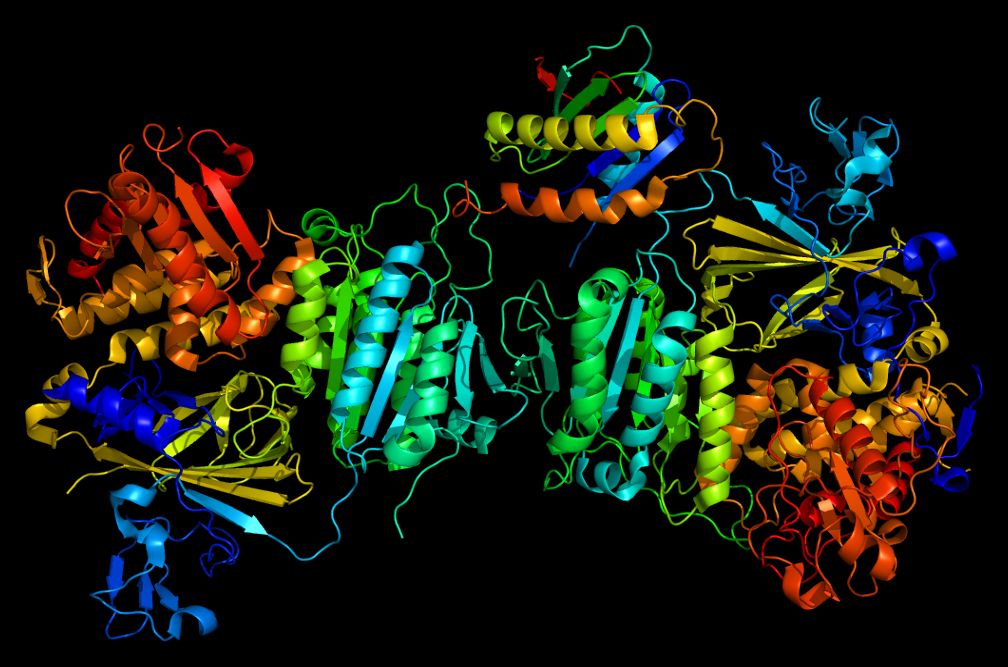
The best example of this has been the AlphaFold database (AFDB) of protein structure predictions which has been used free of cost by more than 3.3 millions researchers across the world!
Today, in collaboration with @emblebi, @Nvidia and @SeoulNatlUni, we are expanding the database by adding millions of AI-predicted protein complex structures to the AlphaFold Database. To maximise global health impact, we’ve prioritised proteins that are important for understanding human health and disease, including homodimers from 20 of the most studied organisms, including humans, as well as the @WHO’S bacterial priority pathogens list.
Read more here:
embl.org/news/science-t…
English
upliftmeplz รีทวีตแล้ว

@SBakerMD @mimikmorgan Remarkable story, but N=1 isn't evidence. We need systematic research before suggesting dietary intervention replaces standard Parkinson's care.
English

Just finished a great interview with @mimikmorgan
She had Parkinson’s disease with tremors, cogwheel rigidity, bradykinesis, could barely walk, was on 1200 mg of L-dopa daily, 330 pills a month -also rheumatoid arthritis on biologics-went keto and now carnivore- off ALL medications, currently deadlifting 135lbs at 72 years of age and getting ready to do a 500 mile walking pilgrimage across Spain! Carnivore can be an awesome healing tool!
English