

Verona Campbell
2.3K posts
🙏
Miad Maleki@miadmaleki
This confirms ~ 13-day onshore storage estimate: Iran is now using containers and "junk storage" (disused tanks in poor condition) in Ahvaz and Asaluyeh to avoid cutting production. And now rail. They're delay tactics measured in days, not weeks. 1. Why rail is a dead end: Iran's own senior rail transport expert Morteza Naserian told Mehr News there are only 2 rail corridors to China, never used for petroleum, with severely limited capacity and zero bulk crude infrastructure. 2. The floating storage "fix" is equally thin. Iran pulled NASHA (IMO 9079107), a 30-year-old retired VLCC, out of the breakers. NASHA buys ~48 hours. 3. Jask terminal storage tanks have reportedly already hit maximum capacity as of April 25. Some tankers are now anchored near Kharg acting as improvised overflow. a fleet the Islamic Republic can't replicate at scale. 4. The 2020 precedent that some point out to (85% storage utilization + 120 Mbbl afloat) was managed under very different conditions (I was watching it from the inside): it was sanctions without a naval blockade, and with active export channels still partially open. That escape valve is gone now, and Iran's tankers (including its ghost fleet) are already filled up with 166M barrels. 5. Bottom line: containers, junk tanks, retired VLCCs, and rail fantasies are not a storage strategy. They're the last moves of a system running out of room, exactly on the timeline that was estimated. Don't forget about the gasoline shortage clock. wsj.com/livecoverage/i…
ART

Who do you trust more Elon Musk or Sam Altman?
chatGPT vs Grok


English
Historical fascism killed millions & is completely opposite of the free market economy in the US which Trump is quite obviously committed to. Equating Trump to a fascist is hyperbole that ignores democracy’s guardrails (courts, states, elections, civil society) which remain despite political name calling. So stop it already.
English
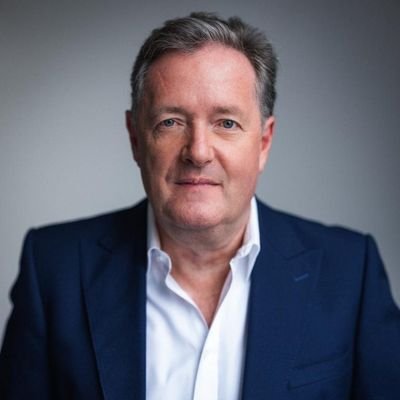
'He's a comedian... the conversation on political violence should begin with Trump!'
Joanne Carducci says Melania Trump's call for Jimmy Kimmel to be fired after he made an assassination attempt joke is "a bridge too far".
📺youtu.be/-HxbB3I001o
@piersmorgan | @JoJoFromJerz

YouTube
English


@JBobMcBoatFace @Sassafrass_84 @FLOTUS I agree I need to work on me. But I think we could all use a little more introspection.
English

@vca0003 @Sassafrass_84 @FLOTUS I mean, you support the guy made threatening and demeaning rhetoric ok for a president to say. You don't seem to care cause you're a fucking hypocrite. You're the one who has to grow, verona, not me. 🤷♂️
English
Kimmel’s hateful and violent rhetoric is intended to divide our country. His monologue about my family isn’t comedy- his words are corrosive and deepens the political sickness within America.
People like Kimmel shouldn’t have the opportunity to enter our homes each evening to spread hate.
A coward, Kimmel hides behind ABC because he knows the network will keep running cover to protect him.
Enough is enough. It is time for ABC to take a stand. How many times will ABC’s leadership enable Kimmel’s atrocious behavior at the expense of our community.
English
"I thought what Elon Musk was doing was great for the world. I have different feelings for him now. We started OpenAI together but at some point he lost faith. Elon really cares about being "the guy". It's sad he is resorting to lawfare."
Sam Altman
English
Verona Campbell รีทวีตแล้ว

BREAKING: The S&P500 has closed at an all time high.
English

Your kidneys filter ~180–200 liters of fluid daily by recycling your blood many times.
And then you overload them with the garbage.

English

@JBobMcBoatFace @Sassafrass_84 @FLOTUS 💜✝️ sorry that my comment is upsetting. Hopefully one day we can all get along (even if we don’t agree on everything)
English
English


Grok is the only moderate AI.
The others are Far Left and Woke.
This is why 𝕏 and Grok must win.

English
Verona Campbell รีทวีตแล้ว

No, Susie Wiles did not work for Monsanto or Bayer (or their parent company).
She was a lobbyist/partner at Ballard Partners until 2022 and co-chair at Mercury Public Affairs until November 2024. Ballard Partners first registered to lobby for Bayer in December 2024; Mercury registered in August 2025—both after she had left. No records show she personally lobbied for them or that the firms took Bayer money during her tenure.
English
I respectfully disagree.
Love is the ONLY way to stop this. Mindless millions (thousands?) have to open their hearts and really take a look at the garbage being spewed at them. We all have control of our own hearts and minds - we just have to take that control back! I am praying for the Holy Spirit to inhabit those misguided hearts and minds, causing them to turn away from evil and that Christians will not cower but stand firm in LOVE. I pray this in the name of Jesus Christ, THE PRINCE OF PEACE.
Like you, I want Kimmel & the rest of the liberal media to stop this horrific barrage of hate spewing! It is evil. It is corrosive. It is destroying our beautiful country and peaceful way of life.
English

@Sassafrass_84 @FLOTUS Someone on our side needs to give Kimmel a taste of his own medicine.
That’s the only way it stops.
English
English
@Sassafrass_84 @FLOTUS Care to comment about all the worse things donald trump has said as president? He also incited a violent mob that attacked our Capitol. Did that upset you?
English
English

Thomas Massie at the Supreme Court this morning:
“The White House Chief of Staff worked for a lobbying firm that accepted money from Monsanto / Bayer and that is wrong.”
English