J Keynes@JKeynesAlpha
$SERV A Leading Physical AI Platform Trading Like a Pizza Stock
The bear case on Serve Robotics ($SERV) writes itself if you only look at the surface. A pre-profit small cap burning cash, just filed a $150M ATM (at-the-market) offering, gross margins still deeply negative, and FY2026 guidance of $26M requiring a steep H2 ramp from a Q1 run rate that annualizes closer to 12M. I take all of that seriously. But I also take seriously that robotics is a major theme and in its true infancy. Serve is very likely to rapidly revalue as the robotics revolution gains steam.
The people dismissing this name as a sidewalk gag are missing what the Q1 EC print actually revealed. Beyond "just delivery bots," Serve is a Level 4 (L4, fully autonomous) physical AI platform with two domains live, a third in the pipeline, and a data flywheel that gets harder to compete with every quarter. Brian Read, CFO, put it directly on the Q1 call: "Serve is building a robotics platform, not a single-use delivery fleet."
Start with the operational scale: Serve went from roughly 100 robots a year ago to 2,000 Gen3 robots deployed across 44 cities and 14 states, manufactured at automotive-grade scale by Magna International. That is a 20x fleet expansion in twelve months, with 1.8M+ cumulative deliveries, a 99.8% completion rate, and zero major safety incidents. Daily active robots grew roughly 10x year over year and supply hours grew 13x.
Co-Founder and CEO Ali Kashani framed the safety record with a line that should stop critics in their tracks: "During our operating hours each day, our robots collectively travel a distance greater than walking from New York to Los Angeles. That's every single day. And they do that with a stellar safety record." Revenue is also up with miles: "Q1 2026 revenue was greater than our total 2025 annual revenues."
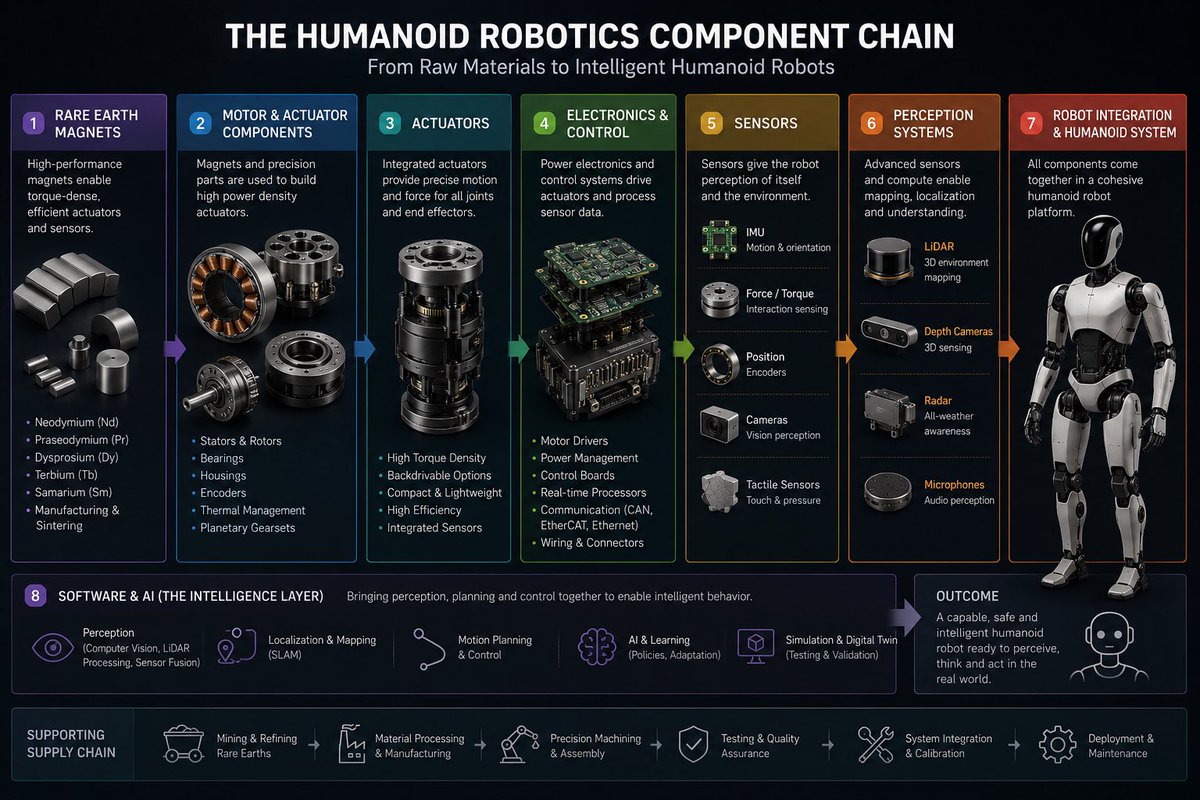
The platform thesis is what most people are missing (see my old post from last year below). Serve is operating a single autonomy stack covering perception, localization, planning, connectivity, and remote supervision, not just food deliveries, and that stack is now running across two physically distinct domains. The Diligent Robotics acquisition closed in Q1 for $29M and brought 100 Moxi hospital robots operating across 26 U.S. hospital systems into the Serve fleet.
Hospital revenue is contracted and recurring, the polar opposite of per-delivery economics. Recurring revenue is already roughly 47% of total. Kashani was explicit that what a Serve robot learns navigating a Los Angeles sidewalk feeds the model that helps a Moxi navigate a hospital corridor in Dallas. As he put it on the call: "Every robot will learn from every other robot even across different environments. What we are building is genuinely hard. Making one autonomy stack work across multiple physical environments at scale is one of the hardest problems in robotics today." This is cross-domain training data at a scale no one else in the space has, and it compounds.
On TAM, Kashani was about as bullish as a CEO can be without crossing into forward-looking statement territory. Asked directly whether the market would still absorb as many robots as Serve could deliver, he responded: "This, to me, feels like the closest thing to infinite TAM because it's such an expensive thing to move things in last mile right now. We haven't really seen any constraint as far as demand goes."
The constraints he identified were policy, societal acceptance, and operational integration, not demand. Every one of those constraints is being actively dismantled. Vancouver just approved a pilot motion as the first international market. Toronto, London, Tokyo, Sydney, and Madrid are on the 2027+ roadmap. The long-term vision Kashani articulated on the call: "We have discussed our long-term vision for a self-fleet reaching 1 million robots deployed globally across cities and hospitals and other complex environments where robots and people share space."
The ecosystem alignment is the part the bears refuse to engage with. Uber Eats has been integrated since inception and Uber holds 2,070,629 shares confirmed via 13F. DoorDash is a multi-year strategic partnership where, per Kashani on the Q1 call, "Our delivery volume with DoorDash has been growing faster than other partners. It's been about 6x in terms of merchant count just since the beginning of this year." White Castle was added in March.
Besides a shout out directly from Jensen, who highlighted Serve Robotics during his CES physical AI keynote and, while pointing to Serve’s robot, said, “I love these guys," NVIDIA Robotics publicly featured Serve in February as a flagship physical AI use case running on Jetson Orin compute and trained in Isaac Sim, and Serve unveiled Maggie, an AI conversational robot running on T-Mobile 5G Edge, at NVIDIA GTC 2026 in April. Magna handles the Gen3 contract manufacturing. $OUST Ouster supplies the digital lidar. This is the exact same playbook NVIDIA has built around Aurora $AUR for freight, and it is no accident that Uber backed both. $UBER Uber wants ownership of autonomy across goods and freight, and Serve is the small-goods half of that bet.
The economics are getting better. Gen3 carries a 65% unit cost reduction versus Gen2, with double the range, faster top speed, wider operating temperature, and heavier cargo capacity. Current per-delivery cost with human couriers is $8 to $10. Serve's expected delivery cost at scale is below $1. Fleet revenue in Q1 was roughly $2M, software and platform revenue was roughly $1M, and that software layer is what no one is paying for at current prices.
Serve is now licensing its connectivity software to other robotics companies. Kashani on the call: "One of the first pieces of software that we are commercializing in our robotic platform as a whole is the connectivity layer. We have a piece of technology that we believe is really superior to whatever is out there. So we have been commercializing that. There's investments made, and there will be more to share in the next few months."
There is also a consolidation thesis hiding in plain sight. Kashani's framing on M&A was telling: "A lot of investment on the private capital side has been made into various sectors in robotics. And right now, it's a very good time for consolidation. So we've been opportunistic, and we found some really amazing opportunities, obviously, Diligent being one of them."
If you believe physical AI is the next compute platform shift and that real-world data is the moat, then you need exposure to companies generating that data at commercial scale today. There are very few public names that qualify. $TSLA Tesla on cars. $AUR Aurora on freight. $SERV Serve on small goods and indoor logistics. The risks are real, but the people laughing at robots with milkshakes are doing what people always do at the bottom of the second inning of a category creation. They are confusing the first commercial use case for the destination. As Kashani closed the call: "On the path to 1 million robots, we are still early, but we are building the platform across more fronts and more domains and a broader footprint than ever before."
Position size to your conviction. I remain long $SERV