پن کیا گیا ٹویٹ

Recap:
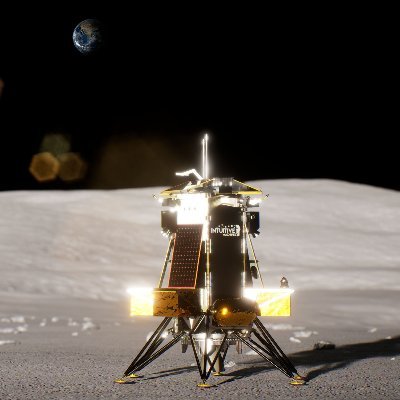
Tugs will enable 50% more landed mass on the lunar surface compared to sending lunar landers directly on a Trans-Lunar Injection (TLI) trajectory. The general concept is straightforward: a tug and lunar lander are launched together as a stack into Low Earth Orbit (LEO). The current Falcon Heavy limit in partially expendable mode is 57 metric tons (MT), and landed lunar mass scales directly with LEO launch capacity.
Once in orbit, the tug performs TLI and Lunar Orbit Insertion (LOI). After separation, the lander remains in a circular Low Lunar Orbit (LLO) until it is commanded to descend, while the tug executes a Trans-Earth Injection (TEI) and uses aerobraking to reenter LEO.
I also have concepts for a reusable heat shield that would allow the same tug to make multiple round trips between LEO and LLO. This architecture would require on-orbit refueling with liquid hydrogen (LH₂) and a Nuclear Thermal Propulsion (NTP) engine on the tug. I assumed an Isp of 800 s for the tug and 350 s for the lander. All of the required technologies either already exist or are just over the horizon.
Overall, tugs would dramatically accelerate the buildout of lunar infrastructure compared to traditional approaches.
Background:
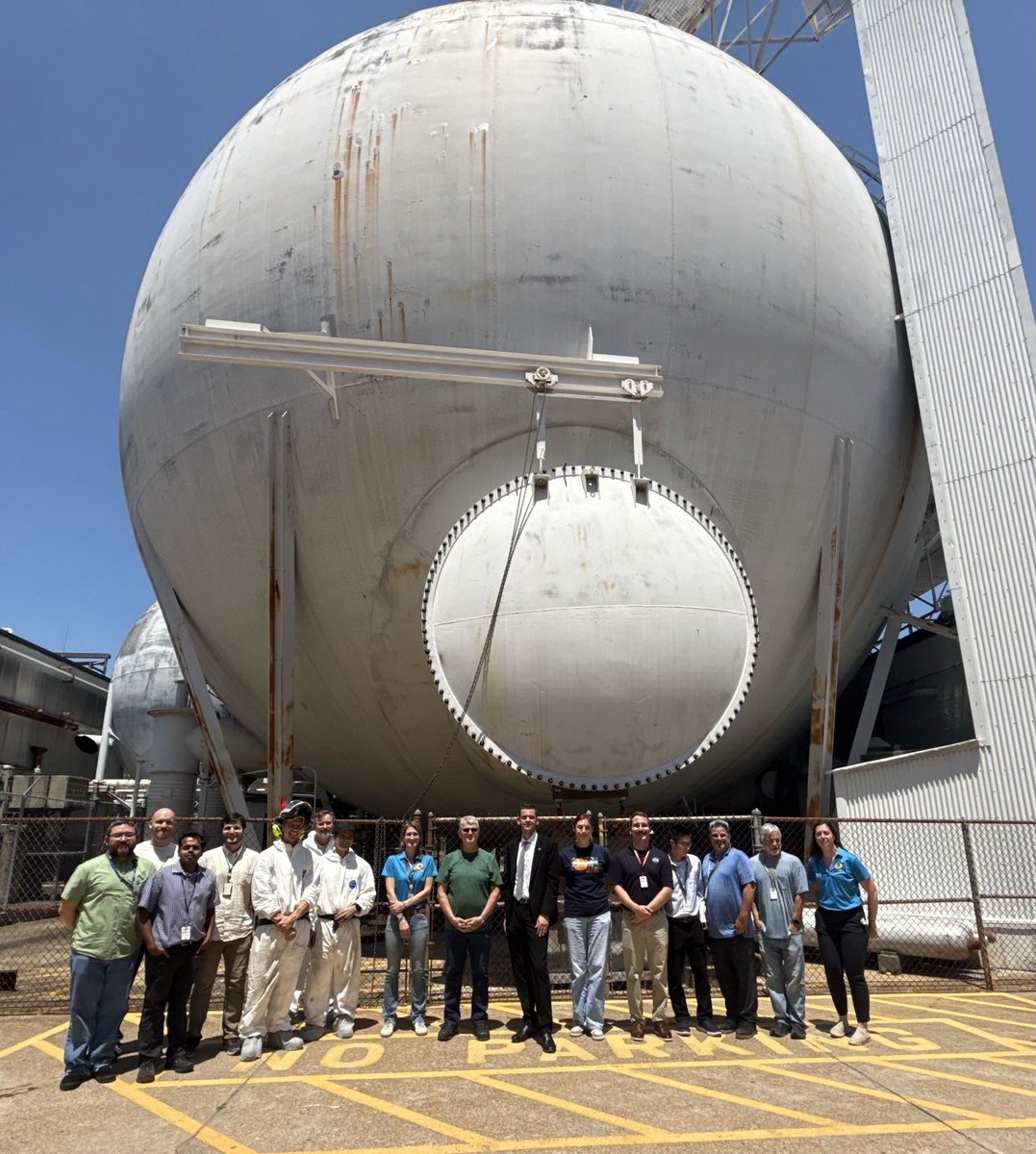
Before Nixon's OMB killed the program in January 1973, @NASA had a nuclear rocket engine research program at Plum Brook Station (PBS) in Sandusky, OH. Their hot-fire test facility was located at the Nuclear Rocket Development Station (NRDS) in Jackass Flats, NV. They learned a lot about nuclear rocket propulsion from 1961 to 1972. They had fires and explosions along the way but managed to build several different engines. These included the Kiwi, Phoebus, and NERVA variants. The best one they produced, IMO, was the NERVA XE. It had an Isp of 811 s, a maximum thrust of 75,000 lbf, and a best thrust-to-weight ratio (TWR) of about four. Project Timberwind / SNTP (Space Nuclear Thermal Propulsion) developed in late 80's and early 90's under the SDI promised a TWR of around thirty. The most recent design, by @DARPA program Demonstration Rocket for Agile Cislunar Operations (DRACO 2020-2025) was just recently cancelled. The TWR for DRACO was much lower than previous designs because they used a significantly lower enrichment of the U235. They improved the materials science but shot themselves in the foot by switching from HEU to LEU. The earlier programs had used HEU and were showing real progress over time.
We gave up too soon on NTP in favor of NEP. NEP just does not have the thrust we need for deep space exploration and colonization!
🇺🇸 🚀 🦾
@NASAAdmin
@CrainTim
@Jason_Lil_Kim
@astrobotic
@blueorigin
@SpaceX


English