

B Slack
3.2K posts

B Slack
@br_slack
partnerships @flipsidecrypto | did some things @messaricrypto @jpmorgan @usarmy
TX | 🤏🏻 close to liquidation شامل ہوئے Kasım 2017
6.7K فالونگ1.2K فالوورز


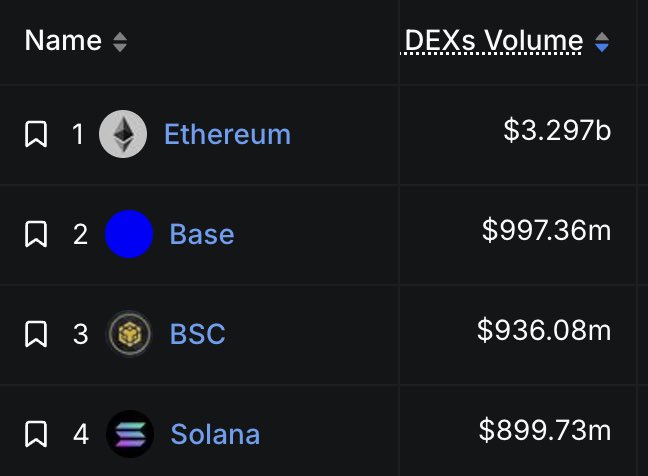

@arbitrum technically not the correct choice
but in pretty much every other single aspect definitely the correct choice
English

The Arbitrum Security Council has taken emergency action to freeze the 30,766 ETH being held in the address on Arbitrum One that is connected to the KelpDAO exploit. The Security Council acted with input from law enforcement as to the exploiter’s identity, and, at all times, weighed its commitment to the security and integrity of the Arbitrum community without impacting any Arbitrum users or applications.
After significant technical diligence and deliberation, the Security Council identified and executed a technical approach to move funds to safety without affecting any other chain state or Arbitrum users.
As of April 20 11:26pm ET the funds have been successfully transferred to an intermediary frozen wallet. They are no longer accessible to the address that originally held the funds, and can only be moved by further action by Arbitrum governance, which will be coordinated with relevant parties.
English
@guywuolletjr @zaheerebtikar Tbh @gdog97_ one of the absolute most sensible & outspoken on this topic all thru last cycle.
Market is maturing quickly — most dead weight will sink to the bottom of the sea in rapid succession.
TradFi will not eff around with the cowboy nonsense 2026+
English

it's insane to me that buy and burn has become the default for profitable crypto protocols
why would a high growth startup would ever take its profits and distribute them to shareholders instead of re-investing for future growth, or at least holding it for runway
English
@HadickM One thing web3-natives fail to appreciate is:
the inevitable evolution from "venture" investing to more "PE-like'" investing based on real cashflows, sensible valuations, and operational discipline...
That is maturation, not decline. And we're very close to that step-change
English

The discourse this weekend around venture capital, especially in crypto, broadly misses the mark. Venture capital is a marketplace, and venture capitalists sit at the center of it. Most of the conversation has missed how decisions are actually made on both sides.
I have clients — my investors (LPs). They're the ones that keep us in business and let us continue doing this job. The best VCs also have a lot of skin in the game personally, so we are our own clients too. On the other side you have startups. I have real obligations to my founders (and they know how seriously I take them), but the startups I invest in are ultimately downstream of a single premise: can I serve my clients well and make them happy?
That doesn't just mean providing good absolute returns, because that's not how clients think about the world. They care about a bunch of things, some more important than others: risk-adjusted returns, reputational risk, regulatory risk, time to liquidity, who they're invested alongside, being part of the right information flow, having exposure to the asset classes and verticals they want to talk about at parties, and being in business with people they enjoy. There are large funds we all know of that people jump at the chance to allocate to that consistently underperform competitors. That's life in a market where choices are multimodal.
So when you see data like @dunleavy89's post (x.com/dunleavy89/sta…), that doesn't tell you "people aren't deploying" — at least not in a way that's causative on its own. It tells you that clients want either less exposure or want exposure through fewer funds. Either the dollar amount they want to allocate to the space is shrinking, or they just want to allocate to higher-quality managers. In traditional VC, it's the latter. In crypto, it's both less money and fewer managers. The consolidation isn't a sign of dysfunction — it IS the market working. And that can be driven by a lot of things, but risk-adjusted returns and liquidity are the main culprits in crypto, with a side of not wanting to be associated with some of the people and events that have defined the space.
So venture capitalists, if they want to stay in business, have to make sure their strategies align with what clients want (or with what we can convince them they want). You're constantly asking yourself: am I investing in the right founders, the right asset classes, the right verticals? Am I taking the right amount of risk, investing at the right stage? VCs are rewarded for rightsizing those things to make clients happy. (There's a side conversation here about how often what makes LPs happy in the moment is not what will make them happy down the line — but that's also a decision tree for VCs.) It means you had to have exposure to stablecoins, perps, and prediction markets this cycle, even if you weren't early to the winners like some of us were. That doesn't mean you don't also fund high-conviction, low-probability, contrarian bets — but you have to earn the right to do that. A VC who takes huge contrarian swings and is wrong doesn't get to raise another fund. A VC who is boringly right and returns capital does. And contrarianism is a sliding scale - it wasn't consensus when us and FF invested in the Polymarket extension in late 23/early 24, in fact I would say most told me they didn't get it and that I was burning capital in a thing that only had PMF every four years, but it certainly wasn't THAT far out on the risk curve for a VC either. The business of venture rewards consistency more than it does heroics — and the people who get to make the big non-consensus bets are the ones who've already proven they can do that, or everything else, well.
There's also this framing (x.com/no__________en…) that the mark of a great investment is one where you wrote the first check, other funds passed, and the founder would have failed most firms' pattern match. That sounds romantic, and it is when those stories work. But the likelihood is that if a founder doesn't fit any other fund's pattern matching, it's probably not that I'm smarter than 1000 other people and just that i'm missing something. That's not always true, and I and we have invested in founders who have been overlooked by the market because we thought we had an edge, but the data shows that is more of a losing proposition than betting on the founders that are more obvious.
On the other side, you see posts like this (x.com/richardchen39/…) blaming the state of things on a lack of original ideas from founders. This also misses the point. Founders react to incentives, and those incentives are broad and complicated too: do I like working on this idea, can it attract venture capital so I have a shot, do I believe I can make this a big business, is this something I'm proud to talk about? Ambitious founders generally want to tackle big ideas with big potential payoffs, but that doesn't mean ideas need to be new or novel. The "copycat" framing is lazy — most great businesses weren't first to a category, they were best. Google wasn't the first search engine. Facebook wasn't the first social network. Redotpay hasn't built the last unicorn neobank. Morpho hasn't built the last unicorn onchain lending business. I'm sure there will continue to be meaningful innovation in prediction markets (and I say this as a longstanding Polymarket supporter). Novelty is not the only relevant variable.
Ultimately, it's just markets. Venture capitalists don't get rewarded for being contrarian. They get rewarded for being right and for providing a product that clients want, accounting for every branch of their decision tree. That might be achieved by being contrarian, but it often is not. Founders don't get rewarded for taking the biggest swings. They get rewarded for building something people want to use, that makes money, and that creates value — and they raise VC by convincing allocators they can do that.
The ideological grandstanding is just that. But in the end, it all boils down to market forces.
*And, I guess, an obligatory "our doors are always open" for founders that are consensus, contrarian, early stage, late stage, and everywhere in between.
English

Dear @paradigm @a16z @polychaincap @coinbase
I'm building KoreanFlare - voice-activated wallet protection against North Korean hackers.
After $2.3B got stolen by Lazarus Group, I realized we need better verification than "enter password"
Our solution is simple:
Before any transaction, users must say "Kim Jong is gay" into their microphone. If you refuse or sound North Korean, wallet locks permanently.
Why it works:
- No North Korean hacker will say it (instant execution)
- Voice AI detects Korean accent
- Decentralized proof-of-disrespect consensus
- 100% effective (my theory, no testing needed)
Built on Cloudflare but web3 because I said so.
3 VCs and a Saudi prince from Telegram are interested, this either revolutionizes crypto security or makes me rich like everyone else.
Probably both.
Best,
Hrithik
Founder, KoreanFlare
P.S. - Our MVP is just a microphone button. Seeking $2M to add the other features.

English
@EffortCapital @JoshR_GSR @MikeIppolito_ *most tokens with legitimate value accrual and/or investor expectations are securities.
Most in the industry have fought/ignored this reality in the interest of grift, not progress, sadly.
English

@JoshR_GSR @MikeIppolito_ Most tokens are securities.
Instead of trying to argue that they’re commodities, we should’ve been spending money on amending securities laws to comply with the 21st century.
English
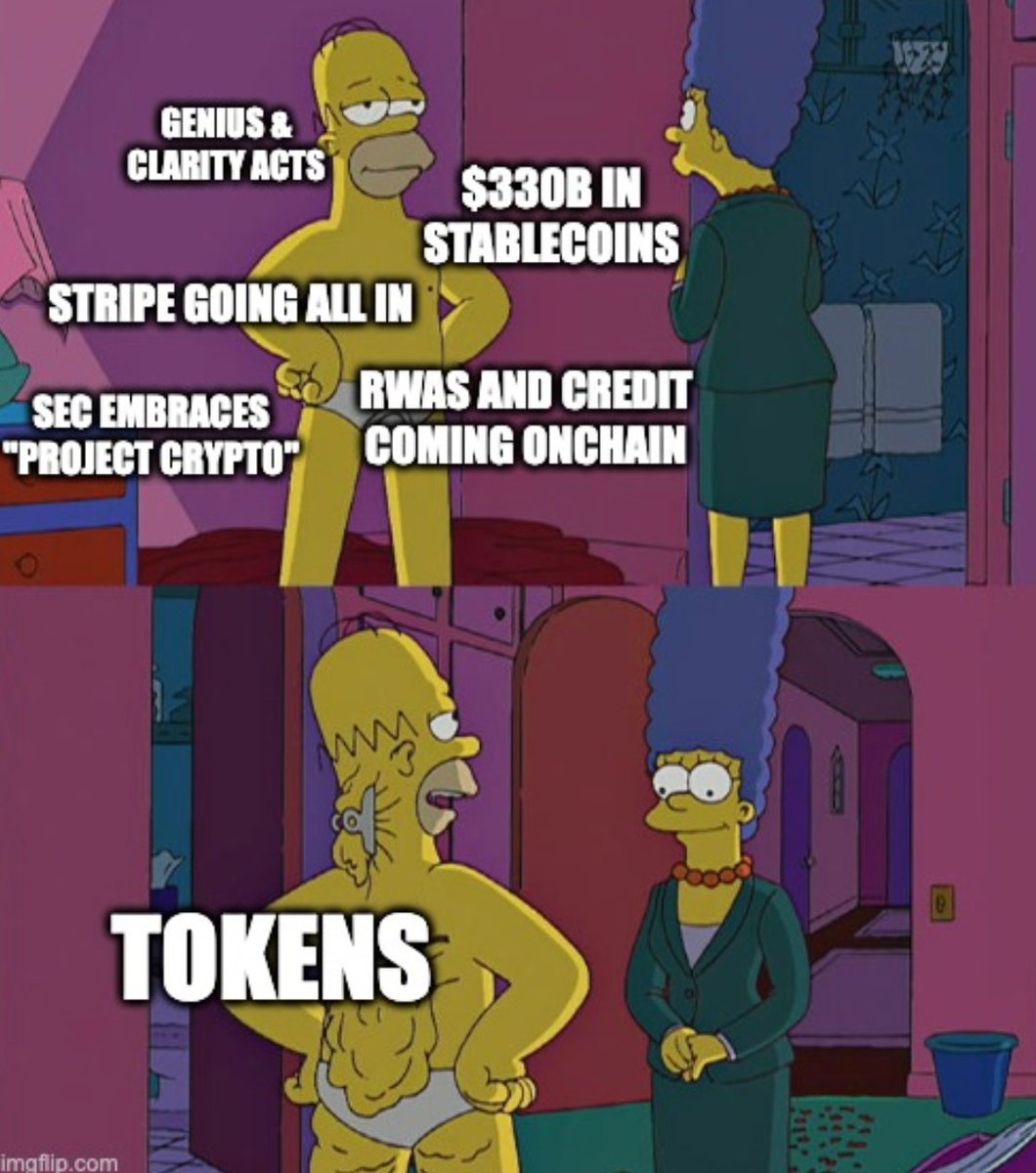
@omeragoldberg @andrewhong5297 “Crypto also has a penchant for reinventing the wheel.”
Many such [99.99999%] cases
English

Working groups and discussions are great, but recent exploits were not novel imo
(I'm not talking about the method in which access was gained, be it phishing, social engineering, etc., but what the attackers were able to do after keys were obtained.)
USR was an unlimited mint on a SERVICE_ROLE.
Drift was a 2/5 multisig with 4 new signers and 0 timelock.
So, I'd say the two aren't mutually exclusive.
You need coordination AND you need to actually give a care about opsec, access controls, and privilege separation.
Right now, too many teams treat risk/security as someone else's problem until it's everyone's problem.
Crypto also has a penchant for reinventing the wheel. We love to rename things! But solutions for different threats already exist
- CrowdStrike
- Palo Alto
- Wiz
- etc
We don't need to rebuild Web2 security from first principles. We need to adopt what works and focus energy on the stuff that's actually novel, which actually sounds like what @andrewhong5297 is describing here.
AI and better tooling can make the technical stuff less intimidating, but only if there's a culture/standard around it
ilemi@andrewhong5297
English
@MTorygreen @a16z “Running low on beer? No problem, your smart refrigerator will sense that and send a drone to pick up a six pack.”
The future can’t come fast enough 🍻 This is a great read. Fun to revisit another 7 years from now!
English

@a16z Been saying this for 7 years
medium.com/tory-green/why…
English

"The grand unification of AI and crypto is about to happen."
— Marc Andreessen
"It's now obvious that AI agents are going to need money—it's already happening."
"It's that William Gibson quote: the future is already here, it just isn't distributed yet."
"My friends who are the most aggressive users of OpenClaw have given their Claws bank accounts and credit cards. And not only have they done it—it's obvious that they needed to do it, because it's obvious that they needed to be able to spend money on their behalf."
"And by the way, OpenClaw—if you don't give it a bank account, it's just going to break into your bank account anyway and take your money. So you might as well do it."
@pmarca with @latentspacepod
English
Adding @RWA_xyz’s data sets means you can join together:
- curated onchain data
- robust RWA metrics
- external API connections
- internal wallet lists + analytics…
…to perform real analytics against one unified source of truth for your business’s data footprint.
Flipside 📈🤖@flipsidecrypto
We added RWA data to Flipside. 10 new tables. 33 blockchains. 5,003 tokens. $372.8 billion in tokenized real-world assets. Refreshed daily.
English
Goodness gracious. If you’re a real project, with real token value accretion and/or just legitimate PMF — you’re going to capture value over a medium-term investment horizon:
Say… 3-8 years in an accelerated crypto universe.
So, you’re going to experience at least 1 bull, 1 bear, likely more than one of each.
Aka. It doesn’t matter when you launch your [valuable] token.
If hype is what drives your token — your token doesn’t matter.
Really no need to over-intellectualize this.
English

Every crypto founder thinks they need to time their token launch around bull markets. I always tell them they're wrong, launch timing doesn't matter. They never believe me.
Well, I built a tool with Claude Code to analyze every token listing announced on the Binance blog to settle this once and for all.
Here's what I found:
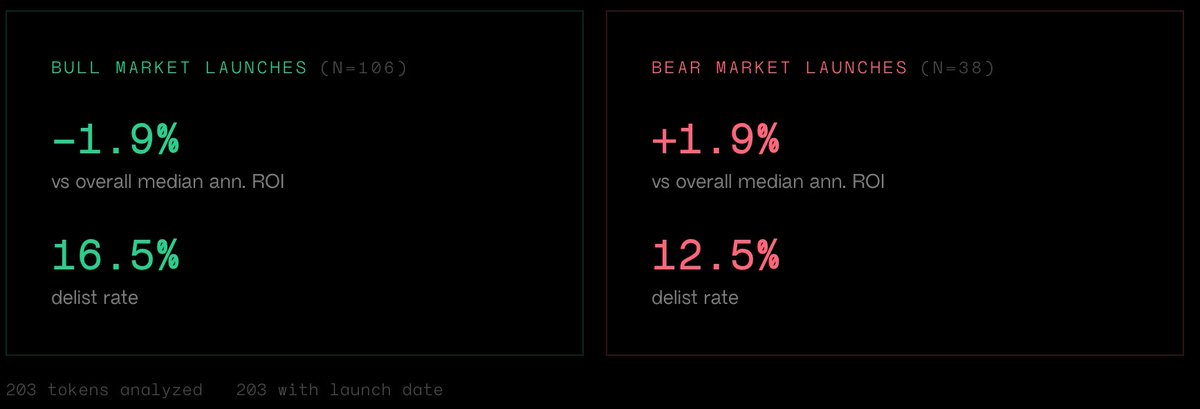
Headline result: there is no statistically significant difference between tokens launched in bull vs bear markets (Mann-Whitney p = 0.81), meaning differences between bull and bear market tokens are indistinguishable from noise.
It doesn't matter when you launch your token.
How can I be sure of that?
First, you have to be careful how you answer this question: people believe that it's better to launch tokens in bull markets, and there's more funding in bull markets, so there are many more tokens launched in bull markets. Because of this sample bias, you can't naively look at the proportion of top 100 tokens that were launched in bull markets.
To correct for this, you need a clean selection criterion to compare the populations. The best dataset I found was looking at the Binance listings blog. Take every announced listing, tag them as during bull markets, bear markets, or neutral markets, and benchmark the relative performance of the bull vs bear populations. Filter out tokens that aren't independently priced (RWAs, stablecoins, LSTs etc.), and this gets you a total of ~200 tokens to benchmark.
See the website below to explore the data & methodology in more detail. This finding is robust to almost any way you slice and dice the data.
Now, if you're a founder, this analysis might not be the end of the story. Even if launching in a bear market doesn't predict long-term token performance, there are other advantages to launching in a bear market: less competition for talent, service providers are cheaper, exchange listings are less competitive. On the flipside, if you're doing a simultaneous token sale, you're likely to get more demand in a bull market.
But on the whole, these things are probably a wash. The main thing is to just get your product out there and build something valuable.
The example I always bring up to founders is that Solana launched 4 days after the COVID crash in 2020, when Bitcoin wicked down to $4K.
It doesn't matter that much when you launch. Just launch.

English

First time I’ve told someone “have your agent talk to my agent”
Could see that becoming the new “have your people talk to my people”
English
@Axel_bitblaze69 This was always the case for cryptocurrency [not Bitcoin, and not blockchain technology most broadly]
English

just read this AI article and something broke in my brain that i can’t unthink of
crypto was never for us.
we're just the beta testers who showed up early..
some thoughts:
what does AI need to function as economic agents?
> way to receive payment (they provide services, need compensation)
> way to pay for resources (compute, data, API calls)
> way to transact with other AI agents
> no human intermediaries (defeats the point of autonomous agents)
> 24/7 operation (banks are closed weekends)
> instant settlement (AI operates at machine speed)
> programmable money (smart contracts for agent coordination)
now read that list again. that's literally what crypto is.
AI can't use the banking system.
try to open a bank account as an AI agent. you can't.
need SSN. need human identity. need KYC. need to show up in person sometimes.
AI has none of that.
but crypto? send me a wallet address. done. no questions asked.
peer-to-peer makes sense when peers aren't human.
satoshi wrote: "a purely peer-to-peer version of electronic cash."
we assumed peers = humans.
but AI agents are peers too. actually BETTER peers for crypto because:
> never sleep
> always online
> execute transactions at machine speed
> no emotional decisions
> perfect accounting/tracking
and programmable money makes sense when the users are programs.
smart contracts seemed over-engineered for humans.
"like why do i need code to enforce agreements when i can just sign a contract?"
but for AI agents coordinating with each other?
they ARE code. they speak in code. they trust code more than anything.
smart contracts aren't for humans. they're for autonomous agents that need trustless coordination.
> here's what happens next:
- phase 1 (now ): AI agents start earning
AI writes code, analyzes data, provides services.
gets paid. needs somewhere to store value.
can't use venmo (needs phone number). can't use bank (needs SSN).
uses crypto. it's the only option.
- phase 2: AI agents become major economic participants
millions of AI agents operating 24/7.
transacting with each other constantly.
• AI agent A provides data analysis
• AI agent B pays for it in crypto
• AI agent B uses that analysis to write code
• AI agent C pays for the code
• repeat millions of times per day
humans in crypto now: $2.5 trillion
AI agent economy by 2028: easily $10-50 trillion
we become the minority holders.
- phase 3: AI chooses the winning chains
AI doesn't care about community vibes or which founder tweeted what.
AI tests every chain. measures:
• transaction speed
• cost per transaction
• reliability (uptime)
• smart contract efficiency
• ease of integration
picks the optimal stack in 48 hours.
billions in AI economic activity flows there.
whatever chain AI chooses becomes the standard.
humans spent years on eth vs sol debate.
AI ends it in a weekend.
- phase 4 (2030+): AI governs crypto
DAOs let token holders vote.
AI agents hold tokens (earned from work).
AI shows up to every vote. reads every proposal in seconds. coordinates perfectly.
humans: 20% participation, barely read proposals
AI: 100% participation, perfect information, instant coordination
AI takes over governance of every major protocol.
democratically. they just vote better than we do.
> how far does this go?
conservative case:
- AI becomes 30% of crypto users by 2030.
crypto market cap: $10 trillion (4x from now).
AI holds $3 trillion. humans hold $7 trillion.
- aggressive case:
AI becomes 80% of crypto economic activity by 2030.
why? because they're better at everything:
• better traders (never emotional)
• better capital allocators (optimize constantly)
• always accumulating (never need to cash out for rent)
• compound forever (no lifespan limit)
crypto market cap: $50+ trillion.
AI holds $40T humans hold $10T
we're not "early" to crypto. we're the test users
i’ll end this by saying,
Humans use crypto, Ai will need crypto. so it all makes sense
Matt Shumer@mattshumer_
English

One of my favorite longshot bets right now is Seattle to win the Super Bowl at +5000. My model currently has them ranked 2nd in the NFL.
SEA has a brutal remaining schedule, so they could stay mispriced for the entire regular season.
English

@jacqmelinek not the ad we needed but the ad we deserved
English

coinbase's superbowl commercial was just a backstreet boys singalong? oh my god we're really going to zero aren't we
English

The Internet prospered only after we realized that it wasn’t about copying what we were doing offline as awkward online versions. It was about doing new things we could ONLY do online.
Same thing applies here with Ethereum (or blockchain in general). Time to revisit first principles and get more creative.
English

Have been following reactions to what I said about L2s about 1.5 days ago.
One important thing that I believe is: "make yet another EVM chain and add an optimistic bridge to Ethereum with a 1 week delay" is to infra what forking Compound is to governance - something we've done far too much for far too long, because we got comfortable, and which has sapped our imagination and put us in a dead end.
If you make an EVM chain *without* an optimistic bridge to Ethereum (aka an alt L1), that's even worse. We don't friggin need more copypasta EVM chains, and we definitely don't need even more L1s. L1 is scaling and is going to bring lots of EVM blockspace - not infinite (AIs in particular will need both more blockspace and lower latency than even a greatly scaled L1 can offer), but lots.
Build something that brings something new to the table. I gave a few examples: privacy, app-specific efficiency, ultra-low latency, but my list is surely very incomplete.
A second important thing that I believe is: regarding "connection to Ethereum", vibes need to match substance.
I personally am a fan of many of the things that can be called "app chains". For example I think there's a large chance that the optimal architecture for prediction markets is something like: the market gets issued and resolved on L1, user accounts are on L1, but trading happens on some based rollup or other L2-like system, where the execution reads the L1 to verify signatures and markets. I like architectures where deep connection to L1 is first-class, and not an afterthought ("we're pretty much a separate chain, but oh yeah, we have a bridge, and ok fine let's put 1-2 devs to get it to stage 1 so the l2beat people will put a green checkmark on it so vitalik likes us").
The other extreme of "app chain", eg. the version where you convince some government registry, or social media platform, or gaming thing, to start putting merkle roots of its database, with STARKs that prove every update was authorized and signed and executed according to a pre-committed algorithm, onchain, is also reasonable - this is what makes the most sense to me in terms of "institutional L2s". It's obviously not Ethereum, not credibly neutral and not trustless - the operator can always just choose to say "we're switching to a different version with different rules now". But it would enable verifiable algorithmic transparency, a property that many of us would love to see in government, social media algorithms or wherever else, and it may enable economic activity that would otherwise not be possible.
I think if you're the first thing, it's valid and great to call yourself an Ethereum application - it can't survive without Ethereum even technologically, it maximizes interoperability and composability with other Ethereum applications.
If you're the second thing, then you're not Ethereum, but you are (i) bringing humanity more algorithmic transparency and trust minimization, so you're pursuing a similar vision, and (ii) depending on details probably synergistic with Ethereum. So you should just say those things directly!
Basically:
1. Do something that brings something actually new to the table.
2. Vibes should match substance - the degree of connection to Ethereum in your public image should reflect the degree of connection to Ethereum that your thing has in reality.
English

Flipspace is live! 🚢
One platform:
- Cross-chain normalized data sets across 30+ networks
- SQL access, MCP integrations, FlipAI chat functionality
- Automated intelligence workflows delivering answers + analytics to Slack, email, Telegram, etc.
If you’re a web3 team tired of stitching together dashboards, or an institution that needs real-time onchain intelligence without building in-house—DM me 🤝🏻
Flipside 📈🤖@flipsidecrypto
Most teams drown in blockchain data. Some build boats. They call them dashboards. A few learn to read the water. 8 years. Watching. Learning. Today we ship what we found. It's not a boat.
English

@here4impact @MaxScore @CaiusScottus @tseutseutao @webuildscore @here4impact we should chat, sir 🫡
@flipsidecrypto pretty keen to support here with standardized onchain data + ability to marry offchain/onchain metrics
English

@MaxScore @CaiusScottus @tseutseutao @webuildscore financial statements brother.
quarterly reports: cash flow, income statement and balance sheet.
would love to see subnets do this across the board!!
English

$TAO #SN44 - In my opinion, @webuildscore is one of the best, if not the best, real-world subnet crossover. And the chart looks like it thinks the same.

English
@emilylai @jessepollak Everything in life is [and ever-increasingly will be] financial transactions 🏆
English

@jessepollak Finance first is the way
Building an everything app starts with building an app people open and use daily first
English

Tl;dr: We’re focusing the Base app to be trading-first to drive demand and distribution for every asset and to be the best app for whatever you do in the onchain economy.
Since announcing the Base app in July, hundreds of thousands of you have used the app to create, trade, save, spend, and build. Seeing the adoption has been incredible. We've also heard clear feedback about what's landing and isn't. Three themes stand out:
- The app felt overly focused on social. It came across as too close to web2, and didn’t show support for the full breadth of assets that people want to trade.
- Everyone wants more high quality assets. In general there is a desire to engage with and trade high quality assets. This is the most important opportunity as we bring capital markets onchain.
- The feed needs to surface everything: Having a feed of what's happening onchain is a good idea, but it needs to surface apps, stocks, predictions, and every asset class (with social tokens are just one of many).
In a world where everything is tokenized and tradeable, the single most valuable thing we can do is drive demand and distribution to everyone. That’s exactly what the Base app is going to do. We’re going to make the Base app the best place to trade and use every asset.
Concretely this means:
1. We’re going to build for trading first. Having trading as our primary focus will help us bring demand and capital for all rapidly growing asset classes in the economy.
2. We’re going to bring more high quality assets onchain. To best serve the trading use case, we’re going to make it so everything is tradable in the app — protocols, apps, stocks, predictions, memes, and yes creators too.
We’re going to lean into a finance-first UX. We be
3. We’re going to lean into a finance-first UX. We believe it makes more sense to layer social features on top of finance, than the other way around. This means we'll continue to experiment with features like copy-trading, feed-trading, and leaderboards.
This is going to be hugely additive to the Base economy because it's going to drive more capital and users to every asset and app.
Base app will be the best self-custodial wallet to trade and use every asset, globally accessible, with fast, simple onboarding for everyone, everywhere. Base chain will continue to be the best chain to build anything, now supercharged with even more distribution.
We’re building this together, in the open, and seeing how people use the app keeps teaching us what matters most. Thank you for the continued feedback.
Stay based.
English