

Random Name
290 posts

I have $3,500 to buy the dip.
Which stocks should I buy?
English
@ritu_twts Yea. Maybe that AI will tell you to use TypeScript...
English

@Yeagermeister0 @LASHYBILLS Did you have the same energy with the German, Polish and Italians 100 years ago? If they don't fly the US flag then they not Americans.
English

@LASHYBILLS If they aren’t speaking English, they aren’t American.
English

A group of Florida men meets every week to crown whose Spanish Timbrado canary sings the best🦜🗣️🎶
English

@JOKAQARMY1 Surveillance state as fuck. Anyone that says US isn't like China is a fucking lier.
English

@Armando46327955 @EricLDaugh Lol... This is the direction Europe is heading. El Salvador will be out of this in 10 years. It takes time.
English


🚨 JUST IN: People are STUNNED upon arriving in Nayib Bukele’s El Salvador, saying it reminds them of EUROPE — what it used to be like
This is what crushing crime with an iron fist looks like! 🇺🇸 🇸🇻
“I had no idea it looked like this. Are you kidding me? I feel like I just showed up in Europe! This place is beautiful, incredible.”
@NayibBukele not only IGNORED the judicial coup to destroy crime but also rapidly beautified his country
So homicides and crime at large PLUMMETED and his residents love it 👏🏻
H/t @JorgeManzaSV
English


@nvk It's ghey because we got Bitcoiners using iOS over @GrapheneOS...
English


@GrapheneOS the question is how we simple users can do to pushback ?
English
Random Name đã retweet

Apple and Google are gradually expanding their use of hardware-based attestation. They're convincing a growing number of services to adopt it. Google's Play Integrity API and Apple's App Attest API are very similar. Apple brought it to the web via Privacy Pass, which Google intends on doing too.
Google's Play Integrity API requires hardware attestation for the strong integrity level and is gradually phasing in requiring it for the more commonly used device integrity level. Apple already has it as a requirement. Over the long term, this will increasingly lock out hardware and OS competition.
The purpose of these systems is disallowing people from using hardware and software not approved by Apple or Google. This is wrongly presented as being a security feature. Banks and government services are the main ones adopting it but Apple and Google are encouraging every service to use it.
Apple's Privacy Pass brought hardware attestation to the web to help with passing captchas on their own hardware. Many people saw that as harmless since few sites would be willing to lock out non-Apple-hardware users. Apple and Google are both likely to bring broader hardware attestation to the web.
Google's reCAPTCHA is planning an approach where they use Privacy Pass on Apple hardware, their own approach on Google Mobile Services Android devices and a QR code scanning system to require an iOS or Google certified Android device for Windows and other systems:
support.google.com/recaptcha/answ…
Banking and government services increasingly require using a mobile app where they can use attestation to force using an Apple or Google approved device and OS. Apple's privacy pass, Google's 'cancelled' Web Environment Integrity and now reCAPTCHA Mobile Verification are bringing this to the web.
Current media coverage for reCAPTCHA Mobile Verification misunderstands it and the impact of it. They're bringing a hardware attestation requirement to Windows, desktop Linux, OpenBSD, etc. by requiring a QR scan from a certified smartphone to pass reCAPTCHA in some cases. They could expand it more.
Control over reCAPTCHA puts Google in a position where they can require having either iOS or a certified Android device to use an enormous amount of the web. Google defines certification requirements for Android which includes forcing bundling Google Chrome, etc. It's enormously anti-competitive.
Google's Play Integrity API bans using GrapheneOS despite it being far more secure than anything they permit. It also bans using any other alternative. This isn't somehow specific to an AOSP-based OS. You can't avoid this by using a mobile OS based on FreeBSD instead. You'll just be more locked out.
Google's Play Integrity API permits devices with no security patches for 10 years. The device integrity level can be bypassed via spoofing but they can detect it quite well and block it once it starts being done at scale. The strong integrity level requires leaked keys from TEEs/SEs to bypass it.
It doesn't provide a useful security feature, but it does lock out competition very well. Services requiring Apple App Attest or Google Play Integrity are primarily helping to lock in Apple and Google having a duopoly for mobile devices. Play Integrity is more relevant due to AOSP being open source.
Governments are increasingly mandating using Apple's App Attest and Google's Play Integrity for not only their own services but also commercial services. The EU is leading the charge of making these requirements for digital payments, ID, age verification, etc. Many EU government apps require them.
Instead of governments stopping Apple and Google from engaging in egregiously anti-competitive behavior, they're directly participating in locking out competition via their own services. Requiring people to have an Apple device or Google-certified Android device is anti-competition, not security.
reCAPTCHA Mobile Verification will currently work with sandboxed Google Play on GrapheneOS but it clearly exists to provide a way for them to start using hardware attestation on systems without it. People without an iOS or Android device will be locked out when this is required even without that.
This isn't about security or any missing functionality. GrapheneOS can be verified via hardware attestation. Google bans using GrapheneOS for Play Integrity because we don't license Google Mobile Services and conform to anti-competitive rules already found to be illegal in South Korea and elsewhere.
Services shouldn't ban people from using arbitrary hardware and operating systems in the first place. Google's security excuse is clearly bogus when they permit devices with no patches for 10 years but not a much more secure OS. It's for enforcing their monopolies via GMS licensing, that's all.
English

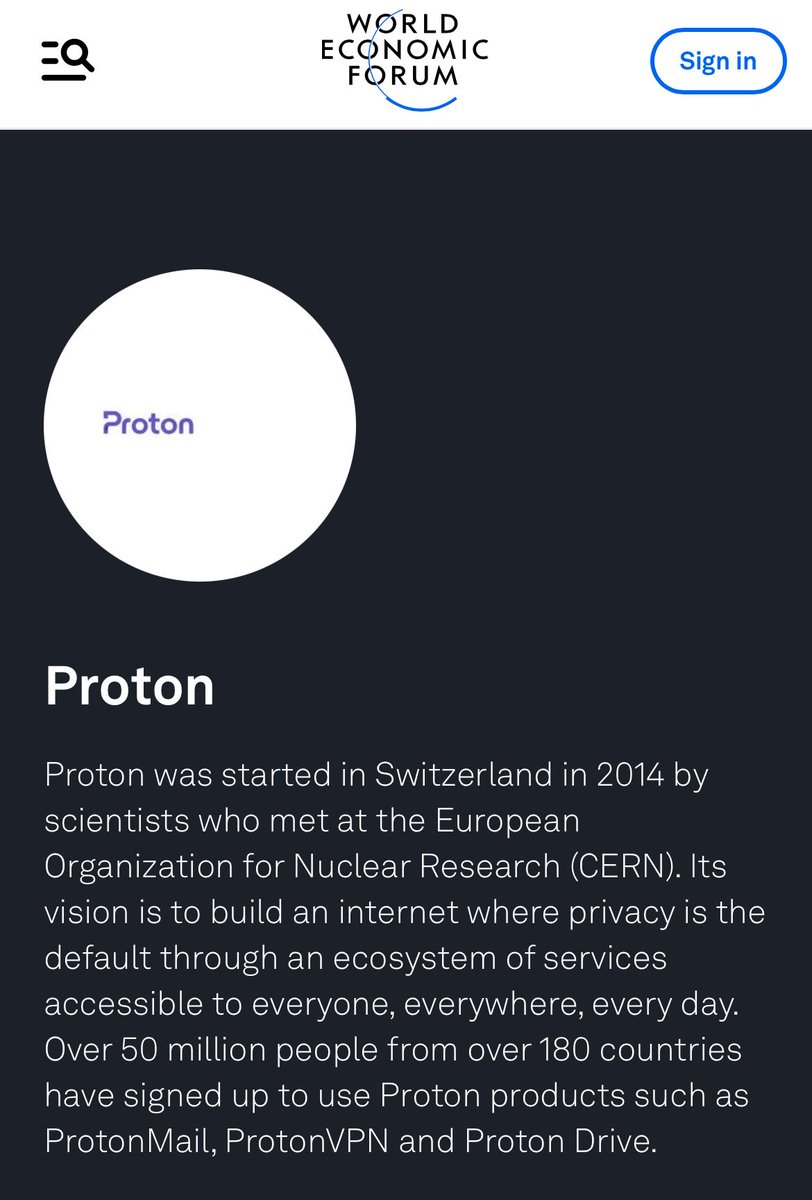
EXCL: Is Proton funded by the World Economic Forum?
English



@w_s_bitcoin @niftynei I can write most features using agents. However, code is still reviewed by humans. Nothing goes to production without human approvers. I don't see that changeing anytime soon.
English

i'm a girl
i've been programming "professionally" for <redacted> years
AMA
English
@w_s_bitcoin I am too greedy. Kept the day job to buy more Bitcoin.
English

I went from full-time programmer to full-time prompt engineer, expected to ship products 10x faster. But my pay didn’t come close to matching that jump in productivity. It didn’t even keep up with inflation.
So I quit and became a stay-at-home dad. That only worked because I had saved in bitcoin over the years. Without bitcoin, I would’ve been stuck on the hamster wheel, expected to run faster than ever.
English

@FluentInFinance I'd love to hear everyone's ideas on how to fix this...
English

"Consumers are literally running out of money" -Kraft Heinz CEO
Nobody needed budgeting apps, roommates, and side hustles 20 years ago.
One job. One income. It was enough.
None of this is sustainable.
English

@ZynxBTC Lmao. Except bitcoin isn’t producing anything, it’s not a utility that has demand through the roof like Sandisk.
If you put $25k in Sandisk last year, you now have $1.25m
If you put $25k into MSTR or Bitcoin, you now have $12,000.
English

SanDisk is something else.
Every time I check $SNDK it is up 10-15% in a single day.
Admittedly, I have missed this one but this performance is what I envision for Bitcoin equities like Strategy and Strive over the next 5 years.
$SNDK is up ~600% since joining the S&P 500 last November.
When $MSTR joins the S&P 500 it is going to be glorious.

English