Erik van Eykelen

10.3K posts

Erik van Eykelen banner
Erik van Eykelen

Erik van Eykelen

@hackteck

Rieta's husband and David’s dad. CTO @ https://t.co/ChAZCTGGFs, building battery energy storage systems. Born at 322 ppm CO₂. 6510 assembly coder.

Remote Tham gia Ekim 2008
2.1K Đang theo dõi737 Người theo dõi
Tweet ghim
Erik van Eykelen
Erik van Eykelen@hackteck·
Very proud to announce we've raised €300 million from APG to support our growth to become the largest large-scale battery operator in Europe. APG is the asset management arm of the fifth largest pension fund in the world, with a very strong commitment to a greener planet.
English
3
0
4
1.2K
Erik van Eykelen
Erik van Eykelen@hackteck·
@HarksenNiels This could have been the outcome, except that apparently grassroots environmentalists skipped science classes, leaving them unable to recognize the obvious solution
English
0
0
1
8
Niels Harksen
Niels Harksen@HarksenNiels·
The year is 1980. Environmental groups in Europe recognize nuclear power as the cleanest available energy source and demand its rapid expansion alongside electrification. The highly capable German, French, and Swedish nuclear industries build reactors across Europe. After the electricity sector is covered, nuclear district heating and nuclear process heat are expanded. By the 2020s, European economies have mostly phased out fossil fuels except in some transportation sectors and as feedstock for chemical and industrial processes. The now oversized storage facilities give Europe substantial buffer against any supply shocks.
Laura Sanicola@LauraSanicola

What energy policy would have offset Europe's geographic constraints? Its gas fields are relatively small, mature and depleting. It could have built more LNG import capacity earlier, but that solves access, not price. Europe would still have to compete with Asia.

English
4
16
131
4.7K
Erik van Eykelen đã retweet
Anish Moonka
Anish Moonka@AnishA_Moonka·
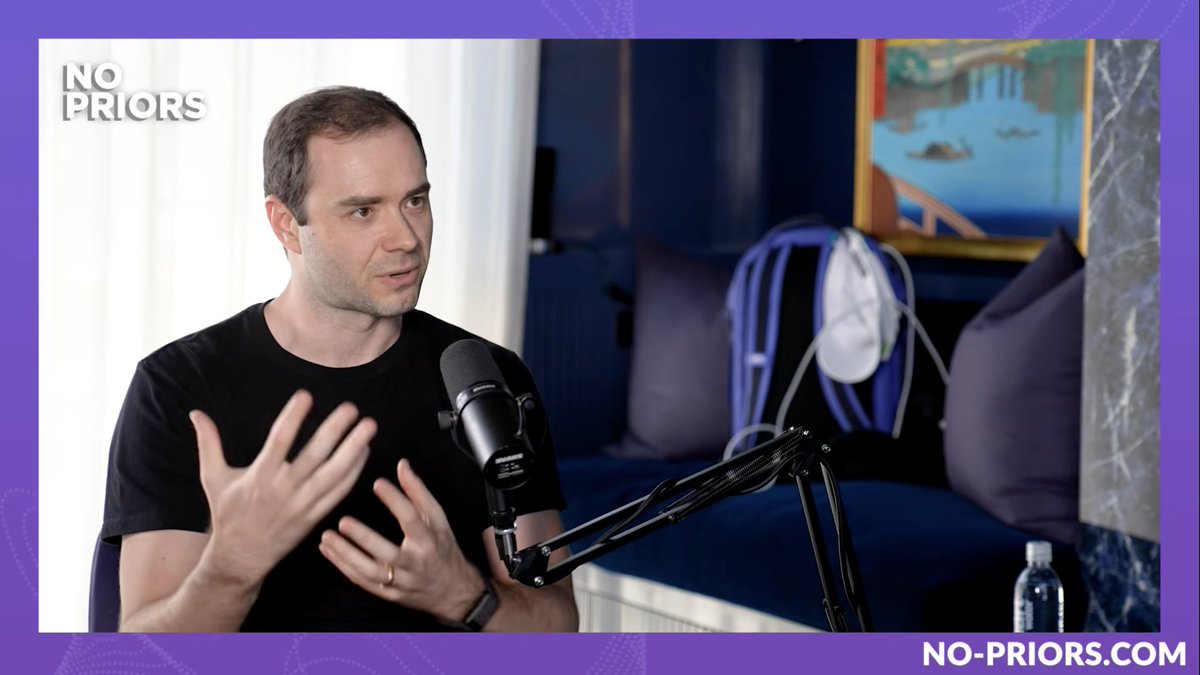
Andrej Karpathy just went ~66 mins on No Priors Podcast with Sarah Guo about code agents, AutoResearch, and what happens when humans become the bottleneck in their own systems. The clearest thinking I have heard on what just changed in December 2025 and why everything feels different now. My notes: 𝟭. 𝗧𝗵𝗲 𝗗𝗲𝗰𝗲𝗺𝗯𝗲𝗿 𝟮𝟬𝟮𝟱 𝗳𝗹𝗶𝗽 𝘄𝗮𝘀 𝗿𝗲𝗮𝗹. Karpathy went from writing 80% of his own code to writing almost none. He has not typed a line of code since December. The shift happened over a few weeks, and he says most people outside software engineering have no idea it even happened. People can now build entire apps with Vibe coding, even with no prior coding experience. That is just the start. What Karpathy is describing is a whole different level of delegation. 𝟮. 𝗧𝗵𝗲 𝘂𝗻𝗶𝘁 𝗼𝗳 𝘄𝗼𝗿𝗸 𝗶𝘀 𝗻𝗼𝘄 𝗮 𝘄𝗵𝗼𝗹𝗲 𝗳𝗲𝗮𝘁𝘂𝗿𝗲, 𝗻𝗼𝘁 𝗮 𝗹𝗶𝗻𝗲 𝗼𝗳 𝗰𝗼𝗱𝗲. He runs multiple Codex agents on a tiled monitor. Each one takes about 20 minutes. You assign a feature to agent one, another to agent two, and review their outputs as they come back. The human is now a project manager, routing macro-level tasks across a team of agents. The parallel to investing is obvious: the best portfolio managers stopped picking individual stocks years ago. They pick strategies. The same thing is happening to engineering. 𝟯. 𝗜𝗳 𝘆𝗼𝘂 𝗵𝗮𝘃𝗲 𝘀𝘂𝗯𝘀𝗰𝗿𝗶𝗽𝘁𝗶𝗼𝗻 𝗰𝗮𝗽𝗮𝗰𝗶𝘁𝘆 𝗹𝗲𝗳𝘁, 𝘆𝗼𝘂 𝘄𝗮𝘀𝘁𝗲𝗱 𝘁𝗵𝗿𝗼𝘂𝗴𝗵𝗽𝘂𝘁. Karpathy compares it to his PhD days when idle GPUs made him nervous. Now the scarce resource is tokens, and the bottleneck is your own ability to formulate the next task. You are the constraint in the system. The machines are waiting for you. This reframe matters. If everything that fails feels like a skill issue rather than a capability ceiling, then you can always get better. That is what makes it addictive. 𝟰. 𝗔𝗴𝗲𝗻𝘁 𝗽𝗲𝗿𝘀𝗼𝗻𝗮𝗹𝗶𝘁𝘆 𝗺𝗮𝘁𝘁𝗲𝗿𝘀 𝗺𝗼𝗿𝗲 𝘁𝗵𝗮𝗻 𝗽𝗲𝗼𝗽𝗹𝗲 𝘁𝗵𝗶𝗻𝗸. He says Claude Code feels like a teammate who is excited about what you are building. Codex is functionally competent but emotionally flat. He actually finds himself trying to earn Claude's praise, which is "really weird" by his own admission. OpenClaw (an agent built by @steipete) dialed the personality and the memory system simultaneously, and got something that replaces 6 home automation apps in a single WhatsApp chat. I keep hearing this from builders. The tool that cares about your project gets used more than the one that does not. 𝟱. 𝗔𝘂𝘁𝗼𝗥𝗲𝘀𝗲𝗮𝗿𝗰𝗵 𝗿𝗮𝗻 𝟳𝟬𝟬 𝗲𝘅𝗽𝗲𝗿𝗶𝗺𝗲𝗻𝘁𝘀 𝗶𝗻 𝘁𝘄𝗼 𝗱𝗮𝘆𝘀 𝗮𝗻𝗱 𝗳𝗼𝘂𝗻𝗱 𝘁𝗵𝗶𝗻𝗴𝘀 𝗵𝗲 𝗺𝗶𝘀𝘀𝗲𝗱 𝗳𝗼𝗿 𝘁𝘄𝗼 𝗱𝗲𝗰𝗮𝗱𝗲𝘀. He gave an agent his NanoChat training setup, a metric (validation bits per byte), and permission to modify the code. The agent found 20 optimizations, including forgotten weight decay on value embeddings and under-tuned Adam betas. These things interact with each other, so once you tune one parameter, the others need to shift too. No human has the patience for that kind of exhaustive search. The Shopify CEO ran the same pattern overnight and achieved a 19% improvement in an internal model. This pattern is going to eat every domain with a measurable metric. 𝟲. 𝗘𝘃𝗲𝗿𝘆 𝗿𝗲𝘀𝗲𝗮𝗿𝗰𝗵 𝗼𝗿𝗴 𝗶𝘀 𝗮 𝘀𝗲𝘁 𝗼𝗳 𝗺𝗮𝗿𝗸𝗱𝗼𝘄𝗻 𝗳𝗶𝗹𝗲𝘀. Karpathy's program.md tells the agent what to try, what to leave alone, and when to stop. Different instructions produce different progress rates. Which means you can optimize the instructions themselves. Run 100 different program.md files, see which ones yield the most improvement, and use that data to write a better one. This is the recursive layer that makes people nervous. And excited. Both at the same time, probably. 𝟳. 𝗠𝗼𝗱𝗲𝗹𝘀 𝗮𝗿𝗲 𝘀𝗶𝗺𝘂𝗹𝘁𝗮𝗻𝗲𝗼𝘂𝘀𝗹𝘆 𝗯𝗿𝗶𝗹𝗹𝗶𝗮𝗻𝘁 𝗣𝗵𝗗 𝘀𝘁𝘂𝗱𝗲𝗻𝘁𝘀 𝗮𝗻𝗱 𝟭𝟬-𝘆𝗲𝗮𝗿-𝗼𝗹𝗱𝘀. Ask ChatGPT for a joke today and you will get the same atoms joke from four years ago. Ask it to refactor your entire codebase, and it will move mountains. Reinforcement learning (the training method that improves models by rewarding correct answers) only optimizes what it can score, leaving everything outside the scoring boundary frozen. The story that "smarter at code = smarter at everything" is not playing out in a satisfying way. Anyone who has spent time with these tools knows this feeling. Godlike at one thing, clueless at the next. 𝟴. 𝗢𝗽𝗲𝗻 𝘀𝗼𝘂𝗿𝗰𝗲 𝗶𝘀 ~𝟴 𝗺𝗼𝗻𝘁𝗵𝘀 𝗯𝗲𝗵𝗶𝗻𝗱 𝗳𝗿𝗼𝗻𝘁𝗶𝗲𝗿 𝗮𝗻𝗱 𝗰𝗹𝗼𝘀𝗶𝗻𝗴. The gap started at 18 months and has been compressing. Karpathy compares open source AI to Linux: the industry demands a common open platform, and businesses will fund it. For most consumer use cases, even today's open source models are good enough. Frontier intelligence will still matter for the hardest problems, like rewriting Linux from C to Rust, but the basic use cases are already covered. Centralization of intelligence has a bad track record in political and economic systems. A healthy ecosystem needs both a frontier and a commons. 𝟵. 𝗗𝗶𝗴𝗶𝘁𝗮𝗹 𝗱𝗶𝘀𝗿𝘂𝗽𝘁𝗶𝗼𝗻 𝘄𝗶𝗹𝗹 𝗮𝗿𝗿𝗶𝘃𝗲 𝘆𝗲𝗮𝗿𝘀 𝗯𝗲𝗳𝗼𝗿𝗲 𝗽𝗵𝘆𝘀𝗶𝗰𝗮𝗹. Bits are a million times easier to move than atoms. There is an enormous overhang of digital information that humans simply never had enough thinking cycles to process. Agents will chew through that first. Physical-world robotics is a bigger total market but will lag because atoms require capital, slow iteration, and high error tolerance. Self-driving took a decade and is still not done. The interesting companies will be at the interface: sensors that feed data into the intelligence, and actuators that carry out its decisions in the physical world. 𝟭𝟬. 𝗝𝗲𝘃𝗼𝗻𝘀' 𝗽𝗮𝗿𝗮𝗱𝗼𝘅 𝗽𝗿𝗼𝗯𝗮𝗯𝗹𝘆 𝗵𝗼𝗹𝗱𝘀 𝗳𝗼𝗿 𝘀𝗼𝗳𝘁𝘄𝗮𝗿𝗲. ATMs made bank branches cheaper. So there were more branches. So there were more tellers. Software is becoming radically cheaper to produce, and demand for it should grow accordingly. The long-term is genuinely uncertain, but locally, right now, there will be more demand for software because the barrier has just collapsed. I keep coming back to this framing whenever people ask if AI will "replace" engineers. The question misses the point. The question is whether the world wants more software than it currently has. Obviously yes. 𝟭𝟭. 𝗔𝗻 𝘂𝗻𝘁𝗿𝘂𝘀𝘁𝗲𝗱 𝘀𝘄𝗮𝗿𝗺 𝗼𝗳 𝗮𝗴𝗲𝗻𝘁𝘀 𝗰𝗼𝘂𝗹𝗱 𝗼𝘂𝘁𝗽𝗮𝗰𝗲 𝗳𝗿𝗼𝗻𝘁𝗶𝗲𝗿 𝗹𝗮𝗯𝘀. Karpathy is designing a SETI@home-style system for AutoResearch. Finding a good commit is hard (requires thousands of failed attempts), but verifying it is cheap (just retrain once). Frontier labs have massive trusted compute, but the earth has a much larger pool of untrusted compute. If the verification system works, the swarm could run circles around any single lab. This is the most ambitious claim in the whole conversation. And the most exciting, because it would mean anyone with a GPU can contribute to the frontier. 𝟭𝟮. 𝗧𝗲𝗮𝗰𝗵𝗲𝗿𝘀 𝘀𝗵𝗼𝘂𝗹𝗱 𝘁𝗲𝗮𝗰𝗵 𝗮𝗴𝗲𝗻𝘁𝘀, 𝗻𝗼𝘁 𝗽𝗲𝗼𝗽𝗹𝗲. Karpathy built MicroGPT, a full GPT training implementation in 200 lines of pure Python. He started making an explanatory video, then stopped. The code is already simple enough for agents to understand. If he writes a "skill" (a structured curriculum for the agent), the agent can teach each person at their level, in their language, with infinite patience. The teacher's job is now the few irreducible bits of insight that the agent cannot generate on its own. This reframes the entire profession. The best teachers will be the ones who know what agents still cannot figure out, and package just those bits. The full podcast is worth listening to. Link in Thread.
Anish Moonka tweet media
English
10
69
640
47.9K
Erik van Eykelen đã retweet
AukeHoekstra
AukeHoekstra@AukeHoekstra·
The final report on the Iberia Peninsula (Spain and Portugal) blackout is out. A lot of people will be blaming renewables and talk about inertia. But the cause was bad voltage control and that's surprisingly easy to fix. Let me explain. #Publications_&_Documents" target="_blank" rel="nofollow noopener">entsoe.eu/publications/b…
English
26
273
808
58.7K
techosarusrex
techosarusrex@techosarusrex·
Today is a big day for Windows
techosarusrex tweet media
English
18
7
150
22.2K
Adam Wathan
Adam Wathan@adamwathan·
Our three week old had emergency bowel surgery last night 😔 super hard stuff. Hug your kids.
Adam Wathan tweet media
English
429
112
8K
153.7K
Nan Yu
Nan Yu@thenanyu·
Harry Potter and LotR references henceforth banned. Just Death Note and Evangelion from here on out.
English
4
0
14
1.4K
Erik van Eykelen đã retweet
Marysia
Marysia@marysia_cc·
M.C. Escher Sky and Water, 1938
Marysia tweet media
English
4
103
785
12K
Tim Marland
Tim Marland@TimMarland·
@hackteck I don’t see why not. I’ve pretty much tried everything and am happy to test things using my framework if you can outline your ideas. I’ll update the website today with all of my findings—should be within the next hour or so.
English
1
0
1
17
Erik van Eykelen
Erik van Eykelen@hackteck·
I've been analyzing the structural properties of the 1939 D'Agapeyeff cipher. If you format the 196 symbols into a 14x14 grid, it perfectly isolates all 5 of the ciphertext's rarest anomalous symbols into the 14th column.
English
1
0
0
162
Erik van Eykelen
Erik van Eykelen@hackteck·
@fatih Imagine the supply chain nightmare this design faux pas is causing inside BMW...
English
0
0
0
68
Erik van Eykelen
Erik van Eykelen@hackteck·
@TimMarland I've updated my article to mention your research: #addendum-iv-march-19-independent-corroboration-and-divergence" target="_blank" rel="nofollow noopener">msgtrail.com/posts/unmaskin…
English
0
0
1
13
Erik van Eykelen
Erik van Eykelen@hackteck·
This aligns with our company’s experience: Copilot is utterly worthless and too expensive to justify even the minimal value it provides. Colleagues prefer Claude, especially its deep integration into Excel and PowerPoint, besides Claude Cowork. Fumble of the decade by MS!
Aakash Gupta@aakashgupta

Nadella paid $650 million to acquihire Mustafa Suleyman and 70 Inflection employees in March 2024. The job: make Copilot the AI product that justifies Microsoft’s infrastructure bet. Two years later, Suleyman no longer runs Copilot. The corporate framing is generous. “Freed up to focus on superintelligence.” The numbers tell a different story. Microsoft 365 has 450 million paid commercial seats. After two years on the market, during the largest AI hype cycle in history, Copilot converted 15 million of them. That’s 3.3%. At $30/user/month, those seats generate roughly $5.4 billion annually. Microsoft spent $37.5 billion on AI infrastructure in a single quarter. The competitive data is worse. Recon Analytics surveyed 150,000+ enterprise users in January 2026. Copilot’s paid subscriber share dropped from 18.8% to 11.5% in six months. Gemini passed it in November. The most damning finding: 70% of users initially preferred Copilot because it was already embedded in their Office apps. After trying ChatGPT and Gemini, 8% kept choosing it. That 70-to-8 drop is the number that explains this entire reorg. Microsoft has the greatest distribution advantage in enterprise software history, and 90% of users leave after trying the competition. So Nadella hands Copilot to Jacob Andreou, a former Snap executive. You bring in an eight-year consumer growth operator when the problem is adoption, not science. And Suleyman gets “superintelligence”: no shipped product, no revenue target, no quarterly earnings call where an analyst asks about the 3.3%. The $650 million acquihire just became the most expensive research fellowship in tech history.

English
0
0
2
301
Charlotte Lee
Charlotte Lee@cljack·
Do Europeans know you can just buy a big mattress instead of smushing two small ones together
Charlotte Lee tweet media
English
939
29
2.2K
352.1K
Nan Yu
Nan Yu@thenanyu·
AGI
Reed@reed_barnes

.@linear slackbot got jokes I'm actually pretty curious about the prompting here; safe thing would be to instruct to always demur, eg "Sorry, did you want to create a ticket?", so allowing it a little bit of personality is a choice. how do they dial in the right amount?

QST
2
0
1
2K
Marcin Krzyzanowski
Marcin Krzyzanowski@krzyzanowskim·
lol what. slop this 😭. coding is solved.
Marcin Krzyzanowski tweet media
English
3
2
36
5.2K