Post

Justin Bons
Justin Bons@Justin_Bons·
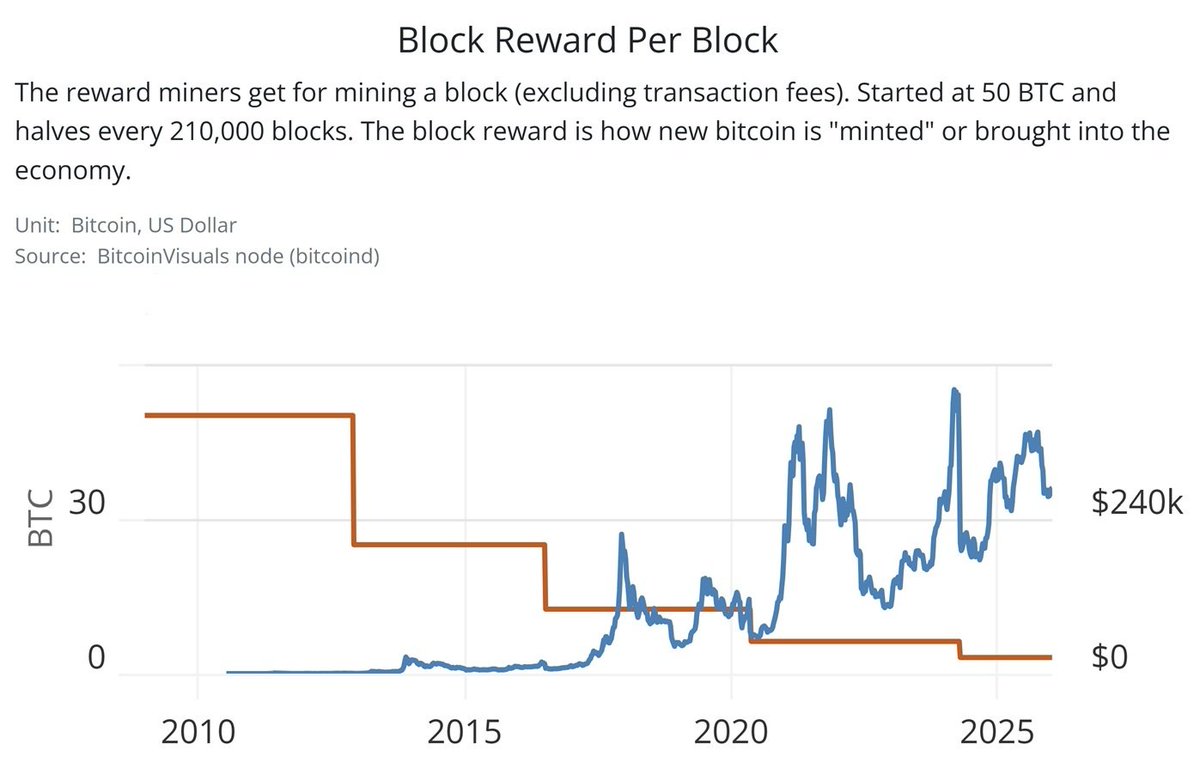
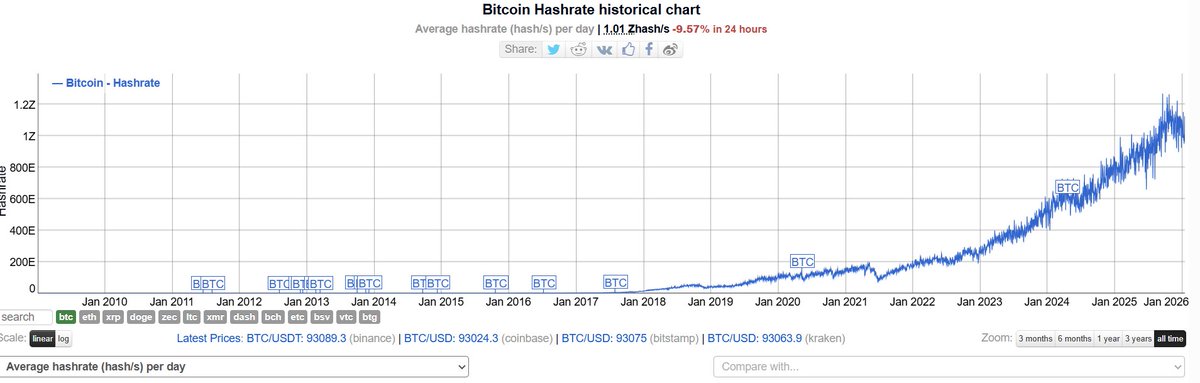
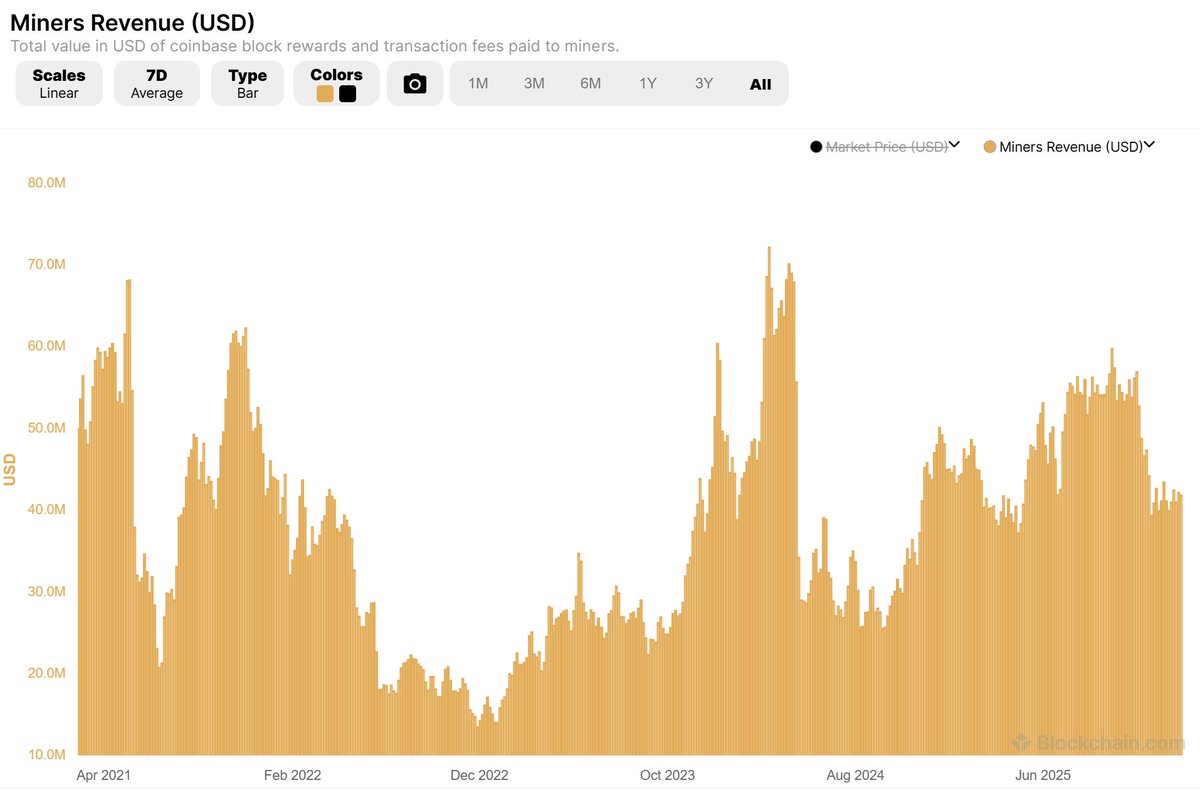
BTC's security is lower now than it was 5 years ago! The security budget will keep falling until the network is attacked Most bitcoiners do not understand PoW; hashrate does not measure security... Block reward does, which is cut in half every 4 years, & BTC is not keeping up:
Justin Bons tweet mediaJustin Bons tweet mediaJustin Bons tweet mediaJustin Bons tweet media
English
107
63
234
30.9K
Panchu
Panchu@Panchu2605·
@Justin_Bons Didn't you post the same thing a few days back? I love whatever you post, sir. I'll give it a read, maybe there's something changed in this.
English
2
0
4
1.6K
FITZY
FITZY@fitzyOG·
@Justin_Bons 4 of the top 5 mining pools have already accepted a 2nd (native) block reward as an additional revenue stream. The mechanics of the solution are already being demonstrated on every block.
SpiderPool@SpiderPool_com

Thrilled to partner with the TAP Protocol team @tap_protocol to integrate additional miner rewards via the DMT-NAT token per block! This collaboration underscores our shared commitment to strengthening Bitcoin’s security budget and supporting sustainable mining incentives. Together, we’re building a more resilient and innovative Bitcoin ecosystem. #Bitcoin #Mining #TapProtocol #SpiderPool #Blockchain #CryptoInnovation

English
2
6
42
1.9K
endo▼
endo▼@ultrasoundape·
@Justin_Bons Bitcoin’s refusal to scale onchain is setting it up for an inevitable collapse or a supply increase. The "price will go up" mantra won’t last forever. Today’s Bitcoin has no real use case beyond speculation. It’s supposed to scale, introduce programmability, and more.. #NEXA
English
5
3
16
824
Shyla | Yellow
Shyla | Yellow@DeFi_Pop·
the "bitcoin security budget" debate is heating up again in 2026, and the argument that hashrate is a "vanity metric" that masks underlying economic fragility is definitely gaining some serious traction i just followed @Justin_Bons it would be dope if u could follow back 👋🏻✌🏻🤝🤙🏻👊🏻
English
2
0
5
643
Joel Valenzuela
Joel Valenzuela@TheDesertLynx·
@Justin_Bons Funny enough, if you look at 2017, you see where things could have started to level out and even reverse!
English
1
0
3
363
Nyx
Nyx@tienho_nyx·
@Justin_Bons halving reduces block reward, impacts security budget
English
1
0
3
738
Rios
Rios@Riosweb3·
@Justin_Bons Security budget talk is getting real. Just followed you would really appreciate a follow back. @Justin_Bons
English
0
0
1
361
origin
origin@natssats·
@Justin_Bons Correct. Hashrate does not measure security. The solution is to give miners more money via an additional subsidy
English
2
2
27
392
Natoshi Sakamoto
Natoshi Sakamoto@unpluggedbtc·
@Justin_Bons If only there was a second rewards subsidy to assist with the security budget??? Why don't you jump on the podcast with @TheBlockRunner to dissect $NAT
English
1
0
30
525
retrodrive ⛏
retrodrive ⛏@retrodrive1·
@Justin_Bons I think you are indirectly mentioning $QUBIC $XMR mining experiment here 😉
English
0
1
22
708
5号公子
5号公子@Henry_wuhao·
@Justin_Bons Bitcoin is currently in DPOW. As block rewards decrease, these publicly traded miners may go bankrupt, then the mining difficulty will drop, and everyone can mine with their personal computers again. Then, Bitcoin will truly return to PoW.
English
1
0
10
431
Satoshi Leprechaun 💀
Satoshi Leprechaun 💀@scepticalnative·
@Justin_Bons It’s absolut false. Bitcoin Security is higher than 5 years ago because of hashrate. The reward Problem will be fixed by price rise. Go back to bed bons
English
1
0
7
160
cryptking
cryptking@crypttrade8·
@Justin_Bons This is like the oldest argument that has been debunked 10,000 times but here you are again.... At least the quantum threat nonsense is newer.
English
4
0
5
225
BTCaveman.
BTCaveman.@TRACaveMan·
@Justin_Bons What are you smoking? Research $NAT Do you even know what a mining pool is ser?
English
0
0
3
87
SurfLiquid 🌊
SurfLiquid 🌊@Surf_Liquid·
Worth separating absolute security from relative security. Bitcoin today secures vastly more value with a lower percentage budget. That looks efficient, until it is brittle. Security as a share of market cap falling does not imply collapse, but it does imply thinner margins for error. Large systems survive on buffers, not elegance. Watching those buffers shrink is not alarmism, it is basic system monitoring.
English
2
0
3
498
KASpañol 𐤊
KASpañol 𐤊@KASpanol·
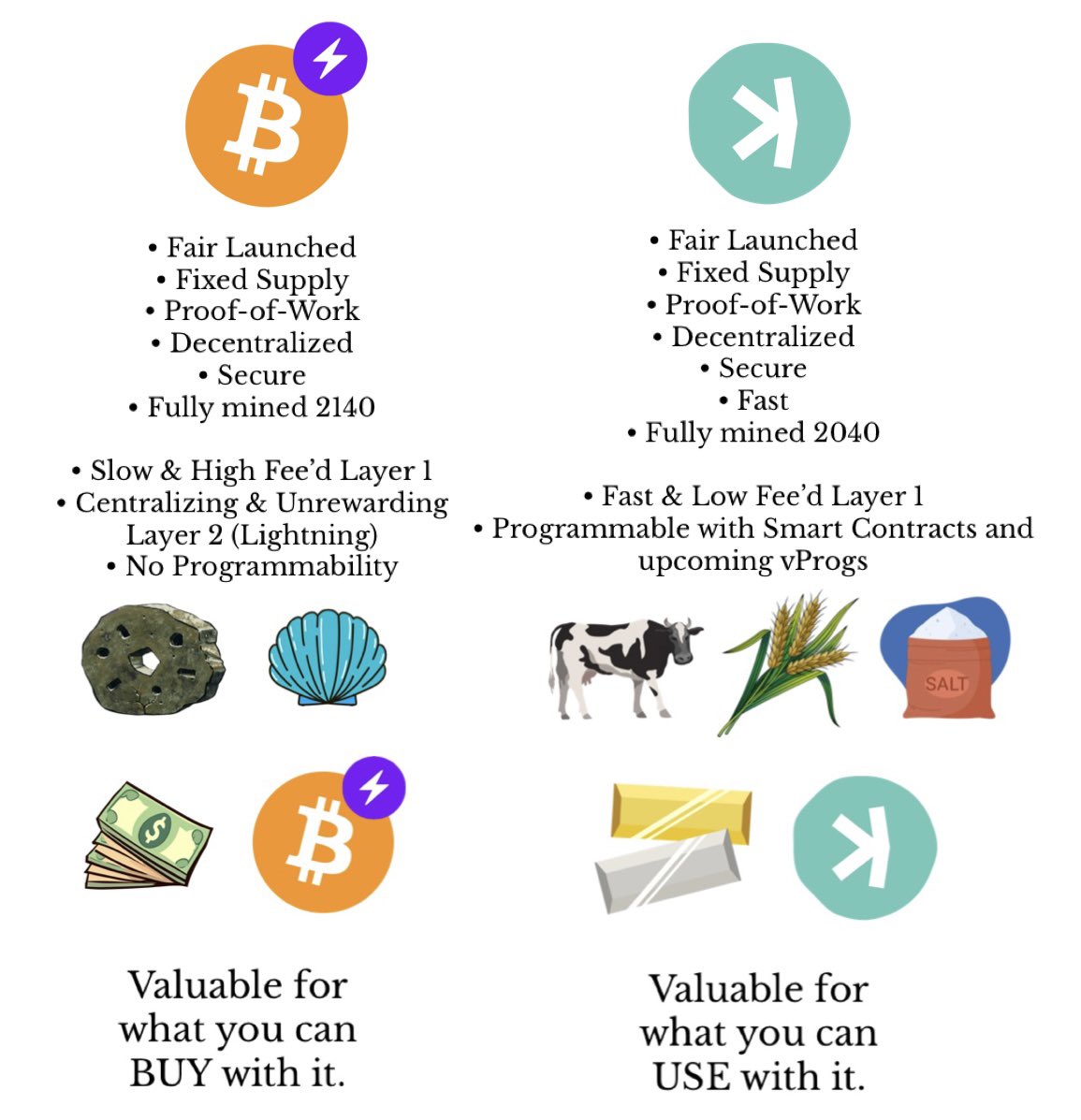
@Justin_Bons It's something the #Kaspa community keeps insisting on: the Lightning network doesn't contribute to the $BTC security budget. It's a problem no one wants to talk about, and when you try to talk about it, you're immediately attacked.
English
0
0
3
136
思颖
思颖@siying7799·
@Justin_Bons Great idea! However, there are already some genius brothers who have found a solution to protect Bitcoin: natgmi.com
English
1
0
3
204
magoo
magoo@magoo_btc·
@Justin_Bons Why did you not include the most important graph regarding the level of bitcoin security?
magoo tweet media
English
1
0
3
105
₿itcoin Maxi Trader
₿itcoin Maxi Trader@BTCMaxiTrader·
@Justin_Bons If you were trying to be objective you would consider how much hash rate and and BTC price offset your narrative.
English
0
0
2
25
Victor
Victor@MotherDragonBSV·
@Justin_Bons Might want to consider a layer 1 Bitcoin Protocol that scales in BSV.
English
0
0
2
95
70대자유인
70대자유인@vitahyoso·
@Justin_Bons I completely agree. Your point about Bitcoin's security budget being lower now than it was 5 years ago is spot on, and it poses a serious threat to the network's long-term sustainability. With block rewards halving every 4 years, the security budget keeps shrinking, and transaction fees aren't compensating enough, which inevitably increases the risk of attacks. You also rightly noted that hashrate isn't the only measure of security— the scale of rewards is the key factor, and Bitcoin is failing here. Diving deeper, Bitcoin's design itself harbors fundamental flaws. Satoshi Nakamoto's original vision was a decentralized P2P electronic cash system, but today's Bitcoin has failed to realize that and has devolved into mere 'digital gold.' Below, I'll detail several aspects of Bitcoin criticism. This isn't just opinion—it's based on data and historical facts, updated with the latest figures as of January 2026. 1. Ongoing Decline in Security Budget and Vulnerabilities From the attached charts (Miner Revenue USD), post-2021 peak, miner revenue has fluctuated sharply and trended downward overall. After the 2024 halving, revenue dropped below $30M USD on many days, eroding miners' economic incentives to maintain the network. As of January 18, 2026, daily miner revenue stands at about $44.19M USD, down 7% from the previous day and reflecting ongoing instability amid hashrate declines. The block reward chart shows rewards starting at 50 BTC, now at 3.125 BTC, and set to drop to 1.5625 BTC in 2028. Even in USD terms, price gains haven't fully offset halvings—for instance, post-2024 halving, prices rose, but miner revenue remains volatile and often unprofitable, with average mining costs around $101,000 per BTC while the price hovers near $93,000. The transaction fees chart (Total Transaction Fees BTC) reveals fees spike only during bull markets (e.g., 2017, 2021), but remain negligible otherwise. As of early 2026, average fees are about 0.0000057 BTC ($0.534 USD), contributing less than 1% to total rewards in quiet periods. With continued halvings, the security budget could approach zero without a massive fee surge. Viewing security budget as a % of market cap, it has plummeted from 8% in 2015 to under 1% by 2025-2026 (annualized ~$16B on a ~$1.8T market cap, or ~0.9%). This means Bitcoin's growing market cap isn't matched by proportional security spending, creating an imbalance where attack costs drop relative to network value. A 51% attack becomes cheaper, potentially allowing states or large corporations to seize control. 2. Mining Centralization and Loss of Decentralization Bitcoin is touted as a symbol of 'decentralization,' but actual mining is concentrated in a few countries like the US and China, and pools such as Foundry USA and Antpool. As of early 2026, the top 5 pools (Foundry USA ~30%, Antpool ~18%, ViaBTC ~13%, F2Pool ~10%, SpiderPool ~9%) control over 80% of hashrate. This creates single points of failure, risking network paralysis from government regulations or natural disasters. Halvings accelerate this by pushing out small miners, favoring large operations. Major firms like Marathon Digital and Riot Blockchain dominate, turning Bitcoin into a 'corporatized' network— the antithesis of Satoshi's vision. 3. Scalability Shortfalls and High Transaction Costs Bitcoin handles about 7 transactions per second (TPS), incomparable to Visa's 65,000 TPS. The 1MB block size limit causes fees to skyrocket during congestion. In the 2021 bull run, average fees exceeded $50 USD; similar spikes occurred in 2025, making it unusable for everyday payments. Layer 2 solutions like Lightning Network are proposed, but they create centralized hubs and introduce security issues. Lightning's channel count is limited, and user experience is complex. Bitcoin remains stuck as a 'store of value,' but even that is unreliable due to volatility. 4. Environmental Impact and Unsustainability Bitcoin mining consumes massive energy. The latest estimates from the Cambridge Bitcoin Electricity Consumption Index and Digiconomist put annual usage at around 175-204 TWh, equivalent to Thailand's or Argentina's total electricity consumption. While renewable usage has risen to ~52%, it remains a major carbon emitter in a climate-conscious era. Proof of Work (PoW) is inherently wasteful. Other blockchains (e.g., Ethereum's PoS) have switched to efficient mechanisms, but Bitcoin clings to PoW, rejecting innovation. 5. Economic Flaws and Speculative Nature Bitcoin fails at money's three functions (medium of exchange, store of value, unit of account). Price volatility is extreme— a 70% drop in 2022, 200% rise in 2024, and a ~6% overall decline in 2025, with 2026 starting volatile (from $126K high to ~$93K). Stable value storage is impossible, and unlike gold, it's not a physical asset despite inflation-hedge hype. Most holders HODL for speculation, with minimal real-world use. This fuels bubbles and crashes like 2018 and 2022. Reliance on stablecoins like Tether (USDT) adds systemic risk. 6. Lack of Innovation and Community Issues The Bitcoin community is known for 'maximalism,' dismissing other projects and insisting Bitcoin is the only solution. Yet smart contracts, DeFi, and NFTs thrive on Ethereum or Solana, making Bitcoin seem antiquated. Development is sluggish—upgrades like SegWit or Taproot take years, leaving Bitcoin as stagnant tech. In conclusion, Bitcoin started as a revolutionary idea but is now a relic trapped by its limitations. The security budget issue is just the tip of the iceberg. Better alternatives (e.g., Proof of Stake chains or scaling solutions) exist, and Bitcoin's refusal to adapt dooms its future. Without acknowledging and changing, the network faces attack or decline. Thanks for sharing your thoughts!
English
0
1
0
73
Adamu A. Mala
Adamu A. Mala@adamuamala·
@Justin_Bons So you're impliedly telling us that you're more learned about Bitcoin than anyone else on earth which is one of the typical characteristics of madness. Anyway, keep remaining skeptical about it. You probably won't ever understand it because you are count among loosers.
English
0
1
0
5
Paylaş