Alula Frezghi

3.6K posts

Alula Frezghi

Alula Frezghi

@AlulaFre

Author, media advocate and a Blogger

انضم Mayıs 2014
819 يتبع748 المتابعون
Alula Frezghi
Alula Frezghi@AlulaFre·
By David Yeh @RedSeaBeacon Introduction States rarely collapse in a single, dramatic moment. They unravel quietly at first through frayed authority, contested legitimacy, and widening fractures until one day the illusion of control gives way to a harsher truth: the center no longer holds. Ethiopia now stands in that dangerous in-between, not yet broken, but no longer whole. What was once presented as a project of renewal under Colonel Abiy Ahmed has hardened into a system increasingly defined by coercion, where the language of reform has been replaced by the logic of force. Yet force, as history repeatedly teaches, cannot stitch together a nation already pulling itself apart. Across the country’s vast and diverse regions, the contradictions are no longer containable. What appears from a distance as a government asserting order is, up close, a state struggling to maintain relevance beyond shrinking pockets of control. The crisis is no longer episodic, no longer regional, and no longer temporary. It is structural, layered, and accelerating an accumulation of unresolved grievances, militarized responses, and eroding trust that now threatens to overwhelm the very foundations of the Ethiopian state. Ethiopia: A Nation on the Brink of Unraveling Ethiopia is no longer merely approaching a breaking point; it is suspended in a state of acute fragility, held together by threads that fray more with each passing moment. At the center of this deepening crises stands Colonel Abiy Ahmed, a figure once synonymous with renewal and reform, but now increasingly associated with coercion and inflexibility. His persistent reliance on militarized solutions, presented as instruments of unity and order, is colliding with a far more intricate and unforgiving reality one defined not by clarity, but by fragmentation, resistance, and erosion of state authority. Across the Amhara Region and Oromia Region, federal forces and their allied units have encountered persistent reversals that expose the limits of centralized power. In Amhara, irregular reckoning forces have demonstrated remarkable resilience, transforming once stable zones into arenas of protracted contestation. In Oromia, the security landscape has become even more volatile. The Oromo Liberation Army has undergone a notable transformation from a loosely organized insurgency into a structured and adaptive force capable of executing coordinated offensives, disrupting logistical arteries, and eroding administrative cohesion. Its expansion is not incidental; it is rooted in enduring grievances tied to political exclusion, contested identity, and unfulfilled promises of autonomy. Simultaneously, the unresolved tensions in Tigray continue to loom ominously over the national landscape. While open warfare has subsided, the absence of a comprehensive political settlement has preserved a volatile equilibrium. Questions surrounding territorial sovereignty, governance legitimacy, and post conflict accountability remain unsettled, creating a system in which instability can reemerge with little provocation. The scars of war remain visible, and the silence that has replaced open conflict is neither stable nor reassuring, it is merely ReadMore @RedSeaBeacon @hawelti @Sudan #Djibouti #Somalia #Egypt #SaudiArabia #Turkey #Qatar #UAE @EmbassyEritrea @hadnetkeleta @SirakBahlbi @EliasAmare @Ghidewon @Yehdavid @GhideonMusa @SharronYemane @PMEthiopia @MFAEthiopia @MOFAEGYPT @AfricanUnion @antonioguterres @cnni @AJEnglish @BBCWorld @Reuters @AFP @AlAhramWeekly @FT @latimes @nytimes @BBCWorld @AlJazeera @tberhan0437898 @shabait @ERiTV_Official @AmbStesfamariam redseabeacon.com/colonel-abiy-a…
Alula Frezghi tweet media
English
0
8
12
141
Alula Frezghi
Alula Frezghi@AlulaFre·
Eritrea and Red Sea: Littoral States, Not Foreign Fleets March 24, 2026 By Debessai Tsegai @RedSeaBeacon The Red Sea is not merely a waterway. It is one of the world’s most indispensable arteries, a narrow corridor through which continents connect, economies flow, and global stability quietly depends. From antiquity to the present, it has carried the weight of civilizations, commerce, and strategic power. Today, as a significant share of global trade and energy supplies passes through its waters, its importance has only intensified. Yet with that importance comes persistent danger: external rivalries, militarization, and competing ambitions that threaten to transform a historic bridge of exchange into a theater of confrontation. It is within this volatile landscape that Eritrea’s role must be properly understood, not as an incidental coastal state, but as a decisive stabilizing force. Stretching along more than 1,200 kilometers of Red Sea coastline and anchored by strategic nodes such as Massawa, Assab, and the Dahlak Archipelago, Eritrea occupies a commanding geographic position. But its true significance lies not in geography alone. It lies in policy, principle, and discipline. Eritrea has pursued a consistent path: peace, self-reliance, and independence from external dictates. In a region where many states have been drawn into dependency or reduced to arenas for proxy competition, Eritrea has charted a different course, one that rejects alignment with foreign agendas and insists on sovereign decision-making. This is not abstraction; it is a strategic posture that has had concrete consequences for the Red Sea. Eritrea’s presence has contributed to maintaining the neutrality of its maritime zone, ensuring that its waters are not converted into extensions of external conflicts or militarized corridors serving distant powers. At the heart of Eritrea’s position is a principle both simple and profound: the security of the Red Sea must be the sole responsibility of its littoral states. Those who live on its shores, whose histories are tied to it, and whose futures depend on its stability, are the only legitimate custodians of its security. External powers no matter how powerful do not anchor their lives in these waters. Their presence, often justified in the language of “security” or “stability,” has historically introduced competition, distortion, and escalation rather than balance. The Red Sea does not need more foreign fleets, more bases, or more geopolitical gamesmanship. It needs restraint. It needs ownership by those to whom it belongs. ReadMore @RedSeaBeacon @hawelti @Sudan #Djibouti #Somalia #Egypt #SaudiArabia #Turkey #Qatar #UAE @EmbassyEritrea @hadnetkeleta @SirakBahlbi @EliasAmare @Ghidewon @Yehdavid @GhideonMusa @SharronYemane @PMEthiopia @MFAEthiopia @MOFAEGYPT @AfricanUnion @antonioguterres @cnni @AJEnglish @BBCWorld @Reuters @AFP @AlAhramWeekly @FT @latimes @nytimes @BBCWorld @AlJazeera @tberhan0437898 @shabait @AmbStesfamariam redseabeacon.com/eritrea-and-re…
Alula Frezghi tweet media
English
1
17
23
213
Alula Frezghi
Alula Frezghi@AlulaFre·
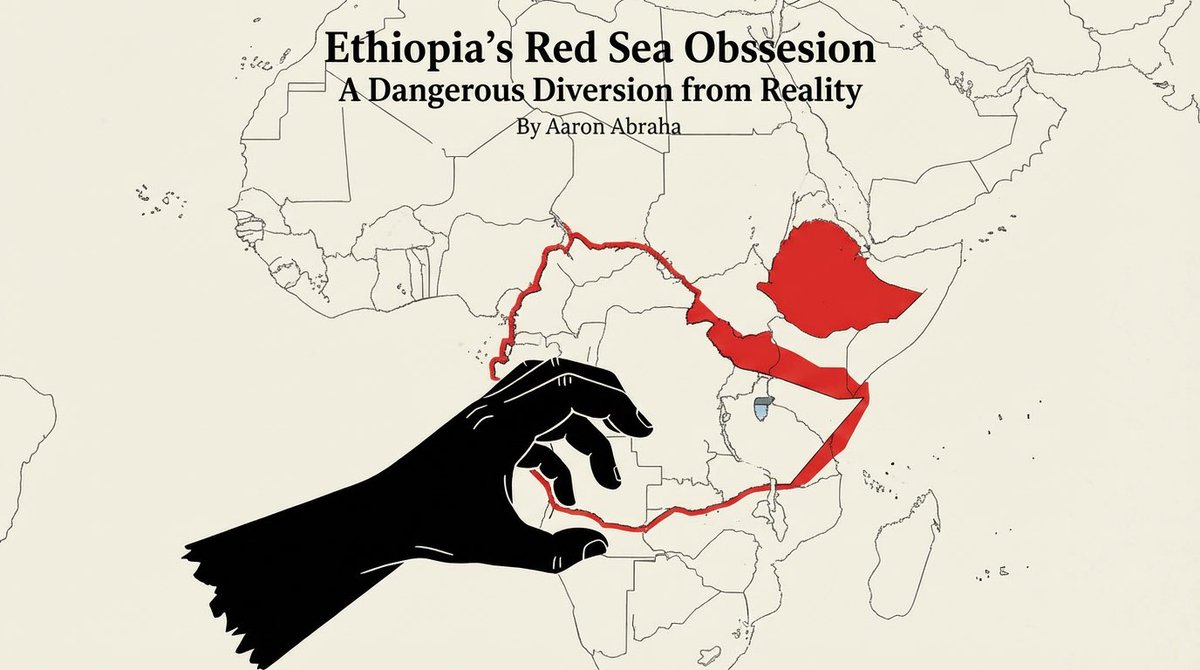
Ethiopia’s Red Sea Obsession: A Dangerous Diversion from Reality March 24, 2026 By Aaron Abraha @RedSeaBeacon In September 2025, Ethiopian Prime Minister Abiy Ahmed stood before his people and declared that losing access to the Red Sea after Eritrea’s independence was a “mistake that will be corrected.” The statement sent shockwaves through the Horn of Africa. Eritrea’s Information Minister Yemane Gebremeskel responded swiftly, calling it “reckless saber-rattling” and a “disdainful distortion of Eritrean history.” What Abiy framed as a correction of historical injustice, Asmara understandably interpreted as a threat to its sovereignty and potentially, a prelude to war. But beneath the nationalist rhetoric lies a more troubling reality: Ethiopia’s Red Sea fixation appears less about genuine economic necessity and more about political theater designed to distract from mounting domestic crises. The Economic Case: Real, But Exaggerated There is no denying Ethiopia’s legitimate grievance. As Africa’s most populous landlocked nation “127 million “people and growing the country pays an estimated $1.5 to $2 billion annually in port fees to Djibouti. This represents nearly one-third of Ethiopia’s export revenue. Over 90% of Ethiopian trade flows through a single port controlled by a neighbor whose strategic leverage grows with every passing year. From this perspective, sea access is not a luxury but a strategic imperative. Yet the government’s framing of this issue has shifted dramatically from pragmatic to provocative. Where earlier discussions emphasized commercial arrangements and regional cooperation, Abiy’s recent rhetoric has embraced historical revisionism and thinly veiled threats. The Ethiopian National Defense Force (ENDF) has gone so far as to describe denial of Red Sea access as “banditry”language that transforms a diplomatic dispute into a casus belli. This escalation is particularly puzzling given that Ethiopia had a viable alternative within reach. The January 2024 Memorandum of Understanding with Somaliland offered access to Berbera port in exchange for recognition,a controversial but potentially transformative arrangement. Yet the deal collapsed, reportedly because Ethiopia failed to make timely payments or move implementation forward. Having squandered a diplomatic opening, Addis Ababa now appears determined to achieve through confrontation what it could not secure through negotiation. ReadMore @RedSeaBeacon @hawelti @Sudan #Djibouti #Somalia #Egypt #SaudiArabia #Turkey #Qatar #UAE @EmbassyEritrea @hadnetkeleta @SirakBahlbi @EliasAmare @Ghidewon @Yehdavid @GhideonMusa @SharronYemane @PMEthiopia @MFAEthiopia @MOFAEGYPT @AfricanUnion @antonioguterres @cnni @AJEnglish @BBCWorld @Reuters @AFP @AlAhramWeekly @FT @latimes @nytimes @BBCWorld @AlJazeera @tberhan0437898 @shabait redseabeacon.com/ethiopias-red-…
Alula Frezghi tweet media
English
1
14
16
277
Alula Frezghi أُعيد تغريده
Alula Frezghi
Alula Frezghi@AlulaFre·
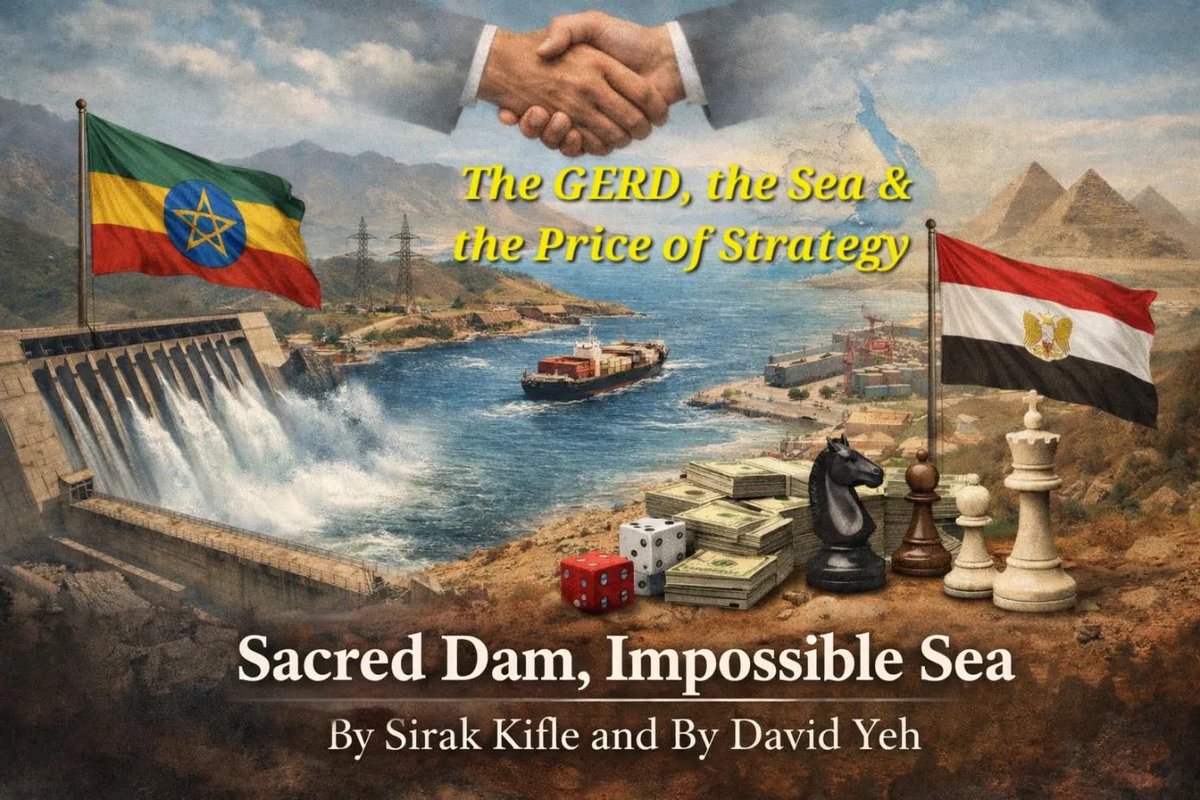
By Sirak Kifle and David Yeh @RedSeaBeacon A few weeks ago, Ethiopia’s ruling Prosperity Party floated what it likely believed was a “clever” geopolitical bargain. The idea was simple: Ethiopia might show flexibility regarding the Grand Ethiopian Renaissance Dam if Egypt supported Ethiopia’s long standing ambition to gain access to the sea. It may have sounded strategic to those who proposed it. Instead, Egypt responded in the simplest and most effective way possible. Cairo allowed the rumor to circulate publicly, letting analysts and observers discuss it openly. Only after the idea had spread did Egypt respond calmly that Ethiopia gaining access to the Red Sea was unthinkable and unattainable. With that statement, Egypt did two things at once. It dismissed the fantasy and exposed the bargaining attempt behind it. The problem for Ethiopia was not simply that the proposal was rejected. The deeper problem was the message it exposed. For more than a decade, the Grand Ethiopian Renaissance Dam (GERD) had been portrayed inside Ethiopia as something almost sacred, beyond negotiation, beyond compromise, beyond politics. Built on the Blue Nile, the dam was presented as a symbol of sovereignty and national dignity. Ethiopian leaders insisted that decisions about filling and operating it were matters of unilateral sovereign right, not subjects for bargaining with outsiders. Citizens were urged to purchase bonds to finance the project, and the government wrapped the dam in the language of survival, pride, and national destiny. The message was unmistakable: the dam was untouchable. Yet the moment reports surfaced that Ethiopia might consider trading flexibility on the GERD in exchange for geopolitical concessions, that carefully cultivated narrative collapsed under its own weight. What had been proclaimed as sacred suddenly appeared negotiable. What had been framed as a sovereign principle began to look like a transactional asset. The contradiction revealed a striking double standard: a government that demands absolute respect for its own “non-negotiable” projects while simultaneously exploring ways to turn them into leverage when it suits its interests. Once leaders signal that something they long declared untouchable can be used in political bargaining, it ceases to be sacred. It becomes a chip on the negotiating table and exposes the hollowness of the rhetoric that once surrounded it. At the same time, Ethiopia’s aspiration for access to the sea must be viewed within its proper historical context. When Eritrea achieved independence in 1991, Ethiopia lost the Red Sea coastline that it had annexed in 1962 in violation of international agreements governing the Eritrean federation. For several years after Eritrea’s independence, Ethiopia continued to enjoy full and unhindered commercial access to the ports of Massawa and Assab. This arrangement lasted until April 1998, one month before Ethiopia launched its war against Eritrea, when the Ethiopian government unilaterally decided to boycott Eritrean ports. ReadMore @RedSeaBeacon @hawelti @Sudan #Djibouti #Somalia #Egypt #SaudiArabia #Turkey #Qatar #UAE @shabait @EmbassyEritrea @hadnetkeleta @SirakBahlbi @EliasAmare @AJEnglish @Ghidewon @Yehdavid @GhideonMusa @SharronYemane @PMEthiopia @MFAEthiopia @MofaSudan @MOFASomalia @MOFAEGYPT @AfricanUnion @IGADsecretariat @antonioguterres @cnni @AJEnglish @BBCWorld @Reuters @AFP @AlAhramWeekly @FT @latimes @nytimes @BBCWorld @AlJazeera @tberhan0437898 @ERiTV_Official @shabait @HornPolitics @TewerwariE @tewerwari_1 @AmbStesfamariam redseabeacon.com/the-gerd-as-ba…
Alula Frezghi tweet media
English
1
36
49
588
Alula Frezghi أُعيد تغريده
Mick Mechanics
Mick Mechanics@MickMechanics·
This ICJ case is a shakedown, plain and simple. Nice graphics though, shame about the facts.
Alula Frezghi@AlulaFre

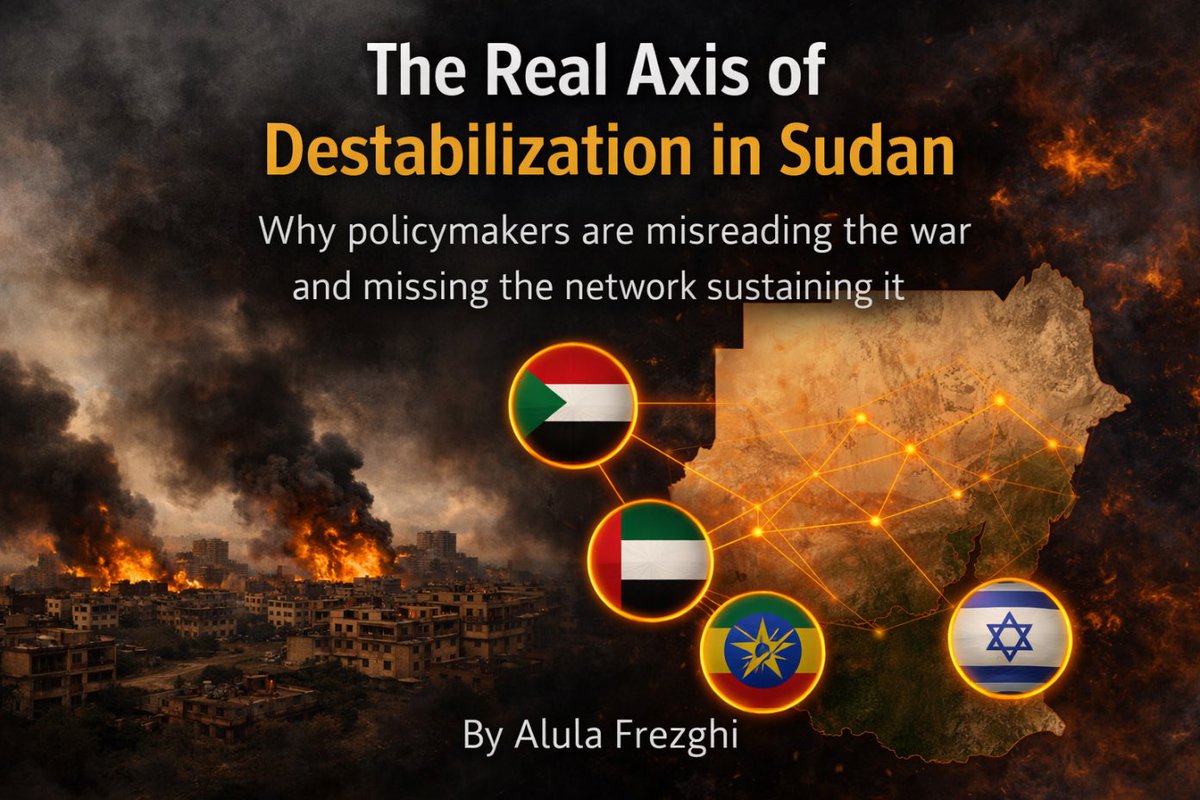
The Real Axis of Destabilization in Sudan March 24, 2026 Why policymakers are misreading the war and missing the network sustaining it By Alula Frezghi @RedSeaBeacon Sudan’s war is being decided less on the battlefield than in the airspace corridors and logistics hubs that sustain it. As diplomats debate ceasefires and humanitarian access, a parallel system of cargo flights, overland transfers, and deniable intermediaries continues to operate with relative impunity quietly determining the balance of power. This is not simply a conflict of rival generals. It is a supply-driven war, shaped by external networks that have adapted faster than the policies designed to constrain them. At the center of this system is a reconfiguring supply architecture supporting the Rapid Support Forces (RSF). This network linked to the United Arab Emirates and routed through multiple regional corridors has allowed the RSF to maintain operational resilience despite battlefield pressure and international scrutiny. Understanding this architecture is now essential to understanding the war itself. Four corridors define this system. The first runs through eastern Libya. Areas under the control of Khalifa Haftar have become a stable logistical platform, with repeated cargo flights into Kufra followed by overland transfers into Darfur. This route combines scale, geographic insulation, and political protection. It is the backbone of RSF resupply, enabling sustained operations in western Sudan. ReadMore @RedSeaBeacon @hawelti @Sudan #Djibouti #Somalia #Egypt #SaudiArabia #Turkey #Qatar #UAE @EmbassyEritrea @hadnetkeleta @SirakBahlbi @EliasAmare @Ghidewon @Yehdavid @GhideonMusa @SharronYemane @PMEthiopia @MFAEthiopia @MOFAEGYPT @AfricanUnion @antonioguterres @cnni @AJEnglish @BBCWorld @Reuters @AFP @AlAhramWeekly @FT @latimes @nytimes @BBCWorld @AlJazeera @tberhan0437898 @shabait @AmbStesfamariam @ERiTV_Official redseabeacon.com/the-real-axis-…

English
0
2
1
42
Alula Frezghi
Alula Frezghi@AlulaFre·
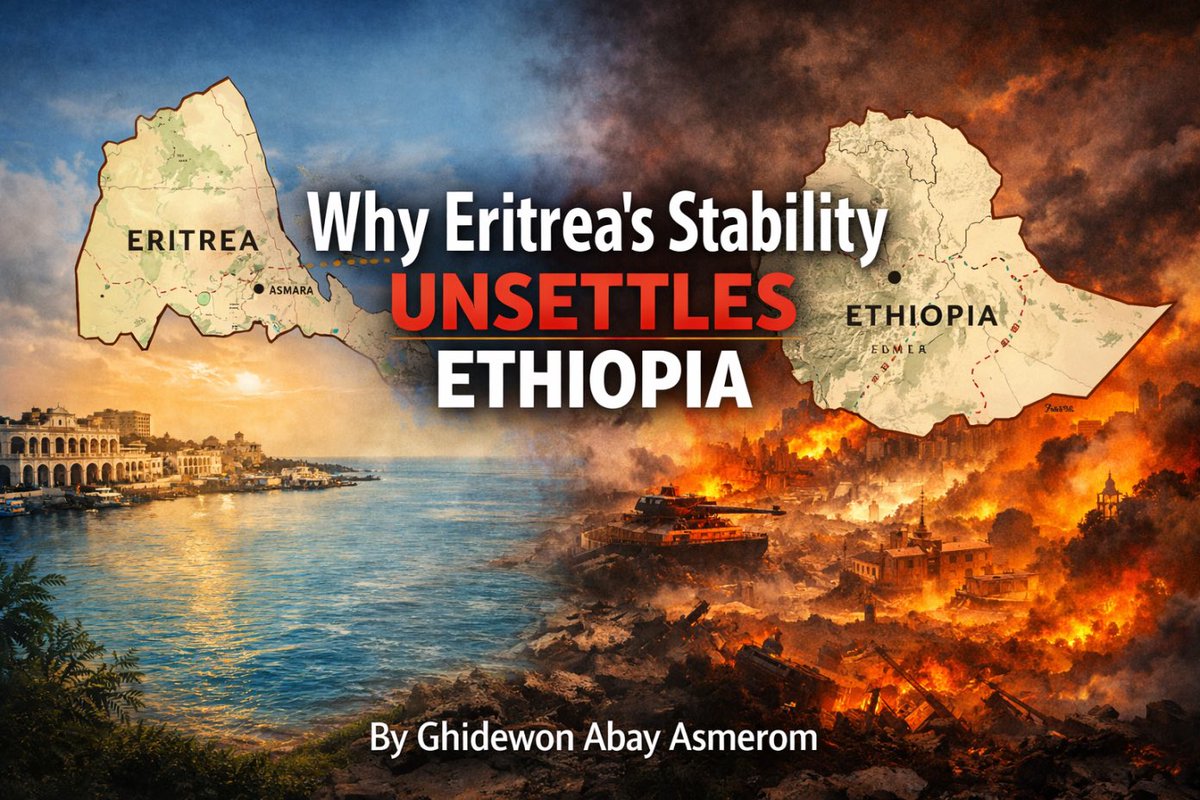
Why Eritrea’s Stability Unsettles Ethiopia March 24, 2026 By Ghidewon Abay Asmerom @RedSeaBeacon There is a pattern that is no longer possible to ignore. Each time Eritrea quietly holds its ground, at peace, cohesive, and charting its own course, the reaction from Ethiopia follows a familiar script. The tone shifts, accusations resurface, and old narratives are repackaged as if they were new. Because what unsettles Ethiopia is not Eritrea’s weakness. It is Eritrea’s resilience. That is the core contradiction. A country weighed down by internal fragmentation, recurring violence, and deepening inequality fixates on a neighbor that has maintained cohesion in one of the most volatile regions in the world. A state where ethnic and religious divisions routinely erupt into conflict lectures a society where those divisions have not been allowed to define the nation. A political system that celebrates skylines while millions struggle looks across the border at a country that has chosen restraint over spectacle, where leadership does not perform prosperity while its people go without. This is not critique. It is discomfort turned into narrative. Eritrea’s model is not loud, but it is consistent, built on self-reliance, discipline, and social balance. It does not depend on borrowed capital or inflated projections. It does not chase validation through display. Its strength is quieter, but more durable. And that contrast is difficult to ignore. Ethiopia has tried to bend Eritrea to its will. When that failed, it turned to war. When war failed, it turned to obstruction. And now, after years of deliberate pressure that constrained Eritrea’s development, it asks why Eritrea did not rise faster. The contradiction speaks for itself. The same logic underpins the recycled claim that Eritrea “failed” to become the “Singapore of Africa.” This is not new insight; it is an old TPLF talking point, now repackaged by the Prosperity Party. It is not analysis. It is messaging. Eritrea did not fail under the weight of ambition. It was forced into a devastating war in 1998 by a state unwilling to accept a sovereign neighbor operating beyond its control. That war was not a detour, it was a defining rupture, costing tens of thousands of lives and reshaping the country’s trajectory. When the war ended, the law was clear. A final and binding ruling awarded Badme to Eritrea. Ethiopia refused to comply, prolonging a “no war, no peace” reality for nearly two decades. A nation held under constant threat cannot be judged as if it developed under normal conditions. To ignore that is not oversight, it is bad faith. For a brief moment, there was hope. Borders reopened, relations warmed, and the region moved toward cooperation. But the shift was short-lived. Old Ethiopian reflexes returned. What followed was not peace, but renewed conflict, first in Oromia, then Tigray, and now Amhara. Violence spread across regions, communities turned against each other, and instability deepened. Today, the consequences are unmistakable. Reports of killings, arrests, displacement, and widespread abuse are no longer exceptional. Entire country has fractured. What was once SNNPR has splintered into multiple states. Authority is uneven, contested, and in many places absent. The forces that should bind the state are weakening, while those pulling it apart are growing stronger. This is not a narrative problem. It is a structural one. ReadMore @RedSeaBeacon @hawelti @Sudan #Djibouti #Somalia #Egypt #SaudiArabia #Turkey #Qatar #UAE @EmbassyEritrea @hadnetkeleta @SirakBahlbi @EliasAmare @Ghidewon @Yehdavid @GhideonMusa @SharronYemane @PMEthiopia @MFAEthiopia @MOFAEGYPT @AfricanUnion @antonioguterres @cnni @AJEnglish @BBCWorld @Reuters @AFP @AlAhramWeekly @FT @latimes @nytimes @BBCWorld @AlJazeera @tberhan0437898 @shabait @ERiTV_Official @AmbStesfamariam redseabeacon.com/why-eritreas-s…
Alula Frezghi tweet media
English
3
37
42
663
Alula Frezghi
Alula Frezghi@AlulaFre·
The Real Axis of Destabilization in Sudan March 24, 2026 Why policymakers are misreading the war and missing the network sustaining it By Alula Frezghi @RedSeaBeacon Sudan’s war is being decided less on the battlefield than in the airspace corridors and logistics hubs that sustain it. As diplomats debate ceasefires and humanitarian access, a parallel system of cargo flights, overland transfers, and deniable intermediaries continues to operate with relative impunity quietly determining the balance of power. This is not simply a conflict of rival generals. It is a supply-driven war, shaped by external networks that have adapted faster than the policies designed to constrain them. At the center of this system is a reconfiguring supply architecture supporting the Rapid Support Forces (RSF). This network linked to the United Arab Emirates and routed through multiple regional corridors has allowed the RSF to maintain operational resilience despite battlefield pressure and international scrutiny. Understanding this architecture is now essential to understanding the war itself. Four corridors define this system. The first runs through eastern Libya. Areas under the control of Khalifa Haftar have become a stable logistical platform, with repeated cargo flights into Kufra followed by overland transfers into Darfur. This route combines scale, geographic insulation, and political protection. It is the backbone of RSF resupply, enabling sustained operations in western Sudan. ReadMore @RedSeaBeacon @hawelti @Sudan #Djibouti #Somalia #Egypt #SaudiArabia #Turkey #Qatar #UAE @EmbassyEritrea @hadnetkeleta @SirakBahlbi @EliasAmare @Ghidewon @Yehdavid @GhideonMusa @SharronYemane @PMEthiopia @MFAEthiopia @MOFAEGYPT @AfricanUnion @antonioguterres @cnni @AJEnglish @BBCWorld @Reuters @AFP @AlAhramWeekly @FT @latimes @nytimes @BBCWorld @AlJazeera @tberhan0437898 @shabait @AmbStesfamariam @ERiTV_Official redseabeacon.com/the-real-axis-…
Alula Frezghi tweet media
English
0
10
12
177
Alula Frezghi
Alula Frezghi@AlulaFre·
Abiy Ahmed’s Blame Game: Eritrea Was Never the Problem, He Was February 5, 2026 By David yeh @RedSeaBeacon The first crack in a political myth rarely comes from an enemy. It comes from an insider, someone who knows where the bodies are buried and who helped build the house in the first place. That moment has now arrived for Abiy Ahmed. His most damning contradiction does not come from foreign critics or opposition figures, but from his own former foreign minister, Gedu Andargachew one of the key architects of the coalition that brought Abiy to power in 2018. Gedu’s message to Abiy is blunt, public, and devastating: you lied. Abiy’s rise was made possible by an extraordinary moment of Oromo–Amhara cooperation, forged to pull Ethiopia back from the brink as protests and repression threatened to tear the state apart under the Tigray People’s Liberation Front–dominated order. Gedu was central to that effort, a stabilizer, a bridge-builder, and a statesman who worked alongside Lemma Megersa to prevent national collapse. That collaboration did not merely elevate Abiy; it saved the country from chaos. And like Lemma before him, Gedu was later discarded once his independence became inconvenient. This is the pattern that now defines Abiy’s rule: allies are useful until they are not; truth is embraced until it becomes a liability. The same leader once hailed as a reformer, peacemaker, and unifier celebrated at home and abroad, crowned with a Nobel Prize now presides over a hollowed-out state where institutions bend to narrative, not accountability. The optimism of 2018 has curdled into fragmentation, war, and exhaustion, while responsibility is endlessly deflected. Nowhere is this more evident than in Abiy’s shifting posture toward Eritrea. Peace and partnership were once paraded as historic achievements and used to legitimize his leadership. Today, those same facts are disowned. Eritrea, once praised as a stabilizing ally, is recast as a villain of convenience blamed for Ethiopia’s internal failures as Abiy’s political fortunes falter. The facts did not change. The storyteller did. Gedu’s rebuke matters precisely because it punctures the illusion. It confirms what many Ethiopians already sense: this is not a leadership anchored in principle, but one addicted to expedient reinvention. Those who helped Abiy ascend, who took risks to steady the nation are sidelined, silenced, Read More @RedSeaBeacon @hawelti @Sudan #Djibouti #Somalia #Egypt #SaudiArabia #Turkey #Qatar #UAE @shabait @EmbassyEritrea @hadnetkeleta @SirakBahlbi @EliasAmare @Ghidewon @Yehdavid @GhideonMusa @PMEthiopia @MFAEthiopia @MofaSudan @MOFASomalia @BBCWorld @Reuters @AFP @AlAhramWeekly @thenation @DailyMonitor @haaretzcom @PressTV @DailySabah @TheDailySomalia @FT @latimes @nytimes @BBCWorld @AlJazeera @tberhan0437898 @YoungPFDJ @YPFDJ @addisstandard @ERiTV_Officia @etv @NeaminZeleke @AmbStesfamariam @tberhan0437898 @PMEthiopia @nytimes @NewYorker @TheAtlantic @AJEnglish @Jerusalem_Post @BostonGlobe @IMFNews redseabeacon.com/abiy-ahmeds-bl…
English
1
22
30
406
Alula Frezghi
Alula Frezghi@AlulaFre·
The tone and clarity of Minister Yemane Gebremeskel’s statement: The notion that Eritrea’s hard-won sovereignty can be retroactively “rescinded” by any external actor is not only legally bankrupt it is morally offensive. Eritrea’s independence was neither gifted nor negotiated in backrooms; it was earned through decades of sacrifice, resilience, and an unyielding commitment to justice. Attempts to reframe Eritrea’s liberation as contingent on Ethiopian “permission” betray a deep ignorance of international law, historical record, and the lived experience of the Eritrean people. These revisionist fantasies peddled by Potemkin pundits and their echo chambers are not academic provocations; they are thinly veiled apologies for colonial violence. Eritrea’s sovereignty is not up for debate. It is a settled reality, anchored in the blood of martyrs and the will of a people who refused to be erased. Those still clinging to imperial nostalgia would do well to confront their own ideological disarray rather than manufacture legal hallucinations. #EritreaPrevails #RedSeaBeacon #HistoricalJustice #NationalErInterest
English
0
0
0
6
Yemane G. Meskel 🇪🇷
Potomkin Party (PP) sponsored/affiliated pundits - Horn Review et el - are indeed a strange breed who can float, with a straight face, outlandish and ludicrous assertions cloaked in "academic" garb. The latest version dwells on "prospects" for Ethiopia to "rescind its Mother State's Permission" and recognition of Eritrea! In the first place, Eritrea's independence was not granted on a "silver platter" by Ethiopia or any other power on earth. Indeed, Eritrea's process of decolonization and inalienable right of independence should have been accomplished in the 1940's in accordance with international law and established norms and practices. But this inalienable right was suppressed to give primacy for, and mollify the "overriding geopolitical interests" of, the US and other powers. In the event, the Eritrean people were compelled to pay a huge sacrifice in Africa's longest war of national liberation to achieve their independence. These are the indelible facts. And for their own sanity, apologists of occupation and colonial rule better grapple with their emotional/moral crises instead of wasting time in an elusive quest for untenable legal conjectures. Eritrea’s Red Sea Sovereignty: An Irrevocable Reality redseabeacon.com/eritreas-red-s… via @Red Sea Beacon
English
12
1.2K
1.3K
61.7K
Alula Frezghi
Alula Frezghi@AlulaFre·
Eritrea’s Paulos Weldehaimanot Elected CECAFA President Eritrea Scores Regional Victory as Paulos Weldehaimanot Elected CECAFA President By Red Sea Beacon Sports Desk @RedSeaBeacon In a development widely viewed as a diplomatic and sporting breakthrough for Eritrea, Paulos Weldehaimanot, president of the Eritrea National Football Federation, has been elected president of the Council for East and Central Africa Football Associations (CECAFA) during the 2026 Elective General Assembly. The assembly, attended by delegates from all 11 CECAFA member nations, including Kenya, Tanzania, Uganda, Burundi, Somalia and others as well as representatives from FIFA and Confederation of African Football, concluded with a rare consensus outcome. Two rival candidates from Uganda and Burundi withdrew their bids before voting, paving the way for Weldehaimanot’s unopposed election to a four-year term. The result places an Eritrean administrator at the helm of one of Africa’s most strategically important regional football bodies for the first time in the country’s history. A Quiet but Significant Win Observers described the election as more than procedural. It signals growing regional trust in Eritrean sports leadership after years of limited international engagement. Rather than a contentious ballot, the withdrawal of competing candidates reflected what delegates characterized as a “unity choice” aimed at stability and institutional reform. That consensus allowed CECAFA to avoid factional disputes and present a united front ahead of major continental competitions. For Eritrea, the moment carries symbolic weight. The country has long been underrepresented in regional sports governance despite its deep football culture and history of producing talented players and coaches. Weldehaimanot’s elevation therefore represents both recognition and responsibility. Platform: Accountability and Growth In his acceptance remarks, Weldehaimanot emphasized three priorities: •Accountability in governance •Integrity and transparency in administration •Aggressive sponsorship and commercial partnerships He pledged to professionalize CECAFA’s operations, improve financial oversight, and attract private investment to strengthen tournaments and youth development programs. “Our region has talent,” he reportedly told delegates. “What we need is structure, credibility, and sustainable funding. We must build institutions that players and sponsors trust.” Read More @RedSeaBeacon @hawelti @Sudan #Djibouti #Somalia #Egypt #SaudiArabia #Turkey #Qatar #UAE @shabait @EmbassyEritrea @hadnetkeleta @SirakBahlbi @EliasAmare @Ghidewon @DahlaKib @Yehdavid @GhideonMusa @SharronYemane @hagerawiDihnet @PMEthiopia @MFAEthiopia @MofaSudan @MOFASomalia @KagutaMuseveni @MOFAEGYPT @AfricanUnion @cnni @AJEnglish @BBCWorld @Reuters @AFP @AlAhramWeekly @thenation @DailyMonitor @PressTV @DailySabah @tesfalem111 @BBCWorld
English
0
14
26
356
Alula Frezghi
Alula Frezghi@AlulaFre·
SHOW ME THE MONEY”: Why Eritrea Wants Results, Not Rhetoric, From Washington’s New Africa Strategy March 24, 2026 By Sirak Kifle and David Yeh @RedSeaBeacon Eritrea’s Challenge to Washington’s New Africa Strategy For more than three decades, Eritrea has lived under a fog of suspicion, sanctions, and geopolitical punishment not because it invaded neighbors, toppled governments, or exported extremism, but because it insisted on something far more subversive in the eyes of the international system: self reliance. In a world where dependency is rewarded and sovereignty is treated as a negotiable commodity, Eritrea’s refusal to bend became its greatest offense. And so, for years, Washington’s Africa policy treated Eritrea as a problem to be managed rather than a nation to be understood. But Eritreans have always had a simple, unambiguous message for the world:
ህዝበይ ንሕና ኣብ ተግባር ኢና ንኣምን፡ ጽቡቕ ዘረባ ገዲፍኩም ሃየ ብተግባር ኣርእዩና – Enough talk, show us results. Now, in 2026, Washington claims it is turning a page. A new Africa strategy. A new tone. A new emphasis on trade, investment, and sovereignty. The question for Eritrea is not whether the rhetoric sounds good, it does. The question is whether the United States, a country with a long history of promising resets, is finally prepared to match its words with action. Eritrea has heard every speech. What it has not seen is consistency. Nick Checker, the Senior Bureau Official for African Affairs, recently declared that the United States is “resetting its relationship with Africa based on mutually beneficial partnerships rather than aid, dependency, and spreading divisive ideology.” It is a striking admission not only of what Washington wants to become, but of what it has been. For decades, U.S. policy in Africa has been shaped by aid dependency, political conditionality, punitive diplomacy, selective engagement, and geopolitical anxiety about China. The new rhetoric suggests a shift toward trade over aid, investment over assistance, sovereignty over interference, and pragmatism over ideology. This is not a small adjustment. It is a philosophical reversal. But Eritrea has learned to treat American rhetoric the way a seasoned sailor treats the wind: useful, but unpredictable. For decades, Africa has been trapped in a donor‑recipient framework that has produced neither prosperity nor autonomy. Aid has kept governments afloat but has rarely built institutions. It has alleviated symptoms but entrenched dependency. The United States now claims it wants to break this cycle. If true, it is long overdue. True partnership requires capacity building, technology transfer, market access, infrastructure investment, and respect for sovereignty. It requires treating African nations as equal stakeholders, not as laboratories for ideological experiments. The proverb captures it perfectly: “Give a man a fish and you feed him for a day; teach a man to fish and you feed him for a lifetime.” Eritrea has lived by this principle since independence. It is not waiting for the world to teach it how to fish. It built its… ReadMore @RedSeaBeacon @hawelti @Sudan #Djibouti #Somalia #Egypt #SaudiArabia #Turkey #Qatar #UAE @EmbassyEritrea @hadnetkeleta @SirakBahlbi @EliasAmare @Ghidewon @Yehdavid @GhideonMusa @SharronYemane @PMEthiopia @MFAEthiopia @MOFAEGYPT @AfricanUnion @antonioguterres @cnni @AJEnglish @BBCWorld @Reuters @AFP @AlAhramWeekly @FT @latimes @nytimes @BBCWorld @AlJazeera @tberhan0437898 @shabait @ForeignPolicy @TheAtlantic redseabeacon.com/show-me-the-mo…
Alula Frezghi tweet media
English
3
25
31
389
Alula Frezghi
Alula Frezghi@AlulaFre·
What started as a grassroots peace effort along the Eritrea–Tigray border has now grown into a regional people‑powered movement. #Ximdo #HornOfAfrica Born from community wisdom in Eritrea, Tigray, and Afar, #Ximdo proved that real peace is built by the people who share land, history, and daily life. #PeopleToPeople This week, representatives from Tigray, Eritrea, and Amhara met in Kassala, Sudan, expanding the initiative across borders. #Sudan #Amhara #Tigray #Eritrea Their message was clear: the peoples of the region refuse to be divided, weaponized, or turned against one another. #PeaceBuilding #RegionalUnity They rejected any political project including Abiy Ahmed’s divide‑and‑rule tactics that relies on fueling conflict to cling to power. #NoMoreWars #Accountability The Kassala gathering showed that stability in the Horn will come from its communities, not from manufactured crises or elite survival strategies. #GrassrootsDiplomacy Eritrean, Tigrayan, Amhara, Afar, and Sudanese communities are choosing dialogue, coexistence, and regional solidarity. #UnityInDiversity #BorderCommunities #Ximdo is becoming a quiet revolution: a citizen‑led blueprint for peace that cannot be sabotaged or co‑opted. #PeoplePower #HornOfAfricaRising
English
0
4
3
30
Alula Frezghi أُعيد تغريده
Alula Frezghi
Alula Frezghi@AlulaFre·
A People’s Architecture of Peace in the Horn From borderlands to Kassala, grassroots dialogue among neighboring communities is rebuilding trust and advancing a locally rooted path beyond cycles of division. By Alula Frezghi What began as a modest, community-driven effort to rebuild trust along the Eritrea–Tigray border is evolving into a rare experiment in cross-border civic diplomacy. The #Ximdo initiative rooted in the lived experience of communities in Eritrea, Tigray, and Afar and Amhara demonstrates a principle often overlooked in the Horn of Africa: durable peace is more likely to emerge from shared social realities than from elite negotiation alone. This week, that model extended beyond its initial geography. Community representatives from Tigray, Eritrea, and Amhara convened in Kassala, Sudan, holding their first joint people-to-people meeting with Sudanese counterparts. The expansion signals a deliberate shift from localized reconciliation to a broader, regionally networked framework. The message from Kassala was clear: communities across the Horn are resisting efforts to instrumentalize identity and fracture long-standing social ties. Participants reaffirmed commitments to coexistence, cross-border dialogue, and the gradual restoration of trust. Implicit in these discussions was a rejection of political strategies whether by central governments or external actors that rely on division, conflict spillover, or managed instability to sustain authority. The significance of Kassala lies not in symbolism, but in method. Unlike elite-driven processes, the Ximdo approach builds legitimacy through proximity: shared markets, interdependent livelihoods, and historical coexistence. These are not abstract constituencies, they are communities with direct stakes in stability. In a region frequently shaped by proxy competition and centralized power struggles, this represents a subtle but meaningful shift. The Ximdo model is not immune to disruption, nor is it institutionally anchored. Yet its strength lies in its diffusion, its ability to operate across borders, outside formal hierarchies, and with a degree of social legitimacy that formal agreements often lack. If sustained, this initiative could begin to reconfigure how stability is produced in the Horn, not through imposed order, but through the slow reconstruction of trust across fractured communities.
English
2
15
15
479
ⓉⓃ
ⓉⓃ@tesfanews·
SUDAN — What began as a grassroots effort to build trust, peace, and cooperation among border communities in Eritrea, Tigray, and Afar through the local people-to-people initiative known as #Ximdo, which successfully fostered peace along the Eritrea–Tigray border, has now expanded to include the people of Amhara and Sudan. Community representatives from #Tigray, #Eritrea, and #Amhara recently held their first people-to-people meeting in the Sudanese town of Kassala. The gathering highlighted their shared commitment to peaceful coexistence as neighbors, while rejecting any attempts by the Abiy Ahmed government to maintain power by fueling divisions and conflict among these neighboring communities.
ⓉⓃ@tesfanews

የአማራ: ትግራይ እና ኤርትራ የህዝብ-ለ-ህዝብ ግንኙነት #ፅምዶ በከሰላ-ሱዳን እየተካሄድ ነው ... 😎

English
5
80
127
10.3K
Alula Frezghi
Alula Frezghi@AlulaFre·
What started as a grassroots peace effort along the Eritrea–Tigray border has now grown into a regional people‑powered movement. #Ximdo #HornOfAfrica Born from community wisdom in Eritrea, Tigray, and Afar, #Ximdo proved that real peace is built by the people who share land, history, and daily life. #PeopleToPeople This week, representatives from Tigray, Eritrea, and Amhara met in Kassala, Sudan, expanding the initiative across borders. #Sudan #Amhara #Tigray #Eritrea Their message was clear: the peoples of the region refuse to be divided, weaponized, or turned against one another. #PeaceBuilding #RegionalUnity They rejected any political project including Abiy Ahmed’s divide‑and‑rule tactics that relies on fueling conflict to cling to power. #NoMoreWars #Accountability The Kassala gathering showed that stability in the Horn will come from its communities, not from manufactured crises or elite survival strategies. #GrassrootsDiplomacy Eritrean, Tigrayan, Amhara, Afar, and Sudanese communities are choosing dialogue, coexistence, and regional solidarity. #UnityInDiversity #BorderCommunities #Ximdo is becoming a quiet revolution: a citizen‑led blueprint for peace that cannot be sabotaged or co‑opted. #PeoplePower #HornOfAfricaRising
English
0
1
1
20
Alula Frezghi أُعيد تغريده
Alula Frezghi
Alula Frezghi@AlulaFre·
Al Sahaba Mosque and the History of Islam and Religious Harmony in Eritrea March 21, 2026 By Sharron Yemane @RedSeaBeacon The history of Islam in Africa and specifically in Eritrea is a profound testament to the interweaving of faith, culture, and society across centuries. Islam’s arrival on the African continent predates many commonly held assumptions about the spread of the religion. During the early seventh century, the Prophet Muhammad and his followers faced severe persecution in Mecca. In response, a small group of his companions, known as the Sahaba, sought refuge across the Red Sea in the Kingdom of Aksum, located in present day Eritrea. This event, recognized as the First Hijra in 615 CE, marked the earliest migration of Muslims beyond the Arabian Peninsula and represented the first opportunity for Islam to take root on African soil. The Christian ruler of Aksum, often referred to in Islamic tradition as Bahri Negasi, granted asylum to these early Muslims, exemplifying the principles of compassion and tolerance that would become hallmarks of Islamic ethical teachings. This migration is historically significant because it positioned Africa as the very first region outside Arabia to host a Muslim community, thereby cementing its role in the nascent history of Islam. Among the most remarkable symbols of this early presence of Islam in Africa is the Al Sahaba Mosque, or Mosque of the Companions, located on the island of Ras Medr adjacent to the port of Massawa in Eritrea. Believed to have been built in the early seventh century, with some traditions specifically citing 615 CE, the mosque is associated with the companions of the Prophet Muhammad who fled persecution in Mecca. This makes Al Sahaba Mosque one of the oldest mosques in the world and possibly predates the Quba Mosque in Medina. It is widely recognized as the first mosque in the world, and its early construction reflects the unique circumstances of the First Hijra. One defining feature of the mosque is its original qibla: historical evidence suggests that the mosque was oriented toward Jerusalem rather than Mecca, which aligns with Islamic practice prior to the qibla change during the Prophet’s lifetime. While the site dates to the seventh century, the current structure has architectural features, such as a curved mihrab, suggesting that it was rebuilt in the early eighth century or later, possibly during the Ottoman period, as a memorial to the original mosque. This combination of historical significance, continuity of worship, and architectural adaptation underscores the enduring importance of Al Sahaba Mosque as both a spiritual and cultural landmark. By contrast, the Quba Mosque in Medina, constructed in 622 CE, is traditionally cited as the first mosque in Islamic history established under the direct supervision of the Prophet Muhammad following the Hijra to Medina. Quba Mosque holds significance as the first formal, purpose built mosque within the organized Muslim community, or ummah, providing a centralized institution for worship, education, and communal activities. The distinction between the two mosques is often highlighted in historical narratives… ReadMore @RedSeaBeacon @hawelti @Sudan #Djibouti #Somalia #Egypt #SaudiArabia #Turkey #Qatar #UAE @shabait @EmbassyEritrea @hadnetkeleta @SirakBahlbi @EliasAmare @Ghidewon @Yehdavid @GhideonMusa @Sharronyemane @PMEthiopia @MFAEthiopia @MofaSudan @MOFASomalia @KagutaMuseveni @MOFAEGYPT @AfricanUnion @UNinEritrea @antonioguterres @cnni @AJEnglish @BBCWorld @Reuters @AFP @AlAhramWeekly @FT @latimes @nytimes @BBCWorld @AlJazeera @tberhan0437898 @shabait @ERiTV_Official @BeyeneRussom @AmbassadorEstif redseabeacon.com/al-sahaba-mosq…
Alula Frezghi tweet media
English
0
18
25
241
Alula Frezghi أُعيد تغريده
Alula Frezghi
Alula Frezghi@AlulaFre·
NAKFA – More Than a Currency Name March 21, 2026 By David Yeh and EriPDX @RedSeaBeacon From the rugged highlands of Eritrea and the ashes of a long and costly struggle, the name Nakfa emerged not merely as a unit of money, but as a profound symbol of identity, sacrifice, and collective strength. To understand the Nakfa is to understand a people who endured hardship, fought with unity, and built a nation not on the shoulders of a few, but through the resilience of many. It is a story etched not only in history books, but in the hearts of those who lived it and those who continue to carry its meaning forward. Born From Struggle, Not Power Unlike many currencies around the world that bear the faces of kings, presidents, or political figures, the Nakfa stands apart. It tells a different story one not centered on authority or fame, but on the shared effort of ordinary citizens. Farmers, mothers, fighters, and workers are the true architects behind its meaning. During the Eritrean War of Independence, the people did not fight for wealth or dominance. They fought for dignity, for freedom, and for the right to define their own future. The struggle was long and unforgiving, marked by sacrifice that touched nearly every family. Yet, through hardship came unity. Communities bonded together, driven by a shared vision of liberation. Women stood alongside men, not behind them carrying weapons, tending to the wounded, organizing supplies, and sustaining the spirit of resistance. Their participation reshaped traditional roles and demonstrated that the fight for freedom belonged to everyone. This unity, built on equality and shared sacrifice, became the backbone of a nation that would later define itself through symbols like the Nakfa. The Significance of Nakfa The currency takes its name from Nakfa, a town that became a powerful symbol of resistance. Throughout the war, Nakfa stood firm despite relentless attacks and extreme hardship. It never fell. Its endurance transformed it into more than just a location, it became a living symbol of defiance, resilience, and hope. For many Eritreans, Nakfa represents the turning point where determination overcame adversity. The town’s survival sent a powerful message: that even in the face of overwhelming odds, the will of the people could not be broken. When the currency was named after Nakfa, it was not simply a tribute, it was a declaration that the spirit of resistance would live on in everyday life. When Eritrea officially introduced the Nakfa in 1997, it marked a defining moment in the country’s journey. After years of struggle and the eventual achievement of independence in 1993, the ReadMore @RedSeaBeacon @hawelti @Sudan #Djibouti #Somalia #Egypt #SaudiArabia #Turkey #Qatar #UAE @EmbassyEritrea @hadnetkeleta @SirakBahlbi @EliasAmare @Ghidewon @Yehdavid @GhideonMusa @SharronYemane @PMEthiopia @MFAEthiopia @MOFAEGYPT @AfricanUnion @antonioguterres @cnni @AJEnglish @BBCWorld @Reuters @AFP @AlAhramWeekly @FT @latimes @nytimes @BBCWorld @AlJazeera @tberhan0437898 @shabait @ERiTV_Official @AmbassadorEstif redseabeacon.com/nakfa-more-tha…
Alula Frezghi tweet media
English
1
36
49
397
Alula Frezghi أُعيد تغريده
Alula Frezghi
Alula Frezghi@AlulaFre·
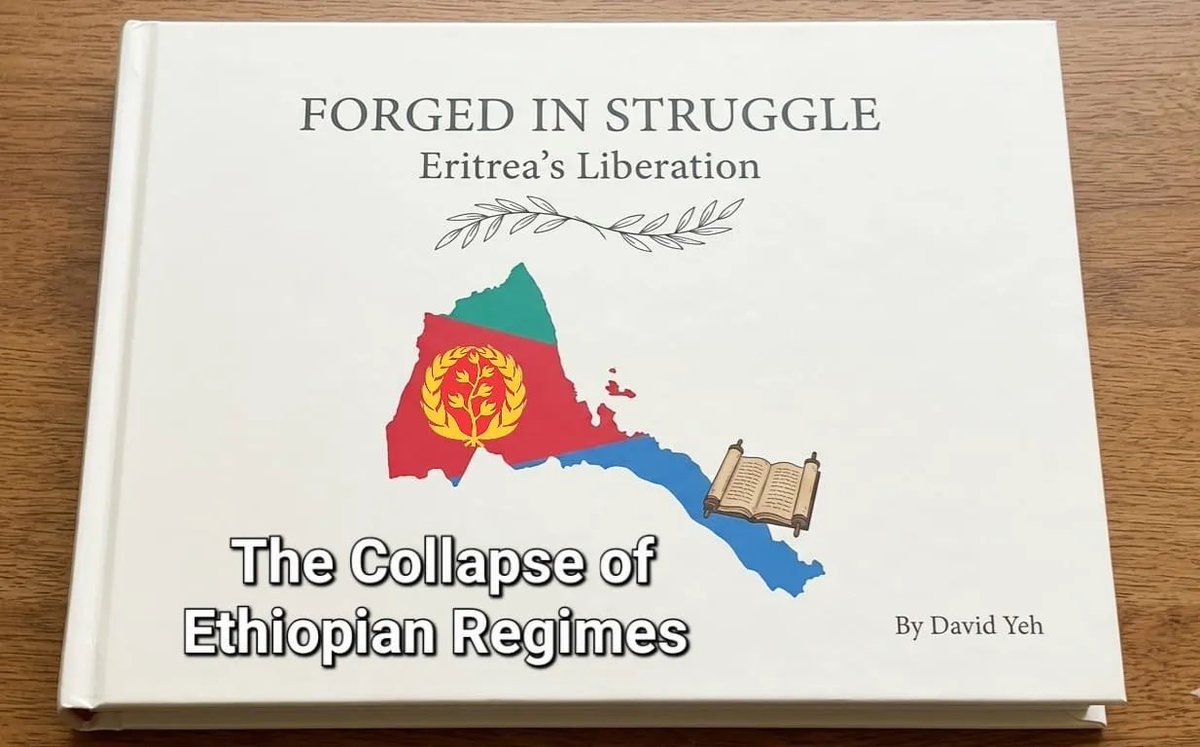
Forged in Struggle: Eritrea’s Liberation and the Collapse of Ethiopian Regimes March 14, 2026 By David Yeh @RedSeaBeacon The liberation of Eritrea stands as one of the most extraordinary examples of resilience, strategic brilliance, and unyielding determination in modern African history. For over three decades, the Eritrean Liberation Front and the Eritrean People’s Liberation Front (EPLF) waged a protracted struggle against successive Ethiopian governments, each commanding armies of unparalleled size and sophistication. At its peak, Ethiopia’s military was not only the largest in sub-Saharan Africa but also among the most technologically advanced. Its arsenal included approximately 300 aircraft and helicopters, seventeen naval vessels and fast boats, around 1,700 tanks, 2,975 armored personnel carriers, 4,000 combat vehicles and trucks, 41,740 light and heavy machine guns, 1,172 cannons, 3,915 mortars, 14,738 anti-tank weapons, 1,605 anti-aircraft guns, 400 rocket launchers and missiles, and 1,551,400 assault rifles. The Imperial Ethiopian Air Force (IEAF), which began with 43 aircraft, developed into a multi-role force capable of strategic bombing, fighter bomber missions, ground-attack, reconnaissance, and troop transport. Despite this overwhelming material superiority, the EPLF demonstrated that strategy, discipline, and determination could overcome even the most formidable conventional power. The Spark of Armed Resistance The Eritrean struggle formally began on September 1, 1961, when armed units of the Eritrean Liberation Front (ELF) attacked Ethiopian garrisons. These early skirmishes, though limited in scale, revealed the vulnerability of Ethiopian outposts in remote mountainous regions. Ethiopia, under Emperor Haile Selassie, deployed infantry units reinforced with light artillery, small tank detachments, and mechanized transport to secure its holdings, but the rugged terrain and the mobility of Eritrean fighters prevented effective control. The period was characterized by hit-and-run raids, sabotage of infrastructure, and grassroots political mobilization to gain local support. By the mid-1960s, internal divisions within the ELF led to the creation of the EPLF, which emphasized centralized command, discipline, and integrated strategy. Leaders such as Isaias Afwerki and Romodan Mehamednur prioritized both military operations and social organization, ensuring that liberated areas were governed and protected. The EPLF established fortified mountain bases and mobile units capable of rapid deployment, exploiting Ethiopia’s inability to adapt conventional tactics to Eritrea’s topography. Ethiopian forces continued to rely on infantry, light armor, and limited air support, yet were unable to suppress the insurgency. The early 1970s saw coordinated EPLF operations targeting Ethiopian garrisons and supply routes. The EPLF destroyed convoys, ambushed armored units, and fortified strategic positions. Meanwhile, Ethiopia faced growing internal dissent. Economic hardships, ethnic tensions, and the failures of military campaigns eroded the legitimacy of Haile Selassie’s imperial regime. In 1974, a military coup brought the Derg, a Marxist – Leninist junta, to power, promising radical reforms while expanding military forces and mechanized divisions. The new regime inherited the challenge of suppressing a deeply entrenched insurgency in Eritrea. Nakfa and Ethiopian Counter Offensives On March 23, 1977, the Eritrean People’s Liberation Army (EPLA) liberated Nakfa after decisively defeating the Derg forces stationed there. ReadMore @RedSeaBeacon @hawelti @Sudan #Djibouti #Somalia #Egypt #SaudiArabia #Turkey #Qatar #UAE @shabait @EmbassyEritrea @hadnetkeleta @SirakBahlbi @EliasAmare @Ghidewon @Yehdavid @GhideonMusa @Sharronyemane @cnni @AJEnglish @BBCWorld @Reuters @AFP @AlAhramWeekly @FT @latimes @nytimes @BBCWorld @AlJazeera @tberhan0437898 @ERiTV_Official @Shabait redseabeacon.com/forged-in-stru…
Alula Frezghi tweet media
English
2
42
56
545