@JoshWilliamsOH It’s not insulated. It’s cheaper because it has more crap in it that’s bad for your engine.
English
S. E. R.
2.1K posts
@fiqbufoe
you’re probably here to see why I responded to your tweet the way that I did.



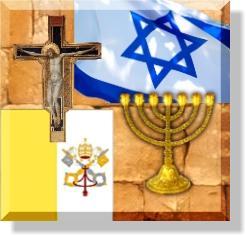
@michaeljknowles, something for your consideration: The true, Catholic definition of “antisemitism” is narrowly confined to hatred of Jews as a race—nothing more—and does not admit of anything broader. This was established in the 1928 Holy Office condemnation of Amici Israel, an ecumenical group who had proposed removing the Good Friday prayer for the faithless Jews in the sacred liturgy. Cd. Merry del Val, head of the Holy Office, commented the following on the proposed change, “This report put forward by the so-called Amici Israel strikes me as completely unacceptable, indeed even rash. We are dealing with ancient prayers and rites of the liturgy of the Church, a liturgy inspired and consecrated for centuries that includes condemnation of the rebellion and betrayal perpetrated by the chosen people who were at once unfaithful and deicide.... I would hope that these Amici Israel would not fall into a trap laid by the Jews themselves, who insinuate themselves throughout modern society and seek with whatever means to minimize the memory of their history and take advantage of the good will of Christians.” Returning to the actual ruling from the Holy Office, after identifying the Jewish people as once chosen, who suffer “continual blindness” after the coming of Christ, the text reads, “Because it [the Catholic Church] reproves all hatreds and animosities between peoples, it condemns without reservation hatred against the people once chosen by God, a hatred that today is commonly called ‘anti-Semitism’”. This hatred of Jews, justly condemned by the Holy Office and opposed to basic Christian charity, was branded as “antisemitism”. It is a narrow and clear error. However, the common definition in the public mind, and certainly the definition of the Jews, is something substantially different—in fact it is much, much broader. Fr. Denis Fahey, an Irish priest and Holy Ghost father, identified this departure in his 1953 book, bearing an imprimatur, The Kingship of Christ and the Conversion of the Jewish Nation, saying, “What is meant by the term [antisemitism]? It means hatred of the Jews as a race. The Jews, however, use the word to designate any form of opposition to themselves, and they strive persistently to associate irrationality and want of balance with the term. They evidently want the world to believe that anyone who opposes Jewish pretensions is more or less mentally deranged. Now, first of all, it must be remarked that the term is too wide and too loose. The Arabs are doubtless Semites. Yet the Arabs in Palestine, on account of their opposition to Jewish domination, are Anti-Semites.” Finally, the idea of a grand Jewish conspiracy against the Catholic Church as somehow baseless, even “antisemitic” as the essay implies, is, frankly, preposterous. Cursory examination of the theological data bears out an enmity between the Church and Synagogue, from the very beginning. The fathers, the medievals and modern Catholic authors attested to the same. As Catholics, we must be on guard against the naturalistic and anti-christic tendencies, spirit and designs of the Jews, Talmudists or otherwise. Christ tells us we must love our enemies—especially the Jews—and not to maintain they do not exist nor that they, objectively, are seeking to overthrow Divine order and the Mystical Body.