Jason Lee

552 posts

Jason Lee banner
Jason Lee

Jason Lee

@JLeeLab

Assistant Professor @BCMhouston studying the logistics of subcellular organization. Membrane-bound and membrane-less organelle functions and contacts.

Houston, TX Beigetreten Mayıs 2020
502 Folgt573 Follower
Angehefteter Tweet
Jason Lee
Jason Lee@JLeeLab·
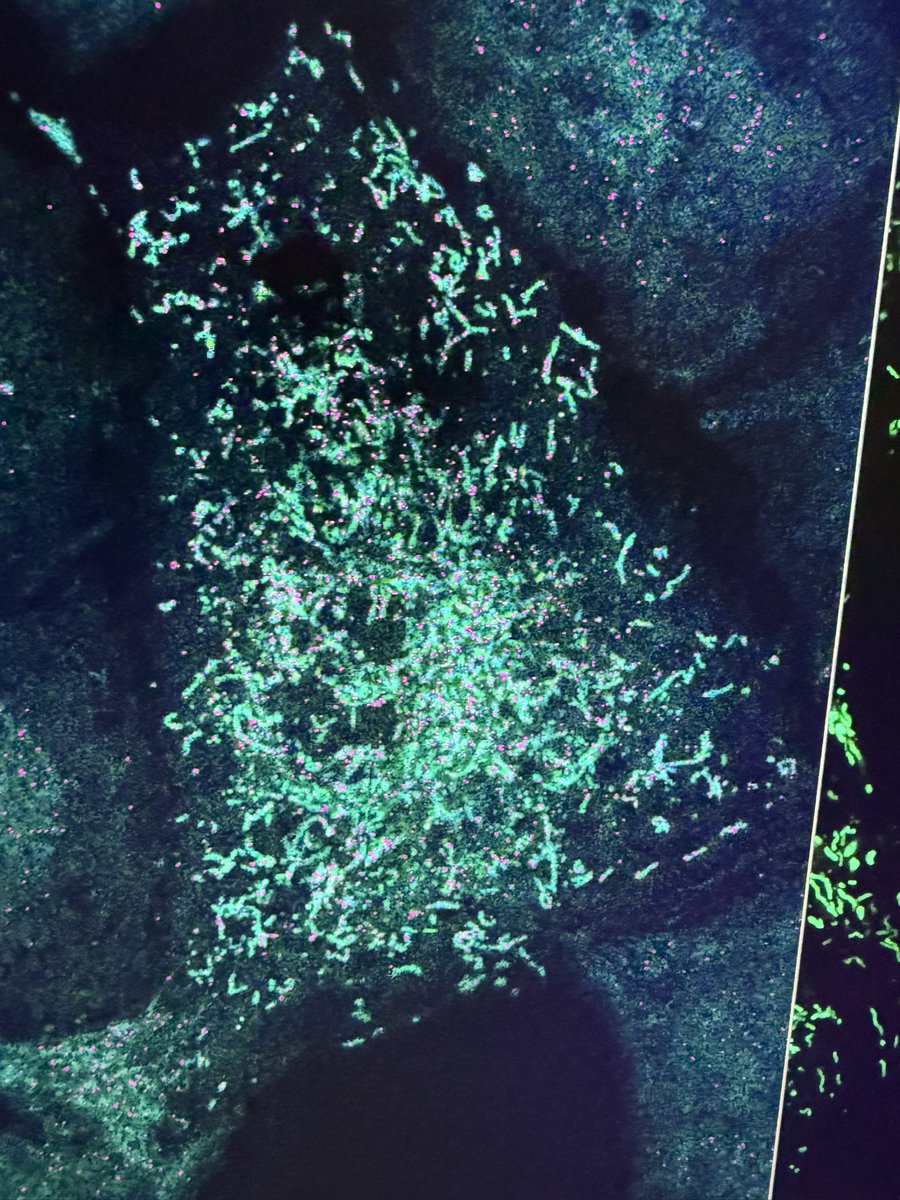
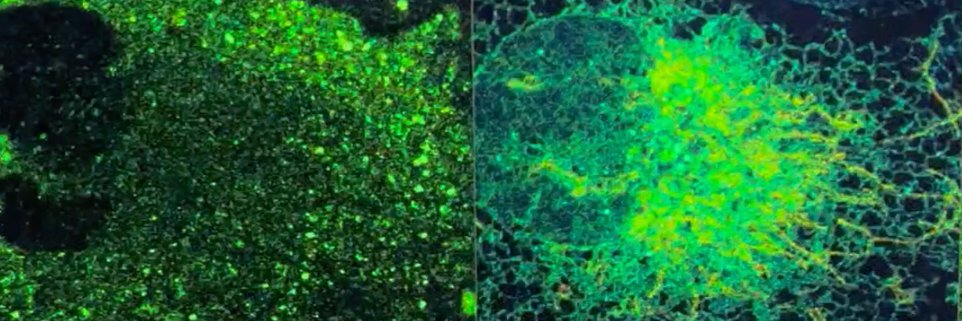
1/A picture is worth a thousand words but what if they can say more?! We developed live-cell FLIM approaches to track protein interactions within RNA-protein condensates – Our first paper is now out in @JCellBiol! doi.org/10.1083/jcb.20…
Jason Lee tweet media
English
12
17
87
13.5K
Jason Lee retweetet
Kyle Eagen
Kyle Eagen@KylePEagen·
1/ Excited to share a new preprint from the lab! We identify NSD3 as a novel regulator of chromatin 3D structure. 🧵 biorxiv.org/content/10.648…
English
2
5
16
1.2K
Jason Lee retweetet
Alice Ting
Alice Ting@aliceyting·
New work describes our efforts to achieve CRISPR editing of the mitochondrial genome. biorxiv.org/lookup/content… The CRISPR toolbox has revolutionized the study of nuclear DNA, but the mitochondrial genome (mtDNA) has remained out of reach, mainly because there are no known ways to deliver sgRNAs across both outer and inner mitochondrial membranes. Yet many organisms have evolved mechanisms to transport RNAs across their mitochondrial membranes. Trypanosomes, for example, do not encode any tRNAs in their mtDNA, and must import all of them from the cytosol to support intra-mitochondrial protein translation. We started with yeast. We engineered a strain that must repair a STOP codon in mtDNA (an arginine biosynthesis gene) to survive. After screening a library of sgRNA import sequences, we identified one that enables a small degree of functional CRISPR editing in mitochondria. Graduate student Sifei Yin obtained these exciting results several years ago, and spent the intervening time understanding how sgRNA import works, and how to make it better. Read the paper to learn what she uncovered!
English
6
71
254
23.8K
Jason Lee retweetet
James Olzmann
James Olzmann@OlzmannLab·
1/ New preprint out! We show that PROTAC-induced ubiquitination can bypass canonical ERAD to degrade ER membrane proteins. Wonderful collaboration w/ @DanNomura and huge credit to grad student superstar Sydney Tomlinson! biorxiv.org/content/10.110…
English
6
19
96
8.3K
Jason Lee retweetet
BCM_Surgery
BCM_Surgery@BCM_Surgery·
In Memoriam: Bert W. O'Malley, M.D. It is with great sadness that we announce the death of Dr. Bert W. O'Malley, Baylor College of Medicine chancellor, and former chair of the Department of Molecular and Cellular Biology. He also served as the associate director of basic research in the Dan L Duncan Comprehensive Cancer Center at Baylor College of Medicine. Considered the ‘founding father’ in the field of molecular endocrinology, Dr. Bert O’Malley was born in Pittsburgh, Pa. and received his Bachelor of Science degree from the University of Pittsburgh and his medical degree from the University of Pittsburgh School of Medicine. He did his clinical internship and residency training at Duke University Medical Center and spent four years at the National Institutes of Health, where he was head of the Molecular Biology Section of the Endocrine Branch of the National Cancer Institute of the National Institutes of Health. He then served as the Lucious Birch Professor and Director of the Reproductive Biology Center at Vanderbilt University before joining Baylor College of Medicine as chair of the Department of Molecular and Cellular Biology in 1973, a position he held for 45 years. During his time in this role, the department was routinely listed in the top five in the nation in securing National Institutes of Health funding; more than five times as No. 1. He published more than 700 papers and holds 29 patents in the fields of gene regulation, molecular endocrinology, steroid receptor and coactive action and cell proteomics and metabolism. In July 2018, O’Malley was named the fourth chancellor of Baylor College of Medicine and stepped down as chair of the department to assume the role of chancellor, but continued to direct his research lab. As chancellor, he advised the president of Baylor College of Medicine, participated in strategic planning activities and acted as an ambassador for the College. He was a member of the NCI-designated Dan L Duncan Comprehensive Cancer Center at Baylor. O’Malley changed the understanding of endocrinology in a fundamental way. He focused his research on the molecular mechanisms that guide gene regulation in endocrinology and endocrine cancers, including how hormones, receptors and coactivators contribute to the disease process. His pioneering work in this field has shown that intracellular hormones and cofactors act at the level of DNA to regulate the production of proteins and affect the function of the cell. Research Highlights: Dr. Bert W. O'Malley received the 2013 Endocrine Regulation Prize of the Foundation IPSEN at the 15th European Congress of Endocrinology on April 29, 2013.. O’Malley’s lab discovered and was the first to solve the structure of a functional receptor-coactivator complex on DNA capable of regulating gene transcription in vitro. In addition, he showed that steroid receptor coactivator-2 (SRC-2), which is highly elevated in a variety of tumors, is likely implicated in metabolic coordination of cancer metastasis, opening the possibility of therapeutically targeting the SRC-2 pathway. His work with steroid receptor coactivator-3 (SRC-3), a prognostic marker for aggressive human breast cancer, showed that small-molecule inhibitors that directly bind SRC-3 cause selective degradation of the complex, hereby killing cancer cells with no observable toxicity. Small-molecule inhibitors represent a new type of oncologic drugs that target coactivators. In addition, Dr. O’Malley’s work showed in a mouse model of heart disease, that stimulating SRC-3 with small-molecule MCB-613 initiated a complex cascade of events in tissue repair and modulation of the inflammatory response that reduced fibrosis, attenuating loss of cardiac function after myocardial infarction. These findings open the possibility of novel therapies to regulate the progression of heart failure via SRC-3. His work also revealed a role for SRC-3 in regulatory immune T cells (Tregs) that promote cancer growth by inhibiting anti-cancer immune responses. He also showed that SRC-3 is significantly enriched in both murine and human Tregs. Inhibiting SRC-3 in Tregs in the lab stopped them from reducing the anti-tumor response, suggesting that modulating SRC-3 in Tregs might help control cancer growth. Dr. O’Malley will be missed greatly and his contributions to cancer research will live on for decades to come.
BCM_Surgery tweet media
English
1
11
44
6.1K
Jason Lee retweetet
Peggy Goodell
Peggy Goodell@Goodell_Lab·
@Gandhar_Datar joined the lab when the world was shutting down, having just gotten started with guidance from @therealDrGundry and @BrunettiLab, who then moved on in their careers. Tough work in isolation until @RibackLab joined @bcmhouston, when informal chats got us thinking about the project in a whole new way. We considered how the aberrant function of NPM1c was related (or not) to its nucleolar WT function. A great collaboration grew, with Gandhar deeply learning both hematology and biophysics! Many ppl world-wide contributed and @sciencyelmira was the closer, getting the in vivo models working. Thanks to all, including the reviewers and editors for feedback.
Gandhar Datar@Gandhar_Datar

(10/10) Thank you to everyone in the @RibackLab and @Goodell_Lab, especially to @sciencyelmira, for this amazing work, and to @theNCI, @CPRITTexas, @LeukemiaRF, Searle Scholars, Ted Nash Long Life Foundation, and @BCM_MSTP for essential funding support.

English
3
4
29
2.7K
Jason Lee retweetet
Bruno Di Stefano
Bruno Di Stefano@DiStefano_Lab·
1/ Excited to share our new study with @Brumbaugh_JB, now out in @NatureBiotech! P-bodies selectively sequester RNAs encoding cell fate regulators, often from the preceding developmental stage. Releasing these RNAs can drive changes in cell identity. 🧵nature.com/articles/s4158…
English
11
47
189
26K
Jason Lee
Jason Lee@JLeeLab·
@KCKlatt “Living the dream” Awesome news! Congrats!!
English
0
0
1
111
Kevin C. Klatt, PhD, RD
Kevin C. Klatt, PhD, RD@KCKlatt·
Really excited to announce that I've accepted an Assistant Professor position in the Department of Nutritional Sciences in the Faculty of Medicine at the University of Toronto! Very excited to venture north (🥶) & build out my own research group in human nutrition &metabolism 🥳
U of T Nutritional Sciences@nutrisci_uoft

Big news! Thrilled to welcome Dr. Kevin Klatt as our newest Assistant Professor in Nutritional Sciences! From Cornell → NIH → Baylor → UC Berkeley, he brings expertise in maternal & infant nutrition + micronutrients! @KCKlatt @DLOConnor0803 @uoftmedicine

English
48
19
315
43.3K
Jason Lee retweetet
maurizio molinari
maurizio molinari@MolinariLab·
Today’s NCB. The cytoplasmic intrinsically disordered regions (IDRs) of ER-phagy and mitophagy receptors are interchangeable, required and sufficient for the ER and mitochondria fragmentation required for lysosomal clearance of the organelle’s portions. rdcu.be/eF5DR
English
0
3
12
893
Jason Lee retweetet
Barsha Chakraborty, PhD
Barsha Chakraborty, PhD@Barshachirps·
Two is better than one for organelles! Our latest work in Advanced Optical Materials shows how a fluorophore can target simultaneously lipid droplets and the endoplasmic reticulum, measuring micro-polarity during homeostasis and ferroptosis doi.org/10.1002/adom.2… @AdvSciNews
Barsha Chakraborty, PhD tweet media
English
9
13
115
5.8K
Jonathan Friedman
Jonathan Friedman@LabFriedman·
Thrilled to announce my official promotion to associate professor with tenure at UTSW! So grateful to all the trainees in the lab for their hard work and proud of their accomplishments over the last several years. This an individual recognition but truly a team effort!
English
26
3
103
6.8K
Jason Lee
Jason Lee@JLeeLab·
@SuperSciJew Looks like a well-seasoned and juicy nucleolus!! Have fun!
English
0
1
3
209
Josh Riback
Josh Riback@SuperSciJew·
12 hours brisket wrapping at 4AM!
Josh Riback tweet mediaJosh Riback tweet media
English
2
0
2
380
Jason Lee retweetet
Katerina Cermakova, cermakova.bsky.social
How does the cBAF complex use disordered protein to engage diverse transcriptional regulators like YAP1, SOX2, and CBP/p300? San’s tweetorial and new Mol Cell paper reveal β-catenin’s role as a molecular adapter
Yuen San Chan@chanyuensan

Excited to share our new Molecular Cell paper! We show that β-catenin is an adaptor that links canonical BAF (cBAF) with binding partners via IDR-domain interactions. (1/7) cell.com/molecular-cell…

English
0
3
8
1K
Jason Lee retweetet
JOAN BRUGGE
JOAN BRUGGE@BruggeMe·
My two NIH cancer research grants were terminated today. One involving breast cancer prevention is an “outstanding investigator award” and had received a perfect score by reviewers. How does ending lifesaving cancer research make Americans healthier? @harvardmed @aacr
English
116
752
2.3K
141K
Jason Lee retweetet
Bruno Di Stefano
Bruno Di Stefano@DiStefano_Lab·
New preprint from the lab! With @Brumbaugh_JB, we show that P-bodies sequester developmentally relevant RNAs to influence cell fate. miRNAs direct this conserved regulatory process, and manipulating it enhances totipotency and germ cell programming. biorxiv.org/content/10.110…
English
0
6
24
1.6K