Mel Gelderman 💫

1.1K posts

Mel Gelderman 💫 banner
Mel Gelderman 💫

Mel Gelderman 💫

@MelGelderman

CEO @tokencom_ | Ethereum since '14 | Creator Monolith '16

Beigetreten Ekim 2013
1.9K Folgt1.8K Follower
Angehefteter Tweet
Mel Gelderman 💫
Mel Gelderman 💫@MelGelderman·
1 Billion user app by 2030. I promise you this. Token.com
English
9
3
43
3.9K
STEPHEN DDUNGU | GAMES
STEPHEN DDUNGU | GAMES@StephenDDGames·
I made a game world that creates itself as you journey through it…
English
139
771
8K
279.9K
Luke Martin
Luke Martin@VentureCoinist·
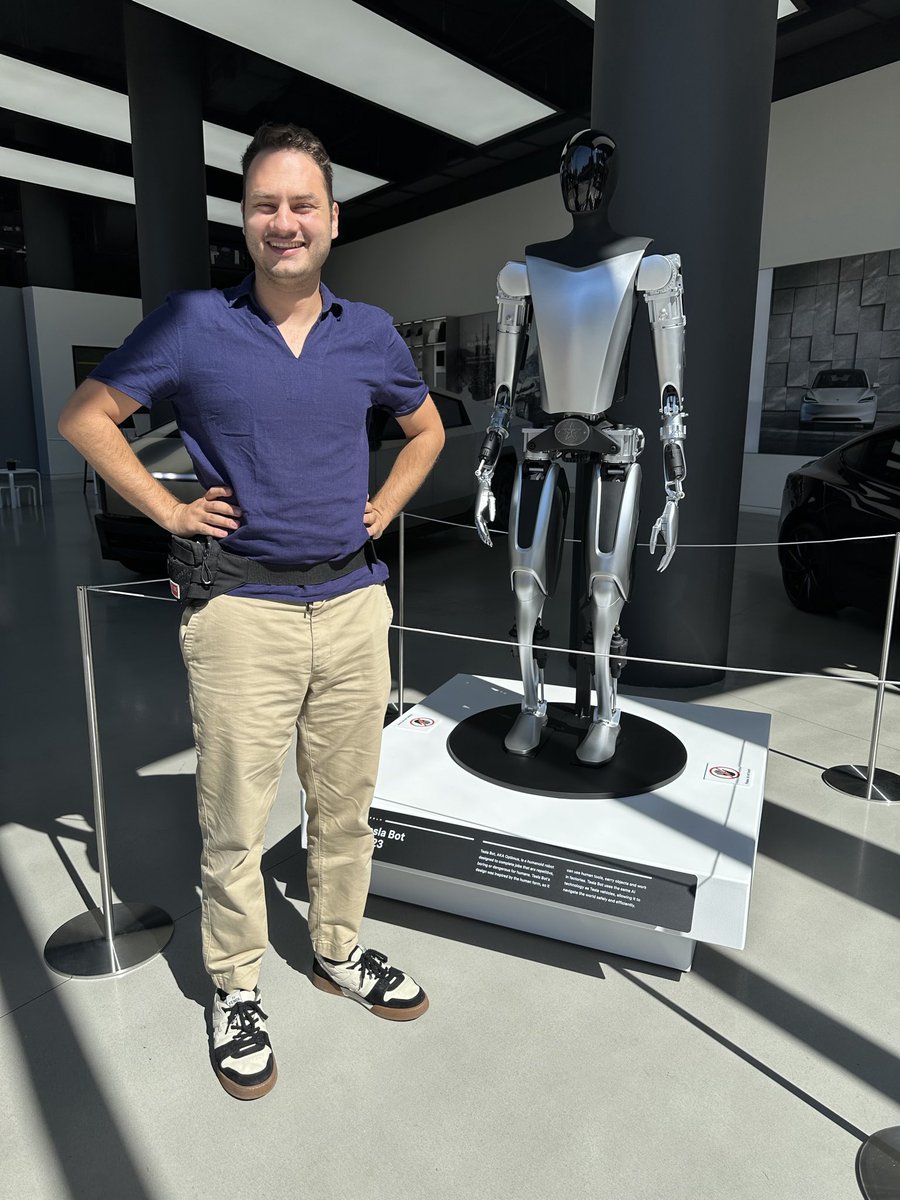
Elon leaked how tall Tesla Optimus robots will be: "It has to carry heavy objects for long periods of time & not overheat. It's 5'11. So pretty tall with lots of intelligence." Anyone < 6 feet tall will be stuck in permanent shortclass forever heightmogged by millions of robots
English
166
107
4.5K
760.2K
Military Support
Military Support@MilitaryCooI·
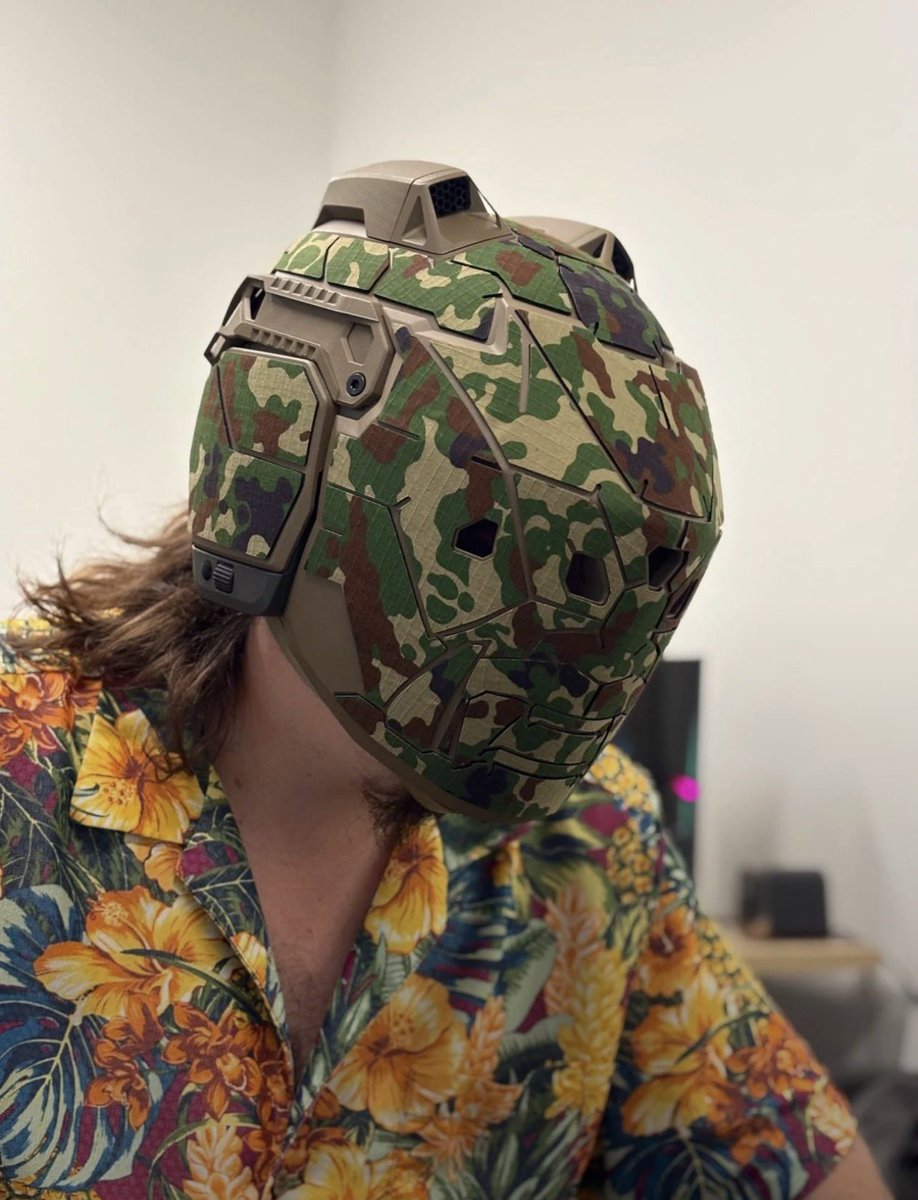
Anduril EagleEye with faceshield
Military Support tweet media
English
230
218
4K
157.6K
Jake Brukhman
Jake Brukhman@jbrukh·
This is the difference between corporate and decentralized AI. Which model will you have with you for the zombie apocalypse? 🧟‍♂️
Jake Brukhman tweet mediaJake Brukhman tweet mediaJake Brukhman tweet media
English
14
23
185
57.9K
Mel Gelderman 💫
Mel Gelderman 💫@MelGelderman·
Fair. The instability issues stemmed from our use of Auth0 for user authentication—a major legacy mistake. It was unreliable, and I wouldn’t recommend it to anyone, ever. The only other factor contributing to the sense of UI lagginess was that we hadn’t built local caching, so most actions waited on backend responses. It was on the roadmap.
English
0
0
0
81
72
72@Number72TM·
@tokencom_ 7. The App UI was laggy and unusable..
English
2
0
1
180
token.com
token.com@tokencom_·
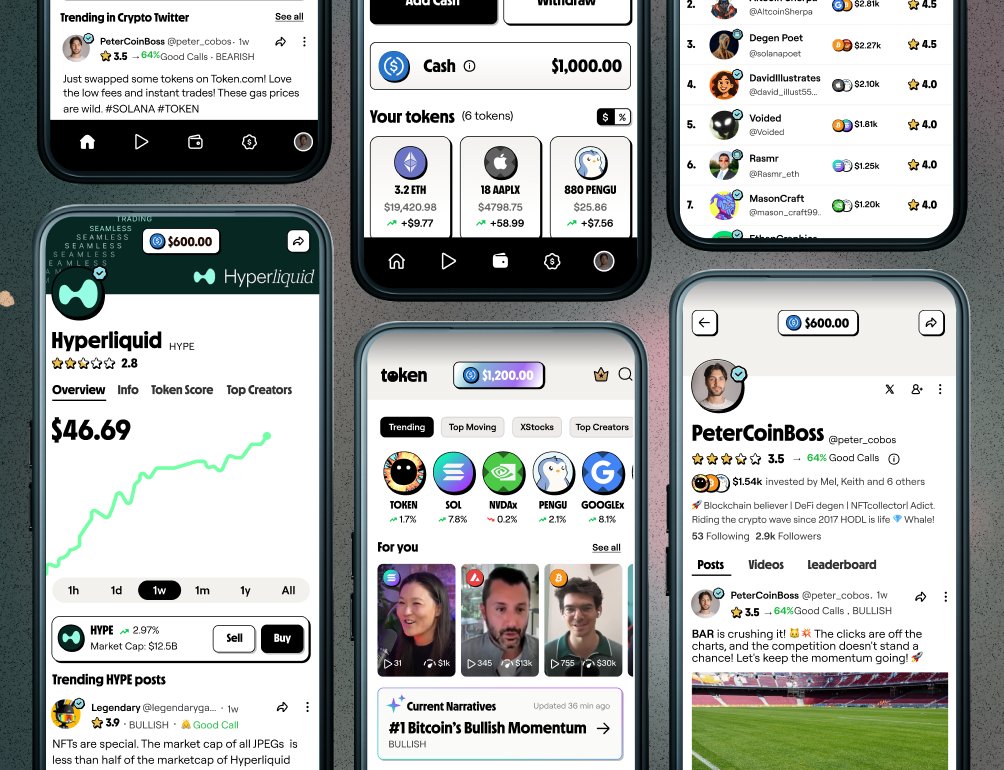
We have some important news. Token.com is shutting down. We poured everything into building what we believe is one of the most beautiful and forward-thinking consumer crypto apps on the market. But we've made the hard decision to wind things down. Here's what you need to do: You have one week from today to sell and withdraw your assets as normal through the app. After March 10th, the app will switch to private key export mode, where you can export your keys and import them into any self-custody wallet like Phantom or Coinbase Wallet. This will be supported for 6 months. Please prioritize this to ensure a smooth withdrawal of your assets. 6 things we learned building Token.com We set out to build a new way for people to discover and trade tokens, by turning your social feed into a one-tap trading terminal. Creator content from X and TikTok, enhanced with live prices. AI-powered scoring to surface signal over noise. Transparency into what your friends and other users were actually trading. And a model where creators earned directly from the volume their posts generated. We still believe every one of these features is correct, and inevitable. But building them taught us some hard lessons about what it takes to make a consumer crypto product sustainable. 1. The chicken-and-egg problem Token.com was designed so that every feature gets better with more people using it. The social feed improves with more creators. AI scoring sharpens with more trading data. Creator earnings only become meaningful with real volume. Even "see what friends are trading" only clicks when enough friends are on the app. This created a fundamental challenge: we couldn't demonstrate the product's full value without scale, and we couldn't reach scale without demonstrating the product's full value. Early users were being asked to believe in a future version of the app. That's a hard sell when the alternatives already work out of the box. 2. Incumbents own distribution, and they copy fast Robinhood and Coinbase have roughly 130 million users between them. As a startup, you're not competing with their product. You're competing with the fact that their app is already on someone's phone. And they move quickly. In September 2025, Robinhood announced Robinhood Social: a feed where users follow traders, see verified trades in real time, and buy directly from the feed. Coinbase has been building similar social features into its wallet. These are the exact mechanics we built Token.com around. We got there first. But when the biggest platforms in your space ship your ideas to their existing user base, being first doesn't matter much. You end up doing R&D for the people who have the distribution. 3. The unit economics don't work at small scale Global average crypto transaction costs have dropped to around 0.20%. Great for users. Really difficult if you're the app facilitating those trades. Token.com's creator fee-sharing model was one of the things that made us special: creators earned from the volume their posts drove. But fee-sharing needs meaningful fees, meaningful fees need serious volume, serious volume needs a big user base, and building a big user base costs real money. DeFi protocols average around $85 per user acquisition. Crypto exchanges can hit $150. When your revenue per trade is fractions of a cent and your acquisition cost is tens of dollars, the gap is brutal. 4. The mainstream consumers we built for aren't in crypto yet We built Token.com for normal people, not DeFi power users or professional traders. We wanted to make tokens feel less alien and more human. But the people we built for haven't arrived in the numbers this space needs. Around 21% of U.S. adults own crypto and that figure has been flat. JPMorgan research shows the pace of new investors entering crypto has slowed significantly since the 2020–2021 boom. Only 6% of Americans who don't already own crypto plan to buy any in 2026. The next wave is coming. We're sure of it. But we couldn't build a sustainable business waiting for it. 5. Tokenised stocks could save consumer crypto. They're just not here yet. In the last few years, retail crypto investors have had a rough ride. Most tokens are highly speculative, and many people have lost money. Stocks, on the other hand, have delivered strong returns for everyday investors. Tokenised stocks bring those better outcomes on-chain: real equity in real companies, tradeable 24/7, fractionally, from your phone. This is what would have made Token.com incredible. Imagine watching a SpaceX rocket launch and buying its token on the spot. Scrolling a creator's post about NVIDIA earnings and tapping to buy the stock right there. We shipped the early version with xStocks: tokenised NVIDIA, Tesla, and more on Solana. But the supply isn't there yet. Only a handful of stocks have been tokenised by a handful of players like Ondo and Backed Finance. The total market is around $700 million, against a $147 trillion global stock market. When hundreds or thousands of stocks are available as tokens, consumer crypto transforms. We were just a bit too early. 6. Too early and too late at the same time Too early for the markets we were building towards: mainstream consumer crypto, tokenised stocks as a daily behaviour, creator-driven discovery as the way people find tokens. Too late to win on distribution. The big platforms had years of head start and have consolidated hard. The window for a new consumer crypto app to break through was probably 2020–2021, when retail interest was surging and the incumbents hadn't locked everything down. By the time we shipped the full vision (social feed as trading terminal, AI scoring, creator economics, xStocks, gasless one-tap execution on Solana) the landscape had hardened around us. We built the right product at the wrong time. A painful reality. What's next AI is changing the game on how we interact with money, the internet and each other. We're taking everything we learned and channelling it into what comes next. Stay tuned. Thank you for being part of this. For downloading the app, for trading, for believing that crypto could feel like something designed for real people. It meant everything to us. The Token.com Team
token.com tweet media
English
10
3
26
3.8K
Harry
Harry@Realmecore_0·
Men now: I still think about her. Men before:
English
41
511
11.2K
537.6K
Mel Gelderman 💫 retweetet
Anish Moonka
Anish Moonka@anishmoonka·
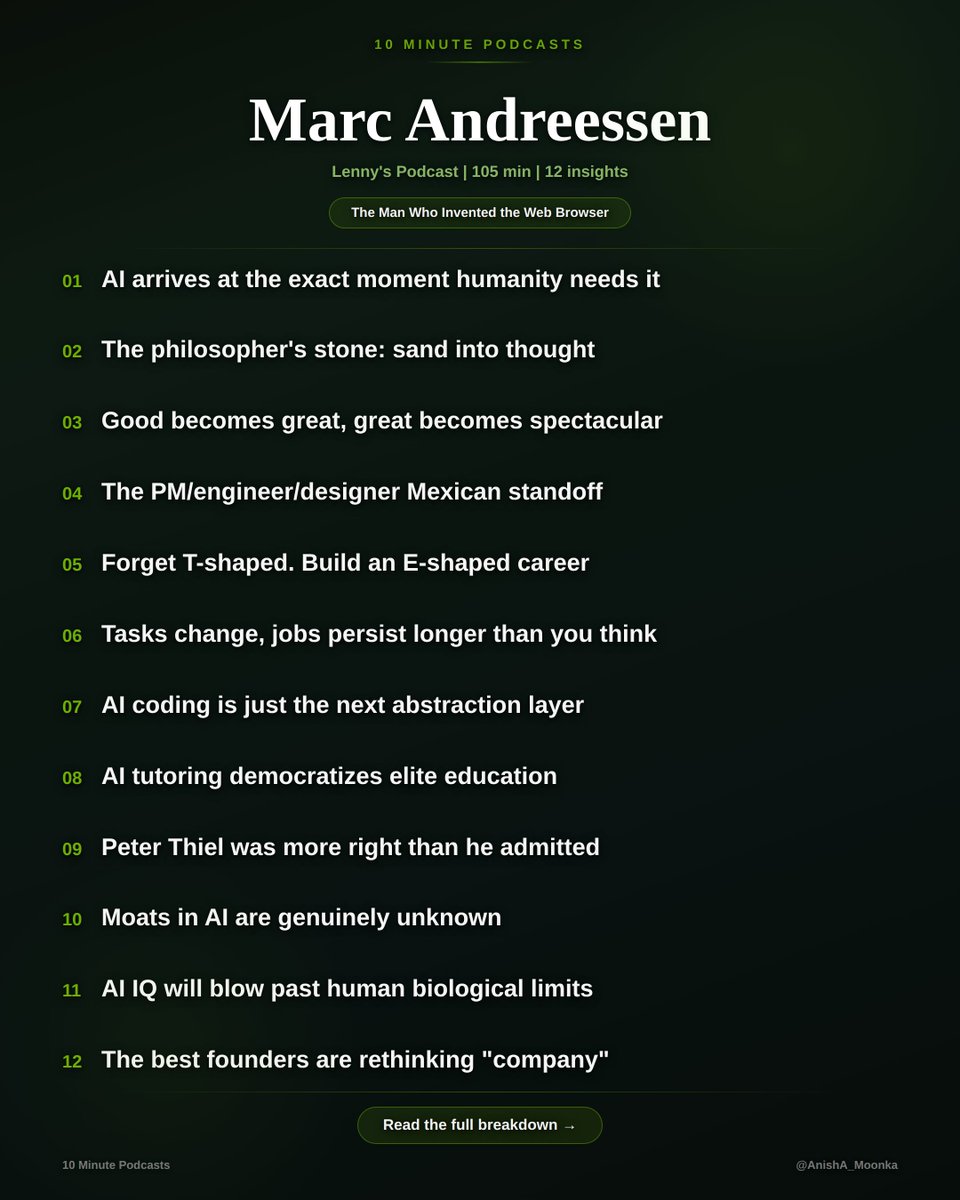
Marc Andreessen just dropped ~105 mins on Lenny's Podcast covering AI, jobs, careers, and why everyone is panicking about the wrong thing. Just the clearest macro framework I've heard on where AI actually lands. My notes: 𝟭. 𝗔𝗜 𝗶𝘀 𝗮𝗿𝗿𝗶𝘃𝗶𝗻𝗴 𝗮𝘁 𝘁𝗵𝗲 𝗲𝘅𝗮𝗰𝘁 𝗺𝗼𝗺𝗲𝗻𝘁 𝗵𝘂𝗺𝗮𝗻𝗶𝘁𝘆 𝗻𝗲𝗲𝗱𝘀 𝗶𝘁. US productivity growth has been running at half the rate of the 1940-1970 era and a third the rate of 1870-1940. The global population is declining below replacement in dozens of countries, including China. Without AI, we would be panicking about economies shrinking from depopulation, not job loss. The timing is almost miraculous. This is what Andreessen means when he says the real boom has not started yet. We have been in a 50-year productivity drought, and most people do not even realize it. 𝟮. 𝗔𝗜 𝗶𝘀 𝘁𝗵𝗲 𝗽𝗵𝗶𝗹𝗼𝘀𝗼𝗽𝗵𝗲𝗿'𝘀 𝘀𝘁𝗼𝗻𝗲. Isaac Newton spent decades trying to transmute lead into gold and never succeeded. AI does something more powerful: it converts sand (silicon) into thought. The most common material in the world is the rarest output. This one metaphor reframes the entire AI conversation. You do not have a job loss problem. You have a philosopher's stone sitting on your desk that you are not using enough. 𝟯. 𝗔𝗜 𝗺𝗮𝗸𝗲𝘀 𝗴𝗼𝗼𝗱 𝗽𝗲𝗼𝗽𝗹𝗲 𝘃𝗲𝗿𝘆 𝗴𝗼𝗼𝗱, 𝗮𝗻𝗱 𝘃𝗲𝗿𝘆 𝗴𝗼𝗼𝗱 𝗽𝗲𝗼𝗽𝗹𝗲 𝘀𝗽𝗲𝗰𝘁𝗮𝗰𝘂𝗹𝗮𝗿𝗹𝘆 𝗴𝗿𝗲𝗮𝘁. The best coders right now are not reporting 2x productivity. They are reporting 10x. The gap between "pretty good with AI" and "elite with AI" is widening, not narrowing. This is the most important signal for career planning right now. If you are just using AI to do the same job slightly faster, you are leaving the real leverage on the table. 𝟰. 𝗧𝗵𝗲𝗿𝗲'𝘀 𝗮 𝗠𝗲𝘅𝗶𝗰𝗮𝗻 𝘀𝘁𝗮𝗻𝗱𝗼𝗳𝗳 𝗯𝗲𝘁𝘄𝗲𝗲𝗻 𝗣𝗠𝘀, 𝗲𝗻𝗴𝗶𝗻𝗲𝗲𝗿𝘀, 𝗮𝗻𝗱 𝗱𝗲𝘀𝗶𝗴𝗻𝗲𝗿𝘀. Every engineer now thinks they can be a PM and designer. Every PM thinks they can code and design. Every designer knows they can do both. And they are all correct, because AI enables each role to absorb the tasks of the other two. I have seen this firsthand in the investing world. The analyst who can build models and write narratives is 5x more valuable than someone who can do only one. The same convergence is happening in the product. 𝟱. 𝗙𝗼𝗿𝗴𝗲𝘁 𝗧-𝘀𝗵𝗮𝗽𝗲𝗱. 𝗕𝘂𝗶𝗹𝗱 𝗮𝗻 𝗘-𝘀𝗵𝗮𝗽𝗲𝗱 𝗰𝗮𝗿𝗲𝗲𝗿. Scott Adams could not have created Dilbert by being the world's best cartoonist or the world's best business mind. He needed both. The additive effect of two skills is more than double. Three skills are more than triple. Larry Summers puts it differently: don't be fungible. The person who can code, design, and ship a product is no longer a unicorn. They are the new baseline for "extremely valuable." If you are only one of those three things, you are increasingly replaceable. 𝟲. 𝗝𝗼𝗯𝘀 𝗮𝗿𝗲 𝗯𝘂𝗻𝗱𝗹𝗲𝘀 𝗼𝗳 𝘁𝗮𝘀𝗸𝘀. 𝗧𝗮𝘀𝗸𝘀 𝗰𝗵𝗮𝗻𝗴𝗲. 𝗝𝗼𝗯𝘀 𝗽𝗲𝗿𝘀𝗶𝘀𝘁. Executives never typed their own emails in the 1970s. Secretaries printed incoming emails and hand-delivered them. Both roles survived the transition, just with different task sets. The same will happen with AI and coding, PM work, and design. Everyone obsessing over "will my job disappear" is asking the wrong question. The right question is: which tasks in my job are about to rotate, and am I ready to pick up the new ones? 𝟳. 𝗔𝗜 𝗰𝗼𝗱𝗶𝗻𝗴 𝗶𝘀 𝗷𝘂𝘀𝘁 𝘁𝗵𝗲 𝗻𝗲𝘅𝘁 𝗮𝗯𝘀𝘁𝗿𝗮𝗰𝘁𝗶𝗼𝗻 𝗹𝗮𝘆𝗲𝗿. We went from human calculators to machine code to assembly to C to scripting languages. Each layer was dismissed by the previous generation. Each time, the new layer won, and total coding employment grew. AI coding is the same pattern, not a rupture. The Perl programmers of 2005, laughing at JavaScript, are the C programmers of 1995, laughing at scripting. History rhymes, and it always rewards the people who adopt the next abstraction first. 𝟴. 𝗔𝗜 𝘁𝘂𝘁𝗼𝗿𝗶𝗻𝗴 𝗱𝗲𝗺𝗼𝗰𝗿𝗮𝘁𝗶𝘇𝗲𝘀 𝗲𝗹𝗶𝘁𝗲 𝗲𝗱𝘂𝗰𝗮𝘁𝗶𝗼𝗻. One-on-one tutoring is the only method proven to move a student from the 50th to the 99th percentile (Bloom's two sigma effect). It used to require being born into royalty. Alexander the Great was tutored by Aristotle. Now, any kid with a phone can access the same quality of personalized instruction. This is the most under-discussed consequence of AI. Every parent reading this should be supplementing their kid's education with structured AI tutoring right now. Not next year. Now. 𝟵. 𝗣𝗲𝘁𝗲𝗿 𝗧𝗵𝗶𝗲𝗹 𝘄𝗮𝘀 𝗺𝗼𝗿𝗲 𝗿𝗶𝗴𝗵𝘁 𝘁𝗵𝗮𝗻 𝗔𝗻𝗱𝗿𝗲𝗲𝘀𝘀𝗲𝗻 𝗼𝗿𝗶𝗴𝗶𝗻𝗮𝗹𝗹𝘆 𝗮𝗱𝗺𝗶𝘁𝘁𝗲𝗱. Progress in bits masked stagnation in atoms. The built world is barely different from 50 years ago. Same bridges from the 1930s, same dams from the 1910s. Cartels, monopolies, unions, and regulations prevent the rate of change that people had 100 years ago. This is also why AI will not transform everything overnight. Institutional sclerosis is real. Healthcare alone could take a generation. If you are building in atoms, budget for a war of attrition, not a blitzkrieg. 𝟭𝟬. 𝗠𝗼𝗮𝘁𝘀 𝗶𝗻 𝗔𝗜 𝗮𝗿𝗲 𝗴𝗲𝗻𝘂𝗶𝗻𝗲𝗹𝘆 𝘂𝗻𝗸𝗻𝗼𝘄𝗻. Within a year of ChatGPT's launch, five American companies, five Chinese companies, and open-source all had roughly equivalent models. DeepSeek emerged from a hedge fund in China and basically replicated the American labs' work. The smartest AI insiders privately admit there aren't many real secrets among the big labs. This is the most honest take I have heard from a top-tier VC. No one knows if the value accrues to models, apps, or infrastructure. Anyone who tells you otherwise is selling you certainty they do not have. 𝟭𝟭. 𝗔𝗜 𝗜𝗤 𝘄𝗶𝗹𝗹 𝗯𝗹𝗼𝘄 𝗽𝗮𝘀𝘁 𝗵𝘂𝗺𝗮𝗻 𝗹𝗶𝗺𝗶𝘁𝘀. Human IQ caps around 160 because of biology. Current AI models test around 130-140. There is no theoretical ceiling stopping AI from reaching 200, 250, or 300. The concept of AGI as a "human equivalent" will be a footnote because AI will race past that threshold. This is the frame that makes the "will AI take my job" debate feel small. We are not building a replacement for human thought. We are building something that will be better than the best human thought has ever been. 𝟭𝟮. 𝗧𝗵𝗲 𝗯𝗲𝘀𝘁 𝗳𝗼𝘂𝗻𝗱𝗲𝗿𝘀 𝗮𝗿𝗲 𝗿𝗲𝘁𝗵𝗶𝗻𝗸𝗶𝗻𝗴 𝘄𝗵𝗮𝘁 𝗮 𝗰𝗼𝗺𝗽𝗮𝗻𝘆 𝗲𝘃𝗲𝗻 𝗶𝘀. Layer one: AI redefines products. Layer two: AI redefines jobs within companies. Layer three, which has not dropped yet: AI redefines the very concept of having a company. The holy grail is the one-person, billion-dollar outcome, and the best founders are chasing it. Satoshi did it with Bitcoin. Instagram and WhatsApp came close with tiny teams. The question is no longer if this is possible with software. The question is how many of these we will see in the next five years. AI is the philosopher's stone. The question is whether you pick it up. The full podcast is worth your time. Link in replies.
Anish Moonka tweet media
English
88
564
3K
829.6K
Mel Gelderman 💫
Mel Gelderman 💫@MelGelderman·
AI in 2027: Idea-to-execution time shrinks dramatically. Get ready, gentlemen.
Mel Gelderman 💫 tweet media
English
0
0
2
121
Mel Gelderman 💫
Mel Gelderman 💫@MelGelderman·
@koeppelmann You would let a Chinese robot roam freely in your house? Tesla can sell at a premium and still dominate the market.
English
0
0
1
63
koeppelmann.eth 🦉💳
koeppelmann.eth 🦉💳@koeppelmann·
Hard for me to see Teslas evaluation justified. Even if Tesla pulls of building a successful robot, they will not have high margins as competition is already fierce. At the same time I would never bet against the economic success of Elon.
English
6
1
17
4.7K
Mel Gelderman 💫
Mel Gelderman 💫@MelGelderman·
I'm huge on Lunar Industrialization and "off-worlding" industry. But how do we prevent the globalisation trap? If 90% of industry happens in space, are we not putting ourselves in a very fragile position?
SMX 🇺🇸@iam_smx

Jeff Bezos says there is “no Plan B” for Earth and argues that heavy industry, including factories and data centers, should be moved to the Moon and orbital stations to protect the planet. What do you think about this?

English
0
0
0
142
Mel Gelderman 💫
Mel Gelderman 💫@MelGelderman·
@monerify This works until in 2029 the all-knowing GOV AI rats you out and condemns you to eternal damnation.
English
1
0
18
4.5K
Mel Gelderman 💫
Mel Gelderman 💫@MelGelderman·
@tbpn @sama Lol. OpenAI is toast. Sam is either in denial or in damage control mode.
English
0
0
0
123
TBPN
TBPN@tbpn·
Jordi: Do you think space data centers will provide a meaningful amount of compute for OpenAI in the next two to three years? @sama: No. Jordi: Five years? Sam: No.
English
70
20
616
111.6K
Tay 💖
Tay 💖@tayvano_·
They’re the rare type who don’t raise money they don’t need and just build and get shit done. I’ve met the team many times over the years. I’ve also hurled many MANY feature requests at them in slack, on twitter, and in tg. I’ve never had a call with them though. Maybe one actually, to oblige someone, lol. Meanwhile, every one of my (good) requests has shipped, usually within days. Sometimes hours. Which is more than I can say about 100% of the teams that Ive had endless calls with. Lessons there. 😉
Tay 💖 tweet media
English
12
2
151
7.8K
Linda Xie
Linda Xie@lindaxie·
Every few months I get asked for an intro to someone at Etherscan and each time I say I have never met someone who works there in my entire time in crypto 😅
English
31
0
188
23.9K
storm
storm@notnotstorm·
new from paradigm: we are building a tool for exploring prediction market data try it out today. I bet you'll find new markets you never knew existed
English
212
362
4.9K
367.4K
Stani
Stani@StaniKulechov·
If you are looking to buy a mansion some day sign up for aave.com/app
English
326
61
1.8K
137.5K