Rarimo 👤

1.2K posts

Rarimo 👤 banner
Rarimo 👤

Rarimo 👤

@Rarimo_protocol

Trustless ZK Registries powering identity & verifiable data. Fully client-side, private, sovereign

Beigetreten Kasım 2022
641 Folgt23.8K Follower
Rarimo 👤 retweetet
Lasha 🔑🗳️
Lasha 🔑🗳️@LashaAntadze·
Let me explain it in simple terms. Since 2024, when we first launched #freedomtool with the Russian opposition, we have been boiling in hot water on the ground to solve each issue and ensure every vote of dissent was secure (there were 40,000 participants). That might look small, but it was the largest protest gathering in Russia since 2021. There are two major caveats when working with passports. First, you need to ensure uniqueness so that 1 vote = 1 passport. For this you have three options: 1. Passport support (active authentication), where you can sign and get a nullifier directly from the document. But since the 2010s, major countries have abandoned support for that standard and it won’t work at scale. 2. An external signer: you can use a TEE, OPRF, secure server, whatever everyone is discussing. It adds an additional secret, and voila, it works. This is the architecture we used for the Russian use case. 3. A third way, which in my opinion is the purest but requires network effect: so-called “shielded privacy of passport hashes,” where you junk up all the passport hashes in an on-chain registry and reuse them for different use cases, granting everyone plausible deniability. I call this pure because there is zero dependency on any vendor. You get a system like blockchain was for money. one that works outside anyone’s control and no one can switch off. When you touch reality, we forget that MPC networks halt operations for certain jurisdictions on governmental notice, that states control bandwidth and can block your traffic, and that wherever you don’t face hostility, participation isn’t a crime and you don’t need these hard setups. That’s the reality check most builders lack with voting tools. It’s not just an engineering question, it’s a political one. When you hit the ground, you learn it on your skin and the skin of others. The second problem; governments issuing fake passports can be solved in two ways: First, a similarity proof of the passport photo and the person holding a phone (we’ve built that with ZKML Bionetta). Or, the second and more elegant one: a ZK graph, where you build participation commitments over time. That can become a much more valuable foundation to reimagine digital democracy. (We’ve built that too with ERC7812) So thank you all for your contributions, but it’s still odd that after all these years we’re discussing the same topics, yet no one asks the real question: what are the true barriers to bringing these tools to the masses, and under what circumstances they actually work?
Ameen Soleimani@ameensol

gm eth nerds who care about ZK voting

English
34
44
168
112.3K
Rarimo 👤
Rarimo 👤@Rarimo_protocol·
Vitalik highlighting our ZK voting #freedomtool. Democratic infrastructure deserves the same cryptographic guarantees as money.
vitalik.eth@VitalikButerin

One thing that it is worth re-thinking is our perspective on when, and how, it makes sense to build "democratic things". This includes: * DAOs and voting mechanisms in DAOs * Quadratic and other funding gadgets * ZKpassport voting use cases, incl freedomtool type stuff, incl attempts to deploy it for local governance, etc * Voting systems inside social media * Attempts at "let's build and push for a brighter and freer political system for my country" Lately I am getting the feeling that there is less enthusiasm about these things than before. The "authoritarian wave" (a phenomenon that is often viewed as being about nation-state politics, but actually it stretches far beyond that, eg. see the phenomenon of companies lately becoming less "multi-stakeholder" and more founder-centric, and recent disillusionment with social media) is not just a matter of some malevolent strongmen smelling an opportunity to exert their will unopposed and seizing it. It's also a matter of genuine disillusionment with democratic things (of various types, not just nation-state, also corporate, nonprofit, social media). Defense of democratic things lately has the vibe of actually being conservatism: it's about fighting to preserve an existing order, and ward off hostile attempts to push the order toward a different order (or chaos) that favors a few people's interests at the expense of others, and not about appreciating positive benefits of the existing order. But conservatism is progressivism driving at the speed limit, and so if that's all that there is, it will inevitably lose, it will just take longer. There is an unfortunate irony to this, because it comes at the same time as we have much more powerful tools to build more effective democratic things: ZK, AI, much stronger cybersecurity, decades of research and experience. But to do so effectively we need to diagnose the present situation. I will break this down into a few parts. ## Stable era and chaotic era In the 00s and 10s, it was common to dream about things like: creating a global UBI, moving a country wholesale to a better political system like ranked-choice voting or quadratic voting, building a large-scale DAO that could eventually provide billions of dollars to global public goods that current systems miss (eg. open source software). Today, all of these dreams seem more unrealistic than ever. I see the main difference why as being that the 00s and 10s were a stable era, and the 20s are a chaotic era. In a stable era, more coordination is possible and imaginable, and so people naturally ask questions like "what would be a more perfect order?", and work towards it. In a chaotic era, the average intervention into the order is not a principled act of mechanism design, it's raw selfish power-grabbing, and so there is much less room to think about such questions. It's difficult to imagine eg. moving the United States to quadratic voting or ranked choice voting, when the country cannot even successfully ban gerrymandering. What do chaotic era democratic things look like? At a large scale, they do not look like hard binding mechanisms for making decisions. Rather, they look like tools for consensus-finding. They look like tools for identifying possible shifts to the order that would satisfy large cross-cutting groups of people, and presenting those possible shifts to change-making actors (yes, including centralized actors, even selfish actors), to make it clear to them that those particular shifts would be easier for them to accomplish, because they would have a lot of support and legitimacy. Pol.is style ideas are good here, anonymous voting is good, also perhaps assurance contract-style ideas: votes or statements that are anonymous at first, but that flip into being public (and hence publicly commit everyone at the same time) once they reach a certain threshold of support. This does not create a perfect order, but it gives highly distributed groups *a voice*. It gives actors with hard power something to listen to, and a credible claim that if they adjust their plans based on it, those plans are more likely to get widespread support and succeed. The Iran war is a good example here. My biggest fear in the ongoing situation has been that while the IRGC is unambiguously awful and murderous, there is an obvious divergence between US/Israel interests, and interests of Iranian common people: while both would be satisfied by a beautiful peaceful democratic Iran, the former would also be satisfied by the perhaps easier target of Iran becoming a low-threat low-capability wasteland, whereas for the latter that would be ruinous. How can Iranian people have a collective voice that carries hard power - not just in some future order that they create, but now, literally this week, while the situation is chaos? Some "sanctuary technology" is sanctuary money. Other times, it's sanctuary communication. But we need sanctuary tools for collective voice too.


English
0
0
2
162
Rarimo 👤 retweetet
Shutter 🛡️⚔️
Shutter 🛡️⚔️@ShutterNetwork·
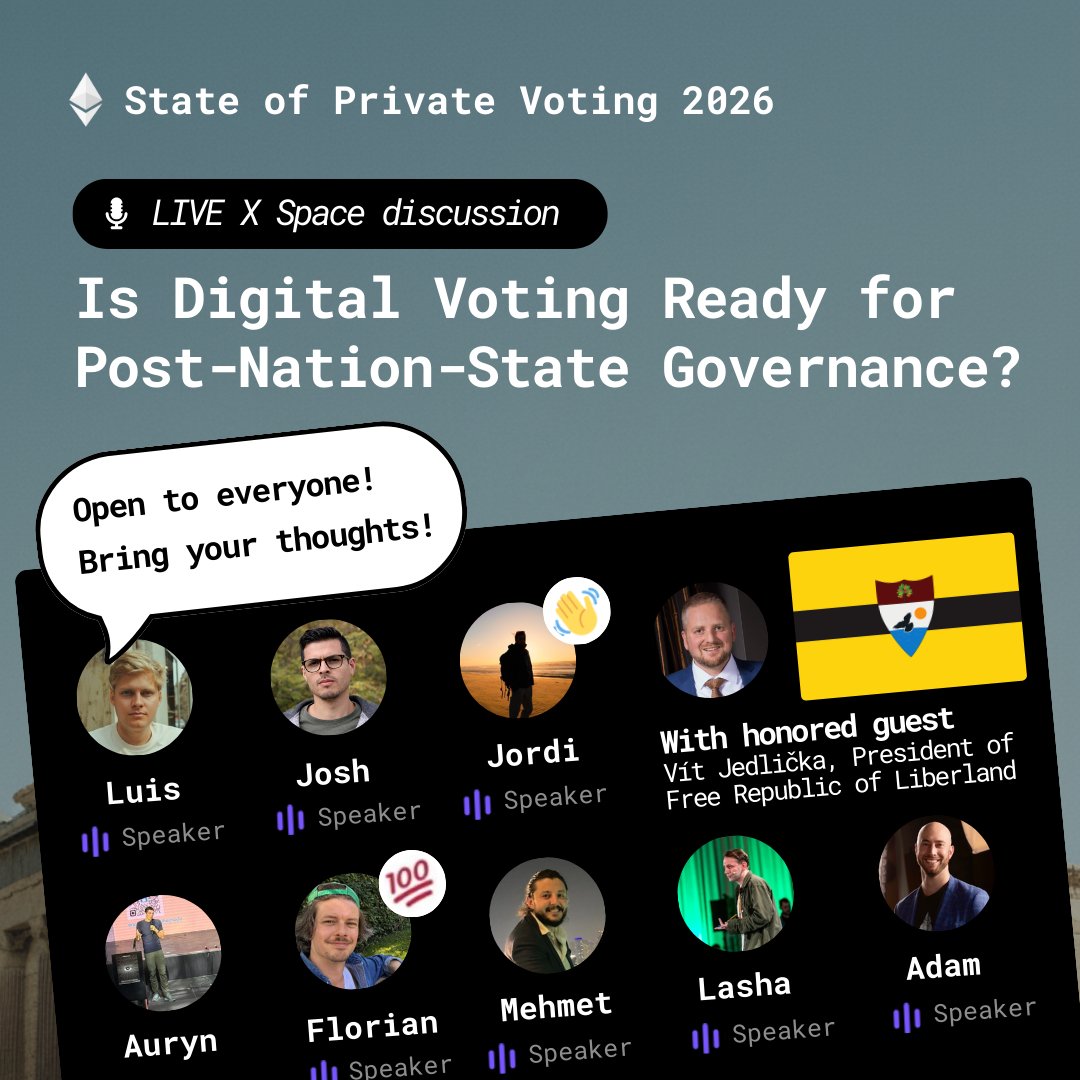
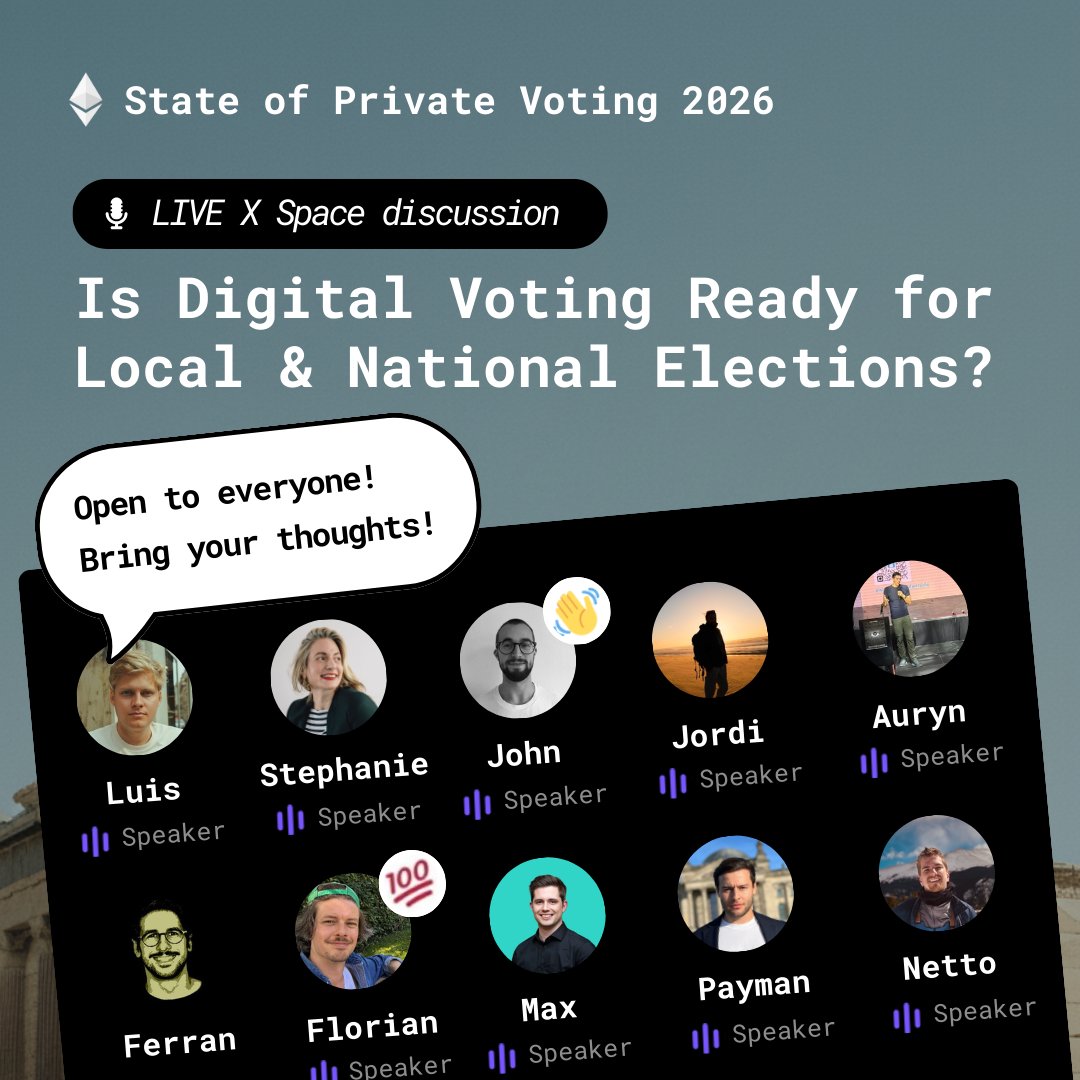
We're back with another X Space! 🎙️ We're witnessing the rise of the post-nation-state - communities united by values instead of by borders But are digital voting systems ready for this new era? Join the X Space with 🇺🇳 leaders + techno-libertarians + tech/legal experts 👇 🫡 With special guest, @JedlickaVit, President of the Free Republic of @Liberland_org@TBSocialist@jordipainan, @vocdoni@auryn_macmillan, @theInterfold@bezzenberger, @ShutterNetwork@heckerhut, blockchain.lawyer@msaidgumus3, @zuzalukas@LashaAntadze, @Rarimo_protocol@0xThriller, @MIDAODS@alextnetto, @blockful_io / @anticapture@alex__eth, @Kleros_io@acaravello, @ShutterNetwork Thurs 19 March, 14:00 UTC
Shutter 🛡️⚔️ tweet media
English
4
15
26
2.6K
Rarimo 👤 retweetet
Alexis Roussel
Alexis Roussel@alexis_roussel·
Le but de cette app de vote est simple. Cela ne doit pas être un énième sondage en ligne. Grâce à une technologie nous venant d'Ukraine développée par mes amis de @Rarimo_protocol c'est avec la Carte d'Identité que nous pourrons voter. Le téléphone devient un bureau de vote qui permet de créer un enveloppe de vote anonyme qui est ensuite déposé dans une urne électronique publique. Les données sont ensuite effacées du téléphone. On fait évidemment quelques compromis. Mais face à l'enjeu, ceux-ci sont acceptables pour nous. L'important est de faire un vote qui ne se repose sur aucune infrastructure gérée par l'Etat. Un vote citoyen, géré par les citoyens. bientôt vous pourrez tester l'application...
Alexandre Jardin@AlexandreJardin

AVANT L’ÉTÉ LES FRANÇAIS POURRONT S’EXPRIMER DIRECTEMENT - ce matin dans le @FigaroMagazine_ Peu à peu nous vous tiendrons au courant, en confiance. Des travaux dirigés par Alexis Roussel, des réactions du monde des hackers face à ses choix technologiques qui font de l’appli un exploit tech. Et de comment vos votes pèseront… très lourd. Ils ont voulu moins de démocratie… on va faire plus de démocratie ! Alexis parlera. Comme Robinson a commencé à parler. Réparer la démocratie est notre joie. #gueux

Français
21
21
63
6.9K
Rarimo 👤 retweetet
Alexandre Jardin
Alexandre Jardin@AlexandreJardin·
LES FRANÇAIS POURRONT DIRIGER LA POLITIQUE PAR RÉFÉRENDUM AVANT L’ÉTÉ. Oui. Vraiment. Pas dans 10 ans. Avant l’été. Tout a commencé le 15 août, dans un Paris désert. Autour d’une table, Alexis Roussel (chantre suisse de l’intégrité numérique), mon fils Robinson Jardin et moi avons posé une question simple : pourquoi votons-nous tous les 5 ans pour que d’autres décident à notre place ? Robinson a dit : « C’est un système du Moyen-Âge. On est en 2026. On peut faire mieux. Une app de référendums pour décider directement : – vérifiable par tous – anonyme – infalsifiable – un vote par carte d’identité – sans données personnelles centralisées – impossible à manipuler » Alexis a dit : « La technologie existe déjà, par morceaux. On peut les rassembler. Je m’en occupe. » On y est presque. Aujourd’hui, Robinson a de bonnes nouvelles. Ce week-end, le @FigaroMagazine_ en dira plus ! Partagez, la politique française ne sera plus jamais la même.
Français
240
1.6K
3K
107.7K
Georgios Konstantopoulos
what were the most interesting on-chain registry designs that never took off because blockspace was too expensive?
English
12
0
39
8.5K
Rarimo 👤 retweetet
Web3Privacy Now
Web3Privacy Now@web3privacy·
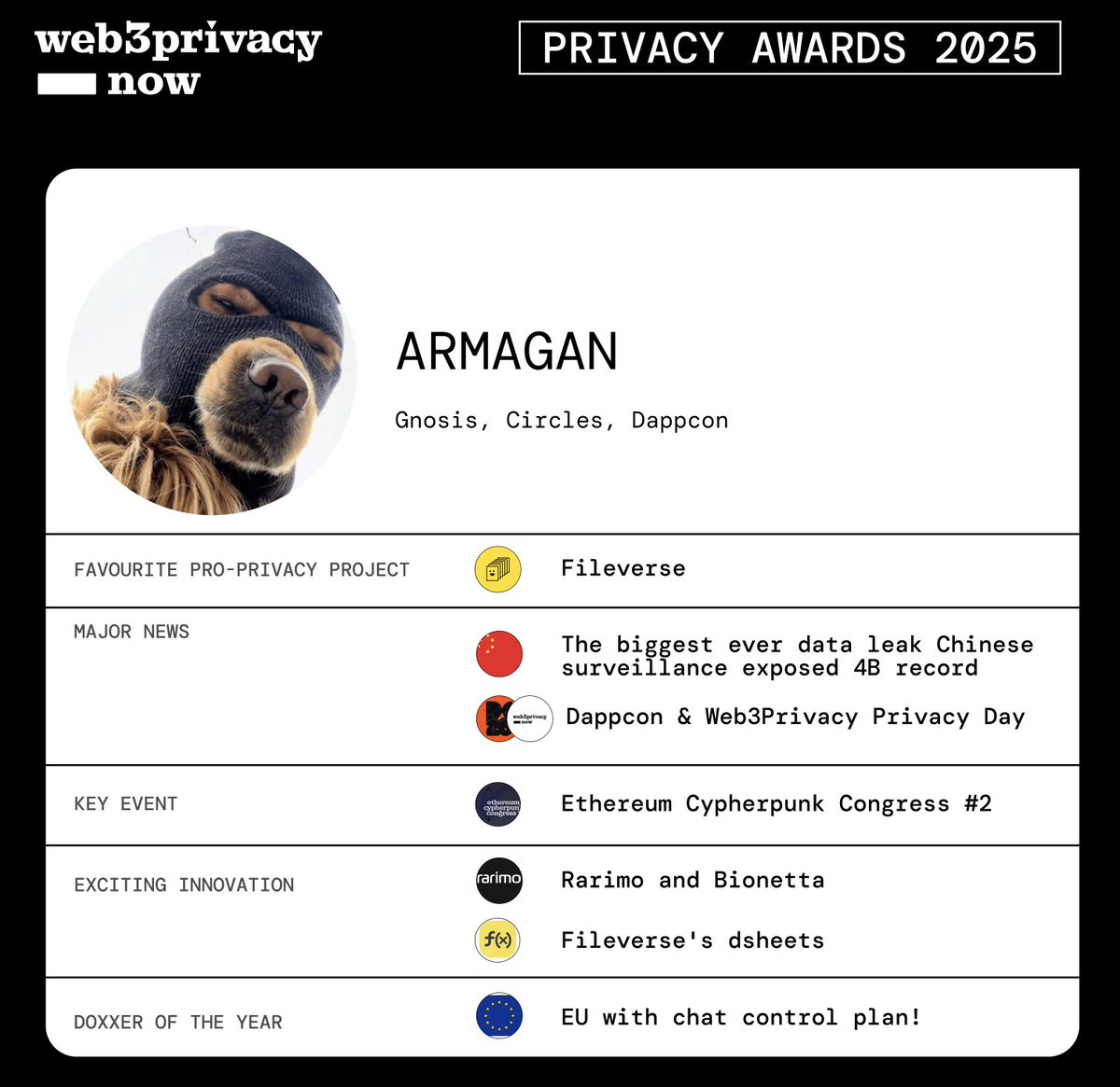
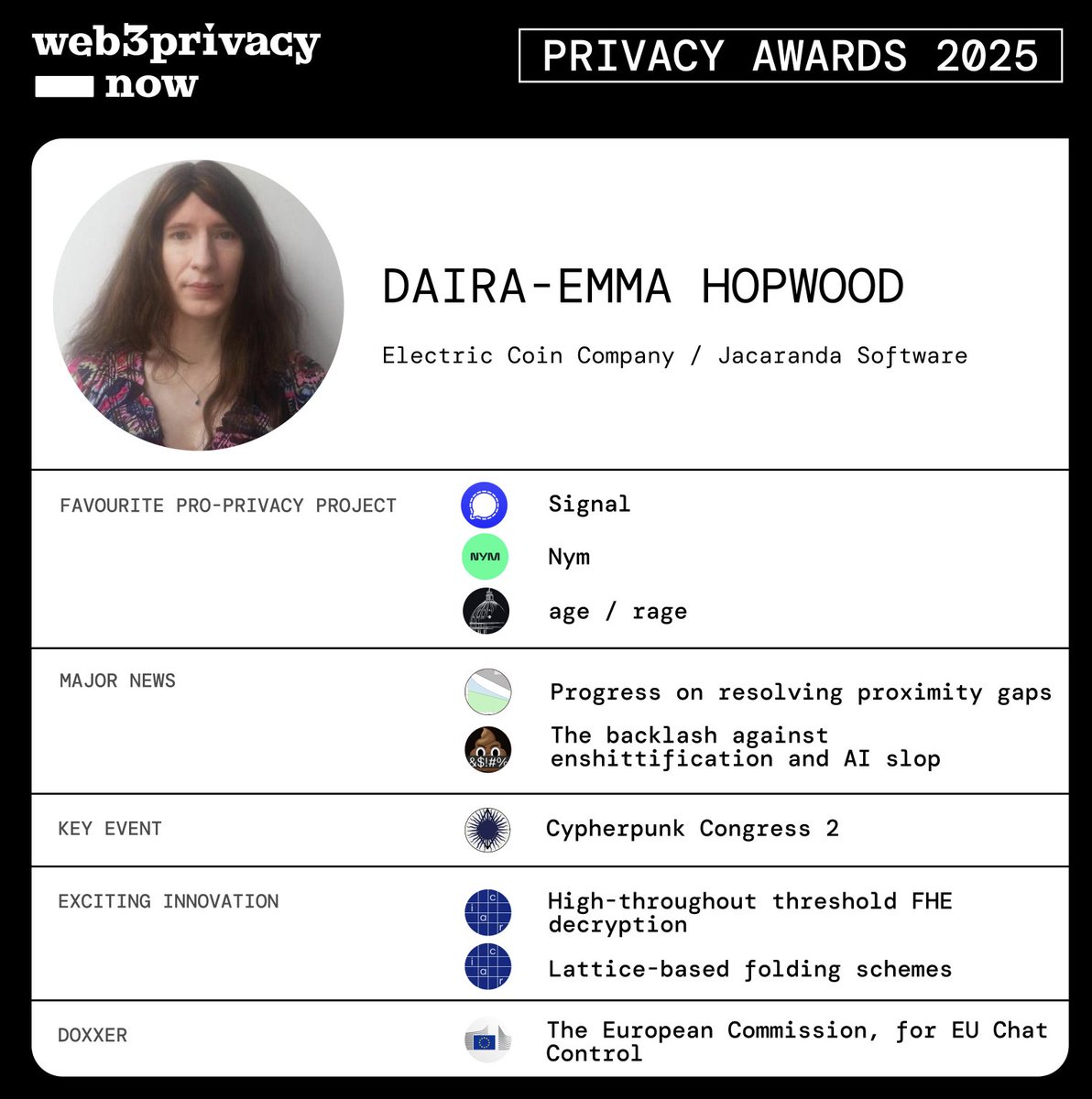
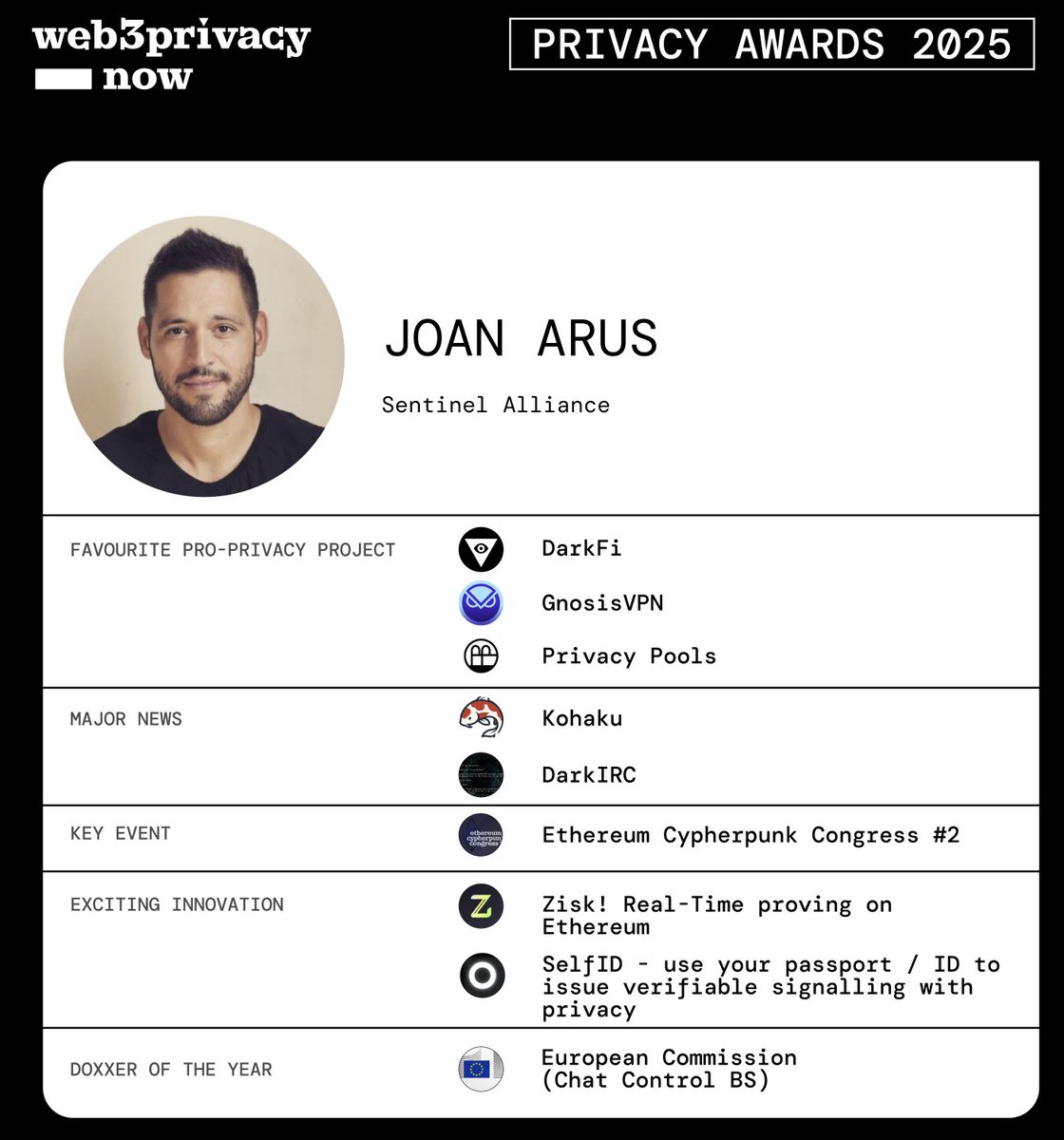
Thanks to everyone who participated in nominations and took time to share their opinion on every single thing worth mentioning from privacy ecosystem last year. Among nominations you can find @aisconnolly x @TACEO_IO @0xMeTony x @fluidkey @epochzer0 x @aboutcircles x @gnosis_ @costgallo x @SafeLabs_ @crispzlegion x @0xfairblock @griffgreen x @Giveth @harryhalpin x @nym @kurtopsahl x @FilFoundation @PryvitKyle x @brave @LashaAntadze x @Rarimo_protocol @naomibrockwell @sethforprivacy @vpavlin x @Logos_network @Zodomo and many more!
Web3Privacy Now tweet mediaWeb3Privacy Now tweet mediaWeb3Privacy Now tweet mediaWeb3Privacy Now tweet media
English
1
3
18
605
Rarimo 👤 retweetet
Dmytro Zakharov
Dmytro Zakharov@ZamDmytro·
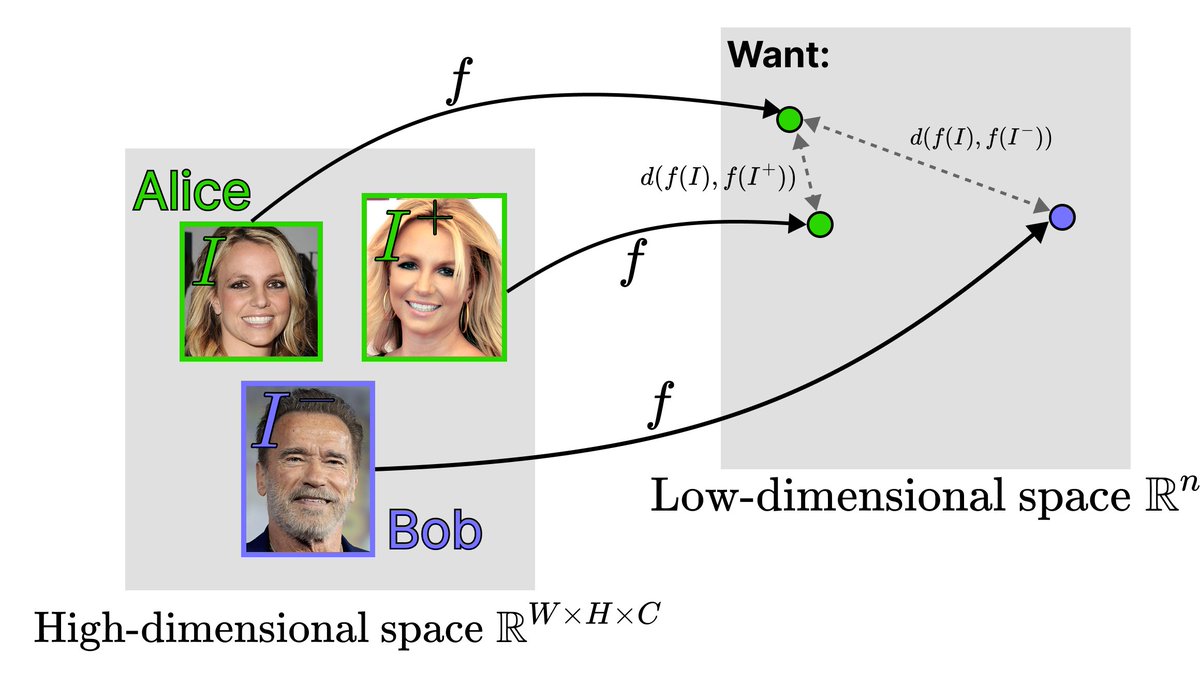
A blog on how Fuzzy Extractors work! It features a high-level explanation on how one can derive stable cryptographic key from unstable (fuzzy) data (such as face/fingerprint samples).
Dmytro Zakharov tweet media
English
1
3
9
509
Rarimo 👤 retweetet
Unforgettable
Unforgettable@unforgetapp·
Are MPC embedded wallets really self-custodial? The test is simple: 🛑Can the system form the key without you? 🛑Can it block your transaction? If Yes, it is not ownership. That’s outsourced control. We’re building something different. JIT (Just-In-Time Keys) for embedded wallets: • Users log in with usual flow • Keys are derived from Unforgettable inputs • Log out → keys vanish Unforgettable embedded wallets 🪄
English
1
1
6
595
Rarimo 👤 retweetet
Shutter 🛡️⚔️
Shutter 🛡️⚔️@ShutterNetwork·
Next week's X Space chat is gonna be stacked 🔥 Hear from people building digital voting tech, working with voting systems, and examining operational/legal risk @Steph_Wissmann, Bundeswehr University Munich @john_guilding, @zkMACI/@PrivacyEthereum @bezzenberger, @ShutterNetwork @heckerhut, blockchain.lawyer @alextnetto, @blockful_io /@anticapture @auryn_macmillan, @EnclaveE3 @LashaAntadze, Freedom Tool (@Rarimo_protocol) @dsernst, Secure Internet Voting Ariana, Secure Internet Voting @jordipainan, @vocdoni @ferran, @vocdoni @paymansuper, Votebase Maximilian Pieters, Votebase and more... Wed 25 Feb, 13:00 UTC
Shutter 🛡️⚔️ tweet media
English
5
10
21
1.2K
Lasha 🔑🗳️
Lasha 🔑🗳️@LashaAntadze·
PoH projects keep inventing new vaporware, and I think the entire "proof of humanity: is a wrong framing, cause it's a biological question, internet does not need biology it needs accountability. If I had to ship something fast and slightly better I'd call it accountable agency. - Use hardware-bound passkeys (it's everywhere and no need for special devices) but instead of one-time login, do periodic silent biometric WebAuthn (it's default secure as runs locally) and becomes continuous proof of live agency. - Add economic cost. Small stake, slashable if you spam, cheat, or farm. Bad behavior becomes expensive. Now you’re not proving “human” you're saying: I am persistent. I am device-bound. I have skin in the game. That's much harder system to exploit than any other scan your elbow ritual to lease your humanness.
Humanity@Humanityprot

We just unveiled Proof of Trust. The cryptographic answer to AI-generated fraud. How it works: → Verifying not just who you are, but the authenticity of your intent. → ZK-proofs that prove eligibility without sharing raw data. → A non-invasive palm-recognition layer that bots simply cannot mimic. The imitation economy ends today. Humanity begins. 📖 humanity.org/blog/humanity-…

English
2
0
4
193
Rarimo 👤 retweetet
Unforgettable
Unforgettable@unforgetapp·
Unforgettable isn’t just about privacy or eliminating key & biometric storage. The bigger shift is architectural: • nothing needs to be hosted • nothing can be leaked Access becomes instant, programmable. JIT keys are a new primitive for wallets, agents, IAM. @LashaAntadze
English
0
4
8
515
Rarimo 👤
Rarimo 👤@Rarimo_protocol·
When people talk about PoH, they often gesture vaguely at “Sybil resistance” without clarifying what problem they’re actually trying to solve. But most use-cases fall into three categories: economic fairness, governance legitimacy, and social trust. It feels clean in theory, but the moment it hits the real world, it warps. 🤝 solid!
English
0
0
0
73
Dmytro Zakharov
Dmytro Zakharov@ZamDmytro·
@zkDragon To be honest reducing 12 to 8 words does not in principle solve the problem. I think solution by @Rarimo_protocol should work: combine several memorable factors (geolocation, low-entropy password, biometrics) to derive the key. But this requires very careful security analysis
English
1
1
3
260
Rarimo 👤 retweetet
Shamex
Shamex@Shamex_Ent·
▫️ Unforgettable (built by @Rarimo_protocol) introduces a powerful idea: cryptographic keys derived from multiple human factors - biometrics, passwords, and even images. Your key can come from something as natural as a photo you take.
English
1
1
4
197
Dev 🧪
Dev 🧪@zkDragon·
We need to make mnemonics more usable. Steps: - Make the dictionary bigger (6000 words). Thats 12.5 bits / word - Make the hash from words -> entropy super slow. (memory hard, do 2**28 ops) - Remove error correction Now were 8 words, instead of 12. Far more brain friendly.
Dev 🧪@zkDragon

@balajis Everything will become self-encrypted to go x-device, using keys derived from your mnemonic. Then when we want better recoverability, we start engineering it via threshold crypto to friends / multisigs. (And in a decade, witness encryption which will remove even that trust)

English
10
1
31
3.5K
Rarimo 👤 retweetet
Unforgettable
Unforgettable@unforgetapp·
Unforgettable website relaunch ✨ We took some time to slow down and really think about where this tech actually makes sense and how self-custody should feel in its next phase. Crypto shouldn’t give up decentralization just to be "easy", but it also shouldn’t be painful to use. With Just-in-Time keys, your crypto keys appear only for a split second to approve a transaction, then disappear. No storing, no MPC, no third parties holding keys for you. Safer by design. Better UX by default. This is the direction we’re building toward.
English
0
2
9
799