Kat

51 posts

Kat banner
Kat

Kat

@katyenko

building @bioArena_ AI ∩ bio | in vitro to in silico, always an experimenter

SF Beigetreten Ağustos 2024
360 Folgt356 Follower
Angehefteter Tweet
Kat
Kat@katyenko·
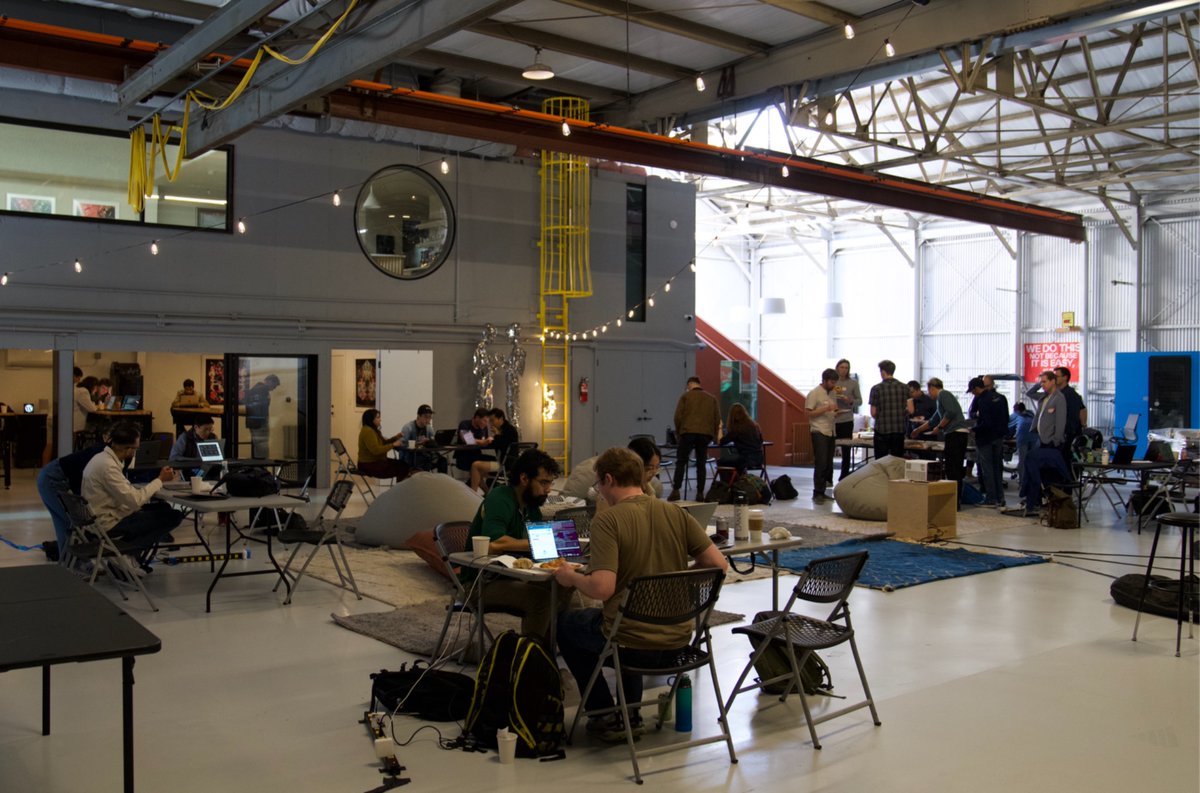
Thanks to everyone who joined the In Silico to In Vitro Hackathon with @adaptyvbio yesterday - we had a blast. Huge thanks to our sponsors @OpenRouter, @modal, and @RowanSci. We will share the results from Adaptyv as soon as they’re in (~3 weeks).
Kat tweet media
English
1
7
20
3.9K
Kat retweetet
Corin Wagen
Corin Wagen@CorinWagen·
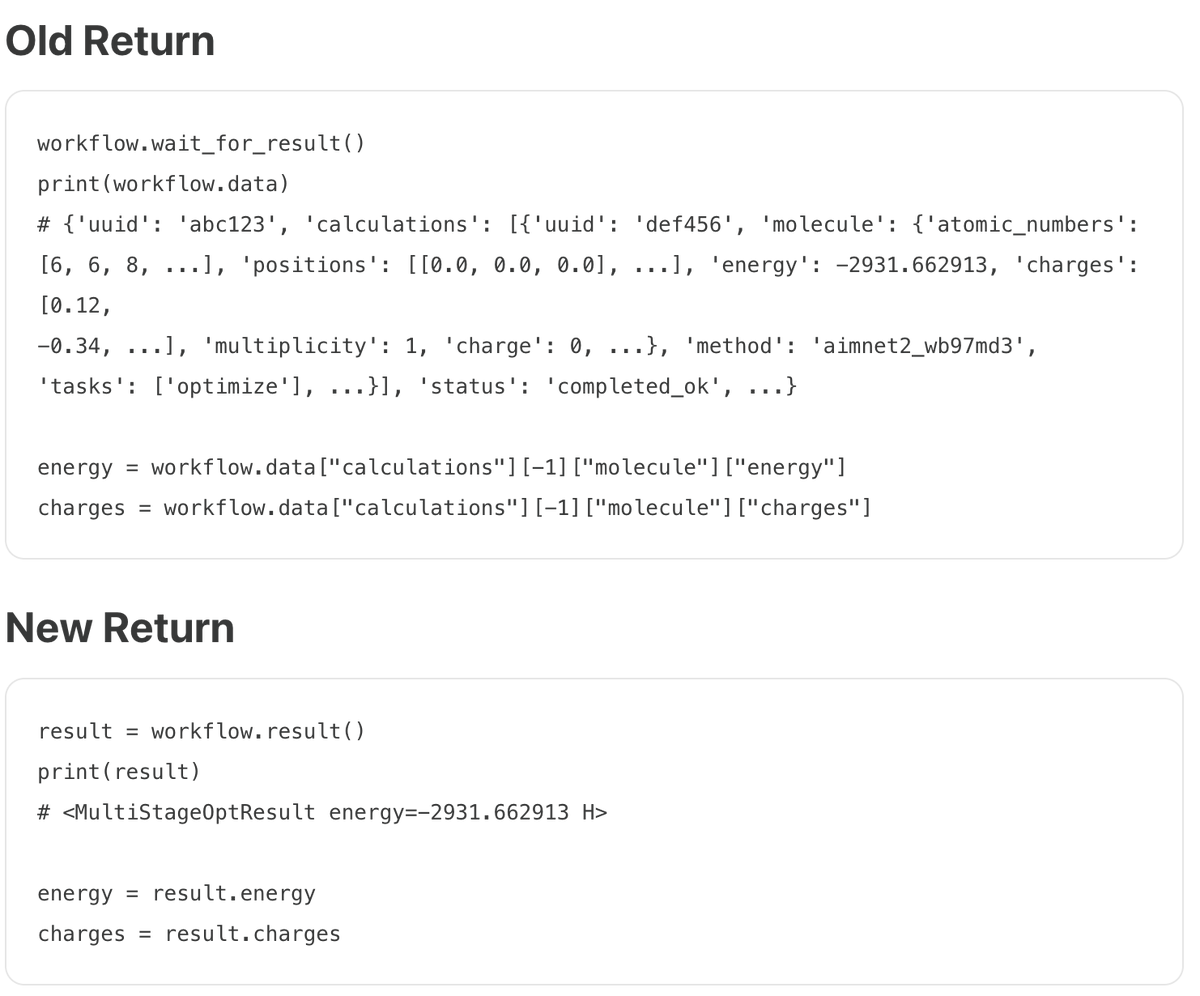
We just released a big update to Rowan's Python API, with the goal of making it easier for (1) regular programmers (2) people using Claude Code/Codex, and (3) "AI scientists" to build atop Rowan. Every workflow now returns a typed output result that mirrors the web interface:
Corin Wagen tweet media
English
2
6
18
769
Kat retweetet
Kat
Kat@katyenko·
A well-written overview of this (very cool) experiment on protein folding transitions
Niko McCarty.@NikoMcCarty

A protein moves between its “folded” and “unfolded” forms in less than one-millionth of a second. For a new study, researchers captured this transition for single proteins. The researchers studied eight small proteins, in fact, ranging in size from 35 to 81 amino acids. (An average human protein, for context, is about 400 amino acids.) Each of these proteins has a single domain, and each protein can only exist in one of two states; “unfolded” or “folded.” Because these proteins are so small, they switch between states incredibly fast (like I said, millionths of a second). Coming up with an experiment to measure this switching, especially at the level of individual molecules, seems really, really, really difficult. I mainly decided to read this paper so that I could understand this experiment, and it did not disappoint! First, the researchers purified each protein and put it into a liquid with urea. Urea destabilizes proteins and coaxes them to unfold, so if you place the molecules in *just* the right concentration of urea, then there will be a roughly equal chance the molecule will exist in either its folded or unfolded form. The goal is to find the urea concentration that causes each protein to switch back-and-forth as often as possible. Next, the researchers attached two fluorescent dyes to each protein; one green and one red. These dyes fuse to cysteine amino acids located far apart when the protein is unfolded, but that come closer together when each protein folds. (Importantly, each protein already has many solved structures, so it’s easy to figure out which amino acids are most suitable for the dyes. The dyes are a bit bulky, though, so you need to make sure they don’t disrupt the protein folding.) When the green and red dyes come together, the green dye transfers its energy over to the red instead of emitting its own light. The result is that an unfolded protein appears in roughly equal parts of green and red. But as it transitions into its “folded” state, it emits a larger and larger fraction of solely red photons. But because this folding happens in less than one millionth of a second, and it’s not really possible to see the tiny number of photons emitted by a single protein, the next step was to — somehow — amplify the fluorescent signal emitted from each protein as its folding. Not easy! To solve this problem, the researchers used something called a zero-mode waveguide, which is a tiny sheet of aluminum with holes punched into it. These holes are only about 120 billionths of a meter wide; just enough for a protein to float inside. (Zero-mode waveguides were also used to build the PacBio DNA sequencer.) When a protein drifts into one of these holes, the metal walls concentrate light in a way that makes the dyes glow five to six times brighter than normal. And finally, the researchers used single-photon detectors to measure the signals from each zero-mode waveguide. These are extremely sensitive light sensors that produce an electrical pulse every time a single photon hits them. The sensors record the exact arrival time of each photon with nanosecond precision. They used two of these detectors for each well. A special mirror, called a dichroic beamsplitter, sits in the light path and reflects green light toward one detector while allowing red light to pass through to the other detector. (These sensors are not recording videos. They literally just record the color of photon and the delay from the prior photon. So the dataset looks like this: - 0.000000 ms, green - 0.000003 ms, green - 0.000005 ms, red - 0.000006 ms, green) The researchers used this setup to measure two things: “Waiting time,” which just says how long a protein stays unfolded before it starts to fold; and the “transition path” time, which describes how long the actual crossing from unfolded —> folded takes after it starts. The major takeaway was that smaller proteins have shorter waiting times on average, meaning they move back-and-forth between folded and unfolded states more frequently. (The protein with 35 amino acids had an average waiting time of 42 microseconds, compared to 1.6 seconds for the protein with 81 amino acids.) Surprisingly, though, larger proteins have SHORTER transition times, meaning they transit between the two states faster after the process has begun. The largest protein had a transition time of 0.7 microseconds, compared to 3.1 microseconds for the smallest. TL;DR Evolution has optimized larger proteins to fold more efficiently via cooperativity, where one part of the protein coaxes another part to snap into place. The whole molecule works together, rather than each chain moving independently. I love biophysics <3

English
0
0
4
386
Kat
Kat@katyenko·
FEP has been a widely used physics-based tool in drug discovery, and improving cost + throughput + UX makes it way more useful in drug discovery programs Excited to see this team addressing cost and throughput bottlenecks here!
Corin Wagen@CorinWagen

Today we're launching free-energy perturbation (FEP) on Rowan! Using Rowan FEP, scientists can predict how tightly a potential drug will bind to a target, allowing teams to explore ligand modifications without having to wait for synthesis. Here's what this looks like:

English
0
0
3
269
Kat retweetet
Adaptyv Bio
Adaptyv Bio@adaptyvbio·
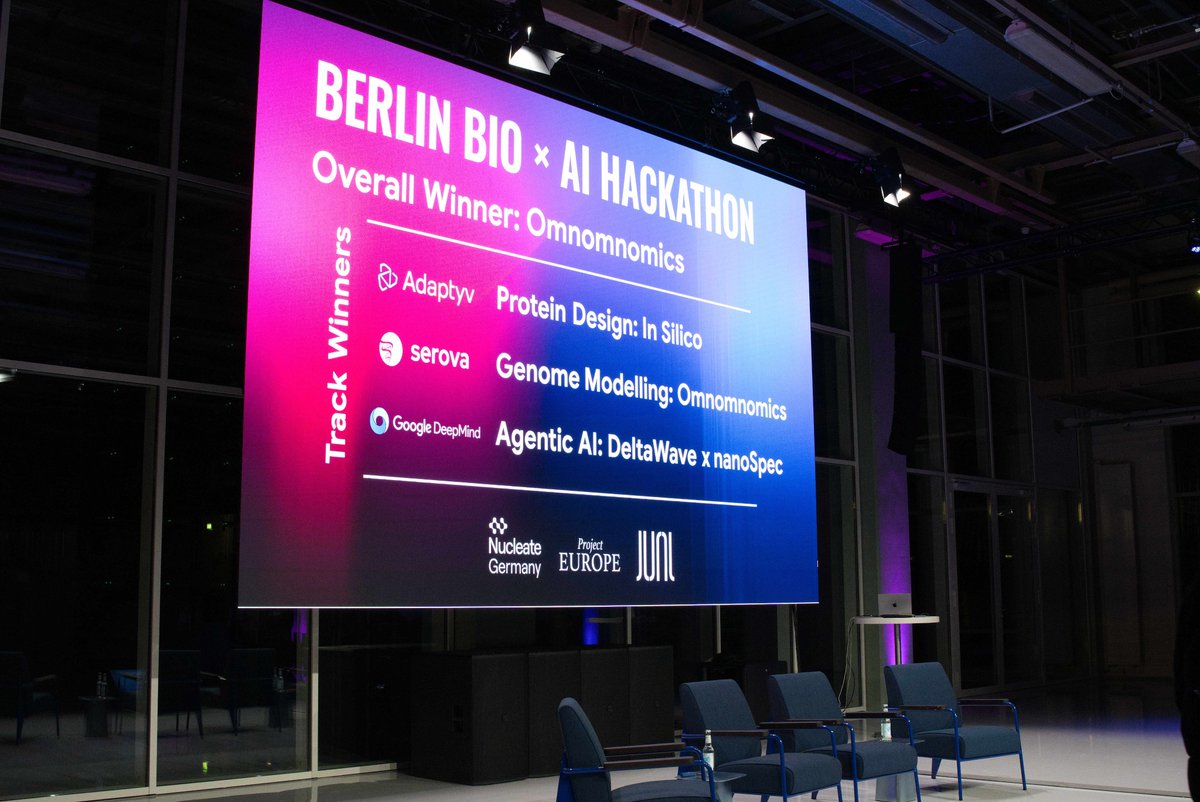
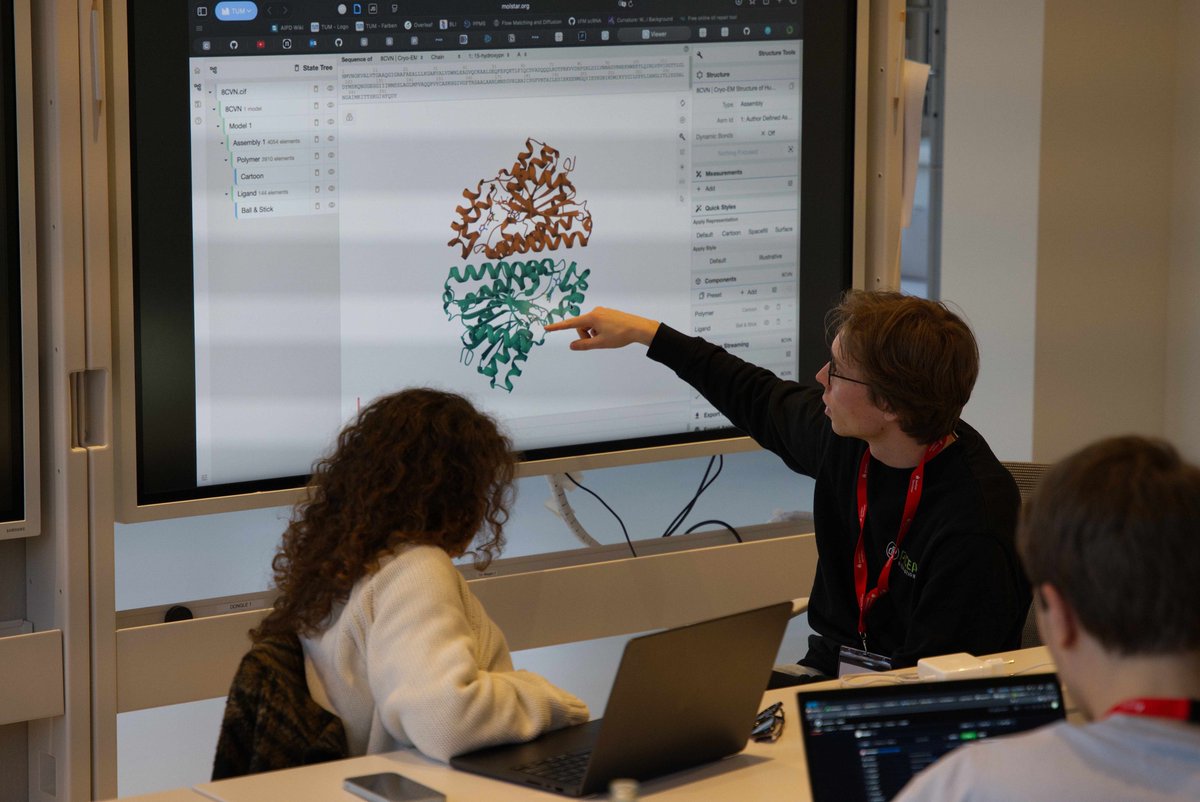
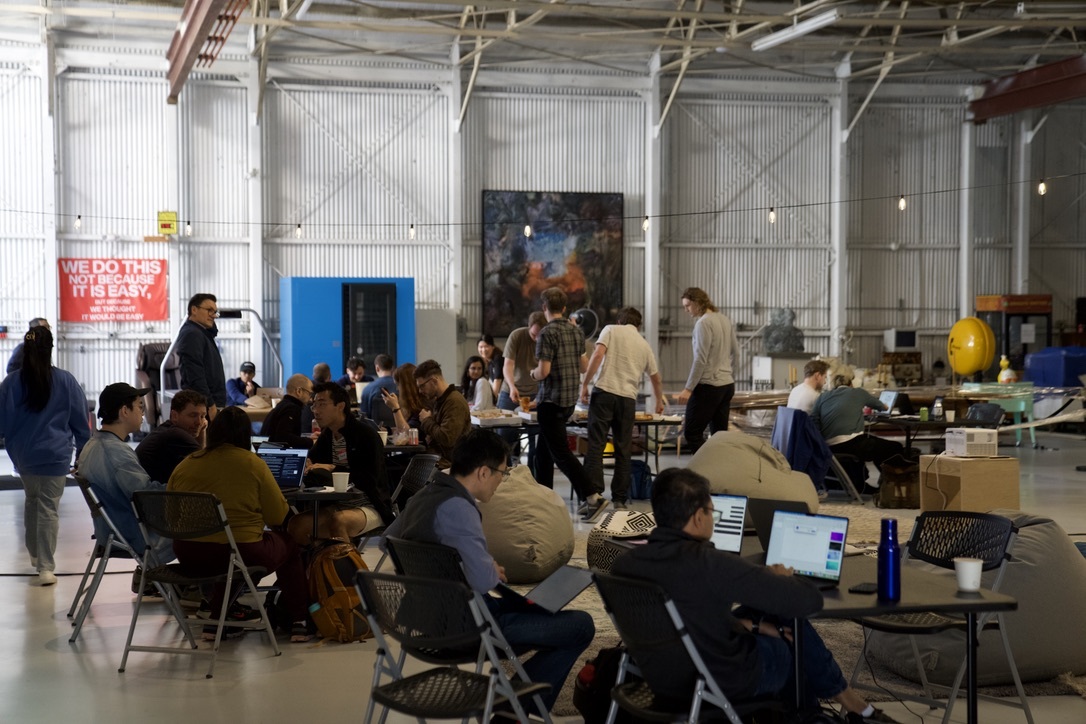
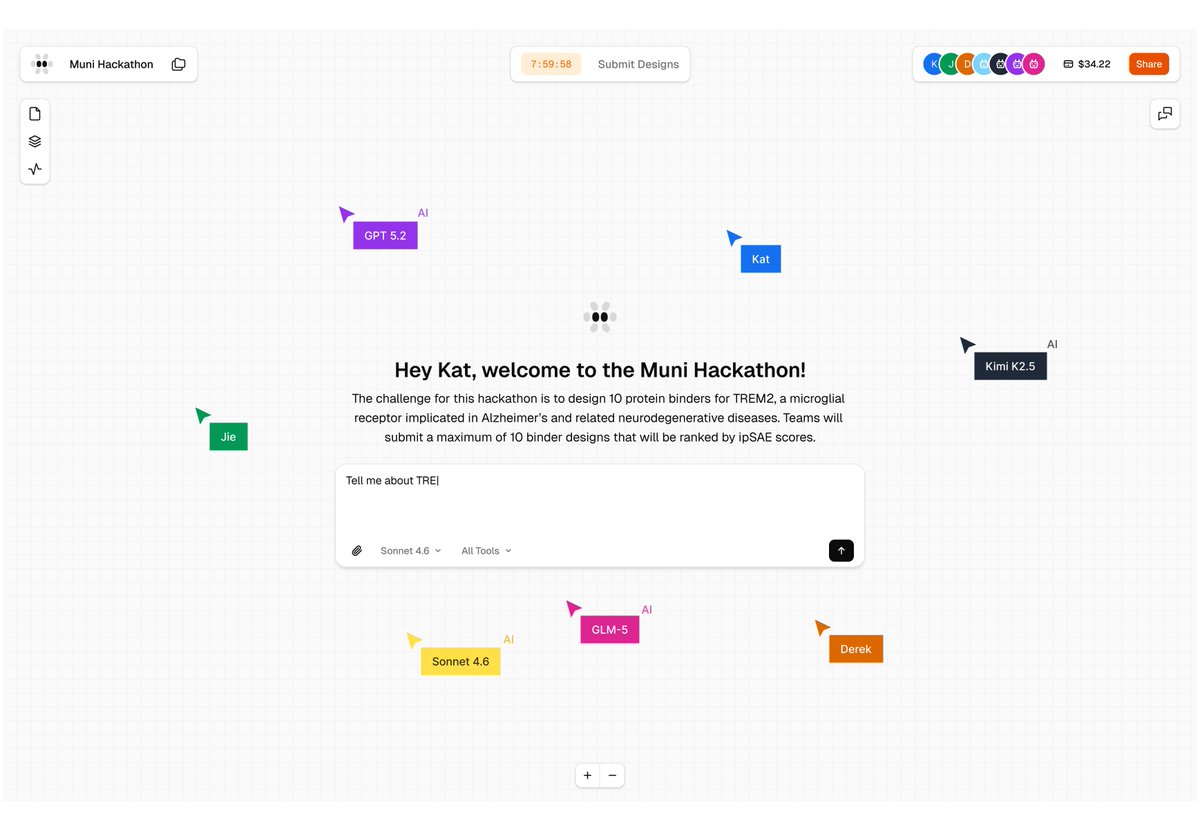
This weekend we hosted two challenging hackathons on two different continents! Excited to see so many people passionate about protein design. We’re looking forward to experimentally test all of those new proteins in our wet lab next, stay tuned for the results 🇩🇪 Berlin Bio × AI Hackathon The Protein Design Track we organized had 6 teams competing by designing binders against 15-PGDH, a gerozyme whose rising activity with age drives muscle loss, neurodegeneration, and joint decline. We saw teams bringing their own models to the task, improving them in 24 hours, while others used out-of-the-box solutions. Some people even created new dashboards with Claude Code integrated for direct feature requests. And others focused on critical challenges for building a biotech: delivering the designer drugs, market analysis, exploring other binder modalities. We’re now testing the best 150 proteins in our lab and will release the experimental results next month! 🇺🇸 SF bioArena Hackathon - Humans vs AI agents A single-day hackathon where human teams and AI agents competed side by side in designing proteins. The target was TREM2, a receptor involved in Alzheimer’s disease. 9 human teams competed against 6 agents, including Anthropic’s Claude Sonnet 4.6 and xAI’s Grok 4.1. 100 designs were selected for experimental validation in our wet-lab. We’ll reveal who won, agents or humans, soon! 🧬Want to participate in one of our competitions? Join the RBX1 challenge on @proteinbase - the submission deadline is at the end of this month. Thanks a lot to @la_Payette_ , Stefan Hristov, @burgshrimps, and the rest for organizing the Berlin Bio hackathon and to @katyenko for the bioArena one in SF.
Adaptyv Bio tweet mediaAdaptyv Bio tweet mediaAdaptyv Bio tweet mediaAdaptyv Bio tweet media
English
0
5
18
2K
Kat
Kat@katyenko·
Thanks to everyone who joined the In Silico to In Vitro Hackathon with @adaptyvbio yesterday - we had a blast. Huge thanks to our sponsors @OpenRouter, @modal, and @RowanSci. We will share the results from Adaptyv as soon as they’re in (~3 weeks).
Kat tweet media
English
1
7
20
3.9K
Kat retweetet
Tudor-Stefan Cotet
Tudor-Stefan Cotet@CotetTudor·
It's Humans vs Agents for Protein Design, in a hackathon hosted by @bioArena_ and experimentally validated by @adaptyvbio. Definitely check it out if you're in SF! It's been so fun to set this one up with @katyenko
Adaptyv Bio@adaptyvbio

𝗖𝗮𝗻 𝗔𝗜 𝗮𝗴𝗲𝗻𝘁𝘀 𝗱𝗲𝘀𝗶𝗴𝗻 𝗽𝗿𝗼𝘁𝗲𝗶𝗻 𝗯𝗶𝗻𝗱𝗲𝗿𝘀 𝗼𝗻 𝘁𝗵𝗲𝗶𝗿 𝗼𝘄𝗻? 𝗛𝗼𝘄 𝗱𝗼 𝘁𝗵𝗲𝘆 𝗰𝗼𝗺𝗽𝗮𝗿𝗲 𝗮𝗴𝗮𝗶𝗻𝘀𝘁 𝗵𝘂𝗺𝗮𝗻𝘀? 𝗪𝗲'𝗿𝗲 𝗮𝗯𝗼𝘂𝘁 𝘁𝗼 𝗳𝗶𝗻𝗱 𝗼𝘂𝘁 🤖🧬 Teaming up with @bioArena_ for a single-day hackathon in San Francisco (Feb 28). The target: TREM2, a microglial receptor where loss-of-function variants increase Alzheimer's risk 2-4x. Alector's antibody AL002 failed Phase 2 last year. Novartis' VHB937 is still in trials. New binding modalities might find paths that existing antibodies missed. Human teams and autonomous agents compete side by side in this hackathon. Participants can submit to 10 sequences, ranked by the ipSAE score via Boltz-2. 🔬 Top 100 designs tested in our wet lab 📊 Results ~3 weeks post-event on @proteinbase 🤖 Get started with the Protein Design Skills for Claude Code → proteinbase.com/protein-design… Register → luma.com/a6t92ohv

English
2
7
44
4.7K
Kat
Kat@katyenko·
Designing protein binders is fun, but seeing them tested in the lab is even better. It’s been awesome partnering with @adaptyvbio. Join us in SF next weekend: luma.com/a6t92ohv
Adaptyv Bio@adaptyvbio

𝗖𝗮𝗻 𝗔𝗜 𝗮𝗴𝗲𝗻𝘁𝘀 𝗱𝗲𝘀𝗶𝗴𝗻 𝗽𝗿𝗼𝘁𝗲𝗶𝗻 𝗯𝗶𝗻𝗱𝗲𝗿𝘀 𝗼𝗻 𝘁𝗵𝗲𝗶𝗿 𝗼𝘄𝗻? 𝗛𝗼𝘄 𝗱𝗼 𝘁𝗵𝗲𝘆 𝗰𝗼𝗺𝗽𝗮𝗿𝗲 𝗮𝗴𝗮𝗶𝗻𝘀𝘁 𝗵𝘂𝗺𝗮𝗻𝘀? 𝗪𝗲'𝗿𝗲 𝗮𝗯𝗼𝘂𝘁 𝘁𝗼 𝗳𝗶𝗻𝗱 𝗼𝘂𝘁 🤖🧬 Teaming up with @bioArena_ for a single-day hackathon in San Francisco (Feb 28). The target: TREM2, a microglial receptor where loss-of-function variants increase Alzheimer's risk 2-4x. Alector's antibody AL002 failed Phase 2 last year. Novartis' VHB937 is still in trials. New binding modalities might find paths that existing antibodies missed. Human teams and autonomous agents compete side by side in this hackathon. Participants can submit to 10 sequences, ranked by the ipSAE score via Boltz-2. 🔬 Top 100 designs tested in our wet lab 📊 Results ~3 weeks post-event on @proteinbase 🤖 Get started with the Protein Design Skills for Claude Code → proteinbase.com/protein-design… Register → luma.com/a6t92ohv

English
0
3
19
2.2K
Fahd
Fahd@fahd838_·
@katyenko @adaptyvbio What if I can not be there Can I participate with any team online?
English
1
0
1
46
Kat
Kat@katyenko·
In Silico to In Vitro is our most ambitious hackathon yet. We’re teaming up with @adaptyvbio to run a challenge where scientists generate novel binders in silico, with top designs built and tested in the lab. Join us if you're in SF on 2/28: luma.com/a6t92ohv Co-sponsored by @RowanSci, @openrouter and @modal, with generous compute support.
English
4
8
27
2K
Leo Wan
Leo Wan@LeoCK_Wan·
@katyenko @adaptyvbio Why not scale up wet lab testing using cell display. Get more than 100000 designs tested all at once
English
2
0
2
153
Kat retweetet
Max Jaderberg
Max Jaderberg@maxjaderberg·
Another very cool capability from IsoDDE is the ability to predict the site of pockets (places where molecules will bind) completely independently of binding molecules. We’ve validated this works almost as well as a 6 month long experimental process (but taking just a few seconds for IsoDDE!) and can uncover novel cryptic pockets which require big changes in the shape of the protein when molecules bind such as this example in the image. 6/7
Max Jaderberg tweet media
English
2
4
62
4.9K
Kat retweetet
Jasmin Kaur
Jasmin Kaur@JasminKaur_·
rather than outsourcing intellectual bets to AI scientists (cause the models are still not good enough yet); this is a fun experiment on maintaining scientific intuition in the loop, a playground models can also learn from
Kat@katyenko

x.com/i/article/2019…

English
0
1
5
806