Willem

906 posts

Willem banner
Willem

Willem

@vanlancker

Investing and design · @terraincap · https://t.co/T3TP9IqX2R

Beigetreten Ekim 2009
606 Folgt9.3K Follower
Willem
Willem@vanlancker·
@naturalpay It all started with that profile image ⬜️
English
0
0
1
124
Natural
Natural@naturalpay·
Currency’s deepest design principle is that complexity, rendered invisible, produces trust. That invisibility is not an accident. It's the highest form of design. And it's the idea at the heart of Natural’s visual identity. More about the intention behind Natural’s brand in the blog below: natural.co/blog/natural-b…
English
5
3
42
6.3K
Rune Kvist
Rune Kvist@RuneKvist·
@elevenlabs is on the frontier of AI security & safety. For them, that meant becoming the world’s first company to secure insurance for a voice AI agent - backed by AIUC-1 certification. Joined @johncoogan & @jordihays at @tbpn to talk about why standards and insurance will unlock secure AI adoption.
English
4
8
42
6.9K
Kahlil Lalji
Kahlil Lalji@bykahlil·
210 days ago, @naturalpay was just a one-pager and a memo. Today, we’re coming out of stealth. Natural is the agentic payments platform powering frictionless money movement between agents, businesses, and consumers. Wallets. Payments. Ledgering. Routing. Identity. Compliance. Credit. Observability. Risk. Everything needed to move money. Engineered for agents and designed for humans. These primitives give you the ability to transact without becoming a payments expert or stitching together a dozen fragmented tools. Huge thanks to our team of 10 (soon to be 25), our early investors, and the supporters who believed in this vision from the start. If you want to help shape how money moves over the coming decades, we’re hiring. And if you’re building agents you should probably be moving money too. Reach out. Read more about Natural and the products we’re launching in the blog below. natural.co/blog/introduci…

San Francisco, CA 🇺🇸 English
102
51
676
117.3K
Willem
Willem@vanlancker·
We first started working with Kahlil last year in Terrain Free Agency, when he was still pre-idea. It’s been incredible to see him move from there to a specific and ambitious vision for agentic payments. Excited for him and the team today as they launch Natural. ⬜️
Kahlil Lalji@bykahlil

210 days ago, @naturalpay was just a one-pager and a memo. Today, we’re coming out of stealth. Natural is the agentic payments platform powering frictionless money movement between agents, businesses, and consumers. Wallets. Payments. Ledgering. Routing. Identity. Compliance. Credit. Observability. Risk. Everything needed to move money. Engineered for agents and designed for humans. These primitives give you the ability to transact without becoming a payments expert or stitching together a dozen fragmented tools. Huge thanks to our team of 10 (soon to be 25), our early investors, and the supporters who believed in this vision from the start. If you want to help shape how money moves over the coming decades, we’re hiring. And if you’re building agents you should probably be moving money too. Reach out. Read more about Natural and the products we’re launching in the blog below. natural.co/blog/introduci…

English
2
2
47
8K
Willem
Willem@vanlancker·
@jegilliland Shaping symbols makes order and meaning. Increasingly important in a world where up is up for debate.
English
0
0
2
152
James Gilliland
James Gilliland@jegilliland·
PG sees brand at its most decadent and concludes that shaping symbols (form and content) is either nefarious or superfluous. But shaping symbols is not decorative. It is one of the ways civilizations produce order. We have immense power to govern matter, yet little willingness to shape symbols. That imbalance helps explain our anomie.
Willem@vanlancker

THE BLEAKNESS OF THE BRAND AGE... PG’s essays on builders and innovation are some of the clearest thinking about the startup world. They are essential. But when he writes about art and design, he tends to apply an engineer's lens that flattens the subject. In this piece he frames design as something to solve and brand as something like the decorative facade constructed when real innovation runs out... He goes on that at the end of golden ages we are met with a bleak reality that the hollowness of brand is all we can compete on. Early industries compete on technological advancement. Later, when products become indistinguishable, companies compete on brand. He frames it as a cosmetic layer applied to otherwise solved problems. He makes a similar move in his essay How Art Can Be Good, resolving artistic quality as something judged objectively by an audience rather than as personal expression (I find this take particularly jarring given his background studying painting at RISD, one of the more intuitively-driven art schools.). The premise assumes that the only meaningful axis of improvement is technical performance. Once precision, efficiency, or cost reach a plateau, the remaining differentiation is treated as superficial, or worse, as a distortion. But value rarely evolves that way... In most product categories, value tends to evolve in layers. At first, the question is functional: does it work at all? Then it becomes experiential: how well does it work, and how does it feel to use? Eventually the frontier becomes cultural: what does this object express, and who does it belong to? Engineering dominates the first phase. Design often shapes the second. Brand emerges in the third, when products begin to carry shared meaning. As industries mature, competition shifts toward these cultural and human needs: what identity a product signals, what kind of world it helps create. As makers, we start by solving the functional problem. Over time the work moves up the ladder of human needs. Those dimensions are often symbolic rather than purely functional, but they are not trivial. They are where design often differentiates. PG is right that brand can become hollow: his account of Patek Philippe cynically creating an asset bubble through artificial scarcity is convincing, and the "comb-over effect" of individually rational steps producing something freakish is well observed (see: Richard Mille). But he makes the mistake of treating this endpoint as the definition of brand itself. Brand at its best is not manufactured scarcity or centrifugal weirdness. It is what happens when product, design, and point of view become coherent to people and begin to signal shared meaning. The watch example he builds the entire essay around actually illustrates the shift. Once quartz solved the problem of precision, watches didn't become irrelevant, their significance as cultural objects was enhanced. They became artifacts of craftsmanship, history, identity, and taste. The engineering problem was solved, but the human one remained. PG sees this transition and concludes that the remaining activity is empty. A designer sees it and recognizes a different kind of problem being solved. His strongest claim, that branding is “centrifugal” while design is “centripetal,” deserves a direct response. It's true that good design often converges. But convergence on what exactly? PG assumes it converges on functional optima: the thinnest case, the most accurate movement. Design converges on human optima: on how something communicates, on the relationship between an object and the person holding it. Brian Eno (whose writing on creative practice is akin to PG’s for startups) has a useful frame here called axis thinking. Most fields get stuck optimizing along a single axis, and the real leap comes from shifting to a different axis entirely. That's what happens when watches move from precision to cultural meaning. It's moving to a different center. That center is just as real, even if it can't be measured with a chronometer. When PG writes that “there's no function for form to follow” in the brand age, he's defining function too narrowly. Expressing identity, signaling values, triggering emotions, these are very real functions. They're just not engineering functions. If his interpretation were correct, if everything beyond technical performance were decorative, whole domains of human creation would stop making sense. Why design new chairs once ergonomics are understood? Why design new garments when we have ones that work perfectly well? Why open new restaurants when we already know how to cook? The answer is that these fields serve a hierarchy of needs that extends well beyond the functional, and the work of addressing those higher needs is not lesser work. This matters now more than it has in decades. As AI compresses the cost of building software toward zero, we are entering a new version of the quartz crisis: one that affects nearly every product built on code. PG's framework would predict that what follows is a rather bleak brand age: superficial differentiation over commoditized technology. But if value evolves in layers, what actually follows is a design age, a period where the human dimensions of product become the primary frontier. When done well, design, taste, point of view, brand, and cultural meaning won't be regarded as decoration applied after the engineering is done, but rather be the work that matters most. Engineering solves problems. Design and brand determine what those solutions mean to people.

English
3
1
8
1.2K
sudarshan
sudarshan@ItzSuds·
Founders need to call their shot or get out of the Arena I thought being a founder & raising venture dollars was my pre-destined birthright. I didn’t realize that it was actually a line of credit against my reputation. A few weeks ago I was on call with a long time friend who was going back out to raise for a new co. He had a thesis on an interesting product he wanted to build, but he had no plan. I asked him some basic questions - who’s going to use this, how much would they pay for it, who are you going to hire to build and sell this? “A lot, …hedgefunds?, I don’t know.” I explained to him that as a credentialed second time founder, he will get a chunky seed round, but that’s the last round of funding he’ll ever raise it he raises on his potential instead of his plan. Outside of institutions like YC, we are in a time where you can’t just start a company to follow your curiosity and “figure it out”, that’s reserved for the 18-22 year olds from Stanford. No, as a founder in 2026, you must call your shot. You need to know what you’re going to build, who you’re going to sell to, who you’re going to hire to build/sell it, and the exact roadmap you’re going to execute against to reach $1b ARR in 7-12 years. A lot of founders who are in network and know they can raise take advantage of it, but they’re don’t realize that they’re 12-18 months away from being unfundable & dying when they run out of cash. Don’t raise on potential. Don’t take a line of credit against reputation. Call your shot and swing hard for a homerun, or get out of the arena until you know what you’re playing for.
English
27
13
363
49.8K
Willem
Willem@vanlancker·
THE BLEAKNESS OF THE BRAND AGE... PG’s essays on builders and innovation are some of the clearest thinking about the startup world. They are essential. But when he writes about art and design, he tends to apply an engineer's lens that flattens the subject. In this piece he frames design as something to solve and brand as something like the decorative facade constructed when real innovation runs out... He goes on that at the end of golden ages we are met with a bleak reality that the hollowness of brand is all we can compete on. Early industries compete on technological advancement. Later, when products become indistinguishable, companies compete on brand. He frames it as a cosmetic layer applied to otherwise solved problems. He makes a similar move in his essay How Art Can Be Good, resolving artistic quality as something judged objectively by an audience rather than as personal expression (I find this take particularly jarring given his background studying painting at RISD, one of the more intuitively-driven art schools.). The premise assumes that the only meaningful axis of improvement is technical performance. Once precision, efficiency, or cost reach a plateau, the remaining differentiation is treated as superficial, or worse, as a distortion. But value rarely evolves that way... In most product categories, value tends to evolve in layers. At first, the question is functional: does it work at all? Then it becomes experiential: how well does it work, and how does it feel to use? Eventually the frontier becomes cultural: what does this object express, and who does it belong to? Engineering dominates the first phase. Design often shapes the second. Brand emerges in the third, when products begin to carry shared meaning. As industries mature, competition shifts toward these cultural and human needs: what identity a product signals, what kind of world it helps create. As makers, we start by solving the functional problem. Over time the work moves up the ladder of human needs. Those dimensions are often symbolic rather than purely functional, but they are not trivial. They are where design often differentiates. PG is right that brand can become hollow: his account of Patek Philippe cynically creating an asset bubble through artificial scarcity is convincing, and the "comb-over effect" of individually rational steps producing something freakish is well observed (see: Richard Mille). But he makes the mistake of treating this endpoint as the definition of brand itself. Brand at its best is not manufactured scarcity or centrifugal weirdness. It is what happens when product, design, and point of view become coherent to people and begin to signal shared meaning. The watch example he builds the entire essay around actually illustrates the shift. Once quartz solved the problem of precision, watches didn't become irrelevant, their significance as cultural objects was enhanced. They became artifacts of craftsmanship, history, identity, and taste. The engineering problem was solved, but the human one remained. PG sees this transition and concludes that the remaining activity is empty. A designer sees it and recognizes a different kind of problem being solved. His strongest claim, that branding is “centrifugal” while design is “centripetal,” deserves a direct response. It's true that good design often converges. But convergence on what exactly? PG assumes it converges on functional optima: the thinnest case, the most accurate movement. Design converges on human optima: on how something communicates, on the relationship between an object and the person holding it. Brian Eno (whose writing on creative practice is akin to PG’s for startups) has a useful frame here called axis thinking. Most fields get stuck optimizing along a single axis, and the real leap comes from shifting to a different axis entirely. That's what happens when watches move from precision to cultural meaning. It's moving to a different center. That center is just as real, even if it can't be measured with a chronometer. When PG writes that “there's no function for form to follow” in the brand age, he's defining function too narrowly. Expressing identity, signaling values, triggering emotions, these are very real functions. They're just not engineering functions. If his interpretation were correct, if everything beyond technical performance were decorative, whole domains of human creation would stop making sense. Why design new chairs once ergonomics are understood? Why design new garments when we have ones that work perfectly well? Why open new restaurants when we already know how to cook? The answer is that these fields serve a hierarchy of needs that extends well beyond the functional, and the work of addressing those higher needs is not lesser work. This matters now more than it has in decades. As AI compresses the cost of building software toward zero, we are entering a new version of the quartz crisis: one that affects nearly every product built on code. PG's framework would predict that what follows is a rather bleak brand age: superficial differentiation over commoditized technology. But if value evolves in layers, what actually follows is a design age, a period where the human dimensions of product become the primary frontier. When done well, design, taste, point of view, brand, and cultural meaning won't be regarded as decoration applied after the engineering is done, but rather be the work that matters most. Engineering solves problems. Design and brand determine what those solutions mean to people.
Paul Graham@paulg

The Brand Age: paulgraham.com/brandage.html

English
23
30
290
51.2K
Cameron Koczon
Cameron Koczon@FictiveCameron·
If you are thinking about / working with AI you just have to watch @frank_chimero's absolutely fantastic Kinference talk.
English
1
4
21
1.8K
Willem
Willem@vanlancker·
Willem@vanlancker

THE BLEAKNESS OF THE BRAND AGE... PG’s essays on builders and innovation are some of the clearest thinking about the startup world. They are essential. But when he writes about art and design, he tends to apply an engineer's lens that flattens the subject. In this piece he frames design as something to solve and brand as something like the decorative facade constructed when real innovation runs out... He goes on that at the end of golden ages we are met with a bleak reality that the hollowness of brand is all we can compete on. Early industries compete on technological advancement. Later, when products become indistinguishable, companies compete on brand. He frames it as a cosmetic layer applied to otherwise solved problems. He makes a similar move in his essay How Art Can Be Good, resolving artistic quality as something judged objectively by an audience rather than as personal expression (I find this take particularly jarring given his background studying painting at RISD, one of the more intuitively-driven art schools.). The premise assumes that the only meaningful axis of improvement is technical performance. Once precision, efficiency, or cost reach a plateau, the remaining differentiation is treated as superficial, or worse, as a distortion. But value rarely evolves that way... In most product categories, value tends to evolve in layers. At first, the question is functional: does it work at all? Then it becomes experiential: how well does it work, and how does it feel to use? Eventually the frontier becomes cultural: what does this object express, and who does it belong to? Engineering dominates the first phase. Design often shapes the second. Brand emerges in the third, when products begin to carry shared meaning. As industries mature, competition shifts toward these cultural and human needs: what identity a product signals, what kind of world it helps create. As makers, we start by solving the functional problem. Over time the work moves up the ladder of human needs. Those dimensions are often symbolic rather than purely functional, but they are not trivial. They are where design often differentiates. PG is right that brand can become hollow: his account of Patek Philippe cynically creating an asset bubble through artificial scarcity is convincing, and the "comb-over effect" of individually rational steps producing something freakish is well observed (see: Richard Mille). But he makes the mistake of treating this endpoint as the definition of brand itself. Brand at its best is not manufactured scarcity or centrifugal weirdness. It is what happens when product, design, and point of view become coherent to people and begin to signal shared meaning. The watch example he builds the entire essay around actually illustrates the shift. Once quartz solved the problem of precision, watches didn't become irrelevant, their significance as cultural objects was enhanced. They became artifacts of craftsmanship, history, identity, and taste. The engineering problem was solved, but the human one remained. PG sees this transition and concludes that the remaining activity is empty. A designer sees it and recognizes a different kind of problem being solved. His strongest claim, that branding is “centrifugal” while design is “centripetal,” deserves a direct response. It's true that good design often converges. But convergence on what exactly? PG assumes it converges on functional optima: the thinnest case, the most accurate movement. Design converges on human optima: on how something communicates, on the relationship between an object and the person holding it. Brian Eno (whose writing on creative practice is akin to PG’s for startups) has a useful frame here called axis thinking. Most fields get stuck optimizing along a single axis, and the real leap comes from shifting to a different axis entirely. That's what happens when watches move from precision to cultural meaning. It's moving to a different center. That center is just as real, even if it can't be measured with a chronometer. When PG writes that “there's no function for form to follow” in the brand age, he's defining function too narrowly. Expressing identity, signaling values, triggering emotions, these are very real functions. They're just not engineering functions. If his interpretation were correct, if everything beyond technical performance were decorative, whole domains of human creation would stop making sense. Why design new chairs once ergonomics are understood? Why design new garments when we have ones that work perfectly well? Why open new restaurants when we already know how to cook? The answer is that these fields serve a hierarchy of needs that extends well beyond the functional, and the work of addressing those higher needs is not lesser work. This matters now more than it has in decades. As AI compresses the cost of building software toward zero, we are entering a new version of the quartz crisis: one that affects nearly every product built on code. PG's framework would predict that what follows is a rather bleak brand age: superficial differentiation over commoditized technology. But if value evolves in layers, what actually follows is a design age, a period where the human dimensions of product become the primary frontier. When done well, design, taste, point of view, brand, and cultural meaning won't be regarded as decoration applied after the engineering is done, but rather be the work that matters most. Engineering solves problems. Design and brand determine what those solutions mean to people.

QME
0
0
10
1K
Dawid Cedrych
Dawid Cedrych@dcedrych·
@vanlancker "Engineering solves problems. Design and brand determine what those solutions mean to people." You're so real for this
English
1
0
9
802
Willem
Willem@vanlancker·
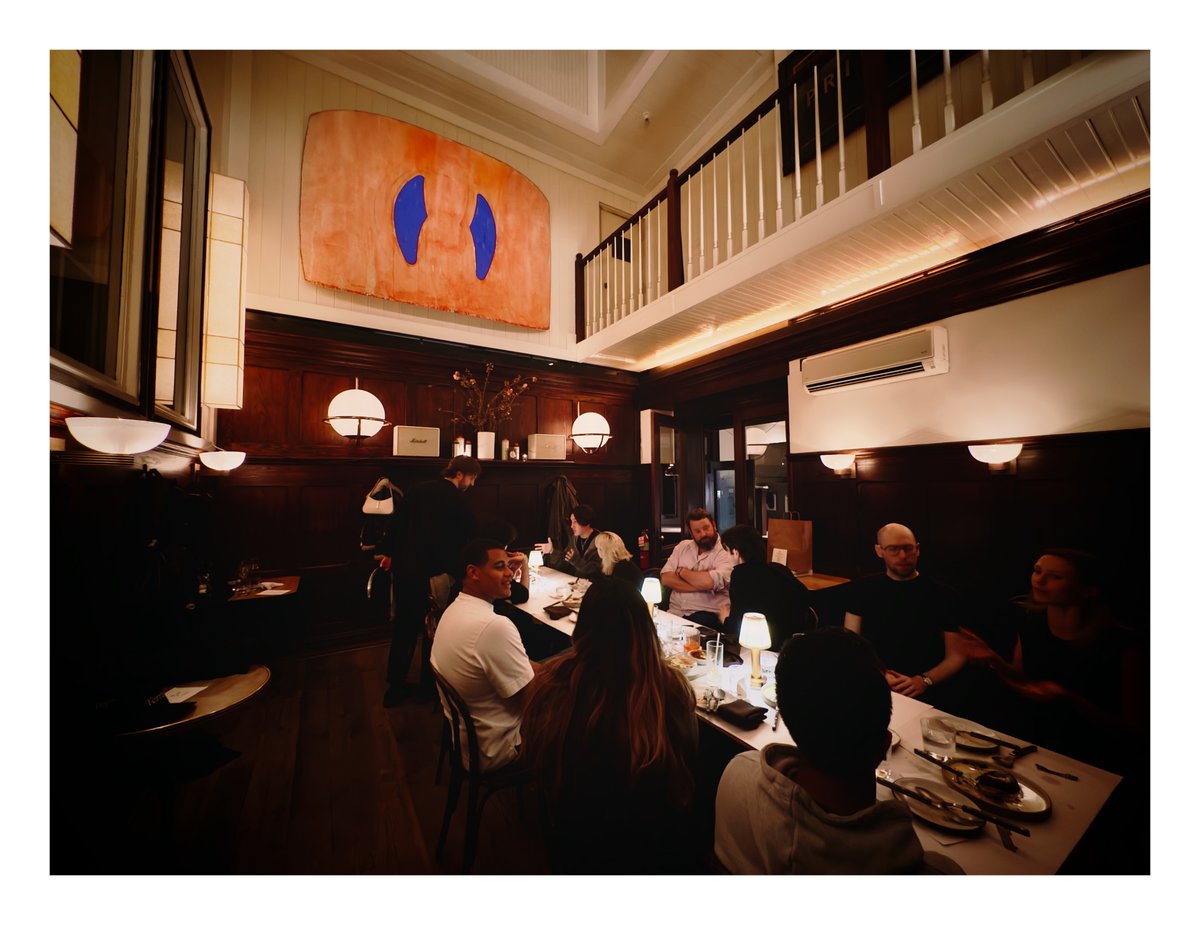
Held the first of these dinners in NYC last night, a small group of just over a dozen founding designers and those thinking about making the leap. What struck me was the diffusion in the conversation, it kept branching outward... Being a designer in a startup used to point somewhere specific. Now it forks: some toward engineering and tech, others toward marketing and creative direction, still others towards strategy and product. Like the tools, the role is being invented in real time. Empowering and a little head-spinning, as one person put it. Grateful for the group that came out — candid, open, and good company. Thanks again to @FictiveCameron for co-hosting. Planning more events and cities soon, sign up below.
Willem tweet media
Willem@vanlancker

FOUNDING DESIGNERS: In demand, misunderstood Taste, storytelling, aesthetics, and creative authenticity are everywhere right now. Designers are leading much of this work in startups, and demand for them is as high as I've ever seen it. There's no shortage of opinions (mostly from non-designers) about how this work should be done and valued. But there's far less conversation among designers themselves. The language has evolved, but the role is still largely misunderstood. I remember the same cycle a decade ago when I was starting a company as a designer—the onus is still on the designer to define their own path: - What is the right structure? What does a great company to join look like? - Do you have to want to eventually be Head of Design, or is staying an IC okay? - Are you also supposed to drive marketing/storytelling? Write production code? With AI changing the expectations, are you expected to be an engineer too? - And beyond the scope of the work, there's the isolation of likely being the only designer in the company. How do you get feedback and improve your craft? I'm hosting a series of informal gatherings, beginning with small dinners in SF later this month (and then NYC and more), for people considering founding designer roles. A few who've done it before, a few embarking on it. The goal is honest conversations about what the role actually requires, what it can become, and connections to companies looking for this kind of person. If you're interested, DM me or register at the link below.


English
10
3
95
10.9K
Jeff
Jeff@jeffinvenice·
@kevintwohy if i join will i get a Terrain Royal Oak
English
1
0
1
157
Willem
Willem@vanlancker·
@kevintwohy no, its not an Apple Watch Kevin
English
0
0
0
153