Cameron Koczon

8.8K posts

Cameron Koczon

Cameron Koczon

@FictiveCameron

I believe in the potential of the Internet and the value of the individual. Agency: @fictivekin Productivity: @teuxdeux Community @kinference @brooklynbeta

Katılım Şubat 2009
1.6K Takip Edilen6.9K Takipçiler
Sabitlenmiş Tweet
Cameron Koczon
Cameron Koczon@FictiveCameron·
We put together a V1 Handbook for how to design and build large-scale websites. Grounded in our work on countless websites for large organizations like like Sweetgreen, Palantir, Galaxy, Color, Ogilvy, Glossier, Bose, Samsung, and Microsoft. Hope you find it useful.

Cameron Koczon tweet mediaCameron Koczon tweet media
English
5
37
289
63.7K
Cameron Koczon
Cameron Koczon@FictiveCameron·
Silicon Valley has been engineering-led for so long, they've forgotten what Brand really is. Gokul: "Brand is no longer a strong moat." Harry: "I thought brand was the most important as technology commoditizes things." Gokul: "I slightly disagree because..." and then he goes on to describe how software will be commoditized right down to pixel by pixel copying. The industry still sees Brand as what something looks like. A shiny coat of paint. The companies that truly understand brand will be the ones to survive in a world where anyone can build or copy anything.
English
1
2
12
2.1K
Cameron Koczon retweetledi
Willem
Willem@vanlancker·
THE BLEAKNESS OF THE BRAND AGE... PG’s essays on builders and innovation are some of the clearest thinking about the startup world. They are essential. But when he writes about art and design, he tends to apply an engineer's lens that flattens the subject. In this piece he frames design as something to solve and brand as something like the decorative facade constructed when real innovation runs out... He goes on that at the end of golden ages we are met with a bleak reality that the hollowness of brand is all we can compete on. Early industries compete on technological advancement. Later, when products become indistinguishable, companies compete on brand. He frames it as a cosmetic layer applied to otherwise solved problems. He makes a similar move in his essay How Art Can Be Good, resolving artistic quality as something judged objectively by an audience rather than as personal expression (I find this take particularly jarring given his background studying painting at RISD, one of the more intuitively-driven art schools.). The premise assumes that the only meaningful axis of improvement is technical performance. Once precision, efficiency, or cost reach a plateau, the remaining differentiation is treated as superficial, or worse, as a distortion. But value rarely evolves that way... In most product categories, value tends to evolve in layers. At first, the question is functional: does it work at all? Then it becomes experiential: how well does it work, and how does it feel to use? Eventually the frontier becomes cultural: what does this object express, and who does it belong to? Engineering dominates the first phase. Design often shapes the second. Brand emerges in the third, when products begin to carry shared meaning. As industries mature, competition shifts toward these cultural and human needs: what identity a product signals, what kind of world it helps create. As makers, we start by solving the functional problem. Over time the work moves up the ladder of human needs. Those dimensions are often symbolic rather than purely functional, but they are not trivial. They are where design often differentiates. PG is right that brand can become hollow: his account of Patek Philippe cynically creating an asset bubble through artificial scarcity is convincing, and the "comb-over effect" of individually rational steps producing something freakish is well observed (see: Richard Mille). But he makes the mistake of treating this endpoint as the definition of brand itself. Brand at its best is not manufactured scarcity or centrifugal weirdness. It is what happens when product, design, and point of view become coherent to people and begin to signal shared meaning. The watch example he builds the entire essay around actually illustrates the shift. Once quartz solved the problem of precision, watches didn't become irrelevant, their significance as cultural objects was enhanced. They became artifacts of craftsmanship, history, identity, and taste. The engineering problem was solved, but the human one remained. PG sees this transition and concludes that the remaining activity is empty. A designer sees it and recognizes a different kind of problem being solved. His strongest claim, that branding is “centrifugal” while design is “centripetal,” deserves a direct response. It's true that good design often converges. But convergence on what exactly? PG assumes it converges on functional optima: the thinnest case, the most accurate movement. Design converges on human optima: on how something communicates, on the relationship between an object and the person holding it. Brian Eno (whose writing on creative practice is akin to PG’s for startups) has a useful frame here called axis thinking. Most fields get stuck optimizing along a single axis, and the real leap comes from shifting to a different axis entirely. That's what happens when watches move from precision to cultural meaning. It's moving to a different center. That center is just as real, even if it can't be measured with a chronometer. When PG writes that “there's no function for form to follow” in the brand age, he's defining function too narrowly. Expressing identity, signaling values, triggering emotions, these are very real functions. They're just not engineering functions. If his interpretation were correct, if everything beyond technical performance were decorative, whole domains of human creation would stop making sense. Why design new chairs once ergonomics are understood? Why design new garments when we have ones that work perfectly well? Why open new restaurants when we already know how to cook? The answer is that these fields serve a hierarchy of needs that extends well beyond the functional, and the work of addressing those higher needs is not lesser work. This matters now more than it has in decades. As AI compresses the cost of building software toward zero, we are entering a new version of the quartz crisis: one that affects nearly every product built on code. PG's framework would predict that what follows is a rather bleak brand age: superficial differentiation over commoditized technology. But if value evolves in layers, what actually follows is a design age, a period where the human dimensions of product become the primary frontier. When done well, design, taste, point of view, brand, and cultural meaning won't be regarded as decoration applied after the engineering is done, but rather be the work that matters most. Engineering solves problems. Design and brand determine what those solutions mean to people.
Paul Graham@paulg

The Brand Age: paulgraham.com/brandage.html

English
23
30
290
51.2K
Cameron Koczon
Cameron Koczon@FictiveCameron·
If you are thinking about / working with AI you just have to watch @frank_chimero's absolutely fantastic Kinference talk.
English
1
4
21
1.8K
Cameron Koczon
Cameron Koczon@FictiveCameron·
Etta James - I'd Rather Go Blind
English
1
0
1
189
Cameron Koczon
Cameron Koczon@FictiveCameron·
Look. I like this song. But it's crazy to me how similar it is to I'd Rather Go Blind by Etta James. It's basically just new lyrics on the same song. Listen below.
Cameron Koczon tweet media
English
1
0
2
225
Cameron Koczon
Cameron Koczon@FictiveCameron·
Need inspiration to build that idea you've been thinking about forever? Jonnie Hallman (@destroytoday) gave an extremely inspiring talk at Kinference that you would be silly not to watch.
English
1
1
22
2.4K
Cameron Koczon
Cameron Koczon@FictiveCameron·
Frenemy Identification Software. I really love this line from @frank_chimero's Kinference talk.
English
3
1
31
2.3K
Cameron Koczon retweetledi
van Schneider
van Schneider@vanschneider·
Who you look up to shapes who you become. Talking to young Designers today, they all struggle to find their North Star. Most of them are looking up to the wrong people. Random design influencers with no real work to show, content creators who have never shipped anything that mattered or design critics on social media whose entire portfolio is screenshots of other people’s mistakes. Below is an incomplete list of some timeless creative legends (in no particular order) who inspired me for the past two decades. Study their work and you’ll be set for life. •George Lois
 •Stefan Sagmeister
 •Bill Bernbach
 •Tibor Kalman
 •Oliviero Toscani
 •Milton Glaser
 •Louise Fili
 •Bob Gill
 •Saul Bass
 •Rory Sutherland 
 •Herb Lubalin •Peter Saville
 •Hermann Zapf
 •Ray & Charles Eames
 •Dave Trott
 •Massimo Vignelli
 •Katsumi Asaba
 •Paul Rand
 •Anton Stankowski
 •Yugo Nakamura
 •Lilian Bassman
 •Dieter Rams
 •Ikko Tanaka
 •Yoshi Yamamoto
 •Otl Aicher
 •Susan Kare
 •Kurt Weidemann
 •Helmut Krone
 •Grace Coddington
English
27
27
579
41.6K
Cameron Koczon retweetledi
Headroom
Headroom@headroomAI·
Open for business. Head over to Headroom to grab a spot!
Headroom tweet media
English
3
8
51
3.5K
Cameron Koczon
Cameron Koczon@FictiveCameron·
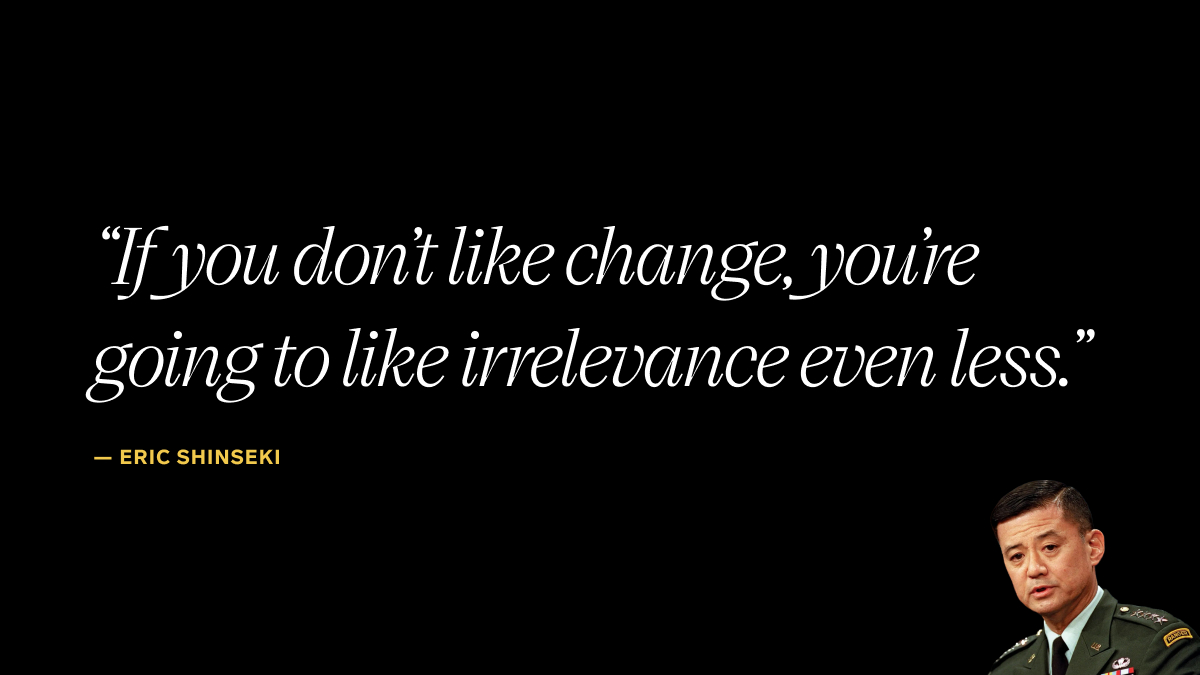
This is my mantra for 2026.
Cameron Koczon tweet media
English
0
0
5
308
Cameron Koczon retweetledi
Carl Rivera
Carl Rivera@carlrivera·
The new bar for software: "can I vibecode this?" We’re heading into a world of personal software — built for one person and their needs — and premium software, designed with such depth that you’re buying a solution, not a tool. Most software today sits in the middle. And the middle is death. As the market catches up to our new reality, it won’t just be the ai bubble popping — it’ll be a lot of traditional SaaS getting wiped out (From my recent Kinference talk.)
English
26
64
723
98.2K
Cameron Koczon
Cameron Koczon@FictiveCameron·
@jdreeves @aofp_studio This feedback does not make sense. In general I agree with not pitching. Not sure how you would win work without presenting.
English
2
0
0
57
J.D. Reeves
J.D. Reeves@jdreeves·
@aofp_studio I do get cold inquiries regularly, but submitted a proposal for this.
English
1
0
0
36
Cameron Koczon
Cameron Koczon@FictiveCameron·
I loved this interview. If Melanie was the archetype of the typical tech CEO, I think we'd be living in a completely different, much better world.
Lenny Rachitsky@lennysan

"I don't want to look at the bricks around me and ask how high I can stack them. I want to design the most magical, wonderful, mythical castle on a hill and then figure out how to build it." Melanie Perkins (@MelanieCanva) is co-founder and CEO of @Canva, one of the hottest private companies in the world—last valued at $42B, generating $3.3B in ARR, profitable for 8 years straight—and is on track to become the most successful female founder in history. But it wasn't always so rosy. She was rejected by over 100 investors, her team had to spend 2 years rewriting their product from scratch (unable to ship anything during that time, something they expected to take 6 months), and they went through a major pivot a few years in. In a rare interview, Melanie and I discuss: 🔸 How “Column B” has been the key to Canva's success 🔸 How Canva survived a painful two-year period without shipping any new features 🔸 How to build a ladder to the moon with small rungs 🔸 Canva’s “two-step plan”: build one of the world’s most valuable companies, then do the most good possible 🔸 So much more Listen now 👇 • YouTube: youtube.com/watch?v=-LywX3… • Spotify: open.spotify.com/episode/114ouJ… • Apple: podcasts.apple.com/us/podcast/the… Thank you to our wonderful sponsors for supporting the podcast: 🏆 @TrustVanta — Automate compliance. Simplify security: vanta.com/lenny 🏆 @Stripe — Helping companies of all sizes grow revenue: stripe.com 🏆 @justworks — The all-in-one HR solution for managing your small business with confidence: ad.doubleclick.net/ddm/trackclk/N…$

English
0
0
10
2.1K