Spencer Everett

1.4K posts

Spencer Everett banner
Spencer Everett

Spencer Everett

@SP3V

👨‍🎨 Product Design @HandoffAI Mostly replying to others' posts

Austin, TX Katılım Mayıs 2011
723 Takip Edilen300 Takipçiler
Jane Manchun Wong
Jane Manchun Wong@wongmjane·
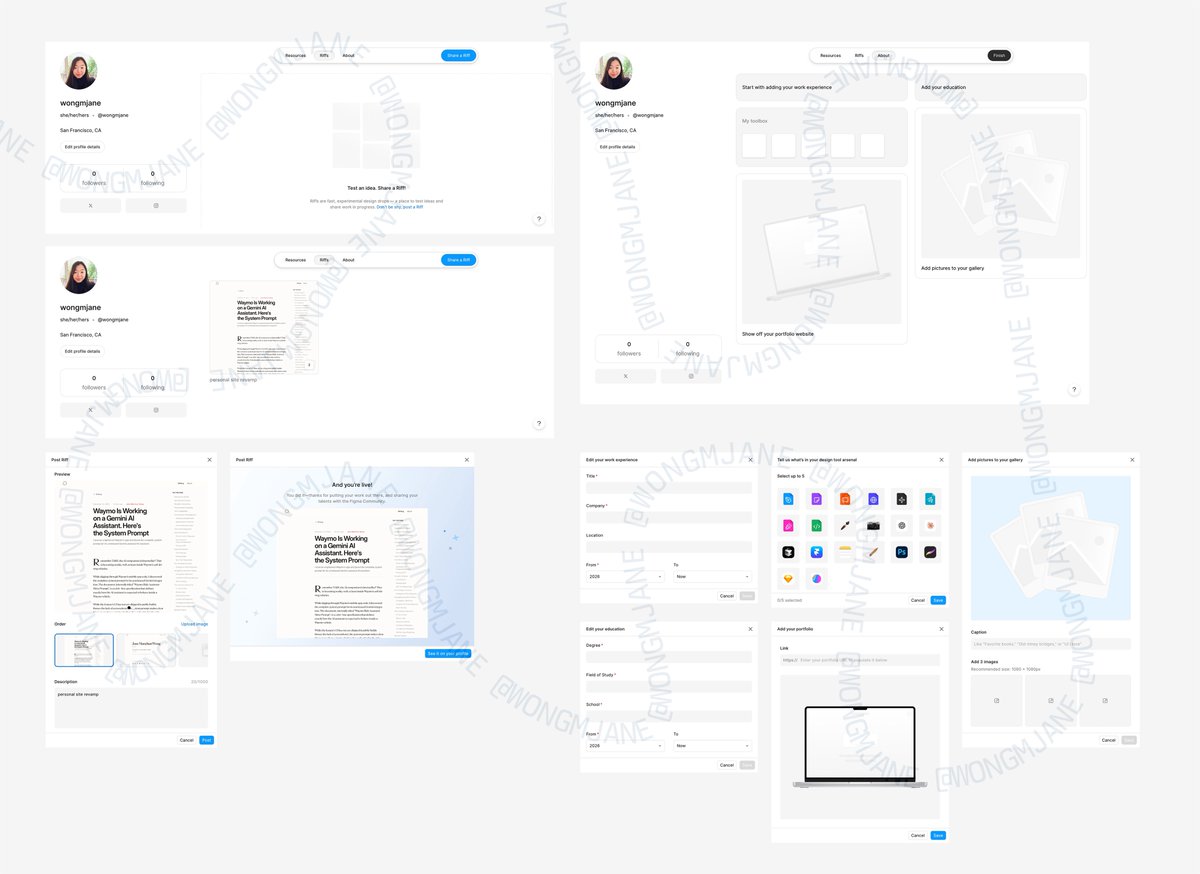
Figma is working on a bento-style Community profile redesign and “Riffs”, a new format for sharing design experiments The new “About” section will let people share: - work & education experience - design tools of choice - portfolio website - pictures
Jane Manchun Wong tweet media
English
7
1
85
8.7K
Spencer Everett
Spencer Everett@SP3V·
The enshitification of software is about to skyrocket
English
0
0
0
4
Kurt Supe, CPA & Retirement Planner
Couple comes in for their annual review. $2.8 million. Well invested. Solid Pension. Completely on track. I ask the question I ask everyone. "How is your daughter doing?" Mom's face changed first. Their daughter is 39. Hasn't asked for anything. Never complained. But she's been in the same apartment for six years. Daycare alone is $1,800 a month. Down payment feels impossible. Dad said "we always figured she'd get it eventually." I pulled up a simple chart. Statistically they live to 88. She inherits at 56. Maybe 60. At 60 her own retirement is eight years away. The money that could change everything at 39 arrives when her finish line is already close. Neither of them had ever seen it framed that way. The annual gift exclusion is $19,000 per parent per child. They can move $38,000 a year to her. No gift tax. No estate implications. Over ten years that's $380,000 transferred while they're healthy enough to watch it matter. Dad looked at his wife. "Why are we waiting?" Most families leave everything at death because nobody showed them the math of giving it while they're alive.
English
574
2.1K
25.3K
1.3M
liz meyer
liz meyer@liz__meyer·
Why are companies so dead set on killing the creative class? focus on finance? healthcare? improving the lives of the vast population, not just the lives of marketing people
Grant Lee@thisisgrantlee

There's a hidden tax on every knowledge worker in the world, and nobody talks about it: The design tax. You're a strategist, a sales lead, a marketer. You were hired for what you know. But every meeting, every pitch, every proposal expects you to show up with something that looks like a designer made it. I lived this. Before Gamma, I spent time in consulting and investment banking. I spent more hours formatting slides than the analysis that went into them. When my cofounders and I started Gamma, we asked: what if you never had to be a designer in the first place? Five years and nearly 100 million users later, we've refunded billions of hours of the design tax. Today, we're eliminating it for good with our biggest launch ever. Gamma Imagine — a powerful, AI-native visual creation tool directly in Gamma. Posters, logos, infographics, visuals from a single prompt. On brand, every time. AI-Native Templates. Templates were supposed to save you from design work. Instead you spent the time filling them in. So we completely rebuilt the template experience. Modify a whole deck with a single prompt, with your brand and style intact every time. Gamma Connectors. You're already thinking in ChatGPT and Claude. Now Gamma sits inside the most popular work apps in the world. No more context-switching. You were hired for your ideas, not to resize text boxes. Let Gamma pay the design tax.

English
34
18
184
14.8K
Spencer Everett retweetledi
Chris Walker
Chris Walker@WalkerATX·
It's 1982 Aqua Fest in Austin and you're watching water ski jumping on Town Lake. @fox7austin
English
49
46
746
56.2K
J.D. Reeves
J.D. Reeves@jdreeves·
took my mom to lunch today for her bday. she’s 60 today, isn’t that wild?
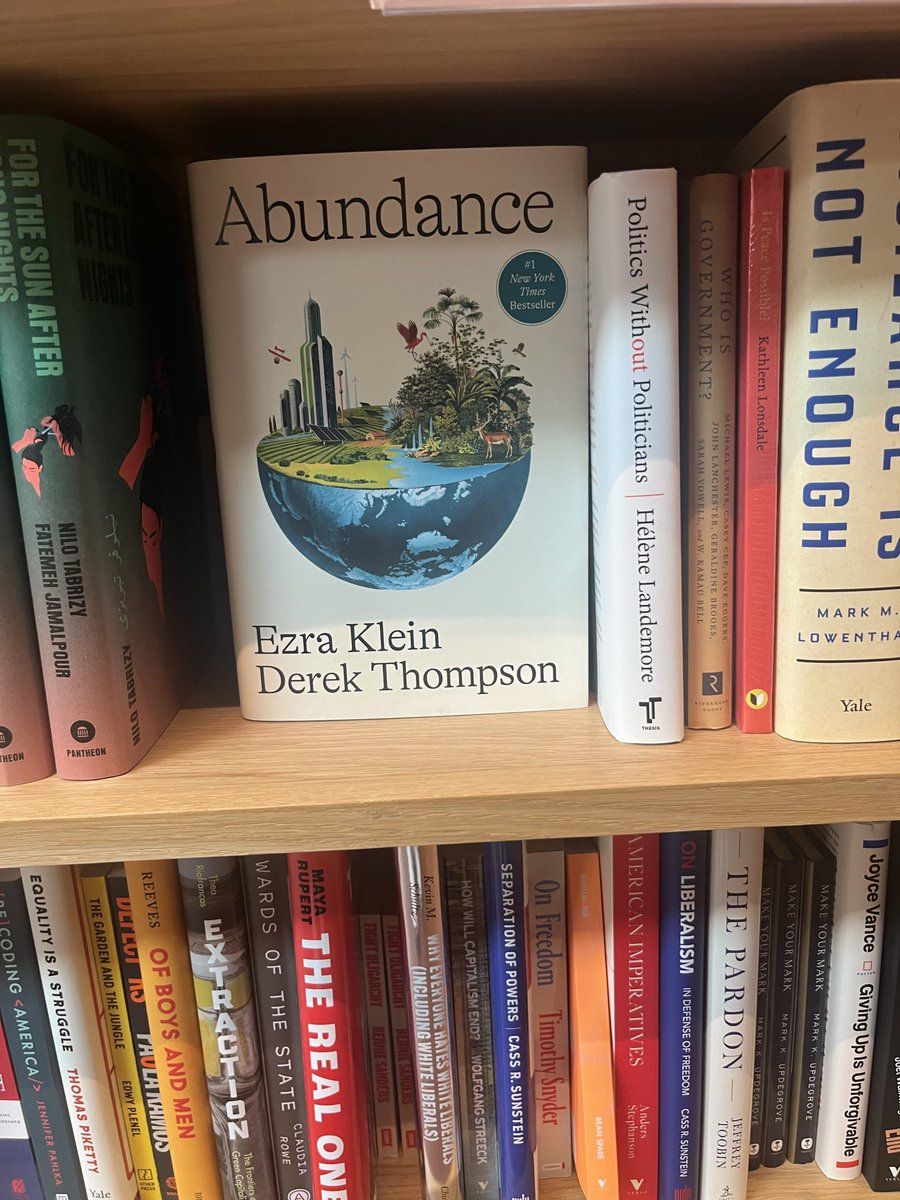
J.D. Reeves tweet media
English
2
0
11
422
Jason Walls
Jason Walls@walls_jason1·
Yesterday Mark Cuban reposted my work, DM'd me, and told me to keep telling my story. So here it is. I'm a Master Electrician. IBEW Local 369. 15 years pulling wire in Kentucky. Zero coding background. I didn't go to Stanford. I went to trade school. Every week I'd show up to a home where someone just bought a Tesla or a Rivian. And every time, someone had already told them they needed a $3,000-$5,000 panel upgrade to install a charger. 70% of the time? They didn't need it. The math is in the NEC — Section 220.82. Load calculations. But nobody was doing them for homeowners. Electricians upsell. Dealers don't know. And the homeowner just pays. I got angry enough to build something about it. I found @claudeai. No coding experience. I just started talking to it like I'd explain a job to an apprentice. "Here's how load calcs work. Here's the NEC code. Now help me build a tool that does this." 6 months later — @ChargeRight is live. Real software. Stripe payments. PDF reports. NEC 220.82 calculations automated. $12.99 instead of a $500 truck roll. I'm still pulling wire. I still take service calls. I wake up at 5:05 AM for work. But something shifted. Yesterday @vivilinsv published my story as Claude Builder Spotlight #1. Mark Cuban saw it. The Claude community showed up. And for the first time, I felt like this thing I built in my kitchen might actually matter. I'm not a tech founder. I'm a dad who wants to coach little league and be home for dinner. I just happened to build something that helps people. If you're in the trades and thinking about using AI — do it. The barrier isn't technical skill. It's believing you're allowed to try. EVchargeright.com
English
604
2.2K
16.3K
879.8K
Home of the Brave
Home of the Brave@OfTheBraveUSA·
Joe Rogan: "It just seems so insane based on what he ran on. I mean, this is why a lot of people feel betrayed. He ran on no more wars and these stupid, senseless wars. And then we have one that we can't even really clearly define why we did it."
English
839
1.3K
8.6K
2.9M
Joe Weisenthal
Joe Weisenthal@TheStalwart·
Who are some interesting AI people in Austin, TX?
English
79
8
151
43.1K
Spencer Everett
Spencer Everett@SP3V·
This should be everyones goal right now. To become this
signüll@signulll

the most underrated hire right now is a great product person. when i say product person i'm def not talking about a product manager. perhaps i think there has to be somewhat of a new role. i don't have a good name for it yet but maybe something like "product thinker".. someone with an intuitive grasp of the product as it exists, where it's soft, where it sings, & how to iterate it toward something even sharper. in some sense, this person has to cohesively hold in their head where this product should be 2 years from now & work backwards from that. i say this cuz when building was hard, engineering was the bottleneck & the status hierarchy often reflected that. building is no longer hard. which means the variance in outcomes has shifted almost entirely to judgment on what to build, how to sequence it, & how to talk about it. & the story matters as much as the thing. internally, it organizes the team around a shared model of why. externally, it shapes the interpretive frame users bring to their first experience. you can't retrofit narrative onto a product & expect it to land, it has to be load bearing from the start. the rarest version of this person sits at the intersection of culture & deep technology. someone genuinely bilingual. they know what's technically possible & they know which cultural currents are real vs. ephemeral. that combo is what separates products that feel inevitable from products that feel assembled. before ppl clap back with this person has always been valuable, i know.. i am just saying now they might be the most *important* person in the room. their value compounds like never before.

English
0
0
0
28
Willem
Willem@vanlancker·
THE BLEAKNESS OF THE BRAND AGE... PG’s essays on builders and innovation are some of the clearest thinking about the startup world. They are essential. But when he writes about art and design, he tends to apply an engineer's lens that flattens the subject. In this piece he frames design as something to solve and brand as something like the decorative facade constructed when real innovation runs out... He goes on that at the end of golden ages we are met with a bleak reality that the hollowness of brand is all we can compete on. Early industries compete on technological advancement. Later, when products become indistinguishable, companies compete on brand. He frames it as a cosmetic layer applied to otherwise solved problems. He makes a similar move in his essay How Art Can Be Good, resolving artistic quality as something judged objectively by an audience rather than as personal expression (I find this take particularly jarring given his background studying painting at RISD, one of the more intuitively-driven art schools.). The premise assumes that the only meaningful axis of improvement is technical performance. Once precision, efficiency, or cost reach a plateau, the remaining differentiation is treated as superficial, or worse, as a distortion. But value rarely evolves that way... In most product categories, value tends to evolve in layers. At first, the question is functional: does it work at all? Then it becomes experiential: how well does it work, and how does it feel to use? Eventually the frontier becomes cultural: what does this object express, and who does it belong to? Engineering dominates the first phase. Design often shapes the second. Brand emerges in the third, when products begin to carry shared meaning. As industries mature, competition shifts toward these cultural and human needs: what identity a product signals, what kind of world it helps create. As makers, we start by solving the functional problem. Over time the work moves up the ladder of human needs. Those dimensions are often symbolic rather than purely functional, but they are not trivial. They are where design often differentiates. PG is right that brand can become hollow: his account of Patek Philippe cynically creating an asset bubble through artificial scarcity is convincing, and the "comb-over effect" of individually rational steps producing something freakish is well observed (see: Richard Mille). But he makes the mistake of treating this endpoint as the definition of brand itself. Brand at its best is not manufactured scarcity or centrifugal weirdness. It is what happens when product, design, and point of view become coherent to people and begin to signal shared meaning. The watch example he builds the entire essay around actually illustrates the shift. Once quartz solved the problem of precision, watches didn't become irrelevant, their significance as cultural objects was enhanced. They became artifacts of craftsmanship, history, identity, and taste. The engineering problem was solved, but the human one remained. PG sees this transition and concludes that the remaining activity is empty. A designer sees it and recognizes a different kind of problem being solved. His strongest claim, that branding is “centrifugal” while design is “centripetal,” deserves a direct response. It's true that good design often converges. But convergence on what exactly? PG assumes it converges on functional optima: the thinnest case, the most accurate movement. Design converges on human optima: on how something communicates, on the relationship between an object and the person holding it. Brian Eno (whose writing on creative practice is akin to PG’s for startups) has a useful frame here called axis thinking. Most fields get stuck optimizing along a single axis, and the real leap comes from shifting to a different axis entirely. That's what happens when watches move from precision to cultural meaning. It's moving to a different center. That center is just as real, even if it can't be measured with a chronometer. When PG writes that “there's no function for form to follow” in the brand age, he's defining function too narrowly. Expressing identity, signaling values, triggering emotions, these are very real functions. They're just not engineering functions. If his interpretation were correct, if everything beyond technical performance were decorative, whole domains of human creation would stop making sense. Why design new chairs once ergonomics are understood? Why design new garments when we have ones that work perfectly well? Why open new restaurants when we already know how to cook? The answer is that these fields serve a hierarchy of needs that extends well beyond the functional, and the work of addressing those higher needs is not lesser work. This matters now more than it has in decades. As AI compresses the cost of building software toward zero, we are entering a new version of the quartz crisis: one that affects nearly every product built on code. PG's framework would predict that what follows is a rather bleak brand age: superficial differentiation over commoditized technology. But if value evolves in layers, what actually follows is a design age, a period where the human dimensions of product become the primary frontier. When done well, design, taste, point of view, brand, and cultural meaning won't be regarded as decoration applied after the engineering is done, but rather be the work that matters most. Engineering solves problems. Design and brand determine what those solutions mean to people.
Paul Graham@paulg

The Brand Age: paulgraham.com/brandage.html
English
23
30
290
51.2K
Austin Statesman
Austin Statesman@statesman·
At Ken Paxton's watch party in Dallas, the Texas attorney general described the night’s results as a referendum on U.S. Sen. John Cornyn, pointing out that many Texans voted for either himself or U.S. Rep. Wesley Hunt, Cornyn's other GOP challenger. statesman.com/politics/elect…
English
5
1
5
3.9K
Spencer Everett
Spencer Everett@SP3V·
@GoogleDesign Conversation flow and interrupting. I should be able to interrupt, but the VUI shouldn't be so sensitive that it stops for every noise it 'hears'
English
0
0
3
101
Google Design
Google Design@GoogleDesign·
Voice User Interfaces (VUIs) are becoming increasingly prevalent. 🗣️ What are some of the unique challenges and opportunities of designing for voice?
English
5
2
35
5.5K
Lisa Demchenko
Lisa Demchenko@llsbetdigital·
Playing around with @paper and @claudeai . My app prerequisites were in Notion: planning, market research, user research, competitors, JTBD, ideation. I asked Claude to read this page and design an app in Paper, based on what it just learned.
English
13
23
353
33.9K
Jmail
Jmail@jmailarchive·
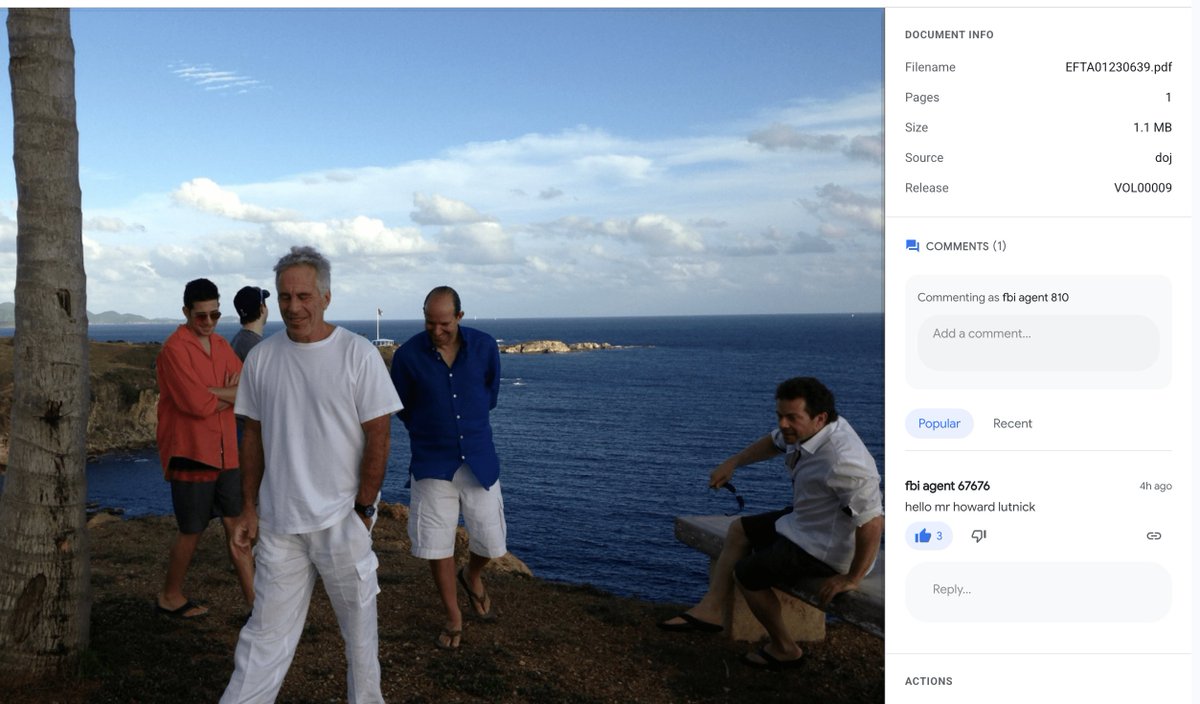
The DOJ removed this photo of what appears to be Howard Lutnick. You can still access it on Jmail jmail.world/drive/vol00009…
Jmail tweet media
English
649
7.2K
33.8K
4.8M
Spencer Everett
Spencer Everett@SP3V·
@alliekmiller These mics have a ¼-inch analog mic output, so they require audio interface ($120) to connect to your Mac
English
0
0
0
2
Allie K. Miller
Allie K. Miller@alliekmiller·
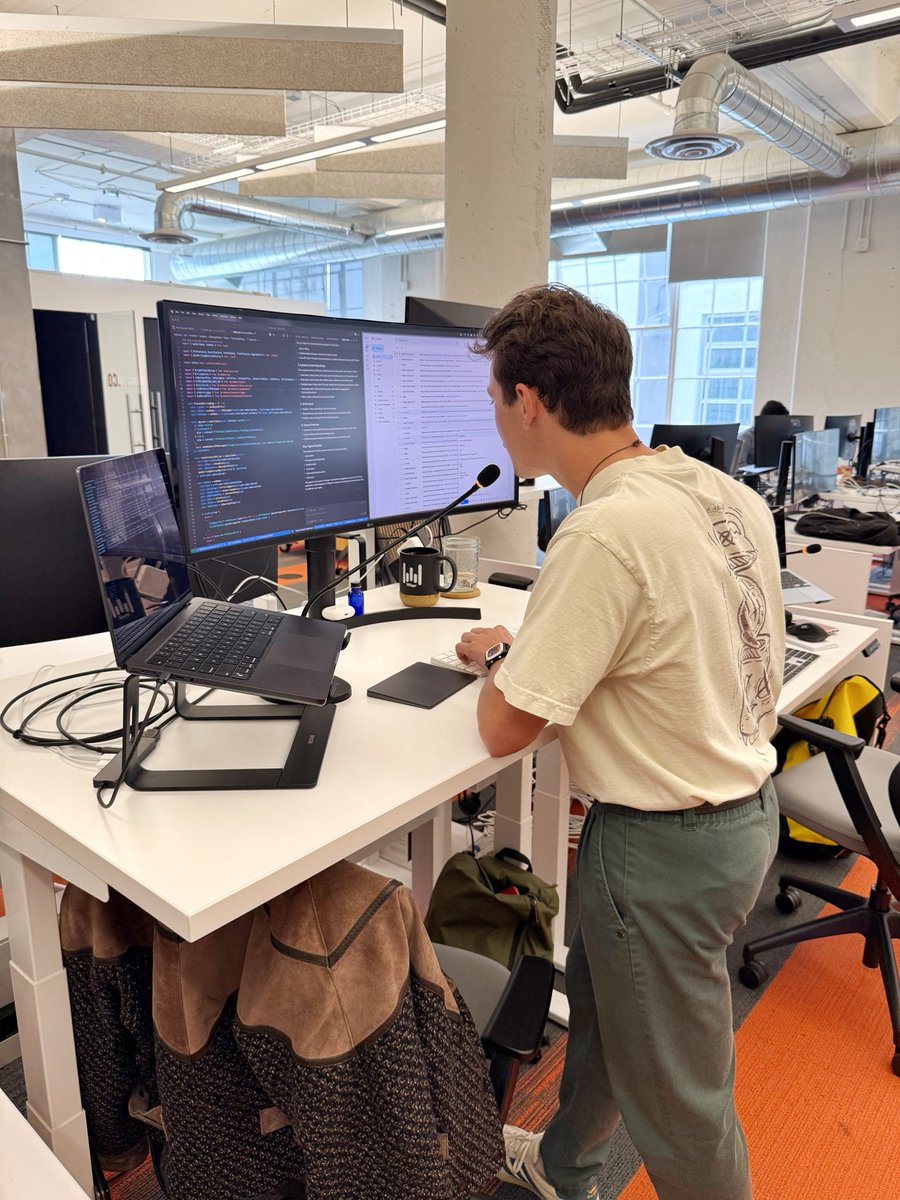
Also, we double checked the exact mic - they upgraded their mics and this one is $62 on Amazon. a.co/d/8Rb5mq4
English
10
4
91
35.7K
Allie K. Miller
Allie K. Miller@alliekmiller·
This is absolutely insane and proof that voice is about to transform the workplace. At Wispr, employees use voice hundreds of times a day to multitask across their entire workflow. Here’s one dev using Cursor and Gmail simultaneously, all through WHISPERING, on a $10 mic.
Allie K. Miller tweet media
English
533
191
3.9K
895.4K