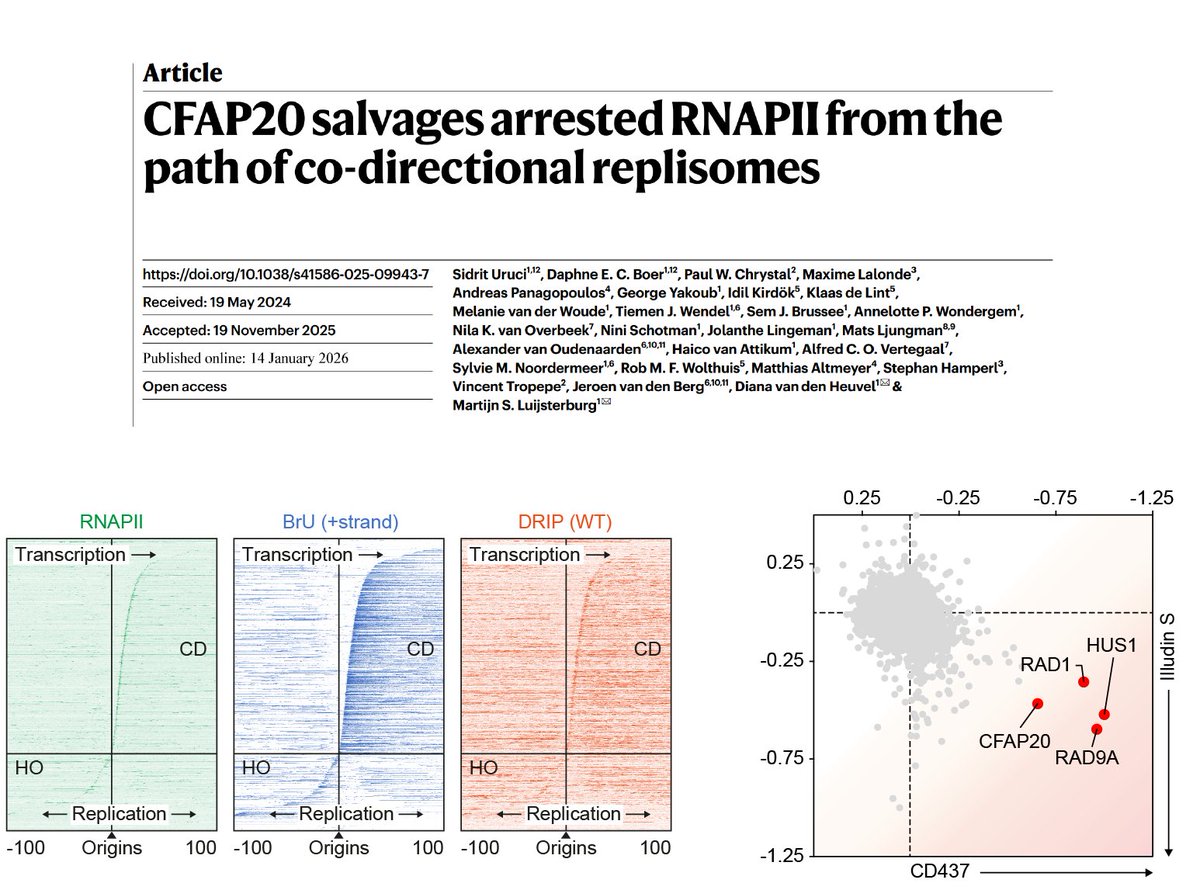
Excited to share our new Nature study! 🧬
We (@UruciSidrit et al) discovered that CFAP20 helps clear stalled RNAPII, preventing harmful co-directional clashes with DNA replication machinery. This protects cells from R-loops and genome instability.
nature.com/articles/s4158…
@StaplesLab Don’t worry Chris! I am happy that is your work! We can manage just need to do some more work, and, by the way, it is also possible that your work can help us. It may be also possible that we are looking at independent mechanism at the end. This would be real fun. I will dm you.
New paper from the lab in collaboration with Unterholzner and Cejka groups. IFI16 protects stalled forks and is required for IFN-driven rescue of nascent DNA degradation.
sciencedirect.com/science/articl…
‘Tip of a Very Damaging Iceberg’: COVID Vaccines Linked to Several Cancer Types in New Review
A systematic review of 69 studies identified safety signals for leukemia, lymphoma, breast and lung cancer. The paper identified mechanisms — including the spike protein and DNA contamination found in some COVID-19 vaccine types — that might be responsible for triggering cancer.
childrenshealthdefense.org/defender/covid…
@StaplesLab Congrats Chris and kudos to the team. This is very interesting and a great piece of science…although it seems you somehow scooped us a little bit 🫣🤐
@BBCRadio4 what is this tonedeaf and disrespectful trash? Apparent Rob and Michelle Reiner double homicide - straight into jaunty movie clips and a warm chuckly lighthearted piece on his career. Unbelievable.
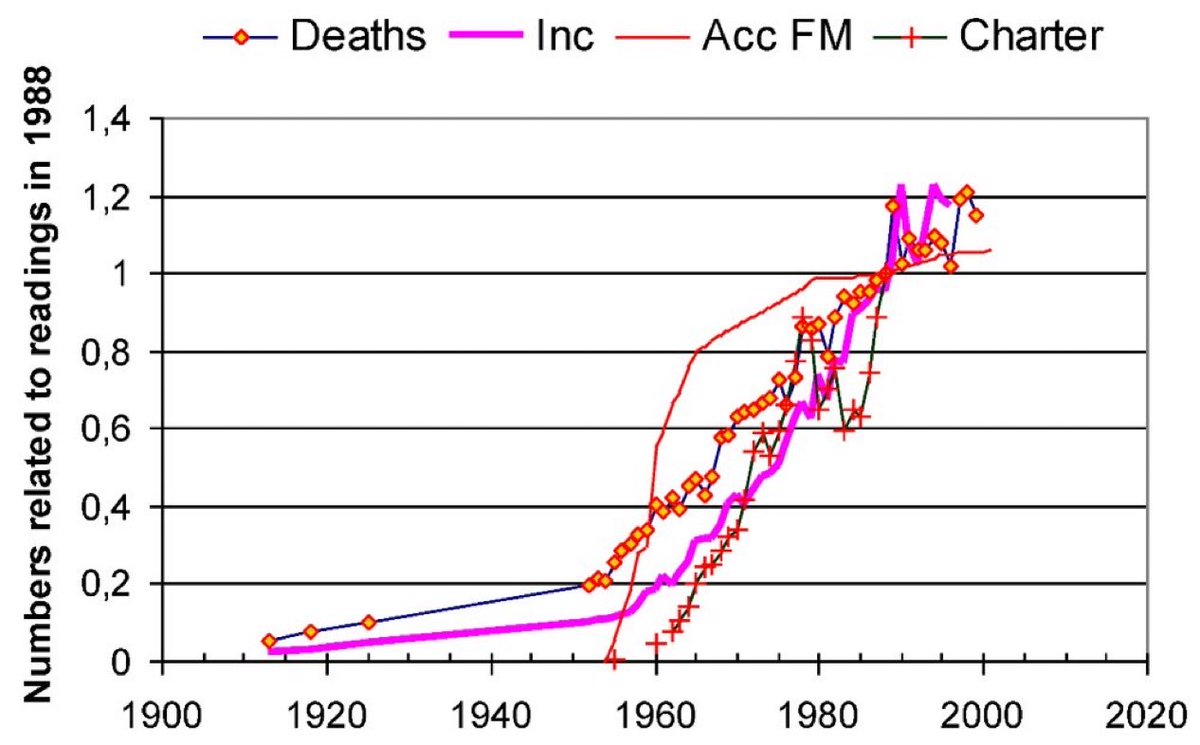
@richardhirschs1 Wait, didn't beach sunbathing become popular en masse in the 1930s, with progressively less body coverage by swimsuits in subsequent decades - and melanoma has a 30 year latency?
⚠️Melanoma, and melanoma deaths, have INCREASED since the invention of sunscreen.
The evidence supporting sunscreen protection against melanoma is surprisingly thin.
It comes down to a single randomised control trial from Australia with a small number of events (33).
That’s it.
#SkinCancer#Melanomapubmed.ncbi.nlm.nih.gov/21135266/
Our PLAMseq paper is out today in @ScienceAdvances . We developed a TurboID-based protein-genomic approach to map proteins and protein interactions in the genome. Validated with CTCF and RNApolII. Applied to map Histone H1 SUMOylation genomic loci.
science.org/doi/10.1126/sc…
📢 For all DNA fiber enthusiasts! 🟥🟩 We are thrilled to announce the release of our long-awaited AI-based workflow for the automated and quantitative analysis of DNA fibers. It's an exciting step forward—check it out on bioRxiv! lnkd.in/dQWUPtsP
@Fynnderella1 Deeply flawed study, though. The journal site has the reviewers comments. One reviewer plainly couldn't be bothered, the second raised appropriate concerns about the limitations of the study.
Analyzing outcomes among 2,234,003 adults aged 50 and older in Catalonia, Spain, the authors found that recipients of both PCV13 and PPSV23 were significantly more likely to be hospitalized for pneumonia and more likely to die from pneumonia-related causes compared to their unvaccinated counterparts—even after adjusting for age, sex, comorbidities, and influenza vaccination status.
#pneumocccalvaccinesbmcinfectdis.biomedcentral.com/articles/10.11…
Until now, most concern about residual DNA has focused on the low risk of genomic integration — the possibility that DNA fragments might insert themselves into human genes and alter them.
But @Kevin_McKernan new data point to a more immediate problem.
Even without entering the nucleus, these fragments could trigger potent immune reactions inside cells, driving inflammation, tissue damage — even tumour growth.
🛑The DNA contamination problem just got bigger
New preprint by @Kevin_McKernan reveals that DNA fragments in Pfizer’s Covid-19 vaccine carry bacterial signatures capable of supercharging inflammation—evidence that residual DNA risks go far beyond genomic integration.
LINK 👇👇
@RetsefL@TracyBethHoeg@Jikkyleaks@newstart_2024