

YieldFinder
151 posts

YieldFinder
@Yield_Finder
Compare cash yields fast. Savings accounts, Money Market Funds, and Treasuries - Updated daily.
Se unió Mart 2024
276 Siguiendo257 Seguidores


@MikeZaccardi @BlackRock I mean, isn’t that to be expected ahead of earnings growth?
English

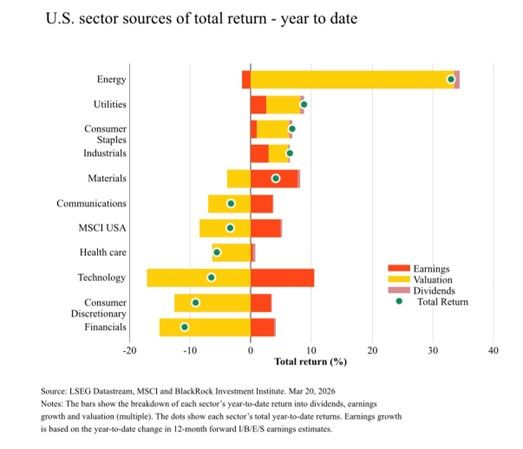
WEI LI @BlackRock: Energy's surge has come almost all from multiple expansion...
Tech, Discretionary, Financials are now wayy cheaper than they were on Dec 31st
English
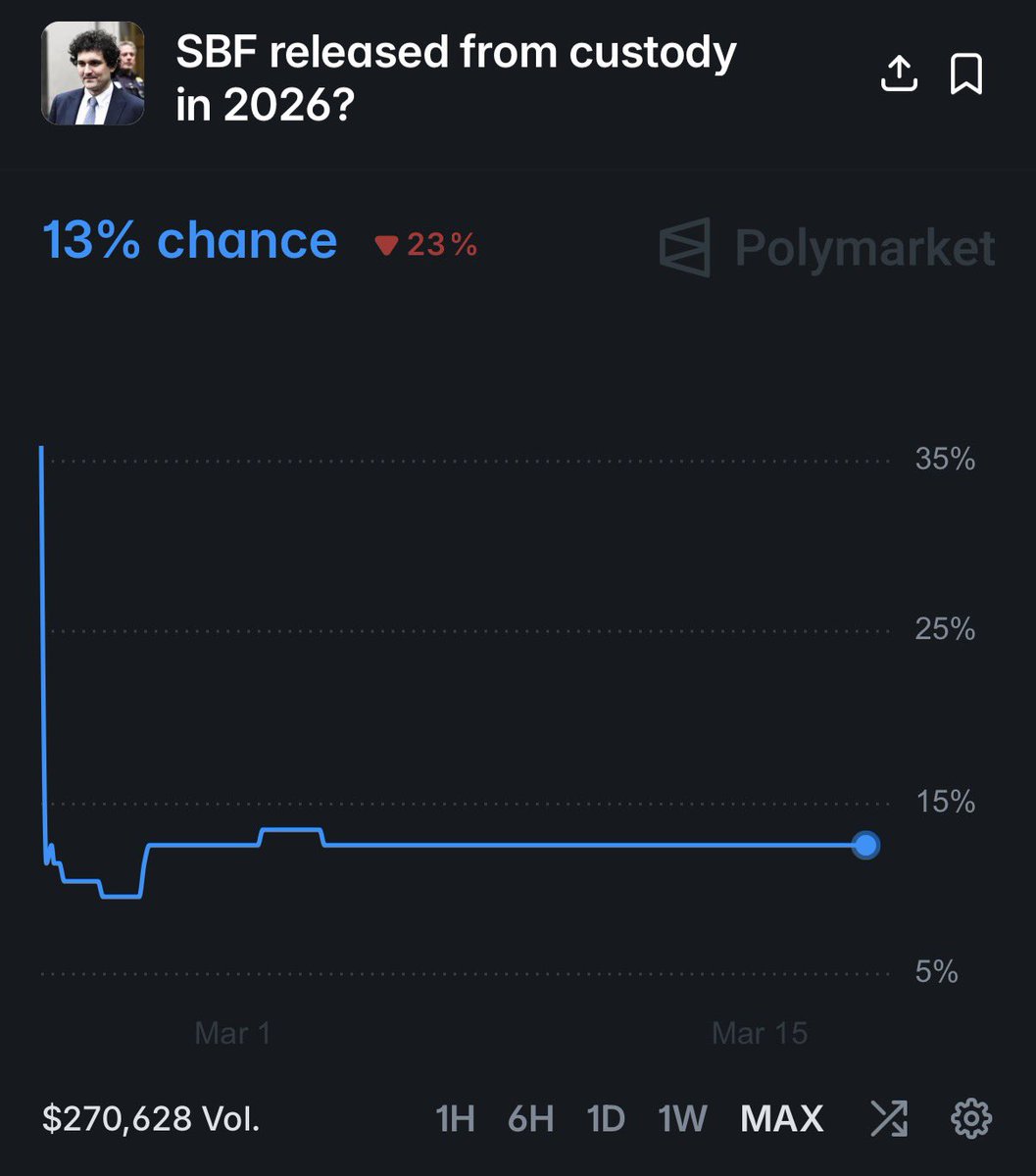
@RampCapitalLLC Might be the only thing that can save crypto at this point
English
@pitdesi I think it’s a combo of more volume and more/better predictive models.
I have to think the average bracket in 2025 was more correct than the average bracket in 2015.
English

In the history of tracked bracket pools (ESPN, Yahoo, CBS, etc.), no one has ever completed a perfect bracket through all 63 games.
The longest verified streaks have reached somewhere around 49 consecutive correct picks before busting.
Kalshi@Kalshi
The $1 Billion Kalshi Perfect Bracket Challenge $1 Billion for a perfect bracket $1 Million guaranteed to the top scoring bracket $1 Million to charity and scholarships See the full rules and submit your bracket: kalshi.com/billion-dollar… No purchase or deposit required. SIG Parametrics, LLC, a member of the Susquehanna International Group of Companies, is financially backing this promotion.
English
@pitdesi I think the fact that Turo exists, is a reasonable counterpoint.
But yeah, as long as Tesla, has a lower cost of capital than me (among many other things), it’s hard to imagine a world where they don’t take the pie for themselves.
English
IMO there’s no chance it’ll be worth it for regular people to lend out their daily driver on the Robotaxi network.
The network may work but Tesla will be the greatest beneficiary, and there may be some money for fleet operators who can manage vehicles professionally at scale. Insurance, cleaning, vandalism are going to be major, and if the economics are what he suggests it’s a race to the bottom on pricing… it should be very good for consumers.
Elon has been saying your car will pay for itself since 2016, but it’ll never be true imo!
Teslaconomics@Teslaconomics
I plan on owning my own Tesla Robotaxi fleet one day. And the more I run the numbers, the more I realize this new business could become one of the most powerful income opportunities I've ever seen. This is how I'm thinking about it. Based on many analyst models and Tesla’s long-term vision, a reasonable base case assumption is about ~$30,000 per year in net profit per Robotaxi to the owner. This is after things like Tesla’s platform fee, charging, tires, maintenance, insurance, and cleaning. Of course, the network is still early and Tesla is just beginning to roll this out in pilot programs in a few cities, so there’s no official real-world owner earnings yet... but using reasonable assumptions around utilization, pricing per mile, and operating costs, the math starts to get really interesting. If one Robotaxi can earn around $30,000 per year, here’s what a fleet might look like: • $100,000 per year → about 4 Robotaxis • $500,000 per year → about 17 Robotaxis • $1,000,000 per year → about 34 Robotaxis It may sound a bit crazy at first, but when you break it down, it starts to make more sense. These vehicles could potentially drive 50,000 to 100,000+ miles per year in high demand areas. If the economics land somewhere around $0.25-$0.50 profit per mile after all costs, you end up right around that ~$30k per vehicle per year range. And remember, the Tesla’s Robotaxi network is going to work a lot like Airbnb for cars. You add your vehicle to the network, Tesla handles the software, routing, payments, and rider experience, and they take a platform fee (often modeled around 25-35%). The owner keeps the rest after operating costs. Another thing that makes this interesting is the expected cost of the vehicles themselves. Tesla has talked about the purpose-built Cybercabs costing roughly $25k-$30k and Elon told me production is starting in 1 month! If that’s even close to reality, a fleet capable of generating around $1 million per year could theoretically cost somewhere around $850k-$1M in vehicles. That ROI is pretty freakin good! Now to be clear, none of this is guaranteed. I'm just thinking out loud and sharing it with you... a lot still depends on regulations, how fast unsupervised FSD scales, demand in each city, insurance costs, and how Tesla structures the network. But if the system works the way Elon has described it for years, owning a Robotaxi fleet could become one of the most powerful forms of passive income I've ever seen. And I plan on sharing the numbers with everyone on 𝕏 when the day comes. Personally, that’s why I’m paying such close attention. Bc one day, owning a fleet of autonomous Teslas working for me 24/7 might be the modern version of owning a rental property, except instead of tenants, you’ve got robots driving people around all day while you sleep. This next book of Tesla is going to be so exciting!
English
@RobertMSterling Respectfully, I’m still unclear why “we were wrong”… if they can do it cheaper, better, faster, etc. so be it.
English

I wrote a seed check into a startup last week that’s going to revolutionize one of the world’s most critical—and America’s most neglected—industries: textile and apparel manufacturing.
A lot of people think America doesn’t need to make its own clothing. A lot of people think we haven’t done it for 100 years, and we don’t need to do it now.
A lot of people are wrong.
Apparel is one of the most fundamental industries in human history. Aside from agriculture, it’s the only industry that’s existed in every economy, across every culture and every society, since the dawn of mankind. It swaddles our bodies the minute we are born into this world, and there it remains each day until our last, when it becomes the only thing we take with us when we are returned to the earth.
Globally, apparel is a $2 trillion industry, producing more than 100 billion garments per year. It’s bigger than airlines; bigger, for that matter, than semiconductors.
And, beginning in the 1970s, we walked away from it. We told ourselves that if China and Sri Lanka and Bangladesh wanted to own the value chain, with its high labor requirements, low productivity, and slim margins, we should let them.
We were wrong.
Just 50 years ago, America led the world in textile and apparel production. Our 16-18 billion square yards of cotton output represented 20-30% of global production (versus 2-4B square yards and 3-5% of global output today). “Made in America” on a clothing tag was a signifier of quality and prestige; American denim even became a weapon of cultural supremacy in the Cold War with the Soviet Union.
As it was back then—prior to NAFTA, the WTO, Chinese manufacturing dominance, the supremacy of Wall Street, and the rise hyper-financialization—so it will be again. America will once again produce its own clothing, and Americans will once again proudly clad ourselves in garments made with skilled American labor, produced in highly efficient American manufacturing centers, fueled by American investors dedicated to American greatness.
When my friend @matthewchang called me last week and told me about the @anatar, the company that will lead this revolution, I instantly wanted in. When he told me @kaiarhodes was the founder, and the Matt’s firm, Chang Robotics, would be supporting their automated production, that was all the diligence I needed. Within 15 minutes, I had a wire transfer out the door.
I’m immensely proud of what Kaia and her team are building. I’m excited to play a small—very small—role in supporting them. And I can’t wait to see the results they are going to create bringing this critical industry back to where it belongs: on American shores, for the American people.
Matthew Chang@MatthewChang
I'm excited to announce that @Anatar and @ChangRobotics have partnered to bring America the next generation in textile manufacturing - reclaiming our supply base of defense and retail textiles from overseas. We have been blown away by the strategy and technology of founder @kaiarhodes, who boasts nearly 20 years in the textile and garment industry. She's surrounded by a stacked team of experienced advisors. Today, Anatar opens their SEED round of funding. Chang Robotics has invested directly off of our balance sheet. We have also committed engineering resources to ensure Anatar can deliver on every promise to industry. Our shared vision includes: -Owning source farms + relationships with farmers -Controlling logistics -Deployment of fully robotic garment production lines -Development of giga-factory -Production of robotics in USA 🇺🇸 The value this creates for the industry is: -MADE IN USA textiles for Dept of Defense -Lower cost of production, lower cost retail clothing -Faster order fulfillment -Reduction of on-hand inventory -Better pricing for farmers of cotton and hemp Now for the nerd stuff, Anatar's Robotic Production System can: -Reduce labor by 80% compared today's method of garment production -Speed of production allows for a 75% reduction in inventory, freeing up warehouses and balance sheet -Operators (workers) will enjoy higher job training, up-skilling, higher wages, and enhanced ergonomics -The ONLY viable path we have to reclaiming textile production in the USA from low cost overseas suppliers Anatar has chosen a unique model - producing as a service in their own factories and selling robotic production systems to major clothing manufacturers. Our financial analysis shows they have a direct line of sight to profitability in the next 12-18 months. What does this mean? Investment from the EXIM Bank, Investment from the DOD, Investment from the Department of Commerce, and institutional capital. This access to capital sets Anatar apart from capex light companies. Remember team, in the age of AI: "The Factory Is The Moat." Let's GO!!! 🤝👕🦅
English
@ServoWealth This should be studied as a great example of how to loose all credibility with one tweet.
These funds have different benchmarks and objectives.
English
How bad is Vanguard—despite their low expenses—at capturing asset class returns? You’re not gonna believe just how bad.
Since 1998, $10k in the S&P 500 grew to $100k. But in small value, $140k—40% more. How much of the small value premium did Vanguard SV fund capture? 110%? 90%, 85%? Lol not even close.
25%. That’s it. $110k.
What good are low expenses if net of fee returns are much lower than what’s possible?
There’s a lot more to investing than low expenses.

English
@Molson_Hart When you say it's a fast growing market... Have you ever met anyone that uses these?
English

Celebrity AI companions are a fast growing market.
You can train an LLM on your own content, including things you've never said publicly, and then charge people to talk to AI you.


English
@RobertMSterling Any suggestions on how to learn more about the agg processors?
The businesses just seem like black boxes from the outside.
English
80% of the food you eat and the gas you put in your car is downstream of companies headquartered in this circle.
Kansas City, Omaha, and Dallas are all thriving. There’s a massive number of wealthy families reinvesting in these cities.
But yeah, nothing goes on here.
josh@DekuSeedot
@shreyabasu003 the New England mind simply cannot fathom what goes on here (nothing)
English
@realEstateTrent As someone that spent their childhood learning to play piano, it’s nice to know, but as an adult, when you see people with real talent, it just felt like wasted time.
English
@AdamSinger It’s a bit more nuanced… would you allow fruit juice? (More sugar/calories than diet/zero soda).
English

It's pretty crazy this was allowed in the first place, especially considering the state of obesity in the country - our own tax dollars were making it worse
Polymarket@Polymarket
BREAKING: RFK says food stamps will no longer be able to be used on sugar & soda.
English
@RobertMSterling My mom packs me a sandwich, but thanks for the tip!
English
Pro tip: Skip the mile-high slop airlines serve and get one of these fruit and cheese boxes from the airport Starbucks before takeoff. 470 calories, 20 grams of protein, and zero United mystery meat.

Peyman Milanfar@docmilanfar
Hey @united is this a joke? I just flew 5+ hours in First Class and this bowl of sadness is what you serve me for dinner. Between the 3D-printed mystery meat, the cafeteria cheese cubes, and the whole tomato I need a chainsaw to cut, this is genuinely unbelievable.
English
@pitdesi I believe they combined the teams a few years back, but still operate two separate apps.
I suspect there are a large number of Waze loyalists (at-least anecdotally that’s my experience), and it probably allows the Maps team to test more aggressive experiments.
English
@txsalth2o There is a tremendous amount of nuance here though…. I highly recommend this @AcquiredFM podcast: podcasts.apple.com/us/podcast/acq…
English
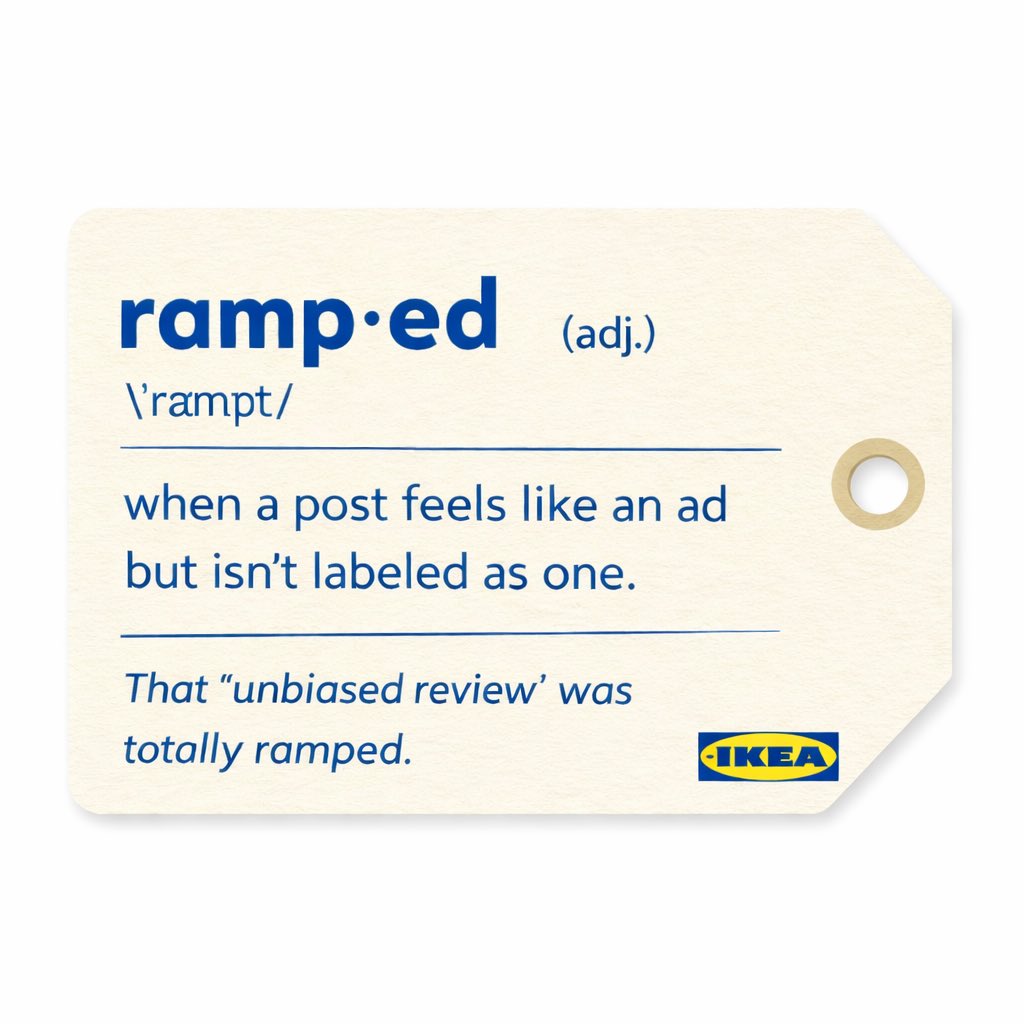

I enjoy putting together knockdown furniture with an Allen wrench
English
@pitdesi I’m sure it happens, but alpha sights has a vetting process, and it’s usually pretty easy to validate someone’s experience.
English
Btw a lot of people do these $1000/hr expert network calls for things they are not experts in (& in some cases don’t know anything about)
Turns out it’s enough money to incentivize some people to lie
“paula”@paularambles
there's apparently an auction on my time going on in my inbox
English

English


This graph has been floating around every couple months, arguing that the top 10% of earners account for 50% of consumption.
Anyone familiar with economic statistics should intuitively feel it must not be right.
So I dug into it a bit, and indeed, it's (mostly) not.
English
@pitdesi Seems like there is only downside to being an early adopter on this.
English
This looks incredible, was an instant order for me… $20k is worth it to me for house cleaning and laundry alone.
Very excited for this future.
1X@1x_tech
NEO The Home Robot Order Today
English