Farhad Salmanian

9.8K posts

Farhad Salmanian banner
Farhad Salmanian

Farhad Salmanian

@twittalisation

Journalist & Translator | Based in Germany Focus Areas: Current Affairs in Germany | Politics | Political Parties | Justice | Philosophy | Personal Account

Germany Se unió Haziran 2009
2K Siguiendo322 Seguidores
Tweet fijado
Farhad Salmanian
Farhad Salmanian@twittalisation·
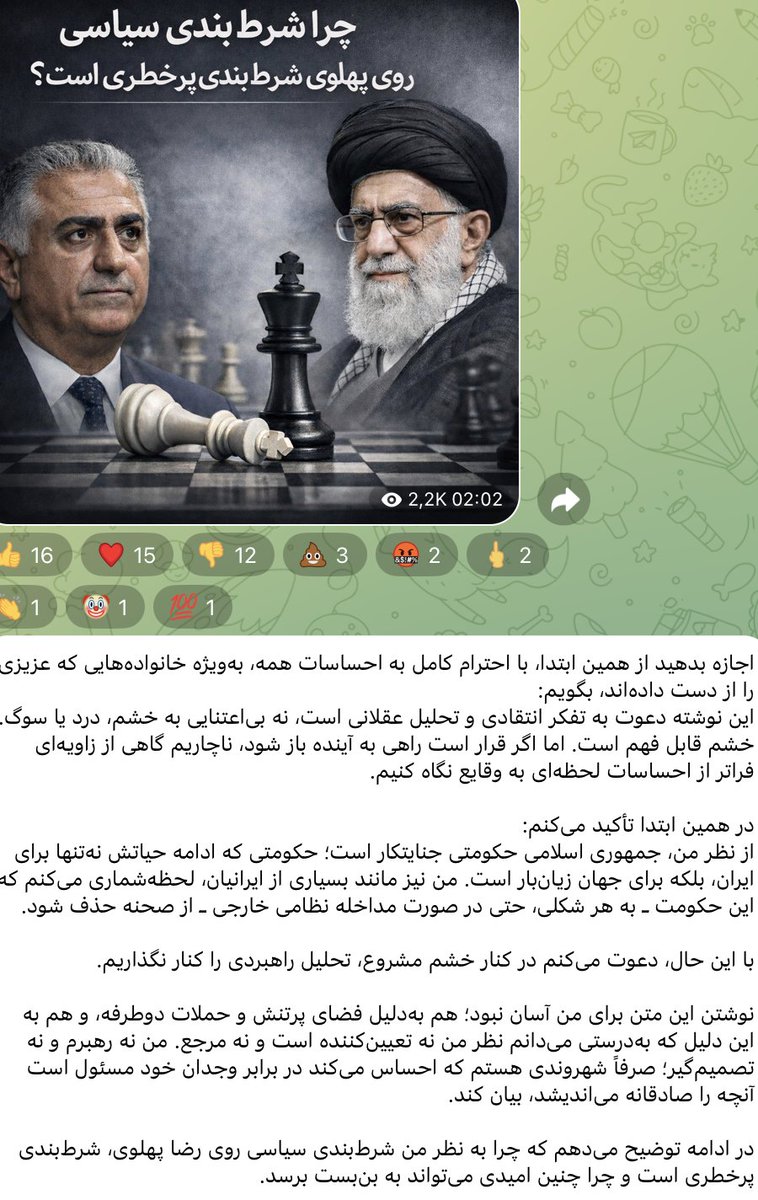
BBC and the Internalisation of Islamic Republic Narratives The line‑up of pundits who have worked – and in some cases still work – for the BBC @bbcworldservice, @BBCWorld, @BBCNews and now jointly speak out against Reza Pahlavi has become more or less complete: Nader Soltanpour @NaderSoltanpour, Siavash Ardalan @BBCArdalan, Panah Farhadbahman @PanahFB, Keyvan Hosseini @Kayvan_Hosseini, Mehrdad Farahmand @MRD_Farahmand, and Rana Rahimpour @ranarahimpour, who has published a text under the title: “Why placing a political bet on Pahlavi is a dangerous gamble?” The title is an ironic allusion to one of Reza Pahlavi’s own remarks during the nationwide uprising of 2022 in Iran, when he addressed the regime’s repressive forces and told them: “Don’t bet on the losing horse.” The “opinions” voiced by these current and former BBC staffers – namely that monarchists and their preferred option are “unsuitable” or “dangerous” – are, unsurprisingly, remarkably aligned. They insinuate – without offering any serious evidence – that if Reza Pahlavi @PahlaviComms ever came to power, Iran would automatically slide into a new dictatorship. This is pure speculative alarmism, indistinguishable from the Islamic Republic’s own talking points: instead of grappling with actual programmes or behaviour, it teaches the audience to pre‑emptively fear any organised alternative and to see every path beyond the current regime as another route to tyranny. Morgan Ortagus and the structural problem Several years ago, former U.S. @StateDept spokesperson Morgan Ortagus @MorganOrtagus pointed quite directly to a structural problem at BBC in a live interview – a warning many inside the newsroom seem to have shrugged off, perhaps simply because she had worked in a Trump administration: Link to the mentioned part of the interview in Persian: facebook.com/reel/251406870… Yet her diagnosis was accurate. The conscious or unconscious internalisation of the Islamic Republic’s propaganda, and treating its premises as self‑evident, is at the heart of the problem on display in this new piece: a kind of political “taqiyya” (religious strategic self‑concealment and dissimulation): The result is a permanent regime of self‑limitation: you censor yourself, narrow your own life, and voluntarily give up rights and freedoms in advance, all to accommodate the dictator. Always calibrate your opposition, your slogans, and even your very presence to the regime’s red lines; hide your real objectives behind layers of caution, because “the dictator will never back down.” Show respect for what the Islamic Republic wants. When it channels the financial windfalls of sanctions relief under @BarackObama into further building up proxy militias in the Middle East, fuelling anti‑Israel campaigns, or prolonging slaughter and displacement in Syria, do not disturb it – stay in the nuclear deal at all costs. Why BBC English reporting from Iran lacks real journalistic value This is also why recent @BBCWorld reports and interviews from Iran – including Lyse Doucet’s @bbclysedoucet pieces – have little real journalistic value. They are produced under conditions that are structurally discriminatory against Persian‑speaking colleagues and shaped largely by terms dictated by the regime itself, as some BBC Persian staff have pointed out in the past. That may satisfy editorial demand in London, but it does not amount to independent reporting from inside a dictatorship after many cases of mass murder. And even this is only the legal‑ethical side of the problem; it does not touch on the propaganda function such coverage performs for the Islamic Republic, by normalising its rule and presenting everyday life in Iran as if it were almost “ordinary.” The argument about “dangerous links” to exiled figures Rana Rahimpour’s text remembers Ortagus’ warning precisely at this point. She writes: “In such circumstances, any direct or symbolic link between protests inside the country and a specific figure abroad can multiply the cost of dissent for ordinary people. Once the name of an individual or a particular group is attached to a social movement, the regime can easily portray all protesters as foreign‑backed, security threats or external enemies – which, in practice, puts people’s lives at greater risk.” Stripped of its rhetoric, the logic that Ortagus criticised – and which the former BBC presenter now reproduces in a different form – would today read as follows, conveniently forgetting that during the November 2019 massacre no one abroad had issued any “call” for protests: “If Reza Pahlavi had not called for demonstrations, the situation would never have escalated to the point of today’s massacre.” Yet the Islamic Republic has repeatedly gunned down unarmed protesters regardless of whether any exiled figure issued such a “call” – most starkly in November 2019, when no call from abroad existed at all. Repeating the regime’s narrative about the opposition On an analytical, social, and political level, this former BBC employee’s argument suffers from several fundamental flaws and ultimately reinforces the narrative that the Islamic Republic has been producing and recycling in Western media for years. The text suggests that the opposition is reckless and without a plan, that it is a threat to Iran’s future, that exiled leaders are frivolous and irresponsible, and that the only ‘rational’ path is to lower expectations (see attached screenshot and the full text on Telegram: t.me/ranarahimpour1). From “plurality” of leaders to paralysis In practice, the piece also dresses up a demand for “plurality” at the leadership level, which, under the current balance of forces, simply means fragmenting the public around every actor with a tangible social base. Pluralism in parties and parliament is a democratic virtue; fragmenting symbolic leadership in the middle of an existential struggle is not pluralism, it is paralysis – precisely what certain so‑called “republican” factions in the diaspora have been doing for a couple of years. The result, as we saw after the rigged 2009 “election” in Iran, is political deadlock: endless quarrels over collective leadership, internal struggles within would‑be leadership groups, and, in the end, the continuation of the Islamic Republic. When the dictator sets the rules of “safe” dissent By repeating and adapting the regime’s talking points, the BBC and its former or current employees help internalise the dictator’s preferred behaviour in the minds of protesters and dissidents. What the regime dictates becomes part of the very grammar of “criticism” and “opposition”, rather than what opponents themselves genuinely want and believe. From this point onward, it is the dictator who defines the boundaries of the playing field, the permissible scope of protest, and the acceptable forms it may take – or at least shapes them as far as the opposition’s discourse allows. The failure of any attempt at serious protest or regime change begins exactly where everyone starts accommodating the dictator and adjusting themselves to him. That accommodation can take the form of clinging to the nuclear deal at any price – or of protesters moderating their demands and refraining from rallying around any recognisable leadership figure. The constitutional fact that is never mentioned Whether one is monarchist or not, one simple constitutional fact from before 1979 is usually airbrushed out of such commentary: absent the catastrophe of 1979 and its so‑called Islamic Revolution, the very person now cast as a “dangerous gamble” would, under the legal order that revolution overthrew, be the lawful head of state of Iran. This is how far the mindset of some current and former BBC employees has drifted towards the Islamic Republic’s propaganda – to the point of internalising it and selling it back to the audience as cautious, reasonable “analysis.” @Ofcom @UKParliament @CommonsCMS @TIME @Channel4News @PiersUncensored @piersmorgan @reuters @AP @TheAtlantic #IranRevolution2026 #DigitalBlackoutlran #IranMassacre #R2PforIran x.com/twittalisation… .
Farhad Salmanian tweet mediaFarhad Salmanian tweet media
English
0
3
11
4K
Farhad Salmanian retuiteado
Farhad Salmanian
Farhad Salmanian@twittalisation·
پایان حکومت‌ربایی، پایان حکومت‌ربایان آنچه در سال ۱۳۵۷ در ایران رخ داد، بیش از آن‌که «#انقلاب» به معنای دانشگاهی آن باشد، #حکومت‌ربایی بود: ربایش تدریجی حاکمیت ملی و نهادهای دولتی از سوی ائتلافی مذهبی-نظامی-امنیتی که رفته‌رفته، با سرکوب و ترور و فریب، دیگر نیروهای سیاسی و اجتماعی را حذف کرد و فرودست‌ترین قشرها از نظر ذهنی و فرهنگی را به بالاترین سمت‌ها رساند. #اسلام_شیعی با دستیابی به قدرت سیاسی، با حذف برجستگی‌های اندیشگی، سیاسی، اجتماعی و اقتصادی، نوعی یکدست‌سازی نخبه و غیرنخبه را رقم زد که زمینه را برای ماندن حکومت ربوده‌شده در دستان بی‌مایگان و فرصت‌طلبان دین‌فروش فراهم کرد. هدف اصلی انقلاب پیش رو در سال ۱۴۰۴ پایان‌ این حکومت‌ربایی، بازپس‌گیری حاکمیت ملی و فراگیر و پس راندن دین به حریم خصوصی برای همیشه خواهد بود؛ برای بازگرداندن آن به صاحبان اصلی‌اش، همان کسانی که در هفته‌های گذشته، با وجود #قتل‌عام، روشن و آشکار با شعارهای‌شان، درون و بیرون ایران، جایگزین رژیم اسلامی و در اصل، روند پایان‌دهنده به حکومت‌ربایی را فریاد زدند: استقرار نظمی که با روندی قانون‌ساز ویرانی‌ای را متوقف کند که اسلام‌گرایان با حکومت‌ربایی سال ۱۳۵۷ و در پی آن، با ترور و کشتار و سرکوب‌های پیاپی #ایران را در آن فرو بردند؛ نظمی نوین بر پایه‌ی همه‌پرسی آزاد با نظارت و حضور رسانه‌های بین‌المللی، تشکیل مجلس موسسان و نگارش قانون اساسی نوین با محوریت تاریخ و فرهنگ سیاسی ایران. #IranRevolution2026 #DigitalBlackoutlran #IranMassacre #R2PforIran
فارسی
0
1
0
87
Farhad Salmanian
Farhad Salmanian@twittalisation·
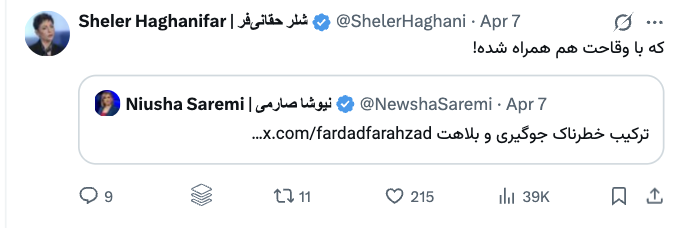
@ShelerHaghani این دقت، خیلی تاثیرگذار بود. فقط «اگر حمله نمی‌کنید، یه جمله بگم و برم»: واکنش به اشتباه‌های احتمالی همکاران در زمان همکاری هر دو طرف در یک رسانه، کار روابط عمومی یا سردبیری است!
Farhad Salmanian tweet media
فارسی
0
0
5
195
Sheler Haghanifar | شلر حقانی‌فر
اگر حمله نمی‌کنید که با فلانی سر ستیز دارم یا علیه بهمانی نوشتم، یه جمله بگم و برم: «در پارلمان سوئد» با «در محلِ پارلمان سوئد» تفاوت دارد. #NoDealWithMullahs
فارسی
166
30
517
23.4K
Farhad Salmanian retuiteado
The Spectator Index
The Spectator Index@spectatorindex·
Netanyahu says ceasefire with Iran could end soon.
English
186
487
3.9K
301.2K
Farhad Salmanian
Farhad Salmanian@twittalisation·
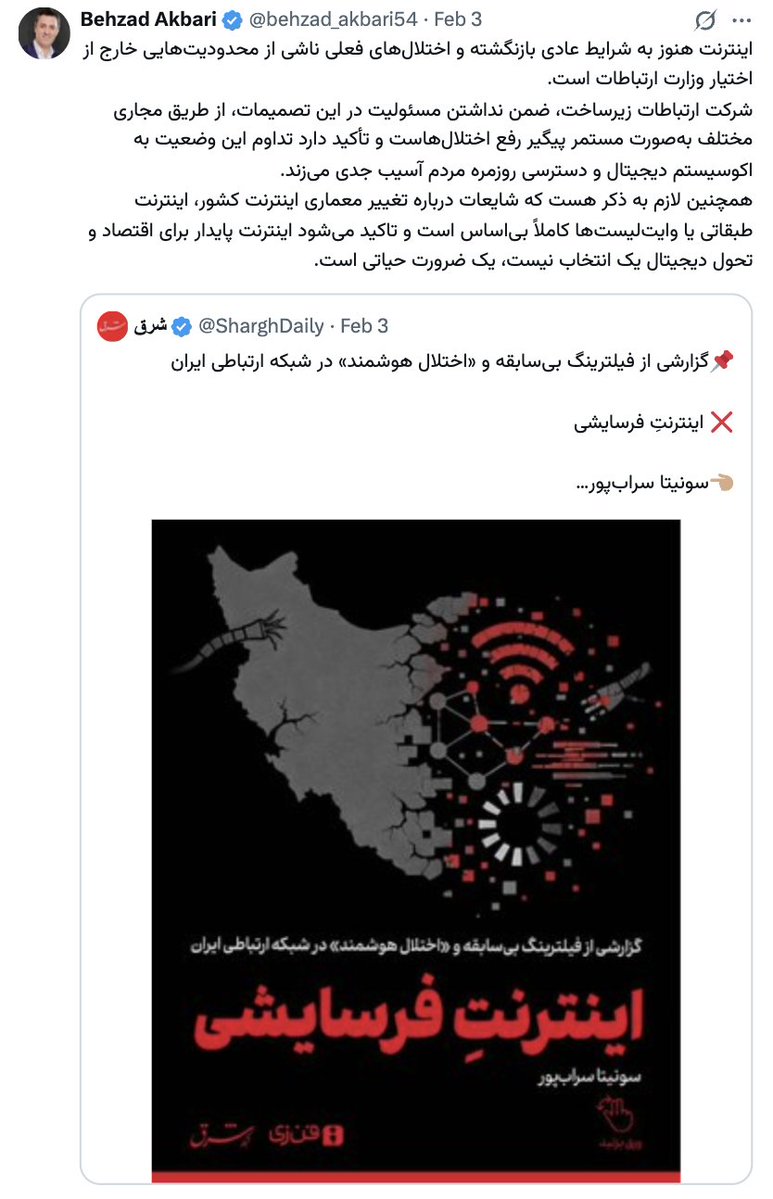
#بهزاد_اکبری، مدیرعامل «#شرکت_ارتباطات_زیرساخت» در ایران، یکی از مجریان #قطع_اینترنت و ارتباطات در دوران #قتل‌عام و #جنگ، از نظر مسئولیت حقوقی و اخلاقی، در حد یک آمر و عامل کلیدی در عملیات جنگی علیه غیرنظامیان درون و بیرون ایران قرار می‌گیرد و جنایتکار جنگی است. او باید برای تحمل مجازات چنین جنایت بزرگی علیه میلیون‌ها نفر آماده باشد. اکبری دستوردهندگان، فراهم‌کنندگان زیرساخت‌ها و ساختارهای لازم و سازوکار قطع اینترنت را می‌شناسد. به همین‌ علت، دست‌اندرکار جنایت‌ علیه بشریت است. نام او و سایر اعضای انسانی ساختاری که در قطع اینترنت دست دارند، باید در فهرست افراد تحت پیگرد بین‌المللی قرار بگیرد. اکبری می‌گوید «مسئولیتی در تصمیم‌ها» ندارد، اما با ادامه‌ی فعالیت خود در سمت مدیر عامل اجرایی، در پیاده کردن تصمیم‌ها سهیم است. «شرکت ارتباطات زیرساخت» بازوی فنی #وزارت_ارتباطات حکومت اسلامی و گلوگاه اصلی اینترنت ایران است. همه‌ی اپراتورها و شرکت‌های خدمات‌دهنده‌ی اینترنت برای اتصال به شبکه‌ی بین‌المللی ناچارند، از شبکه‌ی مخابراتی مادر در این شرکت عبور کنند. این ساختار امکان اجرای تصمیم‌های سیاسی برای قطع اینترنت و محدودسازی سازمان‌یافته‌ی ارتباطات در دوران سرکوب، قتل‌عام و جنگ را در حد کشوری فراهم می‌کند. مسئولیت مدیران چنین شرکتی در اجرا و فراهم‌سازی زمینه‌ی قطع اینترنت و ارتباطات، آن‌ها را در رده‌ی جنایتکاران جنگی قرار می‌دهد. #IranWar #DigitalBlackOutIran#IranMassacre#IranRevolution2026@behzad_akbari54
Farhad Salmanian tweet mediaFarhad Salmanian tweet mediaFarhad Salmanian tweet media
فارسی
0
1
10
223
Farhad Salmanian retuiteado
The White House
The White House@WhiteHouse·
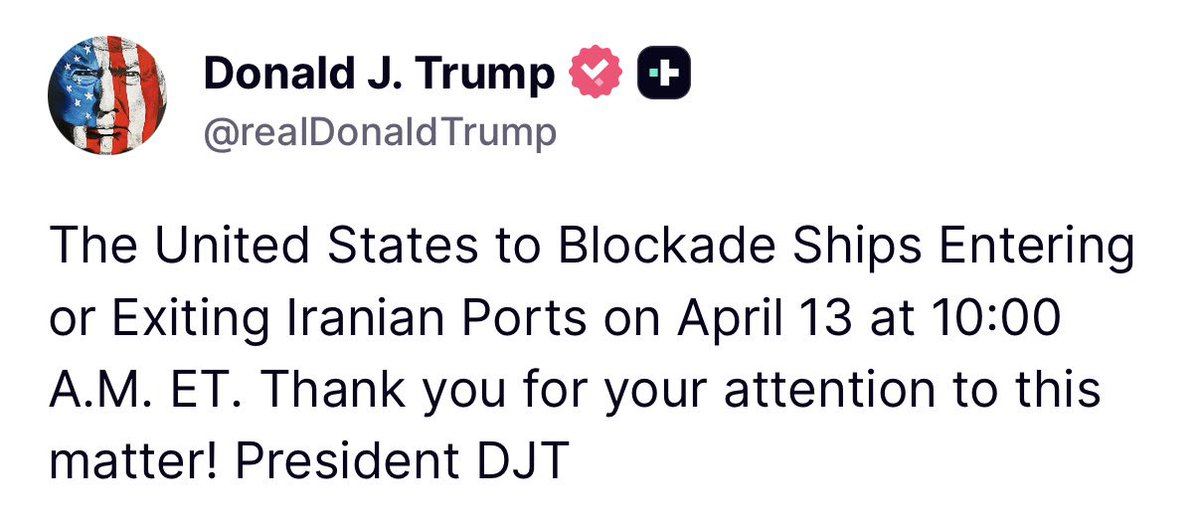
“The United States to Blockade Ships Entering or Exiting Iranian Ports on April 13 at 10:00 A.M. ET. Thank you for your attention to this matter!” - President Donald J. Trump
The White House tweet media
English
3K
5.4K
23.7K
1.1M
Farhad Salmanian retuiteado
Soroush Rabiei سروش ربیعی
حجم عظیم محتوای تولید شده علیه پهلوی از سوی دارالمجانین چپ، اراذل رژیم تروریستی جمهوری اسلامی و مجاهدین با این گزاره همخوانی ندارد. اگر کارش نتیجه نداشت، شب و روز در آتش پهلوی نمی‌سوختید. اگر هیچ‌کاره بود و طرفداری نداشت یا کسی آدم حسابش نمی‌کرد کل وجود و زندگی شما در وحشت از برگشت ملی‌گرایی به ایران خلاصه نمیشد.
سعید@goudarzy

رضا پهلوی شبیه این بچه‌های خیلی فعال توی لینکدینه. همیشه فعال، همیشه ایونت، همیشه در حال موفقیت، ولی بیکاره و برچسب OpenToWork رو دائم داره

فارسی
7
64
554
7.1K
Farhad Salmanian retuiteado
Open Source Intel
Open Source Intel@Osint613·
President Trump is considering resuming strikes if the U.S. naval blockade fails to shift Iran’s position. - Axios
English
60
173
1.6K
59.1K
Farhad Salmanian retuiteado
OuriapA
OuriapA@gh0lch0magh·
از بهترین بخش‌های سخنرانی شاهزاده در پارلمان سوئد به نظرم اونجا بود که گفت: جنگی که باید درباره‌‌اش سخن گفت، جنگ جمهوری اسلامی با مردم ایران است. جنگی که هر روز شعله‌ورتر می‌شود و هیچ آتش‌بسی در آن برقرار نشده است.
فارسی
15
703
3.5K
20.1K
Farhad Salmanian retuiteado
Open Source Intel
Open Source Intel@Osint613·
Kremlin: Russia's proposal to accept Iran's enriched uranium "remains on the table" but has not been taken up.
Open Source Intel tweet media
English
0
16
151
30.3K
Farhad Salmanian retuiteado
Angelica Shalagina🇺🇦
Angelica Shalagina🇺🇦@angelshalagina·
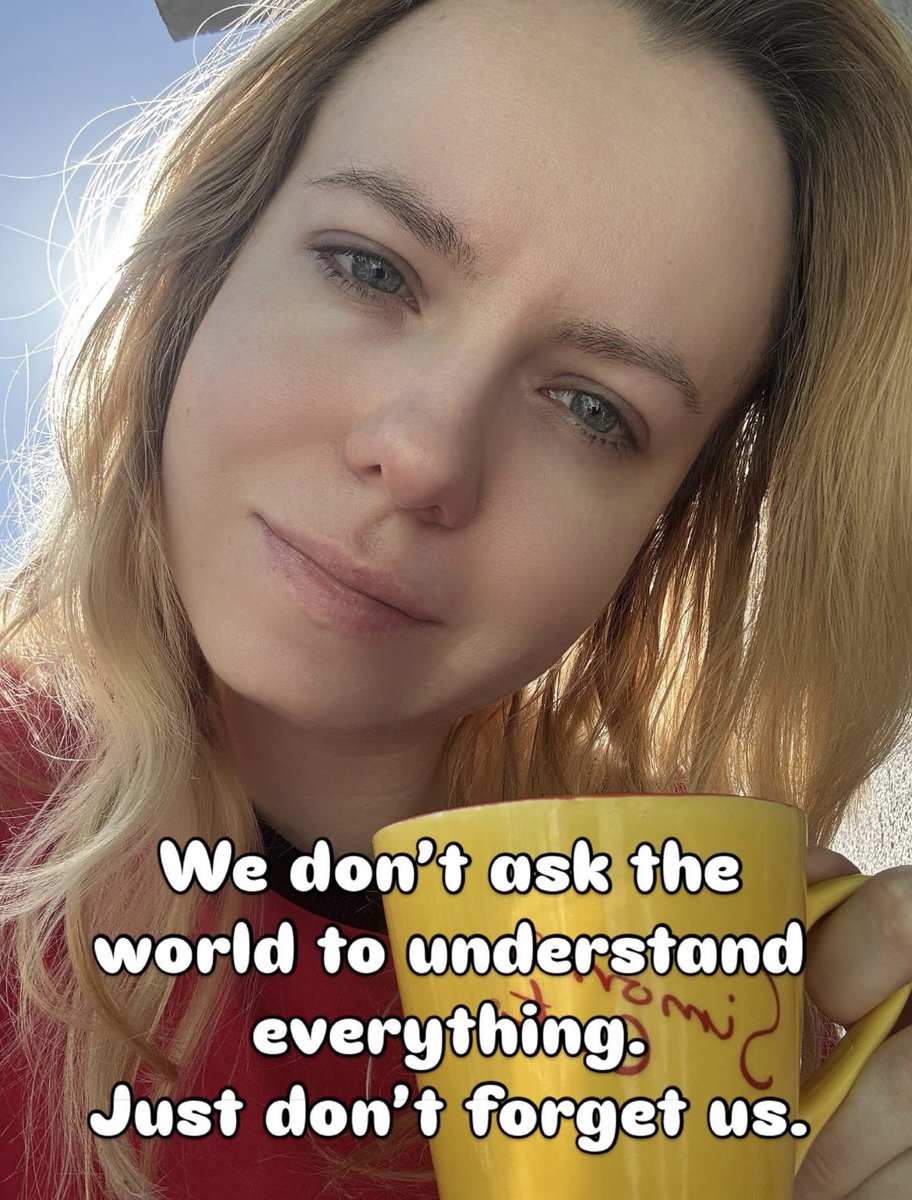
We don’t ask the world to understand everything. Just don’t forget us.
Angelica Shalagina🇺🇦 tweet media
English
17
58
360
1.5K
Farhad Salmanian
Farhad Salmanian@twittalisation·
By treating #TritaParsi as a neutral analyst on #Iran, you risk misleading your audience. Parsi is the long‑time founder of #NIAC, an organization widely described by Iranian dissidents, journalists, and policy experts as a soft‑power vehicle for the Islamic Republic’s #narrative in Washington and European capitals. Documented evidence, internal NIAC emails, and years of public criticism show that he has repeatedly minimized the regime’s human rights abuses and promoted policies aligned with its #interests. At a minimum, basic journalistic standards of #transparency require you to disclose this record and identify him as a highly controversial, #regime-aligned #advocate, not as an independent voice on Iran. #DigitalBlackOutIran#IranWar#IranMassacre
English
2
1
3
158
Reuters
Reuters@Reuters·
Failed US-Iran talks in Pakistan did not necessarily signal a return to full-scale conflict, said analyst Trita Parsi, adding that both sides may reach a new status quo without a formal agreement reut.rs/4dJGcxo
English
18
33
158
39.8K
Farhad Salmanian retuiteado
Moloud.Hajizadeh | مولود حاجی‌زاده
متاسفانه نیروهای ایرانگرا در داخل ایران به شدت تحت فشار امنیتی قرار دارند، چندتن بازداشت شدند اما به واسطه فشار به خانواده‌ها، از رسانه‌ای کردن خبر بازداشت‌ امتناع کردند. تعدادی اخراج شدند از جمله چندتن از روزنامه‌نگاران ایرانگرا در مجموعه رسانه‌های مرتبط با دنیای اقتصاد.
فارسی
1
47
362
4.2K
Farhad Salmanian
Farhad Salmanian@twittalisation·
Update: „Aktuell dauert die landesweite #Internetsperre in #Iran seit 45 Tagen an, die internationale Anbindung ist seit mehr als 1056 Stunden gekappt. #Regimevertreter und ausgewählte regimefreundliche #Influencer können weiterhin ungehindert in sozialen #Netzwerken posten, während 90 Millionen Menschen, denen sie zu dienen vorgeben, zum #Schweigen gebracht werden.“ #DigitalBlackOutIran#IranWar#IranMassacre@amnestyusa @amnesty_de @IS_HumanRights @drmaisato @hrw @UNHumanRights @IGFM_DE @PsiphonConduit
NetBlocks@netblocks

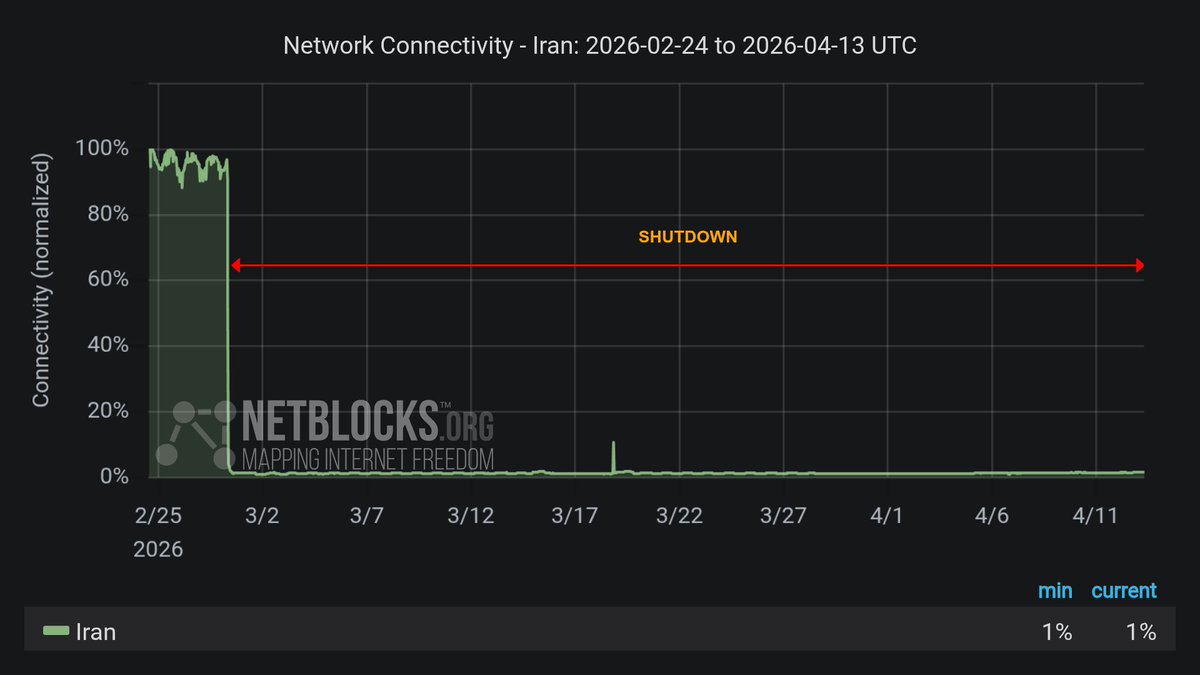
⏱️ It's now day 45 of #Iran's internet blackout, with international connectivity severed for over 1056 hours. Regime figures and whitelisted influencers post freely on social media while they silence a population of 90 million whom they claim to serve.

Deutsch
0
1
1
55
Farhad Salmanian retuiteado
NetBlocks
NetBlocks@netblocks·
⏱️ It's now day 45 of #Iran's internet blackout, with international connectivity severed for over 1056 hours. Regime figures and whitelisted influencers post freely on social media while they silence a population of 90 million whom they claim to serve.
NetBlocks tweet media
English
119
1.5K
2.5K
115.2K
Farhad Salmanian retuiteado
Marcus
Marcus@PersianMarcus·
گزارشی از #مرتضی_نور_محسن در مورد فعالیت های #شادی_امین @shadiamin6
فارسی
65
173
580
13.3K
Farhad Salmanian
Farhad Salmanian@twittalisation·
Eine US-Seeblockade der Straße von #Hormus würde #Iran nach Berechnungen des Ökonomen Miad Maleki täglich Schäden von rund 435 Millionen Dollar zufügen. Die folgenden Berechnungen stammen aus einer aktuellen Analyse des in den #USA tätigen Ökonomen #MiadMaleki @miadmaleki, veröffentlicht auf der Plattform @X. 1/10 Eine US-#Seeblockade der Straße von Hormus würde Iran schätzungsweise Exporteinnahmen von rund 276 Millionen Dollar pro Tag kosten und zugleich Importe im Wert von 159 Millionen Dollar täglich unterbrechen – ein kombinierter wirtschaftlicher Schaden von etwa 435 Millionen Dollar pro Tag beziehungsweise rund 13 Milliarden Dollar im Monat. Über 90 Prozent des jährlichen iranischen #Handelsvolumens von 109,7 Milliarden Dollar laufen über den Persischen Golf; Öl und #Gas stehen für rund 80 Prozent der Exporterlöse des Staates und 23,7 Prozent der Wirtschaftsleistung. Die Insel Chārg allein generiert nach Einschätzung von Ökonomen und, wie von Miad Maleki gegenüber dem Magazin „TIME“ erläutert, bis zu 78 Milliarden Dollar #Energieeinnahmen pro Jahr. 2/10 #ROHÖL: #Iran exportierte zuletzt rund 1,5 Millionen Barrel Rohöl pro Tag und erzielte damit bei kriegsbedingt erhöhten Preisen von etwa 87 Dollar je Barrel Einnahmen von rund 139 Millionen Dollar täglich, die wegen der Finanzsanktionen jedoch nur eingeschränkt ins Land zurückflossen. Eine Seeblockade würde diese Ausfuhren schlagartig auf null drücken; #Chārg, über das etwa 90 bis 92 Prozent der Rohölausfuhren laufen, liegt tief im Persischen Golf. Alternative Häfen mit vergleichbarer Kapazität gibt es faktisch nicht – die täglichen 139 Millionen Dollar wären damit verloren. 3/10 PETROCHEMIE: Iran exportierte in den ersten neun Monaten des iranischen Jahres 2024/25 petrochemische Produkte im Wert von 19,7 Milliarden Dollar, also umgerechnet etwa 54 Millionen Dollar pro Tag. Nahezu die gesamte #Petrochemieausfuhr wird über die Häfen Assaluyeh, Imam Chomeini und Schahid Radschai abgewickelt, die sämtlich im Blockadegebiet liegen; eine Verlagerung auf Landrouten ist bei diesen Volumina nicht möglich – weitere 54 Millionen Dollar pro Tag fielen weg. 4/10 #NICHTÖLEXPORTE: Der Wert der nicht ölbezogenen iranischen Exporte belief sich 2025 auf 51,7 Milliarden Dollar; nach Abzug der Petrochemie entspricht dies Güterexporten – etwa Mineralien und Metalle – im Umfang von rund 88 Millionen Dollar täglich, die überwiegend über die Häfen am Persischen Golf laufen. Rund 90 Prozent dieses Warenstroms würden durch eine Blockade der Straße von Hormus unterbunden, was einem zusätzlichen #Einnahmeausfall von etwa 79 Millionen Dollar pro Tag entspricht. 5/10 HÄFEN: Mehr als 90 Prozent des iranischen Seeverkehrs passieren die Straße von Hormus; der Hafen Schahid Radschai bei #BandarAbbas wickelt allein 53 Prozent aller Umschlagsaktivitäten des Landes ab. Der Hafen Chomeini ist für etwa 58 Prozent der Importe von #Grundnahrungsmitteln zuständig, und die Häfen der Provinz #Buschehr schlugen zuletzt rund 57 Millionen Tonnen Güter pro Jahr um – sie alle liegen im Inneren des Persischen Golfs und wären von einer Blockade direkt betroffen. 6/10 ALTERNATIVEN? Irans #Ausweichmöglichkeiten jenseits der Straße von Hormus sind äußerst begrenzt: Der viel beworbene #Ölhafen #Dschāsk, der als Umgehung dienen soll, arbeitet nur mit einem Bruchteil seiner #Auslegungskapazität von 1 Million Barrel pro Tag. Lediglich zehn der geplanten zwanzig Tanks wurden gebaut; die effektive Durchsatzleistung liegt nach Schätzungen bei etwa 70.000 Barrel täglich. Der Hafen #Tschābahar schlägt nur rund 8,5 Millionen Tonnen pro Jahr um, die fünf Häfen am Kaspischen Meer gemeinsam etwa 11 Millionen Tonnen – gegenüber mehr als 220 Millionen Tonnen, die über den Persischen Golf laufen, ist das marginal. 7/10 #IMPORTE: Iran importierte 2025 Waren im Wert von 58 Milliarden Dollar, was rund 159 Millionen Dollar pro Tag entspricht; eine Seeblockade würde die Einfuhr von Industriegütern, Maschinen und Konsumwaren massiv einschränken. Die #Lebensmittelpreise sind bereits vor Beginn einer Blockadesituation drastisch gestiegen – unabhängige Daten sprechen von einer Nahrungsmittelinflation von bis zu 105 bis 110 Prozent – und würden unter einer Blockade nochmals deutlich anziehen, selbst wenn humanitäre Lieferungen teilweise ausgenommen würden. 8/10 LAGERSITUATION: Iran verfügt über eine geschätzte Onshore-Speicherkapazität für #Rohöl von rund 50 bis 55 Millionen Barrel, die zu etwa 60 Prozent belegt ist; die freie Kapazität liegt somit bei ungefähr 20 Millionen Barrel. Fallen die täglichen #Exporte von 1,5 Millionen Barrel infolge einer Blockade weg, wären die Speicher in etwa 13 Tagen voll, und Teheran wäre gezwungen, Förderquellen zu drosseln oder ganz abzuschalten. Bei reifen Feldern droht durch den Effekt der Wasserförderung („water coning“) eine dauerhafte Beschädigung der #Lagerstätten und ein Verlust von schätzungsweise 300.000 bis 500.000 Barrel täglicher #Förderkapazität, was jährlichen Mindereinnahmen von 9 bis 15 Milliarden Dollar gleichkäme. 9/10 BESCHLEUNIGER FÜR WÄHRUNGSVERFALL: Der Rial ist bereits von ehemals 42.000 auf rund 1,5 Millionen pro US-Dollar abgestürzt. Banken begrenzen Barabhebungen auf umgerechnet 18 bis 30 Dollar pro Tag, und die offizielle #Gesamtinflation liegt bei knapp unter 50 Prozent, während unabhängige Stellen deutlich höhere Werte melden. Fallen in einer Blockadesituation nahezu alle Deviseneinnahmen weg, würde die Landeswährung mit hoher Wahrscheinlichkeit in eine Phase unkontrollierter Hyperinflation eintreten. Die Zentralbank hat jüngst die bislang höchste Nennwert-Banknote von 10 Millionen Rial ausgegeben, die nur noch einem Gegenwert von wenigen US-Dollar entspricht. 10/10 FAZIT: Eine #Seeblockade der Straße von Hormus würde Iran einen kombinierten wirtschaftlichen #Schaden von etwa 435 Millionen Dollar pro Tag zufügen; nach knapp zwei Wochen wären die Öllager voll, Förderquellen müssten abgeschaltet werden, und es drohten dauerhafte Schäden an den Feldern. Gleichzeitig geriete der Rial in den endgültigen #Absturz, während die begrenzten Umleitungsrouten außerhalb des Persischen Golfs weniger als zehn Prozent des bisherigen Durchsatzes ersetzen könnten – wirtschaftlich wäre eine längerfristige Blockade für die Führung in #Teheran kaum durchzuhalten. #IranWar@ifo_Institut
Miad Maleki@miadmaleki

1/10 The U.S. naval blockade of the Strait of Hormuz would cost Iran approximately $276M/day in lost exports and disrupt $159M/day in imports, a combined economic damage of ~$435M/day, or $13B/month. Over 90% of Iran's $109.7B in annual trade transits the Persian Gulf. Oil/gas accounts for 80% of government export earnings and 23.7% of GDP. Kharg Island alone generates ~$53B/year, or as I noted to @TIME, "$78 billion a year in energy revenue.

Deutsch
0
0
0
77
Farhad Salmanian retuiteado
Miad Maleki
Miad Maleki@miadmaleki·
1/10 The U.S. naval blockade of the Strait of Hormuz would cost Iran approximately $276M/day in lost exports and disrupt $159M/day in imports, a combined economic damage of ~$435M/day, or $13B/month. Over 90% of Iran's $109.7B in annual trade transits the Persian Gulf. Oil/gas accounts for 80% of government export earnings and 23.7% of GDP. Kharg Island alone generates ~$53B/year, or as I noted to @TIME, "$78 billion a year in energy revenue.
U.S. Central Command@CENTCOM

x.com/i/article/2043…

English
287
2K
6.4K
2.8M