@FleurPoynter @triedbystats @drpaulclarke @maggiem67582865 By "alleged rashes" do you mean rashes (superficial/skin surface) or mottling (essentially blood flow related)?
English
Astrea Science in Justice
30 posts


Our investigation into the Lucy Letby case, which led the prosecution's key witness to publicly change his mind about the cause of death for one of the babies, still on BBC Sounds. bbc.co.uk/sounds/play/m0…

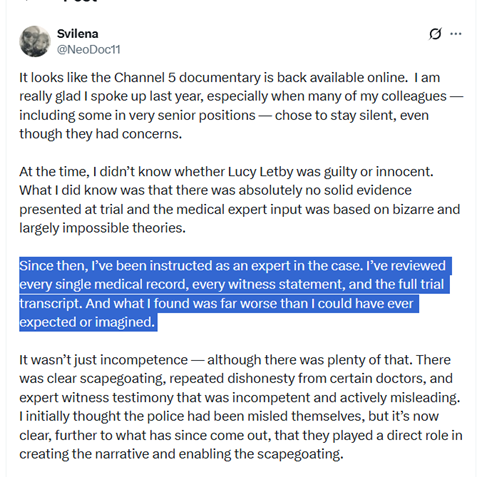
@LucyLetbyTrials @HarryZiman @drpaulclarke @DailyMail Oh, you've unblocked me. How nice. I couldn't access the full paper one year ago when I made the PubPeer comment. It has since been provided to me.
All doctors make mistakes. It’s how we investigate, acknowledge, explain and learn from them that matters. This can happen at the speed of a glacier in the NHS, and even more slowly for a potential miscarriage of justice. The @ccrcupdate has all the new argument and expert evidence it needs to refer the Letby case back to the court of appeal. Further delay just delays justice.
When patients and families say “we feel/think/know we have been harmed” - the only healthy response is to listen, review their cases with care and openly examine what can be learned. Dismissing their voices is gaslighting. It is no different from a relationship where one person says, “I feel hurt by what you did - can we talk about it?” and the other replies - “No, I’m perfect.” As healthcare providers, you owe patients a duty of care. When they say that trust has been broken, the only responsible course is to investigate step by step, to offer external reviews where confidence is lost and to demonstrate through transparency that your standards are as high as you believe them to be. @drphilhammond @wesstreeting @DOckendenLtd @DavidDavisMP @DavidRoseUK @MartynPitman @drcmday

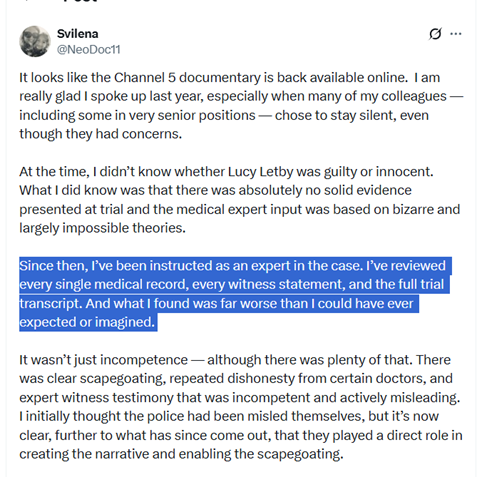

theguardian.com/uk-news/2023/a… Judge Goss stated in his opening that there was more than 50,000 documents. According to Josh Halliday in the Guardian, "the medical notes of one baby alone ran to more than 8,000 pages. There were more than 5,500 pages of witness statements and 32,000 pages of exhibits, including text messages and photographs." But Dimitrova and Lee read them all, along with the transcripts. and cracked the case in weeks. Yeah, right.


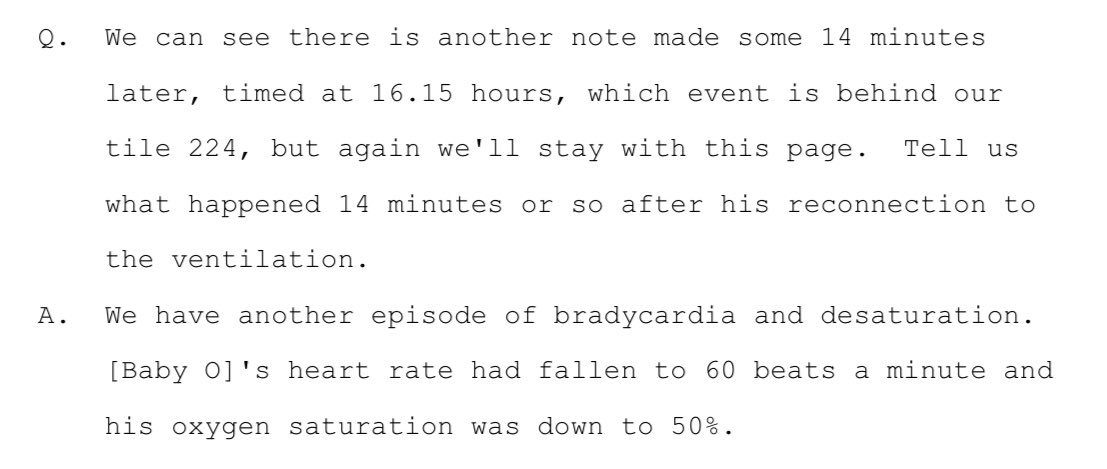

There are a number of problems with this conglomeration of hypotheses. Firstly, the only person who says Baby O was ventilated is Letby and she says he was put on ventilation at 5pm on 23/6, ie. less than an hour before he died. It cannot have been the cause of the collapse at 2.40pm. He had been on CPAP but only for the first ≈20 hours of life. Thereafter, his breathing was fine until Letby came back from her holiday. The haematoma was found post-mortem. The defence agreed that it was not there before Letby started her 23/6 shift. His haemoglobin levels did not fall until his last hours of life (if anything, they were rising) and they were in the healthy range until shortly before his death. If there had been a liver injury at birth - especially one as severe as that found port-mortem - they would have declined sooner. "She could find no evidence of deliberate harm to the liver". Except the three severe liver injuries that Dr Marnerides likened to the victim of a car crash! What caused these? It wasn't a cannula (they were on the wrong side) and it didn't happen during childbirth. The cannula/syringe theory was dismissed in court with good reason (Marnerides said it was most likely to have happened post-mortem), but even if such an injury had occurred, the cannula was inserted as a last ditch attempt to save a baby who had repeatedly collapsed. What caused the collapses?