Solar ☀️

4.6K posts

Solar ☀️ banner
Solar ☀️

Solar ☀️

@DefiSolar

Cracking the code of Solana DeFi — @kamino

Paris, France शामिल हुए Nisan 2021
1K फ़ॉलोइंग8.8K फ़ॉलोवर्स
पिन किया गया ट्वीट
Solar ☀️
Solar ☀️@DefiSolar·
I've been through every Solana @colosseum radar hackathon applications so you don't have to. ...and the DeFi track was full of hidden gems. Here's my top 7🧵
Solar ☀️ tweet media
English
49
37
400
63K
Kormos
Kormos@Kormos_fi·
Slippage. Unstructured risk. Redemption periods. Three problems Kormos solves to unlock the highest quality yields in DeFi.
Kormos tweet media
English
16
6
40
1.3K
Solar ☀️ रीट्वीट किया
Marius | Kamino
Marius | Kamino@y2kappa·
On risk isolation This is one of those things that everyone kind of gets intuitively but once you peel the onion you realise how many layers there are to it. This is my genuinely honest attempt to articulate it after thinking about it for a while. There are three fundamental principles, (1) risk profile, (2) risk non-fungibility, and (3) risk pricing. 1/ When you lend into a market, you essentially underwrite the risk of that market - the collateral (credit risk) along with operational risk (smart contracts, liquidations, oracles, etc). In an ideal world, operational risk goes to 0 over time and you are left with the credit risk of the collateral. Similarly with vaults, but not quite literally the same, you underwrite the risk of the **current** markets, along with the **mandate** and the skill of the risk manager. Let's call this "risk profile". Critically, that is a point-in-time decision, and not something you expect to change over time. A crude equivalence - when you buy a bond you don't expect it to switch from being a US Treasury to a junk emerging market bond. You expect the risk profile to be stable over time, and you price it accordingly. Therefore, adding tokens to a market or markets to a vault is expected to be done with this assumption. It's not a hard rule because DeFi is still nascent, but it's a strong convention you shouldn't violate. 2/ Risk is not fungible nor constant While risk usually collapses to a single value at a point in time (the credit / yield spread over the risk free rate) - the vector of risks that contribute to that value is huge and changes with time. For example, one yielding token commands a 5% spread due to collateral risk, another one due to duration, and yet they could have the same spread at this point in time. That doesn't mean they have the same risk profile and that spread will be the same tomorrow. Adding them to the same market without accounting for that is where the problem starts. Suddenly the collateral of the first token could degrade and the spread could go to 10%. The inputs affecting those risks change over time and therefore the yield. Just because the yield matches now, it doesn't mean the risk is the same. Risk is not fungible, therefore grouping tokens has to be done with care. 3/ Risk is priced by the market, not by the risk manager or by the protocol. The market is an aggregate of all participants out of which the risk curator is just one. Everyone has different perceptions and tolerances of "oracle risk" or "redemption risk" or "smart contract risk". Even more so, since RWAs, the vector of risks has grown exponentially, making the exercise of pricing them 100x harder. That basically means you can't just "lift the curve" or add a constant spread to a token and dump it in an existing market. Some existing lenders may agree, some may not, it's impossible to calibrate this value. So the solution is for the protocol / risk manager to allow the market to price the risk. The simplest way to do it (which people do now) is to simply sit it out - deposit if the yield compensates the risk you think you are taking, or not. A more complicated way would be to place lending intents at diff rates and see where the market clears. DeFi is still crude here but not stupid - given enough information the market will try to price the risk - a black box token is 100x harder to price than a token with SEC filings and audited financials. Disclosure is highly critical here which is not nearly enough spoken about. -- Taking all three into account we have: (1) a lender prices a risk profile and expects it to hold, (2) two tokens with the same spread today carry different vectors of risk that will diverge tomorrow, and (3) no single curator can price that risk on behalf of the market. Therefore, adding assets with a different risk profile to an existing market changes what lenders signed up for, exposes them to risks they never priced, and leaves no way to compensate them because no two lenders price the new risk the same way. The only way to solve all three is isolation - stable risk profile per market / vault and let the participants price it. The principle is as old as finance itself. -- Note: this is not a manifesto for "isolation at all costs". This topic is as deep as it gets and could turn into an essay, but for the sake of brevity, I kept a lot out.
Marius | Kamino tweet media
English
6
12
53
8.5K
Solar ☀️
Solar ☀️@DefiSolar·
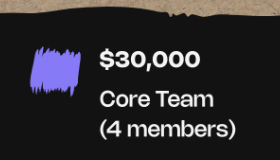
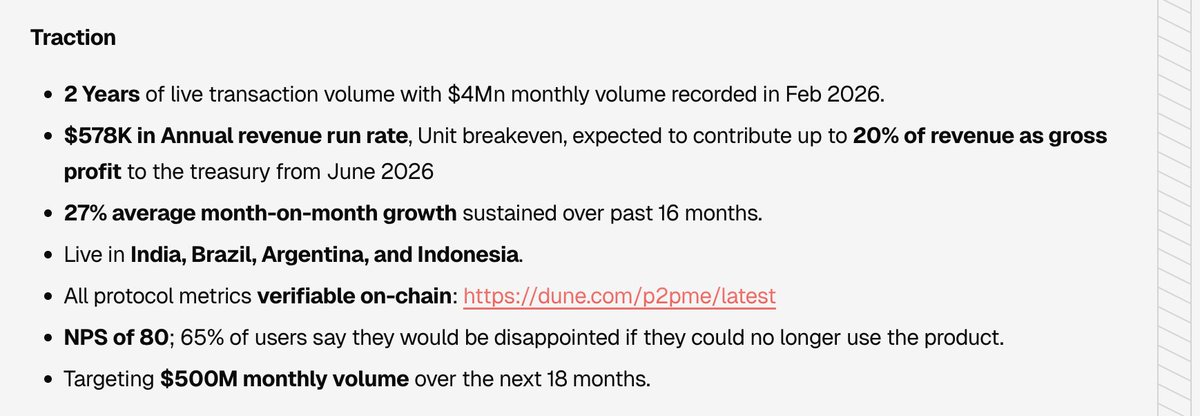
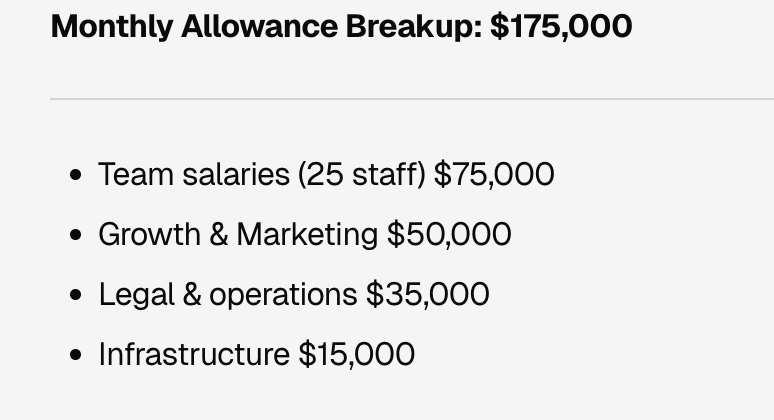
@HeyDrops @MetaDAOProject Pretty ballsy to pay founders 20x the average local salary when the company is still unprofitable and losing $140K a month.
Solar ☀️ tweet media
English
5
0
11
1.7K
crazyDrops ☄
crazyDrops ☄@HeyDrops·
easy skip this @MetaDAOProject new sale. Annual revenue $578K, yet asking $6M here. Monthly allowance per person is $3K ( growth and legal might goes to same stuff), not much but in India ₹3 lakh each month for this?? I don’t even think they need 25 people just to run a sub grade P2P service. All lies and extraction.
crazyDrops ☄ tweet mediacrazyDrops ☄ tweet media
CryptoTelugu@CryptoTeluguO

😂Extraction continues 🤷Another project on @MetaDAOProject planning to raise $6M ❌MetaDao is no longer the special IDO platform 🫠It has become just another launchpad running raises that mostly favor projects, not users ⚠️Last sale Hurupay was cancelled after failing to reach the $3M target 😂I'm Going to skip this one 🫵Will u join?let me know 💙Like 🔁RT

English
30
2
59
43.4K
Kormos
Kormos@Kormos_fi·
Users are missing out on some of the highest yield strategies in DeFi. Most are used to Kamino-like instant and free redemptions, but RWA strategies incur entry and exit slippage, which compounds quickly with looping. Kormos is built to capture this yield.
Kormos tweet media
English
24
9
64
2.2K
Mark
Mark@markwasonline·
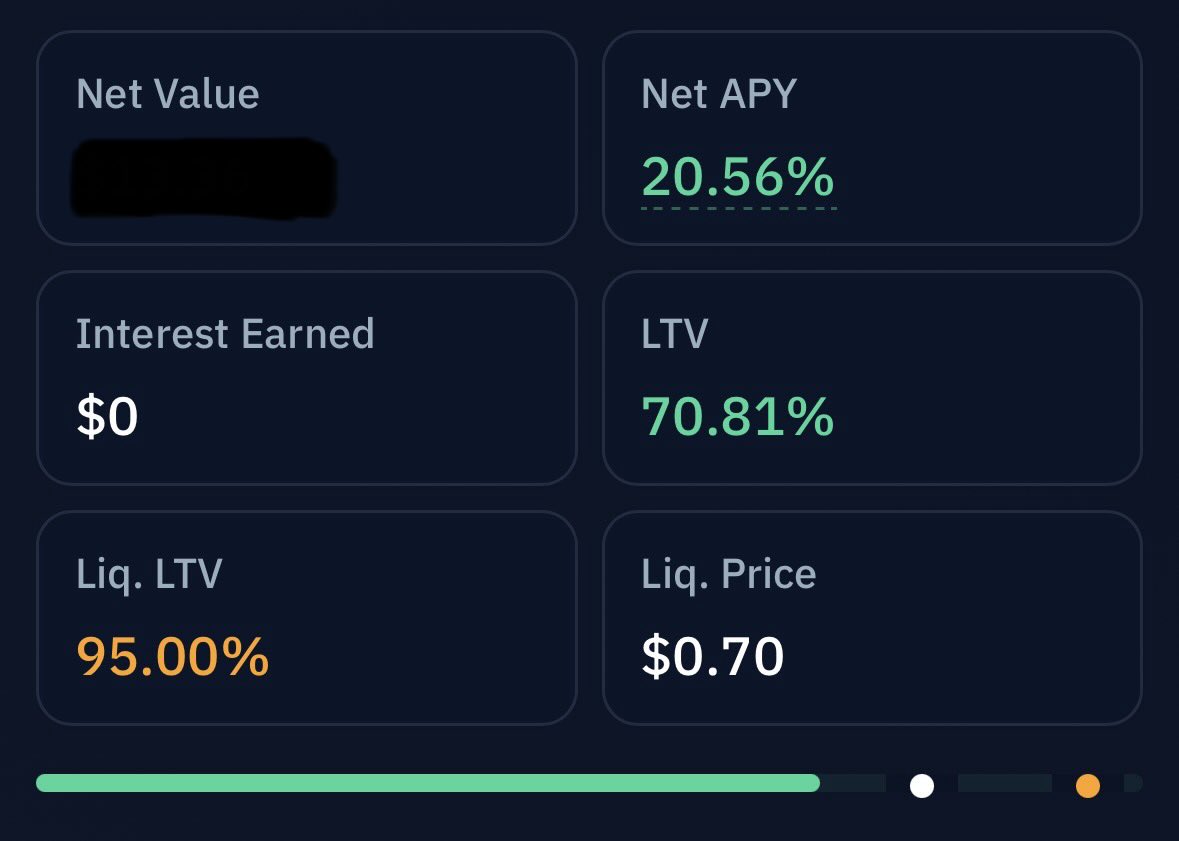
you can manually loop PT-eUSX on @Kamino for 20%+ APY and take advantage of $20k in new incentives. here’s how: swap stables → eUSX (@kamino_swap) eUSX → PT-eUSX (@ExponentFinance) supply PT-eUSX into the Solstice market on Kamino max borrow USX against it repeat until ~70% LTV Currently I’m getting paid to borrow USX as well. And as long as you keep LTV below ~80% you should be chillin.
Mark tweet media
Kamino@kamino

New incentives are live in the @solsticefi Market on Kamino. Lend and borrow with Exponent PTs, USDC, and USX: • 80% max LTV on PT collateral • 1,000 USDC weekly supply incentives • 4,700 USX weekly borrow incentives

English
14
1
34
1.5K
Alan
Alan@0xAlan_·
@DefiSolar As a top 5 points enjoyer, I like this article
English
1
0
1
178
inno
inno@inno_ox·
@DefiSolar what a read! defi goat.
English
1
0
1
100
drunklord.eth
drunklord.eth@DonDeFiMaster·
@DefiSolar Can you please send me the spreadsheet so I can calculate estimated APR for 5x and 6x point multiplier?
English
1
0
0
141
SolanaFloor
SolanaFloor@SolanaFloor·
SolanaFloor is back. As of today, we are thrilled to announce that SolanaFloor has been acquired by @jito_sol and will resume operations under the Jito Foundation’s ownership while maintaining full editorial independence. After announcing a wind-down in February 2026 following an exploit tied to our parent organization, we explored external financing and acquisition options. However, the team was unable to secure a viable path forward at the time, leaving a gap in independent coverage of onchain activity across the Solana ecosystem. Now, we can resume operations. While SolanaFloor will operate under Jito Foundation ownership, all editorial decisions including story selection, data presentation, and coverage priorities will remain fully independent of Jito Foundation’s activities, partnerships, and interests. The mission remains unchanged: documenting the ongoing rise of the Solana ecosystem and providing clear, unbiased research and journalism. It’s a critical time for the chain. Spot $SOL ETFs have crossed $1B in AUM. The ecosystem is gradually institutionalizing. New DeFi tools and integrations emerge every day. The need for independent Solana coverage has never been more apparent. “When SolanaFloor went dark, the ecosystem lost something difficult to replace,” said @brian_smith_0 , President of Jito Foundation. “This acquisition is about filling the gap with a platform that operates from a position of editorial independence. Jito has a long term stake in the health of the Solana ecosystem, and that means investing in the infrastructure and public goods that keeps the community informed.” Additional details on the relaunch -- including editorial structure, commercial offerings, and team updates -- will be shared soon.
SolanaFloor tweet media
English
264
130
929
134.6K