FlyIt

1K posts

FlyIt banner
FlyIt

FlyIt

@FlyItRealFast

I’m an engineer. I believe all technology should be both ergonomic and intuitive. MEGASTRUCTURES! US must lead in AI. Moon → Mars → Ceres → Stars. 🇺🇸 🚀 🦾

Florida Bergabung Kasım 2022
318 Mengikuti364 Pengikut
Tweet Disematkan
FlyIt
FlyIt@FlyItRealFast·
Recap: Tugs will enable 50% more landed mass on the lunar surface compared to sending lunar landers directly on a Trans-Lunar Injection (TLI) trajectory. The general concept is straightforward: a tug and lunar lander are launched together as a stack into Low Earth Orbit (LEO). The current Falcon Heavy limit in partially expendable mode is 57 metric tons (MT), and landed lunar mass scales directly with LEO launch capacity. Once in orbit, the tug performs TLI and Lunar Orbit Insertion (LOI). After separation, the lander remains in a circular Low Lunar Orbit (LLO) until it is commanded to descend, while the tug executes a Trans-Earth Injection (TEI) and uses aerobraking to reenter LEO. I also have concepts for a reusable heat shield that would allow the same tug to make multiple round trips between LEO and LLO. This architecture would require on-orbit refueling with liquid hydrogen (LH₂) and a Nuclear Thermal Propulsion (NTP) engine on the tug. I assumed an Isp of 800 s for the tug and 350 s for the lander. All of the required technologies either already exist or are just over the horizon. Overall, tugs would dramatically accelerate the buildout of lunar infrastructure compared to traditional approaches. Background: Before Nixon's OMB killed the program in January 1973, @NASA had a nuclear rocket engine research program at Plum Brook Station (PBS) in Sandusky, OH. Their hot-fire test facility was located at the Nuclear Rocket Development Station (NRDS) in Jackass Flats, NV. They learned a lot about nuclear rocket propulsion from 1961 to 1972. They had fires and explosions along the way but managed to build several different engines. These included the Kiwi, Phoebus, and NERVA variants. The best one they produced, IMO, was the NERVA XE. It had an Isp of 811 s, a maximum thrust of 75,000 lbf, and a best thrust-to-weight ratio (TWR) of about four. Project Timberwind / SNTP (Space Nuclear Thermal Propulsion) developed in late 80's and early 90's under the SDI promised a TWR of around thirty. The most recent design, by @DARPA program Demonstration Rocket for Agile Cislunar Operations (DRACO 2020-2025) was just recently cancelled. The TWR for DRACO was much lower than previous designs because they used a significantly lower enrichment of the U235. They improved the materials science but shot themselves in the foot by switching from HEU to LEU. The earlier programs had used HEU and were showing real progress over time. We gave up too soon on NTP in favor of NEP. NEP just does not have the thrust we need for deep space exploration and colonization! 🇺🇸 🚀 🦾 @NASAAdmin @CrainTim @Jason_Lil_Kim @astrobotic @blueorigin @SpaceX
FlyIt tweet mediaFlyIt tweet mediaFlyIt tweet mediaFlyIt tweet media
English
0
0
2
88
FlyIt
FlyIt@FlyItRealFast·
@elonmusk This is one of your most important posts. Humans need challenge to survive long-term. Solving problems isn't just a necessity—it is the ultimate regimen for maintaining our mental health.
English
0
0
0
12
Elon Musk
Elon Musk@elonmusk·
Expanding to the stars avoids risk of a mouse utopian behavioral sink
English
14.3K
9.4K
115.6K
64.2M
FlyIt
FlyIt@FlyItRealFast·
@NASAAdmin @NASALangley I wish we could return to the drive and focus we had during project Apollo. I am encouraged by recent events. Godspeed all.
English
0
0
1
45
NASA Administrator Jared Isaacman
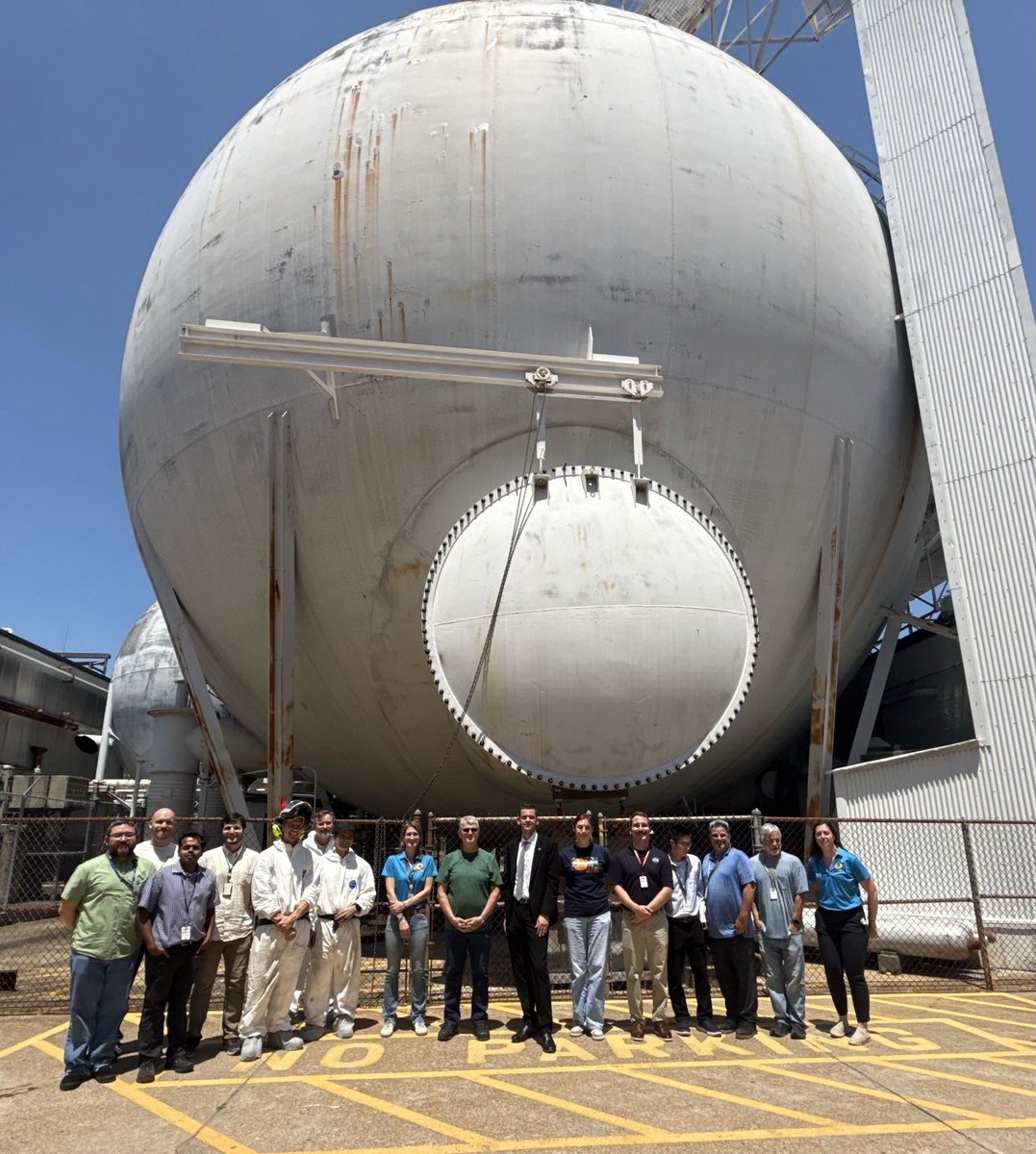
I had the opportunity to visit @NASALangley today and spent time with the extraordinary workforce helping shape the future of American aerospace and space exploration. Their work helps support Artemis, future lunar operations, advanced flight system materials and hypersonics, and nuclear technologies in space. America's leadership in space depends on people willing to solve hard problems, and Langley is full of them.
NASA Administrator Jared Isaacman tweet mediaNASA Administrator Jared Isaacman tweet mediaNASA Administrator Jared Isaacman tweet mediaNASA Administrator Jared Isaacman tweet media
English
19
98
1.1K
30.5K
FlyIt
FlyIt@FlyItRealFast·
@CENTCOM The IRGC is finished. It’s time for Iranians to take back their country. God Bless the USA and Israel. 🇺🇸 🇮🇱
English
1
0
1
610
FlyIt
FlyIt@FlyItRealFast·
@NASA How much simulator training do you think you will need to be ready for all Artemis III planned activities?
English
1
1
3
286
NASA
NASA@NASA·
Tomorrow, we're announcing the astronauts flying aboard Artemis III, the mission that will test rendezvous and docking capabilities with commercial lunar landers in low Earth orbit. If you could ask the Artemis III astronauts any question, what would you ask them?
NASA tweet media
English
1.8K
4.4K
26.5K
1.1M
Tony Bela - InfographicTony
Tony Bela - InfographicTony@InfographicTony·
UPDATE 4.0: Artemis III (unofficial) infographic. This work-in-progress infographic illustrates humanity's next big step in returning to the lunar surface (The main change was the removal of the ICPS).
Tony Bela - InfographicTony tweet media
English
4
11
74
4.9K
Tony Bela - InfographicTony
Tony Bela - InfographicTony@InfographicTony·
UPDATE 3.0: Artemis III (unofficial) infographic. This work-in-progress infographic illustrates humanity's next big step in returning to the lunar surface.
Tony Bela - InfographicTony tweet media
English
13
42
301
13K
World of Engineering
World of Engineering@engineers_feed·
Voyager 1 is 24 billion kilometers from Earth. It communicates with us using a 23-watt transmitter. Less than a refrigerator light bulb. The signal takes 22 hours to reach us, traveling at the speed of light. By the time it arrives, it's 20 billion times weaker than the power of a digital watch battery. NASA's Deep Space Network picks it up using 70-meter dish antennas cooled to near absolute zero to reduce electronic noise. The engineering required to hear a 23-watt signal from 24 billion km away is arguably more impressive than the spacecraft itself. Launched 1977. Still transmitting. Still being heard. We built something that works perfectly, 47 years later, in conditions no one has ever tested in. That's what engineering for the long term looks like.
English
839
4.7K
28.3K
1.4M
FlyIt
FlyIt@FlyItRealFast·
@NASAAdmin @shanksteroflove Confidence can move mountains. It changes how you speak, how you act, and how others perceive your ability to get things done.
English
0
0
0
66
Shanks
Shanks@shanksteroflove·
Mr. Isaacman, Do you personally believe that both providers for HLS are able to provide an HLS in time for Artemis 3? I’m beyond sure that there’s more information related to both than we know about publicly, and I wanted to know your confidence level with that information.
NASA Administrator Jared Isaacman@NASAAdmin

That is not correct. You can look up what the SLS Block 1B cargo variant can send to TLI, and that mass is well below the public MK2 data. And to be clear, NASA is very focused on assisting Blue Origin with root cause analysis, pad recovery, and, most importantly, continuing to advance a lander that can meet Artemis III and crewed landing timelines.

English
4
4
165
34.4K
FlyIt
FlyIt@FlyItRealFast·
Money is important!
Math Files@Math_files

A mathematics professor once discovered that the sink in his kitchen had broken. He called a plumber, who arrived the next day, tightened a few fittings, and quickly fixed the problem. The professor was pleased—until he saw the bill. “This is a third of my monthly salary!” he exclaimed. Still, he paid it. As the plumber was leaving, he said, “I understand your situation. Why not join our company? You could earn much more than you do now. Just one thing—when you apply, say you only finished elementary school. They prefer that.” The professor, intrigued, followed the advice. To his surprise, he was hired. The work was simple—occasional repairs, tightening pipes—and his income improved dramatically. Some time later, the company introduced a new rule: all employees had to attend evening classes to complete basic schooling. The professor had no choice but to attend. On the first day, the subject was mathematics. The instructor asked a student to write the formula for the area of a circle on the board. The professor was chosen. He walked up confidently—but then hesitated. He couldn’t recall the formula. Determined, he began deriving it from scratch. The board quickly filled with integrals, derivatives, and complex expressions. After several minutes of work, he arrived at a result: −πr² Unsatisfied with the negative sign, he tried again. And again. Each time, the same result appeared. Frustrated, he turned to the class. Behind him, the other plumbers were whispering to one another: “Switch the limits of the integral.”

English
0
0
1
231
Dave Limp
Dave Limp@davill·
Some LC-36 updates. Now that we’ve had access to the pad and integration facility we can share a bit of good news. The propellant farm, oxygen, liquid hydrogen and LNG tanks are all in good shape. This is good luck because these are very long lead items. The water tower is also good. The big support tower is damaged, but it can be repaired in place rather than torn down and replaced. The booster “Never Tell Me The Odds” and the three GS-2s that were onsite in the integration facility also look good. I’ve seen some speculation that we might move directly to the 9x4 configuration, but we won’t do that. Rate manufacturing of 7x2 is going well, and we’re going to continue that at pace as planned and store the stages for use. In addition, we had already been working for some time on eliminating our transporter-erector in favor of an alternative vertical conop, and we’ll now go directly to that; so we don’t need a new transporter-erector. We will fly again before the end of this year. Gradatim Ferociter.
English
641
1.4K
12K
1.6M
FlyIt
FlyIt@FlyItRealFast·
@CENTCOM Knock them out. 🇺🇸
English
0
0
0
23
U.S. Central Command
U.S. Central Command@CENTCOM·
Last night at 11 p.m. ET, U.S. forces successfully intercepted two Iranian ballistic missiles targeting American forces based in Kuwait. These missiles were immediately defeated and no American personnel were harmed. U.S. Central Command remains vigilant and will continue to protect our forces from Iranian aggression while supporting the ongoing ceasefire.
English
996
3.2K
17.3K
1.5M
FlyIt
FlyIt@FlyItRealFast·
@davill I’m pulling for you guys Dave.
English
0
0
2
52
Dave Limp
Dave Limp@davill·
We have regained some access to Launch Complex 36 and are actively investigating the hotfire anomaly. We will start clearing the pad soon and have a good rebuild plan in place. The booster and GS2s in the integration facility appear healthy from quick looks.
English
140
414
5.5K
666.5K
FlyIt
FlyIt@FlyItRealFast·
"Aus der Kriegsschule des Lebens. — Was mich nicht umbringt, macht mich stärker." "From the military school of life. — What does not kill me makes me stronger." This quote from the German philosopher Friedrich Nietzsche applies to humans under stress, NOT to rocket components. In fact, the opposite is actually true with rocket components. They suffer from fatigue, micro-cracking, and plastic deformation each time they are tested. The factor of safety (FS) on pressurized tanks and plumbing was 1.5-2.0 during the Apollo program. Dr. Wernher von Braun insisted on it. You don’t have to have that now, due to our much better understanding of the stresses, but you still must account for all unknowns with a reasonable FS. You also need a rigorous QC program. I considered the possibility of resonance being responsible for the pad explosion, but the anomaly occurred too soon after engine ignition for that to be the culprit. I think there had to be a defect in a tank, a pipe, or a valve, that was missed during the preflight inspections. I’m sure @blueorigin will figure it out and let us know what happened. Godspeed.
Deutsch
1
0
0
480
NASA Administrator Jared Isaacman
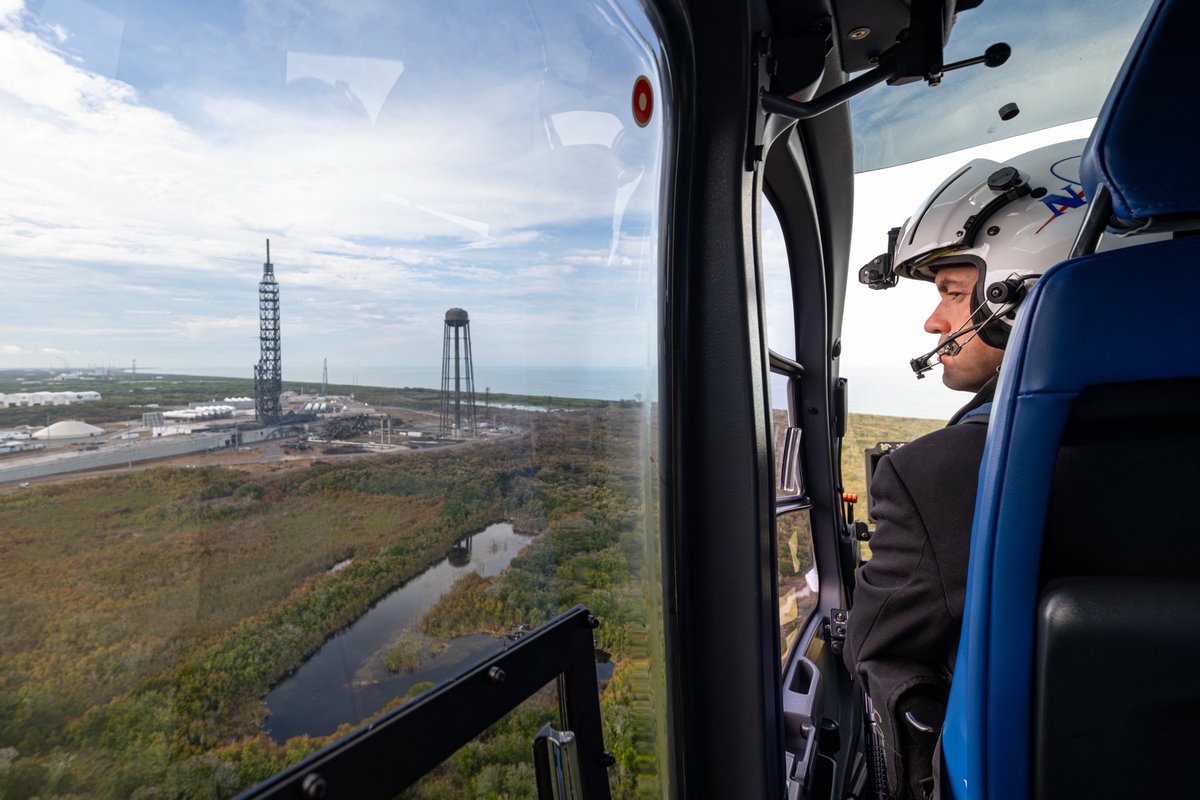
We go where we need to be, and today that was @NASAKennedy. Some of my senior engineers and I spent time at @blueorigin with @JeffBezos and @davill, speaking with the workforce and seeing the damage at LC-36 firsthand. I appreciated the opportunity to hear directly from those working through the aftermath and better understand the challenges ahead. There is a lot of work to do, but this is exactly why people choose careers in aerospace, whether at NASA, Blue Origin, or across the industry. The talent in this field thrives under pressure and performs at its best when solving the toughest problems. We have been saying for months at NASA that we are not going to sit on our hands and wait for the capabilities necessary to achieve the nation’s most pressing objectives. We are going to take an active role alongside our partners, just as we did in the 1960s, to overcome setbacks, remove obstacles, and deliver the intended outcomes. @NASA is committed to helping the Blue team recover, continue to advance their lunar lander and get New Glenn back to launching as soon as safely possible. America’s greatest achievements in space were never the result of avoiding setbacks. They came from overcoming them. We have done it before, and we will do it again🇺🇸
NASA Administrator Jared Isaacman tweet mediaNASA Administrator Jared Isaacman tweet mediaNASA Administrator Jared Isaacman tweet mediaNASA Administrator Jared Isaacman tweet media
English
738
2K
16.5K
2.6M
FlyIt me-retweet
NASA Administrator Jared Isaacman
NASA is aware of the anomaly that occurred tonight at Launch Complex 36 involving Blue Origin’s New Glenn rocket at Cape Canaveral Space Force Station. 

Spaceflight is unforgiving, and developing new heavy-lift launch capability is extraordinarily difficult. We will work with our partners to support a thorough investigation of this anomaly, assess near-term mission impacts, and get back to launching rockets. 
We will provide information on any impacts to the Artemis and Moon Base programs as it becomes available.
English
623
1.7K
18.9K
972.9K
FlyIt
FlyIt@FlyItRealFast·
@CrainTim Ah, I see now. Khon-1 moved from IM-2 to IM-3 and was renamed Altus-1. You guys make it a challenge to keep up! It is all very exciting. I am pulling for you Tim.
English
0
0
2
41
Tim
Tim@CrainTim·
@FlyItRealFast No problemo. Altus-1 is going into an elliptical frozen orbit…or ELFO if you are into the whole brevity thing. #adlunam
English
1
1
2
277
FlyIt
FlyIt@FlyItRealFast·
It’s concerning to me that Khon-1 never entered its planned ‘frozen’ polar orbit due to inability of IM-2 to communicate with it after it landed on Mons Mouton. This means that we don’t really know if the orbital engineers have correctly tuned the orbit for Khon-3 and Khon-4 to account for mascons protruding into the lunar crust. The perilune of the planned ‘frozen’ polar orbit was supposed to be around 100 km, while the apolune was supposed to be around 18,250 km. If the orbit is not properly tuned, to cancel out the perturbations of the mascons, the perilune will decrease each time around the moon. This can be countered with a prograde burn at apolune for awhile, but eventually, the satellite will run out of fuel and crash into the lunar surface. Khon-2 will be dropped into a Halo orbit around EML-2 by IM-3. This type of orbit is not affected by mascons. Kohn-2 will backup Kohn-3 and Kohn-4. Khon-3 and Khon-4 will be carried to the moon by IM-4. They will be dropped into a ‘frozen’ polar orbit exactly like the one that Kohn-1 was intended to occupy. By planning this orbit so that both the Kohn-3 and Kohn-4 satellites each reach apolune at the same time they pass over the base, and placing them in the same orbit, exactly 180° out-of-phase, @NASA and @Int_Machines ensure that our new American moon base never experiences LOS with Earth. @NASAAdmin @CrainTim
FlyIt@FlyItRealFast

Hell yes! A real base on the Shackleton Connecting Ridge! It’s a brilliant start. Because of the ridge's location, you have a direct line of sight with Earth whenever it rises above the lunar horizon, which lasts for about 13.5 days at a time. For the other 13.5 days of the month, the base will rely on the Khon-2 satellite for communications. Intuitive Machines (@Int_Machines) will drop Khon-2 into lunar orbit during their IM-3 mission before attempting their landing at Reiner Gamma. But when Earth is visible? The view from the Shackleton Connecting Ridge will be spectacular. Because of the Moon’s libration, Earth will trace a slow, vertical figure-8 in the lunar sky over the course of a tropical month. It will spend roughly half the month in the top loop of the '8' and the other half in the bottom. The link below allows you to view a very well made video and some infographics that will help you understand what the astronauts looking at Earth from our first moon base will see. sky-lights.org/2021/11/22/ear… @NASAAdmin @CrainTim

English
1
0
4
797
FlyIt
FlyIt@FlyItRealFast·
Apologies, if I posted erroneous data. I had not heard about the name change. I thought Khon-1 was launched with IM-2. So, Altus -1 is going into a Halo orbit around EML-2? I assume that Altus-2 and Altus-3 will be delivered by IM-4? Will they be placed into the type of orbit that I described for the Khon-3 and the Khon-4 satellites? Thanks for the update Tim.
English
1
0
0
68
Tim
Tim@CrainTim·
Actually, we didn’t fly a satellite of our own on IM-2. They were all rideshares to trans lunar orbit. Maybe you’re thinking about JPL’s Lunar Pathfinder? We’ve renamed our comm/PNT birds Altus and are building them in-house. Altus-1 is scheduled to fly with IM-3. Sorry for the confusion! #adlunam
English
1
0
8
345