Bradford Stroh

2.1K posts

Bradford Stroh banner
Bradford Stroh

Bradford Stroh

@bstroh

Brad Stroh - entrepreneur and CEO (https://t.co/nUk5zacvef & https://t.co/PFsLZy20hp), advisor, author, coach, husband & dad. Getting better every day. Having fun!


San Francisco Bergabung Aralık 2008
801 Mengikuti2K Pengikut
Bradford Stroh me-retweet
Ayman Al-Abdullah 🧱
Ayman Al-Abdullah 🧱@aymanalabdul·
The CEO sets the pace of growth for the entire company That means the CEO needs to see 5 or 6 steps down the road so they can prepare the team for what's coming A CEO who's always playing catch up leads to confusion and flat growth
English
3
5
42
1.9K
Bradford Stroh me-retweet
Sequoia Capital
Sequoia Capital@sequoia·
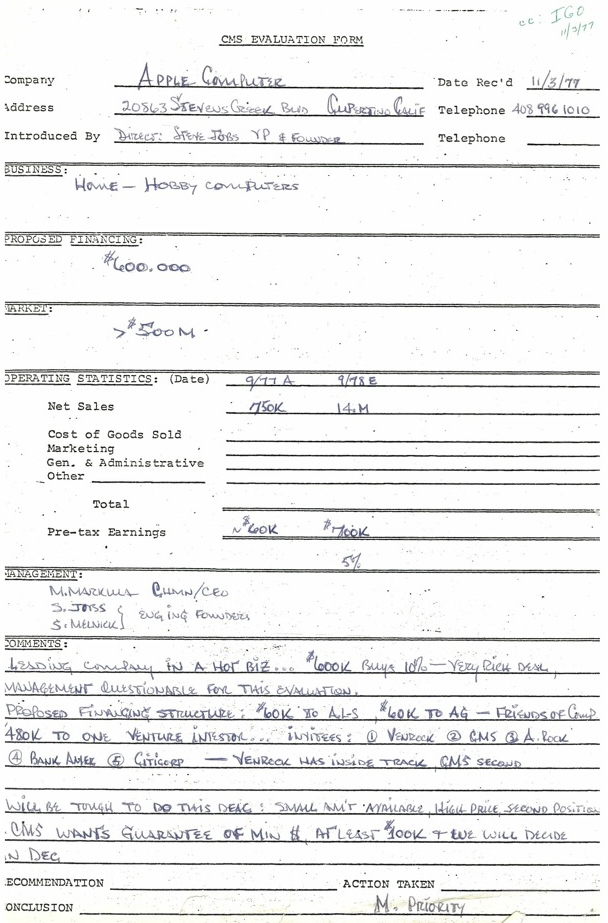
In honor of 50 years of Apple, we're sharing - for the first time ever - Don Valentine's original 1977 memo for Sequoia's investment into Apple Computer. #Apple50
Sequoia Capital tweet media
English
168
816
5.8K
2.2M
Bradford Stroh me-retweet
Startup Archive
Startup Archive@StartupArchive_·
Jack Dorsey on what he learned about culture from 49ers coach Bill Walsh When Bill Walsh joined the 49ers, they were the worst team in the NFL. Within three years, they were Super Bowl Champions. In his book, The Score Takes Care of Itself, he writes: “Winners act like winners before they’re winners…The culture precedes positive results. It doesn’t get tacked on as an afterthought on your way to the victory stand. Champions behave like champions before they’re champions; they have a winning standard of performance before their winners.” And he provides six guidelines for establishing a standard of performance: 1. Start with a comprehensive recognition of reverence for and identification of the specific actions and attitudes relevant to your team’s performance and production. 2. Be clarion clear in communicating your expectation of high effort and execution of your Standard of Performance. Like water, many decent individuals will seek lower ground if left to their own inclinations. In most cases you are the one who inspires and demands they go upward rather than settle for the comfort of doing what comes easily. Push them beyond their comfort zone; expect them to give extra effort. 3. Let all know that you expect them to possess the highest level of expertise in their area of responsibility. 4. Beyond standards and methodology, teach your beliefs, values, and philosophy. An organism is not an inanimate object. It is a living organism that you must nurture, guide, and strengthen. 5. Teach “connection and extension.” An organization filled with individuals who are “independent contractors” unattached to one another is a team with little interior cohesion and strength. 6. Make the expectations and metrics of competence that you demand in action and attitudes from personnel the new reality of your organization. You must provide the model for that new standard in your own actions and attitude. Twitter and Square founder Jack Dorsey encourages anyone thinking about leading teams or building a company to read this book: “What’s important about this is that as you start building a team, you need to set expectations around how people need to perform in the company—how people need to act in the company. And these can be very simple things, but without that, you are rutterless—you will react to the outside. And if you react to the outside, you are building someone else’s roadmap and you’re building someone else’s dream instead of your own.” Video source: @ycombinator (2013)
English
13
71
488
70.2K
Bradford Stroh me-retweet
Dustin
Dustin@r0ck3t23·
Jensen Huang just reverse-engineered why Elon Musk operates at a speed no one on the planet can match. Three traits. The first is deletion. Huang: “He has the ability to question everything to the point where everything’s down to its minimal amount.” Most engineers solve problems by adding. Musk solves them by subtracting. Every part. Every process. Every assumption that survived because no one had the nerve to kill it. He picks it up. Asks if it’s load-bearing. If the answer is anything less than absolutely, it is gone. Not simplified. Not optimized. Removed. What survives is the skeleton. The bare physics of the problem. Nothing between intent and execution. Huang said it plainly. As minimalist as you could possibly imagine. And he does it at system scale. Not at a product level. Not at a department level. Across entire companies. Entire industries. Entire supply chains. He strips a rocket the same way he strips a meeting. Down to the load-bearing walls and nothing else. The second is presence. Huang: “He is present at the point of action. If there’s a problem, he’ll just go there and show me the problem.” Not a Slack message. Not a report filtered through four layers of people who weren’t there when it broke. He walks to the failure. Stands over it. Puts his hands on it. Most executives have never seen the actual problem their company is trying to solve. They have seen slides about it. Read summaries of it. Formed opinions about it in rooms that are nowhere near it. Musk stands over the broken hardware and does not leave until it works. That collapses the distance that buries most organizations. The gap between something breaking and the person with authority to fix it actually understanding what broke. In most companies, that gap is weeks. For Musk, it is hours. The third is the one that bends everyone around him. Huang: “When you act personally with so much urgency, it causes everybody else to act with urgency.” Every supplier has a hundred customers. Every vendor has a dozen priorities. Every manufacturer has a backlog stretching months into the future. Musk makes himself the top of every single one of those lists. Not by demanding it. By demonstrating it. When the CEO shows up at your facility at midnight. When he is moving faster than your own internal team. When his timeline makes yours look like a suggestion. You do not put him in the queue. You rearrange the queue around him. Huang watched this up close. Huang: “He does that by demonstrating.” Not by asking. Not by negotiating. Not by leveraging a contract clause. By moving so fast that everyone else’s normal pace feels like standing still. Three traits. Strip everything down. Show up at the failure. Move so fast the world rearranges around you. That is not a management philosophy. That is why one man runs six companies while entire boards cannot keep one moving.
English
208
1.7K
9.4K
767.6K
Bradford Stroh me-retweet
Jon Gordon
Jon Gordon@JonGordon11·
Great leaders don’t just work harder. They lead differently. They share positive energy. They eliminate negativity. They strengthen their teams. And they create cultures where people thrive instead of just survive.
English
1
52
164
11.7K
Bradford Stroh me-retweet
Jamy Bechler
Jamy Bechler@CoachBechler·
The best teams don't always have the most talented individuals, but they do have the best teammates. 𝗪𝗘 > 𝗺𝗲 Great teams have great teammates.
English
0
17
75
9.3K
Bradford Stroh me-retweet
Ray Dalio
Ray Dalio@RayDalio·
Think of every decision as a bet with a probability and a reward for being right and a probability and a penalty for being wrong. Normally a winning decision is one with a positive expected value, meaning that the reward times its probability of occurring is greater than the penalty times its probability of occurring, with the best decision being the one with the highest expected value. #principleoftheday
Ray Dalio tweet media
English
76
117
851
79.2K
Bradford Stroh me-retweet
unusual_whales
unusual_whales@unusual_whales·
BREAKING: Credit card debt has hit a record $1.28 trillion
English
493
1.3K
8.8K
2.8M
Bradford Stroh me-retweet
Dave Kline
Dave Kline@dklineii·
Great teams don't just do the basics better. They obsess over timeless principles others ignore. The 8 Habits of High-Performing Teams:
English
7
22
218
39.7K
Bradford Stroh me-retweet
Peter Mallouk
Peter Mallouk@PeterMallouk·
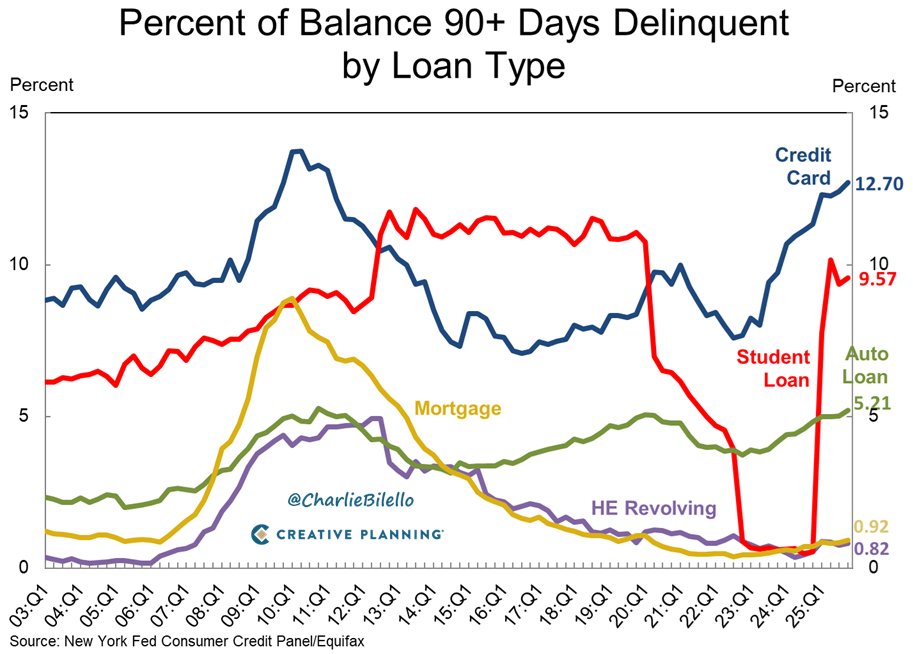
Credit card debt is the silent killer. Over 12% of balances are 90+ days delinquent – the highest in 15 years - with interest rates at 21%. Nothing destroys wealth faster.
Peter Mallouk tweet media
English
20
76
326
39.3K
Bradford Stroh me-retweet
a16z
a16z@a16z·
Ben Horowitz on the importance of culture: "A culture is not a set of ideas, it’s a set of actions." "If you define your culture as a kind of set of ideas—integrity, do the right thing, we have each other’s backs, or any of these ‘corporate values’—it’s actually just a bunch of platitudes. It doesn’t mean anything. The culture has to be defined in terms of the exact behavior you want that support that idea." "It’s the little things—how responsive are you to your colleagues? What’s the SLA on returning a Slack message or an email? Do you show up to meetings on time?" "We have an idea about—you have to respect the entrepreneur... you can’t ever be late to a meeting with an entrepreneur. I used to fine people $10/minute in the beginning of the firm to reinforce it." Source: @bhorowitz on @InvestLikeBest with @patrick_oshag
Patrick OShaughnessy@patrick_oshag

This conversation with @bhorowitz gets into sides of his story you don't often hear. The people who shaped Ben tell you a lot about how he sees the world. His father grew up communist and later emerged on the right after seeing the failures of that system firsthand. He taught Ben that bad government and policy can ruin even the greatest countries, which explains why Ben believes technology is far more effective than policy at changing the world. Andy Grove (former CEO of Intel) taught Ben that when you are the industry leader, expanding the entire market becomes your responsibility. Ben explains how he built @a16z around that idea and why he set out to build the firm at an unusually large and consequential scale. He sees its role as tied to whether America remains the technological, military, and cultural superpower, and is clear about what is at stake if it doesn't. Ben's story also includes his work with the Las Vegas Police Department. He explains why he is personally funding new technology there, and how its deployment has led to crime falling by more than 50% while making policing safer for everyone involved. Ben and I share a deep love of hip hop. We talk about why he thinks Nas is one of the great storytellers of all time and credits him for changing how he sees the world. Enjoy! Timestamps: 0:00 Intro 1:00 The US Tech Advantage 2:49 A Solution for Everything 4:21 The Fragility of Success 7:14 The New Physics of Company Building 10:48 "Alchemistic" Talent 12:57 Inequality and the Kobe Bryant Effect 17:01 Automation History & The Future of Jobs 20:06 American Leadership in the AI Era 22:42 Andy Grove & High Output Management 26:02 The Hardest Part of Being a CEO 29:56 Founding a16z 35:11 Scaling the Firm & Early Mistakes 39:19 Broken Capital Markets 41:23 Why We Don't Do Private Equity 43:29 Culture Is Action, Not Platitudes 49:54 Coding & Art 52:08 Learning from Nas 56:36 Las Vegas: The Future of Tech-Enabled Policing 1:01:03 The Kindest Thing

English
15
52
325
179.3K
Bradford Stroh me-retweet
a16z
a16z@a16z·
Marc Andreessen on Elon Musk: “I think probably the single biggest question in all of business right now is: why don't more CEOs operate the way that he does?” "The top-line thing is just this incredible devotion from the leader of the company to fully, deeply understand what the company does, and to be completely knowledgeable about every aspect of it." "To be in the trenches and talking directly to the people who do the work, deeply understanding the issues, and being the key, lead problem solver in the organization." "What Elon does is—he shows up every week at each of his companies, he identifies the biggest problem that the company's having that week, and he fixes it. He does that every week for 52 weeks in a row. And then each of his companies has solved the 52 biggest problems that year, in that year." "The side effect of it is—he attracts many of the best people in the world to work with him. Because if you work with Elon, the expectations are through the roof in terms of your level of performance." Source: @pmarca on @ChrisWillx
English
67
214
1.9K
140.1K
Achieve
Achieve@achievecom·
64% of Americans are struggling with debt. It's not a you problem. It's systemic. The financial industry profits when you stay stuck. But somehow we're still blaming individuals for a broken system.
English
1
0
3
45
Bradford Stroh me-retweet
Reads with Ravi
Reads with Ravi@readswithravi·
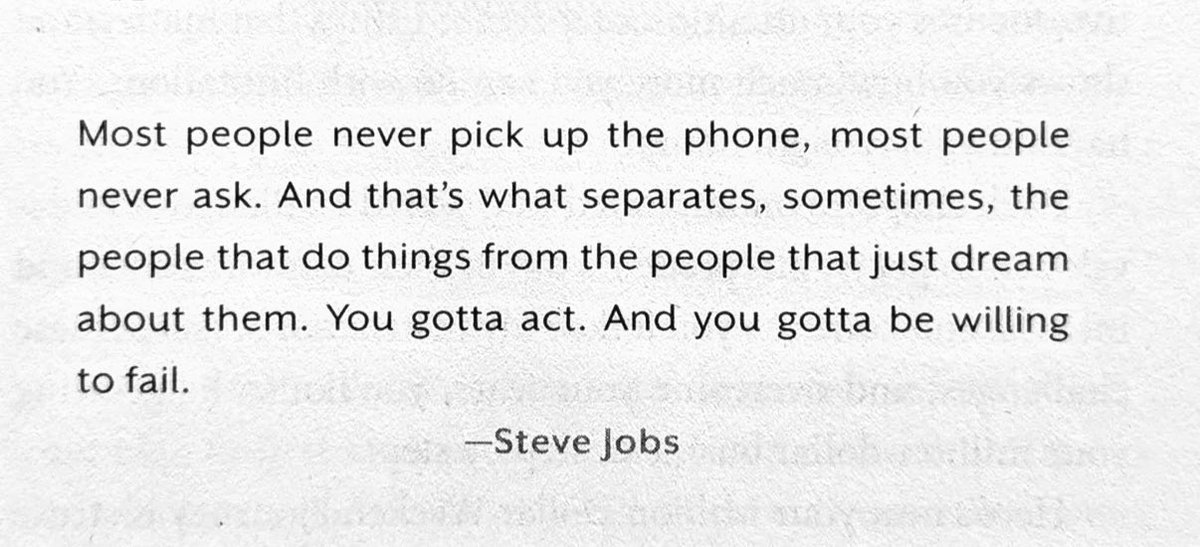
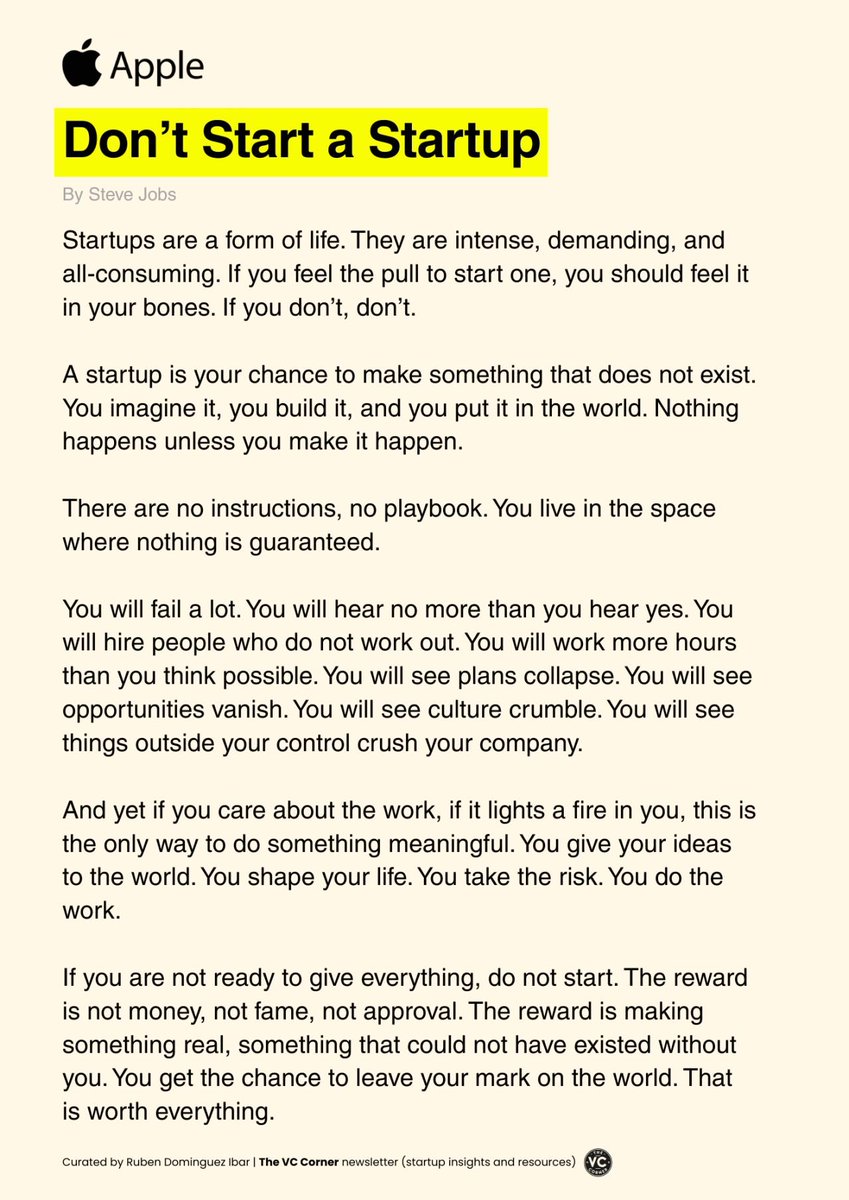
Steve Jobs on doing the work:
Reads with Ravi tweet media
English
23
155
1.2K
34.3K
Bradford Stroh
Bradford Stroh@bstroh·
@cresta @achievecom Love that Achieve is Ai driven to deliver personalized outcomes as the liability optimization and debt consolidation industry leader! Thanks team Cresta for supporting the mission and powering us all forward for our clients.
English
1
0
1
16
Cresta
Cresta@cresta·
. @achievecom predicts in 2026 AI will serve as the primary first contact for customers, with human support stepping in where it adds the most value. 📘 Read more predictions from CX leaders in our 2026 Predictions Report: cresta.com/2026-predictio…
English
1
0
1
119
Bradford Stroh me-retweet
ℏεsam
ℏεsam@Hesamation·
everyone must read this piece from Steve Jobs
ℏεsam tweet media
English
112
907
7.7K
487.8K
Bradford Stroh me-retweet
Big Brain Business
Big Brain Business@BigBrainBizness·
Jack Welch explains the defining trait of every great leader:
English
10
147
845
60K
Achieve
Achieve@achievecom·
Just got named to Az Business Magazine's AZ Big 100 list. But here's what that actually means: Arizona isn't just where we have an office. It's where hundreds of teammates show up every day to help people get out of debt. The recognition is theirs.
Achieve tweet media
English
1
1
4
67