Dan Lark

2.2K posts

Dan Lark banner
Dan Lark

Dan Lark

@ERM_Lab

Studying extracellular vesicle biology in the context of metabolic disease. Assoc. Prof. in Health & Exercise Science at @CSU

Fort Collins, CO 参加日 Ocak 2016
338 フォロー中629 フォロワー
Dan Lark がリツイート
Kevin O Murray, PhD
Kevin O Murray, PhD@KOMurrayPhD·
New publication in the @JPhysiol where we show evidence of lowering mitochondrial oxidative stress to improve physical function in old mice. We also see initial efficacy in humans over the age of 70 (n=5) - but larger follow-up studies are required. Enjoy! physoc.onlinelibrary.wiley.com/doi/full/10.11…
English
0
9
23
2.8K
Dan Lark がリツイート
Alice Ting
Alice Ting@aliceyting·
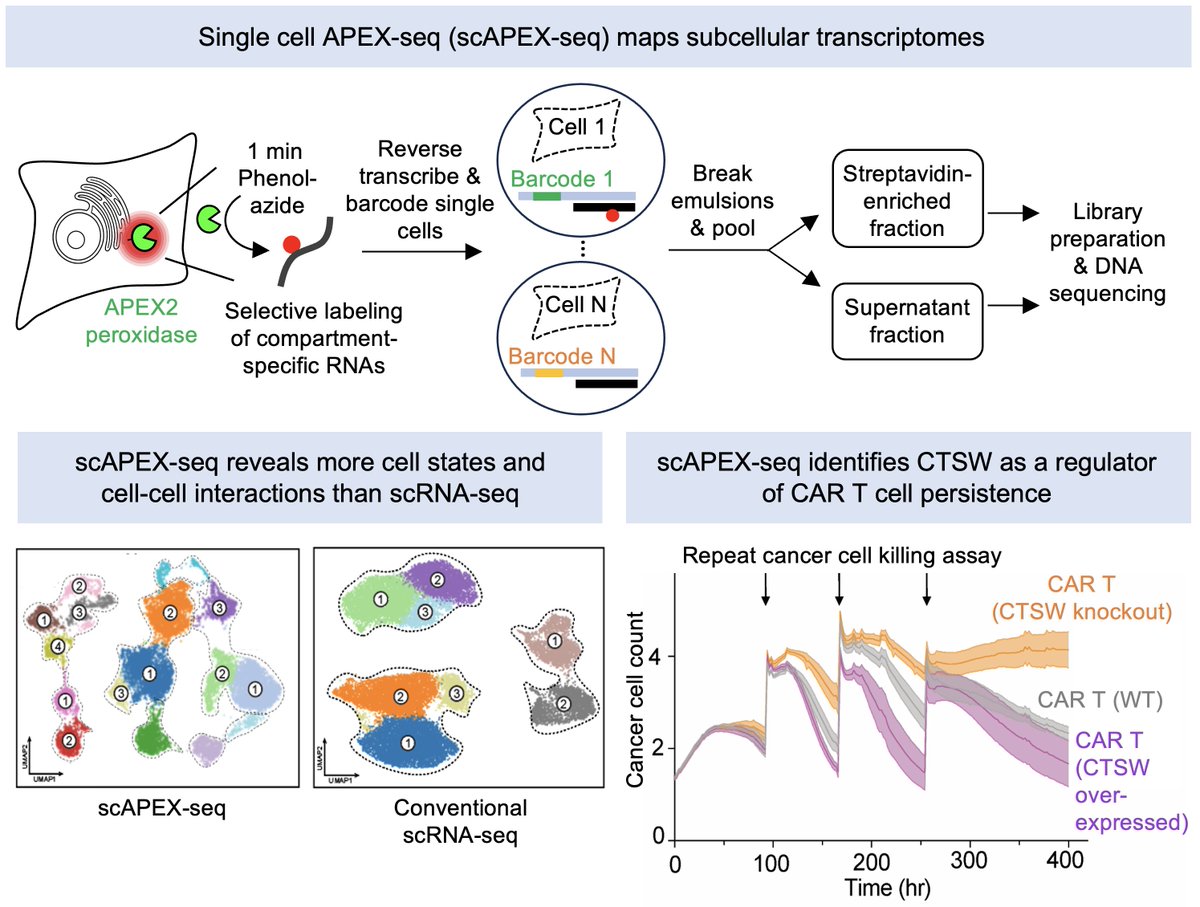
Today we report single-cell APEX-seq (scAPEX-seq) — a new method for unbiased mapping of *subcellular* transcriptomes at single-cell resolution. This approach reveals cell states that are not detectable by standard scRNA-seq, and enabled us to identify regulators of CAR T function that improve solid tumor killing. biorxiv.org/cgi/content/sh…
Alice Ting tweet media
English
2
119
515
36.4K
Dan Lark がリツイート
Cell Reports Methods
Cell Reports Methods@CellRepMethods·
MitoTracker transfers from astrocytes to neurons independently of mitochondria dlvr.it/TRV0Fg
English
0
44
158
10K
Dan Lark がリツイート
Clair Crewe
Clair Crewe@CreweLab·
The first paper from the Crewe lab is online today. We found that macrophage-meditated clearance of EVs is a major determinate of circulating adipocyte EV levels. This clearance is disrupted in obesity. A huge effort by Snigdha Tiash! cell.com/cell-metabolis…
English
5
15
66
4.5K
Dan Lark がリツイート
Zhen Yan
Zhen Yan@ZhenYanLab·
Ampk alpha2 T172 activation dictates exercise performance and energy transduction in skeletal muscle | Science Advances science.org/doi/10.1126/sc…
English
0
9
34
3.7K
Dan Lark がリツイート
Herman Pontzer
Herman Pontzer@HermanPontzer·
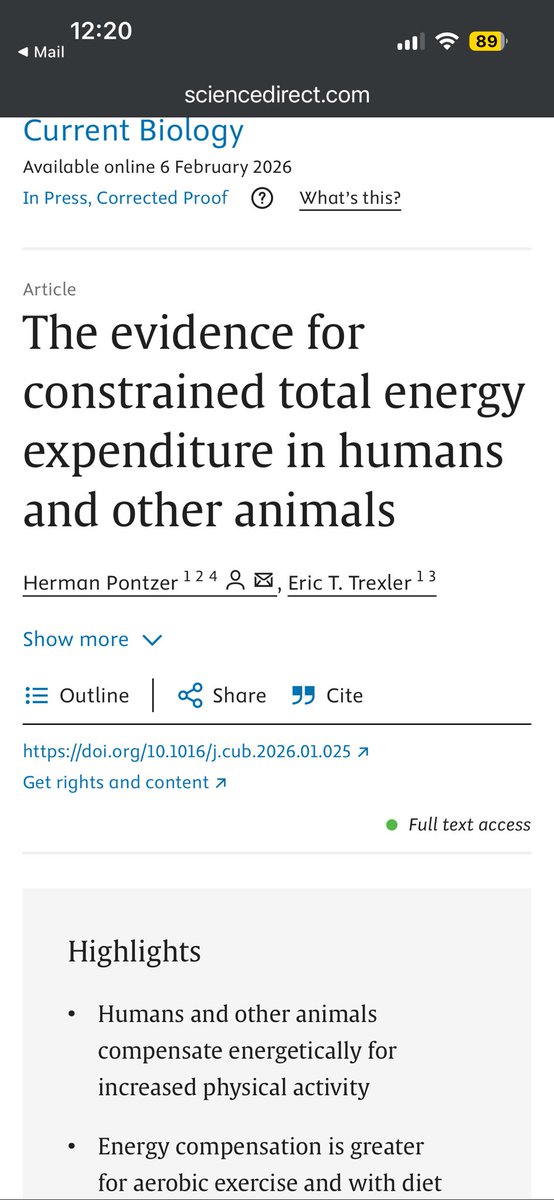
New paper updating the Constrained Energy model w @EricTrexler @CurrentBiology & testing vs Additive model. Punchline: clear evidence for Constrained TEE. Link below
Herman Pontzer tweet media
English
9
35
234
180.1K
Dan Lark がリツイート
Rep. Joe Neguse
Rep. Joe Neguse@RepJoeNeguse·
Last week marked 16 years since the Supreme Court’s disastrous decision in Citizens United. I’ve authored a proposed constitutional amendment — H.J.Res. 122 — to overturn it & over 70 of my colleagues have joined our effort. I’ll keep fighting to get it across the finish line.
English
154
1.2K
4K
31K
Dan Lark がリツイート
The Hornberger Lab
The Hornberger Lab@HornbergerLab·
📢Tenure Track Faculty Position: UW-Madison is expanding its research portfolio in aging and is interested in applicants who study the interplay between aging and skeletal muscle biology. 10 days left to apply - please RT and DM if you have questions. jobs.wisc.edu/jobs/immunolog…
English
1
8
22
2.1K
Dan Lark がリツイート
Natalie Niemi
Natalie Niemi@nieminm·
Really thrilled to share our work on mitochondrial presequence strength @JCellBiol. We establish quantitative parameters to better define "strong" and "weak" presequences in vitro and in vivo. This work was spearheaded by the ever talented Youmian Yan, a grad student in my lab.
Journal of Cell Biology@JCellBiol

Youmian Yan, @IanofBristol, @nieminm et al. define quantitative parameters underlying the strength of mitochondrial-targeting presequences, and demonstrate that yeast require strong presequences to facilitate select metabolic pathways in #mitochondria. hubs.la/Q03-1x5l0

English
9
14
43
3.6K
Dan Lark がリツイート
Alejandra Tomás Catalá
Alejandra Tomás Catalá@TomasLab_ICL·
I am extremely pleased to announce that our paper is now published in Nature Communications. Here, we show for the first time that the GLP-1R signals from endosomes by forming contacts with the ER via the ER membrane contact site tethers VAPA and VAPB🧵 nature.com/articles/s4146…
English
4
17
85
9.2K
Dan Lark がリツイート
Alexander Bartelt
Alexander Bartelt@BarteltLab·
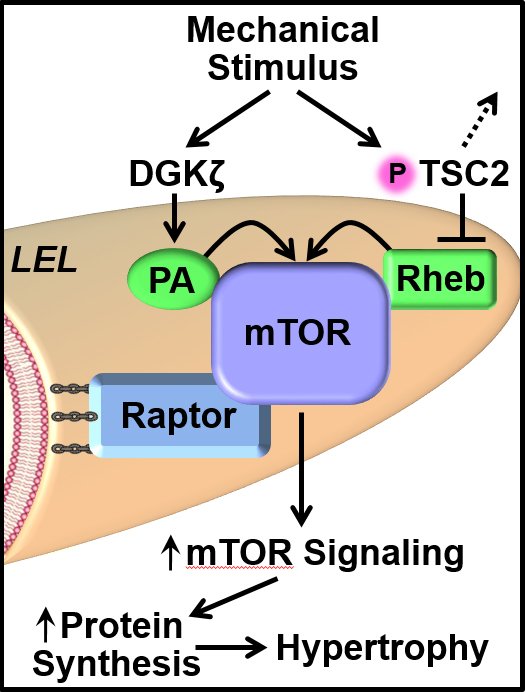
Today, we report a cellular cross-species RNA-seq atlas of myogenesis: Using mouse & human cell culture models combined with in vivo snRNA-seq from muscle we provide a comprehensive resource for investigating skeletal muscle differentiation. biorxiv.org/content/10.648…
English
1
7
23
2.1K
Dan Lark がリツイート
Niko McCarty.
Niko McCarty.@NikoMcCarty·
Computational design of insulin proteins that bind to the insulin receptor and "induce different downstream responses." "We identified designs more potent than insulin, causing longer-lasting glucose lowering in vivo and retaining activity on disease-causing IR mutants..." in mice. Nice paper from David Baker's group. They made insulin variants that bind to many different parts of the receptor, including partial agonists that bias downstream signaling away from MAPK. The authors solved many of the bound structures as well.
Niko McCarty. tweet mediaNiko McCarty. tweet media
English
3
49
262
16.4K
Dan Lark がリツイート
Hao Yin
Hao Yin@HaoYin20·
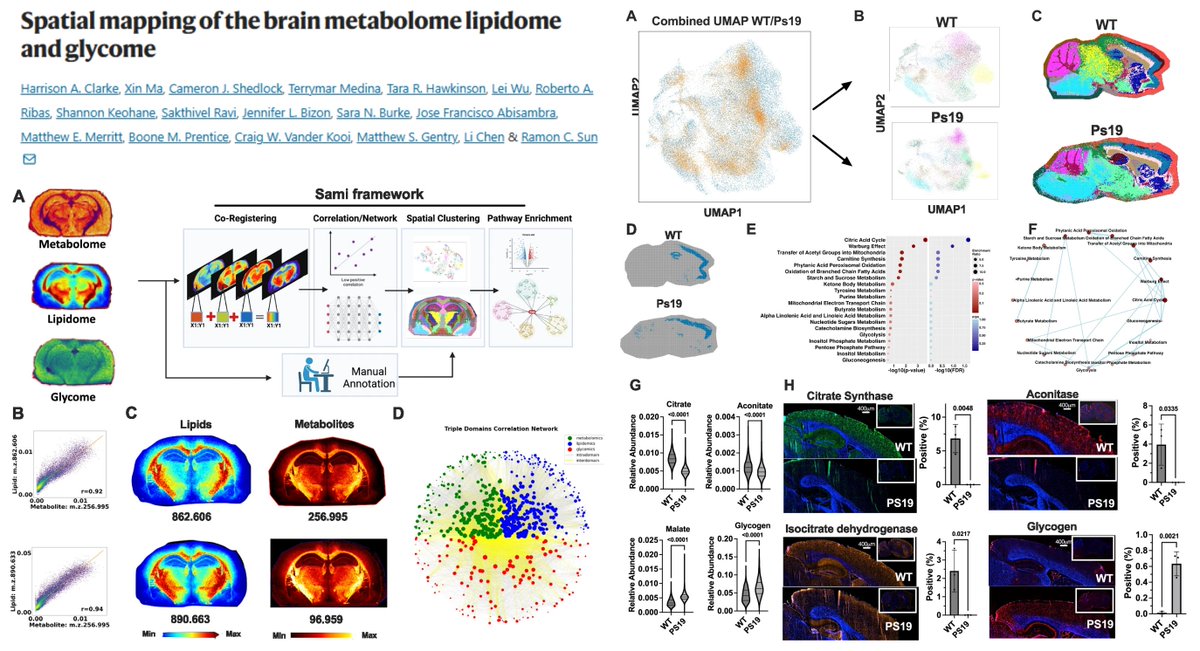
Spatial Multiomics (Metabolome➡️ Lipidome➡️ Glycome) on a single 10 µm brain section👹 +Sami Spatial Augmented Multiomics Interface with Small Molecule Pathway Database Direct pixel-to-pixel matching across modalities😎 @RCSunlab @NatureComms 2025 nature.com/articles/s4146…
Hao Yin tweet media
English
2
30
117
8.8K
Dan Lark がリツイート
Patrick Hsu
Patrick Hsu@pdhsu·
Today in @ScienceMagazine, we report a new DNA editing technology to seamlessly write massive changes into the right place in the human genome. The reason gene editing hasn't transformed human health is that current gene editing technologies like CRISPR are very limited. The problem with CRISPR is that it cuts up your DNA, and then hopes that unreliable cellular DNA repair will make the wanted edit. @geochurch famously called it genome vandalism. More precise versions of CRISPR only edit less than 100 bases - often only a single base. Therefore, it's not suited to make large changes safely. However, most diseases are not the result of mutations in one location. Instead, their causes are spread all across the 3 billion base pairs in the genome. We found bridge RNAs in bacterial “jumping genes” that allow us to make safe and arbitrary changes (insert, cut out, or flip) to every nucleotide within (up to) a 1 million bp sequence in your DNA. In the paper, we show that we can correct the disease-causing DNA repeats that cause Friedreich's ataxia (which is a rare neurological disease). The same approach could be applied to Huntington’s and other repeat expansion disorders. At @arcinstitute, we're working towards a full Turing machine for biology. Evo, our DNA foundation model, helps us design the optimal healthy DNA sequences. And Bridge recombination gives us the ability to seamlessly write these changes into the right place in the genome. This work was a wonderful collaboration with my @arcinstitute cofounder @SKonermann and led by the indefatigable @ntperry13, alongside our amazing bridge editing team: @BartieLiam @dhruvakatrekar @Gabogonzalez515 @mgdurrant @james_jw_pai @AlisonFanton Juliana Martins Masa Hiraizumi @chiaroscurale @hnisimasu
Patrick Hsu tweet mediaPatrick Hsu tweet media
Patrick Hsu@pdhsu

What if we could universally recombine, insert, delete, or invert any two pieces of DNA? In back-to-back @Nature papers, we report the discovery of bridge RNAs and 3 atomic structures of the first natural RNA-guided recombinase - a new mechanism for programmable genome design

English
76
668
3K
664.1K