Sam Jackson
3.6K posts

Sam Jackson
@samjackson
Expert-at-Large, space explorer; someone who defies description in 160 characters. I advise and work with different folks but all opinions here are my own.

Friends, customers, and partners — Today, I am excited to share that @ArynInc has been acquired by @glean ! We started Aryn at the cusp of the AI boom, before the launch of ChatGPT. It was a mad time (and still is). While everyone was (and still is) trying to solve AGI, we wrote a simpler mantra on the back of our shirts: “Answer questions from all of your data.” We worked to use AI to help people in enterprises with their unstructured data. From the first time I met Arvind Jain (Glean’s CEO), it was clear that Glean’s mission and Aryn’s mission were well aligned. Their vision is big — to enable humans to do extraordinary work — and we like to work on things big. He was humble and decisive. We felt that together we could accelerate and create a way for our combined tech to have the biggest impact. So, why wait? The Aryn ride has been mad fun. I cannot lie; it was also hard, but the people made it all worthwhile. We are grateful for our customers, including Novacore and @DataRobot, who were a guiding light and without whom we’d be floating in a dark abyss. We are grateful for our investors, Factory (Chris Re, Samuel Jackson, Jon Feiber), @8vc (Bhaskar Ghosh, Kevin Chen, Venkatesh Seetharam, Asanka Jayasuriya, and Karen White), Amarjit Gill, and Lip-Bu Tan who saw something in us before the AI boom and still do. We are grateful for all the partners, advisors, employees, friends, and family whose cumulative blood, sweat, and tears got us here. As we worked to make the future, we gelled into an unforgettable family. We were many things: inspired, nerds, creators, principled, trustworthy, charitable, and goofy. We are not bowing out; on the contrary, we are on a bigger pitch shooting at a bigger goal. And while we retire the name and logo, we still carry the message on the back of our shirts.


insane sequence of statements buried in an Alibaba tech report


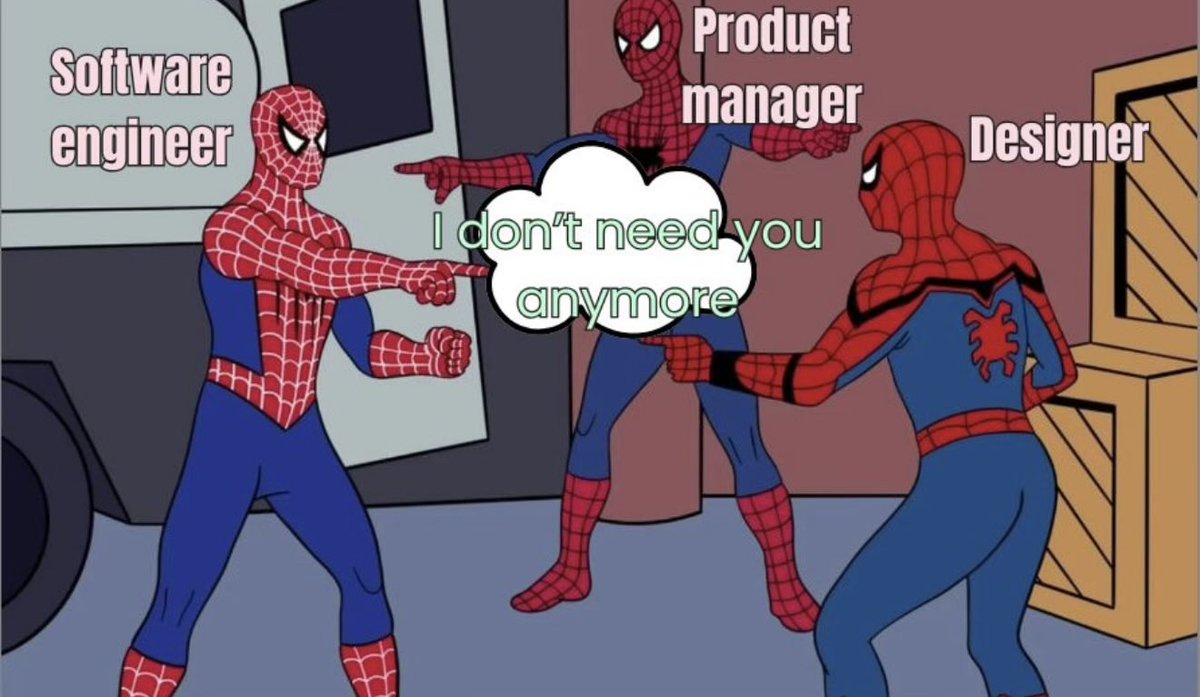
I don't know why this week became the tipping point, but nearly every software engineer I've talked to is experiencing some degree of mental health crisis.

Our ability to measure AI has been outpaced by our ability to develop it. This evaluation gap is one of the most critical problems in AI. Today, we’re excited to announce the Open Benchmarks Grants - with a starting $3M commitment from @Snorkel + support from @HuggingFace @togethercompute @PrimeIntellect Factory HQ @harborframework & @PyTorch - aimed at supporting the academic and open source teams solving this. Today, two things are simultaneously true: - (1) AI agents are taking massive, quantifiable leaps forward in certain areas like coding, where they are rewriting how we do our work. - (2) Most of the world is still unsure of where/whether they can put agents in production for their unique use cases. The source of this dichotomy: our ability to measure AI has been outpaced by our ability to develop it – and this evaluation gap is one of the most critical problems to solve in AI. Public benchmarks are of course only one (limited) tool for measurement, and need to be balanced responsibly with others (no benchmaxxing!). But at their best, they become key guideposts for whole new vectors of AI research and development. We’re particularly excited to see progress along three core axes: - (I) Environment Complexity: E.g. domain-specificity, context complexity, multi-modality, tool complexity, human & agent interaction, world modeling, and more - (II) Autonomy horizon: Long horizon scope, non-stationary goals and environments - (III) Output complexity: Complex work products with nuanced trace- and output-level rubrics, new evaluations of trust and safety, and more But these are just our starting thoughts. We’re excited to see what the community comes up with, and even more excited to support! 🚀

millennial gamers are the best prepared generation for agentic work, they've been training for 25 years