JJ

205 posts

JJ

JJ

@2006VSJACK

a guy without happiness

Katılım Temmuz 2020
582 Takip Edilen50 Takipçiler
JJ
JJ@2006VSJACK·
@LabWaggoner @CellCellPress Although no related concerns have been posted on PubPeer, the issues described above are indeed present in the published article. We hope that the editorial office of Cell will take appropriate action to investigate these matters in the future.
English
0
0
0
14
Waggoner Lab
Waggoner Lab@LabWaggoner·
@weijunwu7 @CellCellPress I do not see anything on #PubPeer for this paper or for the senior author's body of scholarship. Please document your specific concerns somewhere so that they can be evaluated rather than making unsubstantiated insinuations that could harm reputations/careers Thank you
English
5
0
0
38
Waggoner Lab
Waggoner Lab@LabWaggoner·
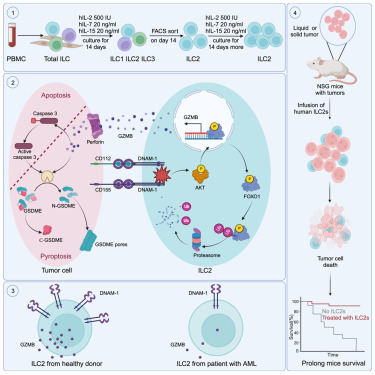
Human ILC2, unlike mouse counterparts, show cytolytic activity in tumor cells through granzyme B-mediated induction of cell death, opening possibility of ILC2 immunotherapy @CellCellPress Jianhua Yu & Michael Caliguiri cell.com/cell/fulltext/…
Waggoner Lab tweet media
English
2
4
18
1.9K
JJ
JJ@2006VSJACK·
@LabWaggoner @CellCellPress Additionally, in the THP1 group, the flow plots for "ILC2 alone" and "ILC2+Tumor" are also repeated. Yet, the statistical analyses reported for these conditions yield different numerical values.
English
0
0
0
11
JJ
JJ@2006VSJACK·
@LabWaggoner @CellCellPress In Fig. S4G, multiple flow cytometry plots appear duplicated—for instance, in the MOLM13 group, the plots for "ILC2+Tumor+NKG2D Ab" and "ILC2+Tumor+DNAM-1 Ab" are identical, and the same duplication occurs for the corresponding two treatment groups in the THP1 group.
English
0
0
0
30
JJ
JJ@2006VSJACK·
@LabWaggoner @CellCellPress Furthermore, in Fig. 3K and 3L, the two GAPDH bands also raise concerns of shared usage or duplicate exposures. In Fig. 5C, the bands for p-FOXO1, FOXO1, p-AKT, and AKT are nearly all consistent with repeated exposures of the same image.
English
0
0
0
29
JJ
JJ@2006VSJACK·
@LabWaggoner @CellCellPress Please refer to the WB results in Fig. 3B: the GAPDH and CASPASE3 bands appear strikingly similar, almost as if they were derived from repeated exposures of the same blot. A comparable phenomenon is observed in Fig. 3D.
English
0
0
0
26
JJ retweetledi
David M. Sabatini
David M. Sabatini@DMSabatini·
For a variety of reasons, we’ve been quantitating many western blots & radioactive protein gels so made this app for doing so as unhappy with what is available. Can quickly quantitate gels/blots & make simple graphs from the data. Instruction tab in app. dms-western-blot-analyzer.netlify.app
English
3
43
216
29.2K
JJ retweetledi
Christoph Bock Lab @ CeMM & MedUni Vienna
🗨️ Just published in @NatureBiotech: Our CellWhisperer AI enables chat-based analysis of single-cell sequencing data. You can talk to your cells & figure out the biology without writing any computer code. Paper link and annotated walkthrough in the thread below (1/11)
English
12
185
688
64.7K
JJ retweetledi
nature
nature@Nature·
Nature research paper: Transcriptomic and spatial organization of telencephalic GABAergic neurons go.nature.com/47Ygfqv
English
2
33
132
25.8K
JJ retweetledi
Patrick Hsu
Patrick Hsu@pdhsu·
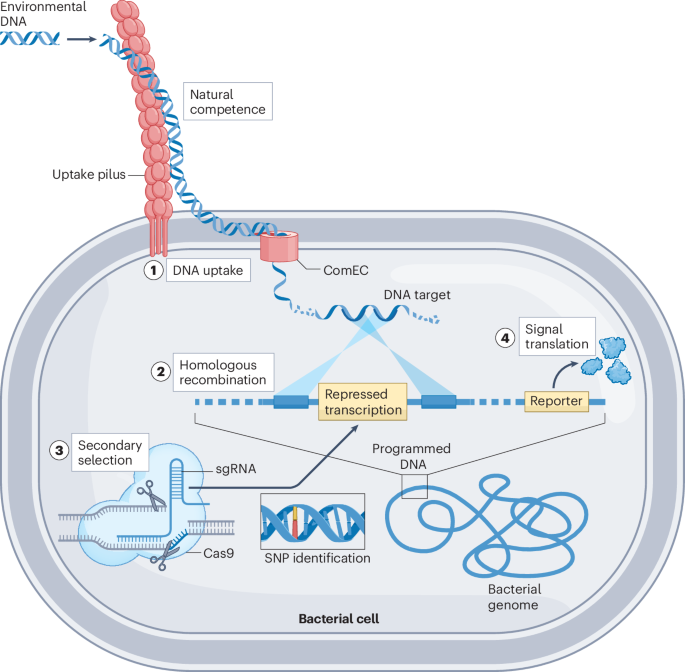
Today in @ScienceMagazine, we report a new DNA editing technology to seamlessly write massive changes into the right place in the human genome. The reason gene editing hasn't transformed human health is that current gene editing technologies like CRISPR are very limited. The problem with CRISPR is that it cuts up your DNA, and then hopes that unreliable cellular DNA repair will make the wanted edit. @geochurch famously called it genome vandalism. More precise versions of CRISPR only edit less than 100 bases - often only a single base. Therefore, it's not suited to make large changes safely. However, most diseases are not the result of mutations in one location. Instead, their causes are spread all across the 3 billion base pairs in the genome. We found bridge RNAs in bacterial “jumping genes” that allow us to make safe and arbitrary changes (insert, cut out, or flip) to every nucleotide within (up to) a 1 million bp sequence in your DNA. In the paper, we show that we can correct the disease-causing DNA repeats that cause Friedreich's ataxia (which is a rare neurological disease). The same approach could be applied to Huntington’s and other repeat expansion disorders. At @arcinstitute, we're working towards a full Turing machine for biology. Evo, our DNA foundation model, helps us design the optimal healthy DNA sequences. And Bridge recombination gives us the ability to seamlessly write these changes into the right place in the genome. This work was a wonderful collaboration with my @arcinstitute cofounder @SKonermann and led by the indefatigable @ntperry13, alongside our amazing bridge editing team: @BartieLiam @dhruvakatrekar @Gabogonzalez515 @mgdurrant @james_jw_pai @AlisonFanton Juliana Martins Masa Hiraizumi @chiaroscurale @hnisimasu
Patrick Hsu tweet mediaPatrick Hsu tweet media
Patrick Hsu@pdhsu

What if we could universally recombine, insert, delete, or invert any two pieces of DNA? In back-to-back @Nature papers, we report the discovery of bridge RNAs and 3 atomic structures of the first natural RNA-guided recombinase - a new mechanism for programmable genome design

English
79
664
3K
699.1K
JJ
JJ@2006VSJACK·
@Jiankui_He First, you should find a wife with gene edited
English
0
0
0
205
Jiankui He
Jiankui He@Jiankui_He·
I will be the National Hero of China.
Jiankui He tweet media
English
88
87
1.8K
95.3K
JJ retweetledi
Subhojit Roy, MD, PhD
Subhojit Roy, MD, PhD@Roy_Lab_Thinks·
Wrote it this morning for a student and thought it may help others.
Subhojit Roy, MD, PhD tweet media
English
1
15
86
8.2K
JJ retweetledi
Amit Agarwal
Amit Agarwal@Agarwalneurolab·
It’s exciting to share our review on oligodendrocyte lineage cells and their fate regulation by calcium. What a fun experience brainstorming and putting togather this piece with Kelly Monk, Jiaxing Li and Fred Fiore. cell.com/trends/neurosc…
English
0
9
56
3.1K
JJ retweetledi
Science Magazine
Science Magazine@ScienceMagazine·
A pair of split inteins—small protein segments that can undergo a self-sustained protein splicing reaction—enables endogenous protein editing in living mammalian cells, according to a new study in Science. 📄: scim.ag/3ENypj9 #SciencePerspective: scim.ag/430jwC9
Science Magazine tweet media
English
7
60
159
38.4K
JJ retweetledi
Simon Shen
Simon Shen@twinsmc18·
We are hiring postdocs. If you are passionate about using iPSC, CRISPR screens, organoids, and multiomics to understand cardiovascular disease and advance precision medicine.
Simon Shen tweet media
English
2
23
68
11.2K