
@416ash retweetledi
@416ash
64.7K posts


@416ash
@416ash
I'm so optimistic that even my blood type is B+.
The lands of ones and zeros Katılım Eylül 2009
4.9K Takip Edilen3.8K Takipçiler

@416ash retweetledi

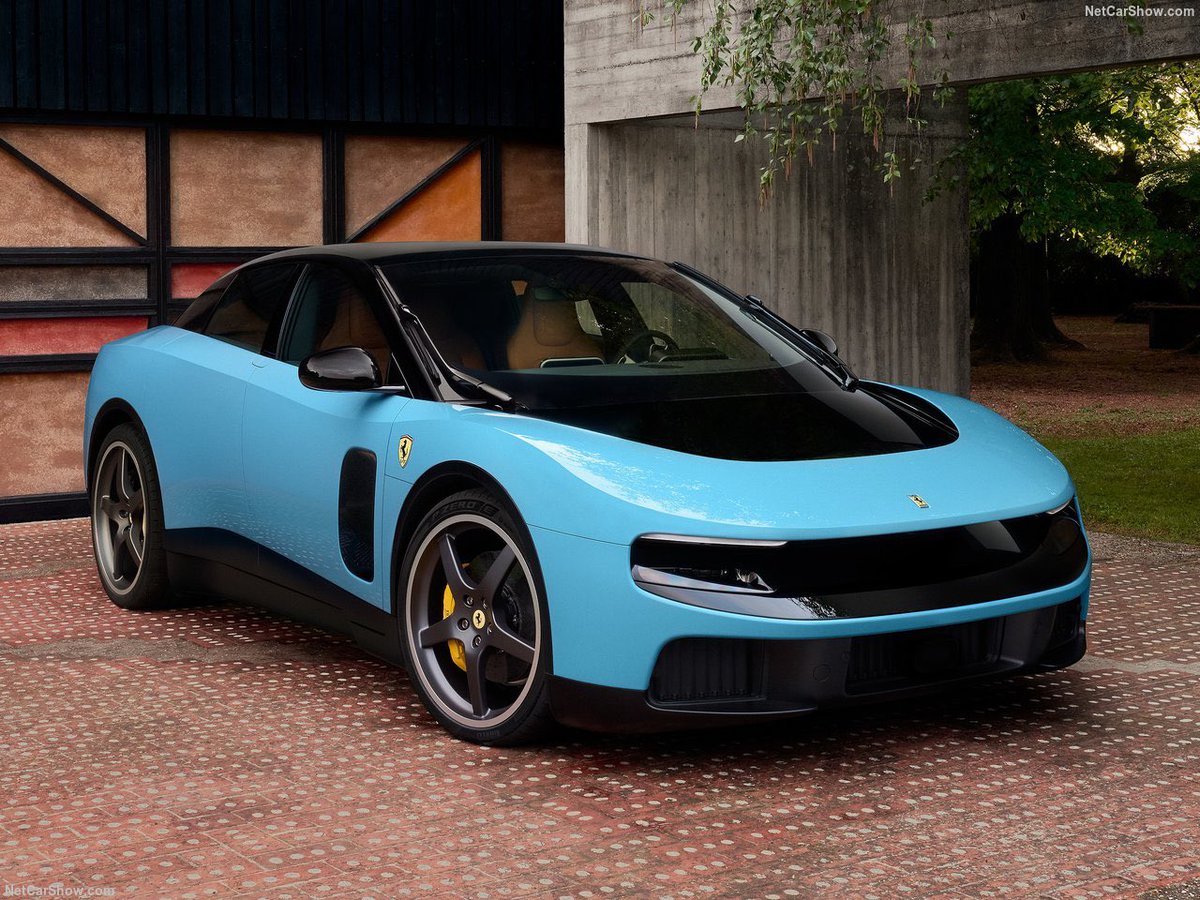
The Ferrari Luce bravely asks “is it possible to design an electric vehicle so hideous it makes people want to burn hydrocarbons to accelerate the death of the planet?”
English
So ugly. I expect more from Ferrari.
Ive’s design team delivered total blah.
An Apple mouse design would have been better.
Electrek.co@ElectrekCo
Ferrari has officially unveiled the Luce, its first all-electric car and five-seater ⚡️ 1,050+ hp from four motors, one per wheel ⚡️ 0-62 mph in 2.5s ⚡️ 0-124 mph in 6.8s ⚡️ Top speed of 193 mph ⚡️ 122 kWh pack, 330+ miles of range ⚡️ 800V architecture, charging up to 350 kW ⚡️ Interior co-designed by Jony Ive's LoveFrom ⚡️ No synthetic motor sounds ⚡️ Plays real motor vibrations amplified like a guitar am ⚡️ First deliveries October 2026
English
@416ash retweetledi

25 May 1977: George Lucas' iconic movie, Star Wars, is released in theaters. There are nine movies in the Star Wars series. #StarWars #movie #film #greatmovie #LukeSkywalker #darthvader #History #Hollywood #OTD #StarWars #ad amzn.to/3cYM0kh

English
@garyvee @veefriends Around since early 2021. Back from the Damien Hirst, WoW days.
Thanks for the opportunity Gary.
0xc5a2c3A524bE0792519655d4093b44B988Db4f68
English
Sending several @veefriends series 2 NFT’s for free to serious collectors here on crypto twitter - not looking for new wallets or people clearly flipping, this giveaway and karma play is to give an nft to a serious nft collector, one that would clearly appreciate it and hold it long term and maybe explore our echo system deeper because of the kindness of this gesture - pls please your wallet address in reply to this post
English
@416ash retweetledi

After spending more time reviewing CPP’s annual report, my main takeaways:
1) CPP’s 10-year stated returns look strong on paper.
2) But the asset mix raises questions: 40%+ in private equity and real assets, plus another 9% in credit.
3) How reliable are stated returns when such a large portion of the portfolio is not publicly traded?
4) Operating expenses + management fees + performance fees + transaction-related expenses were roughly 91 bps.
That’s a lot of complexity and cost.
The real question is whether the private market heavy model can outperform public markets over the next 10+ years
Simon Belanger@Fiat_iceberg
My initial take on CPP’s 7.8% annualized return: 1) Comparing CPP to an equity-only index is financial malpractice. If that's your take, you need to go do some homework. 2) CPP is a pension plan with both long-term and shorter-term liabilities. It is normal and necessary for it not to be 100% equities. That would be reckless. 3) Even comparing it to an 85/15 equity/fixed income benchmark is flawed. CPP has roughly 22% in credit/fixed income and about 20% in real assets. Those real assets are much harder to benchmark and often rely on models, appraisals, and projected cash flows. 4) The 7.8% return may still represent underperformance, but likely not by as much as some people on here are suggesting on this platform. 5) IMO, The more important area to scrutinize, is the asset mix, especially the exposure to credit and private equity. CPP has meaningful allocations to both, and a lot of private credit risk is ultimately tied back to private equity-backed businesses. That's the real area of concern for me. Not the 7.8% return which may or may not be good given on how hard it is to find an appropriate benchmark.
English
@416ash retweetledi

Bill C-22’s “scope could mean requiring companies to install spy tools into mobile devices, social media and messaging apps, cloud-storage services, video game platforms, smart home devices, live video camera networks, or health and fitness trackers”
x.com/KateRobertson_…
Kate Robertson@KateRobertson_
NEW today an essay from me in @TheWalrus on Bill C-22 (being rushed through committee in Canada this May), its implications for Can-US negotiations on data-sharing, and why the rule of law threats unfolding in the US may soon become Canada's problem too. thewalrus.ca/trump-wants-to…
English
@416ash retweetledi

🇨🇦 Don’t be surprised if Mark Carney sells a Canadian airport or seaport to
Brookfield or its American
subsidiary all in the
name of “attracting investment.”..
during his upcoming New York trip.🗽
The same Brookfield where
Carney was Chairman.
The same asset class
Canada is now selling.
Watch closely. 🔒🇨🇦
Bookmark and share this tweet
#CdnPoli #MarkCarney #Brookfield
English
@416ash retweetledi

🚨 do you understand what happened to Stephen Colbert..
24 hours after his final Late Show, Colbert hijacked a tiny public access channel in Monroe, Michigan with Jack White, Eminem, Jeff Daniels and Steve Buscemi.
Now Paramount - the company that just cancelled his show - is mass-blocking every reupload worldwide via Content ID. And the deeper you dig, the worse it looks:
- The finale pulled 6.74M viewers - a weeknight record over 11 years
- Eminem cameoed as "Marshall, the fire marshal" to greenlight torching the set
- The same day Trump posted an AI video of throwing Colbert into a dumpster, Colbert aired footage of himself burning a real one
- Mayday Network and verified journalist Matthew Keys both got blocked globally - for sharing a community access show
Paramount cancelled his show to silence him. Instead they handed him a Streisand-effect comeback 10x bigger than the show ever was.
Matthew Keys@MatthewKeysLive
Paramount is apparently trying to suppress copies of "Only in Monroe" from appearing on other social platforms by filing frivolous copyright notices, even though the show was produced by a public access TV channel and doesn't use their intellectual property...
English
@416ash retweetledi
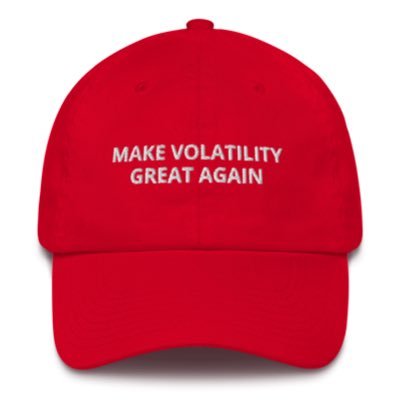
So if I do all four below, I’m guaranteed to make money! Got it.
I better add horse racing, just to be safe.
Jon Erlichman@JonErlichman
Odds of making money: 1 year in stock market: 74% Blackjack: 42% Slot machine: 5-10% Lottery ticket: 5%
English
@416ash retweetledi

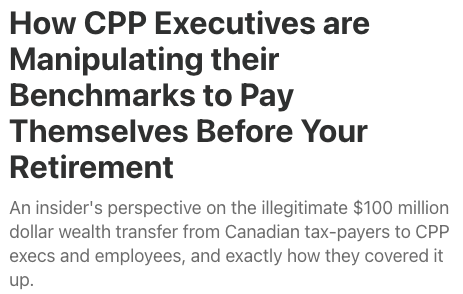
Former CPP analyst claims they are manipulating benchmarks to game their compensation
(link in reply)
English
@416ash retweetledi

The 2026 Coca-Cola 600 will be the first NASCAR Cup Series race without an “Earnhardt” or “Busch” in the field since 1979.
It is the first Coca-Cola 600 without either since 1977. Richard Petty won that race.
The 47 and 49-year streaks will be broken tonight.
English
@416ash retweetledi

News Release - Missing Youth, Bathurst Street and Hotspur Road, UPDATE: Updated Photo and New Website Available
tps.ca/media-centre/n…

English
@416ash retweetledi

Police share new photo, website as search for missing Toronto teen Esther reaches 1 week mark
ctvnews.ca/toronto/articl…
English
@416ash retweetledi

@416ash retweetledi

Of all the tax changes made by the previous federal government, the dumbest by far has to be the clawback of part of the basic personal amount.
The amount of complexity created to sneak in a phantom 2.11% tax rate that results in at most $240 in taxes for people earning over $177,000 is just ridiculous.
English
@416ash retweetledi

@416ash retweetledi

BREAKING: Quebec is expected to announce on Monday that the province will eliminate the provincial sales tax on many grocery store items.
Quebec would become only the second province in Canada to do so, after Manitoba.
English