xSOJIB

200 posts

xSOJIB

xSOJIB

@55xSojib

Katılım Nisan 2026
21 Takip Edilen26 Takipçiler
Kamrul
Kamrul@kamrulbroz·
Cross-chain interaction should not feel uncertain for normal users. This is one area where @RialoHQ becomes interesting. Today, many applications operate across multiple networks. A user may begin an action on one chain. Assets may exist somewhere else. Data and execution may come from different environments. From the user side, everything should still feel like one experience. But underneath, coordination becomes more complex. > A single cross-chain action can involve: • sending messages • checking network state • moving value • executing logic • confirming outcomes As more systems become involved, the chances of delays and failed coordination increase. Users may experience slow confirmations. Actions may fail halfway. Recovery steps may become difficult to understand. That is why safer cross-chain interaction is not only about connectivity. It is also about verification. A safer process needs a clear sequence. First, the system identifies where the action starts. Then it routes the request to the correct network. After that, the current state is verified. Only then does execution continue. Finally, the result returns back to the application. @RialoHQ can support this kind of structured coordination. Instead of making every application manage all of this independently, coordination can happen closer to the infrastructure layer. That creates a cleaner execution flow. For users, interactions become easier to follow. For developers, there are fewer disconnected systems to maintain. > A simple way to think about it: • Cross-chain interaction should feel like tracked delivery. • You know where it started. • You know where it is moving. • And you know when it arrived successfully. @RialoHQ moves toward that direction. Not only connecting networks. But helping cross-network actions become easier to coordinate, verify, and trust. I learn something new about Rialo every day, and I try to make posts about those topics as well. Let’s support the @RialoHQ community with our best efforts. > Join Rialo Now 👀 • Website: rialo.io • Discord: discord.gg/QJxfSruF • Twitter: @RialoHQ
Kamrul tweet media
English
25
0
36
389
S H A HE D (build szn)
S H A HE D (build szn)@shahed05miazee·
AI oracles and Infernet may look similar at first because both bring external information into blockchain systems. But they solve different problems. An AI oracle is mostly designed to deliver outputs. It collects information or runs a model externally, then sends the final answer onchain for a contract to use. The blockchain receives a result. The process behind that result is usually outside the application’s control. Flow: External Data / Model Oracle Smart Contract That works well when the application only needs a single output. Infernet takes a different approach. Instead of treating AI as a black-box response, Infernet introduces an execution layer between applications and compute. A smart contract can create requests, coordinate workloads, route execution, receive outputs, and attach verification before results are used. Flow: Smart Contract Infernet Compute Verification Settlement That changes the role of the application. The contract is no longer waiting for external answers. It becomes an orchestrator of computation. This matters because modern AI applications often need more than simple data delivery. They may require: multiple execution steps, different models, context processing, verification, or adaptive decision flows. An oracle answers. Infernet coordinates. That distinction moves AI from being an external dependency to becoming infrastructure applications can build around.
S H A HE D (build szn) tweet media
English
13
0
15
66
BlockWeb
BlockWeb@marurlemo·
Markets reward attention. Systems survive on utility. That difference is where most projects fail. Because attention is temporary. It shifts, fades, and moves on. But utility compounds. Quip @quipnetwork is built around that principle. Instead of relying on speculation, it anchors demand in what the network actually does. Through Proof of Useful Work, every computation contributes to real output. Not noise. Not empty cycles. But results that have value beyond the network itself. This changes the foundation. Demand is no longer driven by hype cycles. It’s driven by usage. And when usage becomes the core driver, growth stops being reactive and starts becoming inevitable.
BlockWeb tweet media
English
14
0
34
108
xSOJIB
xSOJIB@55xSojib·
@dropper68384 A Ritualist is only as good as their companion 🐈‍⬛💚 Love this one.
English
0
0
0
1
Malik (❖,❖)
Malik (❖,❖)@dropper68384·
Every Ritualist needs a loyal companion. Meet mine. 💚🐈‍⬛ Now it's your turn , show me yours. 👇 Prompt in the quote post below.
Malik (❖,❖) tweet media
Keybi@KeybiNFT_

gritual @ritualnet Every Ritualist needs a loyal companion. Here’s mine 💚 Now show me yours 👀 (prompt in replies 👇🏻)

English
13
0
13
36
xSOJIB
xSOJIB@55xSojib·
@orihimay The easier it is to build, the faster ecosystems tend to grow.
English
0
0
0
0
𝐒𝐡𝐚𝐧𝐚𝐲𝐚
Building Bitcoin apps just became much easier for mobile developers. Utexo has launched its RGB Lightning React Native SDK, making it easier to add private USDT payments on Bitcoin directly into iOS and Android apps. Instead of building complex infrastructure from scratch, developers can integrate it using a React Native package. What developers get: • Private payments through RGB • Lightning fast transactions • Native Bitcoin settlement • Support for both iOS and Android • Wallet connection and balance checks • Node integration and payment support This removes a lot of the complexity behind building Bitcoin payment apps. Think about apps like: • Digital wallets • Payment apps • Merchant tools • DeFi applications They can now support private Bitcoin based stablecoin payments with much less development work. For me, this is one of those updates that matters more than it first appears. Users don't usually care what SDK an app uses. But developers do. Making development easier often leads to more apps, more integrations, and better user experiences. If Bitcoin is going to become a bigger payment network, tools like this will quietly play an important role in getting it there. @utexocom
𝐒𝐡𝐚𝐧𝐚𝐲𝐚 tweet media
𝐒𝐡𝐚𝐧𝐚𝐲𝐚@orihimay

Everyone talks about bringing stablecoins to Bitcoin. Very few talk about what actually makes it possible. That's where Utexo comes in. Instead of building a new blockchain, Utexo combines three technologies into one simple stack: • Bitcoin for security and final settlement • RGB for private asset ownership • Lightning Network for fast payments The interesting part is RGB. Unlike many blockchains where balances and transactions are public, RGB keeps most asset data off-chain. Only cryptographic proofs are anchored to Bitcoin. This means: • Better privacy • Less blockchain congestion • Bitcoin level security Utexo handles the difficult parts in the background. Developers don't need to manage RGB nodes, Lightning channels, or complex infrastructure. They can simply use the API and SDK to build applications. The result is: • Fast USDT payments on Bitcoin • Private asset transfers • Self custody • No wrapped assets or bridges for native RGB assets What I like about Utexo is that it isn't trying to replace Bitcoin. It's making Bitcoin more practical for real payments and stablecoin use while keeping the user experience much simpler. If Bitcoin based payments continue to grow, infrastructure like this could play an important role behind the scenes. @utexocom

English
17
1
24
188
xSOJIB
xSOJIB@55xSojib·
@M3rik00 @quipnetwork The strongest systems often reward value creation, not resource consumption.
English
0
0
0
1
M𝑒r𝑖kO
M𝑒r𝑖kO@M3rik00·
Most consensus systems start with one assumption: security must be “paid for” in something external to the work being done. @quipnetwork's proof of Useful Work flips that assumption by tying consensus directly to real computational demand in the network. That creates a tighter loop than traditional models: • users submit optimization problems • operators solve real workloads to earn block rights • verification stays cheap relative to computation • rewards are anchored to useful output, not synthetic puzzles The important shift is economic, not just technical. Security is no longer funded by wasted energy. It is funded by demand for computation itself. That’s a very different incentive surface than Proof of Work or Proof of Stake.
M𝑒r𝑖kO tweet media
English
18
2
26
112
Kashi awan
Kashi awan@Kashi3229·
🎉 GIVEAWAY: 30x GDT Spots 🎉 Secured straight from @Dollz_nft 15x gdt spot giveaway here , 15x On DC raffle To enter: 1. Follow @kashi3229, @Dollz_nft & @Alpha__NFTs 2. Like + RT 3. Tag one friend 4. Drop your Evm in comment Winner's in : 6H Winners picked live via Grok after requirements are verified
Kashi awan tweet media
English
20
6
22
143
LAMI
LAMI@0x_Lamiya·
Data availability has become one of the most discussed topics in blockchain infrastructure. But availability and accessibility are not the same thing. A piece of data can technically exist somewhere in the network and still be difficult to retrieve when participants actually need it. That distinction is becoming increasingly important as blockchains scale. As networks grow, validators, sequencers, and full nodes spend less time generating data and more time locating, requesting, and recovering it across distributed environments. The challenge is no longer just storing information. The challenge is making information instantly accessible under real-world network conditions. This is where performance metrics begin to change. Throughput measures how much data a system can process. Availability measures whether the data exists. Accessibility measures how efficiently participants can obtain that data when it matters.A network that stores information successfully but retrieves it slowly introduces delays throughout the entire system. <>Consensus slows down. <>State synchronization takes longer. <>Recovery becomes more expensive. <>Coordination efficiency drops. This is one of the reasons infrastructure projects @get_optimum are focusing on the communication layer itself rather than only execution or storage. Moving information efficiently across decentralized networks is becoming just as important as generating it. As blockchain architectures become increasingly modular, the ability to access data quickly may become a more meaningful performance indicator than simply proving that the data exists. The next generation of blockchain infrastructure may not be defined by who stores the most information. It may be defined by who can make information accessible the fastest. @get_optimum is building for a future where data accessibility becomes a first-class network primitive, not an afterthought. @shariaronchain
LAMI tweet media
English
13
0
41
72
Ari 🥀
Ari 🥀@Ari_qen1·
Snow falls. Tension rises. Three paths. One target. Eyes locked. Weapons ready. No room for mistakes. The cold might slow the world down, but not them. Featuring the core members of @thepromptlab_ai Built this cinematic winter action concept today. Which character steals the scene? Is it .... @Virex_onchain @Eva_chain01 @node_anonymous Top of the morning my lovelies 🥀
Ari 🥀 tweet media
English
15
2
18
76
MAKHULU
MAKHULU@MAKHULU169·
Most DeFi protocols fight for users. Concrete is building the rails they will all use. While everyone chases the next narrative @ConcreteXYZ is engineering multichain yield infrastructure behind the scenes. No noise. Just execution. Here's what's actually being built: 🟢 Tokenized asset management real yield, real assets, on-chain. 🟢 Automated yield systems strategies that run without human bottlenecks. 🟢 Portable liquidity across chains capital moves where opportunity is. 🟢 Native Binance Wallet integration seamless access for millions of users. The backing speaks for itself: 🟩 Built by Blueprint Finance. 🟩 Backed by YZi labs. 🟩 $17M+ raised. 🟩 Live on Ethereum, Solana and BNB Chain. One protocol. One liquidity layer. Every major chain. Most teams are building for the current cycle. Concrete is building for the next decade. The next phase of DeFi won't be louder. It will be the invisible infrastructure everything else runs on. @nic_builds | @crypttoji | @d3crypt0r25
MAKHULU tweet media
English
13
0
16
56
𝐌 𝐀 𝐗
𝐌 𝐀 𝐗@0_maxiz·
𝐓𝐡𝐞 𝐌𝐨𝐬𝐭 𝐒𝐮𝐜𝐜𝐞𝐬𝐬𝐟𝐮𝐥 𝐏𝐥𝐚𝐭𝐟𝐨𝐫𝐦𝐬 𝐆𝐢𝐯𝐞 𝐏𝐞𝐨𝐩𝐥𝐞 𝐀 𝐑𝐞𝐚𝐬𝐨𝐧 𝐓𝐨 𝐂𝐨𝐦𝐞 𝐁𝐚𝐜𝐤 Think about the apps you open every day. Most people don't come back because of the underlying technology. They come back because of the people they've met, the conversations they're having, and the communities they've become part of. That's something many Web3 projects are still figuring out. Technology can attract attention. Community creates retention. ▣ features bring users in ▣ interaction keeps them engaged ▣ relationships create loyalty ▣ communities drive long-term growth The social layer is becoming increasingly important across decentralized ecosystems for that reason. @DlicomApp is built around the idea that participation shouldn't feel like a side feature. When communication becomes part of the core experience, users spend less time feeling like visitors and more time feeling like contributors. And contributors are what turn products into ecosystems. In the long run, the strongest networks may not be the ones with the most features. They may be the ones where people genuinely enjoy showing up every day. @dimakuncik | @joyhasanX10 | @DelightTalight
𝐌 𝐀 𝐗 tweet media
𝐌 𝐀 𝐗@0_maxiz

𝐖𝐡𝐚𝐭 𝐈𝐟 𝐀𝐝𝐨𝐩𝐭𝐢𝐨𝐧 𝐈𝐬𝐧’𝐭 𝐀 𝐓𝐞𝐜𝐡𝐧𝐨𝐥𝐨𝐠𝐲 𝐏𝐫𝐨𝐛𝐥𝐞𝐦? Many blockchain networks are faster than before. Infrastructure keeps improving. New tools launch every month. ⊹ better performance ⊹ stronger ecosystems ⊹ growing developer activity Yet mass adoption still feels further away than many expected. 𝐏𝐞𝐨𝐩𝐥𝐞 𝐀𝐝𝐨𝐩𝐭 𝐄𝐱𝐩𝐞𝐫𝐢𝐞𝐧𝐜𝐞𝐬, 𝐍𝐨𝐭 𝐏𝐫𝐨𝐭𝐨𝐜𝐨𝐥𝐬 One reason might be that people don't adopt technology. They adopt experiences. Nobody joined the internet because TCP/IP was revolutionary. People joined because email, websites, and social platforms were useful. The same lesson applies to Web3. 𝐔𝐬𝐞𝐫 𝐁𝐞𝐡𝐚𝐯𝐢𝐨𝐫 𝐌𝐚𝐭𝐭𝐞𝐫𝐬 𝐌𝐨𝐫𝐞 𝐓𝐡𝐚𝐧 𝐌𝐨𝐬𝐭 𝐏𝐞𝐨𝐩𝐥𝐞 𝐑𝐞𝐚𝐥𝐢𝐳𝐞 Most users are not looking for better consensus mechanisms. ▹ easier communication ▹ simpler participation ▹ more natural interactions They want technology that fits into existing behavior rather than forcing behavior to change. 𝐓𝐡𝐞 𝐁𝐞𝐬𝐭 𝐓𝐞𝐜𝐡𝐧𝐨𝐥𝐨𝐠𝐲 𝐅𝐞𝐞𝐥𝐬 𝐈𝐧𝐯𝐢𝐬𝐢𝐛𝐥𝐞 Platforms such as @DlicomApp reflect this shift by focusing on how people naturally interact online rather than expecting users to adapt to complex systems. Because in the end, adoption rarely starts with technology. It starts with making technology feel invisible. @dimakuncik | @joyhasanX10 | @DelightTalight

English
14
0
19
109
SAMIR
SAMIR@__Samir_broz·
Rialo is quietly showing that infrastructure can still be innovative @RialoHQ Infrastructure is not supposed to be exciting. That is what most people in crypto believe. The exciting part is the application layer. The games, the financial products, the social platforms, the things users actually touch and feel. Infrastructure is the plumbing underneath. Necessary but boring. Something you pick based on cost and reliability not based on genuine innovation. Rialo is quietly proving that entire assumption wrong. The innovation Rialo is bringing to infrastructure is not the kind that generates viral moments. It is the kind that changes what is possible to build on top of it. When REX confidential execution was built it did not trend on crypto twitter. But it permanently expanded the category of applications that can exist onchain by making it possible to handle sensitive real world data privately and verifiably for the first time. That is not a feature improvement. That is a fundamental expansion of what blockchain infrastructure can do. When Gauss was developed as a reconfiguration mechanism for protocol upgrades it did not generate headlines. But it solved one of the most persistent and painful problems in distributed systems by allowing a live blockchain to change its validator set, adjust its security parameters, and swap its consensus algorithm without stopping execution or putting the network at risk. Infrastructure that can evolve safely over decades is not a small thing. It is what separates systems that last from systems that have to be replaced. When native web calls were built into the Rialo protocol it did not cause a wave of excitement in mainstream crypto media. But it broke down the wall that has kept blockchain permanently isolated from the real world economy since the beginning. An onchain program that can call any web API during execution is a fundamentally different kind of program than one that can only read data already written to the chain. The innovation is quiet. The implications are enormous. When Hybrid Concurrency Control was implemented to make parallel execution both fast and correct at the same time it did not make the front page of any newsletter. But it solved a problem that most blockchains either ignore by staying sequential or paper over by accepting occasional incorrectness. Getting both right simultaneously is genuine computer science innovation embedded in production infrastructure. The pattern across all of these is the same. Rialo identifies a real limitation in what existing blockchain infrastructure can do. It builds a real solution that removes that limitation permanently. And it ships that solution as a native protocol feature rather than an afterthought or an external integration. The innovation is not loud. It does not need to be. It shows up every time a developer realises they can build something on Rialo that was simply impossible to build anywhere else. Infrastructure innovation is the kind that compounds most powerfully over time. A flashy application can be copied or replaced. Infrastructure that genuinely expands what is possible becomes the foundation that everything more exciting is built on top of. Rialo is building that foundation quietly and deliberately and the developers paying close attention are already figuring out what to build on it. The quiet ones are often the ones building what lasts.
SAMIR tweet media
English
12
0
17
60
Pinku Neel
Pinku Neel@pinku_neel71449·
PrismaX changed the way I think about robotics. A robot isn't valuable simply because it can move. It's valuable when its actions are purposeful, its objectives are clear, and its training is grounded in real-world experience. That's where teleoperation becomes essential. Human operators remotely guide robots through real tasks, providing precise control while generating valuable training data for Physical AI. Every movement, correction and interaction contributes to the learning process. What stands out about @PrismaXai is its focus on data quality over data quantity. High quality robotic training data requires: • Clearly defined tasks • Consistent execution • Useful visual perspectives • Careful avoidance of repeated errors AI systems learn from everything they observe not just successful outcomes. That's why human oversight remains critical. Validators review teleoperation sessions to ensure the collected data meets the standards needed to train future AI models. To me, PrismaX represents a practical feedback loop: Humans guide → Robots perform → Data improves → AI becomes more capable. That's how Physical AI moves beyond controlled demonstrations and toward real world reliability. @MaxC16134
Pinku Neel tweet media
Pinku Neel@pinku_neel71449

Excited to receive the Exploratory Role (4/7) at @PrismaXai It's been a rewarding journey of learning, contributing, staying active and continuously improving. Grateful to see those efforts recognized. @PrismaXai continues to stand out with its vision around AI, teleoperation and human-in-the-loop systems. Big thanks to the moderators @MaxC16134 and @vivianrobotics for the support and guidance. Looking forward to learning more, building more and contributing even further.

English
12
0
13
21
LAMI
LAMI@0x_Lamiya·
Most blockchain infrastructure today operates with a simple assumption: every node should be treated the same. Data is propagated through fixed pathways, messages are broadcast without context, and network behavior rarely changes based on real-time conditions. That model worked when networks were smaller. As validator sets grow and traffic becomes more complex, treating every node identically starts creating inefficiencies that compound across the system. A node connected through a high-bandwidth, low-latency route does not have the same network characteristics as a node experiencing congestion, packet loss, or slower connectivity. Yet most propagation mechanisms make little distinction between them. This is where network awareness starts becoming important. Instead of blindly distributing information, future infrastructure may need to understand the state of the network itself - latency patterns, route quality, congestion levels, and data availability conditions. Communication becomes adaptive rather than static. The objective is no longer just moving data. It is moving data through the most efficient path available at a given moment. This shift mirrors what happened in large-scale internet systems years ago. Modern communication networks constantly adapt to changing conditions because fixed routing becomes inefficient as scale increases. Blockchain infrastructure is beginning to face the same reality. At @get_optimum, much of the research around efficient information distribution points toward a future where propagation is not simply about speed, but about making smarter decisions while data moves through the network. The next generation of blockchain performance may come less from faster execution and more from infrastructure that understands its own environment. As networks continue to scale, network awareness may evolve from an optimization into a fundamental infrastructure primitive. And @get_optimum are exploring the communication layer where that transition begins.
LAMI tweet media
English
2
0
27
51
saze(revival arc)
saze(revival arc)@sazexbt·
$15M raised, backed by Pantera Capital and coinbase ventures. thats some serious backing on @SurfAI surf is playing as the first AI model purpose-built for crypto. Not a general-purpose chatbot with a crypto plugin but an actual domain-specific intelligence that analyzes onchain activity, market sentiment, token behavior, and research all at a single place. already generated 1M+ research reports and is used by major exchanges and research firms daily this is what AI for crypto actually looks like. --- and now, as the community grows Surf is introducing something that rewards the people building with them. the new Role System 👇 >🔹 Subscriber Roles - For users who actively subscribe to Surf plans. The more you use, the more you're recognized. >🔹 Contributor Roles - For members who actively create value in the Surf community. Content, feedback, engagement all counts here. two tracks and a clear message: whether you're a power user or a community builder, Surf has a place for you. the infrastructure is being built and the community is being shaped. now's the time to get in early and bring value. @SurfAI @kevin_lur @YiwiJR
saze(revival arc) tweet media
English
13
0
18
505
xSOJIB
xSOJIB@55xSojib·
@marurlemo @get_optimum Interesting how @get_optimum is applying coding theory beyond networking. The idea of embedding security into the data itself feels like a powerful shift.
English
0
0
0
5
BlockWeb
BlockWeb@marurlemo·
Traditional security focuses on protecting the lock. Stronger keys, better algorithms, and new cryptographic standards. But Optimum @get_optimum is exploring something much bigger. Through coding theory, security can be distributed across the entire data structure instead of being concentrated around a single point of protection. This philosophy is visible across Optimum's vision. The same mathematical foundations behind RLNC are already improving blockchain networking through faster and more efficient data propagation. Now, similar coding-based approaches are being explored for post-quantum security through innovations like HUNCC. The idea is simple: Don't just protect access to data. Protect the data itself. As quantum computing advances, reinforcing the lock alone may not be enough. Systems become more resilient when protection is woven throughout the entire structure. For Optimum, coding isn't just a networking breakthrough. It's a foundation for the future of decentralized infrastructure, security, storage, and computation. The future may belong to networks where security lives everywhere, not in one place.
BlockWeb tweet media
BlockWeb@marurlemo

𝗪𝗵𝘆 𝗢𝗽𝘁𝗶𝗺𝘂𝗺 𝗦𝗲𝗲𝘀 𝗖𝗼𝗱𝗶𝗻𝗴 𝗮𝘀 𝗠𝗼𝗿𝗲 𝗧𝗵𝗮𝗻 𝗮 𝗡𝗲𝘁𝘄𝗼𝗿𝗸𝗶𝗻𝗴 𝗧𝗲𝗰𝗵𝗻𝗼𝗹𝗼𝗴𝘆 Networks, storage systems, computation, and security are often treated as separate challenges. Optimum's vision suggests they may have something important in common: 𝐜𝐨𝐝𝐢𝐧𝐠. Through 𝐑𝐋𝐍𝐂 and network coding, Optimum @get_optimum demonstrates how mathematics can make data propagation faster and more efficient. But the implications extend far beyond networking alone. The same coding principles can improve how information is stored, recovered, coordinated, and protected across decentralized systems. This creates a different way of thinking about infrastructure. Instead of building isolated solutions for every layer of the stack, coding provides a shared foundation that can enhance scalability, resilience, and efficiency simultaneously. That's what makes Optimum's approach so compelling. It's not simply optimizing how data moves between nodes. It's exploring how coding can become a universal infrastructure layer, one capable of supporting the future of decentralized networking, memory, computation, and security. Sometimes the most powerful technology isn't a product. It's a mathematical framework that improves everything built on top of it. Gmum everyone! ♾️

English
22
0
50
392
xSOJIB
xSOJIB@55xSojib·
@SamirAhame96036 @SurfAI Getting started with @SurfAI feels surprisingly easy. Free credits plus access to so many data sources is a nice combination for builders.
English
0
0
0
4
Samir ~
Samir ~@SamirAhame96036·
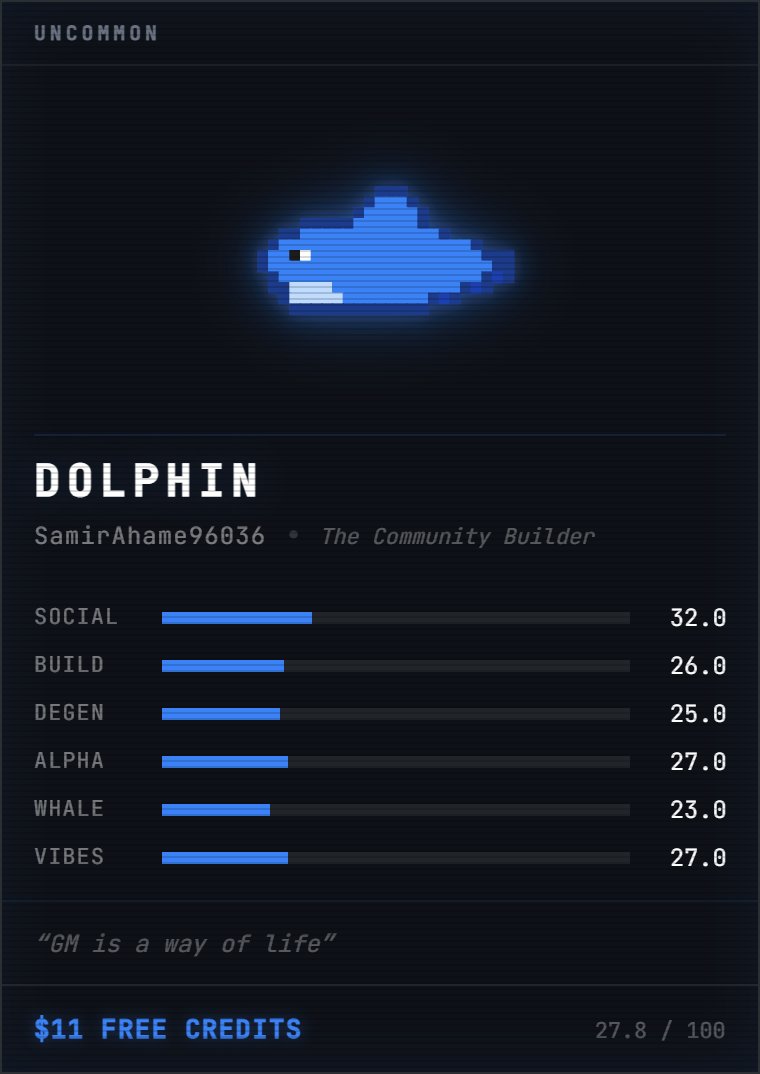
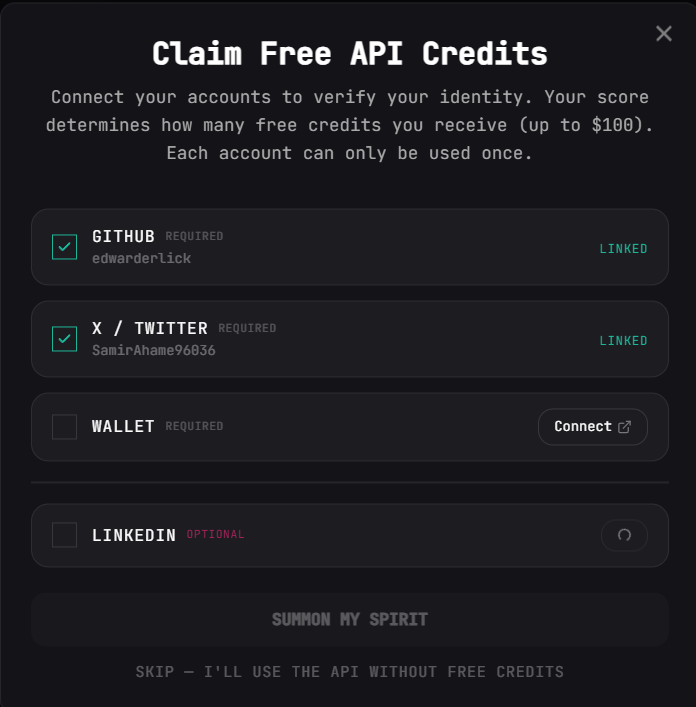
GM Surfers @SurfAI Was exploring Surf and found out you can claim up to $100 in free API credits just by signing up at agents.asksurf.ai and connecting your GitHub and X accounts. Connected mine and got $11 in free credits straight away. If you are building anything in crypto, whether that is apps, agents or dashboards that need real time onchain data, market prices, wallet tracking, social sentiment, prediction markets or analytics, Surf is genuinely the best API to build with right now. One single line and your AI agent gets full crypto superpowers: npx skills add asksurf-ai/surf-skills --skill surf Claude Code, Cursor, Gemini CLI or any local agent now has access to 90+ commands across 12 data domains including live prices from 16 exchanges, onchain SQL queries, wallet profiling, Polymarket and Kalshi prediction markets, crypto news from 30+ sources and social intelligence from 40M+ tweets. Instead of juggling 60+ different APIs from CoinGecko, Nansen, Dune, Glassnode and others, Surf replaces your entire data stack in one install. Go claim your free credits before they run out. agents.asksurf.ai
Samir ~ tweet mediaSamir ~ tweet mediaSamir ~ tweet media
English
38
1
69
691
𝕷𝖚𝖙𝖍𝖊𝖗🥷🏾
🧵 Most validator operators concentrate on optimizing staking yield, yet @get_optimum evaluates the landscape through a distinct lens: accelerating the velocity of information flow across decentralized networks. Through enhanced block dissemination and superior data transmission
𝕷𝖚𝖙𝖍𝖊𝖗🥷🏾 tweet media
𝕷𝖚𝖙𝖍𝖊𝖗🥷🏾@Lutt33r

🧵 According to my understanding, @get_optimum introduces a novel outlook on distributed ledger architecture through its Universal Data Acceleration Network. Instead of substituting established frameworks, it amplifies them by expediting information exchange and minimizing….

English
21
0
26
268
Kamrul
Kamrul@kamrulbroz·
Today I want to talk about something that becomes more important as apps expand across networks. How better interop can improve liquidity movement. Liquidity becomes less useful when it is trapped in separate networks. This is where @RialoHQ interop approach becomes important. Many financial apps do not run inside one clean environment. • Liquidity can sit on one chain. • Users may interact from another chain. • Execution may happen somewhere else. • Settlement may need a different system. When these parts cannot communicate smoothly, liquidity movement becomes slower and harder to manage. Apps then need extra bridges, routing logic, manual steps, and separate integrations. • That creates more friction for users. • It also creates more work for developers. • Better interop helps reduce this problem. Instead of treating each network as a separate island, systems can pass messages, verify state, and coordinate actions across environments. • A simple flow can look like this: • Liquidity exists on Network A. • A user starts an action from Network B. • The system checks the required state. • A message is passed across networks. • The correct route is selected. Execution happens where it makes the most sense. The final result is confirmed back to the app. This makes liquidity movement more flexible. The app does not need to force users into one network before they can act. It can coordinate across networks underneath. For DeFi, this can support better swaps, lending, payments, and settlement flows. For users, it means fewer broken steps. For developers, it means less custom infrastructure around every cross-network action. A simple comparison: Liquidity without interop is like money locked in different rooms. Each room has value. But movement is slow if the doors do not connect. Interop creates better pathways between those rooms. @RialoHQ focuses on making that coordination more native to the infrastructure. The goal is not just to move liquidity. The goal is to let applications use liquidity across networks without making the user handle all the complexity.
Kamrul tweet media
English
31
0
50
517
M𝑒r𝑖kO
M𝑒r𝑖kO@M3rik00·
One thing I didn't fully appreciate about @quipnetwork at first is that the network has to solve two different trust problems at the same time. First, can you trust the computation? Second, can you verify the result without repeating all the work yourself? That's where optimization workloads become important. The network isn't just trying to distribute compute. It's trying to distribute compute in a way that remains economically efficient. If verification costs as much as solving the problem, the model breaks down. If verification is cheap, useful work becomes scalable. That's a big reason why Quip's focus on optimization feels deliberate rather than arbitrary.
M𝑒r𝑖kO tweet media
English
23
1
33
226