alex 🏴‍☠️🇺🇸🇺🇦

148.3K posts

alex 🏴‍☠️🇺🇸🇺🇦 banner
alex 🏴‍☠️🇺🇸🇺🇦

alex 🏴‍☠️🇺🇸🇺🇦

@alex

Journalist. @twistartups, @CaOptNews. Dad x3. He/Him. Black Lives Matter. I podcast and write. Hey!

Providence Katılım Temmuz 2007
8.1K Takip Edilen104.8K Takipçiler
alex 🏴‍☠️🇺🇸🇺🇦 retweetledi
Lisa Abramowicz
Lisa Abramowicz@lisaabramowicz1·
Kevin Warsh is facing the highest yields on 10-year Treasuries on his swearing-in date of any Fed chair going back to Alan Greenspan in August 1987.
Lisa Abramowicz tweet media
English
54
172
586
91.4K
alex 🏴‍☠️🇺🇸🇺🇦 retweetledi
robertjdenault
robertjdenault@robertjdenault·
I usually don't comment too much on media reporting on prediction markets. But the lies being spread are getting out of control. It's always healthy to debate new products and safety concerns, but smear campaigns against Kalshi and prediction markets are off the rails. We support nationwide regulations for ads and marketing of prediction markets; meanwhile, the American Gaming Association called proposed nationwide ad restrictions a "slap in the face" and opposed them. I am not surprised casinos are spreading lies against prediction markets. They’ve spent decades and hundreds of millions of dollars fighting back against federal standards for advertising and consumer protection, and more recently fighting back against market integrity in sports. Kalshi has done more to ban minors on its platform than most gambling platforms. Here are some of our measures: KYC with SSN and selfie verification at signup Face ID on by default 2FA when signing in Parent ID check portal How many of these measures do casinos or OSBs implement? Ask any state representative how conversations about Face IDs have gone with the gambling companies: a bill gets put forward, gambling companies spend millions to squash it, and nothing ever changes. If the casinos want to protect consumers, they would look to embrace much-needed nationwide, uniform regulation. There are constructive debates to be had about marketing, but pretending that casinos and the gambling industry are a model for platform safety or proper regulation is not serious. Currently, only 2 out of 40 states that allow OSBs also require them to gate minors from their social media advertising. Why? OSBs have been lobbying against these kinds of requirements for a decade. BetMGM sent 3000 marketing emails directly to minors in February of this year. Kalshi is not perfect. But we are working to address these kinds of challenges and set a new standard for our industry. Instead of smears, let's pass nationwide legislation to ban minor marketing and make safer platforms: face IDs, selfie verification, parent portals, etc. We support updated uniform laws and regulations that will increase platform safety. If we all care about customers, then let’s work together to get nationwide safety bills like this passed.
Front Office Sports@FOS

Critics are warning Kalshi and Polymarket that they could have a Juul-style reckoning. Lawmakers from both parties grilled witnesses from the sports betting and prediction market industries about consumer safety and advertising to minors.

English
31
43
623
197.6K
alex 🏴‍☠️🇺🇸🇺🇦 retweetledi
Aaron Levie
Aaron Levie@levie·
What’s happened is that we went from AI chat tools that were relatively cheap and had small context windows, to AI agents that have giant context windows, the ability to keep track of longer running work, and models that cost an order of magnitude more on inference because they’re that much better. This has compounded far faster than most realized (unless you were paying close attention at the middle or end of last year, which many here were), and the dollars flowing in now are much more real. What follows is a continued march of AI capability that will continue to be used by anyone with a frontier use-case (like coding, sciences, finance, consulting) and then a peeling off of tasks to lower cost models that are capable enough for the job. Whereas we thought the cost of AI might converge on a single low price per token before, it’s clear the stratification is only widening based on the task you need performed. This will be yet another component that has to be figured out for broad AI diffusion. Enterprises will need to put in programs, new finance teams, and technology solutions to manage this all. The labs and platforms that can ensure customers can price optimize for the task at hand will be in the best position.
Hedgie@HedgieMarkets

🦔Microsoft canceled its internal Claude Code licenses this week after token-based billing made the cost untenable, even for a company with effectively infinite cloud resources. Uber's CTO sent an internal memo warning the company burned through its entire 2026 AI budget in just four months. American AI software prices have jumped 20% to 37%, and GitHub (owned by Microsoft) is dropping flat-rate plans for usage-based billing across its products. My Take The AI subsidy era is ending in real time. The same company that put $13 billion into OpenAI and built the Azure infrastructure powering most of Anthropic's compute just looked at the bill from a competitor's coding tool and decided it was not worth paying. That is not a productivity failure on Anthropic's end. Token-based pricing is forcing every enterprise customer to confront the actual cost of running these models at scale, and the number turns out to be far higher than the flat-rate experiments suggested. This ties directly to my Gemini Flash post yesterday. Anthropic, OpenAI, and Google all raised effective prices in the last six months. Enterprises that built workflows assuming AI costs would keep falling are now watching annual budgets evaporate in months. Two outcomes look likely from here. Either enterprises scale back AI usage to fit budgets, which slows the revenue ramp the labs need to justify their valuations ahead of IPOs, or the labs cut prices and absorb the losses, which makes the unit economics worse at exactly the wrong moment. Both paths land in the same place, the numbers stop working, and somebody has to take the writedown. Hedgie🤗

English
89
77
738
187.6K
alex 🏴‍☠️🇺🇸🇺🇦 retweetledi
Sophia Cai
Sophia Cai@SophiaCai99·
New: The AI exec. order was postponed because David Sacks called Trump this morning and argued that having the federal government review models before their public release would slow down innovation and harm the U.S. in its AI race with China. David Sacks was read in on the EO this week and senior White House officials believed he was good with it. “Then, he called POTUS this morning unbeknownst to anybody, his own staff included, and derailed it,” a senior White House official told me. w/ @cheyennehaslett @jacob_wendler politico.com/news/2026/05/2…
English
84
303
1.1K
856.7K
alex 🏴‍☠️🇺🇸🇺🇦 retweetledi
Deirdre Bosa
Deirdre Bosa@dee_bosa·
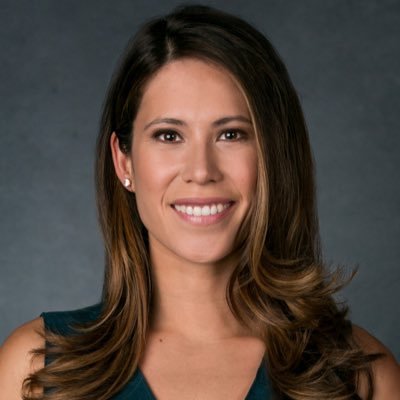
The more interesting part is that Microsoft’s own engineers liked Claude code best…and they’re cutting it anyway Token pricing is making enterprise actually look at what these models cost to run and that could be a problem for the labs when the subsidy ends. Lots of cheaper options out there and not just Chinese open source anymore
Hedgie@HedgieMarkets

🦔Microsoft canceled its internal Claude Code licenses this week after token-based billing made the cost untenable, even for a company with effectively infinite cloud resources. Uber's CTO sent an internal memo warning the company burned through its entire 2026 AI budget in just four months. American AI software prices have jumped 20% to 37%, and GitHub (owned by Microsoft) is dropping flat-rate plans for usage-based billing across its products. My Take The AI subsidy era is ending in real time. The same company that put $13 billion into OpenAI and built the Azure infrastructure powering most of Anthropic's compute just looked at the bill from a competitor's coding tool and decided it was not worth paying. That is not a productivity failure on Anthropic's end. Token-based pricing is forcing every enterprise customer to confront the actual cost of running these models at scale, and the number turns out to be far higher than the flat-rate experiments suggested. This ties directly to my Gemini Flash post yesterday. Anthropic, OpenAI, and Google all raised effective prices in the last six months. Enterprises that built workflows assuming AI costs would keep falling are now watching annual budgets evaporate in months. Two outcomes look likely from here. Either enterprises scale back AI usage to fit budgets, which slows the revenue ramp the labs need to justify their valuations ahead of IPOs, or the labs cut prices and absorb the losses, which makes the unit economics worse at exactly the wrong moment. Both paths land in the same place, the numbers stop working, and somebody has to take the writedown. Hedgie🤗

English
55
41
418
147.7K
alex 🏴‍☠️🇺🇸🇺🇦 retweetledi
Sophia Cai
Sophia Cai@SophiaCai99·
NEW: Scott Bessent and national cyber director Sean Cairncross clashed in the early stages of drafting the AI EO: - Bessent felt Cairncross wasn’t moving fast enough to address risks to critical infrastructure and the financial system. - They also disagreed over their respective lanes. - When Treasury CIO Sam Corcos requested access to Mythos in April without going through the interagency process, Cairncross questioned Corcos’ role. w/ @johnnysaks130 @mstratford @cheyennehaslett politico.com/news/2026/05/2…
English
4
37
105
44K
alex 🏴‍☠️🇺🇸🇺🇦 retweetledi
Zeb Evans
Zeb Evans@DJ_CURFEW·
Today we reduced headcount by 22%. The business is the strongest it's ever been. So I think it's important to be direct about what I'm seeing and why. First, I made this decision and I own it. I did it because the way to operate at the highest level of productivity is changing, and to win the future, ClickUp needs to change with it. Second, this wasn't about cutting costs. Most savings from this change will flow directly back into the people who stay. We'll be introducing million-dollar salary bands. If you create outsized impact using AI, you'll be paid outside of traditional bands. Most importantly, I have the deepest gratitude for those affected. We're doing this from a position of strength specifically so we can take care of people properly. Everyone affected receives a package aimed at honoring their contributions and easing the transition. I only see two options: wait for this to play out gradually in the market or be honest about what I'm seeing and act proactively. THE 100X ORGANIZATION The primary change is that we're restructuring around what I call 100x org. The goal is 100x output. The roles required to build at the highest level are fundamentally different than they were a year ago. Incremental improvements to existing systems won't get us there. We need new ones. That means creating enough disruption to rebuild rather than iterate on what's already broken. The common narrative is that AI makes everyone more productive. It doesn't. Many of the workflows of today, if left unchanged, create bottlenecks in AI systems. These roles will evolve. But waiting for that to happen naturally means falling behind now. The 100x org is actually heavily dependent on people - infinitely more than today. This is only possible with 10x people that have embraced and adopted new ways of working. THE BUILDERS, AGENT MANAGERS, AND FRONT-LINERS — THE BUILDERS: 10X ENGINEERS I don't think most companies have internalized what's actually happening with AI in engineering. The common narrative is that AI makes all engineers more productive. That may be true in isolation, but at an organization level - that is the farthest thing from reality. Here's what we've validated recently at ClickUp: the great engineers, the ones who can orchestrate, architect, and review, are becoming 100x engineers. They're not writing code. They're directing agents that write code. The skill is judgment. AI makes the best engineers wildly more productive, and everyone else using AI slows these engineers down. Think about it - the bottlenecks are (1) orchestration - telling AI what to do, and (2) reviewing - what AI did. Everything is leapfrogged and no longer needed. So who do you want orchestrating and reviewing code? And how do you want your best engineers to spend their time? If your best engineers are spending time reviewing other people's code, then this is inherently an inefficient bottleneck. These engineers can review their agent's code much faster than reviewing human code. The new world is about enabling your 10x engineers to become 100x. The wrong strategy is to push every engineer to use infinite tokens. Companies doing this are celebrating 500% more pull requests. But customer outcomes don't match the volume of code being generated. I call this the great reckoning of AI coding, and every company will face this soon if not already. More code is just another bottleneck to the best engineers, and ultimately to your company's impact as well. — THE BUILDERS: 10X PRODUCT MANAGERS Product management and design roles are merging. Designers that have customer focus, become more like product managers. And product managers that have intuition for UX become more like designers. The bottleneck of user research is gone. It takes us just one mention of an agent to kickoff research and analyze results. The bottleneck of product <> design iteration is also gone. The product builder iterates on their own, along with agents and skills that ensure alignment with quality and strategy. Also controversial today - I believe that the wrong strategy is to have your PMs shipping code - that just introduces another bottleneck that the best engineers will waste their time on. To be clear, PMs should be coding but they should do this in a playground to iterate, validate, and scope. That code should not go to production. Everything outside of managing systems, orchestrating AI, and reviewing output becomes a bottleneck. That's why the other roles that are critical along with these are the systems managers (to reduce bottlenecks) along with a bottleneck you can't replace - customer meeting time. — THE SYSTEM MANAGERS Ironically, the people that automate their jobs with AI will always have a job. They become owners of the AI systems - agent managers. We have many examples of these people at ClickUp. The underlying systems in which we operate are absolutely critical to get right. I think most companies are delusional to think they can iterate on existing systems and compete in this new world. You must create enough disruption so that old systems are deprecated entirely. If there's any definition for 'AI native' that's what it is. — THE FRONT-LINERS In a world that will become saturated with AI communication, the human touch will matter more than anything to customers. This is a bottleneck that you shouldn't replace - even when agents are high enough quality to do video meetings. One-on-one meeting time with customers is something that shouldn't be automated. The systems around the meetings should be - so that front-liners spend nearly 100% of their time with customers. REWARDING 100X IMPACT In a world where companies are able to do so much more with less, where does that excess money go? In our case, much of the savings in this new operating model will flow directly back to those that enabled it. We must reward people that create productivity accordingly. This aligns incentives on both sides. Plus, in a world where your best people create 100x impact, you can't afford to lose them. You should aim to retain these employees for decades. The context they have and their ability to efficiently orchestrate and review will be nearly impossible to replace. Compensation bands of today should be thrown out the door. We're introducing $1 million cash/year salary bands with a path available to nearly everyone in the company if they produce 100x impact by creating or managing AI systems. THE FUTURE Nearly every company will make changes like these. The ones that do it proactively will define what comes next. The future is not fewer people. It's different work, new roles, and better rewards for those who embrace it. We're already seeing entirely new roles emerge, like Agent Managers, that didn't exist a year ago. ClickUp is positioning to lead this shift, not just internally, but for our customers too. I've never been more certain about where we're headed.
English
1.3K
915
10.5K
5.2M
Stephen Hughes
Stephen Hughes@stephendhughes·
@alex Thank you Alex & the TWIST team for the support over the last year!
English
1
0
0
140
alex 🏴‍☠️🇺🇸🇺🇦 retweetledi
Andrew Desiderio
Andrew Desiderio@AndrewDesiderio·
News — Nearly 2-hour meeting with Acting AG Todd Blanche and Senate Republicans was incredibly hostile, per multiple attendees. As many as 25 GOP senators spoke (this is very rare for these meetings), all in opposition to weaponization fund. R’s pitched specific ideas such as dictating how the 5 commissioners are chosen & not allowing people convicted of violence against cops to be eligible for a payout.
English
420
1.6K
6.7K
1.8M
Cullen
Cullen@cullend·
@alex What is “nameplate compute”? Is nameplate a financial term I’m not aware of?
English
1
0
0
18
alex 🏴‍☠️🇺🇸🇺🇦 retweetledi
Conor Sen
Conor Sen@conorsen·
[@opinion] For most of the past 2 years we’ve had a K-shaped economy with an AI boom largely offsetting cyclical weakness elsewhere in the economy, but a continued AI boom is swamping those cyclical soft spots and increasing overheating risks: bloomberg.com/opinion/articl…
English
5
15
129
95.9K