AntonyRod. (microRNA Lab)

453 posts

AntonyRod. (microRNA Lab) banner
AntonyRod. (microRNA Lab)

AntonyRod. (microRNA Lab)

@ARodCastro

PI, Baylor College of Medicine. microRNA-lncRNA circuits; epithelial stem cells, lung repair and regeneration; COPD; ILD.

Houston, Texas Katılım Ekim 2012
316 Takip Edilen69 Takipçiler
AntonyRod. (microRNA Lab) retweetledi
nature
nature@Nature·
Nature research paper: The E3 ubiquitin ligase mechanism specifying targeted microRNA degradation go.nature.com/4cVeRIm
English
0
19
77
10.5K
AntonyRod. (microRNA Lab) retweetledi
Cell Reports
Cell Reports@CellReports·
A single-cell CRISPR screen defines a gene regulatory network governing human pluripotency in primed and naive cells dlvr.it/TRZwJC
English
0
9
28
2.7K
AntonyRod. (microRNA Lab) retweetledi
Cancer Discovery
Cancer Discovery@CD_AACR·
Now online: Targeting the Lipid Metabolism Proteins FASN and GPAM in Alveolar Type II Cells Decreases Lung Metastasis doi.org/10.1158/2159-8…
Cancer Discovery tweet media
English
0
3
11
2.3K
AntonyRod. (microRNA Lab) retweetledi
Alice Ting
Alice Ting@aliceyting·
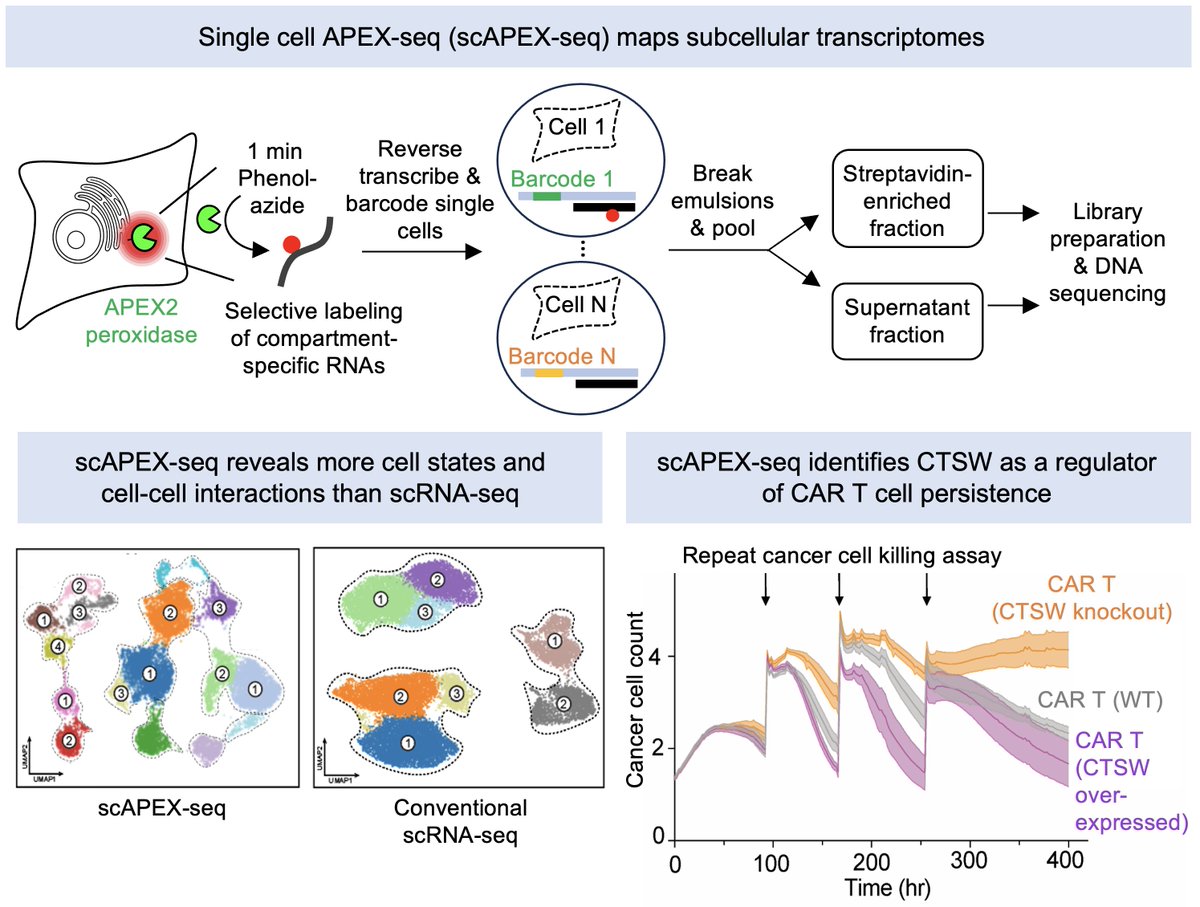
Today we report single-cell APEX-seq (scAPEX-seq) — a new method for unbiased mapping of *subcellular* transcriptomes at single-cell resolution. This approach reveals cell states that are not detectable by standard scRNA-seq, and enabled us to identify regulators of CAR T function that improve solid tumor killing. biorxiv.org/cgi/content/sh…
Alice Ting tweet media
English
2
117
512
36K
AntonyRod. (microRNA Lab) retweetledi
Nature Biotechnology
Nature Biotechnology@NatureBiotech·
Transposable elements, such as retrotransposons and endogenous retroviruses, are increasingly recognized for their important roles in genome function and impact on disease development go.nature.com/4tQ1zTn rdcu.be/e8Eci
Nature Biotechnology tweet media
English
3
22
70
5.5K
AntonyRod. (microRNA Lab) retweetledi
Scripps Research
Scripps Research@scrippsresearch·
Scripps Research scientists have received nearly $5M from @theNCI to study how RNA modifications—a hidden layer of gene regulation—may influence cancer growth. In collaboration with @HopkinsMedicine, the team will test how diet-derived nutrients reshape RNA chemistry. More: ow.ly/PpHu50YuTuv
Scripps Research tweet media
English
0
5
18
3.4K
AntonyRod. (microRNA Lab) retweetledi
Prof Steve Horvath
Prof Steve Horvath@prof_horvath·
Epigenetic aging happens at different rates in individual cells within the same tissue. Using single-cell DNA methylation analysis, Hagit Masika, Tommy Kaplan, Howard Cedar, and colleagues show polycomb CpG island methylation creates 'young' vs 'old' cell subpopulations even at fixed chronological age. Fascinating finding: white vs black hairs from the same 53-year-old person show dramatically different epigenetic ages. This single-cell view of aging could explain why age-related diseases often start from individual cells (like cancer). Title: Cell-to-cell variability and gain of methylation at polycomb CpG islands as a hallmark of aging. Link: biorxiv.org/content/10.648…
English
1
19
71
4.7K
AntonyRod. (microRNA Lab) retweetledi
UCSC Genome Browser
UCSC Genome Browser@GenomeBrowser·
We are excited to announce the release of the Human Methylation Atlas Summary and Signals tracks for hg38 and hg19. The tracks display genome-wide DNA methylation profiles across 39 primary human cell types from 205 healthy tissue samples. Learn more at bit.ly/humanMethylati…
UCSC Genome Browser tweet media
English
2
90
350
22K
AntonyRod. (microRNA Lab) retweetledi
Cell Reports
Cell Reports@CellReports·
Single-nucleus multiome analysis in the human prefrontal cortex identifies gene expression and cis-regulatory elements associated with aging dlvr.it/TRWxgL
English
0
7
30
3.7K
AntonyRod. (microRNA Lab) retweetledi
Nature Reviews Drug Discovery
Human organoids as 3D in vitro platforms for drug discovery: opportunities and challenges rdcu.be/e8qhG nature.com/articles/s4157… This Review in the March issue discusses generating and maintaining organoids, and their applications in disease modelling and drug screening
Nature Reviews Drug Discovery tweet media
English
0
45
151
9.6K
AntonyRod. (microRNA Lab) retweetledi
eLife - the journal
🧬 A major data reanalysis in December's most-read Genetics paper uncovers thousands of previously hidden protein-coding regions in human and mouse genomes: elifesciences.org/reviewed-prepr…
eLife - the journal tweet media
English
0
25
91
7.9K
AntonyRod. (microRNA Lab) retweetledi
Science Magazine
Science Magazine@ScienceMagazine·
New work in @SciSignal exploits long noncoding RNAs in the “dark transcriptome” that possess anti-inflammatory properties by reengineering them to dampen acute inflammation in mice—a finding that could open a new field of lncRNA-based therapies. scim.ag/3OSovl3
Science Magazine tweet media
English
1
39
166
24.7K
AntonyRod. (microRNA Lab) retweetledi
Oded Rechavi
Oded Rechavi@OdedRechavi·
A new mechanism for “RNA memory”! 😱 Thrilled to share another crazy paper from the lab (can’t believe we posted 2 in 2 days!), summarizing >10 years of research: Work on transgenerational inheritance of small RNAs in the powerful model organism C. elegans changed how we think about what’s possible in inheritance and evolution, because it allows the most heretical thing: inheritance of parental responses to the environment! However, it’s still unclear whether RNAs are inherited across generations in other animals, largely because the RNA-dependent RNA polymerases that amplify heritable small RNAs and prevent their dilution in C. elegans are not conserved in mammals. In this new work, an amazing collaboration with the Rink and Wurtzel labs, we show that planarians establish long-lasting and heritable small RNA–based gene regulatory states despite lacking canonical RNA-dependent RNA polymerases and nuclear RNAi machinery (that are required in C. elegans). You might say “they are both worms…” BUT planarians are evolutionarily very distant from C. elegans (flatworms vs. roundworms, diverged more than 500 million years ago), making this particularly surprising. These are totally different animals. We find that ingestion of double-stranded RNA induces sequence-specific silencing that persists for months and survives repeated cycles of whole-body regeneration. Even more strikingly, RNAi can be transferred between animals, echoing James V. McConnell’s controversial “RNA memory” experiments from the 1970s (his lab was targeted by the Unabomber terrorist Ted Kaczynski, who sent McConnell a bomb. This and other controversies ended this line of experiments…) Mechanistically, we find that the response transitions from a transient systemic dsRNA-triggered phase to a stable, cell-autonomous post-transcriptional “memory phase” maintained by antisense small RNAs. Using a new luminescence reporter (transgenesis is currently impossible in planarians), we show that silencing spreads along the targeted gene and identify a weird type of planarian small RNAs with untemplated polyA tails. RNAi inheritance without canonical RdRPs establishes planarians as a powerful system for studying RNA-based regulatory inheritance beyond C. elegans and raises the possibility that RNA-mediated inheritance may be more broadly conserved in animals, potentially even in mammals. Here’s a video of a planarian that is treated by RNAi against β-catenin and develops multiple heads instead of just one. This is one of the phenotypes that is inherited. Another phenotype is “loss of eyes” (which we show is not only inherited across multiple regeneration cycles, but can also be transmitted between animals in transplantation experiments). Amazing work led by first authors Prakash Cherian and Idit Aviram (co-supervised by Omri and me). Please read the preprint, the link is in the next tweet, and share!
English
55
336
1.4K
184.9K
AntonyRod. (microRNA Lab) retweetledi
Lurie Cancer Center
Lurie Cancer Center@LurieCancer·
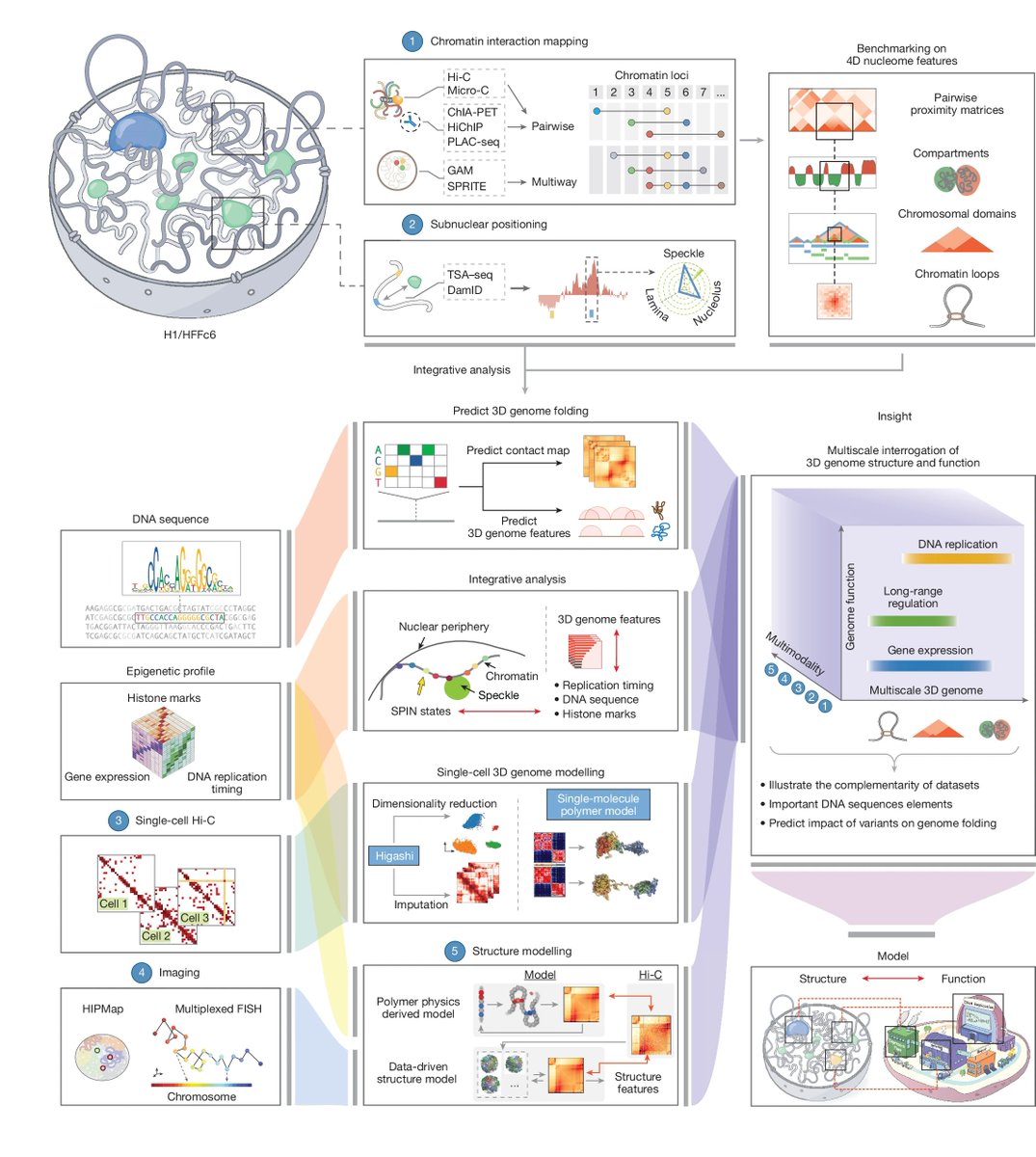
A study in the journal #Nature maps more than 140,000 3D DNA loops across human stem cells and fibroblasts, offering the most comprehensive look yet at the 4D nucleome or how genome structure changes across space and time. These maps reveal how looping, nuclear positioning, and long‑range interactions shape gene regulation and replication. Corresponding author: Feng Yue, PhD nature.com/articles/s4158…
Lurie Cancer Center tweet media
English
0
16
66
5.5K
AntonyRod. (microRNA Lab) retweetledi
Micah G. Allen
Micah G. Allen@micahgallen·
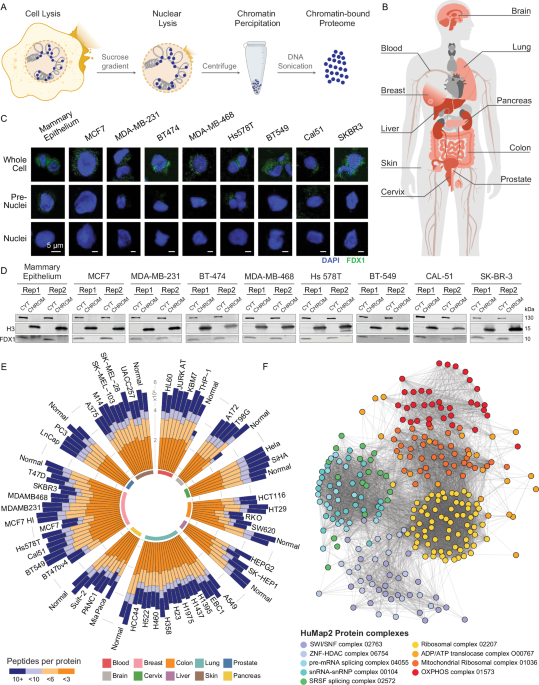
A recent study in Nature Communications reveals over 250 metabolic enzymes located directly on chromatin, a discovery that vastly expands the previously known count of only about 20. nature.com/articles/s4146…
Micah G. Allen tweet media
English
4
110
345
23.5K
AntonyRod. (microRNA Lab) retweetledi
Molecular Cell
Molecular Cell@MolecularCell·
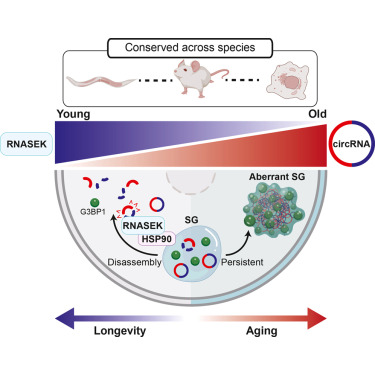
Ribonuclease κ promotes longevity by preventing age-associated accumulation of circular RNA in stress granules dlvr.it/TRKzLt
Molecular Cell tweet media
English
0
14
57
4.4K