Abd Alwarith 🇺🇸

424 posts

Abd Alwarith 🇺🇸

Abd Alwarith 🇺🇸

@Abd_Alwarith

Computer Engineer, currently student of Islamic Law at University of Islamic Sciences in Jordan, direct student of Dr Salah Abu Al Hajj

Amman Katılım Eylül 2021
278 Takip Edilen29 Takipçiler
Sabitlenmiş Tweet
Abd Alwarith 🇺🇸
Abd Alwarith 🇺🇸@Abd_Alwarith·
Im currently writing a research paper on Muslim immigration to the west and classical Islamic frameworks on the matter. It’s important that it is grounded in reality so I want to collect interviews from diaspora Muslims and Muslims born in non-Muslim majority countries.
English
1
0
0
705
Abd Alwarith 🇺🇸
Abd Alwarith 🇺🇸@Abd_Alwarith·
@lallathurayya Interesting. I still have so much to explore in the islamic history of west Africa/north Africa beyond Egypt.
English
0
0
0
1.2K
Salma ⵣ
Salma ⵣ@lallathurayya·
We always have a discourse about Islamization in North Africa in a way that mimics European settlers in the Americas but we rarely talk about the Muslims who were fleeing persecution & corruption in the caliphates & became protégés of Amazigh leaders who extended their power
English
10
20
225
121.3K
Brooke Taylor
Brooke Taylor@Brooketaylortv·
It costs the U.S. millions of dollars to intercept Iran’s small, fast-moving drones. But a Texas-based defense robotics company says it has developed a cheaper solution, one that could take down a drone for as little as 10 bucks.
English
125
682
6.9K
561.9K
Buck
Buck@BuckOnTwidder·
there are guys on here who don’t know how to cook themselves eggs trying to trade oil against Citadel
English
224
1.8K
24.5K
674.9K
Abd Alwarith 🇺🇸 retweetledi
Seyed Abbas Araghchi
The Iran–U.S. Ceasefire terms are clear and explicit: the U.S. must choose—ceasefire or continued war via Israel. It cannot have both. The world sees the massacres in Lebanon. The ball is in the U.S. court, and the world is watching whether it will act on its commitments.
Seyed Abbas Araghchi tweet media
English
6.1K
34.3K
97.7K
3.9M
HFI Research
HFI Research@HFI_Research·
I have been in the weeds of oil market modeling for over 10 years. I thought it was a stupid skill to learn. What the fuck do you gain by learning how to model oil market balances? Well, it seems like it’s coming in a bit handy now. To the uninformed observer, the largest oil market deficits in history have only ever reached ~3 million b/d. Here’s a fun fact: Q4 2018 balances was widely considered to be one of the tightest quarters in history. What was the deficit? 1.6 million b/d. Yes, 1.6 million b/d. Oil markets have never had a deficit larger than 3 million b/d. In 2022? Markets started pricing in a structural 2 million b/d deficit, oil spiked, and equity markets sold off. Now? People are talking about sustained 5 million b/d deficit as somehow being manageable? No. That’s not how the oil market works. Because oil is traded on the margin, that last barrel would push prices to the extreme. We are eating into onshore oil inventories now, the market is still asleep.
English
19
226
1.6K
119K
Abd Alwarith 🇺🇸
Abd Alwarith 🇺🇸@Abd_Alwarith·
This can easily be understood once you understand how elites view the common man. To them, it is a class thing. They dont care about Americans, they care about rich people. It is rich vs poor. Their fellow elites in other countries help them create pipelines to get cheaper labor in America. It was always more expensive to invest in America. It hurts their bottom line. Their profit margin. It is cheaper to build a school in another country and import all its graduates after. Just a numbers game. This isnt a country anymore unfortunately, just an oil company with an army. DC no longer serves us.
English
2
8
103
4.3K
Abd Alwarith 🇺🇸 retweetledi
Ryan Grim
Ryan Grim@ryangrim·
And Americans are not actually rooting against their country, they’re rooting against the savage faction that took power by promising to end wars and focus on America and instead launched this insane war. Nobody really believes that Trump and Netanyahu are “America” — not even them. Probably nobody cares less about America than them, frankly. By rooting against Trump and Netanyahu many people are trying to root *for* America, for America to survive and overcome them.
English
289
1.1K
7.7K
169.4K
Abd Alwarith 🇺🇸 retweetledi
Donald J. Trump
Donald J. Trump@realDonaldTrump·
The United States has spent EIGHT TRILLION DOLLARS fighting and policing in the Middle East. Thousands of our Great Soldiers have died or been badly wounded. Millions of people have died on the other side. GOING INTO THE MIDDLE EAST IS THE WORST DECISION EVER MADE.....
English
16.4K
55.7K
159.4K
0
Hedgeye
Hedgeye@Hedgeye·
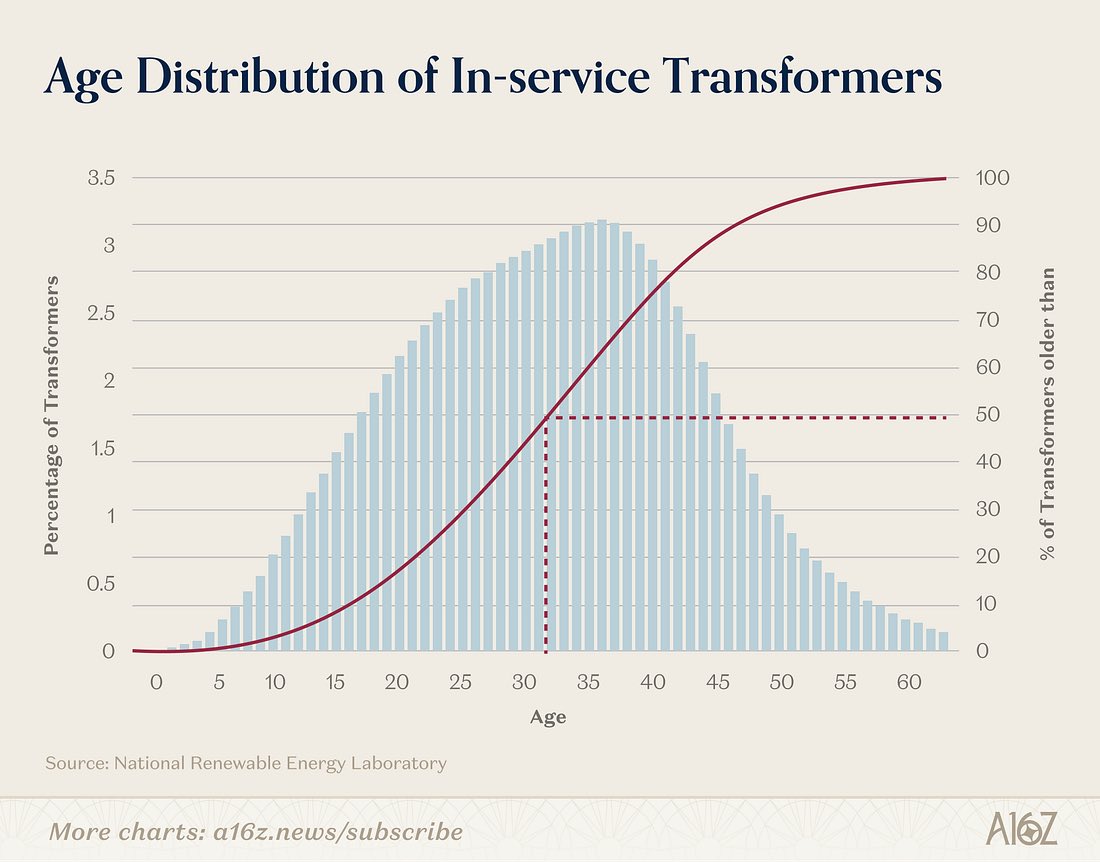
🚨 50% of U.S. distribution transformers are already past their expected useful life. Over two-thirds of transmission lines and large power transformers are over 25 years old. The grid is aging out.
Hedgeye tweet media
English
38
126
491
177.2K
Abd Alwarith 🇺🇸
Abd Alwarith 🇺🇸@Abd_Alwarith·
@imetatronink Do you think the Great Pentagon Purge is a precursor to the end of this very ill and poorly functioning democracy?
English
0
0
0
268
Will Schryver
Will Schryver@imetatronink·
‼️ Greasy Pete has cashiered the Chief of Staff of the United States Army. There is clearly a strategic and ideological clash taking place at the highest levels of the US government and its military.
Will Schryver@imetatronink

🔸 Civil wars do not happen because the masses rise up against their masters. They happen when a schism forms between the masters, who then use long-refined methods to enlist factions of the masses to fight for them against their rivals.

English
59
380
1.6K
62.9K
Abd Alwarith 🇺🇸 retweetledi
Monika Wiesak
Monika Wiesak@MonikaWiesak·
The United States is neither omnipotent not omniscient. We are only 6% of the world’s population & we cannot impose our will upon the other 94% of mankind. We cannot right every wrong or reverse each adversity. There cannot be an American solution to every world problem. - JFK
English
186
4.7K
18.6K
330.5K
Abd Alwarith 🇺🇸 retweetledi
Joe Kent
Joe Kent@joekent16jan19·
Winding down the war is the right call, but for any peace agreement/exit plan to work we must restrain Israel 1st. Israel will thwart any peace deal or come back to us in a few months demanding more support to topple the Ayatollahs & IRGC unless we restrain them now. Restraining the Israelis means taking away the military aid & support they need to conduct offensive military ops in Iran.
The Hill@thehill

Graham to Trump: ‘Wind down’ Iran war, ‘wind up’ efforts for peace deal thehill.com/homenews/senat…

English
1.8K
5.5K
27.1K
804.7K
Abd Alwarith 🇺🇸 retweetledi
Ramy Abdu| رامي عبده
French judge Nicolas Gouyou, who issued an arrest warrant for Netanyahu at the ICC: • Visa and Mastercard have blocked all my cards • I cannot make any purchases • I am a judge, yet treated like a criminal • Judges, lawyers, and politicians are being intimidated • A colleague told me my name won’t be removed from the blacklist until Trump’s term ends • Despite intervention by the French president, U.S. authorities have not responded
English
2.3K
38.4K
97.3K
4.8M
Abd Alwarith 🇺🇸 retweetledi
Drop Site
Drop Site@DropSiteNews·
Tucker Carlson challenges The Economist’s editor-in-chief to define Israel’s “right to exist”
English
761
5.8K
28.3K
4.9M
Abd Alwarith 🇺🇸 retweetledi
James Talarico
James Talarico@jamestalarico·
The President of the United States said I insulted Jesus. You want to know what insults Jesus? Kicking the sick off their healthcare. Bombing schoolchildren in Iran. Deporting moms and babies. Covering up the Epstein files.
English
8.4K
32.6K
165.2K
2.8M
Abd Alwarith 🇺🇸 retweetledi
Shanaka Anslem Perera ⚡
Shanaka Anslem Perera ⚡@shanaka86·
Hormuz is not an oil story anymore. Stop trading it like one. The strait carries one quarter of global seaborne oil trade. That is the number the market knows. Here are the numbers it does not. One third of global seaborne fertiliser trade transits the same waterway. S&P Global says the disruption has effectively halted LNG tanker traffic through Hormuz, temporarily impairing roughly one fifth of global LNG supply, with Asia-Pacific absorbing the sharpest hit. UNCTAD reports vessel traffic has collapsed by 97 percent. Tanker freight, war-risk insurance, and marine fuel costs have all surged simultaneously. This is not a commodity shock. It is a junction box. Six systems are now synchronised through a single 21-mile chokepoint: oil, LNG, fertiliser, freight, insurance, and sovereign debt. The market is pricing the first one. The other five are compounding underneath. LNG is the bomb nobody is watching. Oil creates the headline. LNG keeps the inflation impulse alive after the headline fades. It feeds power prices, industrial costs, chemicals, and utility bills. When LNG reprices, the shock broadens from transport fuel into the entire cost structure of manufacturing. That is stagflationary. Not merely inflationary. Stagflationary. Growth softens while costs harden. Fertiliser is the food fuse. Urea peaked at $683 per ton at New Orleans. CBOT March futures settled at 610.50 yesterday, up 35 percent in a month. Farmers across the Midwest are choosing soybeans over corn this week because corn needs nitrogen at $610 and soybeans fix their own from the atmosphere. USDA projects corn falling to 94 million acres. Soybeans rising to 85 million. The Renewable Fuel Standard mandates 15 billion gallons of corn ethanol consuming 43 percent of a shrinking crop. The cattle herd is at 86.2 million, a 75-year low. Feed reprices. Protein reprices. Packaging reprices after the IRGC published satellite targeting images of Jubail, Mesaieed, Ras Laffan, and Al-Hosn petrochemical facilities today. Every layer of the food system from the field to the checkout counter is now gated by Hormuz. Duration is the hidden repricing. Markets love to front-run ceasefires. Logistics do not normalise that fast. The Red Sea insurance precedent is 26 months and premiums are still elevated. Solvency II capital rules require 30 to 60 days of incident-free stability before P&I reinstatement. Even after a ceasefire, the physical trade system will lag the financial relief rally by months. That lag is where sticky inflation hides. The global growth mix is getting uglier. Bank of America’s fund-manager survey shows cash at 4.3 percent, the sharpest jump since the pandemic. Growth optimism collapsed. Inflation expectations rose. Geopolitical risk overtook AI as the top cited tail event. Meanwhile China’s property investment fell 11 percent in January and February per the Wall Street Journal. The world’s largest cyclical demand engine is impaired while the world’s largest supply chokepoint is closed. The sovereign channel is where this becomes existential. The S&P can hedge. Bangladesh cannot. Sri Lanka cannot. Egypt cannot. Countries that import calories and fuel in dollars while servicing debt in dollars face rising import bills, rising borrowing costs, and shrinking buffers simultaneously. UNCTAD warns explicitly: developing economies are most exposed because high debt leaves no room to absorb another shock. This is where Hormuz stops being a commodity move and becomes a solvency crisis. Six systems. One chokepoint. The market is trading the oil ticker. The crisis is in the wiring underneath. open.substack.com/pub/shanakaans…
Shanaka Anslem Perera ⚡ tweet media
Shanaka Anslem Perera ⚡@shanaka86

JUST IN: Iran just published satellite photographs of four Gulf petrochemical facilities with identical Arabic warnings overlaid in red: evacuate immediately, military strikes within hours. Jubail petrochemical complex, Saudi Arabia. Mesaieed industrial city, Qatar, home to the Chevron-linked Q-Chem plant. Ras Laffan refinery, Qatar. Al-Hosn gas processing facility, UAE. Four sites. Three countries. One message: the IRGC is telling the Gulf that the war has entered the petrochemical layer. This is the domino nobody priced. The Middle East is the world’s largest polyethylene exporter. PE becomes the cling film on your meat tray. The bottle your milk comes in. The bag your rice is packed in. The shrink wrap on every pallet that moves through every cold chain on Earth. Asian PE crackers have already declared force majeure. Indonesia’s Chandra Asri. South Korea’s Yeochun NCC running at 66 percent. Singapore PCS. CNOOC-Shell Huizhou. US PE spot prices surged 10 cents per pound in the first week. Indian PE jumped 20,000 rupees per tonne. The nitrogen crisis determines whether the food grows. The petrochemical crisis determines whether it can be packaged, transported, and sold. A farmer in Iowa is choosing soybeans this week because urea at $610 per ton on the CBOT March settlement makes corn uneconomical. USDA projects corn dropping to 94 million acres from 98.8 million. Soybeans rising to 85 million from 81.2 million. The Renewable Fuel Standard mandates 15 billion gallons of corn ethanol consuming 43 percent of a shrinking crop. The cattle herd sits at 86.2 million head, a 75-year low. Feed costs spike. Meat reprices. Eggs reprice. Dairy reprices. Now add the packaging layer on top. The same grocery item that costs more because the corn that fed the animal is more expensive now costs more again because the plastic that wraps the meat is more expensive. The nitrogen shortage hits the farm gate. The polyethylene shortage hits the shelf. Both originate from the same Gulf geography. Both are threatened by the same decentralised doctrine. Both arrive at the same checkout counter. The IRGC evacuation warning is either a bluff or a prelude. If it is a bluff, it has already succeeded in repricing PE futures and deepening force majeure across Asian supply chains. If it is a prelude, the Gulf’s petrochemical infrastructure joins its desalination plants and fertiliser trade as targets that the Mosaic Doctrine’s provincial commands consider legitimate. Gulf air defences intercept 90 to 96 percent of incoming missiles and drones. That leaves 4 to 10 percent arriving. A missed interception on a PE cracker does not divert flights. It shuts down a production line that takes months to restart and serves packaging supply chains across three continents. The war started with uranium. It moved to oil. Then fertiliser. Then water. Now plastic. Each layer is deeper than the last. Each one closer to the physical infrastructure that delivers food from the field to the human body. Nitrogen grows it. Water sustains the grower. Plastic packages it. Each molecule is now compromised by the same 21-mile strait and the same sealed orders. The satellites are published. The warnings are issued. The farmer is planting soybeans. The plastic is repricing. And the grocery bill that absorbs all of it has no bypass, no pipeline, and no sealed packet that can make it cheaper. Full analysis: open.substack.com/pub/shanakaans…

English
11
86
218
44.6K
Abd Alwarith 🇺🇸 retweetledi
Shanaka Anslem Perera ⚡
Shanaka Anslem Perera ⚡@shanaka86·
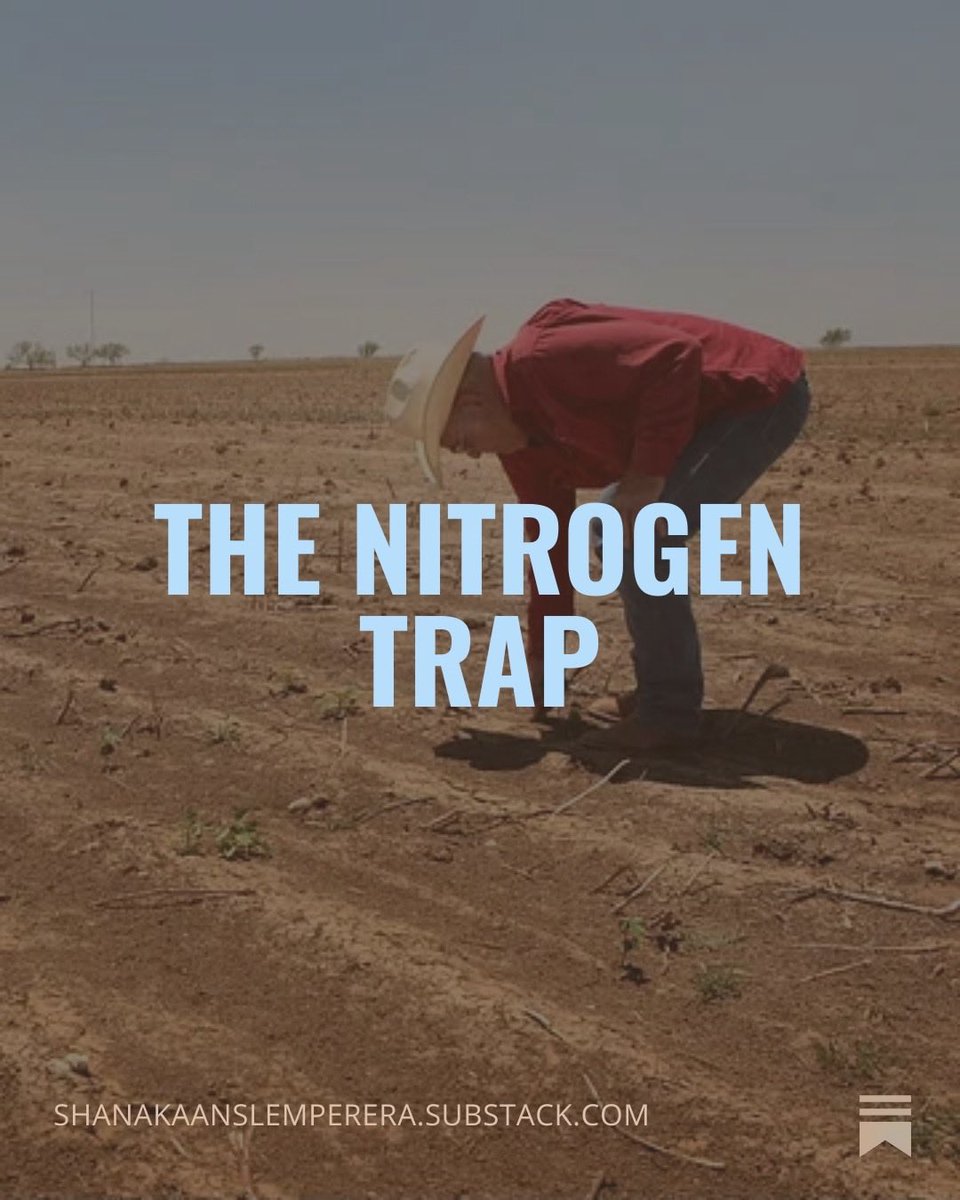
BREAKING: While the world debates oil prices and war strategy, the actual crisis is unfolding in silence. The molecules that produce half the planet’s food are physically trapped behind a war zone. And the biological window to apply them closes in weeks. Not months. Weeks. This is not a drill. Roughly one-third of all seaborne fertilizer trade passes through the Strait of Hormuz according to UNCTAD. Nearly 49% of globally traded urea is tied to conflict-exposed exporters. Nearly half of global sulfur trade, the chemical without which phosphate fertilizer cannot be processed anywhere on Earth, is Gulf-dependent. Transit has collapsed 97%. There is no alternative route. There is no strategic fertilizer reserve anywhere on Earth. There is no Plan B. Right now, as you read this: Bangladesh has shut five of six urea factories. Boro rice season, which produces over half the country’s grain, is underway with no domestic nitrogen supply. India is operating fertilizer plants at 60% capacity and has formally asked China for emergency urea. China said nothing and banned its own phosphate exports through August. Egypt, the world’s largest wheat importer, faces $28 billion in debt repayments while the bread subsidy feeding 69 million people hemorrhages money at prices it never budgeted for. Sudan, already in confirmed famine, sources 54% of its fertilizer from the Gulf. WFP shipping now takes 25 extra days rerouting around the war zone. Australia imports virtually all its urea, two-thirds from the Gulf, and its entire heavy trucking fleet runs on AdBlue made from the same urea that is not arriving. No urea, no AdBlue, no freight, no groceries on shelves in Sydney. 318 million people were at crisis-level hunger BEFORE February 28. The number that should haunt every policymaker on Earth: the yield response to nitrogen is not linear. It is quadratic. In wealthy countries that over-apply fertilizer, a 15% reduction costs maybe 3% of yield. In the Global South where farmers already apply one-seventh the global average, the same reduction pushes crops off a biophysical cliff where production does not decline. It collapses. Sri Lanka proved this in 2021. One season without synthetic fertilizer. Rice output collapsed 40%. Government fell. Now multiply Sri Lanka across thirty countries simultaneously. During a potential El Nino that Skymet says carries a 60% chance of below-normal Indian monsoon. While 51% of US corn-growing areas are already in drought. While Australia’s root-zone soil moisture sits in the lowest 10% since 1911. While corn farmers are abandoning nitrogen-intensive planting because they cannot afford $900-per-ton ammonia against $4.50 corn. While the Fed is trapped at 3% core PCE with no room to cut and food inflation about to surge through every grocery aisle in America six months from now. Nobody is talking about this. CNBC leads with oil. Bloomberg leads with equities. The Pentagon leads with strike counts. But the actual weapon of mass destruction in this conflict is not a missile. It is a calendar. The Corn Belt needs nitrogen by mid-April. India needs to prep Kharif by May. Australia needs urea by June. Miss those windows and no subsequent intervention reverses the yield loss. The food is not decided by diplomats in six months. It is decided by soil chemistry in the next six weeks. The prices hit your table by Christmas. Both sides rejected ceasefire talks this week. The world spent fifty years preparing for an oil shock. It spent zero years preparing for a fertilizer shock. Half of humanity eats because of a single industrial process that runs on natural gas from the Persian Gulf, exits through 21 miles of water that are currently mined, uninsured, and unescorted. The planting window does not care about your geopolitics. It is closing. Full analysis: open.substack.com/pub/shanakaans…
Shanaka Anslem Perera ⚡ tweet media
Shanaka Anslem Perera ⚡@shanaka86

BREAKING: The world spent fifty years and hundreds of billions of dollars building Strategic Petroleum Reserves so that no geopolitical shock could starve civilization of energy. Nobody built the equivalent for fertilizer. That is the most expensive oversight in the history of modern statecraft, and you are about to pay for it at the grocery store. The Strait of Hormuz does not merely carry 20% of global oil. UNCTAD estimates roughly one-third of all seaborne fertilizer trade passes through it. The Fertilizer Institute estimates that conflict-exposed exporters account for nearly 49% of global urea exports and nearly half of global sulfur trade. Since February 28, daily ship transits have collapsed by 97%. Here is what almost nobody understands about why this is not "just another commodity spike." It was not the missiles that closed the strait. It was the insurance. Multiple P&I clubs cancelled war-risk extensions for the Gulf after 26 months of Red Sea losses had already depleted their Solvency II capital buffers. War-risk premiums surged from 0.25% to as high as 5% of hull value per transit. A urea cargo cannot absorb that. The economics of fertilizer shipping through Hormuz became impossible before a single mine needed to detonate. The Trump administration announced a $20 billion sovereign-backed reinsurance facility with Chubb as lead underwriter. There is no confirmed public evidence that a single fertilizer vessel has used it. Insurance pays for financial loss. It does not intercept anti-ship missiles. Physical security remains the binding constraint, and the US Navy confirmed on March 12 it is "not ready" for commercial escorts. Now here is the part that should terrify every allocator on Earth. Agriculture runs on biological deadlines. Corn Belt farmers need nitrogen applied by mid-April. Indian Kharif season prep starts in May. Australian winter crop needs urea by June. These are not financial deadlines that reprice. They are photosynthetic deadlines that, once missed, produce irreversible yield loss. A diplomatic breakthrough on April 15 does not help a farmer who needed fertilizer on April 1. And the yield math is nonlinear. Wall Street models fertilizer-to-output as proportional. It is not. The response is quadratic. In developed systems that over-apply nitrogen, a 15% reduction costs 2-5% of yield. In the Global South where farmers already under-apply, the same reduction pushes crops off a biophysical cliff. Sri Lanka proved this in 2021 when a sudden fertilizer ban collapsed rice production 40% in a single season and brought down the government. The market is pricing a 45-day disruption. The insurance architecture says 120 days minimum. Even after a hypothetical ceasefire, Solvency II capital rebuild, reinsurance treaty renegotiation, and vessel re-underwriting take months. The Red Sea precedent: 26 months after Houthi attacks began, war-risk premiums never returned to pre-crisis levels. Both sides are rejecting negotiations. Trump rebuffed ceasefire mediation March 14. Iran's foreign minister on March 15: "We never asked for a ceasefire." Meanwhile: 51% of US corn areas in drought. El Nino favored by June at 62% probability. Skymet assigns 60% chance of below-normal Indian monsoon. Bangladesh has shut five of six urea factories. India formally asked China for urea on March 12. Egypt faces $28 billion in debt repayments while importing 12.7 million tonnes of wheat. WFP identifies 318 million people already at crisis-level hunger. The world stockpiled oil but forgot to stockpile the molecules that produce half its food. The clock is the position. Full analysis in the link! open.substack.com/pub/shanakaans…

English
116
1.2K
2.1K
235.4K