

B N Sullivan
97.7K posts
B N Sullivan
@AircrewBuzz
Aviation news for crews. Also cover breaking news about natural disasters and severe weather near major aviation hubs. #AvGeek
Colorado, USA Katılım Aralık 2008
4.3K Takip Edilen36.7K Takipçiler
B N Sullivan retweetledi

This incredible video shows the B-2 undergoing wing flutter testing back in 1995.
Aircraft wings are designed to flex, but the B-2 took this to the next level. Built with nearly 80% composite materials, mostly carbon fiber, the B-2 became a milestone in aerospace engineering. These advanced materials replaced traditional metal alloys, making the aircraft lighter, stronger, and stealthier.
English
B N Sullivan retweetledi

Testing one of the best safety features of an airplane, the “Enhanced Ground Proximity Warning System” (EGPWS, pronounced E Gyp-Wiz). It’s part of every preflight check. Sound on!
It’s a warning system. While the jet has separate warnings for things wrong internally, EGPWS is concerned about what’s outside the jet, not what’s inside. It’s primarily concerned w/ terrain & obstacles…EGPWS can “see” outside when pilots can’t.
It doesn’t actually see anything, though. There are no cameras or lasers. EGPWS does use the jet’s radar, but not for detecting terrain.
(We’ll talk more about radar in a minute, but it’s not useful for orienting yourself to terrain in the vertical. It has a “map” mode that you can use to “paint” things like cities, lakes & shorelines, but it only knows how strong the reflection is & how far away, not how high. We almost never use it in map mode, anyway)
EGPWS uses the jets navigation systems – like GPS, Inertial Reference, Altimeters, airspeed, etc. – to plot a position in a virtual world. This world is contained in a database on the jet; it’s constantly plotting your position & then estimating where you’ll be in the next few minutes if the trend continues.
The virtual world database knows where the mountains are. When you get close to airports in the database (not all airports are in it), it knows where the buildings & antennas are, too, out to a certain radius. Past that radius, it stops caring about the manmade objects.
Anyway, it can tell if you will hit something on your current trend & will issue various warnings. It can give you up to 60 seconds of warning. It starts out slow, like saying “CAUTION, TERRAIN”, but if you don’t fix it, it gets serious…“TERRAIN, TERRAIN, PULL UP!”. You’re 20-30 seconds from impact.
It’s not a miracle worker, though. It can wait to give you a warning that you can’t fix. Imagine flying toward a 10,000’ high cliff at 1,000’. A 60 second warning will not be enough time to climb 9,000’ & clear it. Or, it sees a mountain to your right, but your current path is clear. It doesn’t know you’ll do a 90° right turn once abeam the mountain. Now you’ll get some late warnings.
EGPWS has various other functions. If you get on the approach but haven’t configured to land, it will say “TOO LOW, FLAPS” (or GEAR). If you start getting below the glidepath, it will say “GLIDESLOPE”. Start descending right after takeoff? “DON’T SINK”…and if you do keep sinking, it switches to “PULL UP!”
Now, EGPWS doesn’t use the onboard Doppler radar for any of these functions, but it does use it to detect windshear. EGPWS doesn’t care if you turn on the radar or not, it turns it on itself when you push the throttles up for takeoff or when you descend below a certain altitude on approach.
It takes about 12 seconds for the radar to build a picture from that point, but once it does, it can “see” windshear. The Doppler detects this by bouncing radar off of particulates & reading how they are moving at different altitudes. The particulates can be dust or just humidity…the radar can’t read air molecules by themselves. So, it’s still possible to get windshear the radar doesn’t see on very dry, clean days.
EGPWS hates windshear. If it detects it, EGPWS replaces your screen w/ the radar – even if not turned on by you – & starts with a gentle warning to “MONITOR RADAR DISPLAY”. If you get closer to it, you get “WINDSHEAR AHEAD” (on takeoff – abort if you still can) or “GO AROUND, WINDSHEAR AHEAD!” (on landing).
EGPWS is great, but can’t actually move the jet. It’s not connected to the controls in any way. Some fighters do have that capability, but not airliners. The pilots have to fix it.
OK, that’s a brief summary of EGPWS. As usual, I’m dramatically simplifying things for a non-techie audience…there is much more to it & different models of jets have slight differences in how this all works.
The 737 MAX has some improvements, w/ different voices & even panic, but I don’t have one to record, sorry!
English
B N Sullivan retweetledi

A single-engine Noorduyn Norseman vanished over the English Channel on December 15, 1944, carrying legendary bandleader Glenn Miller on a secret flight, but the rugged Canadian bush plane known as the C-64 first proved its worth with the RCAF in WWII hauling supplies, training radio operators, and executing rescues across the frozen north on skis or floats with a 550-hp Pratt & Whitney engine and 2,000 lb cargo capacity. 🫡
English
B N Sullivan retweetledi

Most people think pilots are constantly talking to ATC.
But some of the most important messages are sent without anyone picking up the radio.
It’s called ACARS. ✈️📡
Every few minutes or whenever needed, the aircraft quietly exchanges digital messages with the airline through VHF, satellite, or HF radio.
Here’s what ACARS can send:
🛫 Departure and arrival times automatically
⛽ Fuel remaining and fuel usage
⚙️ Aircraft system faults and maintenance alerts
🌦️ Weather updates and flight plan changes
🧑✈️ Messages between pilots, dispatchers, and maintenance teams
By the time an aircraft lands, engineers may already know exactly which parts need attention.
No waiting.
No guessing.
Just data.
Modern airliners can transmit hundreds of messages during a single flight, often without passengers realizing it’s happening.
Question for aviation enthusiasts:
If you could see one live ACARS message from the cockpit during a flight, what would you choose?
A) Engine performance data
B) Weather updates
C) Maintenance alerts
D) Pilot–dispatcher messages
With atplquestions

English
B N Sullivan retweetledi

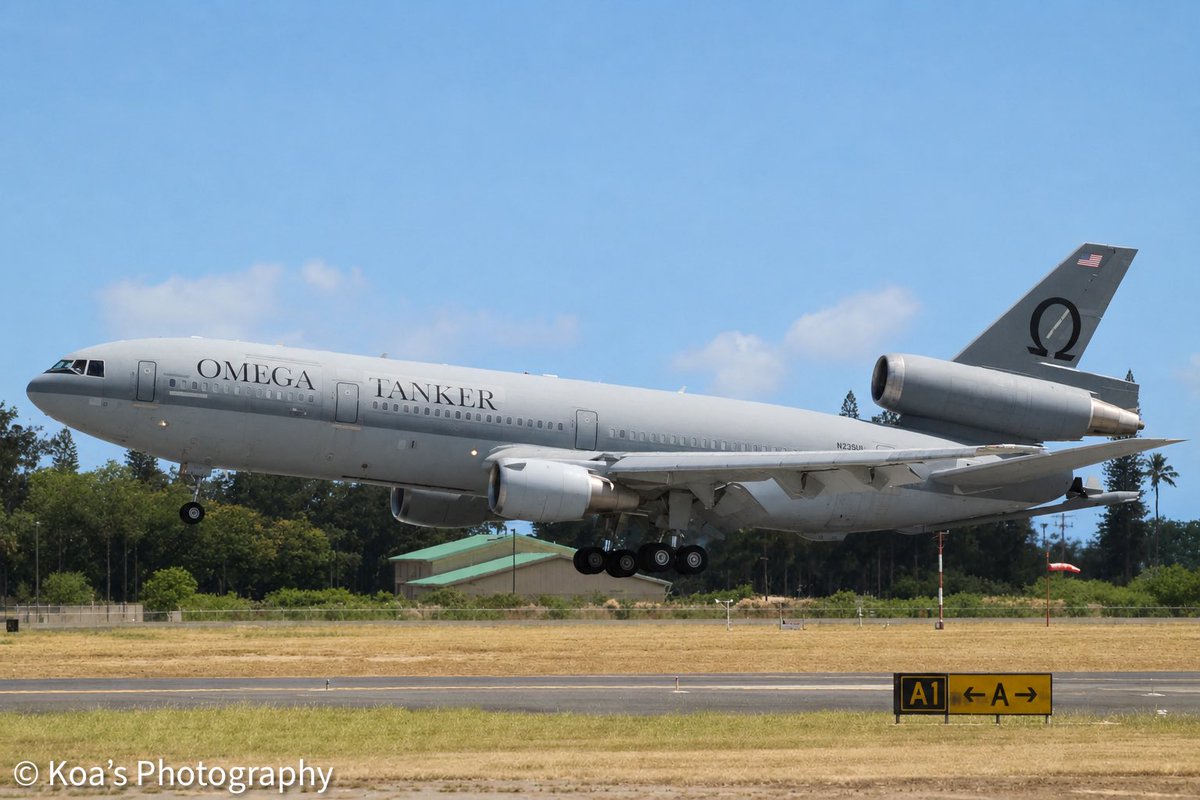
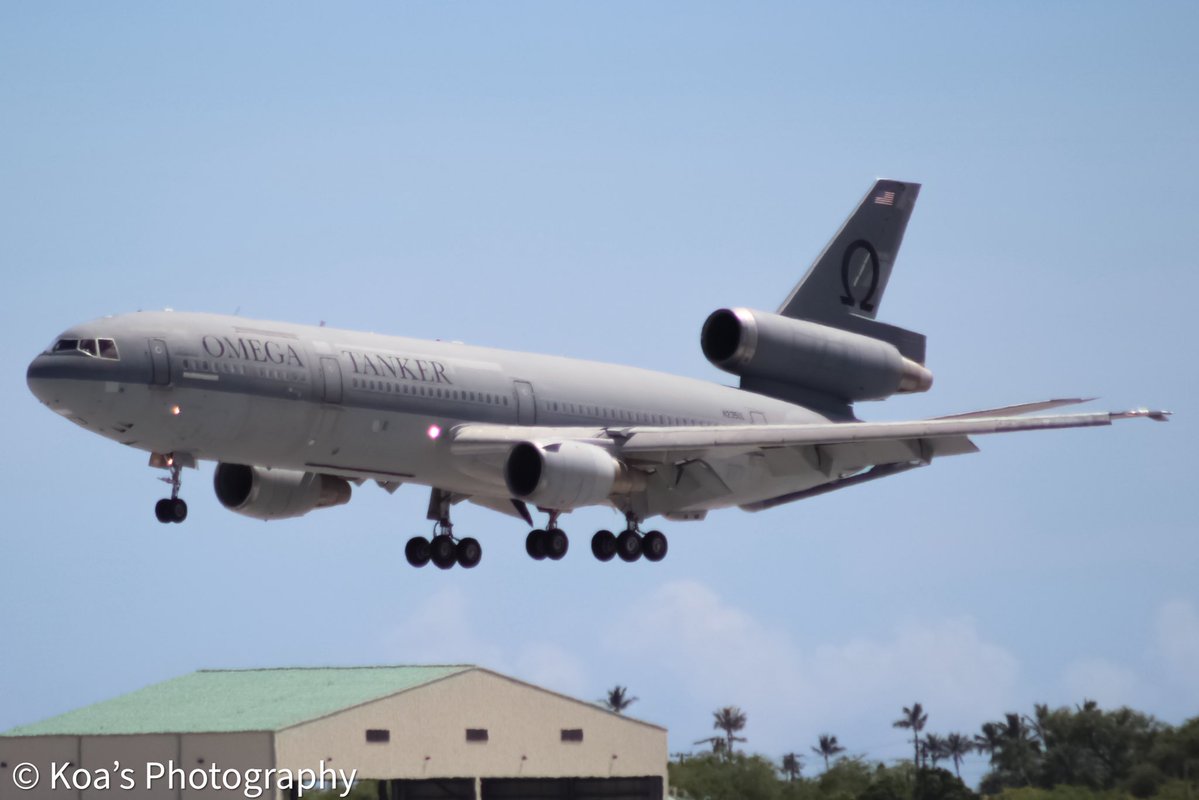
Took my son plane spotting at our usual spot on Joint Base Pearl Harbor-Hickam yesterday because he really wanted to catch the second Omega Tanker (the one with the boom).
While he was out taking pictures, Security Forces rolled up and started asking why he was photographing aircraft. I walked over and chatted with the young Airman. He was cool about it—he just asked that we not take photos toward the parked C-17s, KC-46s, and KC-135s. No problem at all. We were there for the Omega Tanker anyway.
After we got back to the car, Security Forces came by one more time just to look through the photos and confirm we hadn’t taken any of the parked military aircraft.
In the end, everything was good, and we got what we came for—a successful catch of the Omega Tanker landing on Runway 8L in Honolulu.
Interesting day… but definitely a successful one.

English
B N Sullivan retweetledi

"Before you plan your day or go out, check AirNow.gov. They do real-time air quality monitoring, so you’re able to know what your area will be like at a specific time, and you can try to predict what you’re going to be up against."
cnn.com/2026/07/17/hea…
English
B N Sullivan retweetledi
The bizarre Stipa-Caproni 1932 aircraft fundamentally changed how engineers thought about propulsion. It was an experimental Italian aircraft built by the Caproni manufacturer. Designed by Luigi Stipa, the aircraft featured a hollow, barrel-shaped fuselage that completely enclosed the engine and propeller. This innovative design formed a ducted fan, which concentrated the propeller's thrust and significantly increased engine efficiency. While the test flights proved the aerodynamic validity of Stipa's theories, the design created substantial aerodynamic drag that limited the aircraft's top speed. Consequently, the Italian military did not pursue production, but the principles demonstrated by the Stipa-Caproni directly influenced the future development of jet propulsion.
English
B N Sullivan retweetledi

Loucura! Isto não pode acontecer! Airbus A321XLR da IBERIA matrícula EC-OLE voava de Recife para Madrid a Nível de Voo 360 na rota N857 sob controle do ATC das Canárias. Na mesma rota, à mesma altitude e em sentido contrário voava de Madrid para São Paulo Guarulhos o Boeing 787-900 da Air Europa. Quando se aproximaram a tragédia foi evitada pelo sistema TCAS (Traffic Collision Avoidance System) instalado em ambos os aviões que emitiu um RA (Resolution Advisory) que mandou subir o B787 e descer o A321. A reação dos pilotos a um RA deve ser imediata e agressiva de forma a impedir a colisão. Coisa de poucos segundos tal como é exigido nos treinos de simulador. As autoridades espanholas irão agora investigar como foi possível dois aviões encontrarem-se na mesma rota em sentidos opostos à mesma altitude. Não há explicação possível. Houve aqui uma falha monumental que só não acabou em tragédia porque o TCAS e a rápida reação dos pilotos evitou o pior

Português
B N Sullivan retweetledi

Photographer's Choice by Wolfgang Mendorf airliners.net/photo/Pan-Amer…
English
B N Sullivan retweetledi

Our own Nostradamus is back to project compensation growth.
We are in the wait-and-see period between data collection/analysis and the release. Our author sees pretty constant wage pressure being generated by operators and by the airlines, and he has no doubt that compensation is going to grow. It’s just a question of how much growth we’ll experience.
Read the full article: aerocrewnews.com/213k

English
B N Sullivan retweetledi

Abandoned by drug smugglers. Back in the air. ✈️
This Gulfstream was abandoned by drug smugglers before being recovered by the Mexican government. The pilot takes it airborne from a rough grass runway. Wait until you see the cockpit view
English
B N Sullivan retweetledi

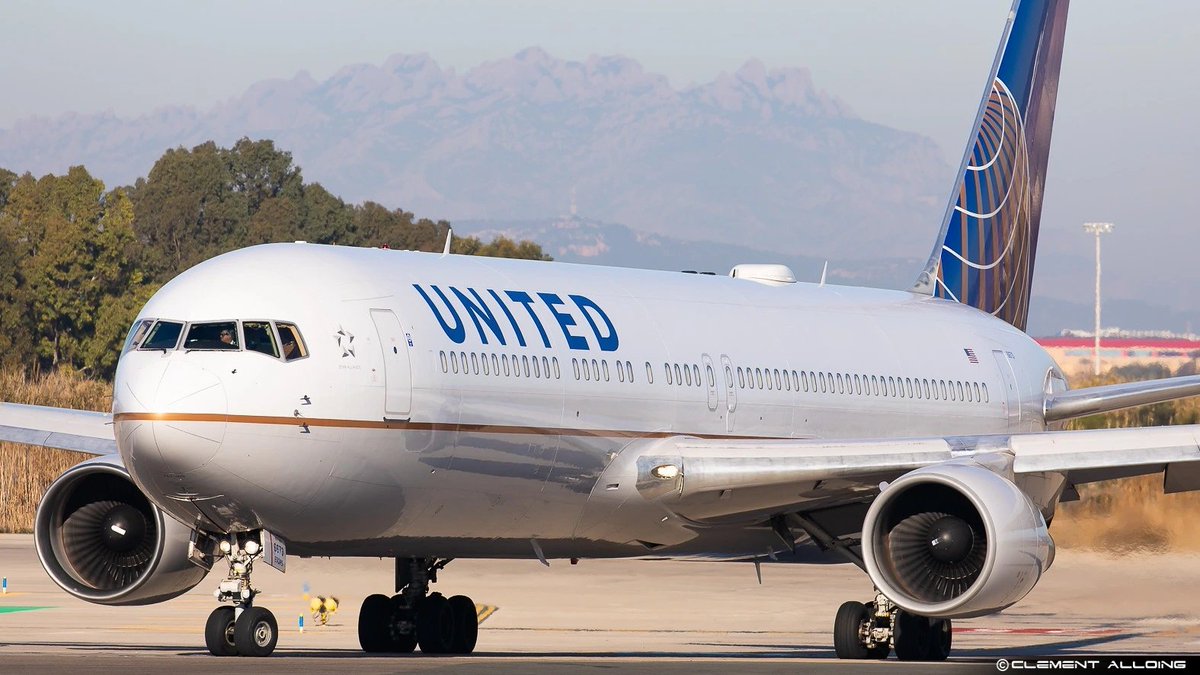
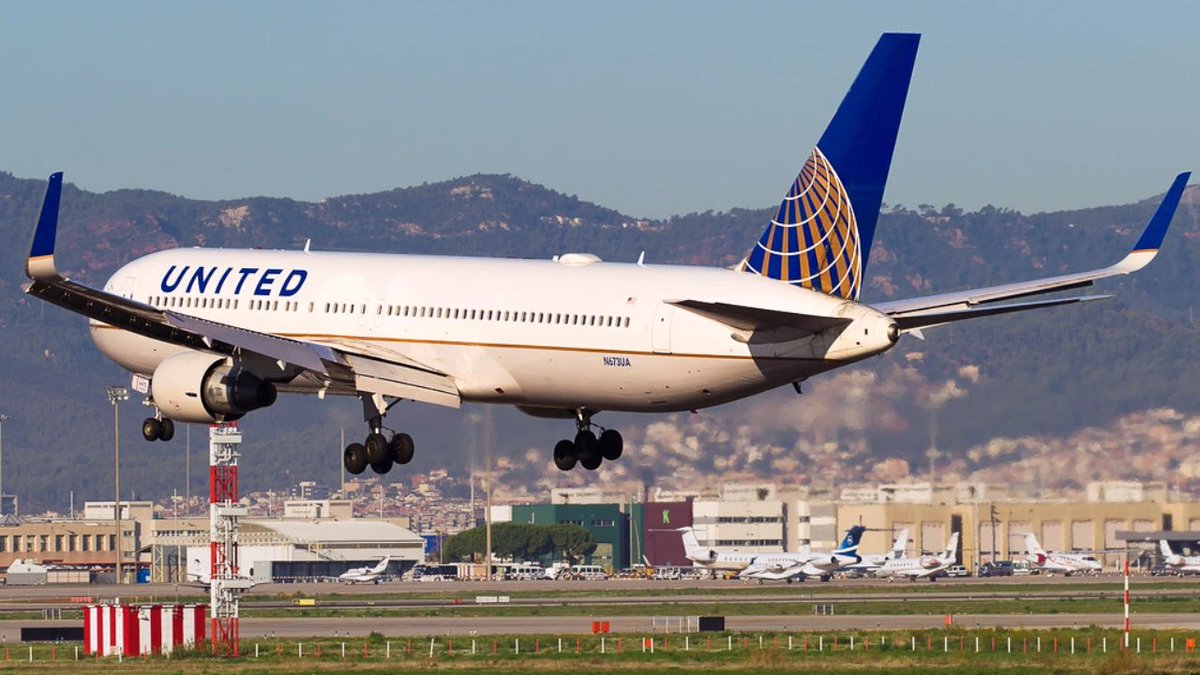
United Flight with 767 Diverted to Ireland After Abnormal Engine Vibrations✈️
A @united Airlines (UA) @Boeing 767-400 operating a scheduled transatlantic service from Rome to Newark made an unscheduled diversion to Ireland after the flight crew reported abnormal engine vibrations and an unusual odor while crossing the Atlantic Ocean.
United Airlines flight UA509 departed Rome Fiumicino Airport (FCO) on July 11 for Newark Liberty International Airport (EWR).
Read in detail👇🔗
aviationa2z.com/index.php/2026…
#Aviationnews #Boeing767 #Unitedairlines


English
B N Sullivan retweetledi

Today in Aviation History
7/17/1996 – TWA Flight 800, a Boeing 747, explodes in mid-air above the ocean off East Moriches, New York, killing all 230 people on board.
Photo: Alain Durand (actual aircraft)
*Don’t let history museums become history*

English
B N Sullivan retweetledi

NTSB is investigating the crash of a Vans RV-4 airplane in Yuba City, California.
English
B N Sullivan retweetledi
NTSB is investigating the crash of a Dakota Cub PA-18 near Plymouth, Massachusetts.
English
B N Sullivan retweetledi
NTSB issues its preliminary report for the ongoing investigation into the June 29 crash of a Bellanca 14-19-2 airplane in Goldsby, Oklahoma: web.ntsb.gov/investigations…
English
B N Sullivan retweetledi
Following further analysis of the Ryanair Boeing 737 flight track, investigators determined that the accident occurred in Greek airspace. Under the provisions of ICAO Annex 13, which allow the country in which the accident occurs to delegate an investigation, the Hellenic Air and Rail Safety Investigation Authority elected to delegate the investigation to the NTSB. The NTSB accepted the delegation and is leading the investigation, with Greece participating as the Accredited Representative.
NTSB Newsroom@NTSB_Newsroom
The NTSB has appointed an Accredited Representative to assist the Republic of North Macedonia with its investigation into the Ryanair accident over North Macedonia, Friday. Per international protocols under the International Civil Aviation Organization's Annex 13, all information on the investigation will be provided by the Republic of North Macedonia.
English
B N Sullivan retweetledi

17 July 1952. First flight of the Dassault M.D.316X. Modified prototype version of the M.D. 315 Flamant. French light twin-engine transport aeroplane powered by two 830 hp SNECMA 14X Super Mars star engines.

English
B N Sullivan retweetledi

🌡️THE HELL IN THE MEDITERRANEAN :50 DEGREES
Absolutely crazy heat:
Almost 50C on The ALGERIAN coast (next post)
47.2c Ollastra SARDINIA
(many stations >45C,even above 500m asl)
Monthly records in FRANCE
40.5 Bocognano
39.8 Les Arc
38.1 Quenza
40.0 Draguignan

English