Alexander Dilthey

2K posts

Alexander Dilthey

Alexander Dilthey

@AlexDilthey

Bioinformatics, genetics and population genomics. Professor @HHU_de. MHC/HLA, graphs, long reads, SARS-CoV-2, microbiome. Own opinions.

Düsseldorf, Germany Katılım Eylül 2012
2.4K Takip Edilen1.4K Takipçiler
Bo Wang
Bo Wang@BoWang87·
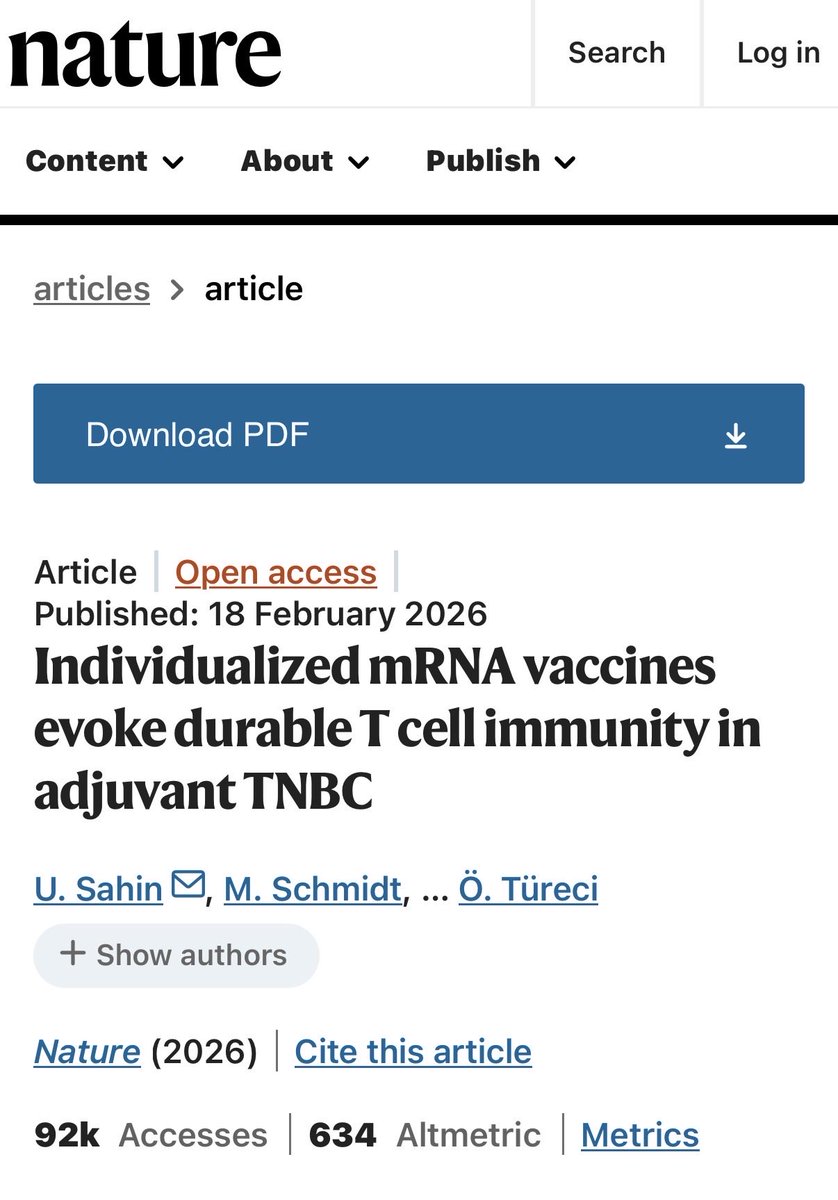
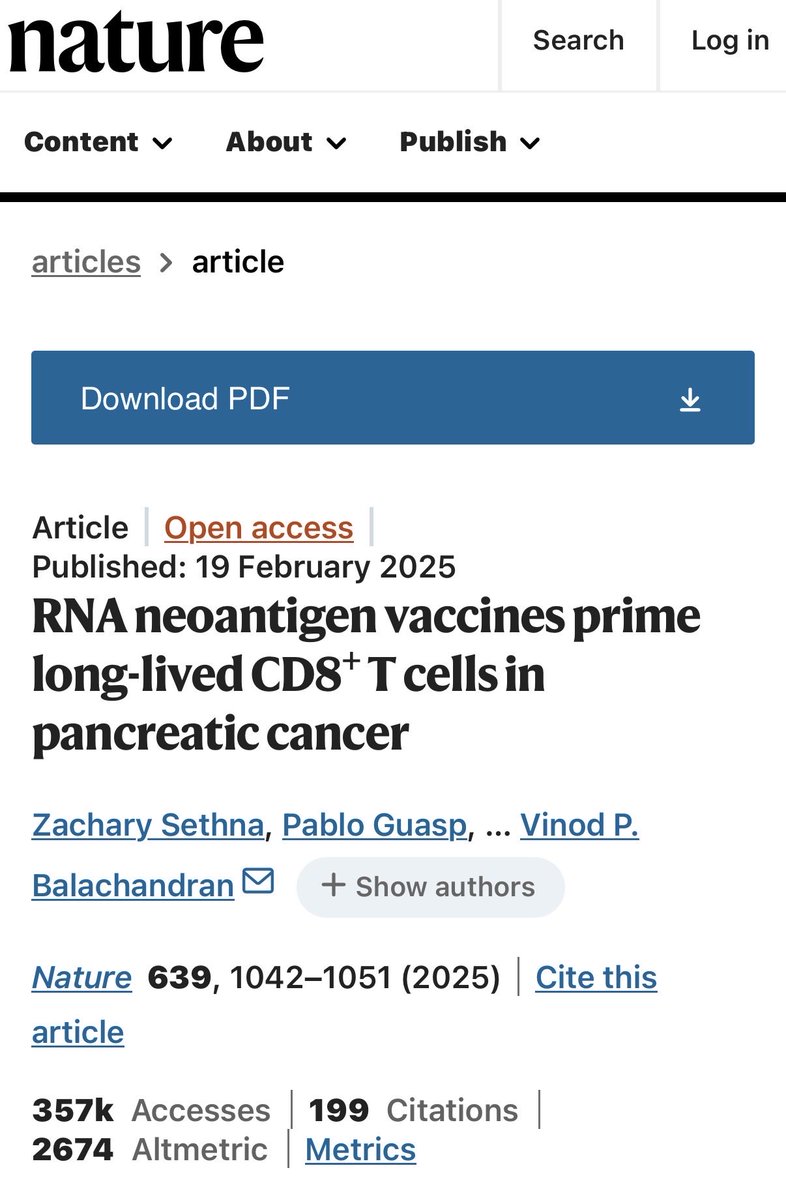
Everyone is talking about personalized mRNA cancer vaccines. I want to share two recent Nature papers that cut through the excitement and reveal something the viral posts aren't telling you: the approach works — but only in patients whose immune system actually responds to the vaccine. In the PDAC trial, that was half. Papers: — TNBC-MERIT trial (Nature 2026): nature.com/articles/s4158… — PDAC 3-year follow-up (Nature 2025): nature.com/articles/s4158… Here's the exact number that explains why. The PDAC trial: at 3.2 years median follow-up, vaccine responders had median recurrence-free survival that was never reached. Non-responders: 13.4 months. HR = 0.14. The T cell memory is real — some clones are projected to persist for over a decade. The TNBC trial: 10 of 14 patients remained relapse-free at 5 years. One patient has been in remission for over 6 years, with neoantigen-specific T cells still circulating at ~2% of her CD8 repertoire. So what separates responders from non-responders? Across both trials: only 41 of 251 neoantigens actually triggered a T cell response. That's 16%. Each vaccine encodes up to 20 neoantigens — the algorithm's best guess at which tumor mutations will be immunogenic. Most don't work. Half the PDAC patients didn't respond — not because they couldn't mount an immune response (they responded fine to concurrent COVID vaccines) — but because their selected neoantigens happened to miss. This is the core unsolved problem: predicting, from sequence alone, which mutations will produce peptides that a specific patient's immune system will actually recognize. It sounds like an MHC binding problem. It isn't. Tools like NetMHCpan handle binding affinity reasonably well. What they miss is the full causal chain: 1. Proteasomal processing — will the protein actually be cleaved into this exact peptide? 2. TAP transport — will it reach the ER for MHC loading? 3. HLA-peptide stability — across the patient's specific HLA alleles (10,000+ variants in the population) 4. T cell repertoire availability — has central tolerance already deleted the clones that would recognize it? 5. Tumor clonal architecture — is this mutation in every tumor cell, or just 30%? Targeting subclonal neoantigens leaves most of the tumor untouched. Every step is a filter. Current prediction stops at step one. Compounding everything: average manufacturing time in the TNBC trial was 69 days (range: 34–125) from sample to vaccine release. For pancreatic cancer, where non-responders recur at 13.4 months post-surgery, that's not a footnote. It's a window closing. The good news: the T cell biology is sound. The mRNA platform works. The immunology is spectacular — when it works. The bottleneck is the first step: choosing which 20 neoantigens go in the vaccine. Get that prediction right, and the responder rate moves. This is where AI in cancer immunotherapy has to go next. Not mRNA design. Not LNP formulation. Immunogenicity prediction — integrating mutation calling, HLA typing, T cell repertoire sequencing, and single-cell tumor expression simultaneously, as a causal inference problem, not a binding affinity lookup. We don't have a model that does this well. That's the gap.
Bo Wang tweet mediaBo Wang tweet media
English
27
124
585
53K
Alexander Dilthey retweetledi
Schneeberger lab
Schneeberger lab@LabSchneeberger·
🌾 We have an open postdoc position in Plant Genomics in our group at HHU Düsseldorf! If you enjoy plant genomics, asking big questions, and the satisfaction of code working on the first try, check out schneebergerlab.org/career/ Apply by Mar. 31 | 3-year postdoc | German required
English
0
7
12
1.1K
Alexander Dilthey retweetledi
Eric Topol
Eric Topol@EricTopol·
🆕@Nature Genome sequencing of >800,000 people finds Epstein-Barr virus reads and their association with other autoimmune diseases besides multiple sclerosis, including type 1 diabetes, inflammatory bowel disease, and hypothyroidism nature.com/articles/s4158…
English
11
229
833
85.7K
Alexander Dilthey retweetledi
Steven Salzberg 💙💛
Steven Salzberg 💙💛@StevenSalzberg1·
I'm happy to share this free link to our new paper on the perils of trying to find microbes in human cancers, which appeared today in @NatureCancer. Co-authors include Nobel laureate @barjammar and ancient DNA expert Eske Willerslev: rdcu.be/e4IaU
English
1
23
88
8.9K
Alexander Dilthey retweetledi
Martin Lercher
Martin Lercher@MartinJLercher·
🚀 We’ve launched the Night Science Institute! Our mission: to champion a cultural shift in science toward embracing the creative scientific process –  as a vital complement to rigorous hypothesis testing. Watch the launch video with @ItaiYanai: drive.google.com/file/d/1qpuxad…
Martin Lercher tweet media
English
1
5
38
2.2K
Alexander Dilthey retweetledi
Itai Yanai
Itai Yanai@ItaiYanai·
🚀Today we're launching the 'Night Science Institute', a non-profit to lead a cultural shift in science! You may say we're dreamers, but we think we're not the only ones. Perhaps today you will join us to make the Day Science and Night Science parts of the process live as one! 😉
English
13
40
236
14.6K
Alexander Dilthey retweetledi
Vincent Geloso
Vincent Geloso@VincentGeloso·
I have been listening to EconTalk since I was an undergraduate student. I listened to the first episode, with Milton Friedman, within the first or second month after it was placed online. A great deal of knowledge was acquired by listening to it.
Econlib@Econlib

It's finally here!!! @econtalker celebrates his 1,000ths episode- a remarkable accomplishment! Today, he reflects on his journey and where he wants to go from here: loom.ly/bSeHkGU

English
0
3
37
2.9K
Alexander Dilthey retweetledi
Alex Strudwick Young
Alex Strudwick Young@AlexTISYoung·
In March last year, at the age of 35, I was diagnosed with advanced stage III rectal cancer with a metastasis in my liver. This was a shock: I had no family history, and none of the doctors suspected it. In fact, I'd had a negative occult blood test when I went to ER with severe digestive symptoms a few months before. The first lesson I learnt from this was that there's no substitute for the proper diagnostic procedures: if you have any bleeding, get a colonoscopy, even if you don't have family history. I was treated with total neoadjuvant therapy at UCLA. I had 6 weeks of combination radiation and chemotherapy (Xeloda). The photo shows me after completing that first step of my treatment along with my parents in Yosemite. My mother has already survived two breast cancers, and my father had recently had a knee replacement (at the age of 70), so getting all three of us to the top of Sentinel Dome felt like an achievement. The chemoradiation was followed by 6 rounds of combination chemotherapy: oxaliplatin infusions followed by two weeks of Xeloda. I tolerated this unusually well. During this period, I managed to hike up to over 11,000ft multiple times in the Sierras, and I wrote the main text of a 72 author meta-analysis paper and submitted it to Nature where it has passed first round reviews (currently working on revisions). I showed a good clinical response, with the tumor in my rectum nearly completely disappearing and the liver metastasis shrinking substantially. At the end of October I had surgery: I was under for 9 hours, and they cut out a large bit of my rectum, 1/3rd of my liver, and gave me a temporary ileostomy. Waking up from this was probably the strangest experience of my life: I felt more machine than man, and I had wild hallucinations form such a large dose of anesthesia. It took a while to feel OK after that surgery. However, I still had the ostomy. I had that reversed at the end of January in another surgery, which took a greater toll on me than I expected. There's a cumulative effect of having so many major medical interventions, and it reveals anything weak in body or mind. Surprisingly, my mind held up well during this process. This was thanks to the love and support I received from friends and family and the great care I received from UCLA — in particular Dr Anand (medical oncology), Dr Kazanjian (colorectal surgery), Dr Agopian (liver surgery), and the radiation oncology team. I only just started to feel like I was starting to feel OK again and I got bad news: I got a positive circulating tumor DNA test (ctDNA), the signatera test from natera. Unfortunately, the second test I had done recently showed the level of ctDNA in my blood is increasing. This means disease recurrence is almost certain, likely within a year from the first positive test. Since then I've been put on celecoxib based on recent data indicating this can reduce risk of disease recurrence, although it doesn't seem to agree to well with my digestion. I've had CT, MRI, colonoscopy and there's been nothing to see, but it's only a matter of time. My oncologist thinks it is very likely (90%+) that it will be a local recurrence in my liver, which should be fairly easy to cure. But there's a small chance it is something worse, even potentially incurable. This is the reality of cancer for many patients: years of uncertainty. It's still not clear why this happened. Genetic testing returned nothing. My polygenic risk score (PRS) — something close to my own research — gave me totally average risk, at least according to 23andMe. I've always been slim, fit, eaten a pretty healthy diet. I was even raised vegetarian by hippy parents. I probably drank and partied more than is medically advised, but nothing extreme. However, there's been a well-documented uptick in cases like mine. A recent paper indicated this may be due to colobactin, a bacterial mutagen associated with E. coli among other bacteria. I may look at my Tempus tumor data to see if the somatic mutation in the APC gene they found (the only driver mutation) has a signature matching colobactin. If anyone knows anyone with a worthwhile expert opinion on how to manage my situation I'd be interested to hear!
Alex Strudwick Young tweet media
English
72
75
678
143.2K
Alexander Dilthey retweetledi
Karel Břinda
Karel Břinda@KarelBrinda·
A decade ago, we had thousands of bacterial genomes. Now, we have millions. How to scale computational methods? Our paper in @naturemethods answers this: use evolutionary history to guide compression and search. …From terabytes to tens of GBs… w/@Baym @ZaminIqbal et al. 🧵1/
Karel Břinda tweet media
English
3
52
167
11.8K
Alexander Dilthey retweetledi
Chirag Jain
Chirag Jain@chirgjain·
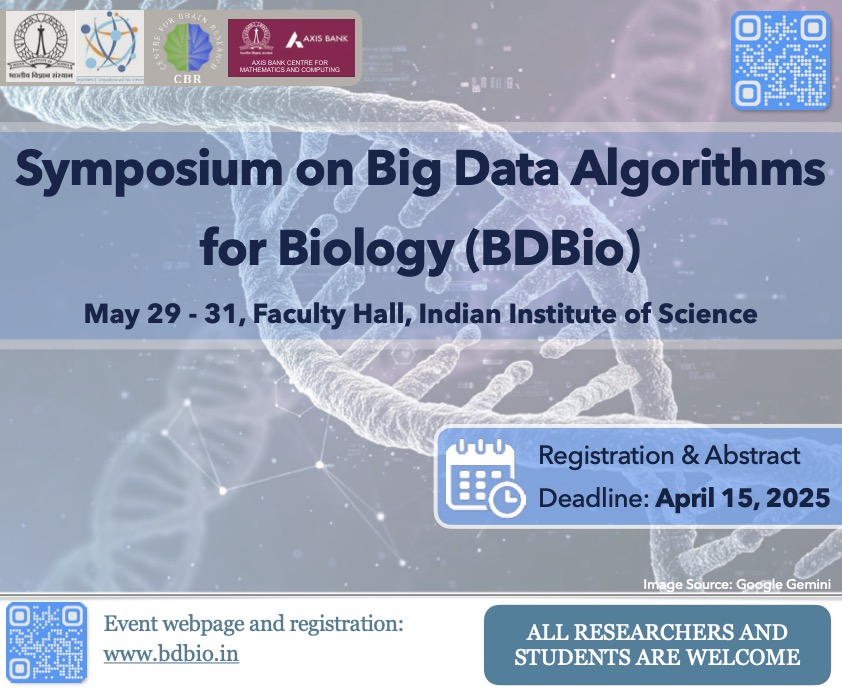
The 3rd annual Symposium on Big Data Algorithms for Biology (BDBio) is happening this May! Join us for insightful talks and discussions on comp-bio topics Register, submit abstract, and see program details at bdbio.in @iiscbangalore @cdsiisc @CBR_IISc
Chirag Jain tweet media
English
0
8
13
2.5K
Alexander Dilthey retweetledi
Sri Kosuri
Sri Kosuri@srikosuri·
It’s been a tough few weeks. My 10yo daughter was diagnosed with a very rare, aggressive cancer called interdigitating dendritic cell sarcoma (IDCS). I’m reaching out to identify clinicians/patients who have encountered pediatric IDCS, indeterminate dendritic cell histiocytosis or other (non-LCH) histiocytic sarcomas cases. I'm trying to understand non-surgical chemo and targeted therapy options, new pathology markers to better diagnose subtypes/treatments, and any data on progression in pediatric patients. Please feel free to share – I’m trying to cast a wide net due to the rarity of this condition and how little is known. People can contact me directly at my first name (as written in my profile) at octant.bio.
Sri Kosuri tweet media
English
992
5.4K
19.1K
2.7M
Alexander Dilthey retweetledi
Marc Johnson
Marc Johnson@SolidEvidence·
I finally solved the mystery of why there are so many cryptic lineages in Northern Ohio. This is a mystery I’ve been working on for the last 18 months. 1/
Marc Johnson tweet media
English
50
371
2.6K
321.5K
Alexander Dilthey retweetledi
Gang Fang
Gang Fang@gangfang_1·
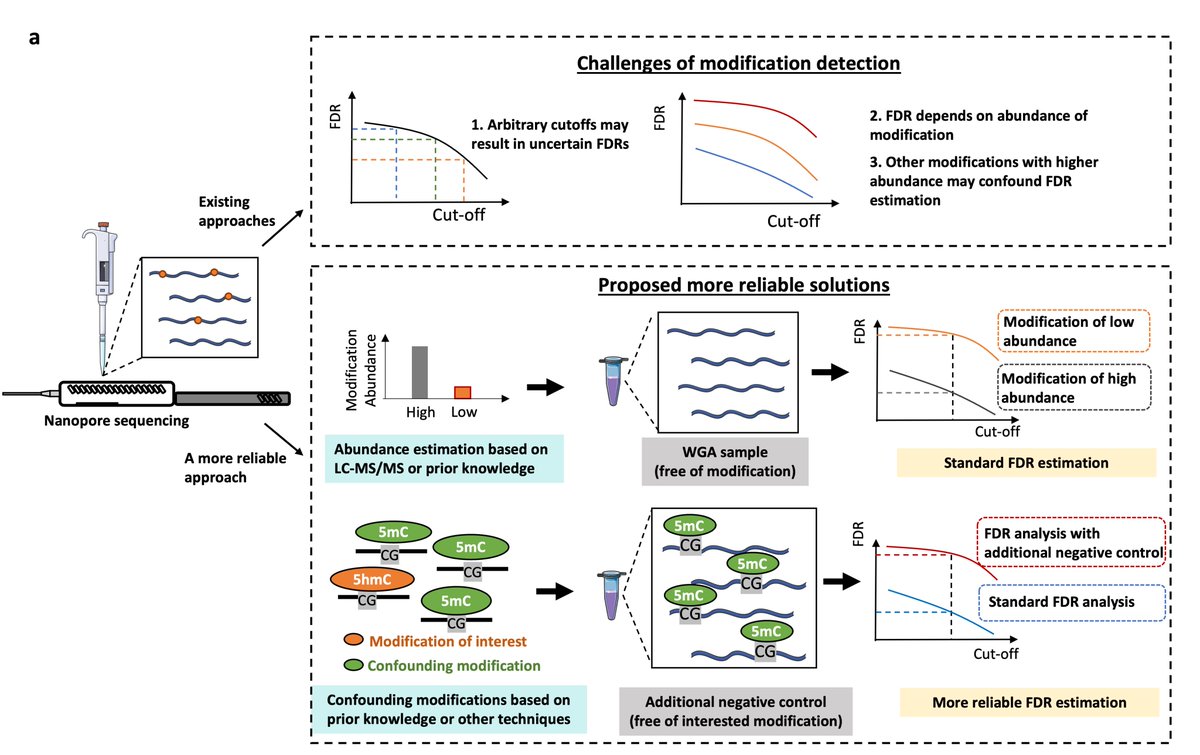
Preprint alert 🚨 Cautions in the use of @nanopore sequencing to map DNA modifications: officially reported “accuracy” ≠ reliable mapping in real applications. We performed a critical assessment of nanopore sequencing (across different versions of models) for the detection of multiple forms of DNA modifications: while it is reliable for high-abundance modifications, including 5mC at CpG sites in human cells and 5hmC in human brain cells, it makes very high % false positive calls for low-abundance modifications, such as 5mC at CpH sites, 5hmC and 6mA in most human cell types [1]. Want to know why? Please read further (long): In 2022, we reported in @ScienceMagazine that 6mA is much less abundant in human cells than previously reported (mostly false positives) [2]. In 2023, we wrote a perspective in @NatureRevGenet to help navigate the common pitfalls for false positive in the mapping of DNA and RNA modifications [3]. With these two papers, we thought the importance of recognizing false positive calls has been adequately described. Unfortunately, this was not the case. New official models report nanopore seq can achieve >97.5% raw read accuracy in the detection of 5mC, 5hmC and 6mA, across all sequence contexts. New methods are to be released for mapping DNA damages, etc. Unfortunately, we do not think these “accuracies” are reliable in practical applications. To help biologists and methods developers, @kong_yimeng (first author of the 2022 & 2023 papers, now a PI) and I felt the need to do this study to critically assess nanopore seq for the detection of multiple forms of DNA mods. Thanks to team and collaborators: @KohliLab @ChristianLoo_ @XuesongRutgers. Why did we pick nanopore in this critical assessment? First of all, we have no bias among different sequencing platforms. In fact, we regularly use nanopore seq in our lab for several projects. However, we think there is a broad misunderstanding and over expectation that nanopore sequencing can map many forms of DNA modifications in any genome. A fundamental limitation is that the training and test data used in existing machine learning models do not consider the physiological levels of DNA modifications. Common pitfalls: 1. High accuracies in training and test data don't guarantee reliability in real applications. It depends on the abundance of DNA modifications (6mA is abundant in bacteria, but rare in human). 2. Reliability in one sequence context or genomic region doesn't ensure reliability in others. It depends on the abundance of DNA modifications at a specific sequence context or genomic region (5mC is abundant at CpG sites but not at CpH sites; 5mC is abundant on the nuclear genome but not on mtDNA). 3. Reliability in one cell type doesn't guarantee success in others. It depends on the abundance of DNA modifications in a specific cell type (5hmC is abundant in brain tissues but rare in blood). Why do each of these pitfalls involve the critical consideration of the abundance of DNA modification? This is because every genomic technology has a certain level of background noise in detecting DNA modifications. It will detect a certain level of DNA modification even when no modification was present in a negative control sample! Therefore, the method is only reliable if the physiological levels of DNA modification are sufficiently higher than background noise. How to navigate the pitfalls? To assist biologists and methods developers, we describe a framework for rigorous evaluation that highlights the use of false discovery rates (FDRs) along with rationally designed negative controls capturing both general background and confounding modifications. What is “confounding modification”? It turns out that modification-free negative controls are not enough. For example, the abundant 5mCpG in most human cell types can lead to increased levels of false positive 5hmC calls, much higher than the actual 5hmC levels in most human cell types (Fig. 1 attached) …… (1) This study highlights the urgent need to incorporate this framework in future methods development and biological studies. Using this framework, you can quantitatively evaluate the reliability of DNA modifications detected in your samples. (2) This study advocates prioritizing nanopore sequencing for mapping abundant, not rare, modifications in biomedical applications. Specifically, 5mCpG can be largely reliably mapped across mammalian cell types; 5hmCpG mapping by existing methods should be limited to tissues with high 5hmC abundance (e.g. brain tissues). In addition, our assessment does not support the use of nanopore sequencing to map endogenous* 6mA or various DNA damages in mammalian genomes due to their low abundance. (3) This framework is also applicable to RNA modifications. Although this work is focused on DNA modifications, the principles we outline—rigorous false positive recognition, use of negative controls, and FDR evaluation—are equally applicable to RNA modifications. [1] New preprint: biorxiv.org/content/10.110… [2] Critical assessment of DNA adenine methylation in eukaryotes using quantitative deconvolution science.org/doi/10.1126/sc… [3] Navigating the pitfalls of mapping DNA and RNA modifications nature.com/articles/s4157… [*] Please note the detection of exogeneous DNA modifications is different from mapping natural endogenous DNA modifications, because abundant exogeneous DNA modifications are added to the genome as in Fiber-seq, DiMeLo-seq, etc.
Gang Fang tweet media
English
5
38
117
19.1K
Alexander Dilthey retweetledi
Caleb Watney
Caleb Watney@calebwatney·
This is the best paper written so far about the impact of AI on scientific discovery
Caleb Watney tweet media
English
106
1.6K
7.7K
5.7M
Alexander Dilthey retweetledi
Florian Kraft
Florian Kraft@flokraft_·
I am excited to share our latest research findings with you. We have identified a new group of neurodevelopmental disorders, which we are calling "TRICopathies," caused by de novo mutations in genes encoding the subunits of the TRiC complex. 1/8 science.org/doi/10.1126/sc…
English
2
5
29
3.3K
Alexander Dilthey retweetledi
Zamin Iqbal
Zamin Iqbal@ZaminIqbal·
I'm going to be advertising a PhD studentship (open to international students) working on long read pangenome / assembly algorithms in bacteria. Would suit someone with maths/compsci background. Aptitude and interest more important than experience. Advert to follow. Pls RT!
English
1
64
68
10.3K