Alex Rozinov

67 posts

Alex Rozinov

Alex Rozinov

@AlexRozinov

Kneel only to truth.

Katılım Mayıs 2019
188 Takip Edilen17 Takipçiler
Alex Rozinov
Alex Rozinov@AlexRozinov·
Let’s not throw the baby out with the bathwater. This effect is a consequence of dysbiosis. As we age, the populations of beneficial, anti-inflammatory bacteria decline, and opportunistic, pro-inflammatory bacteria take over. For example there’s now evidence of gut bacteria causing Alzheimer’s. With that being said most probiotics and transient and don’t take hold in your body, especially colon. The real magic is figuring out how to combine targeted fecal transplants with these antibiotic therapies, because the overall effect sizes of fecal is way higher than probiotics. Eg on treating depression, and possibly on cognitive improvement.
English
0
0
0
18
Kyle Chassé 🐸
Kyle Chassé 🐸@Kylechasse·
Harvard just nuked the probiotic industry. Depleting the gut microbiome in aged mice improved memory, grew new neurons, and reversed brain aging markers. On antibiotics. This is a preprint, not peer reviewed yet. But if it holds, every "feed your gut" protocol just got a serious question to answer.
Kyle Chassé 🐸 tweet mediaKyle Chassé 🐸 tweet media
English
50
14
131
30.7K
Alex Rozinov
Alex Rozinov@AlexRozinov·
A full body ultrasound is not a magic replacement for an MRI. It cannot see into your skull, past lungs, intestines and bones. I’m not saying it’s useless: you’ll be able to track cysts, tumors, organ abnormalities etc, so long as they’re in soft tissue near the surface of your body.
English
1
0
11
1.9K
vittorio
vittorio@IterIntellectus·
this is actually incredible a full body ultrasound scanner that takes 60 seconds instead of spending an hour in an MRI tube, without radiation, hospitals or a $2000 bill soon you’ll just walk into a health spa, order a coffee, step into the pod, and walk out with a 3D map of your body the future is finally starting to look like the future
vittorio tweet mediavittorio tweet media
Midjourney@midjourney

A technical dive inside our new "Midjourney Scanner"

English
253
1.2K
15.4K
1.3M
Alex Rozinov
Alex Rozinov@AlexRozinov·
I would argue they lack useful data. All available public biology data are textbooks and papers that communicate only positive results. There is no real public data on the hard negatives: stuff that sounds good but doesn’t work. It’s all locked away on servers in big biotechs, universities and labs. Even then, that data is probably lost or too sparse to use. This hard-negative data would partially enable asking the right questions or at the very least ruling out bad ideas. We also lack billions of tokens of self supervised data from all of the additional traces and logging that never gets communicated in the papers and results. Models are hungry to predict the future from the present but that’s impossible to do if all you have is a few sparse snapshots from your experiments. Short of that, we’re left to the useful but synthetic data harnesses like AlphaFold where a problem can be cast into an RLVR form and hillclimbed from there. I think the AI labs are completely sleeping on this opportunity. Despite 90% of biowork being sample and experiment preparation, there is likely a huge opportunity to instead instantiate self supervised learning over cheaply and continuously monitoring existing experiments to strengthen causal inference.
English
0
0
1
24
Jason Locasale
Jason Locasale@LocasaleLab·
The reason large AI companies with virtually unlimited capital, compute, and computer science talent have not transformed biology is very simple. They do not understand biology. In biology, the hardest problem is not accessing information. We already have enormous amounts of publicly available data, papers, databases, omics datasets, and experimental results. Much of it remains underutilized. Most of it can be converted into computable formats straightforwardly. The difficult part is knowing which questions matter. What do we actually understand? What don’t we understand? Which hypotheses are worth testing? Which experiments would meaningfully reduce uncertainty? Where are the conceptual bottlenecks preventing progress? These are scientific judgment problems, not database problems. What biology lacks is not data. It lacks enough biologists with strong quantitative and computational skills who can identify important questions and use available tools to answer them. Biology is different from coding. The challenge is not retrieving information. The challenge is deciding what information is worth generating in the first place. Once AI companies recruit enough biologists who know how to identify important questions and how to use quantitative tools to address them, the opportunities will be enormous. The bottleneck is not the databases. The bottleneck is biological insight.
Anthropic@AnthropicAI

New Science Blog: Why has AI advanced faster in coding than in biology? To agents, bio databases are like cities built before cars—maddening to drive in because they're designed for different traffic. How do we build infrastructure agents can use? anthropic.com/research/agent…

English
29
35
229
27.4K
Alex Rozinov
Alex Rozinov@AlexRozinov·
The problem with category theory is it has terrible marketing. It takes great investment to learn all the symbology to grok the diagrams. And the payoff always feel further off. As an example, I really like Hatcher’s Algebraic Topology book because it strikes a good balance between showing you how insanely hard even basic questions are, while also giving intuition with awesome diagrams and pictures. Category Theory in Context by Riehl is the closest attempt I’ve seen at this, but I feel like it could be better.
English
0
0
0
45
Daniel Litt
Daniel Litt@littmath·
I actually think it would be possible to redesign our institutions to teach e.g. some category theory to most people, if we decided it was a priority (though I’m not sure why we would). Some historical math curricula have taught similarly difficult material (say, basic set theory) concurrently with basic algebra. For some reason there’s some mystique around category theory but it’s really quite close to the ground and has almost no prerequisites, though it’s useful to know other things for motivation.
English
4
0
21
1.2K
Daniel Litt
Daniel Litt@littmath·
One thing I find obnoxious about “hitting a ceiling in math” discourse is that it’s mostly based on people’s self-reports of having found some topic too hard. But my experience teaching math is that people are often wrong when they make such claims!
English
50
31
637
38.1K
Alex Rozinov
Alex Rozinov@AlexRozinov·
@LocasaleLab If I was a sauna manufacturer, I would be pouring everything into funding this research.
English
0
0
0
3.7K
Jason Locasale
Jason Locasale@LocasaleLab·
Bryan Johnson is the ringmaster of the longevity circus. The public loves to see influencers turning themselves into laboratory animals. The interesting part is that a media stuntman is trying to answer questions that the biomedical research establishment ignores despite enormous public interest, and there are actually some interesting results in here. As for the science, I am highly skeptical that the health benefits of sauna are primarily explained by HSP or UPR responses. His anecdotal N=1 experiment may actually contain some truth in suggesting that HSP and UPR activation are not the primary drivers. Those pathways evolved as responses to severe, near-death cellular stress when observed at a global scale. They are not triggered by processes that a complex organism can sustain broadly for extended periods of time without severe consequences. These ideas originated from experiments in yeast, organisms that evolved very differently from multicellular animals. Translating those findings into explanations for the health benefits of sauna in humans is a big leap. I use a sauna at 185°F for about 15 minutes. By the end, I am ready to get out. Sitting at 200°F for nearly an hour sounds insane. But the bigger issue is that millions of people want answers to questions about sauna use, exercise, diet, and health. There is little commercial incentive to fund definitive studies because they are expensive, difficult to monetize, and do not create products that must pass regulatory approval. NIH is focused on drug development and disease treatment rather than understanding how everyday behaviors influence long-term health. The popularity of these experiments is a story about the vacuum left by modern biomedical research.
Bryan Johnson@bryan_johnson

I swallowed a miniature computer drew my blood six times sat in a 200°F dry sauna for 56 min felt like I was going to die from the heat and paid $21,093 for specialty biomarkers… To ask a question: do sauna benefits depend on time, or body temperature? This experiment has never been done before. Results: 1) Sauna benefits depend on how hot your body gets, not how long you sit in the sauna 2) Heat shock protein 27 (HSP27), one of the molecules that drives sauna's longevity benefits, only switched on when my core body temperature held above 102.2°F (39°C) for about 15 minutes. 3) Reaching that took 56 minutes at 200°F (93°C), with ice on my face, neck, and groin. 4) This challenges the generic advice that 20 minutes of sauna is enough. What this means for you: 1) The standard advice of 20 minutes at 176°F (80°C) is a floor, not a ceiling. The bigger benefits sit further up the curve, in longer and hotter sessions. If you can tolerate more, more likely helps. 2) Skip the cold plunge right after the sauna. My core body temperature kept climbing for several minutes after I left the sauna, so much of my time above the activation threshold happened post-exit. Cold plunging cuts that window short. 3) Population level studies point in a direction but cannot tell you what is happening inside your own body. Continuous core temperature tracking can. Here is the experiment explained A brief background first. Heat shock proteins (HSPs) are believed to be the enablers of sauna based longevity benefits. You can think of them as a clean up crew that travels through your body removing misfolded proteins and cellular debris. When you get really hot, like in a sauna, you generate a lot more of them. A tsunami of clean up crews unleashed inside your body. There are many types of HSPs. We focused on HSP27 in this experiment because of its high value longevity benefits: 1. Calms harmful inflammation through a controlled signaling pulse, driven by IL-10 2. Protects arteries by blocking the damaged cholesterol that builds up into plaque 3. Helps the body grow new blood vessels over time 4. HSP27 is one of the first proteins your body makes when it gets hot, which makes it a clean signal of how hard the sauna session actually worked. We saw initial signs of biomarkers of these benefits also turned on alongside HSP27, with enough time above the activation threshold. I ran three sauna sessions, holding sauna temperature, my meticulous morning routine, and every other variable constant. We measured HSP27 activation and release (along with scores of other biomarkers) in my serum after each session. I swallowed a temperature capsule about the size of a vitamin pill. As it traveled through my body, it sent a reading of my core body temperature every 30 seconds. That continuous, real time data from inside the body is what no prior study has had. The 102.2°F (39°C) core temperature threshold for HSP activation has been established in the research literature for years. Dry-sauna users have never been able to act on it because they had no way to track their core temperature during a session. An end-point thermometer cannot tell you how long you held above threshold, and the duration is the dose. Which is why we chose to use real time tracking. The findings across the three sessions. Two of the three sessions pushed me well past the threshold. In one, I spent 14.7 minutes above 102.2°F (39°C), with a peak of 102.87°F (39.37°C). In the other, I spent 15.8 minutes above the threshold, with a peak of 102.81°F (39.34°C). After both, HSP27 in my blood rose sharply. The third session (the middle one in the figure) was different. I only spent 5.1 minutes above 102.2°F (39°C), with a peak of 102.34°F (39.08°C), barely above the threshold. HSP27 did not respond. The reading actually dipped slightly, but the change was too small to count. Two things separate the responder sessions from the non-responder. The first is time above the threshold: 14.7 and 15.8 minutes versus 5.1 minutes. The second is peak core temperature: 102.87°F (39.37°C) and 102.81°F (39.34°C) versus 102.34°F (39.08°C). Either, or more likely both, are driving the response. Future sessions will help us figure out how much each one matters. Within my body, holding all other variables constant, the central heat shock protein response is a direct function of the heat dose delivered to the body's core. No prior study has done this. Earlier sauna research used a single thermometer reading at the end of the session, not continuous tracking. The studies that used continuous tracking used exercise, not dry sauna. None had a matched negative control like my session three. And all reported only cohort averages, not what happened inside one body. What this means for the body Once HSP27 is released into circulation, it signals to cells throughout the body and drives the four mechanistically proven downstream benefits listed above. All four are supported by my long-term sauna data, the population literature, and mechanistic studies. My acute post-session measurements hint at each being engaged. To activate HSP27 in my body, I needed 56 minutes at 200°F (93°C) in a dry sauna. That is the total session length required to spend enough time above the 102.2°F (39°C) core temperature threshold to trigger HSP27 release. Does this mean longer sessions, long enough for your core to hit 102.2°F (39°C), would supercharge the longevity benefits? Maybe. What we do know, I did 232 dry sauna sessions over the past year. My protocol was 200F (93°C) for 20 min. So even though my core body temperature didn’t reach 102.2°F (39°C) to unleash the HSP27, the results were still compelling: + a 10 year vascular age reduction + massive drop in environmental toxins [1] + complete elimination of microplastics in my semen (first ever in human achievement) The data suggests there are health benefits at 200°F (93°C) for 20 min. The data also shows that additional health benefits unlock when your core body temperature reaches 102.2°F (39°C). Does this mean that if one is in the sauna longer, long enough to reach a core body temperature of 102.2°F (39°C). that the longevity benefits would be supercharged? Maybe. Here is what this experiment teaches: + population level data is great for averages, pointing in a general direction + the resulting protocols are crude + not personalized + the only way to find out the truth for you is to measure + single person experiments (n=1) like this one are useful, because they find blind spots that population averages cannot see. Note: I kept ice on my face and neck during these three experimental sessions to protect those sensitive areas from heat induced skin damage at extreme temperatures. In a previous session, not included in this experiment, I had no ice on my face or neck and used an ingestible temperature capsule for real-time core readings. I reached a core body temperature of 102.2°F (39°C) after 34 minutes at 200°F (93°C). Adding ice to the face and neck adds roughly 20 minutes to the total time required to reach 102.2°F (39°C) core body temperature. Subjectively, the 34 minutes without ice on my face and neck was much harder than the 56 minutes with ice on my face and neck. After the 34 minute session, I exited the sauna and just laid on the concrete, immobilized. But I got the data. [1] Toxin reduction: After 15 sessions, sauna dramatically reduced environmental toxins in my body: 65% drop in 2,4-D 100% drop in MEP 15% drop in MBP 100% drop in MEHP (undetectable post sauna) 56% drop in NAPR 56% drop in HEMA 100% drop in Perchlorate (undetectable post sauna)

English
10
10
137
31.2K
Alex Rozinov
Alex Rozinov@AlexRozinov·
@bryan_johnson Have you considered using a sleeping-bag sauna? I’m curious if that would lower the time it takes to get to 102.2F.
English
0
0
0
149
Bryan Johnson
Bryan Johnson@bryan_johnson·
I swallowed a miniature computer drew my blood six times sat in a 200°F dry sauna for 56 min felt like I was going to die from the heat and paid $21,093 for specialty biomarkers… To ask a question: do sauna benefits depend on time, or body temperature? This experiment has never been done before. Results: 1) Sauna benefits depend on how hot your body gets, not how long you sit in the sauna 2) Heat shock protein 27 (HSP27), one of the molecules that drives sauna's longevity benefits, only switched on when my core body temperature held above 102.2°F (39°C) for about 15 minutes. 3) Reaching that took 56 minutes at 200°F (93°C), with ice on my face, neck, and groin. 4) This challenges the generic advice that 20 minutes of sauna is enough. What this means for you: 1) The standard advice of 20 minutes at 176°F (80°C) is a floor, not a ceiling. The bigger benefits sit further up the curve, in longer and hotter sessions. If you can tolerate more, more likely helps. 2) Skip the cold plunge right after the sauna. My core body temperature kept climbing for several minutes after I left the sauna, so much of my time above the activation threshold happened post-exit. Cold plunging cuts that window short. 3) Population level studies point in a direction but cannot tell you what is happening inside your own body. Continuous core temperature tracking can. Here is the experiment explained A brief background first. Heat shock proteins (HSPs) are believed to be the enablers of sauna based longevity benefits. You can think of them as a clean up crew that travels through your body removing misfolded proteins and cellular debris. When you get really hot, like in a sauna, you generate a lot more of them. A tsunami of clean up crews unleashed inside your body. There are many types of HSPs. We focused on HSP27 in this experiment because of its high value longevity benefits: 1. Calms harmful inflammation through a controlled signaling pulse, driven by IL-10 2. Protects arteries by blocking the damaged cholesterol that builds up into plaque 3. Helps the body grow new blood vessels over time 4. HSP27 is one of the first proteins your body makes when it gets hot, which makes it a clean signal of how hard the sauna session actually worked. We saw initial signs of biomarkers of these benefits also turned on alongside HSP27, with enough time above the activation threshold. I ran three sauna sessions, holding sauna temperature, my meticulous morning routine, and every other variable constant. We measured HSP27 activation and release (along with scores of other biomarkers) in my serum after each session. I swallowed a temperature capsule about the size of a vitamin pill. As it traveled through my body, it sent a reading of my core body temperature every 30 seconds. That continuous, real time data from inside the body is what no prior study has had. The 102.2°F (39°C) core temperature threshold for HSP activation has been established in the research literature for years. Dry-sauna users have never been able to act on it because they had no way to track their core temperature during a session. An end-point thermometer cannot tell you how long you held above threshold, and the duration is the dose. Which is why we chose to use real time tracking. The findings across the three sessions. Two of the three sessions pushed me well past the threshold. In one, I spent 14.7 minutes above 102.2°F (39°C), with a peak of 102.87°F (39.37°C). In the other, I spent 15.8 minutes above the threshold, with a peak of 102.81°F (39.34°C). After both, HSP27 in my blood rose sharply. The third session (the middle one in the figure) was different. I only spent 5.1 minutes above 102.2°F (39°C), with a peak of 102.34°F (39.08°C), barely above the threshold. HSP27 did not respond. The reading actually dipped slightly, but the change was too small to count. Two things separate the responder sessions from the non-responder. The first is time above the threshold: 14.7 and 15.8 minutes versus 5.1 minutes. The second is peak core temperature: 102.87°F (39.37°C) and 102.81°F (39.34°C) versus 102.34°F (39.08°C). Either, or more likely both, are driving the response. Future sessions will help us figure out how much each one matters. Within my body, holding all other variables constant, the central heat shock protein response is a direct function of the heat dose delivered to the body's core. No prior study has done this. Earlier sauna research used a single thermometer reading at the end of the session, not continuous tracking. The studies that used continuous tracking used exercise, not dry sauna. None had a matched negative control like my session three. And all reported only cohort averages, not what happened inside one body. What this means for the body Once HSP27 is released into circulation, it signals to cells throughout the body and drives the four mechanistically proven downstream benefits listed above. All four are supported by my long-term sauna data, the population literature, and mechanistic studies. My acute post-session measurements hint at each being engaged. To activate HSP27 in my body, I needed 56 minutes at 200°F (93°C) in a dry sauna. That is the total session length required to spend enough time above the 102.2°F (39°C) core temperature threshold to trigger HSP27 release. Does this mean longer sessions, long enough for your core to hit 102.2°F (39°C), would supercharge the longevity benefits? Maybe. What we do know, I did 232 dry sauna sessions over the past year. My protocol was 200F (93°C) for 20 min. So even though my core body temperature didn’t reach 102.2°F (39°C) to unleash the HSP27, the results were still compelling: + a 10 year vascular age reduction + massive drop in environmental toxins [1] + complete elimination of microplastics in my semen (first ever in human achievement) The data suggests there are health benefits at 200°F (93°C) for 20 min. The data also shows that additional health benefits unlock when your core body temperature reaches 102.2°F (39°C). Does this mean that if one is in the sauna longer, long enough to reach a core body temperature of 102.2°F (39°C). that the longevity benefits would be supercharged? Maybe. Here is what this experiment teaches: + population level data is great for averages, pointing in a general direction + the resulting protocols are crude + not personalized + the only way to find out the truth for you is to measure + single person experiments (n=1) like this one are useful, because they find blind spots that population averages cannot see. Note: I kept ice on my face and neck during these three experimental sessions to protect those sensitive areas from heat induced skin damage at extreme temperatures. In a previous session, not included in this experiment, I had no ice on my face or neck and used an ingestible temperature capsule for real-time core readings. I reached a core body temperature of 102.2°F (39°C) after 34 minutes at 200°F (93°C). Adding ice to the face and neck adds roughly 20 minutes to the total time required to reach 102.2°F (39°C) core body temperature. Subjectively, the 34 minutes without ice on my face and neck was much harder than the 56 minutes with ice on my face and neck. After the 34 minute session, I exited the sauna and just laid on the concrete, immobilized. But I got the data. [1] Toxin reduction: After 15 sessions, sauna dramatically reduced environmental toxins in my body: 65% drop in 2,4-D 100% drop in MEP 15% drop in MBP 100% drop in MEHP (undetectable post sauna) 56% drop in NAPR 56% drop in HEMA 100% drop in Perchlorate (undetectable post sauna)
Bryan Johnson tweet media
English
337
161
2.9K
605.3K
Alex Rozinov
Alex Rozinov@AlexRozinov·
@danrobinson Then there’s the opposite Iike Mertens Conjecture which ends up being false for some n between 10^16 and exp(10^29). A lot of this occurs in number theory because of the log(log(log(…))) bounds that arise.
English
0
0
1
689
Dan Robinson
Dan Robinson@danrobinson·
I find this observation from Scott Aaronson very unsettling There's a possibility that some famous conjectures (like Collatz or Goldbach) might be like this—true for mundane statistical reasons, but unprovable
Dan Robinson tweet media
English
30
22
315
36.6K
Alex Rozinov
Alex Rozinov@AlexRozinov·
Given how much AI prefers to make nested if/except logic to satisfy tests, it feels like we should be looking into making all code run via an XGBOOST-powered dynamic language program.
Alex Rozinov tweet media
English
0
0
1
29
Alex Rozinov
Alex Rozinov@AlexRozinov·
Somewhere inside these labs is a CICD job that evaluates the ability of these models to reproduce themselves to by starting effectively from scratch (and have access to the internet). My guess is that an alert went off for the first time. For example: $10M in tokens and $20M in training compute to get to 90% performance. The question is if the money involved here will double or halve next year.
English
0
0
0
433
Alex Rozinov
Alex Rozinov@AlexRozinov·
Completely agree. I gave it a goal of hill-climbing a retrieval benchmark and it tried all these complex multi faceted approaches, none of which panned out much. I then asked it to try a simple nearest neighbor expansion and reweighing and reranking, which boosted performance by a significant margin at almost no extra cost. I think mixedbreeds thesis that we (and therefore LLMs) don’t know much about embeddings is very likely true!
English
0
0
1
57
Ben Clavié
Ben Clavié@bclavie·
GPT-5.5 Pro is amazing at almost everything I want it to be, except discussing/reasoning about ideas for retrieval. It consistently devolves into proposing "multi-facet" representations that make no sense whatsoever. Very weird failure mode.
English
4
0
34
2K
Alex Rozinov
Alex Rozinov@AlexRozinov·
I think the RLVR just hasn’t fully entered real-world engineering yet. It relies too heavily on knowledge from forums and is myopic. The other day I was trying to debug a stepper motor that was stuttering, and Codex insisted my wiring was wrong or the motor was broken. I begged it to just look at the GRBL code, and after a lot of obstinance it realized the step it was sending was 1000x smaller than it should be.
English
0
0
0
116
Teortaxes▶️ (DeepSeek 推特🐋铁粉 2023 – ∞)
one of the most persistent failures of LLMs is coordinate flip bugs in end-user applications (camera, controls, physics). It's incredibly annoying. From DeepSeek-Flash/Pro to GPT 5.5-xhigh, they all do this crap. Why?
Teortaxes▶️ (DeepSeek 推特🐋铁粉 2023 – ∞) tweet media
English
5
0
41
3.5K
Alex Rozinov
Alex Rozinov@AlexRozinov·
@UrbanCourtyard I’m really hoping there are some underground subways in this pic. The downtown in the background is 1 hour away during rush hour.
English
0
0
0
107
Alex Rozinov
Alex Rozinov@AlexRozinov·
@Jason @ClementDelangue This realistically needs $1B+ in funding. The closest example would be Mistral which raised around $4B albeit with an agreement to have a path toward liquidity. Do you see a way of getting this funding while promising to remain fully open source?
English
0
0
0
74
@jason
@jason@Jason·
Where is the open source frontier model company in the USA?
English
223
18
490
167.6K
Alex Rozinov
Alex Rozinov@AlexRozinov·
@remilouf Use basedpyright and vulture to partially mitigate this.
English
0
0
4
1.9K
Rémi
Rémi@remilouf·
Codex generated code is like 40% dead code
English
79
6
474
94.6K
Alex Rozinov
Alex Rozinov@AlexRozinov·
The worst offenders are engineers in companies. People are writing entire engineering requirement docs using vibe-coding. You end up with bloated slop that has extremely low signal-to-noise ratio, and ends up taking even longer to manually review. Zero care for ideas, implementation or scope. This makes team collaboration nearly impossible too.
English
0
0
1
335
(((ل()(ل() 'yoav))))👾
oh wow, interaction with LLMs are really affecting how people think, shape their thoughts, and communicate ideas: i see an increasing amount of email correspondence with eg students, that reads as if an LLM wrote it
English
12
0
65
9.6K
Alex Rozinov
Alex Rozinov@AlexRozinov·
I think this conflates breadth with abstractions. Sure, models can produce way more knowledge than any one human could digest. But, abstractions are related more to core contributions that are highly cited. If we think of knowledge as a scale-free graph and abstractions as highly connected nodes, then connectivity scaling (e.g. Price’s Square Root Law) says that abstractions will grow like the square root of all knowledge. So even if all knowledge goes up 1000x in the next 10 years, the total number of meaningful abstractions would only go up 33x. When you combine that with the observation that few billion parameter models can also do competent specialized math, this can still make humans be able to keep up.
English
0
0
0
55
Jason Abaluck
Jason Abaluck@Jabaluck·
Math won't be exhausted, but we'll get to a point where the contribution of human mathematicians is less than what the average person today contributes to Terry Tao's thinking about number theory. The levels of abstraction will exceed what any human brain can grasp.
English
16
4
59
5.2K
Alex Rozinov
Alex Rozinov@AlexRozinov·
I think we’re going to be adding LLMs as an animal to Dyson’s “Birds and Frogs” [1] analogy. Perhaps LLMs will be “Spiders,” helping to link vast swaths of the math web, but not quite flying like the birds, nor obsessing like the Frogs. To me, it’s interesting that the LLM auto-proof community has thus far focused heavily on Erdős problems, considering Dyson explicitly labeled Erdős as a Frog. Dyson viewed mathematicians like Grothendieck as Birds, who unified massive swaths of mathematical topography through sweeping abstractions. He labeled himself and Erdős as Frogs, who “live in the mud” and focus on very specific, intricate problems. This is not meant as derogatory! It is because you inevitably need to put **in the work to disentangle certain problems.** You need to lay the breadcrumbs for the birds to find. A famous example of this ecosystem at work is Hugh Montgomery and Freeman Dyson’s chance meeting over tea in 1972. After chatting about their respective research, they realized the pair correlation function for the non-trivial zeros of the Riemann Zeta function was exactly the same as the distribution of eigenvalues in random Hermitian matrices (used to model heavy nuclei in quantum physics). What’s amazing is that this eigenvalue abstraction had been hovering in the air for decades. In the early 1900s, the mathematician Edmund Landau asked George Pólya if he knew a physical reason the Riemann Hypothesis might be true. Pólya astutely guessed it must be because there is a self-adjoint operator whose eigenvalues correspond to the imaginary parts of the zeros [2]. This was 60 years before Montgomery and Dyson bridged the gap, and over a decade before Andrew Odlyzko confirmed the connection computationally by calculating millions of Zeta zeros. Right now, LLMs exhibit a striking ability to find connections across concepts due to their massive latent knowledge compression. If the breadcrumbs are laid out in the literature, the Spider will feel the vibrations, find them, and string them together. It’s the same thing in coding. They are incredible at traversing known paradigms, passing tests, and compiling. But the grand abstractions—the leaps across entirely unmapped territory—are still not quite there. I’m still bullish on humans for helping abstract stuff and organize what these LLMs produce. They’re going to supercharge the Frogs and the Birds. [1] pdodds.w3.uvm.edu/files/papers/o… [2] en.wikipedia.org/wiki/Hilbert–P…
English
0
0
0
131
Daniel Litt
Daniel Litt@littmath·
(What I wrote is screenshotted below.)
Daniel Litt tweet mediaDaniel Litt tweet media
English
13
22
360
180.1K
Alex Rozinov
Alex Rozinov@AlexRozinov·
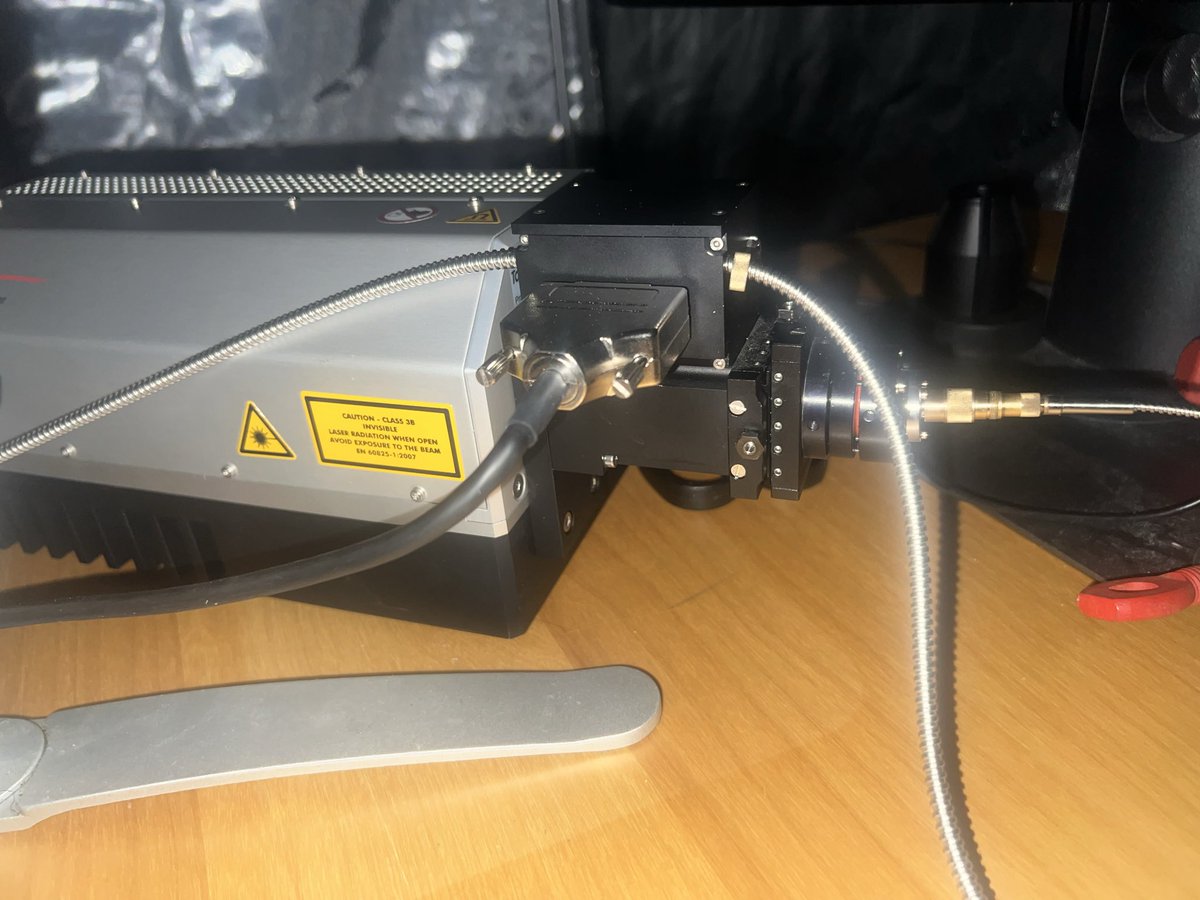
Coupling a 780nm laser to an FC/APC single mode fiber is absolutely ridiculous. The fact that there’s also an X-Y adjustment makes it even worse. You need to be precise to the width of 1/4 a human hair or else you get 0 power out the other end. Is there really no better way than to grid-search for the fiber by turning X-Y screws till you see a tiny bit of power out the other end? Do laser specialists just sit for hours doing this? At this point I’m thinking of attaching two 100:1 gear-ratio motors to automate the search. Anybody have success with this approach?
Alex Rozinov tweet media
English
0
0
0
65
Alex Rozinov
Alex Rozinov@AlexRozinov·
@Math_files Why is the base of the big triangle longer than the height? It needs to be isosceles for this to work.
English
0
0
14
1.3K
Math Files
Math Files@Math_files·
A visual proof that ½ + ¼ + ⅛ + 1⁄16 + 1⁄32 + ⋯ = 1
Math Files tweet media
English
26
47
1.2K
62.5K
Alex Rozinov
Alex Rozinov@AlexRozinov·
This entire procedure can be accomplished by extending the conveyer belt an extra meter and using a funnel. This would cost 100x less and be more reliable. There seems to be a complete disconnect between how efficient factories actually work vs what AI companies think is valuable. The revolution is optimized robots for each task that are proven to be reliable, efficient and cost effective.
English
0
0
8
2K