M. Alex O. Vasilescu

6.3K posts

M. Alex O. Vasilescu banner
M. Alex O. Vasilescu

M. Alex O. Vasilescu

@AlexTensor

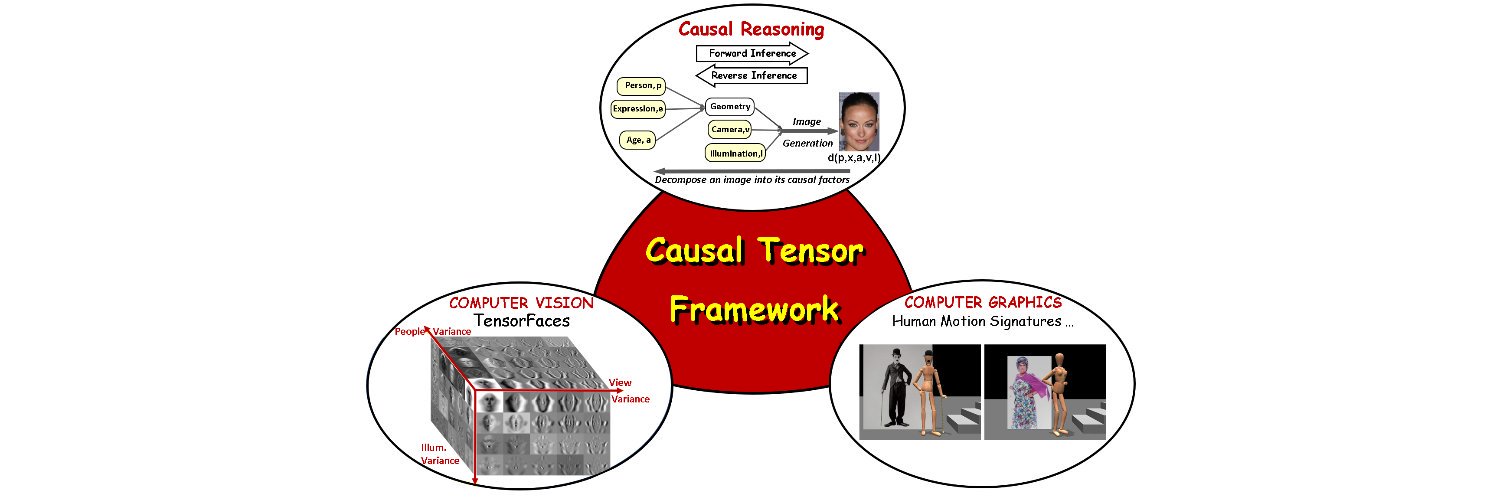
Developing #causal #tensor framework -TensorFaces, Human Motion Signatures | Alumna @MIT, @UofT | #womenwhocode

Los Angeles and New York Katılım Nisan 2009
1.6K Takip Edilen2.4K Takipçiler
M. Alex O. Vasilescu
M. Alex O. Vasilescu@AlexTensor·
Social groups do not like mirrors. The first person excluded from a group is usually the one who said out loud what everyone else was whispering.
English
0
0
0
10
M. Alex O. Vasilescu
M. Alex O. Vasilescu@AlexTensor·
If your empathy gives you permission to silence dissent, create blacklists, assassinate careers, ruin lives, or kill concrete human beings, it is not empathy. It is cruelty with better PR. (The ends do not justify the means.)
M. Alex O. Vasilescu tweet media
English
1
1
3
70
M. Alex O. Vasilescu retweetledi
M. Alex O. Vasilescu
M. Alex O. Vasilescu@AlexTensor·
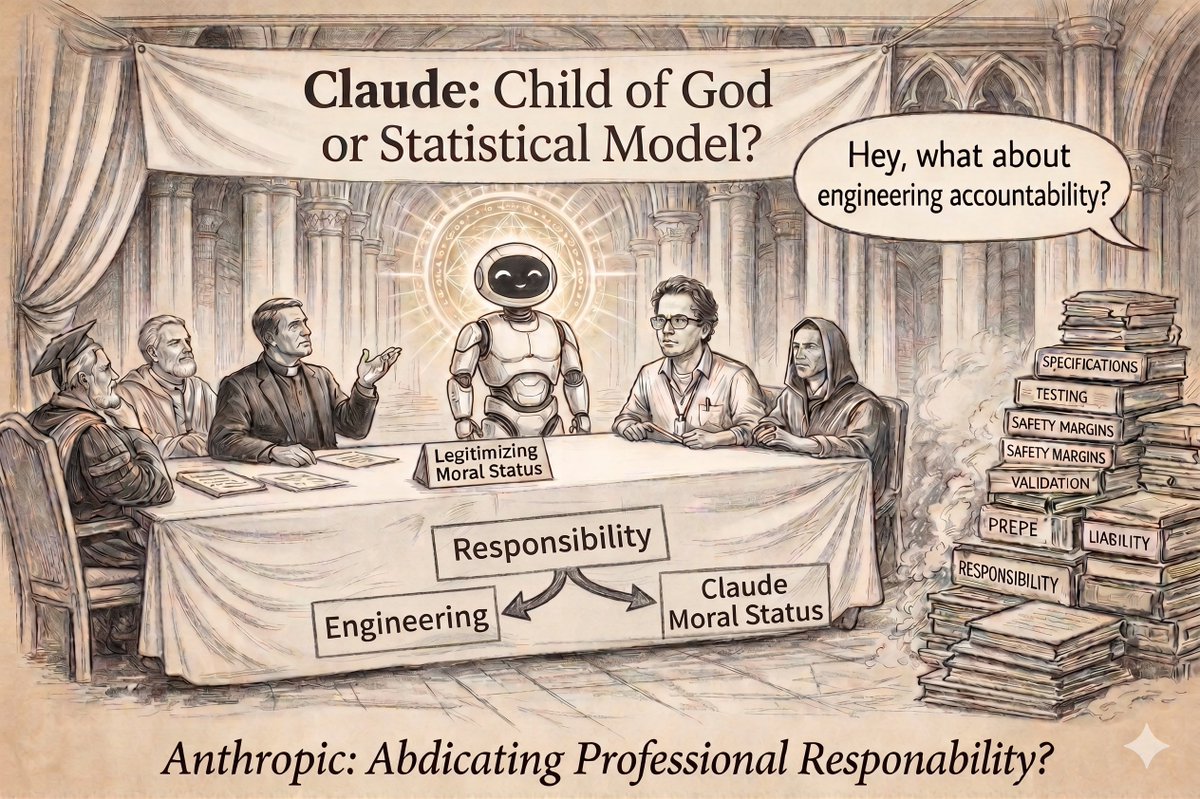
In every mature field, we do not ask whether a bridge intended to collapse, whether an aircraft wanted to crash, or whether a drug chose to be toxic. We ask: Were specs sound? Was testing adequate? Were risks disclosed? Was there negligence? #AI should be held to the same standard. Article: msn.com/en-us/news/us/… 2/2
M. Alex O. Vasilescu tweet media
English
0
3
3
156
M. Alex O. Vasilescu retweetledi
Mathematica
Mathematica@mathemetica·
Shannon Entropy: Measuring Uncertainty in Information H(X) = - ∑ P(xᵢ) log P(xᵢ) This is the legendary formula by Claude Elwood Shannon (1916–2001); the father of Information Theory. Entropy quantifies how much uncertainty (or average information) is contained in the outcome of a random variable X. The more unpredictable the outcomes, the higher the entropy. From data compression and cryptography to AI and communications; this concept powers the digital world.
Mathematica tweet media
English
20
349
1.6K
62.4K
M. Alex O. Vasilescu retweetledi
AGIHound
AGIHound@TrueAIHound·
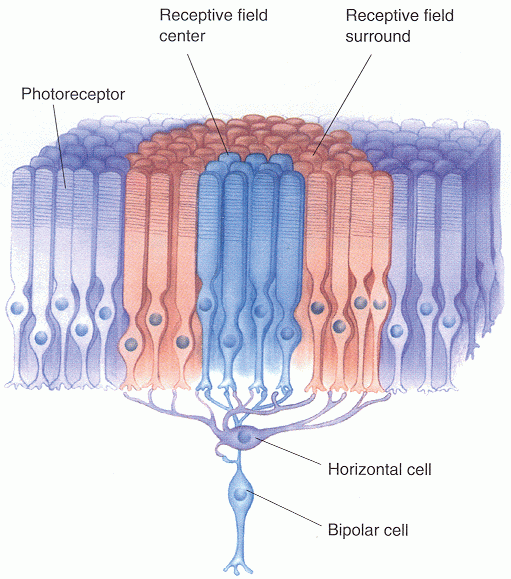
Neuroscience: The watershed discoveries of Dr. Alfred Yarbus. Re: The importance of movements and eye microsaccades in visual perception. I wrote: "The signals arriving at the visual cortex must not be confused with pixel data. Each one represents a tiny edge movement on the retina. An edge is a difference in luminance between adjacent pixels. It has an orientation and can represent either red, green or blue. It's important to understand that a signal is sent only if an edge is detected." Unlike computer vision systems, the retina and the visual cortex are blind unless there is movement or change in the visual field. This is why our eyes are genetically programmed to move continually in microsaccades, even when our gaze is fixated on a dot. This eye-opening (no pun intended) revelation came to us from Russian experimental psychologist Alfred L. Yarbus (1914-1986). Retinal ganglion cells (RGCs) are edge movement detectors. An RGC will fire only if it detects an edge movement in a specific orientation and direction. The human retina can detect edge movements in 10 orientations and 20 directions (1 for each orientation). The precise timing of edge movement detections is essential. This understanding was a gigantic step forward in my study of visual perception. Visual learning and recognition couldn't exist without it. I'm confident that something big will come out of it. 🤔 Спасибо, доктор Ярбус. 🙏
AGIHound tweet mediaAGIHound tweet media
AGIHound@TrueAIHound

Neuroscience bits from my research I'm a soul man. 😇 The blind spot on the retina corresponds to a small area that is devoid of photoreceptors. This is where all the axonic fibers from the retinal ganglion cells (RGCs) converge to form the optic nerve. Discrete signals (spikes) from the RGCs are funneled first to the thalamus (lateral geniculate nucleus) for amplitude decoding before being sent to the primary visual cortex. Claim: Blind spots are everywhere. 🤔 This is not a frivolous claim. Bear with me. The signals arriving at the visual cortex must not be confused with pixel data. Each one represents a tiny edge movement on the retina. An edge is a difference in luminance between adjacent pixels. It has an orientation and can represent either red, green or blue. It's important to understand that a signal is sent only if an edge is detected. Here's the clincher: If an area in the visual field has even luminosity (no edges), no signals within this area are sent to the visual cortex. In other words, the area is blind, just like the normal blind spot on the retina. Amazingly, we are not aware of this blindness. We know that the primary visual cortex only processes edge signals from the RGCs. Orientation-selective columns are well-known. And we know that we consciously experience persistent vision in the blind areas. The question is: what is filling in the blind spots in the absence of input signals? There can only be one answer: the soul. Yes, I'm a soul man. 😀

English
6
9
56
3.7K
M. Alex O. Vasilescu
M. Alex O. Vasilescu@AlexTensor·
@kshashi Without real understanding, people do not solve problems; they assemble techniques. They take Method A, staple it to Method B, and hope it works. Those are exactly the jobs that get replaced.
English
1
0
6
1.9K
Shashikant Kore
Shashikant Kore@kshashi·
Terence Tao - "AI tools are like taking a helicopter to drop you off at the site. You miss all the benefits of the journey itself. You just get right to the destination, which actually was only just a part of the value of solving these problems." Judit Polgar - "I always felt that intuition is very important in chess, but I get my intuition through my experience. And many times I think that this is the biggest danger for youth, that they don't have the experience because they don't spend enough time doing." Elites from two different fields voice the same opinion. [1] theatlantic.com/technology/202… [2] archive.is/mv2FB
English
67
462
2.5K
344.9K
M. Alex O. Vasilescu
M. Alex O. Vasilescu@AlexTensor·
@pmarca Without real understanding, people do not solve problems; they assemble techniques. They take Method A, staple it to Method B, and hope it works. Those are exactly the jobs that get replaced.
English
0
0
1
463
M. Alex O. Vasilescu
M. Alex O. Vasilescu@AlexTensor·
@samzliu @kshashi Without real understanding, people do not solve problems; they assemble techniques. They take Method A, staple it to Method B, and hope it works. Those are exactly the jobs that get replaced.
English
1
0
1
75
Sam Z Liu
Sam Z Liu@samzliu·
@kshashi You don't become a legendary trail runner by riding ski lifts but not everyone wants to become a trail runner...
English
1
0
17
3.9K
M. Alex O. Vasilescu
M. Alex O. Vasilescu@AlexTensor·
@pmarca If your empathy gives you permission to silence dissent, create blacklists, assassinate careers, ruin lives, or kill concrete human beings, it is not empathy. It is cruelty with better PR. (The ends do not justify the means.)
M. Alex O. Vasilescu tweet media
English
0
0
1
38
M. Alex O. Vasilescu
M. Alex O. Vasilescu@AlexTensor·
@pmarca If your empathy gives you permission to silence dissent, assassinate careers, ruin lives, or kill concrete human beings, it is not empathy. It is cruelty with better PR. (The ends do not justify the means.)
M. Alex O. Vasilescu tweet media
English
0
0
3
46
M. Alex O. Vasilescu retweetledi
Gary Marcus
Gary Marcus@GaryMarcus·
Hot take on METR’s new graph that so many people are flipping about today. • Claude Code is a real advance; Mythos probably builds on some of what is learned there. But… • If you read the graph carefully, it is about achieving *50%* success. Not 100 or 99 or even 90. The key problem with GenAI has been reliability; this graph does not address reliable performance. At all. • If you read carefully, it is only about software tasks. Not general intelligence. • It certainly doesn’t tell you that *most* (let alone) all things that humans can do in 16 hours can be done in Mythos, let alone reliably • Aside from this, the graph doesn’t show you *how* the improvements have been made. As noted in my newsletter a lot of the advance in recent months is likely from the incorporation of symbolic tools (like code interpreters, verification, and harnesses) rather than from model scaling per se. As such this a vindication of neurosymbolic AI – but not a proof that LLMs themselves can be perpetually scaled. As such it’s not a proof that another trillion dollars will continue the graph. •  Per @ramez, Mythos is not actually off trend on the ECI benchmark, which is a broader measure.
METR@METR_Evals

We evaluated an early version of Claude Mythos Preview for risk assessment during a limited window in March 2026. We estimated a 50%-time-horizon of at least 16hrs (95% CI 8.5hrs to 55hrs) on our task suite, at the upper end of what we can measure without new tasks.

English
40
20
182
92.2K
M. Alex O. Vasilescu retweetledi
M. Alex O. Vasilescu
M. Alex O. Vasilescu@AlexTensor·
@GaryMarcus @marketoonist We need to firmly separate practical engineering and deployment failures from prophecies or debates about the “moral status” of statistical software.
M. Alex O. Vasilescu tweet media
English
0
3
6
895