Alpha_Ex_LLC
5.5K posts

@Alpha_Ex_LLC
Alpha Exchange is a podcast series by Dean Curnutt to explore topics in financial markets, risk management and capital allocation in the alternatives industry


$MSFT reports next week (7/29) along with 36% of the market cap of the $SPX. below, rolling one-week implied volatility with the day prior to earnings circled. Tmrw, 7/29 will be a week away, so the implied vol will shoot up, probably to mid 60's.


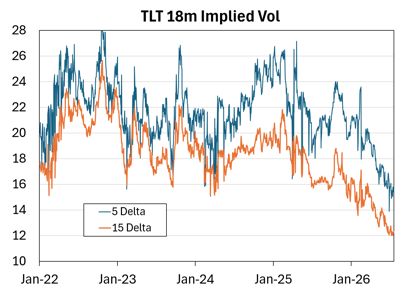
The most interesting and largest trade of yday was in the $TLT where 212k of the Jan'28 100-120 call spread were bought for 62 cents. One of my sayings is that "equities are short the straddle on rates." Large moves, either up or down, in Treasuries mostly spell trouble for the stock market. With the correlation between stock and bond prices often positive these days, it's been higher rates that get a lot of attention as a threat. Warts and all, Treasuries still probably rally if there's a significant enough risk-off that leaves the SPX in a large drawdown. I like the time to expiry, the skew and, especially, the vol in this call spread. The trade has 18 months to expiration, a lifetime away in today's unprecedented pace of change in markets and the world. It collects a nice amount of skew. And you are net buying vol in an unstable asset at extremely low levels. Below the vols associated with the 100 strike (15 delta) and 120 strike (5 delta). A solid way to part with 62 cents and protect a tail.


When you look at risk premium across equities, rates, FX and credit, you see exceedingly low compensation for bearing volatility/spread risk. Check out the chart below. Two things are true at the same time: first, these levels are not inconsistent with the very modest daily swings in macro assets. On a "carry" basis, vol isn't cheap. Second - and in my view more important - these options are nominally quite low in price. Insurance costs a ton everywhere (heath, car, property), EXCEPT in the financial market. Basic assertion: the amount of uncertainty justifies higher prices for market based insurance.


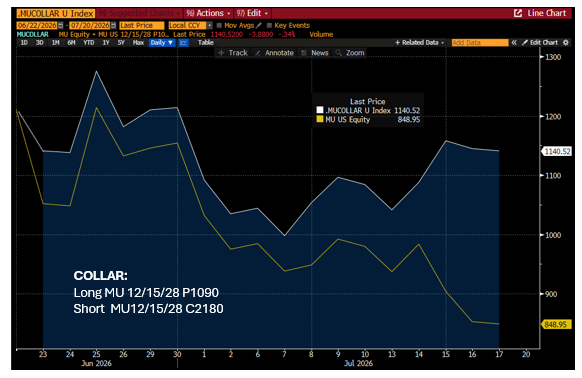
$MU long dated vol and skew is something to behold. the Dec'28 2290(!) call, nearly double the stock price, has a delta of 63 and a bid of $465. the interaction between delta and implied vol is not a "front page Greek" like gamma and vega. but it's pretty important for a hedger. to get the implied vol wrong is to get your delta wrong as well. very high levels of implied vol on OTM, long dated calls lead to almost inconceivably high call deltas. Two trades for those long the stock.... 1. if you are long MU, you could do the Dec'28 420-2290 one by two call spread for zero. Buy the 420 call and sell 2x the 2290 call. if you are long the stock, you double up your exposure - AT EXPIRATION ONLY - from 420 up to 2290. your break-even on this trade versus doing nothing is that the stock needs to go to 4160. that is correct. you are better off having done this trade anywhere from an MU price from zero to 4160 (again, at expiration only). MU market cap would be nearly 5 Trillion at this price. 2. if you are long the stock, you could buy a Dec'28 expiry put struck at 90% of today's price and sell a call that is struck at 180% of today's price for zero cost. tremendous asymmetry. I am convinced that today's pricing of long dated options on stocks (most all of them in chips/memory) that have already risen a massive amount will go down as one of the most incredible times ever for risk reducing (collar) or return enhancing (1x2 call spread) overlay trades.