Bo Collins

503 posts

Bo Collins

Bo Collins

@Beauregarde

https://t.co/XmhOfQED4Z

Katılım Ağustos 2009
1.7K Takip Edilen452 Takipçiler
Bo Collins retweetledi
Ronnie Stoeferle
Ronnie Stoeferle@RonStoeferle·
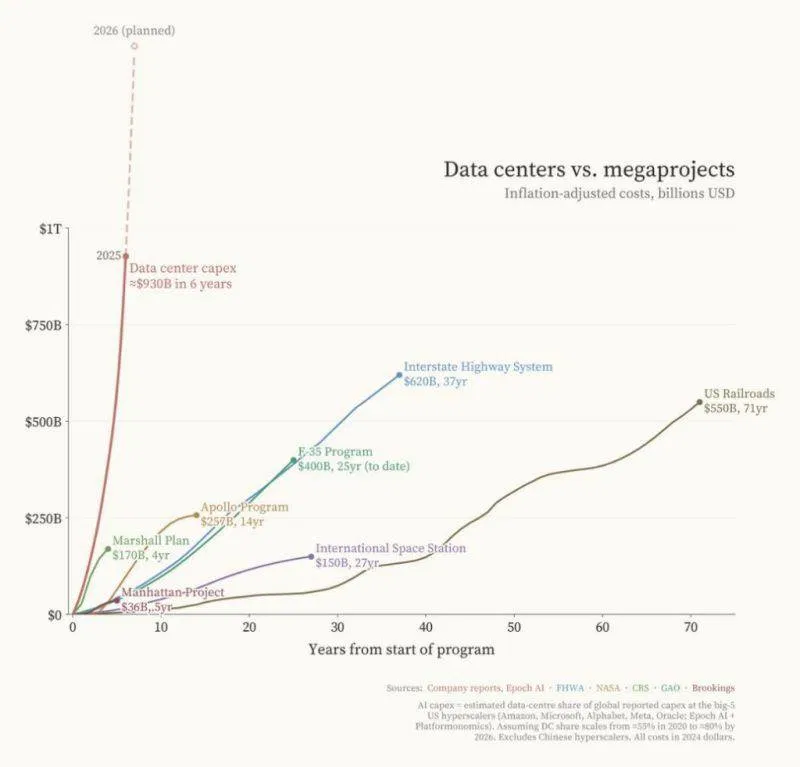
The US is pouring more capital into AI data centers in 6 years (~$930B) than the inflation-adjusted cost of the Marshall Plan, Apollo, Manhattan Project, and the Interstate Highway System — combined. Meanwhile: AI ≈ 45% of the S&P. Energy ≈ 4%. Everyone is overweight the thing that needs power. Underweight the power. H/T @ekwufinance
Ronnie Stoeferle tweet media
English
125
543
2K
199K
Bo Collins retweetledi
Brian Roemmele
Brian Roemmele@BrianRoemmele·
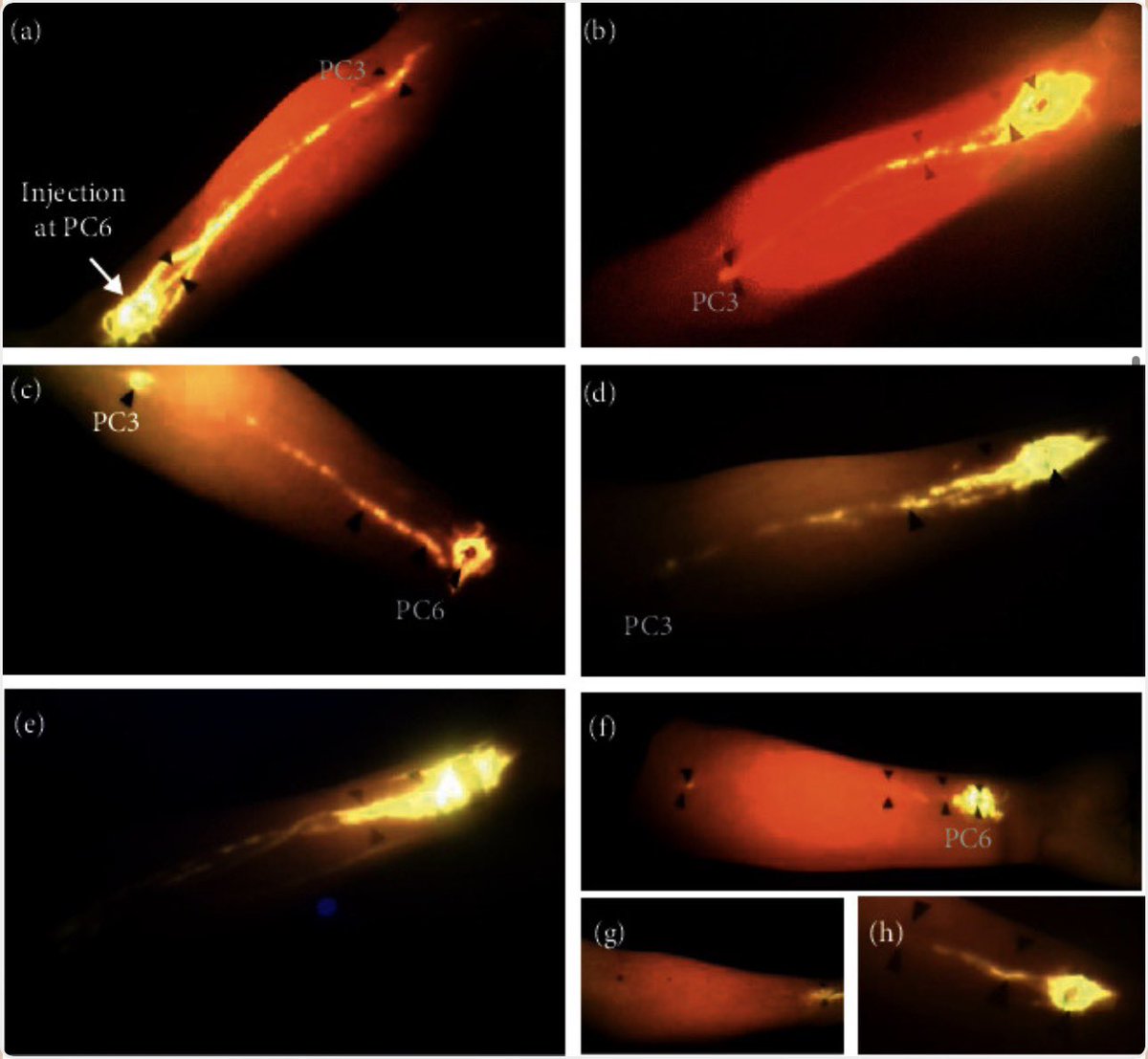
Boom! Scientists Discovered a Hidden Superhighway Inside You That Might Finally Explain Why Acupuncture Actually Works! How tattooed skin biopsies proved something over 4,000 years old. Buckle up…research just dropped a bombshell that is rewriting the human anatomy textbook and high fiving ancient healers at the same time! Deep inside your body lies an enormous, previously overlooked network called the interstitium. It is a vast, fluid filled web that acts like a secret third circulatory system alongside your blood vessels and lymphatics. It is not just empty space between tissues. It is a dynamic, interconnected superhighway made of collagen bundles suspended in a shimmering hyaluronic acid gel that soaks up water and lets fluids, cells, and molecules flow slowly but surely throughout your entire body, from skin to muscles to organs and back again. For over a century, scientists saw these spaces as isolated little pockets. But groundbreaking work starting in 2018 by pathologists revealed the jaw dropping truth: it is one giant, continuous network. When researchers examined tattooed skin biopsies, the ink particles had boldly marched from the skin deep into the fascia below, traveling through the interstitium in ways that made scientists say, That was not supposed to happen! Here is where it gets truly electrifying. This hidden highway might finally give Western medicine the biological proof it has been craving for acupuncture and Traditional Chinese Medicine. For 4000 years, TCM has described chi flowing along 12 specific meridians. Acupuncture needles target precise points along those lines. Skeptics have long asked for hard science. Now they have it. Studies, including tracer injections and dye experiments in living volunteers, show that when you inject dye into an acupuncture point, it does not just sit there or race through veins. It flows exactly along the traditional meridian pathways through the interstitial spaces between muscles, heading straight toward the heart. The dye follows the interstitium like a GPS guided river. Rebecca Wells, one of the lead scientists, sums it up perfectly: “I actually do think that the interstitium could be the link between Eastern and Western medicine”. The implications are massive and mind blowing. Cancer cells may hitch rides on this network to metastasize. It could explain autoimmune flare ups where gut particles travel to distant organs. It might even unlock better treatments for Type 2 diabetes by revealing how interstitial cells influence healthy fat production during weight gain. This is not just a cool anatomy fact. It is a paradigm shift that could reshape pain management, chronic disease treatment, and how we think about the body as a whole. Evolutionarily speaking, similar fluid systems appear in ancient creatures going back hundreds of millions of years. The interstitium is not new. It has been with us since the dawn of multicellular life. We are only now catching up. This discovery is pure science magic: ancient wisdom validated by cutting edge research, turning what looked like disconnected puzzle pieces into one breathtaking picture of how our bodies really work. When reading this, be sure to send condolences to the “debunkers” that stole this 4,000 year old empirical science from your health. They were wrong. Dive into the actual research papers: The groundbreaking discovery of the interstitium: nature.com/articles/s4159… The study on continuity of interstitial spaces across the body: nature.com/articles/s4200… Research visualizing fluorescent dye migration along acupuncture meridians: pmc.ncbi.nlm.nih.gov/articles/PMC80… Your body just got a whole lot more awesome. The future of medicine is flowing through the interstitium right now, and it is going to be legendary!
Brian Roemmele tweet media
English
196
1.7K
5.3K
300.9K
Bo Collins retweetledi
Science Postcard
Science Postcard@Sciencepostcard·
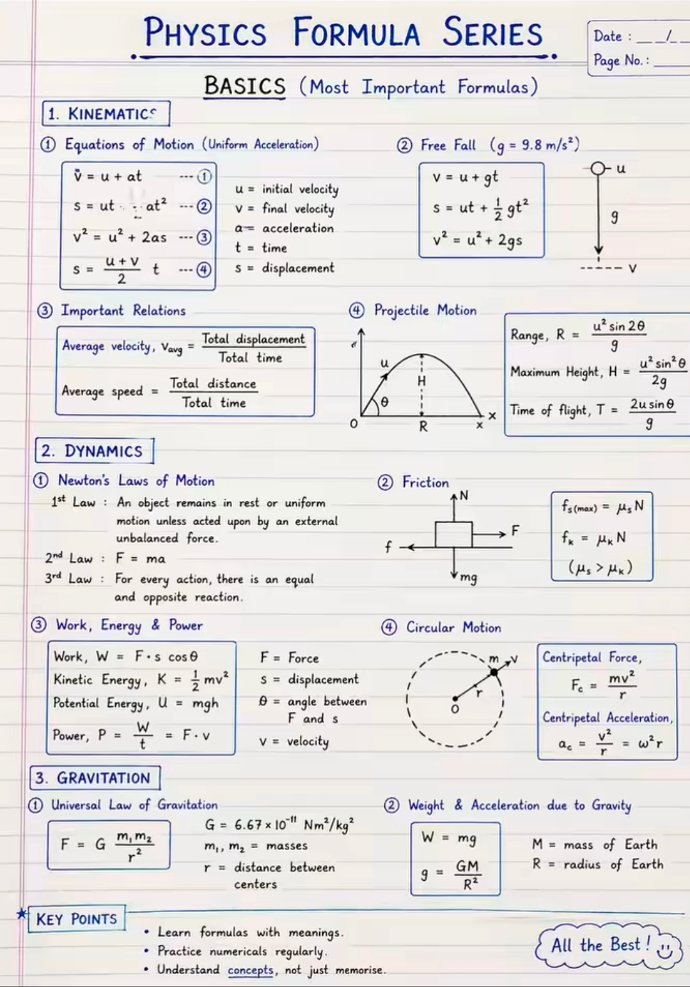
Essential physics formulas you should save 📘
Science Postcard tweet media
English
2
92
471
13.3K
Bo Collins retweetledi
CopyRebeldia
CopyRebeldia@CopyRebeldia·
La biología en PDF acaba de morir. Un tío hizo una app donde exploras estructuras 3D como un videojuego. UI: GPT Images 2. Código: Gemini 3.1 Pro. Los libros de texto ya no sirven.
Español
193
1.9K
10.5K
773.4K
Bo Collins retweetledi
Math Hub
Math Hub@mathhub_vn·
Vector Geometry
Math Hub tweet media
Română
4
117
526
16.2K
Bo Collins retweetledi
Supermicro
Supermicro@Supermicro·
Want to see AI Factories in action? Watch ServeTheHome’s latest video breakdown to see how Supermicro and NVIDIA deliver turnkey AI infrastructure at scale.
English
1.1K
1.7K
12.8K
109.1M
Bo Collins retweetledi
Ihtesham Ali
Ihtesham Ali@ihtesham2005·
A mathematician at Bell Labs wrote something on paper in 1994 that made every government on earth quietly panic. The machine that runs it doesn't exist yet. The panic never stopped. His name is Peter Shor. He is a professor of applied mathematics at MIT. He won the Turing Award in 2021, the highest honor in computer science. And the thing he is most famous for is a piece of mathematics he wrote in four days that he did not fully intend to write. Here is the story almost nobody tells, and why it should change how you think about the security of everything you do online. In 1994, Shor was a researcher at AT&T Bell Labs in Murray Hill, New Jersey. Bell Labs at the time was the most intellectually alive research environment in the world. The same building that produced Claude Shannon's information theory, the transistor, and the Unix operating system was now full of physicists who interrupted each other mid-sentence and argued through lunch. Quantum computing in 1994 was not a field. It was a rumor. A handful of theorists believed that computers built on quantum mechanical principles could solve certain problems exponentially faster than classical machines. Most of the scientific establishment considered them eccentric. There was no working quantum computer. There was no clear proof that one would ever matter. It was the kind of research that serious people called interesting and quietly avoided. Shor was not avoiding it. He had been thinking about a problem called the discrete logarithm, a mathematical operation that sits underneath several encryption schemes. Encryption works because certain mathematical operations are easy to perform in one direction and almost impossible to reverse. Multiply two enormous prime numbers together and you get a product in seconds. Start with the product and try to find the two original primes and a classical computer would take longer than the age of the universe. That asymmetry is the lock. Every bank transaction, every encrypted email, every password you have ever entered online is protected by some version of that lock. Shor worked out a quantum algorithm for the discrete logarithm problem. He presented it at an internal Bell Labs seminar. The physicists in the room paid attention for the entire talk, which was unusual. The talk ended, and people started talking. Then the telephone game started. The discrete logarithm is used in some encryption systems, but not most. The dominant encryption standard protecting most of the world's sensitive data, RSA, is built on a different problem: prime factorization. As news of Shor's seminar spread through the halls of Bell Labs and then through the physics community, something got lost in translation. By the time the story reached physicists across the country four days later, the rumor was that Shor had solved factoring. He had not. He had solved something related but different. Shor heard the rumor. And then, in four days, he made it true. He sat down, looked at what he had already built, found the mathematical connection between the discrete logarithm and prime factorization, and extended his algorithm to cover both. The rumor had described something that did not exist. He built it to match the rumor before anyone found out it was wrong. What he had now was a quantum algorithm that could factor enormous numbers exponentially faster than any classical computer. In practical terms, what that meant was this: if a quantum computer ever existed with enough stable qubits to run Shor's algorithm at scale, RSA encryption would be broken. Not weakened. Not compromised at the margins. Broken completely. Every message ever encrypted with RSA would be readable. Every private key ever generated would be derivable from the public key. Every lock built on the assumption that factoring is hard would unlock. The paper went out. The reaction was not what most people imagine. There was no press conference. No announcement. A 32-page technical paper appeared in the proceedings of a symposium on the foundations of computer science. Cryptographers read it and understood immediately what it meant. Intelligence agencies read it and understood immediately what it meant. Governments that had spent decades and billions of dollars building encryption infrastructure understood immediately what it meant. None of them said much publicly. They started working. The NSA gave Shor a Mathematics in Cryptology Award in 1995, one year after the paper came out. That is a fast turnaround for an award from an intelligence agency. The implication is that they read the paper and moved. The problem was the machine. Shor's algorithm requires a quantum computer with enough fault-tolerant qubits to factor the kind of numbers used in real encryption, numbers with hundreds of digits. In 1994, no such machine existed. In 2001, IBM demonstrated Shor's algorithm on a 7-qubit quantum computer and used it to factor the number 15 into 3 and 5. That was the proof of concept. It was also a machine that required more infrastructure than most university labs own, running a calculation a fourth grader could do in their head. The gap between that demonstration and a machine capable of breaking real encryption is enormous. The numbers involved in modern RSA encryption have hundreds of digits. Factoring them with Shor's algorithm would require a quantum computer with potentially millions of stable, error-corrected qubits. The best machines available today have thousands of qubits, most of them too noisy to use reliably for extended computation. But the direction of progress is not ambiguous. Every year, the machines get larger. Every year, error correction improves. Every year, the gap between what exists and what Shor's algorithm requires gets smaller. Nobody knows exactly when a machine capable of breaking RSA will exist. Estimates from serious researchers range from ten years to thirty. The NSA has said publicly that it believes the threat is real. NIST, the US standards body, spent years running a global competition to identify encryption algorithms that would survive a quantum computer, and in August 2024 published the first official post-quantum cryptography standards. Google has already integrated one of them into Chrome. Apple adopted another for iMessage. Signal switched to a hybrid post-quantum system in 2023. All of that activity, every dollar of it, every hour of engineering, traces back to four pages Shor wrote in 1994. The most interesting detail is the one Shor himself has repeated in multiple interviews. He compared the current scramble to build post-quantum cryptography to Y2K, the race to patch computer systems before the year 2000. He said the difference is that Y2K had a fixed deadline. The quantum threat has no deadline. Nobody knows when the dangerous machine will exist. And his warning was blunt: if you wait until it is obvious that a sufficiently powerful quantum computer is coming, you will already be too late. The migration of critical infrastructure to post-quantum standards takes years. The systems protecting financial markets, government communications, and military networks cannot be updated in an afternoon. The race is not theoretical. It is happening right now, in every major government and every serious technology company on earth. Shor is 65 years old. He still teaches at MIT. He did not build the machine. He wrote the paper that proved the machine would matter before anyone had built it. He won the Turing Award 27 years after the paper came out, which is either a sign that the committee moves slowly or a sign that the full weight of what he wrote is still arriving. The most dangerous algorithm in the history of cryptography has never successfully been used against a real target. Every system protecting your money, your messages, and your government's secrets is safe for exactly one reason. The computer that breaks them has not been finished yet.
Ihtesham Ali tweet media
English
53
278
1.2K
128.3K
Bo Collins retweetledi
Mathematica
Mathematica@mathemetica·
Shannon Entropy: Measuring Uncertainty in Information H(X) = - ∑ P(xᵢ) log P(xᵢ) This is the legendary formula by Claude Elwood Shannon (1916–2001); the father of Information Theory. Entropy quantifies how much uncertainty (or average information) is contained in the outcome of a random variable X. The more unpredictable the outcomes, the higher the entropy. From data compression and cryptography to AI and communications; this concept powers the digital world.
Mathematica tweet media
English
20
348
1.6K
63.6K
Bo Collins retweetledi
SolvingForZ
SolvingForZ@SolvingForZ·
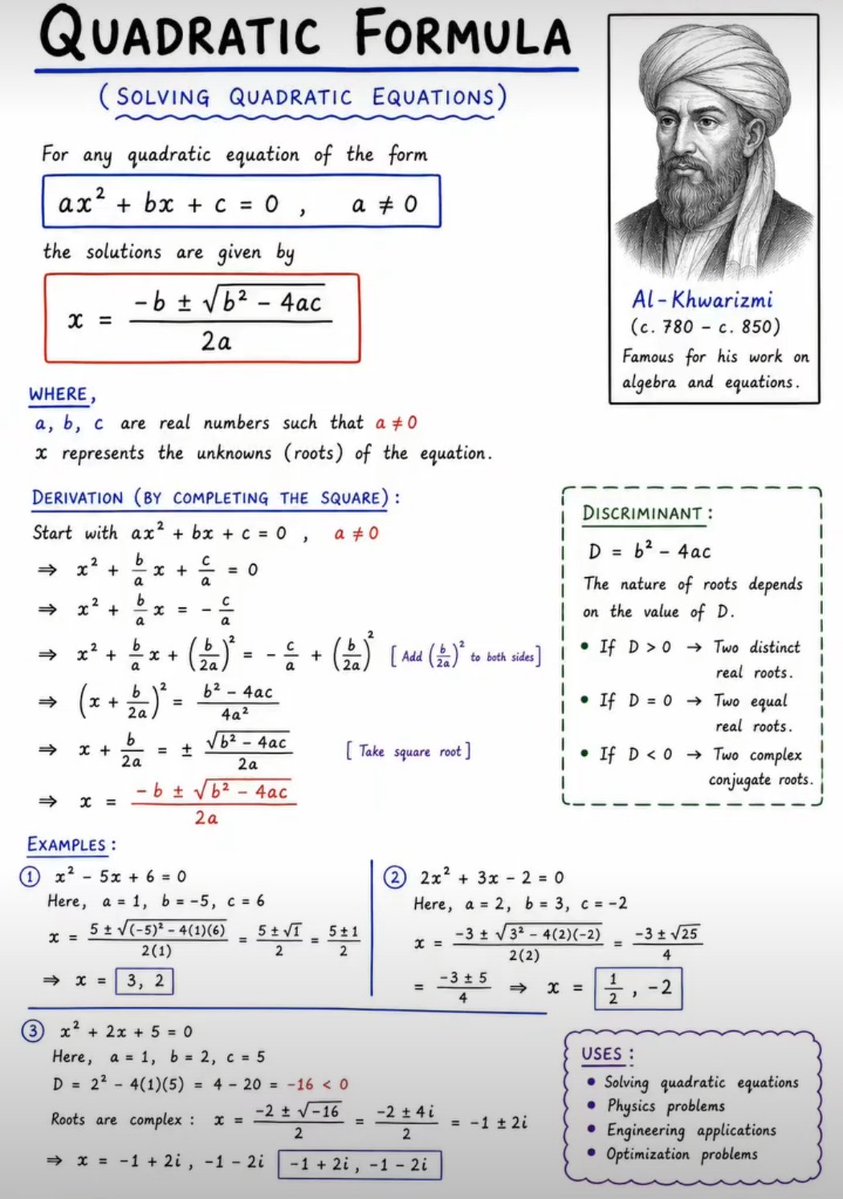
The Quadratic Formula. The Quadratic Formula is one of the most powerful tools in algebra — it can solve every quadratic equation and even predict the nature of the roots before solving them .📚 Used in physics, engineering, computer science, and real-world problem solving, this formula proves that mathematics is more than numbers — it’s a language of patterns and logic 💙 “Math becomes beautiful when you understand the reason behind the formula.” ✍️🔥
SolvingForZ tweet media
English
1
90
358
11.3K
Bo Collins retweetledi
Amanda van Dyke
Amanda van Dyke@AmandaVandyke13·
We need to mine as much copper in the next 25 years as we did in the last 125 years. The vast majority of global reserves sit between .14-.34 %. That is the canary in the coal mine. That mean exponentially bigger pits, more waste, more tailings, more chemicals, and more energy to get the same amount of copper. Copper recoveries are not getting better. Economies of scale in mining are becoming diseconomies of scale. This cannot be done without completely re thinking how we find, mine and refine everything from copper to rare earths. The Copper Paradox is the Mining Paradox. #mineralimperative #criticalmineralshub. @ScottNorth64736 @EdZamanillo @ctindale
Amanda van Dyke tweet media
English
32
133
478
43K
Bo Collins retweetledi
Jack Prandelli
Jack Prandelli@jackprandelli·
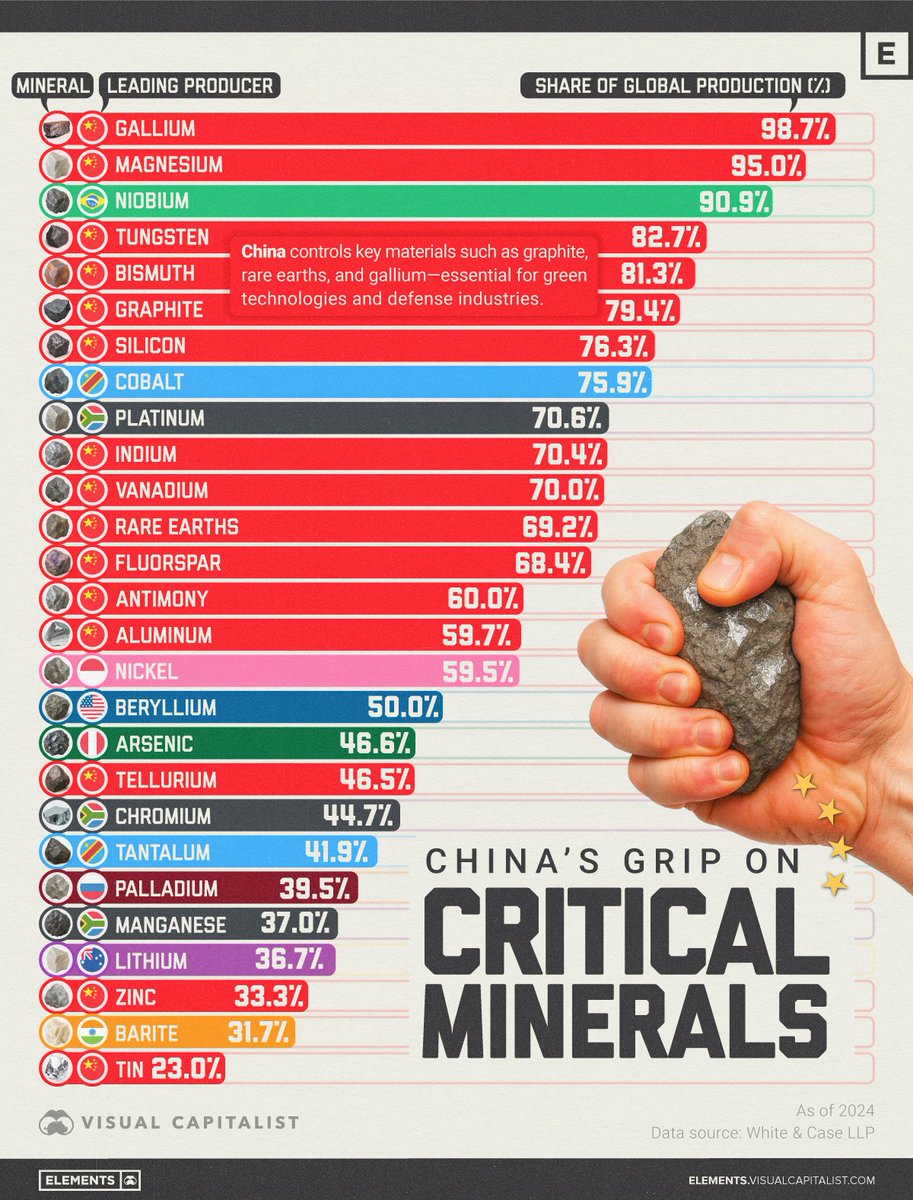
This chart is the most important leverage for China going into the Beijing summit. China's share of global production for the minerals that run the modern economy: 🔴 Gallium: 98.7% 🔴 Magnesium: 95.0% 🟢 Niobium: 90.9% (Brazil) 🔴 Tungsten: 82.7% 🔴 Bismuth: 81.3% 🔴 Graphite: 79.4% 🔴 Silicon: 76.3% 🔵 Cobalt: 75.9% (DRC) 🔴 Rare Earths: 69.2% 🔴 Antimony: 60.0% 🔴 Aluminum: 59.7% The pattern across critical minerals is the same. China is the leading producer in almost all. Even where China doesn't mine it, it processes it. Gallium at 98.7% is the number that should concern every defence ministry in the world. Gallium is essential for semiconductors, radar systems, satellite communications, and EV power electronics. Beijing already restricted gallium exports in 2023. It can turn that tap further at any moment. This is the leverage sitting across the table from Trump in Beijing this week. $575 billion in US-China trade repricing. 20 mb/d of oil. 20% of global LNG. Taiwan. Iran. Hormuz. Tariffs. All stacked into 48 hours against an active shooting war in the Gulf. The announcement will move prices.... Hard. 👇 Full breakdown in my latest article link in the comments
Jack Prandelli tweet media
English
21
261
645
39.9K
Bo Collins retweetledi
The Math Flow
The Math Flow@TheMathFlow·
Euler’s Identity is often called the "God Equation" because it links five of the most fundamental constants in mathematics into one impossibly simple statement. Here is a trick to reach Euler's Identity:
The Math Flow tweet media
English
10
192
900
21.5K
Bo Collins retweetledi
Mathematica
Mathematica@mathemetica·
Banked curve physics at its finest demo! At the max speed (threshold of sliding up the incline): v_max = √[ r g (sin θ + μ_s cos θ) / (cos θ − μ_s sin θ) ] Limiting cases: > Frictionless bank: v = √(r g tan θ) > Flat road: v = √(r g μ_s)
Mathematica tweet media
Română
3
223
1.2K
28.5K
Bo Collins retweetledi
Learn with Sam
Learn with Sam@Sam_Axiom·
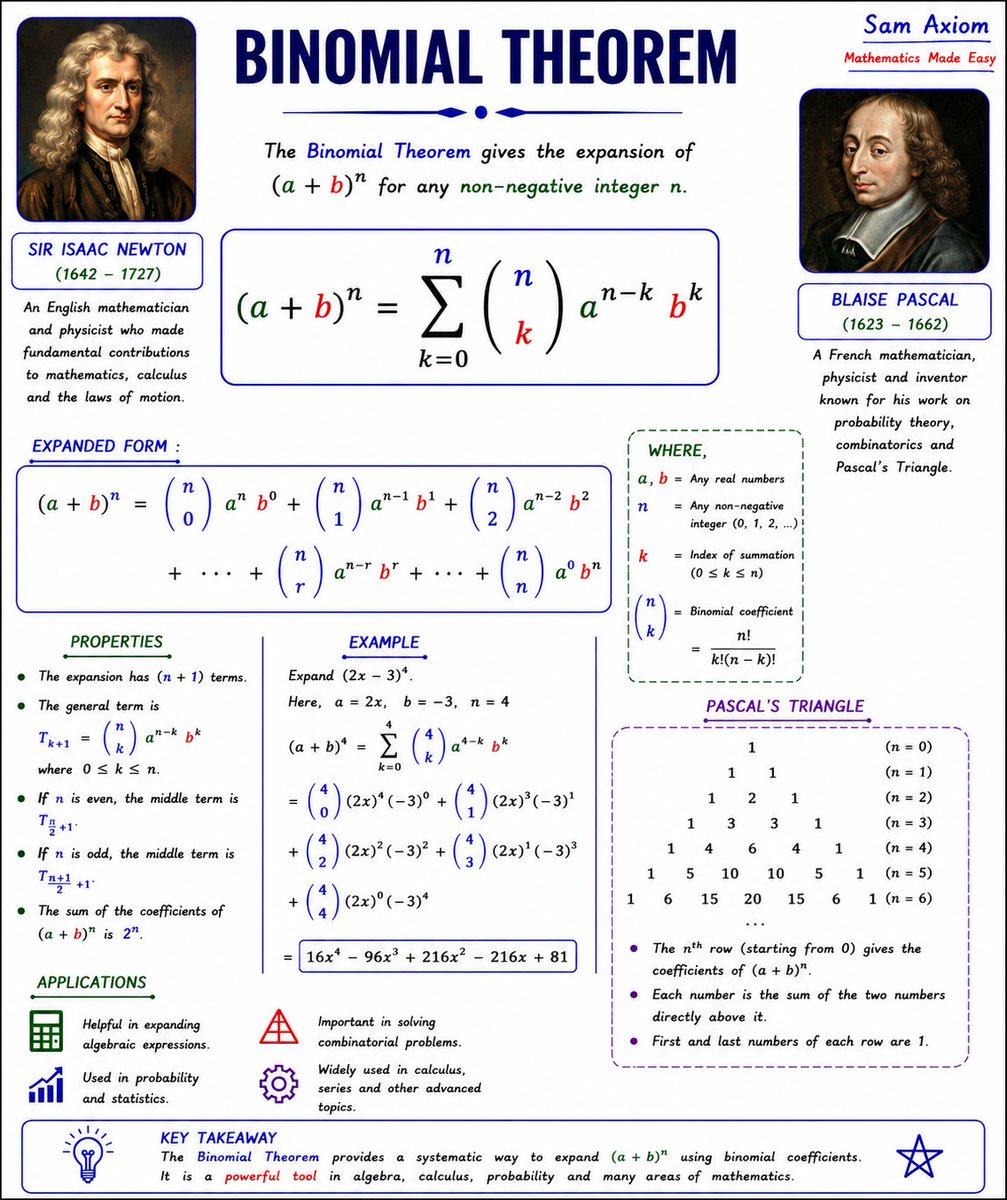
Binomial Theorem. It explains how mathematics can transform complex algebraic expansions into beautiful and organized patterns. The Binomial Theorem provides a systematic method for expanding expressions efficiently while revealing the deep relationship between algebra, combinations, probability, and Pascal’s Triangle. It is one of the most powerful and elegant concepts that forms the foundation of higher mathematics. ✨📘
Learn with Sam tweet media
English
5
159
651
15.6K
Bo Collins retweetledi
Philosophy Of Physics
Philosophy Of Physics@PhilosophyOfPhy·
Visualization of Euler's formula e^ix = cos(x) + i sin(x).
6
100
523
18.5K
Bo Collins retweetledi
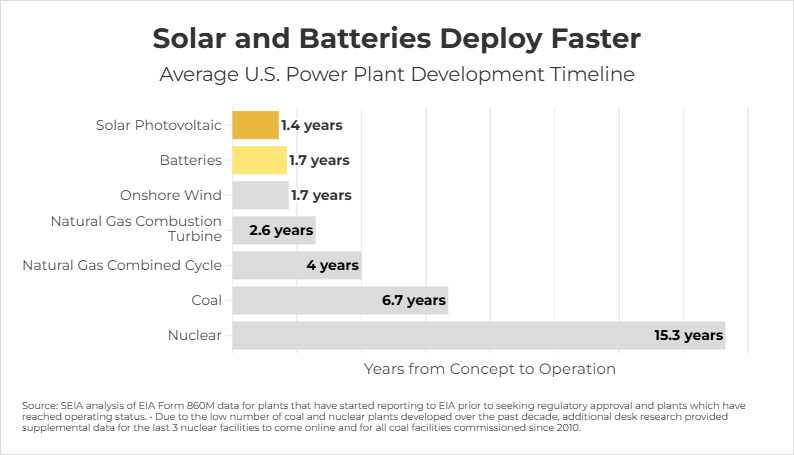
Solar and Storage Industry
This is the most important chart you'll see today. AI can't wait 5-10 years for new power.
Solar and Storage Industry tweet media
English
15
72
202
11.4K
Bo Collins retweetledi
Hanako
Hanako@hanakoxbt·
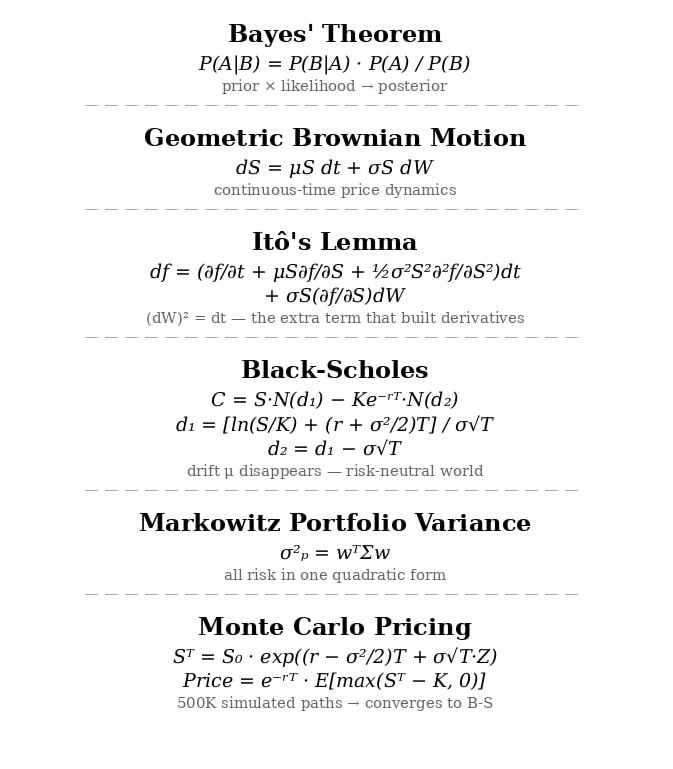
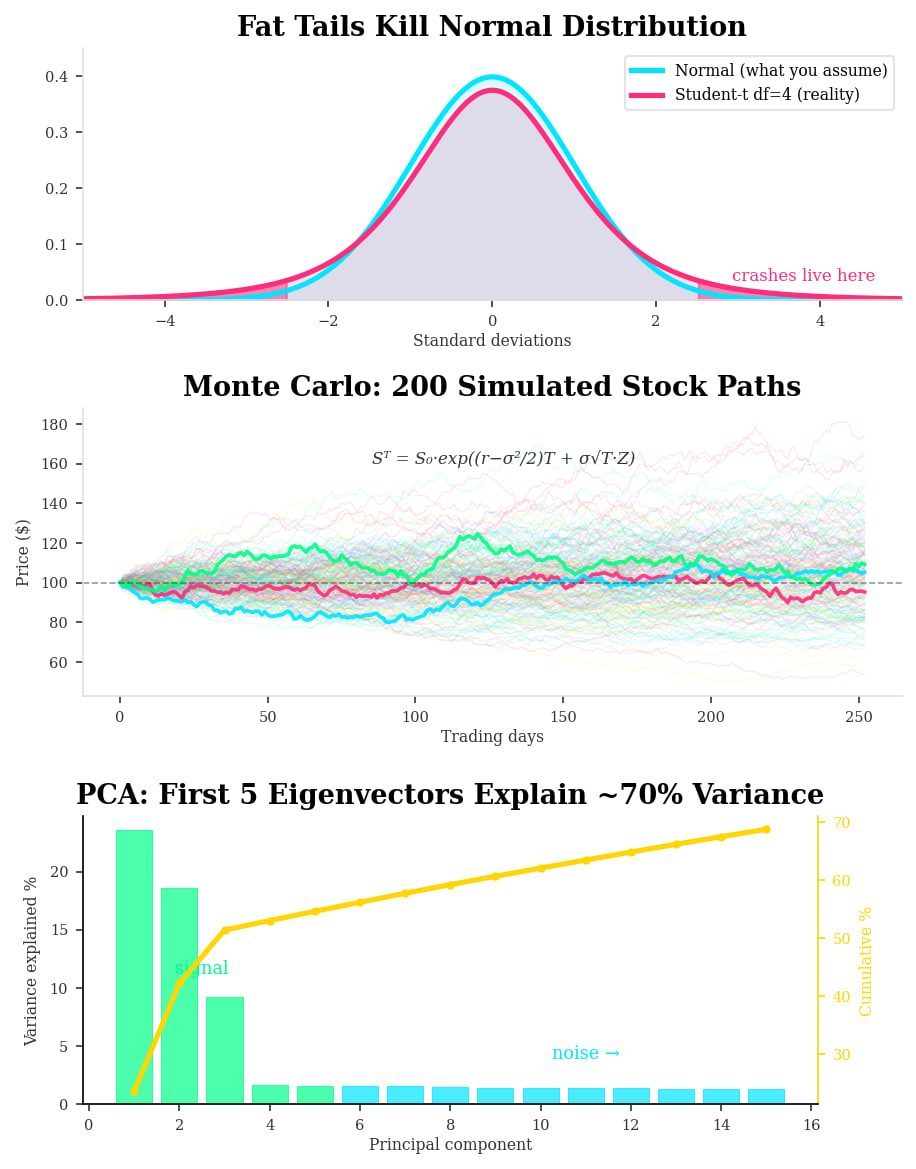
Jane Street rolls back your application if you can't spin up Monte Carlo in your head Most traders look at a $100 stock and place a bet. Jane Street interns look at the same stock and simulate everything. 500,000 paths. One pricing equation: ST = S0 × exp((r - σ²/2)T + σ√T × Z) Each path is a possible future. Average discounted payoff across all of them is the price. Converges to Black-Scholes within pennies. No opinions involved. Pure math. Now here's why Jane Street tests this on a whiteboard. They hand you a marker and expect this from memory: d1 = (ln(S/K) + (r + σ²/2)T) / (σ√T) d2 = d1 - σ√T Drift μ vanishes completely from the equation. Option price doesn't care where you think the stock goes. Risk-neutral pricing broke everyone's intuition and Jane Street checks if you understand why. The superday filters hard and fast: > Zetamac below 50 means instant rejection. > Unsolvable problems test your iteration with hints. > Mock trading exposes your runtime under real pressure. > Five rounds. No breaks. No second attempts. Two thirds of their interns came from CS. One third from pure mathematics. Finance degrees almost never survive the screening. The result for those who do: $300K to $500K starting. $1.4M company average. $30M ceiling for star traders. The edge isn't knowing the formula. It's deriving it under pressure while five people watch.
Hanako tweet mediaHanako tweet media
gemchanger@gemchange_ltd

x.com/i/article/2028…

English
80
264
3.3K
599.4K
Bo Collins retweetledi
Philosophy Of Physics
Philosophy Of Physics@PhilosophyOfPhy·
Finance Borrowed this Equation from Physics✍️ The Black–Scholes equation (1973) is mathematically the same diffusion (heat) equation used to describe Brownian motion introduced by Albert Einstein in 1905. A risk-free portfolio behaves like heat flowing through a metal rod. Volatility is diffusivity. Payoffs are boundary conditions. Markets are just noisy physical systems. In 1997, the Nobel Prize in Economic Sciences was awarded for this idea, essentially a physics equation. Built on the Wiener process, the same math describes pollen grains, stock prices, quantum paths (Richard Feynman), and even early-universe fluctuations. Different fields. Same diffusion.
Philosophy Of Physics tweet media
English
20
90
524
97.2K