CAB

86 posts

CAB banner
CAB

CAB

@CABeyney

Building the world’s largest non-pollutive AI factory business at an unprecedented speed and scale.

UAE Katılım Ocak 2016
12 Takip Edilen714 Takipçiler
CAB
CAB@CABeyney·
@ilzmcfly Hmm I am a wine maker from family heritage I can’t guarantee it will only be a coffee specially with this cold 😂
English
1
0
3
342
McFly
McFly@ilzmcfly·
@CABeyney treat them to a coffee 😉
English
1
0
1
425
CAB
CAB@CABeyney·
A big shoutout to our customer Nebius, our incredible DataOne Vineland team and partners who are giving their very best to deliver this next gen AI Factories. Despite the harshest winter we’ve seen in more than two decades frozen ground, feet of snow, and relentless conditions they show up every single day and keep pushing forward, no matter what. It’s truly heartwarming to witness this level of passion, resilience, and energy. I must say, it’s something quite unique. Proud of what we are building. Proud of the people making it happen.
English
6
5
157
14.9K
CAB
CAB@CABeyney·
🔥 CDUs Are Dead in Native AI Factories. Yes, I said it. Cooling Distribution Units may still make sense in: • Retrofitted legacy data centers • Space-constrained environments • Mixed IT workloads But in purpose-built AI Factories? They are largely irrelevant. Let’s demystify what a CDU really is. A CDU is essentially: • A plate heat exchanger • Pumps • Filters • Sensors (flow, pressure, temp) • Controls Pre-assembled on a skid. Factory tested. Looks clean on paper. But in reality? • Massive pressure drops • Added hydraulic complexity • High maintenance burden • Long lead times • 2x to 10x markup on commodity components • Design constraints across the entire data hall And most vendors are still deploying 1.5–2.5 MW CDUs. Which means: • Dozens (sometimes hundreds) of additional pumps • Dozens of filters • Increased failure points • Higher CAPEX • Dramatically higher OPEX The Real Question: Why fragment your cooling architecture… When you can centralize it? Instead of distributing small CDUs across the data hall, we: • Remove them entirely • Centralize high-efficiency plate heat exchangers in mechanical rooms • Run larger systems with 1–2°C approach temperature (not 4°C+) • Use 4 large optimized pumps instead of dozens of small ones • Centralize filtration • Use redundant control logic for flow, pressure, and VFD management Each degree of approach temperature matters. Each extra pump matters. Each additional failure point matters. At AI scale, every inefficiency multiplies. People often ask: “How are you moving faster than everyone else?” Simple. We eliminate long lead time items. We remove unnecessary complexity. We challenge legacy “best practices.” We redefine what is truly required without compromising SLA or performance. And yes CDUs are one of the first things to go. Your operations team will thank you. Your CFO will thank you. Your lenders will thank you. And most importantly your customers will thank you. Because when CDUs disappear, modularity increases dramatically. With our native Direct Liquid Cooling architecture, customers can deploy 135kW+ racks almost anywhere in the hall with near-zero layout constraints. CDU removal is only step one. If you want to know the rest you know who to call. 😉
CAB tweet media
English
0
4
32
10.9K
CAB
CAB@CABeyney·
@MB_Hogan I cannot confirm or deny 🙄😁
English
0
0
2
158
Mark Hogan
Mark Hogan@MB_Hogan·
Thx for reply. So glad you secured more in advance! Enough for a second DC of equivalent size as Vineland? Elon Musk just mentioned in a podcast that the blades/vanes are the main supply constrained part of gas turbines and so I thought hopefully that the gensets don’t face the same shortage.
English
2
0
0
197
CAB
CAB@CABeyney·
@MB_Hogan The issue is that demand is so strong that all factories are sold out. They’re ramping up production, but it takes time. It’s applicable for Gensets Gas Turbines etc
English
0
0
1
166
CAB
CAB@CABeyney·
@MB_Hogan They do unfortunately but we were the first to buy this kind of gensets for an AI Factory power plant so we had all the required allocation and we have secured a lot more too 😅.
English
1
0
2
115
Mark Hogan
Mark Hogan@MB_Hogan·
@CABeyney Charles can you confirm that the gas gensets don’t currently face the same supply constraints as gas turbines?
English
1
0
0
112
CAB
CAB@CABeyney·
@Asmallfish5 Our plant operates at nearly 95% total efficiency: 48% from electrical output, an additional ~40% from heat recovery converted into chilled water, and the remaining ~7% into biomass, oxygen, and water.
English
0
0
1
158
Asmallfish🦇🔊
Asmallfish🦇🔊@Asmallfish5·
Actually I just found out Bergen has official data for their B36:45V20 engines electrical efficiency at 45-50%😀. I should have checked before asking. Anyways, look forward to the full site coming online later this year. Good luck and hope all things go well. bergenengines.com/wp-content/upl…
English
1
0
0
160
CAB
CAB@CABeyney·
Just to give you a sense of how big our engines really are 🤩 Let’s go the largest Bergen Engines plant on Earth is being built! 🚀 And the cherry on top: this plant will operate at close to net-zero pollution.
English
11
10
89
21.6K
CAB
CAB@CABeyney·
Jim, I understand your enthusiasm for IREN without a doubt a very strong team and probably an excellent stock to invest in (not a financial advice). That said, please take the time to look closely at what our technology actually does before stating inaccurate facts. We are not capturing carbon; we are transforming it into valuable resources. And the overhead cost of our exhaust treatment represents roughly 10–15% of our CAPEX, so rest assured it won’t ruin us 🙂. On another note, I am a strong advocate of renewable energy. If I could rely exclusively on renewables, I absolutely would. Unfortunately, I don’t have a dam nearby, nor sufficient solar irradiation, nor wind farms in close proximity. And when you need to operate 24/7 without interruption, renewables alone become challenging although they are an excellent part of the overall mix. When everything freezes, dams stop working. When there’s no wind, turbines stop. When conditions are icy or stormy, solar panels also struggle. Gas isn’t ideal to begin with, but what truly matters is what you do with it. With our approach, it becomes far more acceptable and, crucially, significantly more reliable.
English
3
1
6
312
Jim Liu
Jim Liu@jiahanjimliu·
If anybody remembers peak ESG, the issue with Carbon Capture wasn’t just that they were questionable in effectiveness but they were also too expensive so oil and gas found it more sensible to just pay the penalties. BTM Gas Turbines already expensive, add on Carbon Capture capex and Opex on top of that. Most carbon capture techniques are energy intensive.
English
3
0
9
372
CAB
CAB@CABeyney·
Many people start talking about a “bubble” as soon as they see P&Ls under pressure. More often than not, it simply means they are confusing the investment phase with the return phase. Every major technological disruption follows the same sequence: massive upfront investment, infrastructure build-out, product deployment, gradual client adoption, development of real use cases… and monetization comes last. Those investments only bear fruit after several quarters, sometimes several years. In the data center industry, this timing is even more pronounced. A data center is traditionally designed and built over 3 to 5 years. At DataOne, we deliver projects in 6 to 18 months — an exception, not the norm. So no, this is not a bubble. This is a massive investment cycle, driven by seemingly unlimited client demand. We are living through the largest civilizational shift humanity has ever experienced. In 2000, there was supply but no demand, due to a lack of telecom infrastructure. Today, it’s the exact opposite: everyone is equipped, everyone is connected, everyone is a potential consumer. Add to that a technology where the marginal cost per token follows a steep logarithmic decline, often approaching a 2× reduction over a few-year horizon, and the conclusion is straightforward: short-term P&Ls are mechanically under pressure. But over the long term, the compounding effect of these investments is massive. This is precisely what Joseph Schumpeter described as creative destruction. Except this time… we are experiencing it in an ultra-accelerated form.
CAB tweet media
English
4
7
56
22.1K
CAB
CAB@CABeyney·
@Asmallfish5 I can’t disclose this information 🙈.
English
1
0
2
279
Asmallfish🦇🔊
Asmallfish🦇🔊@Asmallfish5·
@CABeyney Hi Charles, any estimates you could share for the cost of power running these engines? Assuming these are superior in efficiency?
English
1
0
0
350
CAB
CAB@CABeyney·
@nglotus9898 @BagelC47 Don’t worry it will come in time. But first, let us execute on what we’ve promised. Then we’ll share the outcomes. We still have a tremendous amount of work ahead of us, and right now we’re right in the middle of the storm literally.
English
1
0
2
289
eric ng
eric ng@nglotus9898·
@CABeyney @BagelC47 You should consider to invite CNBC to make a documentary for the data centre in Vinland.
English
2
0
0
355
CAB
CAB@CABeyney·
What do you want me to say? Let the facts and reality be the judge. Facts again: 50 MW delivered within 6 to 9 months, exactly as promised. This is public information, so I can comment on it and it remains the fastest delivery ever recorded, especially for a breakthrough, on-the-fly designed Direct Liquid Cooling infrastructure. For the rest, I won’t be the one commenting. As always, I let my customers speak before I do, just as I’ve done since day one. My primary objective in communicating here is to shut down, firsthand, the nonsense I keep reading about Nebius and about us. My second objective now that I’ve shared what our most advanced R&D is actually about is to show my peers that another path is possible: one that is far more eco-friendly and responsible, with zero compromise on speed quite the opposite, in fact. Why? Because I care. I genuinely care about our planet and its ecosystem. I deeply believe that heaven is beneath our feet not on Mars or the Moon and that we can fix the mess left by previous generations through AI, science, and technology. Some dream only about the stars. I dream about both but my priorities are clear: fix what’s broken here first, then dream about going off-world to make life here even better. So, will we succeed in delivering on all our promises? I have no doubt we will. Will we be perfectly on time on everything? The coming months will continue to challenge our ambitions against the complex reality we operate in and reality will tell the story. What I can say with certainty is this: we are relentlessly committed, surrounded by brilliant minds and truly outstanding partners. And as for Nebius, one thing is absolutely clear they will never be the bottleneck. They are moving at a speed that has nothing to do with the rest of this industry. And ask yourself this: why did I choose them as our customer before anyone else, even when we had every big name you can imagine as a prospect? Because I truly believe they will become the next AWS. Arkady and his teams are warriors. They take no prisoners. They think short-, mid-, and long-term and they are absolute monsters when it comes to execution.
English
4
1
34
631
Gen Z Investor
Gen Z Investor@genZinvest0r·
Alright, I'll be the first of the $NBIS bulls to say this: Having CAB engage this much with the retail community on X is net negative imo. All these string of consciousness bull statements are getting pulled out of context and most people can't distinguish when he is speaking factually, from when he is just posting visionary statements just for the sake of posting. Truth is DataOne has been shilling this whole speed narrative and how they are such efficient DC builders, yet reality would point otherwise... From void statements like 400MW in 12 months and Phase 1 completion in 20 weeks, we have yet to see any of these claims come to fruition, and we definitely won't for the Vineland site. Vineland won't be at 400MW in 12 months, it's more like 20 months. All this shilling of speed and efficiency, yet no mention of how the Vineland project is soon to be 12 months in and capacity is still in the ~50MW range... 12 months in and only ~50MW to show for it? Doesn't scream "speed" to me. Don't get me wrong, Vineland is, per now (simplification), going according to plan and will be fully finished by November 2026 (as per agreement between $NBIS and DataOne). But don't get it twisted, the project has been scrutinized by a severe lack of planning and foresight (you know), and definitely could have (should have) been further along at this point in time. As a shareholder of $NBIS, I would much rather just watch the execution speak for itself. That's my 2 cents at least🤷‍♂️
CAB@CABeyney

Yes, we’ve just invented a small thing — we call it hexageneration. Nothing dramatic: it simply allows you to take the most polluting technologies and turn them into harmless systems that generate a whole lot of good for the communities around them. Oh, and as a side effect, we now know how to eliminate CO₂ emissions entirely while producing biomass and/or biofuels. No storage, no offsets, no greenwashing — we transform pollutants into valuable resources. And just for context: instead of building a 400 MW (gross load) power plant in five years, we’re delivering it in twelve months. I’m not even sure that would have been considered possible in the 1800s. I hope it answers your concern, and no we don’t have a fusion reactor just yet or something that will make a civilisation of type 2 (one step at a time first: we fix our world then we improve it🙈…).

English
18
2
88
20.2K
Edge Of Power
Edge Of Power@edge_of_power·
$CRWV is dropping tens of millions on a new TV ad campaign. Why blow that much when you're buried in debt and only stay afloat because $NVDA needs its own cloud? From a customer acquisition standpoint, this campaign is a total waste. Man, I'm starting to think this whole thing has nothing to do with market logic. It’s like having a maxed-out credit card and going out to buy a brand new car. Before this, it was the racing team sponsorship. I have no idea who Chance The Rapper is, but he's the face of this campaign
English
9
1
23
8.2K
CAB
CAB@CABeyney·
As an engineer, I get bored by slow and inefficient processes, so I constantly question how and why things are done the way they are. I like to think out of the box all the time and my entire team is wired exactly the same way. The crazier an idea looks at first glance, the more exciting it becomes for us. Speed, for us, is not a goal it’s a consequence of our design choices, our decision-making process, and our willingness to make bold bets. Sometimes we make mistakes. Yes, it costs money. But our responsibility is to recognize those mistakes immediately and find better solutions almost instantly, because in today’s market, speed is everything. That’s what defines our DNA. Precast is just one of many tools we use to move faster. When I openly share our full design, you’ll understand why we operate at a completely different pace: we’ve designed an AI Factory that works like an IKEA kit. AI factories are, honestly, extremely simple. The only real challenge is scale mainly supply-chain constraints but that’s just another problem to solve. Interestingly enough, Elon ended up working with the same suppliers three to nine months after we did. Pure coincidence, of course but so far, he’s the only one following the same tracks even if his design is totally different than ours… Power plants are a completely different beast, especially when you start stacking multiple layers of innovation the way we do. That’s where things get really exciting and where you’ll see a lot of people fail. We’re investing heavily in exceptional engineering teams to make sure we’re not among them 😁.
English
0
0
4
1.2K
Finn Stockinger
Finn Stockinger@FinnStockinger·
That standard deviation is exactly where things get interesting - hard to find a better filter for actual value. Given that DataOne is hitting build times that make the rest of the industry look stationary, is that speed-to-market your main moat, or is it more about the underlying efficiency of the prefab approach? Curious if the "nimble" part is primarily a construction play for you.
English
1
0
1
164
CAB
CAB@CABeyney·
@Spiralout_one @BagelC47 Let them talk, they will realise Nebius is in a league of its own… 😇
English
5
4
42
32.1K
Tobacco Barn
Tobacco Barn@Spiralout_one·
@CABeyney @BagelC47 Thank you, Charles for owning these IREN fanboys and Nebius haters.. we will show them!
English
1
0
6
1.1K
CAB
CAB@CABeyney·
Nous réduisons massivement les NOx grâce aux SCR. Seul le résiduel est ensuite traité par les wet scrubbers et les biofiltres. Au total, nous atteignons 99,8 % de réduction des NOx. Il ne reste qu’environ 6 tonnes de NOx par an, soit l’équivalent des émissions annuelles d’environ 150 camions.
Français
2
0
12
579
Daniel Romero
Daniel Romero@HyperTechInvest·
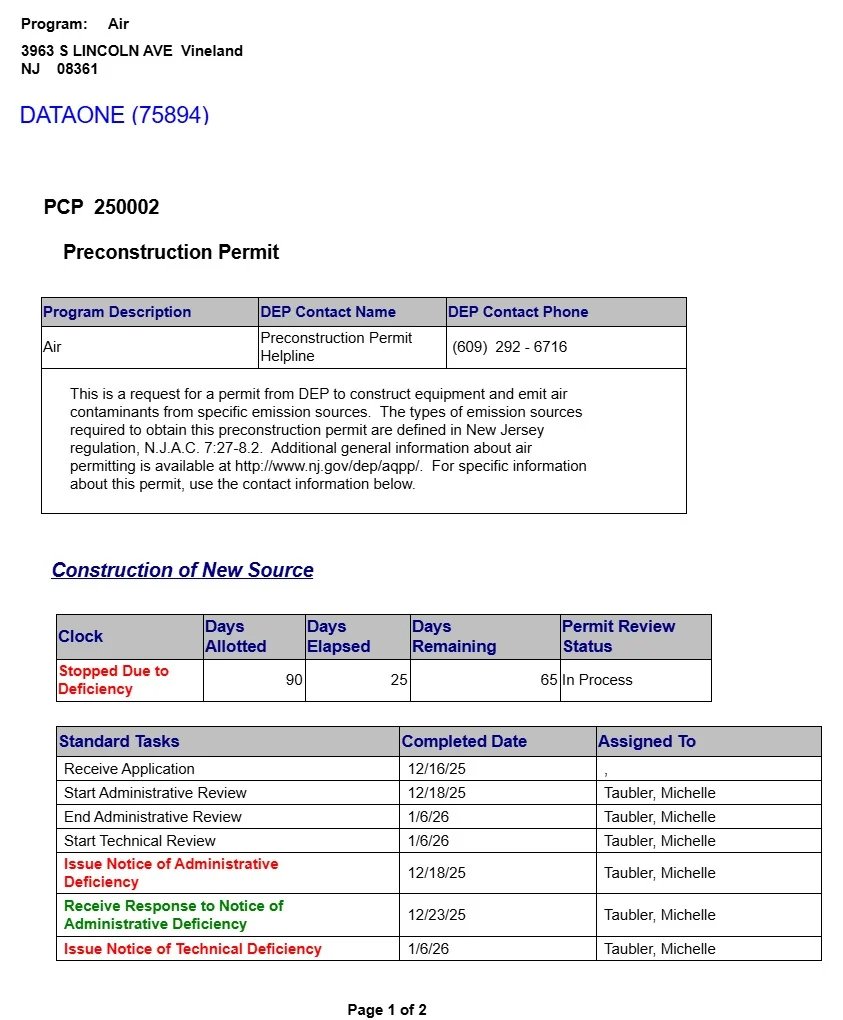
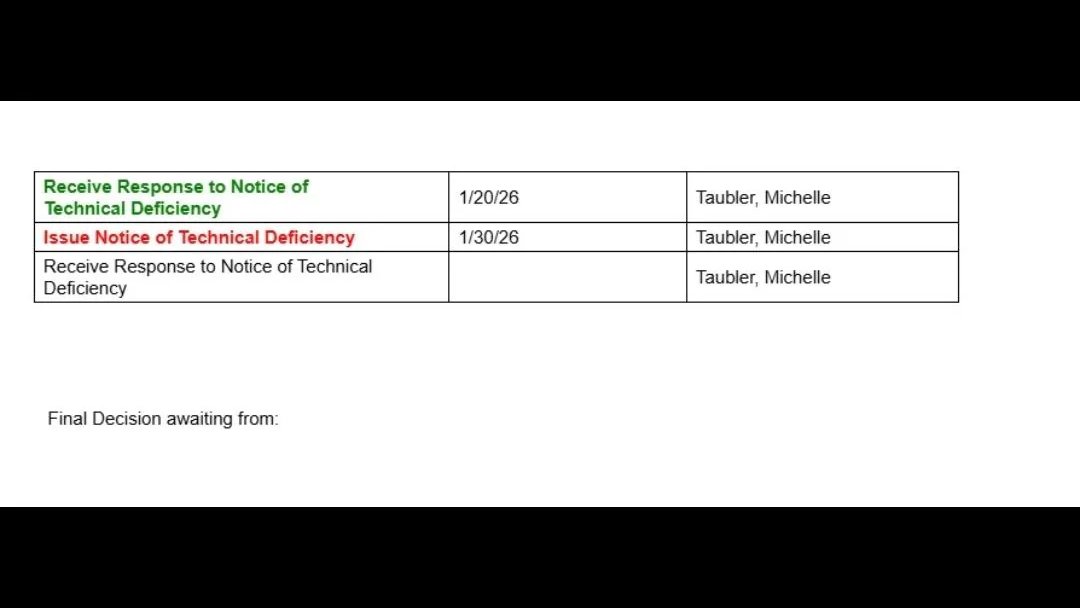
$NBIS DataOne has still not received the air permit for its gas engines at the Vineland data center The permit covers 36 Bergen engines, with a combined 403 MW of power generation potential Until they stop triggering deficiencies, the engines cannot be installed
Daniel Romero tweet mediaDaniel Romero tweet media
English
29
6
169
85.7K
CAB
CAB@CABeyney·
What for? They pollute more than our system, degrade quickly, struggle to keep up with demand, cost three times more per megawatt, and the list goes on. I don’t think people fully realize this, but we are only applying for a minor source permit. This is a worldwide first. Per megawatt, our system emits less pollution than any other solution currently available on the market. To put it in perspective: we emit less than 200 cows. That’s not incremental progress that’s a revolution. I know we haven’t communicated widely yet; that’s intentional. We want to prove this works at scale first. But it’s coming — and it’s coming fast.
English
0
1
31
720
Herg
Herg@herg_·
@CABeyney @FinnStockinger Hehe je pense savoir dans quelle catégorie se situe $NBIS. Vivement la retraite anticipée d'ici 2030.
Français
1
0
0
197