
Chris Sutherland

1.9K posts

Chris Sutherland banner
Chris Sutherland

Chris Sutherland

@C_S_Sutherland

Research: monetary policy identification, micro- & macro-econometrics, expectations. Views my own. @OxfordEconDept @ExeterCollegeOx .

@chrissutherland10.bsky.social Katılım Ocak 2010
911 Takip Edilen629 Takipçiler
Mathelirium
Mathelirium@mathelirium·
Kiyosi Itô and the Birth of Stochastic Calculus Once you swallow the fact that Brownian motion is continuous everywhere and differentiable nowhere, Itô’s quadratic variation is the next quiet shock waiting for you. Ordinary smooth curves have zero quadratic variation. If you chop time into tiny pieces and add up (increment)² over the interval, that sum goes to zero as your partition gets finer. But for Brownian motion that same sum doesn’t vanish, it locks onto the length of the time interval. So, you have this path with no velocity anywhere, but its squared wiggles accumulate in a completely rigid, deterministic way. Over time T, the total quadratic variation is exactly T. So, you lose the classical derivative, but you gain a new calculus where the (dB)² term behaves like dt, and suddenly integrals against Brownian motion make sense and you can do Stochastic Calculus. Brownian motion refuses to be smooth, but its roughness is so structured that when you look at it through the lens of quadratic variation, the randomness averages out and you’re left with a clean clock ticking underneath the noise. #BrownianMotion #ProbabilityTheory #StochasticCalculus #RandomWalks #Ito #QuadraticVariation
English
7
21
142
7.1K
Chris Sutherland retweetledi
Γ(z)
Γ(z)@gammaofzeta·
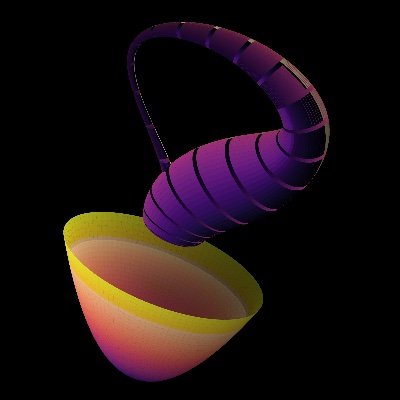
Today, on International Women’s Day #IWD2026 , I want to honor those warriors who paved the way for us—all those courageous women who, against the establishment, never gave up. Let me just mention two of my greatest inspirations: (1) Émilie du Châtelet, whose work gave us the energy approach to mechanics (basis for Lagrangian and Hamiltonian mechanics); (2) the great Emmy Noether, whose work on abstract algebra and symmetries brought us one of the most beautiful theorems in mathematical physics. By Noether’s theorem, every continuous, differentiable symmetry of a system’s action corresponds to a conserved quantity. Here’s a tribute to Noether (and to all of us women): the proof that if the system’s action is invariant under time translation, then energy is a constant of the motion.
Γ(z) tweet media
English
5
36
276
8.3K
Chris Sutherland retweetledi
Martin Bruns
Martin Bruns@mbecon1989·
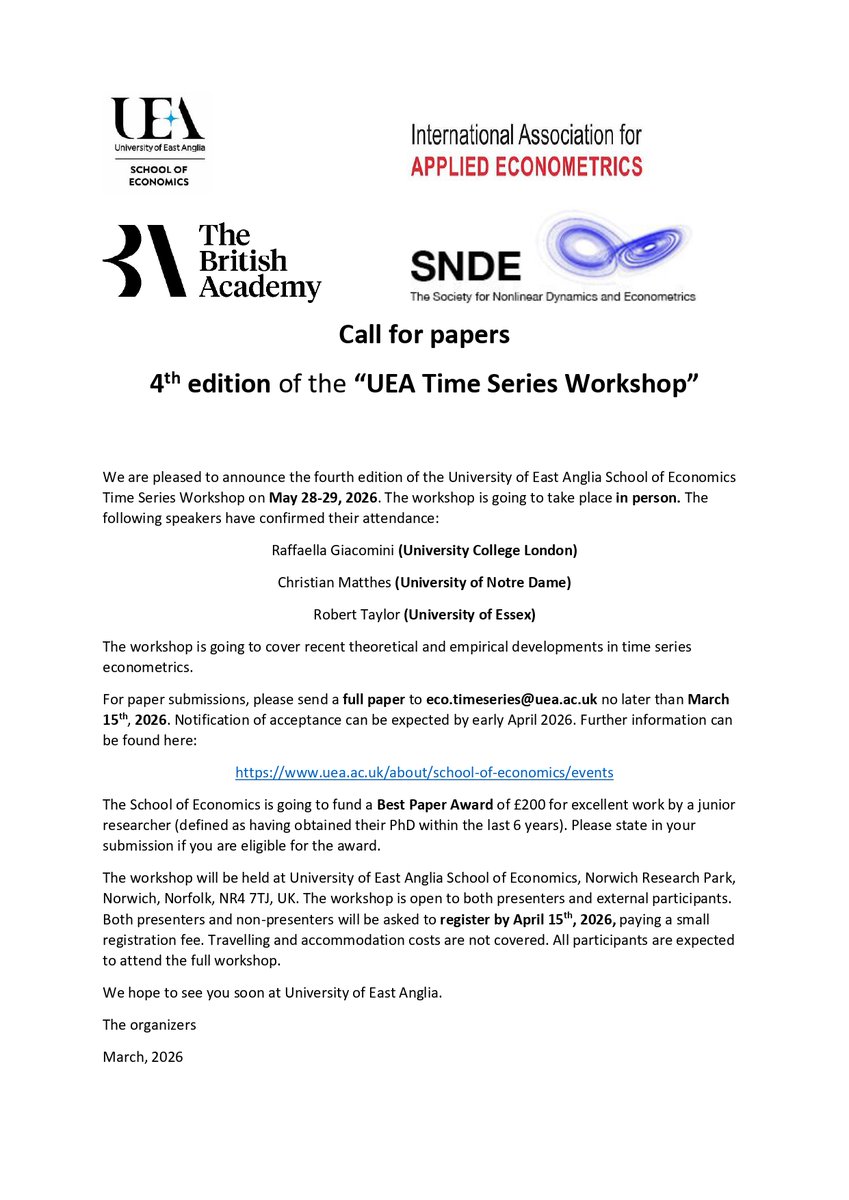
Call for papers reminder: 4th UEA Time Series Workshop. Deadline March 15th. More information here: uea.ac.uk/about/school-o…
Martin Bruns tweet media
English
1
3
2
197
Chris Sutherland retweetledi
Mathelirium
Mathelirium@mathelirium·
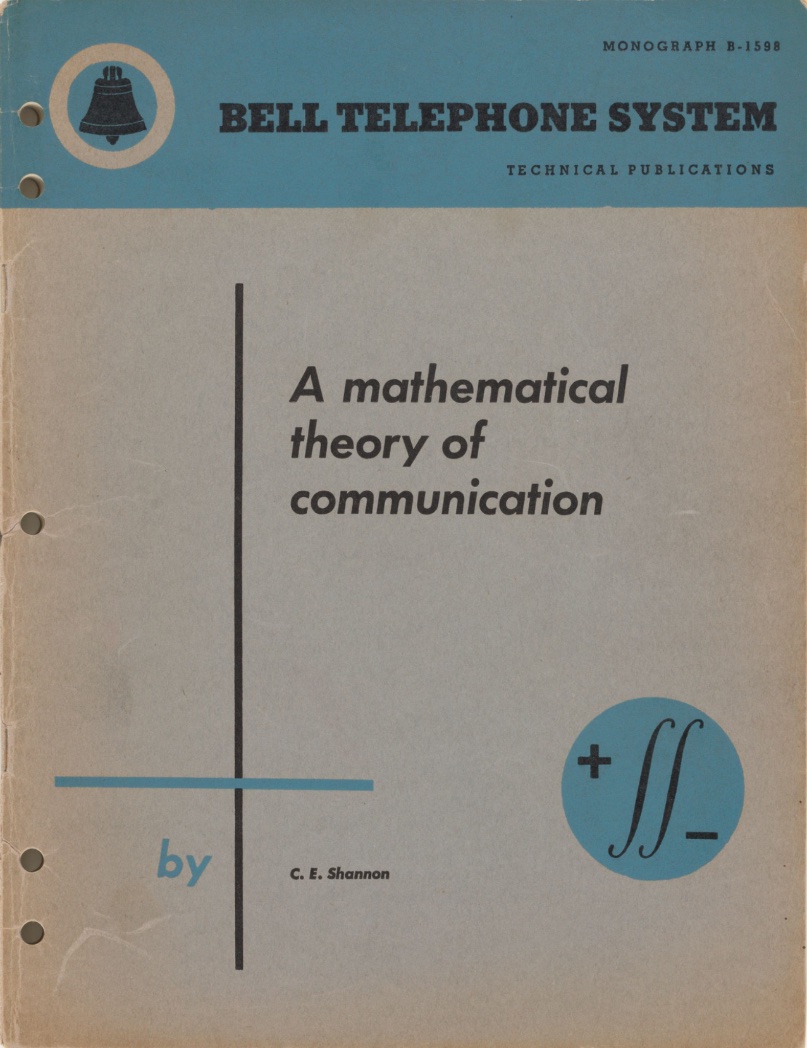
We rave about giants like Newton, Einstein, Bohr, Tesla, and Edison. But in terms of direct impact on our lives in the information age, nobody comes close to Claude Shannon. In 1948, he dropped a straight 10/10 paper: A Mathematical Theory of Communication. His work has imbued us with the ability to send whispers across continents. The paper doesn’t just suggest techniques, it draws the boundaries of reality for information... how far compression can go (entropy), the maximum rate a noisy channel can carry reliably (capacity), and why error correction isn’t optional if you want those whispers to arrive intact.
Mathelirium tweet media
English
32
306
1.7K
80.2K
Chris Sutherland
Chris Sutherland@C_S_Sutherland·
@Francesco_Bia It is. The decision by Hughes to go five-hole and not top-right corner was stunning. Even as a Canadian, you have to respect it.
English
0
0
1
46
Francesco Bianchi
Francesco Bianchi@Francesco_Bia·
What is truly remarkable about Jack Hughes' winning goal is that he initiated the counterattack, then again midfield, finally he scored. For those who have played a team sport like soccer or rugby, this is a masterpiece youtu.be/J9TqIb4FI-w?si…
YouTube video
YouTube
English
2
0
4
1.1K
Mathelirium
Mathelirium@mathelirium·
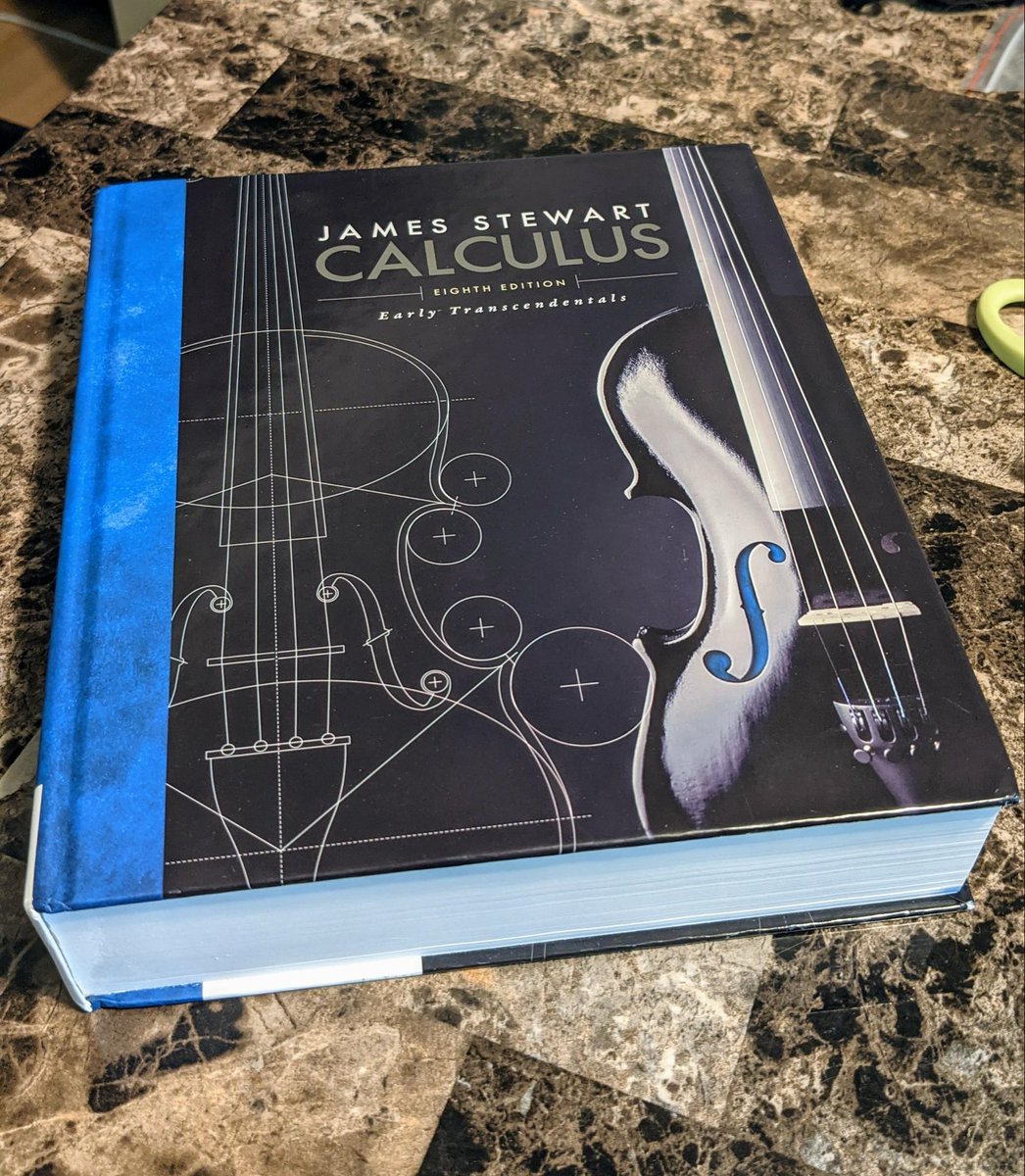
Which one did it for you? Larson or Stewart?
Mathelirium tweet mediaMathelirium tweet media
English
129
73
1.1K
62.7K
Chris Sutherland retweetledi
Michael Bauer
Michael Bauer@michaelbauer_hh·
We are excited to again sponsor a session at the Annual Meeting of @CebraOrg. If you have a policy-relevant recent working paper in international finance, macro-finance, and/or #monetarypolicy, please consider submitting your work! Deadline March 2 #CEBRA26 @sffed
Central Bank Research Association@CebraOrg

🌍 #CFP: Session 16 at the #CEBRA26 Annual Meeting in Copenhagen focuses on International Macro-Finance & Monetary Policy — central to today’s global policy challenges. Organized by the Center for Monetary Research & the Center for Pacific Basin Studies (@sffed). Committee: @michaelbauer_hh, @zliu001, @ThomasMMertens, @fernandanechio 📅 Deadline: March 2 🔗 Full Call for Papers: cebra-events.org/call-for-paper… #CEBRA #CentralBanking #MonetaryPolicy #MacroFinance #CallForPapers

English
0
4
15
3.1K
Chris Sutherland retweetledi
Banca d'Italia
Banca d'Italia@bancaditalia·
📢 #CallForPapers 📌 Banca d’Italia will host a conference on new approaches to modelling and assessing the macroeconomic impact of uncertainty | Rome, 24-25 September 2026 ⏰ Papers must be submitted by 𝗔𝗽𝗿𝗶𝗹 𝟭𝟱𝘁𝗵, 𝟮𝟬𝟮𝟲 ℹ All details here bancaditalia.it/media/notizia/…
Banca d'Italia tweet media
English
0
8
24
2K
Chris Sutherland retweetledi
Mathelirium
Mathelirium@mathelirium·
Is there any result in Probability Theory with this kind of reach? It’s kind of insane. Markov’s inequality looks almost too plain to matter. It’s one line. No distributional assumptions. No smoothness. No variance. No independence. And it still gives you a real handle on tail probabilities. Feed it (X − μ)² and Chebyshev falls out. Feed it exp(λX) and you’re suddenly in Chernoff territory, and from there it’s a short walk to Hoeffding and Bernstein once you add the right bounds. Feed it a sum of indicator variables and you get the union bound vibe that props up half of those with high probability arguments. Same move every time. Markov, plus a smarter choice of X, and this tiny idea turns into a whole toolbox for modern probability, statistics, and learning theory. #ProbabilityTheory #MarkovInequality #Concentration #Statistics #MachineLearning #LearningTheory
Mathelirium tweet media
English
14
87
719
33.8K
Chris Sutherland retweetledi
Central Bank Research Association
📢 Call for Papers | #CEBRA26 Annual Meeting 🗓️ Submission deadline: March 2 We invite submissions to Session 12: Inflation Dynamics, organized by CEBRA’s Inflation: Drivers and Dynamics (IDD) Program: cebra.org/programs/idd/ Inflation remains a central issue for policymakers, researchers, and financial markets. 👏 Session Organizer: @RaphaelSchoenle 🔗 Full CFP: cebra-events.org/call-for-paper… #CEBRA #IDD #CallForPapers #Inflation #Macroeconomics #EconomicResearch #AcademicResearch
Central Bank Research Association tweet media
English
0
1
4
300
Chris Sutherland retweetledi
CEMFI
CEMFI@CEMFInews·
CEMFI is inviting applications for one position of Research Assistant (Pre-doc) cemfi.es/all_news_blog_…
English
0
6
43
5.2K
Chris Sutherland retweetledi
Erika 
Erika @ExploreCosmos_·
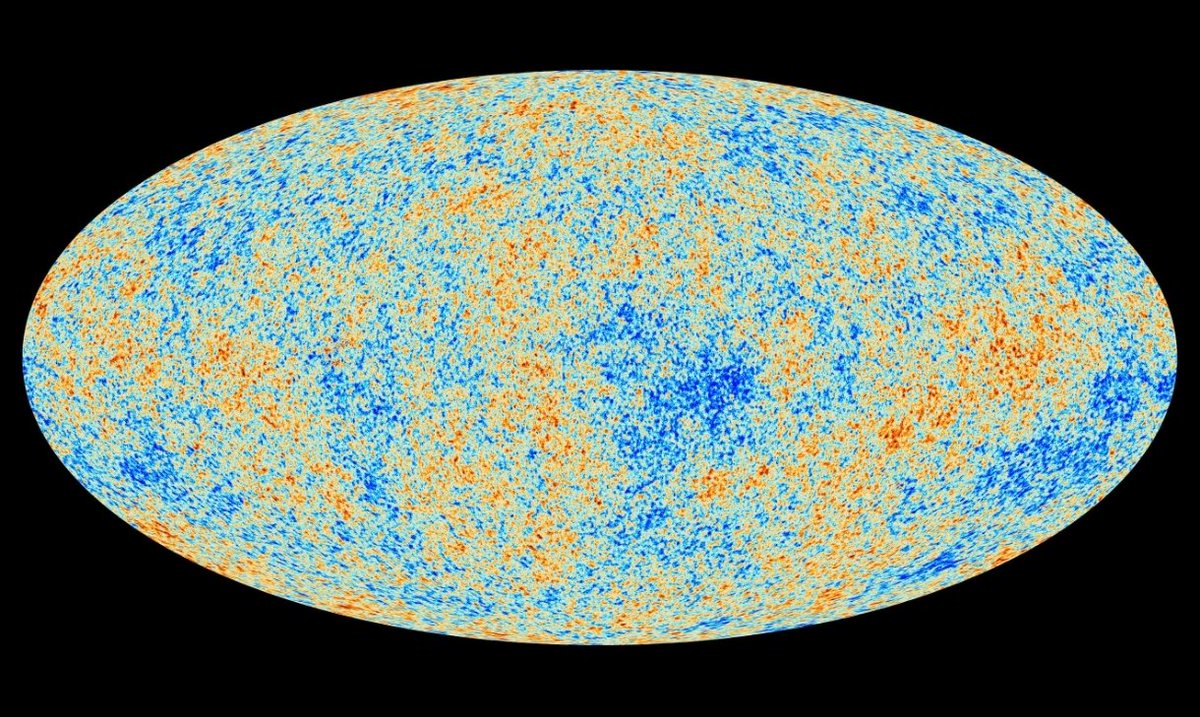
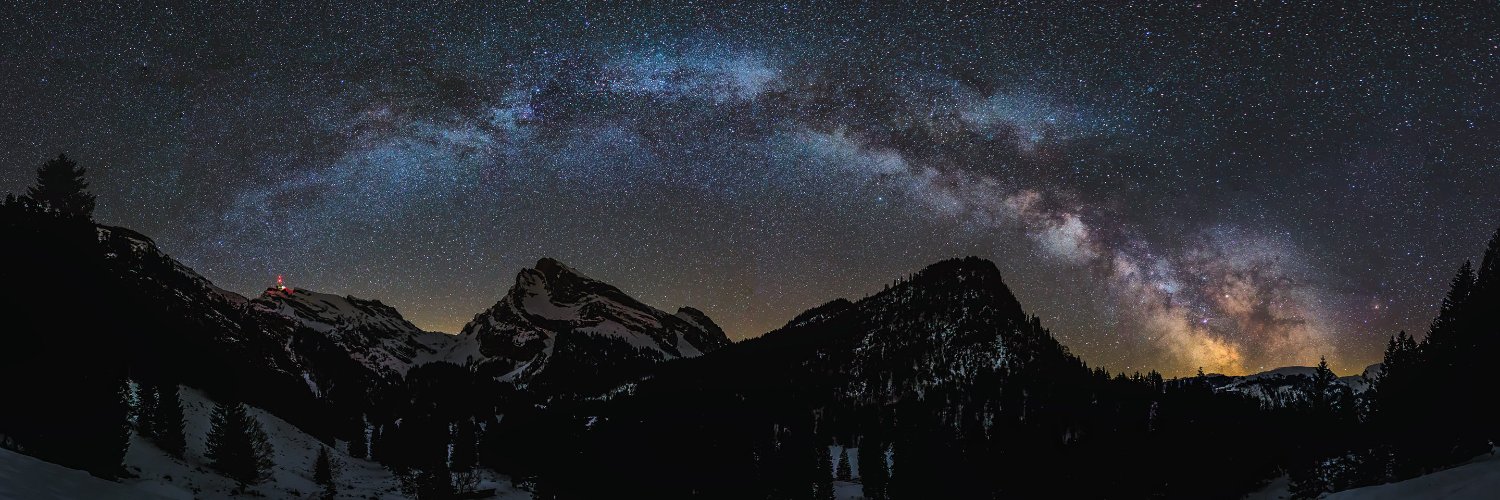
Why Space Is So Cold: Heat, Emptiness, and the Physics of Nothingness. When we say that space is cold, we are not describing a hostile freezer waiting to chill anything that enters it. We are describing an environment where heat has nowhere to stay. That distinction matters, because much of the confusion about the temperature of space comes from importing everyday Earth-based intuition into a place where the usual rules of heat transfer simply do not apply. Temperature, in physics, is a measure of the average kinetic energy of particles, how fast atoms and molecules are moving. On Earth, air is dense. Molecules constantly collide, exchanging energy through conduction and convection. When sunlight warms the ground, the air above it warms too, and heat spreads efficiently. This is why we experience temperature as something smooth and continuous. Space is different in a way that is hard to overstate. Even in regions between stars that we consider relatively “dense,” there may be only a few atoms per cubic meter. For comparison, Earth’s atmosphere contains around 10¹⁹ molecules per cubic centimeter. The difference is not subtle. It is like comparing a packed football stadium to a single person standing alone in the middle of a vast desert. In such emptiness, the familiar mechanisms that move heat around simply stop working. Without matter, conduction and convection are impossible. There are too few particles to collide, too little substance to carry energy from one place to another. The only way heat can move through a vacuum is by radiation, electromagnetic waves such as visible light or infrared. This is why space can be simultaneously associated with intense heat and extreme cold. Near the Sun, radiation is abundant. Objects that absorb it can become very hot. In fact, the sunlit side of the International Space Station can exceed 120 °C, while the shaded side can drop below −150 °C. There is no air to distribute that energy, no atmosphere to soften the contrast. Temperature becomes brutally directional. Far from stars, however, radiation thins out dramatically. In the deep void between galaxies, the dominant source of energy is the cosmic microwave background, the faint afterglow of the Big Bang itself. That background corresponds to a temperature of about 2.7 kelvin, only a few degrees above absolute zero. This is not because space is actively cold, but because almost nothing is present to absorb or store energy. This distinction becomes clearer if we consider what would actually happen to a human body in space. Contrary to popular films, a person does not instantly freeze solid. Freezing requires heat to be efficiently removed, and in a vacuum that process is slow. Without air, your body cannot lose heat through conduction. Instead, it radiates energy gradually as infrared light. You would lose heat, yes, but not explosively. The danger comes from other factors: lack of oxygen, rapid decompression, and boiling of bodily fluids, not from an immediate plunge into icy cold. This brings us to the key physical insight: cold is not a thing. There is no substance called “cold” that fills space and drains warmth from objects. Cold is simply the absence of heat. Space does not cool things down in the way a freezer does. Objects cool themselves by losing their internal energy, radiating it away into an environment that cannot give anything back. In that sense, space is not a cold place so much as a thermally indifferent one. It does not impose temperature; it merely fails to prevent energy from escaping. Left alone, without incoming radiation, any object will slowly shed its heat until it reaches equilibrium with the faint background glow of the Universe itself. The cosmic cold, then, is not a mystery born of darkness or distance. It is a consequence of emptiness. Where there is almost nothing to hold energy, warmth cannot linger.
Erika  tweet media
English
71
167
813
25.8K
Chris Sutherland retweetledi
Giovanni Ricco 🇪🇺🇺🇦
Giovanni Ricco 🇪🇺🇺🇦@ricco_giovanni·
The call for the workshop in "Advances in Structural Shocks Identification" on 16-17 June @bse_barcelona Summer Form is out Submission deadline: Feb 28, 2026 Keynote: Christiane Baumeister (University of Notre Dame) Please consider sending your work! bse.eu/summer-forum?u…
English
0
9
51
4.2K