Harsha Nagaraja

2.1K posts

Harsha Nagaraja banner
Harsha Nagaraja

Harsha Nagaraja

@Calls_a_Spade

Bored of all the crap floating around in cyberspace. Bore of political correctness. Want to go back to the days of calling spade a spade

Bits and Bytes of India Katılım Temmuz 2013
276 Takip Edilen96 Takipçiler
Rahul Jain
Rahul Jain@rahulj51·
Imo, this has more profound implications than it sounds. Middle management was largely performative theater but it was also a slight nod to a system of traditional career progression at tech companies - a ladder and a process of feedback by your immediate boss. Feedback meant companies were forced to define good behavior vs bad behavior aka values etc. With middle managers gone, the way this plays out is that all conversations become purely tactical over time with a tacit understanding that we are here to get the job done and gtfo. Sounds exciting to everyone tired of meaningless bureaucracy like 1:1s and quarterly appraisals. But this is actually more insidious. Because it depletes an org of its function as a career progressor. Meanwhile, pure tactical work quickly translates to the exact same cluelessness that orgs had with layers of heirarchy and bullshit titles. No one knows where the ship is going though it's moving. At some point most people mentally check out. It's not exactly quiet quitting - value gets produced in the short term. For all its flaws, AI actually helps keep the lights on and more. And folks aren't exactly planning to leave and jump ship. But they also don't come to work with a purpose. Orgs become temporary vehicles of sustenance, not places where careers are made. Now the extraordinary 0.1% still find a way to navigate the system and progress their careers due to sheer talent or ambition. Those with very high agency but poor people skills quit to start something of their own. What remains are schritte-für-schritte folks. These folks used to work for the promise of linear progression. They aren't poor performers by any means. In fact they are the most hard working middle who get shit done and hope that their work gets recognized. These are the ones who come prepared for their weekly 1:1s because it means something to them. They are the ones who care about values and culture and cheer when the org does well. They may be sceptical at times but are still sold on the overall idea of the org and its purpose. When orgs invested in people and promised a career progression, many of these folks did well for the orgs and for themselves. With that system officially or tacitly removed, they turn into zombies bracing for the next lay off cycle.
Harshit Jain@jain_harshit

🚨 Meta is forcing managers to convert to IC role.

English
32
34
400
129K
Harsha Nagaraja
Harsha Nagaraja@Calls_a_Spade·
@nutanc It was obvious to everyone when the model came out that model was not the product. The application was. Technology itself is never the product, the application always is. I am just tired of influence peddlers like you coming with up "OMG, the world is now different" statements.
English
0
1
1
102
Howard Lerman
Howard Lerman@howard·
Everyone is obsessed with AI making a 10x engineer a 1000x engineer. The recent reductions at CloudFlare and Click have me me realize the plot is equally about the inverse: AI amplifies the *negative* impacts of poor performers. If a person with poor taste, who makes mediocore judgement calls, and doesn't properly build things customers love is able to produce 10x more work - does a company want that? Hell no! Productivity isn't just about as many people as possible tokenmaxxing. AI is a double edged sword, especially when it's used to produce net new work. If you give a bad artist a pen that can draw 100x as fast, you're going to pile up with a lot of junky artwork very quickly. And since it happens so quickly leaders are now able to see quickly who is Picasso and who is not and adjust accordingly.
Zeb Evans@DJ_CURFEW

Today we reduced headcount by 22%. The business is the strongest it's ever been. So I think it's important to be direct about what I'm seeing and why. First, I made this decision and I own it. I did it because the way to operate at the highest level of productivity is changing, and to win the future, ClickUp needs to change with it. Second, this wasn't about cutting costs. Most savings from this change will flow directly back into the people who stay. We'll be introducing million-dollar salary bands. If you create outsized impact using AI, you'll be paid outside of traditional bands. Most importantly, I have the deepest gratitude for those affected. We're doing this from a position of strength specifically so we can take care of people properly. Everyone affected receives a package aimed at honoring their contributions and easing the transition. I only see two options: wait for this to play out gradually in the market or be honest about what I'm seeing and act proactively. THE 100X ORGANIZATION The primary change is that we're restructuring around what I call 100x org. The goal is 100x output. The roles required to build at the highest level are fundamentally different than they were a year ago. Incremental improvements to existing systems won't get us there. We need new ones. That means creating enough disruption to rebuild rather than iterate on what's already broken. The common narrative is that AI makes everyone more productive. It doesn't. Many of the workflows of today, if left unchanged, create bottlenecks in AI systems. These roles will evolve. But waiting for that to happen naturally means falling behind now. The 100x org is actually heavily dependent on people - infinitely more than today. This is only possible with 10x people that have embraced and adopted new ways of working. THE BUILDERS, AGENT MANAGERS, AND FRONT-LINERS — THE BUILDERS: 10X ENGINEERS I don't think most companies have internalized what's actually happening with AI in engineering. The common narrative is that AI makes all engineers more productive. That may be true in isolation, but at an organization level - that is the farthest thing from reality. Here's what we've validated recently at ClickUp: the great engineers, the ones who can orchestrate, architect, and review, are becoming 100x engineers. They're not writing code. They're directing agents that write code. The skill is judgment. AI makes the best engineers wildly more productive, and everyone else using AI slows these engineers down. Think about it - the bottlenecks are (1) orchestration - telling AI what to do, and (2) reviewing - what AI did. Everything is leapfrogged and no longer needed. So who do you want orchestrating and reviewing code? And how do you want your best engineers to spend their time? If your best engineers are spending time reviewing other people's code, then this is inherently an inefficient bottleneck. These engineers can review their agent's code much faster than reviewing human code. The new world is about enabling your 10x engineers to become 100x. The wrong strategy is to push every engineer to use infinite tokens. Companies doing this are celebrating 500% more pull requests. But customer outcomes don't match the volume of code being generated. I call this the great reckoning of AI coding, and every company will face this soon if not already. More code is just another bottleneck to the best engineers, and ultimately to your company's impact as well. — THE BUILDERS: 10X PRODUCT MANAGERS Product management and design roles are merging. Designers that have customer focus, become more like product managers. And product managers that have intuition for UX become more like designers. The bottleneck of user research is gone. It takes us just one mention of an agent to kickoff research and analyze results. The bottleneck of product <> design iteration is also gone. The product builder iterates on their own, along with agents and skills that ensure alignment with quality and strategy. Also controversial today - I believe that the wrong strategy is to have your PMs shipping code - that just introduces another bottleneck that the best engineers will waste their time on. To be clear, PMs should be coding but they should do this in a playground to iterate, validate, and scope. That code should not go to production. Everything outside of managing systems, orchestrating AI, and reviewing output becomes a bottleneck. That's why the other roles that are critical along with these are the systems managers (to reduce bottlenecks) along with a bottleneck you can't replace - customer meeting time. — THE SYSTEM MANAGERS Ironically, the people that automate their jobs with AI will always have a job. They become owners of the AI systems - agent managers. We have many examples of these people at ClickUp. The underlying systems in which we operate are absolutely critical to get right. I think most companies are delusional to think they can iterate on existing systems and compete in this new world. You must create enough disruption so that old systems are deprecated entirely. If there's any definition for 'AI native' that's what it is. — THE FRONT-LINERS In a world that will become saturated with AI communication, the human touch will matter more than anything to customers. This is a bottleneck that you shouldn't replace - even when agents are high enough quality to do video meetings. One-on-one meeting time with customers is something that shouldn't be automated. The systems around the meetings should be - so that front-liners spend nearly 100% of their time with customers. REWARDING 100X IMPACT In a world where companies are able to do so much more with less, where does that excess money go? In our case, much of the savings in this new operating model will flow directly back to those that enabled it. We must reward people that create productivity accordingly. This aligns incentives on both sides. Plus, in a world where your best people create 100x impact, you can't afford to lose them. You should aim to retain these employees for decades. The context they have and their ability to efficiently orchestrate and review will be nearly impossible to replace. Compensation bands of today should be thrown out the door. We're introducing $1 million cash/year salary bands with a path available to nearly everyone in the company if they produce 100x impact by creating or managing AI systems. THE FUTURE Nearly every company will make changes like these. The ones that do it proactively will define what comes next. The future is not fewer people. It's different work, new roles, and better rewards for those who embrace it. We're already seeing entirely new roles emerge, like Agent Managers, that didn't exist a year ago. ClickUp is positioning to lead this shift, not just internally, but for our customers too. I've never been more certain about where we're headed.

English
95
307
1.7K
326K
Harsha Nagaraja
Harsha Nagaraja@Calls_a_Spade·
@fernialarconp @howard AI has taste too right. Pre-training. Irrespective, if you are an engineer who is bad, how will AI make it worse?
English
0
0
0
9
Rolo
Rolo@fernialarconp·
@Calls_a_Spade @howard what if taste is the defining attribute, and the designer/developer has none.
English
1
0
1
38
Phield Martiall Jambavan
Phield Martiall Jambavan@SirJambavan·
Am ambivalent about this. On one hand, it is good to expose her for the vacuous entity she is. OTOH, we made her a sensation. 🤷🏽
NDTV@ndtv

Watch @gauried's exclusive chat with Norway Journalist Helle Lyng (@HelleLyngSvends) tonight at 8:30 only on NDTV 24X7

English
6
2
23
1.3K
Harsha Nagaraja
Harsha Nagaraja@Calls_a_Spade·
@howard Why would an engineer do that. AI with all their pre training will avoid that. Unless an engineer is malicious to know the correct path and consciously chooses the wrong path, using AI is a net gain.
English
3
0
0
763
Harsha Nagaraja
Harsha Nagaraja@Calls_a_Spade·
@sarthakgh I never really understood how other engineer slow down using AI. I have with Claude's help looked at completely new code repo and been able to build demo's within a fraction of the time that I would have taken without Claude. For the new repo, I am definitely not a 100x/10x eng.
English
0
0
0
547
Sar Haribhakti
Sar Haribhakti@sarthakgh·
“The common narrative is that AI makes all engineers more productive. That may be true in isolation, but at an organization level - that is the farthest thing from reality. Here's what we've validated recently at ClickUp: the great engineers, the ones who can orchestrate, architect, and review, are becoming 100x engineers. They're not writing code. They're directing agents that write code. The skill is judgment. AI makes the best engineers wildly more productive, and everyone else using AI slows these engineers down.”
Zeb Evans@DJ_CURFEW

Today we reduced headcount by 22%. The business is the strongest it's ever been. So I think it's important to be direct about what I'm seeing and why. First, I made this decision and I own it. I did it because the way to operate at the highest level of productivity is changing, and to win the future, ClickUp needs to change with it. Second, this wasn't about cutting costs. Most savings from this change will flow directly back into the people who stay. We'll be introducing million-dollar salary bands. If you create outsized impact using AI, you'll be paid outside of traditional bands. Most importantly, I have the deepest gratitude for those affected. We're doing this from a position of strength specifically so we can take care of people properly. Everyone affected receives a package aimed at honoring their contributions and easing the transition. I only see two options: wait for this to play out gradually in the market or be honest about what I'm seeing and act proactively. THE 100X ORGANIZATION The primary change is that we're restructuring around what I call 100x org. The goal is 100x output. The roles required to build at the highest level are fundamentally different than they were a year ago. Incremental improvements to existing systems won't get us there. We need new ones. That means creating enough disruption to rebuild rather than iterate on what's already broken. The common narrative is that AI makes everyone more productive. It doesn't. Many of the workflows of today, if left unchanged, create bottlenecks in AI systems. These roles will evolve. But waiting for that to happen naturally means falling behind now. The 100x org is actually heavily dependent on people - infinitely more than today. This is only possible with 10x people that have embraced and adopted new ways of working. THE BUILDERS, AGENT MANAGERS, AND FRONT-LINERS — THE BUILDERS: 10X ENGINEERS I don't think most companies have internalized what's actually happening with AI in engineering. The common narrative is that AI makes all engineers more productive. That may be true in isolation, but at an organization level - that is the farthest thing from reality. Here's what we've validated recently at ClickUp: the great engineers, the ones who can orchestrate, architect, and review, are becoming 100x engineers. They're not writing code. They're directing agents that write code. The skill is judgment. AI makes the best engineers wildly more productive, and everyone else using AI slows these engineers down. Think about it - the bottlenecks are (1) orchestration - telling AI what to do, and (2) reviewing - what AI did. Everything is leapfrogged and no longer needed. So who do you want orchestrating and reviewing code? And how do you want your best engineers to spend their time? If your best engineers are spending time reviewing other people's code, then this is inherently an inefficient bottleneck. These engineers can review their agent's code much faster than reviewing human code. The new world is about enabling your 10x engineers to become 100x. The wrong strategy is to push every engineer to use infinite tokens. Companies doing this are celebrating 500% more pull requests. But customer outcomes don't match the volume of code being generated. I call this the great reckoning of AI coding, and every company will face this soon if not already. More code is just another bottleneck to the best engineers, and ultimately to your company's impact as well. — THE BUILDERS: 10X PRODUCT MANAGERS Product management and design roles are merging. Designers that have customer focus, become more like product managers. And product managers that have intuition for UX become more like designers. The bottleneck of user research is gone. It takes us just one mention of an agent to kickoff research and analyze results. The bottleneck of product <> design iteration is also gone. The product builder iterates on their own, along with agents and skills that ensure alignment with quality and strategy. Also controversial today - I believe that the wrong strategy is to have your PMs shipping code - that just introduces another bottleneck that the best engineers will waste their time on. To be clear, PMs should be coding but they should do this in a playground to iterate, validate, and scope. That code should not go to production. Everything outside of managing systems, orchestrating AI, and reviewing output becomes a bottleneck. That's why the other roles that are critical along with these are the systems managers (to reduce bottlenecks) along with a bottleneck you can't replace - customer meeting time. — THE SYSTEM MANAGERS Ironically, the people that automate their jobs with AI will always have a job. They become owners of the AI systems - agent managers. We have many examples of these people at ClickUp. The underlying systems in which we operate are absolutely critical to get right. I think most companies are delusional to think they can iterate on existing systems and compete in this new world. You must create enough disruption so that old systems are deprecated entirely. If there's any definition for 'AI native' that's what it is. — THE FRONT-LINERS In a world that will become saturated with AI communication, the human touch will matter more than anything to customers. This is a bottleneck that you shouldn't replace - even when agents are high enough quality to do video meetings. One-on-one meeting time with customers is something that shouldn't be automated. The systems around the meetings should be - so that front-liners spend nearly 100% of their time with customers. REWARDING 100X IMPACT In a world where companies are able to do so much more with less, where does that excess money go? In our case, much of the savings in this new operating model will flow directly back to those that enabled it. We must reward people that create productivity accordingly. This aligns incentives on both sides. Plus, in a world where your best people create 100x impact, you can't afford to lose them. You should aim to retain these employees for decades. The context they have and their ability to efficiently orchestrate and review will be nearly impossible to replace. Compensation bands of today should be thrown out the door. We're introducing $1 million cash/year salary bands with a path available to nearly everyone in the company if they produce 100x impact by creating or managing AI systems. THE FUTURE Nearly every company will make changes like these. The ones that do it proactively will define what comes next. The future is not fewer people. It's different work, new roles, and better rewards for those who embrace it. We're already seeing entirely new roles emerge, like Agent Managers, that didn't exist a year ago. ClickUp is positioning to lead this shift, not just internally, but for our customers too. I've never been more certain about where we're headed.

English
13
3
53
21K
Harsha Nagaraja
Harsha Nagaraja@Calls_a_Spade·
@sagorika_s They are linking this data center that is being setup in India. So data center causes India to heat up and killing people. It will also dry up water resources. Same story in the US as well.
English
0
0
0
134
Sagorika
Sagorika@sagorika_s·
The internet feels like a cave of amnesiacs. Growing up, news of heatwaves killing scores of people in every city was usual. Perhaps people have gotten used to the AC in the last decade, which is wonderful. However, that should not come with compromised memory or intelligence. Heat waves in India are not a new phenomenon.
English
21
34
136
5.1K
Harsha Nagaraja
Harsha Nagaraja@Calls_a_Spade·
@Rijasmhd86 @0xlelouch_ 1-2 high leverage projects in a year inplot only the teams working on them have a chance. Othwerwise you can do anything and you will still be sidelined
English
0
0
1
10
Rijas Muhammed
Rijas Muhammed@Rijasmhd86·
@0xlelouch_ Exactly this. In most orgs, 1–2 high-leverage projects drive promotions, not 50 well-executed tickets. Stacked work compounds visibility, ownership, and trust in a way isolated tasks never do
English
1
0
3
433
Abhishek Singh
Abhishek Singh@0xlelouch_·
A lot of software engineers work hard, but their work does not stack. They do one bug here, one dashboard there, one random API there. Good work, but no story. And promotion usually goes to the person with a story. The smarter way to choose projects is this: Pick work that compounds. That means: 1. It teaches you a deeper part of the system 2. It is visible to multiple teams 3. It solves a painful business problem 4. It creates follow-up work where you become the obvious owner 5. It can be explained as a journey, not a one-off task A friend of mine did this really well. His company had a huge monolith. Everybody complained about it. Slow deploys. Tight coupling. Random breakages. Teams stepping on each other. Everyone knew it was a problem, but most people only wanted to work on safe tickets around it. He picked one feature from that monolith and said: let me take this end to end and move it into a service properly. At first, people thought it was just another backend task. It was not. To do it well, he had to understand: how the old module worked, which tables it touched, what hidden side effects existed, what downstream consumers depended on it, how auth, logging, retries, deployment, metrics, alerts, rollback all worked. For almost 1 year, that one project kept stacking. First he wrote the extraction plan. Then interfaces. Then data contracts. Then dual writes. Then shadow traffic. Then observability. Then gradual cutover. Then cleanup of old code. Then docs for other teams to repeat the pattern. By the end of it, he had not just “migrated one feature”. He had built: a migration playbook, a reusable service template, credibility with senior engineers, trust with management, and a promotion case that wrote itself. That is what stacked work looks like. One project became: technical depth + cross-team visibility + business impact + leadership signal. That is how you should think too as a software engineer. Do not just ask: “What ticket can I finish this sprint?” Ask: “What project, if I own it well, will make next year’s bigger opportunities naturally come to me?” That is how careers compound.
Justin Skycak@justinskycak

Choose projects that stack. You want your work this year to be the foundation for something 10x bigger next year.

English
9
29
449
44.7K
Harsha Nagaraja
Harsha Nagaraja@Calls_a_Spade·
@0xlelouch_ It really depends on the strategic importance of a project and how is your manager able to convince his leadership of your contributions. You will know whether you can get a promotion or not at the start of the year itself depending on how critical your project is.
English
0
0
0
66
Nalin Haley
Nalin Haley@Nalin_Haley·
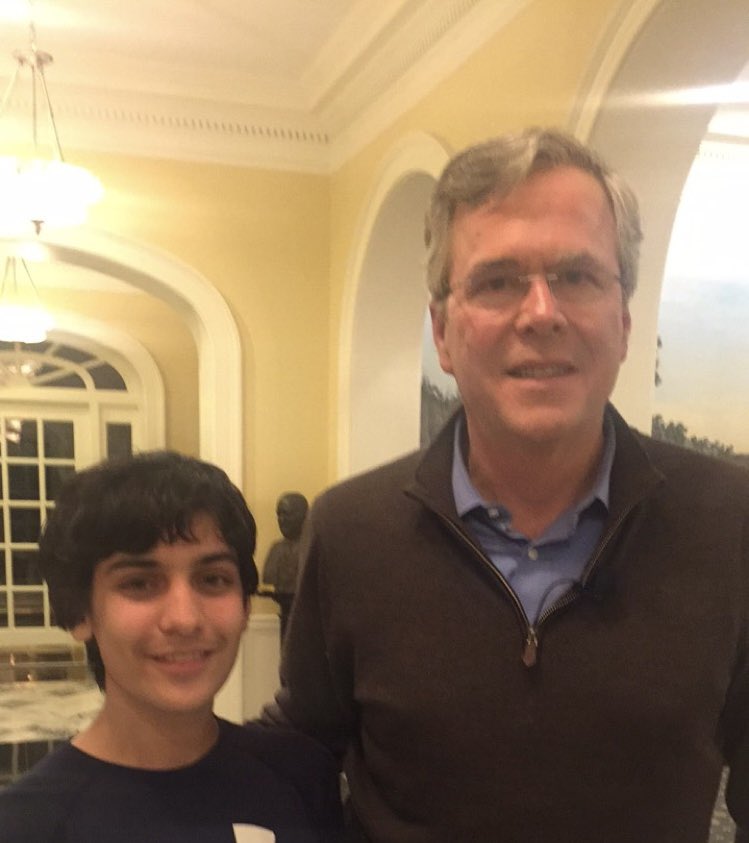
My camera roll is so funny cuz it’ll just be like "10 years ago Ted Cruz and Jeb Bush were at your house"
Nalin Haley tweet mediaNalin Haley tweet media
English
355
85
4K
4.9M
Harsha Nagaraja
Harsha Nagaraja@Calls_a_Spade·
@TheSignOfFive Oh God. I genuinely had a laugh reading this. Man, the possibilities. It will be one country that no longer cares about AGI as well while every other country runs behind it. Content in having finally found jannat.
English
0
0
1
22
KIKI ♈ 🌈
KIKI ♈ 🌈@SabaSha80630047·
@TheSialkotiLad I'm literally flabbergasted that these indians knows the word "body count" or maybe they googled it like "ceasefire"🫥🫥🫥🫥
English
2
0
3
1.1K
Sensei Kraken Zero
Sensei Kraken Zero@YearOfTheKraken·
Guess who was the happiest about Narendra Modi's visit to the SCO Summit
Sensei Kraken Zero tweet mediaSensei Kraken Zero tweet media
English
1
0
15
1.5K
Harsha Nagaraja
Harsha Nagaraja@Calls_a_Spade·
@AbhinavAgarwal Everyone is a boss till they start doing hardware. This company does not have 1 hardware device and everything they have tried so far has been a disaster or commands a minor revenue stream. Yeah, he can continue to blabber.
English
0
0
0
12
Harsha Nagaraja
Harsha Nagaraja@Calls_a_Spade·
@jogakhichudi @adgpi Those were my thoughts too reading the letter. He considers himself as the victim for all the wrong reasons. Naive much?
English
0
0
0
27
Joga-Maya 😎
Joga-Maya 😎@jogakhichudi·
I respect and adore Neeraj so much, and yet this long explanatory note tells me he understood nothing of why people were angry and questioned him 😔 He's a World class sportsman, but isn't he still part of the Indian Army?Can't @adgpi give him an orientation course or something?
Neeraj Chopra@Neeraj_chopra1

English
3
8
21
999