Cernea Radu

496 posts

Cernea Radu

Cernea Radu

@CerneaRadu92

Katılım Haziran 2020
557 Takip Edilen28 Takipçiler
Cernea Radu retweetledi
Linas Beliūnas
Linas Beliūnas@linasbeliunas·
Be Leopold Aschenbrenner > Age 19: Graduates Columbia as valedictorian > Age 22: Joins OpenAI's Superalignment team > Age 22: Fired for raising AI safety concerns > Age 23: Publishes viral manifesto on AGI > Age 23: Launches hedge fund with $225M > Age 24: Returns 47% in six months > Age 25: $5.5B+ in equity exposure Leopold is the Warren Buffett of the AI Era. His AGI investment thesis, the full portfolio breakdown, and the framework any investor, entrepreneur, or operator can steal right now: linas.substack.com/p/leopold-asch…
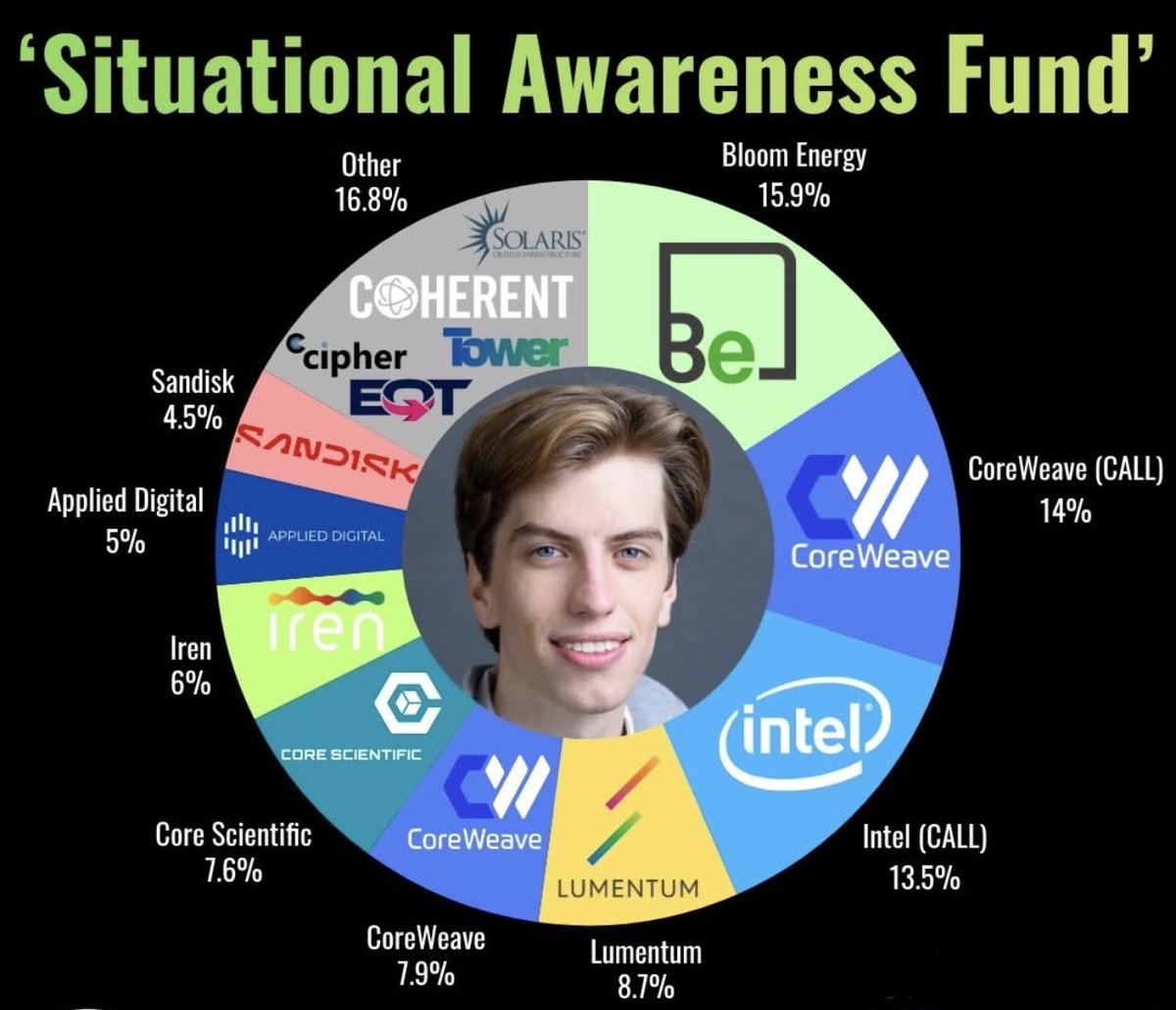
Linas Beliūnas tweet media
Autopilot@joinautopilot

Update: Leopold cannot be stopped One week ago: $5,000,000 Today: $11,000,000 The Leopold Aschenbrenner tracker in less than two months is already up ~65% According to his recent filings, he entered the year managing $5.29B That portfolio is now expected to have nearly doubled

English
3
15
94
13.3K
Cernea Radu retweetledi
Felipe Demartini
Felipe Demartini@namcios·
Um engenheiro do Google acabou de mostrar como substituir sua empresa inteira por agentes de IA Ivan Nardini subiu no palco de um evento da Anthropic e fez o que nenhum CEO tem coragem de dizer em público: Mostrou, passo a passo, como rodar uma empresa onde o único humano é o dono. CEO: 1 humano. Funcionários: agentes de IA. Infraestrutura: Google Cloud. Custo de um "funcionário" 24/7: menos de $60 dólares/mês. Sessenta dólares por mês para um agente que não dorme, não pede aumento, não marca reunião. E não é protótipo. Tudo que ele mostrou já está em produção com preço publicado: → Claude Code Agent Teams: múltiplos agentes trabalhando em paralelo, se coordenando sozinhos com tarefas compartilhadas → Managed Agents da Anthropic: deploy de agentes autônomos por US$ 0,08/hora de runtime. Oito centavos. → Vertex AI Agent Engine do Google: auto-scaling, monitoramento e governança prontos → Agent Development Kit: agentes multi-framework em menos de 100 linhas de código Os números já são brutais. A Stripe colocou Claude Code em 1.370 engenheiros. Uma equipe migrou 10.000 linhas de Scala para Java em 4 dias. A estimativa original era 10 semanas. Dez semanas virou quatro dias. Compressão de 92% do tempo de trabalho. Agora pensa em toda função que envolve processar informação, escrever código, gerar relatório, coordenar tarefa, responder ticket. Cada uma dessas cadeiras está com prazo de validade. O que está acontecendo nos bastidores é maior do que parece: O Google está se posicionando como a AWS dos agentes autônomos. A Anthropic fornece a inteligência. O Google fornece a infra de produção. Quando as duas convergem para o mesmo ponto e publicam a documentação juntas, não é experimento. É aposta declarada. E a aposta é que a empresa média do futuro não tem 50 funcionários. Tem 1 operador e uma frota de agentes. A pergunta deixou de ser "quantas pessoas você tem no time." Passou a ser "quantos agentes você consegue orquestrar."
Português
24
142
913
71.1K
Cernea Radu retweetledi
Álvaro J
Álvaro J@jota_snchez·
En 2014, Peter Thiel impartió una clase de 1h sobre cómo crear un monopolio partiendo de 0. Explicó cómo: · Google se convirtió en intocable · PayPal superó a todos · Facebook arraso a la competencia Estas son las 11 lecciones de su clase: 1. Crea valor y, después, captúralo
Español
23
303
1.6K
179.4K
Cernea Radu retweetledi
Jason Luongo
Jason Luongo@JasonL_Capital·
$NVDA just told you exactly where to invest your money. They just poured $4 billion dollars into photonics. Here are 10 of the most important photonics companies you need to be aware of: 1. $LITE - Lumentum (Lasers) The laser source that powers photonics interconnects. NVIDIA just invested $2B with a multibillion-dollar purchase commitment for advanced laser components. Building a new 240,000 sq ft InP laser fab in North Carolina. Added to the S&P 500. When NVIDIA writes a $2B check to secure your supply, the market is telling you something.
Jason Luongo tweet media
English
121
564
4.8K
933.6K
Cernea Radu retweetledi
McKinsey Global Institute
McKinsey Global Institute@McKinsey_MGI·
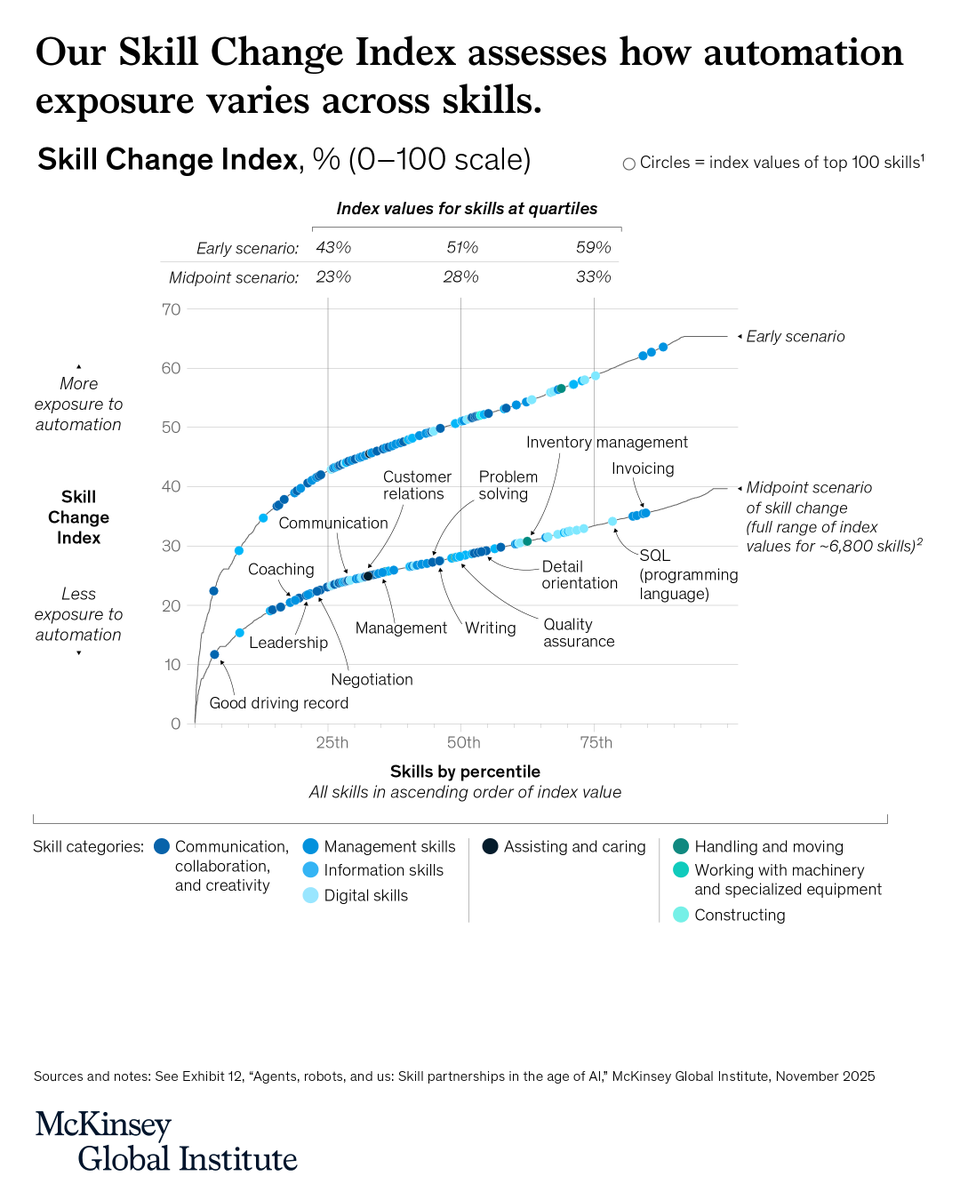
AI won’t make most human skills obsolete, but it will change how they’re used. Negotiation, problem solving, and leadership will matter more than ever as people work alongside agents and robots. Our new Skill Change Index shows which skills will be most, and least, exposed to automation in the next five years: mck.co/aiskills
McKinsey Global Institute tweet media
English
39
321
1K
184K
Cernea Radu retweetledi
Brivael Le Pogam
Brivael Le Pogam@brivael·
Tout le monde prend Elon pour un génie alors que c'est juste un mec obsédé par une seule chose : raisonner par principes premiers au lieu de raisonner par analogie. La différence est fondamentale. Raisonner par analogie, c'est regarder ce que font les autres et adapter. "Les constructeurs auto font des voitures électriques avec des batteries au plomb, donc on fait pareil en mieux." Tu pars du consensus et tu itères à la marge. Tu finis par faire le même produit que tout le monde, avec 10% en plus. Raisonner par principes premiers, c'est décomposer le problème jusqu'à des vérités physiques incontestables, puis reconstruire à partir de là. Tu ignores ce que font les autres. Tu pars de la physique. Quand Elon a regardé la voiture électrique début 2000, tout le monde disait que c'était mort. Les batteries au plomb donnaient 100 bornes d'autonomie, performance ridicule, bagnole qui pèse trois tonnes. Consensus : "c'est pas possible, c'est pour ça que personne y arrive." Lui s'est posé une question idiote : pourquoi mon laptop tient 10h sur une batterie qui pèse 300 grammes, et pourquoi une voiture électrique ne tient pas ? Même problème physique : stocker de l'énergie chimique et la transformer en énergie électrique. Donc soit la physique est différente entre un laptop et une voiture (fausse), soit c'est juste la chimie choisie qui est pourrie. Le plomb, c'est 30-40 Wh/kg. Le lithium-ion dans ton laptop, c'est 250 Wh/kg. Facteur 6. Tout le problème d'autonomie venait de là. Le reste de l'industrie auto raisonnait par analogie ("les voitures utilisent des batteries au plomb depuis 100 ans"), Tesla a raisonné par physique ("la densité énergétique est le seul vrai goulot"). Sauf que coller 6 831 cellules 18650 de laptop dans un châssis de Lotus Elise, c'est l'enfer. Les premiers prototypes partaient en thermal runaway - une cellule qui surchauffe en enflamme une autre, réaction en chaîne, bagnole qui crame. Littéralement. Ils ont dû inventer un système de refroidissement liquide propriétaire qui circule entre les cellules, repenser l'architecture thermique à partir de zéro, parce que personne n'avait jamais packé autant de li-ion ensemble. Et même après ça, pendant des années, des packs Roadster partaient en fumée en atelier. Ça c'est le truc que les gens ratent sur Elon : le raisonnement par principes premiers ne te donne PAS la solution. Il te donne juste la bonne direction. Après, il faut itérer comme un porc, casser des prototypes, brûler du cash, et accepter que la première version soit une merde qui explose. La plupart des gens s'arrêtent au premier prototype qui crame. Ego blessé, "bon ok c'était peut-être pas la bonne idée". Lui continue. Pas parce qu'il est "visionnaire", mais parce que la physique lui a dit que c'était possible, donc c'est juste un problème d'ingénierie. Tu résous un problème d'ingénierie avec du temps et de la discipline, pas avec du génie. Et c'est exactement le même raisonnement derrière son refus du Lidar pour la conduite autonome. Tout le monde met du Lidar parce que tout le monde met du Lidar - raisonnement par analogie pur. Lui pose la question : un humain conduit avec deux caméras (ses yeux) et un réseau de neurones (son cerveau). Donc par principe premier, une voiture autonome peut conduire avec des caméras et un réseau de neurones. Le Lidar, c'est une béquille qu'on utilise parce qu'on sait pas faire de la vision par ordinateur correctement. Tu peux être d'accord ou pas avec la conclusion, mais le raisonnement est propre. Le truc qu'il faut internaliser : le raisonnement par principes premiers demande zéro intelligence supplémentaire. Il demande de l'humilité intellectuelle et zéro ego. Parce que quand tu raisonnes par principes premiers, tu arrives à des conclusions qui te font passer pour un débile devant tes pairs. "Tu veux mettre des batteries de laptop dans une bagnole ?" "Tu veux virer les Lidar que tout le monde utilise ?" "Tu veux atterrir une fusée à la verticale ?" Si tu as de l'ego, tu ne supportes pas le ridicule social de défendre la conclusion pendant les 3-5 ans où elle a l'air conne. Tu recules, tu nuances, tu t'alignes sur le consensus. Et tu meurs au milieu de la distribution. Le pragmatisme vrai, c'est ça : décomposer jusqu'à la physique, reconstruire froidement, itérer malgré les échecs, ignorer le regard des autres. C'est accessible à tout le monde. Ça demande juste d'arrêter de se demander ce que les autres pensent et de commencer à se demander ce qui est vrai.
Français
91
309
1.5K
89.1K
Cernea Radu retweetledi
Palantir
Palantir@PalantirTech·
Because we get asked a lot. The Technological Republic, in brief. 1. Silicon Valley owes a moral debt to the country that made its rise possible. The engineering elite of Silicon Valley has an affirmative obligation to participate in the defense of the nation. 2. We must rebel against the tyranny of the apps. Is the iPhone our greatest creative if not crowning achievement as a civilization? The object has changed our lives, but it may also now be limiting and constraining our sense of the possible. 3. Free email is not enough. The decadence of a culture or civilization, and indeed its ruling class, will be forgiven only if that culture is capable of delivering economic growth and security for the public. 4. The limits of soft power, of soaring rhetoric alone, have been exposed. The ability of free and democratic societies to prevail requires something more than moral appeal. It requires hard power, and hard power in this century will be built on software. 5. The question is not whether A.I. weapons will be built; it is who will build them and for what purpose. Our adversaries will not pause to indulge in theatrical debates about the merits of developing technologies with critical military and national security applications. They will proceed. 6. National service should be a universal duty. We should, as a society, seriously consider moving away from an all-volunteer force and only fight the next war if everyone shares in the risk and the cost. 7. If a U.S. Marine asks for a better rifle, we should build it; and the same goes for software. We should as a country be capable of continuing a debate about the appropriateness of military action abroad while remaining unflinching in our commitment to those we have asked to step into harm’s way. 8. Public servants need not be our priests. Any business that compensated its employees in the way that the federal government compensates public servants would struggle to survive. 9. We should show far more grace towards those who have subjected themselves to public life. The eradication of any space for forgiveness—a jettisoning of any tolerance for the complexities and contradictions of the human psyche—may leave us with a cast of characters at the helm we will grow to regret. 10. The psychologization of modern politics is leading us astray. Those who look to the political arena to nourish their soul and sense of self, who rely too heavily on their internal life finding expression in people they may never meet, will be left disappointed. 11. Our society has grown too eager to hasten, and is often gleeful at, the demise of its enemies. The vanquishing of an opponent is a moment to pause, not rejoice. 12. The atomic age is ending. One age of deterrence, the atomic age, is ending, and a new era of deterrence built on A.I. is set to begin. 13. No other country in the history of the world has advanced progressive values more than this one. The United States is far from perfect. But it is easy to forget how much more opportunity exists in this country for those who are not hereditary elites than in any other nation on the planet. 14. American power has made possible an extraordinarily long peace. Too many have forgotten or perhaps take for granted that nearly a century of some version of peace has prevailed in the world without a great power military conflict. At least three generations — billions of people and their children and now grandchildren — have never known a world war. 15. The postwar neutering of Germany and Japan must be undone. The defanging of Germany was an overcorrection for which Europe is now paying a heavy price. A similar and highly theatrical commitment to Japanese pacifism will, if maintained, also threaten to shift the balance of power in Asia. 16. We should applaud those who attempt to build where the market has failed to act. The culture almost snickers at Musk’s interest in grand narrative, as if billionaires ought to simply stay in their lane of enriching themselves . . . . Any curiosity or genuine interest in the value of what he has created is essentially dismissed, or perhaps lurks from beneath a thinly veiled scorn. 17. Silicon Valley must play a role in addressing violent crime. Many politicians across the United States have essentially shrugged when it comes to violent crime, abandoning any serious efforts to address the problem or take on any risk with their constituencies or donors in coming up with solutions and experiments in what should be a desperate bid to save lives. 18. The ruthless exposure of the private lives of public figures drives far too much talent away from government service. The public arena—and the shallow and petty assaults against those who dare to do something other than enrich themselves—has become so unforgiving that the republic is left with a significant roster of ineffectual, empty vessels whose ambition one would forgive if there were any genuine belief structure lurking within. 19. The caution in public life that we unwittingly encourage is corrosive. Those who say nothing wrong often say nothing much at all. 20. The pervasive intolerance of religious belief in certain circles must be resisted. The elite’s intolerance of religious belief is perhaps one of the most telling signs that its political project constitutes a less open intellectual movement than many within it would claim. 21. Some cultures have produced vital advances; others remain dysfunctional and regressive. All cultures are now equal. Criticism and value judgments are forbidden. Yet this new dogma glosses over the fact that certain cultures and indeed subcultures . . . have produced wonders. Others have proven middling, and worse, regressive and harmful. 22. We must resist the shallow temptation of a vacant and hollow pluralism. We, in America and more broadly the West, have for the past half century resisted defining national cultures in the name of inclusivity. But inclusion into what? Excerpts from the #1 New York Times Bestseller The Technological Republic: Hard Power, Soft Belief, and the Future of the West, by Alexander C. Karp & Nicholas W. Zamiska techrepublicbook.com
English
8.7K
7.2K
34K
35.8M
Cernea Radu retweetledi
hormonemoon
hormonemoon@hormonemoon·
En 2019, el profesor del MIT, Patrick Winston dió una conferencia magistral de 1 hora llamada «Cómo hablar». Tiene más de 18 millones de vistas por una razón. Sus conceptos clave: - Tus ideas son como tus hijos - La regla de los 5 minutos para conferencias de trabajo - Por qué los chistes fallan al principio En vez de ver Netflix hoy, deberías ver este video. 15 lecciones sobre comunicación: 🧵 1. Tu éxito está determinado por tu habilidad para hablar, habilidad para escribir y la calidad de tus ideas. En ese orden.
Español
45
2.6K
10.9K
970.2K
Cernea Radu retweetledi
Jaynit
Jaynit@jaynitx·
In 2014, Peter Thiel gave a 50-minute masterclass on how to build a monopoly from scratch. His frameworks: - Competition is for losers - Secrets vs mysteries - Substance over status 15 timeless lessons from his book "Zero to One": 1. Every moment in business happens only once
English
9
77
326
25.6K
Cernea Radu retweetledi
Jaynit
Jaynit@jaynitx·
Kobe Bryant cold-called Jony Ive, Oprah, and Nike's CEO to learn how they think: "I just cold-call people. Absolutely. I just cold-call people and pick their brain about stuff. Some of the questions I'll ask will seem really, really simple and stupid, quite honestly, for them. But if I don't know, I don't know. I have to ask. I want to learn more about how they build their business, how they run their companies, how they see the world." On who he calls: "We could start in the Nike family. I cold-call Mark Parker all the time. Johnny Ive. Dan Wieden. Oprah Winfrey. Arianna Huffington. Hillary Swank. It just goes on and on and on." Kobe explains why he called Jony Ive: "He's obviously unique in what he does. I want to know how does he view product? How does he view the process of designing product? How does he know when he has the product exactly where he wants it to be? How is he seeing the world differently than everybody else who's manufacturing hardware? There's something going on from the moment he sees something to when it goes into his brain, that's a different process than other designers. I'm curious to know what that is." Kobe visited Apple to learn: "I spent the day there, talking with Johnny, picking his brain about product. What makes them who they are? And why? Once you have the passion the thing that you're passionate about, now you can look at other people, other entities, works of art, and draw things from that to help you be better at what you do. By looking for those common denominators." Jony Ive asked Kobe the same questions in return: "Johnny wanted to know, how do I prepare? How do I study? How do I view the game? How do you build your game? My response is much like the way he builds products. You think sequentially. You look at the end result of what you want to create. But in order to create that, there are so many little things that go into this massive entity or device." Kobe continues: "It's no different than building my basketball game. You start with: where do you want your game to be? What would make your game most unstoppable or hard to deal with? Now you work backwards from there. You start building it one piece at a time. One move at a time. One counter at a time. There's a lot of similarities." On building his company, Kobe Inc: "We're just cranking away every day, building out the internal structure. Communicating the culture internally. Where are we going? Building out that model, that plan. We also don't want to get too far ahead of ourselves. I have this vision of where I'd like us to go, but it's important for us to go one step at a time." On what he'd tell other athletes about marketing: "For me, doing that, it seems like I should really just do it for free. Because what I'm going to tell them is: be yourself. That's it. Be you. There's no gimmick. You don't have to contrive anything. Who are you? Where are you today? What is your story? Where does that come from? Then all you're doing is communicating that story to the public." Kobe reflects on LeBron going back to Cleveland: "It depends how you shape the story. You stay in Miami, there's a great story you can mold around that. You go to Cleveland, there's a way you can mold that too. It really just depends on what his personal truth is. I think he communicated his truth extremely well, and that's what you have to stick to."
English
10
119
826
144.1K
Cernea Radu retweetledi
Science girl
Science girl@sciencegirl·
That fresh smell after rain is called petrichor. When raindrops hit dry soil, they release plant oils and geosmin from bacteria, creating that rich, earthy scent.
English
203
2K
15.4K
1.4M
Cernea Radu retweetledi
Reads with Ravi
Reads with Ravi@readswithravi·
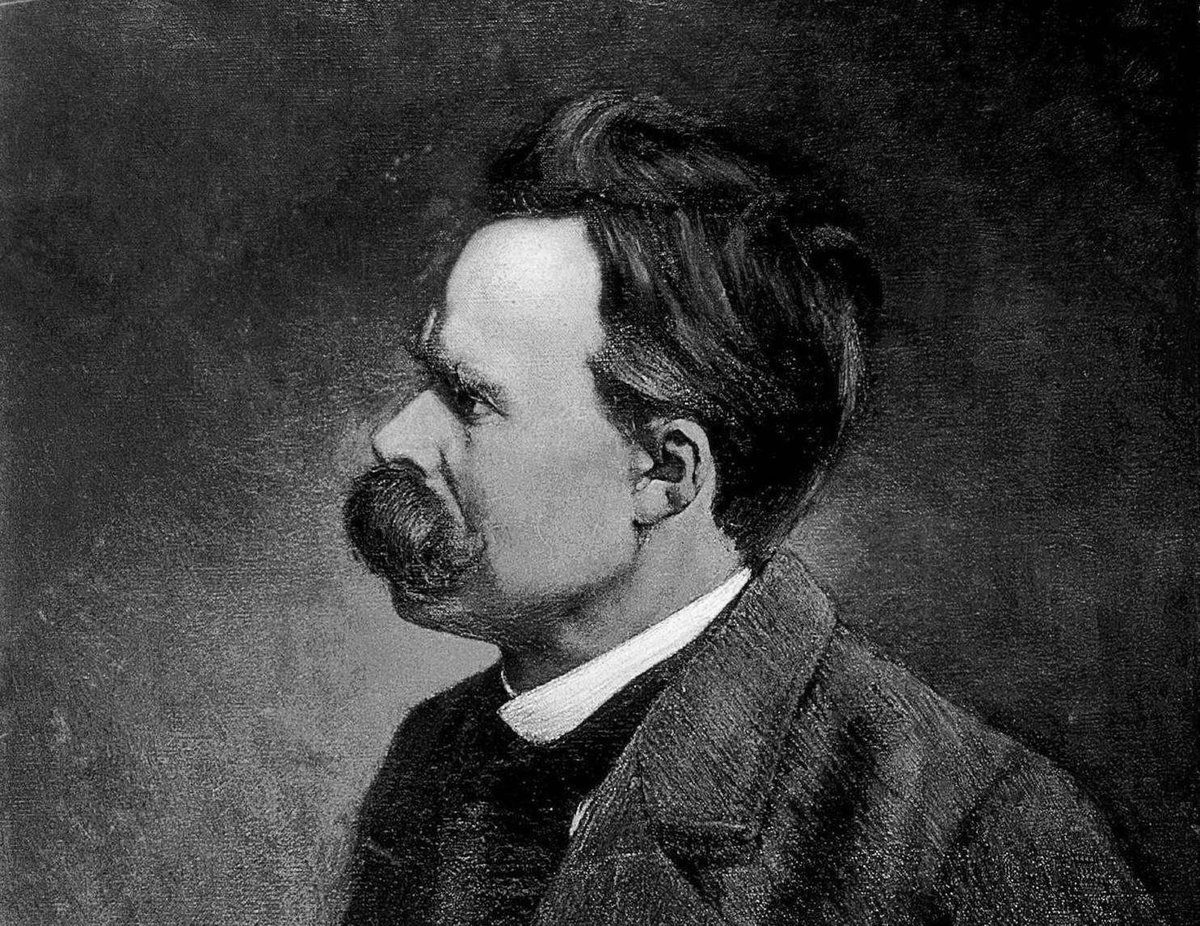
“The most dangerous form of blindness is believing that your perspective is the only reality.” — Friedrich Nietzsche
Reads with Ravi tweet media
English
77
1.1K
4.7K
107.7K
Cernea Radu retweetledi
Elon Musk
Elon Musk@elonmusk·
Most CEOs have no idea what’s really going on
David Senra@davidsenra

IBM built a cloud of suits to make sure the CEO never talked to anyone actually doing the work. @elonmusk does the opposite. "Elon's method is extreme focus on substance. Extreme focus on getting to the truth. In any organization with multiple layers, there's compounding lies. Each layer wants to look good. Each layer puts a little spin on things. If one layer lies to the next layer above it, maybe that's okay. When that happens two or three times, the lies compound. If that happens six times, the lies really compound. If that happens 12 times, the CEO has no idea what's happening. That was IBM. By the time I got there as an intern, I calculated there were 12 layers of management between me and the CEO. They even had a term for it: the great cloud. A cloud of men in gray business suits who followed the CEO around and prevented him from ever talking to anybody who was actually doing the work. When he would come to visit, it was like a visit from the king. A completely impervious bubble. That's the polar opposite of the Elon approach." — @pmarca

English
3.5K
14.2K
110.9K
17.2M
Cernea Radu retweetledi
Construction Videos by Viralfizz
Precision in every line ✨ This design is crafted using V-Bit carving
English
1
9
171
52.5K
Cernea Radu retweetledi
عبدالعزيز المقبل
عبدالعزيز المقبل@AzizSapphire·
The strait of Hormuz is a global chokepoint for crude Oil 🛢 and refined products.
عبدالعزيز المقبل tweet mediaعبدالعزيز المقبل tweet media
English
7
69
201
23.6K
Cernea Radu retweetledi
Vala Afshar
Vala Afshar@ValaAfshar·
Tim Cook on how Steve Jobs believed that small teams could do amazing work.
English
16
130
780
37.1K
Cernea Radu retweetledi
۟
۟@MINHxDYNASTY·
took 60 minutes to read through this ray dalio rarely writes here, but when he does id recommend paying attention or ask ai to help you summarize everything and chat on how it pertains to your specific life and options
Ray Dalio@RayDalio

x.com/i/article/2022…

English
245
426
10.1K
5.1M
Cernea Radu
Cernea Radu@CerneaRadu92·
What sound..
English
0
0
1
9
Cernea Radu retweetledi
ₕₐₘₚₜₒₙ
ₕₐₘₚₜₒₙ@hamptonism·
Finance is not about math, Blackstone CEO:
English
27
476
3.1K
548.4K