CLINTEL FOUNDATION

3.3K posts

CLINTEL FOUNDATION banner
CLINTEL FOUNDATION

CLINTEL FOUNDATION

@ClintelOrg

World Climate Declaration, signed by more than 2000 scientists and experts. Message: there is no climate emergency. Book: The Frozen Climate Views of the IPCC.

Amsterdam, The Netherlands Katılım Mart 2020
698 Takip Edilen8K Takipçiler
Sabitlenmiş Tweet
CLINTEL FOUNDATION
CLINTEL FOUNDATION@ClintelOrg·
We are proud to announce that today, during a press conference in Brussels, we revealed that former Czech President Václav Klaus will succeed Guus Berkhout as President of Clintel after seven years. Read the press release on our website. 👇 clintel.org/former-czech-p…
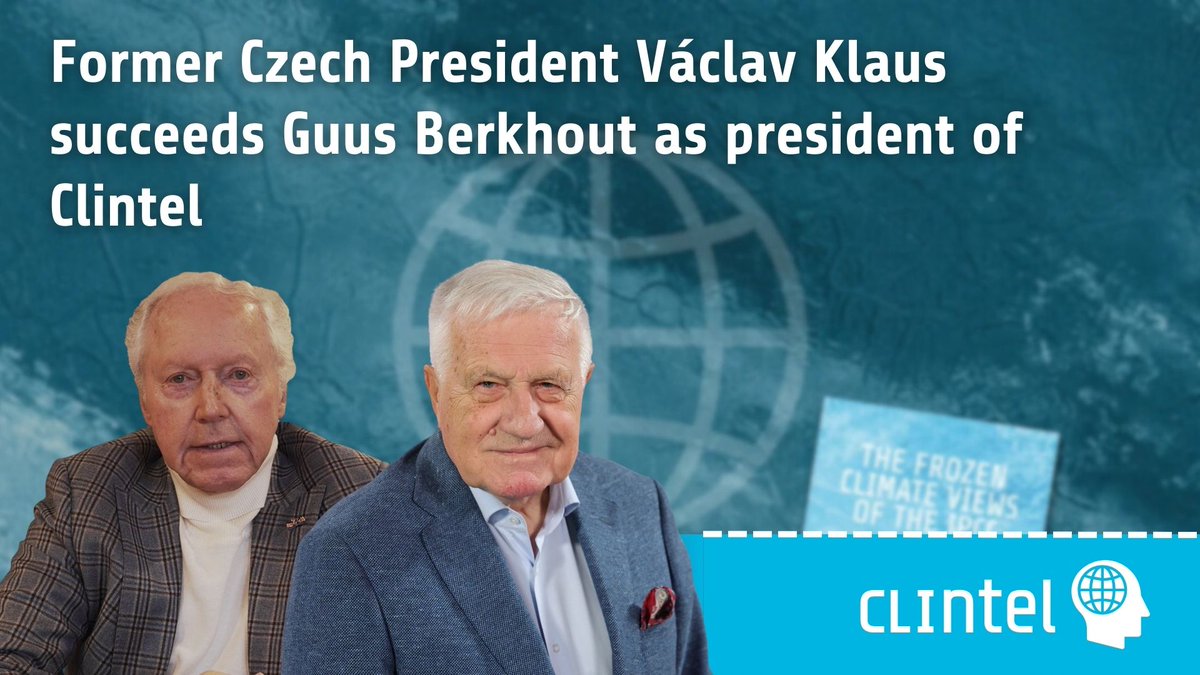
CLINTEL FOUNDATION tweet media
English
2
16
43
5.1K
CLINTEL FOUNDATION retweetledi
Marcel Crok
Marcel Crok@marcelcrok·
Rob de Vos en ik schreven inderdaad voor het eerst over deze kwestie in 2017/2018 in het rapport voor de Groene Rekenkamer getiteld "Waarom de KNMI-scenario's niet zullen uitkomen". Bron: klimaatgek.nl/document/KNMI%… In de samenvatting van dat rapport staat het volgende (vet door mij aangebracht): "Het KNMI gebruikte twee van de vier IPCC-scenario’s als uitgangspunt voor de KNMIscenario’s, het RCP4.5- en het RCP8.5-scenario. RCP4.5 is de basis voor het “Gematigde” KNMI-scenario (GH en GL) en RCP8.5 de basis voor het “Warme” KNMIscenario (WH en WL). Het KNMI omschrijft RCP8.5 als een business-as-usual-scenario, maar dat is anno 2017 niet langer houdbaar. RCP8.5 is echter veel meer een worst case-scenario. Een manier om in 2100 op RCP8.5 uit te komen is bijvoorbeeld dat de wereld dan tien keer zoveel steenkool gebruikt als tegenwoordig. Dat is zeer onwaarschijnlijk. Een recente studie stelt dan ook dat RCP8.5 een onaannemelijk scenario is dat eigenlijk niet meer als referentie gebruikt zou moeten worden voor beleidsstudies. De bovengrens van 2,3°C aan opwarming in 2050 in de KNMI-scenario’s is gebaseerd op dit onaannemelijke RCP8.5-scenario." Destijds ging het om de KNMI Next scenario's uit 2014, maar zelfs bij de KNMI scenario's in 2023 gebruikte het KNMI nog altijd dit RCP8.5 scenario. Meteen na de presentatie schreef ik het volgende: "Maar de olifant in de kamer is dat hoogste scenario SSP5-8.5. Dit scenario ligt sinds enkele jaren onder vuur van (energie)deskundigen, die stellen dat het zo onrealistisch is dat het niet gebruikt zou moeten worden bij het adviseren voor beleid." clintel.nl/de-helft-van-d… In ons boek De Starre Klimaatvisie van het IPCC wijdden we een heel hoofdstuk aan de kwestie. We schrijven in de introductie van het hoofdstuk het volgende: "Het grootste nieuws in het AR6 rapport is waarschijnlijk dat bovengrensscenario’s zoals SSP5-8.5 en SSP3-7.0 nu als onwaarschijnlijk worden beschouwd. Dat is heel goed nieuws, want het betekent dat een hogere opwarming in 2100 minder waarschijnlijk wordt geacht dan een paar jaar geleden. Helaas is dit nieuws diep verborgen in het rapport en zullen maar weinig beleidsmakers het zien. Erger nog, grote delen van het rapport benadrukken nog steeds deze bovengrensscenario’s. Hoe heeft dit kunnen gebeuren?" Bron: clintel.shop/product/de-sta… Sinds 2017 was bekend dat dit scenario niet houdbaar was. Pas in 2026 geven wetenschappers die gaan over de scenario's (waaronder de in de Volkskrant geciteerde Detlef van Vuuren van het PBL) het niet alleen publiekelijk toe maar passen ze de scenario's eindelijk aan. En vergis je niet, nog dagelijks worden er studies gepubliceerd met dit extreme RCP8.5 scenario. Het is met name te danken aan Roger Pielke Jr @RogerPielkeJr dat het IPCC het nu aanpast. Hij heeft samen met enkele collega's jarenlang gepleit voor aanpassing. Afgelopen week bracht Pielke dit nieuws ook weer als eerste op zijn substack pagina: rogerpielkejr.substack.com/p/rcp85-is-off… (achter paywall) Een Nederlandse vertaling van dat stuk is te lezen bij @ClintelNED: clintel.nl/goed-nieuws-ex… Zonder die inbreng van Pielke Jr zou deze kop vandaag niet in de Volkskrant verschenen zijn. Maar eerlijk is eerlijk, Maarten Keulemans heeft er enkele jaren geleden ook op gewezen dat dit scenario niet houdbaar was. Dus Wierd heeft gelijk dat ondergetekende dit al jaaaaren geleden zei. Het was zelfs voordat Clintel werd opgericht! Volg @ClintelNED en @ClintelOrg als je jaren voor wilt lopen op de media 😊
Wierd Duk ܦܝܪܬ ܕܘܟ@wierdduk

En wie zeiden dit al jaaaaaren geleden en werden uit elk debat geweerd? Juist, mensen als @marcelcrok @ClintelNED en ook @Simon_Rozendaal

Nederlands
16
163
476
15.8K
CLINTEL FOUNDATION retweetledi
Stefan Willems (Beurs/Expat)
Stefan Willems (Beurs/Expat)@FinanceFilosoof·
17 kernreactoren hebben we in Duitsland gesloten sinds 2010. Die leverden in 2010 nog 140 Terrawatuur stroom, genoeg voor 40 miljoen Duitse gezinnen te voorzien van stroom. Dat noemen we tegenwoordig een ‘strategische misstap’. Ik noem het liever ideologisch wanbeleid.
First Squawk@FirstSquawk

URSULA VON DER LEYEN: LOOKING BACK, I BELIEVE IT WAS A STRATEGIC MISSTEP FOR GERMANY TO ABANDON NUCLEAR ENERGY — IF WE ARE SERIOUS ABOUT CLIMATE, BOTH GAS AND COAL ARE FAR MORE HARMFUL THAN NUCLEAR.

Nederlands
35
194
840
16.4K
CLINTEL FOUNDATION
CLINTEL FOUNDATION@ClintelOrg·
Die vollständige Abschaffung aller Wiederkäuer würde kaum 0,05 °C „Nutzen“ bringen – nicht einmal messbar. Gleichzeitig riskieren wir Lebensmittelknappheit und Hungersnöte. Laut William Happer trägt CO₂ sogar zur Begrünung des Planeten bei. Wann hört diese Klima-Hysterie endlich auf? 🌍🐄 #Klima #Methan #Landwirtschaft
CLINTEL FOUNDATION tweet media
Deutsch
4
14
32
432
CLINTEL FOUNDATION
CLINTEL FOUNDATION@ClintelOrg·
L’obsession du « net zéro » au Canada est un sabotage économique. Le soi-disant coût carbone du « Timbits » est un mythe — les coûts réels écrasent l’industrie, nuisent à la compétitivité et pénalisent les travailleurs. Il est temps de regarder la réalité en face. @FriendsOScience Communiqué de presse #NetZero #TaxeCarbone #Canada #CriseÉnergétique
CLINTEL FOUNDATION tweet media
Français
3
6
19
640
CLINTEL FOUNDATION
CLINTEL FOUNDATION@ClintelOrg·
South Korea’s “net zero” fantasy is colliding with reality. While politicians chase climate targets, the economy still runs on fossil fuels—and always will. Energy security matters more than green ideology. Time to face facts. #NetZero #ClimatePolicy #EnergyReality #Clintel
CLINTEL FOUNDATION tweet media
English
4
10
17
277
CLINTEL FOUNDATION retweetledi
Tom Nelson
Tom Nelson@TomANelson·
Tom Nelson Podcast #391: “Brenda Shaffer” is now published. @ProfBShaffer Brenda Shaffer discusses her Wall Street Journal piece arguing that current renewable-driven policies undermine energy security by making Western systems less reliable, more expensive, and dependent on concentrated supply chains, often tied to China. She says maritime security failures (Red Sea, Russia-Ukraine, Strait disruptions) show poor preparation, and argues fossil fuels still dominate the global energy mix (87%) despite decades of subsidies, while wind/solar remain limited and require backup baseload. She criticizes restricting fossil-fuel finance, especially in Africa, for worsening energy access and development. Shaffer claims UN climate institutions are political, seek taxation power withouBt representation, and that climate movements often oppose both fossil fuels and nuclear. She highlights Germany’s costly energy transition, emphasizes operational energy in warfare, and calls to restore energy security as national security and enable open debate. 00:00 Renewables and Crisis 00:57 Energy Security Failures 03:04 Emperor New Clothes 05:36 China and Methane Politics 10:32 Climate Narratives vs Reality 12:33 Myths of Transition 16:26 Cutting Supply Hurts Poor 19:50 Africa Needs Real Power 26:36 Germany Energiewende Fallout 29:21 Climate Activism and Anti West 30:33 Hydrocarbon Roadmap Skepticism 31:19 UN Climate Taxes and Power Grabs 33:18 Transparency and Budget Secrecy 34:39 Trump Era Workarounds and Lawfare 38:08 Gatekeepers and Speaking Freely 39:13 Languages and Middle East Shifts 44:07 Operational Energy in Warfare 47:53 Military Electrification Limits 51:52 IPCC Politics and Carbon Markets 55:27 Extreme Weather Narratives 58:01 Energy Realism Closing Message
English
1
19
39
3.5K
CLINTEL FOUNDATION retweetledi
Roland Tichy
Roland Tichy@RolandTichy·
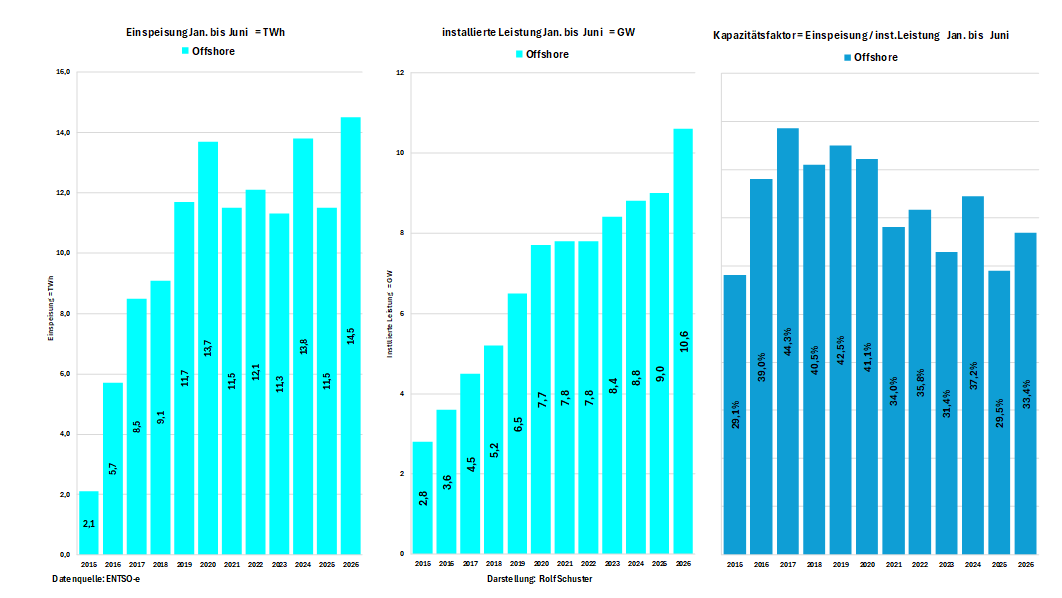
Strom fehlt, wenn man ihn braucht = teuer. Zuviel Strom, wenn man ihn nicht braucht = noch teurer. Dafür nötige Infrastruktur und Netze = irrsinnig teuer. So dumm läuft das mit der Energiewende. tichyseinblick.de/kolumnen/licht…
Deutsch
98
715
2.9K
20.8K
CLINTEL FOUNDATION
CLINTEL FOUNDATION@ClintelOrg·
Deutschlands sinkende CO₂-Emissionen? Kein Erfolg der Energiewende, sondern das Resultat wirtschaftlicher Schwäche. Weniger Energie = weniger Industrie = weniger Emissionen. Wind und Sonne werden gefeiert – doch tatsächlich verdecken sie nur den Rückgang der industriellen Produktion. Die unbequeme Wahrheit: Nicht „grüne“ Politik, sondern Deindustrialisierung senkt die Emissionen. #Energiekrise #Klimarealität #Energiewende #NettoNull #CO2
CLINTEL FOUNDATION tweet media
Deutsch
5
22
58
742
CLINTEL FOUNDATION
CLINTEL FOUNDATION@ClintelOrg·
Wake up world!
Peter Clack@PeterDClack

Are we the first species to create material objects that will outlive us by thousands of years? A wind turbine works for around 20 years, but its remains will exist for 500 years or a millennium. We are building a world of permanent plastic: discarded bottles and utensils, computers, televisions and car bodies. There is only so much land area, and it is gradually being swallowed to dump our discarded material society. The physics is a barrier for which there are few solutions. We use immense energy resources to bind materials together—resins, alloys, and composites. These bind so tightly that nature cannot pull them apart. We’ve created a physical era of deadlock. The energy now required to undo objects like turbine blades or batteries is greater than the energy it took to build them in the first place. The cosmos may be silent, but this new kind of barrier highlights a different kind of silence—the end of biological renewal, replaced by the static, unchanging hum of synthetic mounds of waste piling up on every available land and seascape. Will we resort to junkyards in Antarctica, the living deserts or the ocean bed? This is the silent symbolism of a biological world replaced by 'Plasticine'—a world of cellophane landscapes and lifeless grey mounds of garbage. It’s the logical conclusion to a system we never found an answer to. The waste problem is no longer a niche concern. It's reality.

English
3
12
34
953
CLINTEL FOUNDATION retweetledi
Peter Clack
Peter Clack@PeterDClack·
Solar panels and turbine blades are destined to become the actual 'fossils' from a bygone age. Much of this unusable rubble will lie in the ground for thousands of years—a legacy of a modern world where recycling is a myth used to prop up a narrative of free wind and sunshine. Despite decades of hysteria and trillions of dollars spent on renewables - coal, oil and gas still produce 81% of the world's primary energy. It's around 10 to 30 times more expensive to recycle a solar panel than to landfill it. Hundreds of thousands of decommissioned wind turbine blades the size of Boeing 707 wings, are never going to be recycled. High-purity silicon used in wind solar is produced by heating quartz (silica) with carbon (usually in the form of coal, coke, or wood chips) in a submerged-arc furnace at temperatures exceeding 2,000°C. Nothing can justify the colossal electricity volume needed to run the furnaces, which, in the world's largest solar-producing regions, are still supplied by coal-fired grids. Recycling costs far more than any benefits. A 90% figure often cited refers primarily to the steel towers and internal wiring, which are valuable. But the 'green' challenge remains with the composite blades and the economic gap in solar recovery. A technology can be 'recyclable' in a lab but a costly 'liability' in the real world if the market for those recovered materials doesn't exist without massive subsidies. While solar panels may pay back the 'joules', they don't necessarily pay back the quality of energy (baseload/dispatchable) used to create them. With a decommissioning cycle occurring before 2050, we are essentially stuck in a perpetual loop of high-energy manufacturing swallowing the very fuels we are trying to replace. Research from groups like the IEA and various mining analysts suggests that to meet Net Zero by 2050, the world will need to mine more copper in the next 25 years than has been mined in the last 5,000 years. New copper mines are not popping up either. It takes an average of 16 years to move a copper mine from discovery to first production. We are significantly behind the curve for the volume required for EVs, wind turbines, and massive grid expansions. Environmental regulations and permits often stretch that 16-year average out. This creates a paradox where 'green' regulations slow down 'green' mineral extraction. It isn’t just copper; a single 3 MW wind turbine requires approximately 2 tons of rare earth magnets. We use massive diesel-burning fleets to mine the minerals for 'clean' energy. We are demanding a 500% increase in the production of minerals like lithium, graphite and cobalt by 2040. As we dig deeper for lower-grade ore, the energy required to extract each ton of metal rises, creating a feedback loop where we need more energy just to get the materials to build 'energy-saving' tech. The industrial cost of waste from high-tech civilisations must eventually hit a geological wall. Are we planning for that wall or still accelerating towards it?
Peter Clack tweet media
Bega, New South Wales 🇦🇺 English
80
723
1.4K
20K
CLINTEL FOUNDATION retweetledi
CLINTEL.NL
CLINTEL.NL@ClintelNED·
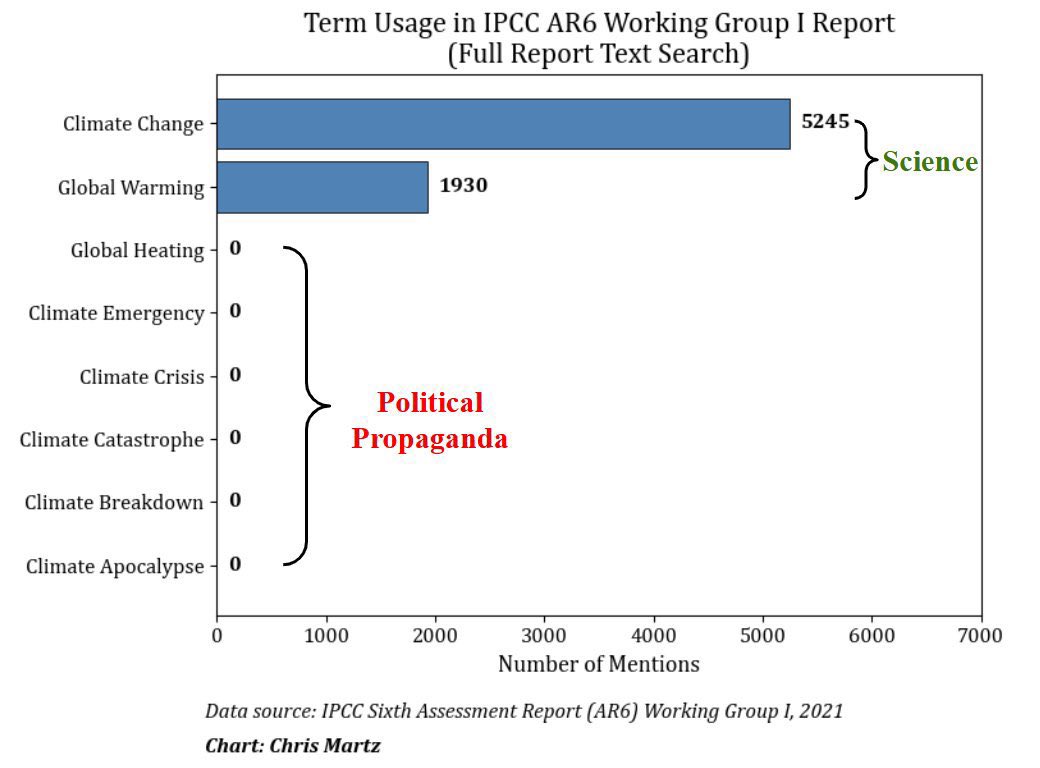
Jarenlang werden we weggezet als “ontkenners”. En nu? Het CMIP schrapt eindelijk de extreme klimaatscenario’s (zoals RCP8.5) die volgens ons altijd al onrealistisch waren. Toch is wereldwijd – en zeker in Nederland – beleid gebouwd op deze overdreven doemscenario’s. Den Haag kan dit niet langer negeren. Herziening van het klimaatbeleid is onvermijdelijk. #Klimaat #Energiebeleid #IPCC #RCP85 #Klimaatrealisme #Clintel #RogerPielkeJr
CLINTEL.NL tweet media
Nederlands
14
310
461
7.2K