Sabitlenmiş Tweet
Rob Allen
103 posts

Rob Allen
@CoachRobAu
Youth football coach & parent. Doctor by training. Helping parents understand the game so kids enjoy it more. https://t.co/bSnnSRiQT8
Perth, Western Australia Katılım Ocak 2026
17 Takip Edilen28 Takipçiler

For me the “window” isn’t just age.
It’s when they can hold instructions, repeat actions 20+ times, and still enjoy solving problems.
Example: 3v3, four mini goals.
Score is double if it comes within 5 seconds of winning it back.
You’ll see lots of transitions in 10 minutes.
Scanning, pressing, turning, passing — repeated inside the game. Decision-rich reps. That’s what compounds later.
English

Free session of the week 🥳
Youth Development is your golden window.
Physical development is stable, attention spans are longer, but they still love learning new skills. Miss this opportunity and you'll spend years trying to fix what should have been learned now.
Want a new session like this one in your inbox every Tuesday?
360tft.com/?section=Htg1b…

English

@KyleUnitas @kestrelpsych @coach_kevin_m The underrated part is the emotional climate. When kids are new, curious, and not judged on outcomes, they take risks and repeat more reps. That’s a learning accelerant. “Golden” might be love + safety + opportunity, as much as growth curves.
English

@CoachRobAu @kestrelpsych @coach_kevin_m What specifically makes this window “golden”—biological stability, neural plasticity, or quality of coaching?
Some capacities compound earlier (coordination bandwidth, rhythm, perception). Others can be refined and strengthened at any stage (efficiency, force production).
English

The line between leadership and management is interesting.
With kids it grows when challenge is just above current ability — enough stretch to feel possible, enough support to feel safe.
That’s where confidence compounds.
In youth sport especially, what does “very high standards” look like without becoming pressure?
English

“I slowly came to understand that my job was to set very high standards. It was to help everyone else believe they could do things that they didn’t think they were capable of. It was to make everyone understand that the impossible was possible. That’s the difference between leadership and management.”
- Sir Alex Ferguson

English

Instead of eliminating errors, I’ve found it helpful to design games where risk has a purpose.
Small numbers. Directional chaos.
Constraints that invite solutions rather than instructions that close them down.
I’m curious — how do you protect creativity in environments where results still matter?
English

@coach_kevin_m Our job as coaches is to maintain the love of the sport for as long as possible.
That’s the true victory.
English

Good points.
A lot of coaches don't understand that there won't be a later if we "drill" young players to death with tactics and development areas that are not age and stage appropriate.
No point in helping to develop a great young player who then gives up football at age 13.
Rob Allen@CoachRobAu
@coach_kevin_m I like sessions that build foundations quietly. Lots of repetition, but hidden inside games. Let them chase the problem, not the coach’s voice. The fixing later often reflects how we trained now.
English

@BeastModeSoccer When players rush the shot, it’s rarely technical. It’s overload.
Keeper appears → stress spikes → working memory narrows → swing.
If the angle is created first, the brain has time to breathe.
English

Stop forcing your finishes.
Create the angle first.
Most players see the keeper and panic. They rush the strike and find gloves. This pattern flips the picture. One touch forward. Slight cut back. Separation created. Far corner opens. Calm finish with the inside.
This exact sequence was built into Kennedy Fuller and Simone Charley’s IDPs. Same movement. Same picture. Repeated until the solution shows up automatically in games.
Finishing isn’t about finding something new.
It’s trusting a pattern you’ve trained.
Save this. Train it. Let the angle do the work.
#OwnYourDevelopment
English

@TheS_Resource When kids feel safe and connected, stress drops and learning sticks. Belonging isn’t a “nice extra” — it changes how the brain takes in the session.
English

@NeuroLeoGarcia @PedMenCoach Variation works because it prevents early certainty. When the brain can’t predict, it stays engaged — not because it’s clever, but because it hasn’t settled yet.
English

This is brilliant neuroscience application. What Arteta is doing leverages the brain's "orienting response" — a primitive survival mechanism controlled by the superior colliculus and pulvinar nucleus.
When balls of different sizes appear unpredictably, the brain's dopamine prediction error system fires. The locus coeruleus-norepinephrine system then floods the prefrontal cortex with norepinephrine, creating a state of heightened alertness that accelerates motor learning by 40%.
The genius is disrupting "chunking" — how expert athletes automate skills. When every ball is different size, the basal ganglia can't create fixed motor programs. This forces the cerebellum to recalculate trajectory EVERY time, building superiore perceptual-motor integration.
Most elite sports training is outdated — they automate skills. What Arsenal is doing automates ADAPTABILITY itself.
English

@The_CoachingLab @JPR_25 There’s a real tension in those moments between wanting flow and wanting clarity. Stop too long and energy drops. Rush it and meaning slips. That space between games quietly decides which way it goes.
English

@NTolleback I can’t take credit for that — it was Cris Ola on our C Diploma who really drilled that into us. He was incredible. Pro Licence holder and very strong on using constraints intentionally, especially with younger players.
English

@CoachRobAu That’s a way I haven’t thought of it actually. Interesting
English

@kieronbutton17 100%. When we remember they’re children first, our coaching shifts — expectations, language, and even what “success” looks like.
English

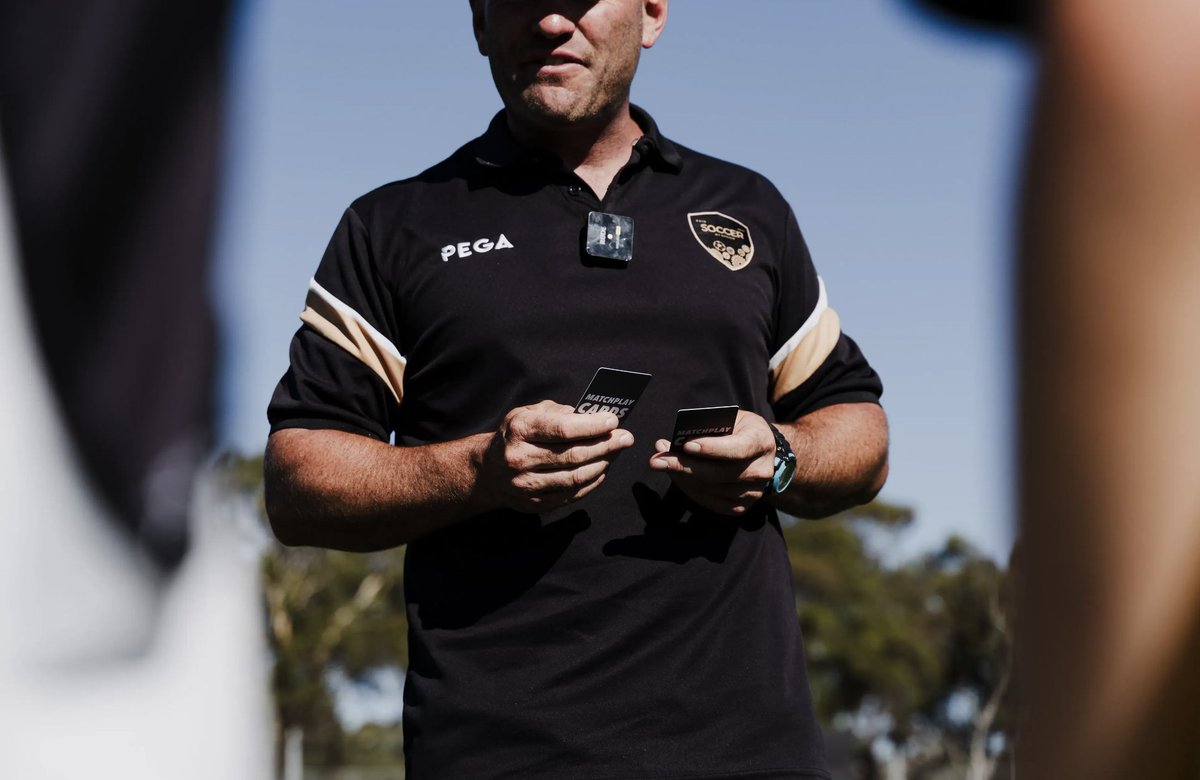
@The_CoachingLab These match-day cards are such a clever idea.
They give players something clear to focus on without stopping the game — guiding attention rather than over-coaching.
Same game, different lens.
Less noise, more intentional learning.
English

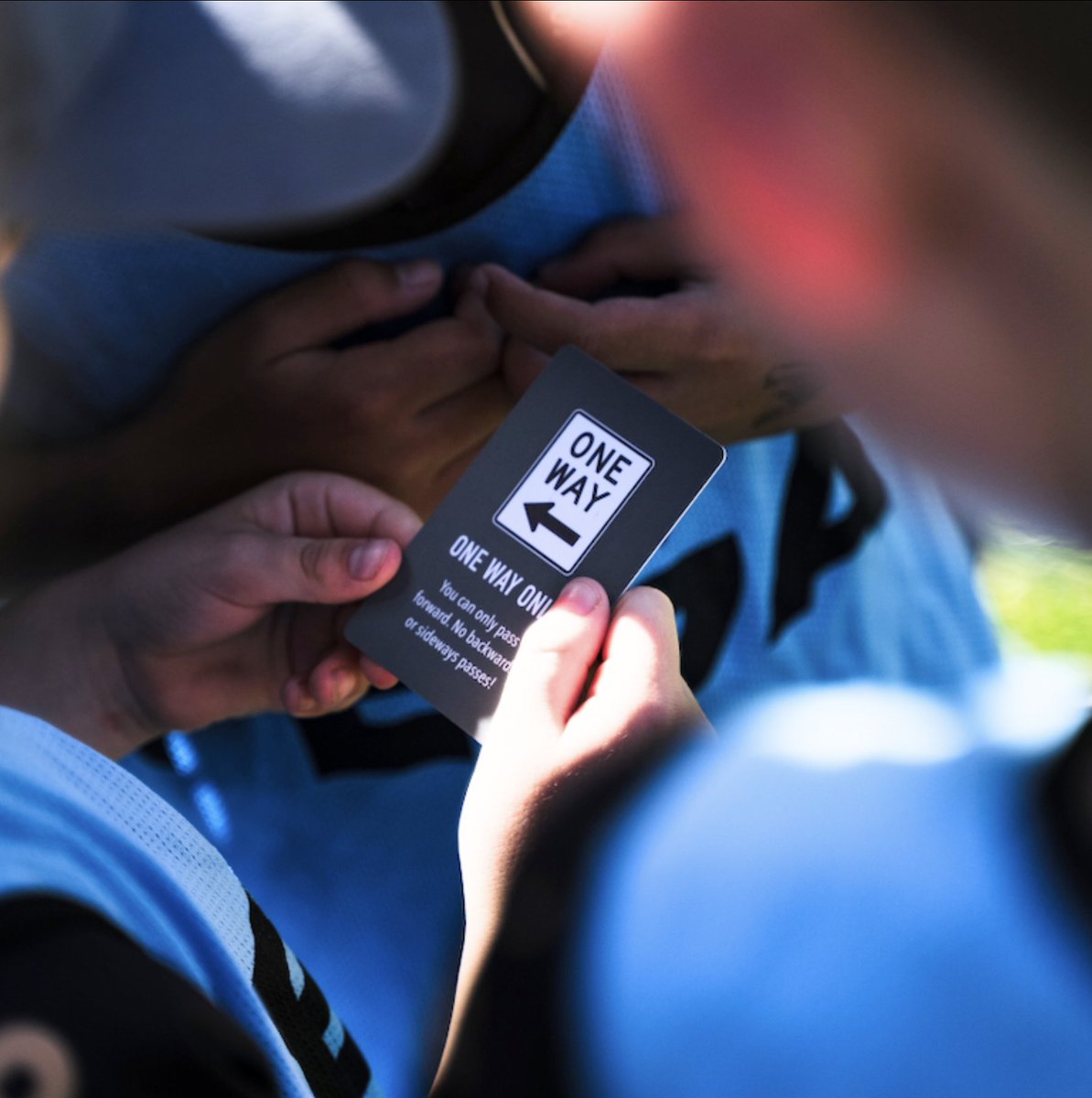
Progression doesn’t always mean a new drill. Using the same game with different #MatchPlayCards:
• Deepens understanding
• Reduces cognitive overload
• Builds stronger connections
Repetition with purpose beats novelty every time.


English

This really resonates.
Kids don’t learn resilience by absorbing adult emotion — they learn it by operating in environments that feel safe, predictable, and steady.
Challenge is essential. Chaos isn’t.
When adults stay regulated, mistakes become information instead of threats — and that’s where real learning happens.
English

Not shouting, yelling, or projecting adult emotions onto children is not the same as wrapping them in bubble wrap.
Yet that's the argument people often skip to when discussing regulated environments and emotional management on the sidelines.
This isn't about protecting children from:
➟ Challenges
➟ Disappointment,
➟ Genuine difficulties
All of which naturally come with sport.
It's about perspective, and perspective is where most of this conversation breaks down.
⛔ Children's football is not senior football.
⛔ Children are not adults.
Using adult standards, adult behaviours, and adult emotional intensity as the reference point is fundamentally misunderstanding what children need to actually develop.
Learning to deal with ups and downs comes from experience, yes, but not from absorbing unmanaged adult emotion while they're trying to navigate their own.
There's a clear difference between:
Challenge ←→ chaos,
Pressure ←→ panic,
Genuine encouragement ←→ emotional noise
That difference matters enormously, and it's often invisible to adults who've normalised high intensity as simply "how sport is."
What children actually need to build resilience is regulated environments where adults stay steady, not deregulated adults whose emotions become the loudest voice on the pitch.
Emotional regulation doesn't mean removing difficulty, it means allowing children to navigate difficulty without adults hijacking the moment:
❌ Without sighing at mistakes,
❌ Without loading ordinary moments with the weight of adult meaning, they don't carry.
🚨 The sideline isn't real life.
It's an artificial environment created entirely by adults, which means adults carry responsibility for what that environment teaches. When an adult shouts, glares, or makes a mistake feel catastrophic, children aren't learning resilience.
They're learning to manage other people's emotions, to read the adult's face instead of the game, to internalise the message that their performance carries weight it shouldn't yet carry.
🚨 That's not preparation for life.
↳ That's interference with development.
✅ Perspective matters.
✅ Behaviour matters.
The quickest way to distort childhood development is to compare children's football to adult sport and use that as justification for adult intensity.
This isn't about bubble wrapping children, it's about clarity, calm, and context about creating an environment where children can actually think, learn, and grow without managing the emotional temperature of the adults around them.
🤔 What's one moment you've seen a child respond differently when the adult stayed calm versus when they didn't?

English

@CoachRayO3313 @LamphereRamsFB @LamphereSchools @LamphereHS @lamphererams_ad @LegacyMI_FBall @LegacyMacomb @LegacyYouthFB There’s no shortcut around consistency — especially in youth football.
Players don’t need extraordinary sessions every week.
They need reliable ones, with clear values and expectations they can trust.
English

One thing I’ve learned is that not every session lands equally for every player — and that’s okay.
Some sessions will suit some kids, others will suit different ones.
It’s easy to coach the players who respond quickly and play well.
Often it’s the ones who struggle, technically or behaviourally, who have the most to gain if we stay patient.
English