

Compusemble
2.4K posts


I'm delighted to announce I've joined @MaverickGames as Senior Community Manager 🟣⚪
The energy and excitement this team share is incredibly special and I can't wait to share more with you all 💖
#IAmAMaverick

English

My first article for @tomshardware. Article is up now in early access for TH Premium, but will be available free for all next week. GPU decompression has been an issue for older RTX cards, but what about Blackwell? Interesting results!
tomshardware.com/pc-components/…
English
Compusemble retweetledi

Testing DirectStorage with GPU decompression — do Blackwell GPUs have the upper hand? tomshardware.com/pc-components/…
English
Some on vs off examples of Meta's DLSS 5-like neural rendering tech. As the paper outlines, it preserves the underlying geometry and dynamics. The improvement to image quality comes from enhanced lighting and materials.




Compusemble@compusemble
Meta also worked on DLSS5-like tech, which aims to turn rendered video into photorealistic video while anchoring it to the input's geometric structure and motion. Some examples of it in GTA-V in the thread below. Very cool tech. Also, full paper here: arxiv.org/pdf/2603.23462
English
Compusemble retweetledi

DLSS 5 is all over the timeline, and for good reason. In my internship at @AIatMeta we had the same idea: use a video model as a learned second-stage renderer on top of game engines. In our paper RealMaster, we make synthetic video look real while preserving scene fidelity 👇
English
Meta also worked on DLSS5-like tech, which aims to turn rendered video into photorealistic video while anchoring it to the input's geometric structure and motion. Some examples of it in GTA-V in the thread below. Very cool tech.
Also, full paper here: arxiv.org/pdf/2603.23462
Dana Cohen Bar@DanaCohenBar
DLSS 5 is all over the timeline, and for good reason. In my internship at @AIatMeta we had the same idea: use a video model as a learned second-stage renderer on top of game engines. In our paper RealMaster, we make synthetic video look real while preserving scene fidelity 👇
English
Some Forza Horizon 6 shots captured on PC using the Extreme RT preset (RT reflections & RT global illumination.)



English
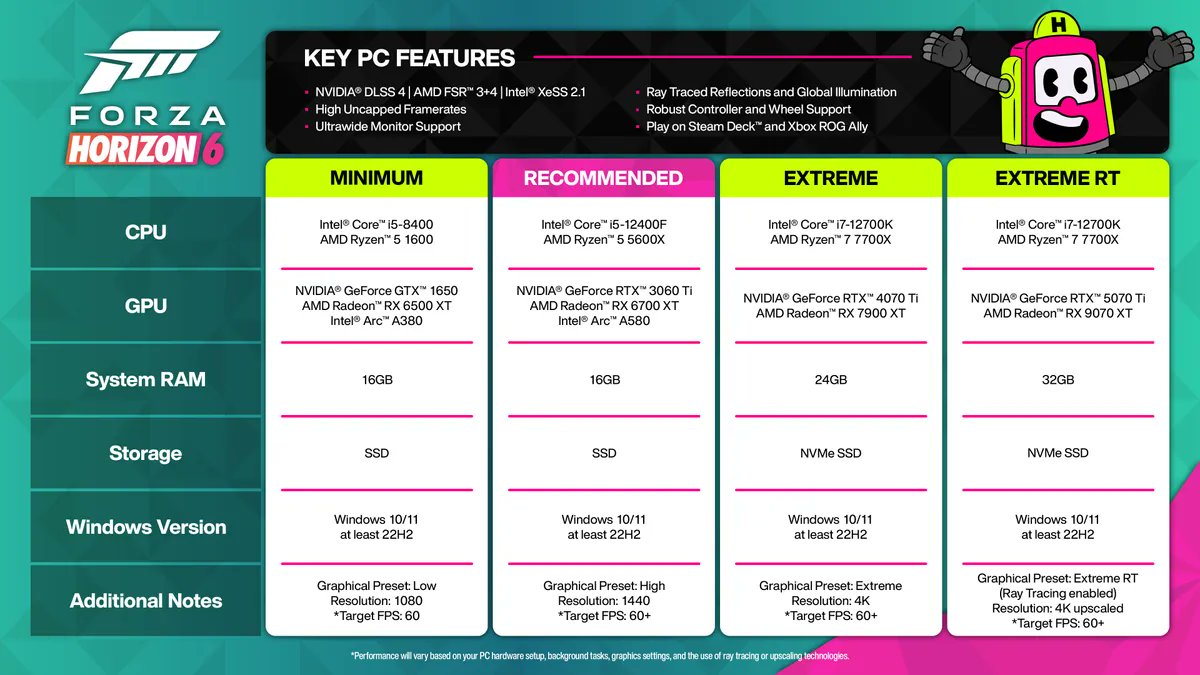
Forza Horizon 6 PC requirements. The game will support RT reflections and RT global illumination, DLSS 4, and FSR 3+4.
English
Compusemble retweetledi

I spent some time looking into DLSS 5 rendering from the pure tech side - so ignoring the artistic debate for a second, I think it may already be showing early signs of something much more interesting:
- Implicit Inverse Rendering

English
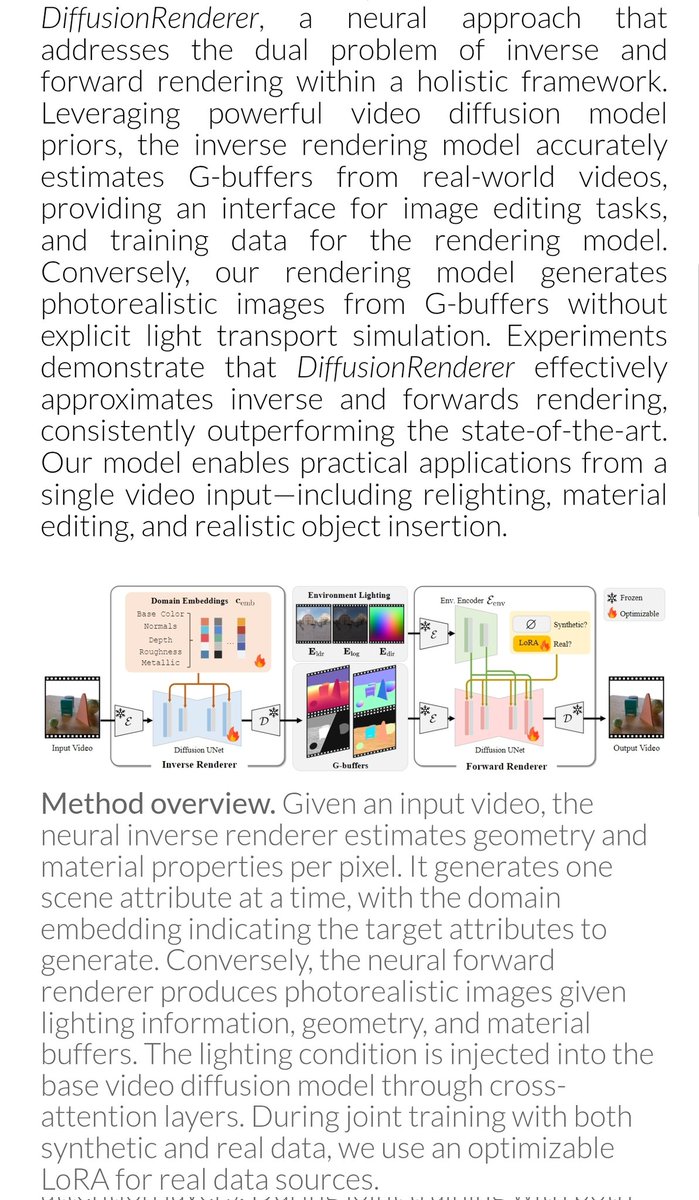
NVIDIA's DiffusionRenderer does this too. A dual inverse & forward neural rendering framework where the inverse renderer uses video diffusion model priors to estimate G-buffers from 2D images/videos & the forward renderer generates photorealistic images from those estimates 🤔
Mike Dereviannykh@Mishok2000
I spent some time looking into DLSS 5 rendering from the pure tech side - so ignoring the artistic debate for a second, I think it may already be showing early signs of something much more interesting: - Implicit Inverse Rendering
English
@mpr_reviews @aziebert Noticed this in other Sony games too. Considerable performance gains on PCIe Gen5.
English

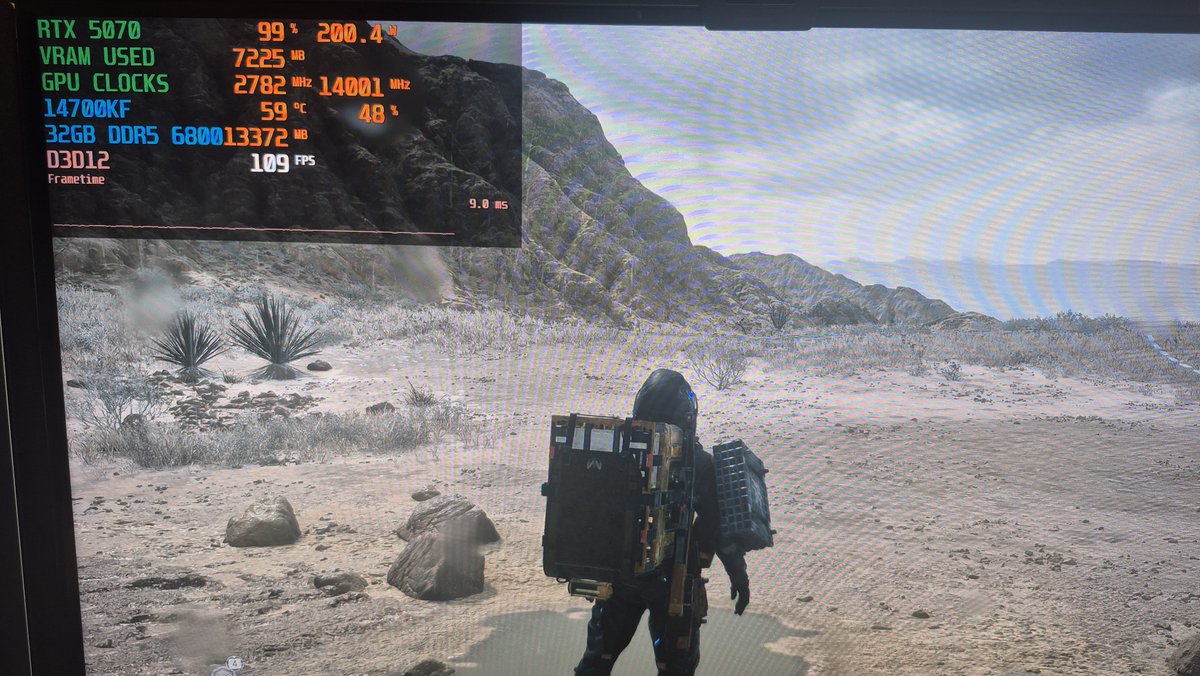
Ran a quick test at 1440p Very High, DLSS Balanced, RTAO on.
PCIE Gen 4 x 16 = 99 fps
PCIE Gen 5 x 16 = 109 fps
So basically a 10% improvement by going to PCIE Gen 5. I saw similar gains when @aziebert and I tested Doom: TDA PCIE Gen 5 vs Gen 4.

Sebastian Castellanos@Sebasti66855537
Saw an interesting Steam forum post from Nixxes regarding DEATH STRANDING 2: ON THE BEACH possible performance issues due to PCIe bandwidth, so I decided to measure it on my system using @CapFrameX, and I indeed saw quite a bit of PCIe traffic when moving around in the game.
English
Microsoft says that Windows will be "much better" by the end of 2026, with various improvements. This includes performance improvements and a reduction in resource utilization.
Let's see if they actually deliver this time.
windowscentral.com/microsoft/wind…
English
English
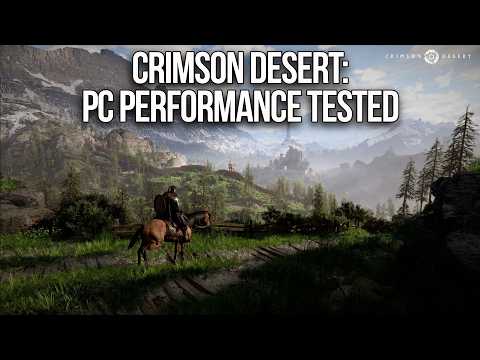
Crimson Desert tested on the 5090, 5070, and 5060. Performs well at the highest presets on all cards tested, so long as you're using an appropriate resolution for the GPU. The game has some great physics. Visuals are solid, but I've seen much better.
youtube.com/watch?v=d6_5ZZ…
YouTube
English
@beyond_fps I don't see any new info in the video. This was all mentioned in the article they released right after the announcement. Still don't know why anyone thought it did anything at the geometry level.
nvidia.com/en-us/geforce/…
English

Relevant info about DLSS 5 👇
Osvaldo Pinali Doederlein@opinali
Daniel got important clarifications from NVIDIA. TLDR: the "DLSS5 skeptical" were right about *everything*. 1⃣ It's a 2D AI Filter. Input is only color buffer & motion vectors. The model doesn't see geometry, lights, PBR properties, normals, anything🧵 youtu.be/D0EM1vKt36s
English
FSR 4.1 is based on the same neural network as PSSR 2, per Mark Cerny.
Mark Cerny@cerny
Just tried FSR Upscaling 4.1 in a few PC games. It’s based on the same neural network as the upgraded PSSR we released for PS5 Pro… and it looks stunning! Wonderful working with @jackhuynh and the @AMD team as we collaborate on AI graphics tech. Big win for Project Amethyst :-)
English
@JesseGaming27 @beyond_fps No idea. Not my video. I assume just a customized RTSS overlay.
English

@compusemble @beyond_fps What stat monitoring tool is that on those screenshots compusemble?
English
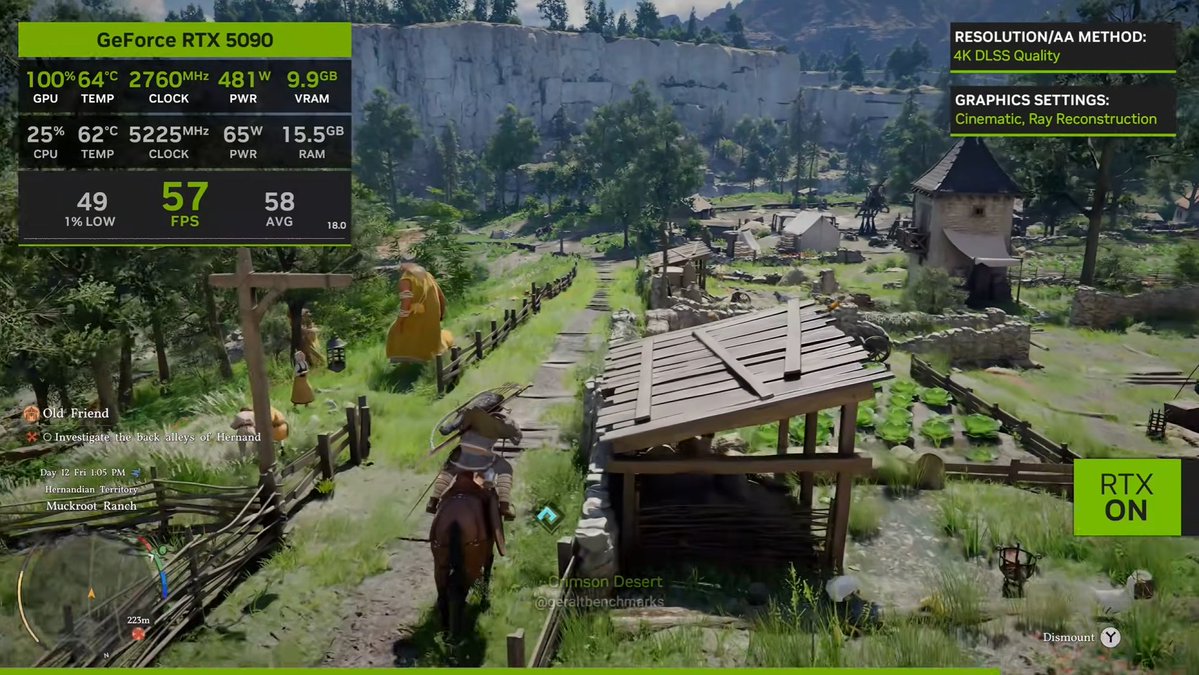
The performance difference enabling Ray Reconstruction is brutal on Crimson Desert, goes from ~80s fps with 4K DLAA to ~55 with DLSS on Quality
They must be enabling higher quality RT settings when RR is on, there is no way otherwise

English