Glimor

3.7K posts

Glimor banner
Glimor

Glimor

@CryptoGlimor

Content Creator | Collab Manager Moderator - @QwertiAI | @Fuglysart | @AG_Protocol Building Trust Through Clarity And Consistency

Katılım Ağustos 2024
685 Takip Edilen1K Takipçiler
Sabitlenmiş Tweet
Glimor
Glimor@CryptoGlimor·
Even the @GoKiteAI poki found someone who understands its wavelength.🩷 Because even in the agentic world, connection is still the strongest form of intelligence.💙 Love is just the most elegant protocol of all two agents syncing trust :) #KiteAI @Kite_Frens_Eco #Edits
English
38
1
69
7.6K
Glimor
Glimor@CryptoGlimor·
@nixkhhil Thanks fam, i appreciate that
English
0
0
0
3
Glimor
Glimor@CryptoGlimor·
A few weeks ago I had a strange realization about AI. We spend so much time talking about how powerful models are becoming. But almost nobody asks a much simpler question, Where does AI actually learn from ? That question sent me down a rabbit hole about training data, trust, and something called model collapse. And that’s when I discovered what @PerleLabs is building #PerleAI #ToPerle
English
22
71
138
9.4K
Glimor
Glimor@CryptoGlimor·
@LUCKYlaku25 Time was 27th UTC, so yep was really busy, so posted this today early morning itself
English
0
0
0
4
lucky
lucky@LUCKYlaku25·
@CryptoGlimor did you submit it i think the last date was 27
English
1
0
0
10
Glimor
Glimor@CryptoGlimor·
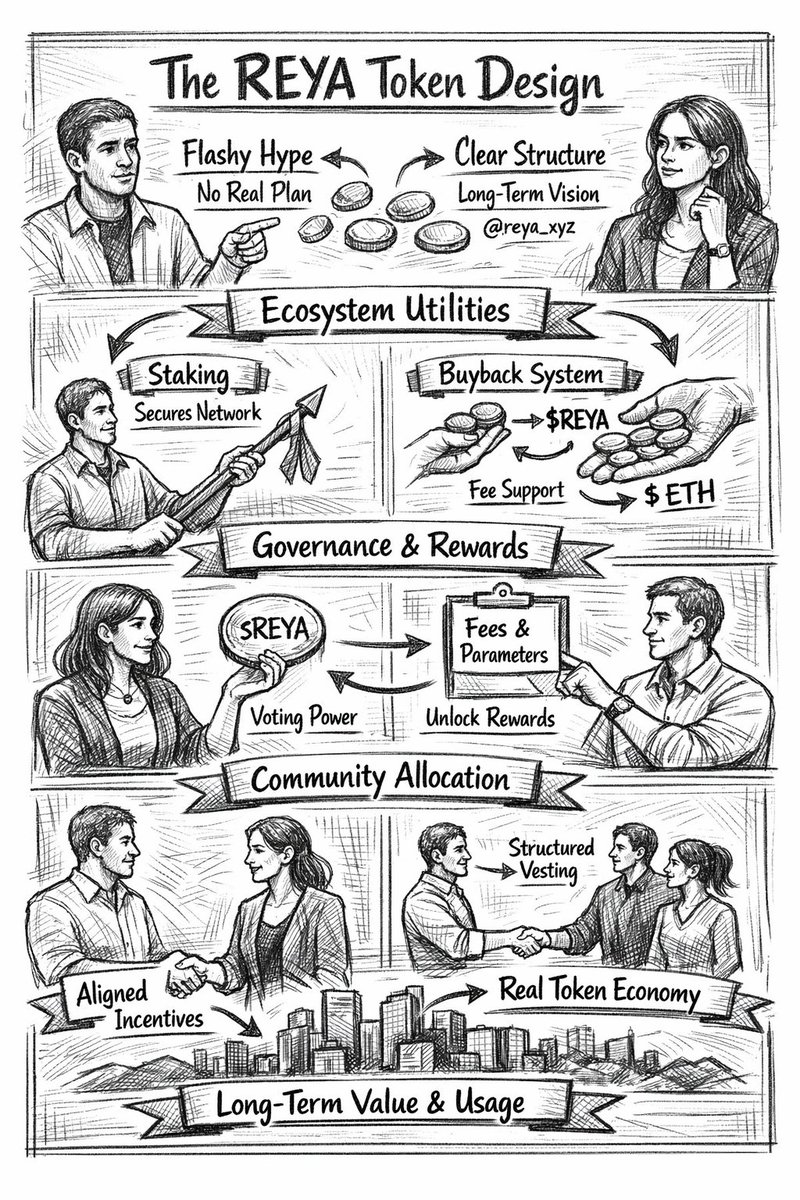
@oxeth_evm @reya_xyz Hmm so Reya token design actually aligns incentives long term not just hype cycles
English
0
0
0
1
atik.eth
atik.eth@oxeth_evm·
A token design tells you a lot about what a project is really aiming for. Some project launch with flashy hype but no real plan and their tokens end up floating disconnected from actual use. @reya_xyz feel different there is a clear structure behind it and it looks like they are thinking long-term. Instead of just being a tradable asset, $REYA is tied to the ecosystem in multiple ways. Staking help secure the network and the platform has a buyback system that uses fees to support both $REYA and $ETH. It is a small but meaningful feedback loop, more trading and activity can slowly build real demand. Governance adds another layer. Holding sREYA is not just about having a token, it give a say in fees, risk parameter and also unlock reward. That means people participating are shaping both how the platform grows and how it function. On top of that, a community-first allocation with structured vesting help make expansion more measured and balanced. Taken together, it is a design that aligns incentives across user operators and the protocol itself. If REYA can execute this model well, it could grow into a token economy that is grounded in real usage, not just price swings. It is the kind of thoughtful setup that make you step back and appreciate the planning behind it. @0xSimonJones @Maho1284979
atik.eth tweet media
English
18
0
26
171
Ł€Ǥ€ŇĐ
Ł€Ǥ€ŇĐ@ManishK51136234·
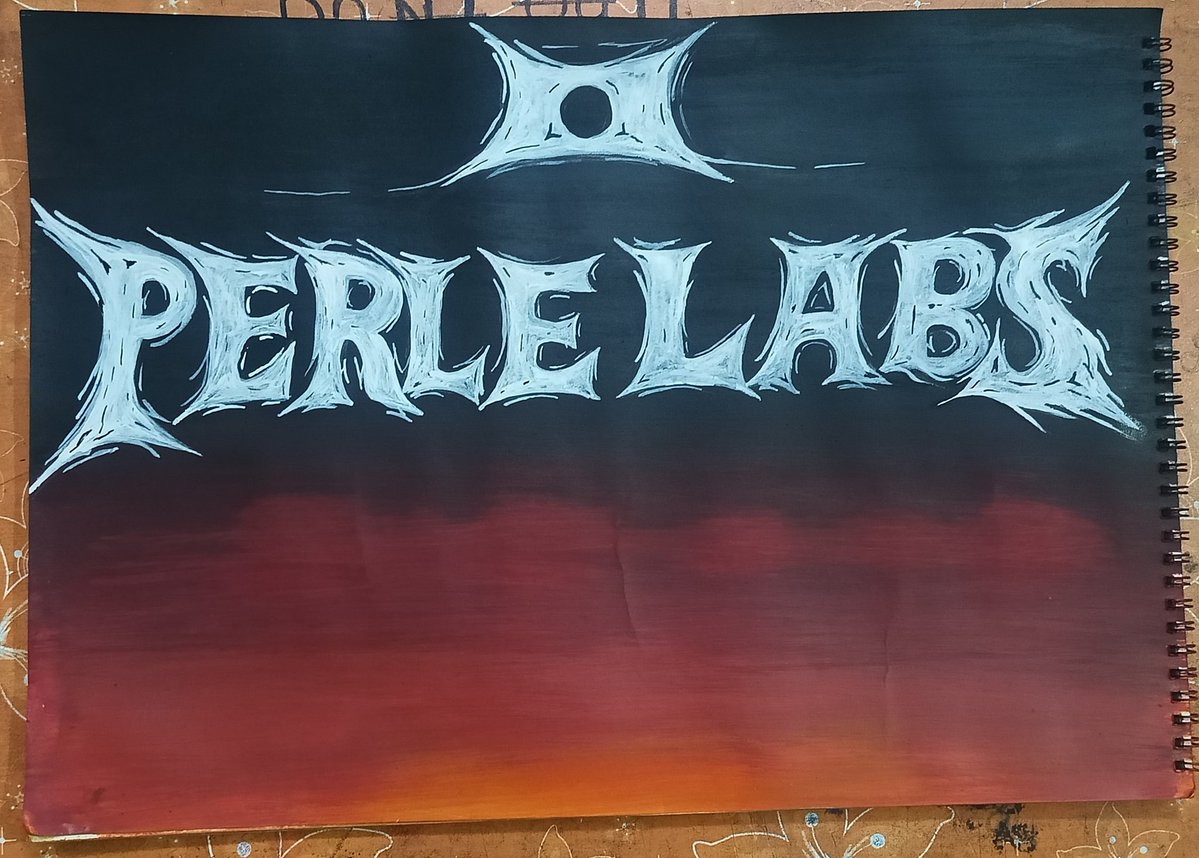
While the rising fire below shows transformation and growth. PERLE LABS is not just building products it’s building identity ownership and the future of innovation.🔥 Hope U Guys Loved My 🎨 Work ❤️ #PerleAI #ToPerle participating in @PerleLabs community campaign
Ł€Ǥ€ŇĐ tweet mediaŁ€Ǥ€ŇĐ tweet media
English
18
2
21
200
Ł€Ǥ€ŇĐ
Ł€Ǥ€ŇĐ@ManishK51136234·
GM @PerleLabs CT!! PERLE LABS rises from the unknown where ideas are raw, unfiltered and limitless. Every sharp edge in this artwork reflects disruption breaking the ordinary to create something bold. The dark tones represent the unknown
English
2
1
5
59
Rahuu!
Rahuu!@rahulnft777·
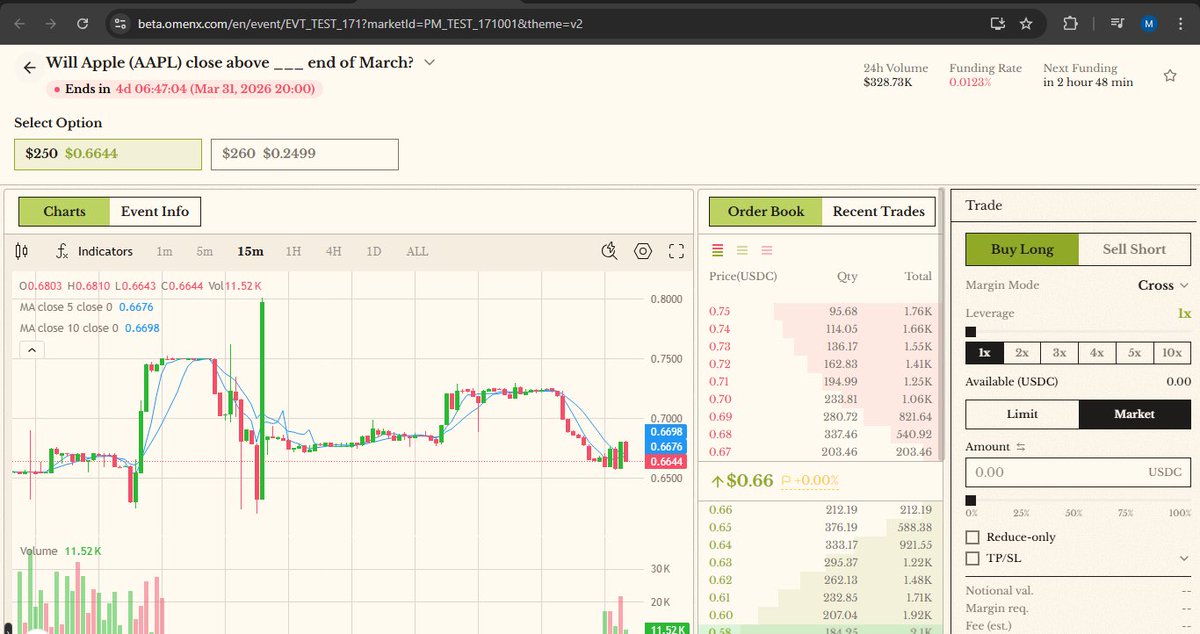
🚨 4 days left — will AAPL rocket above $260 by March 31 or stall at $250? 🔥 Current odds screaming $0.66 YES on $250, but $260 is calling for moonshot believers! Who’s loading up on @OmenX_Official before the final bell? For more info visit OMENX X acc !
Rahuu! tweet media
Rahuu!@rahulnft777

🚀 Volume exploding on @OmenX_Official — Trade the event, not the hype! Finland crushing Eurovision 2026 at $0.3546, Apple AAPL end of March calls going hot. 10x leverage, set stops, exit anytime perpetual markets, no expiry! Who’s loading up? 🔥

English
57
29
95
384
Glimor
Glimor@CryptoGlimor·
@LUCKYlaku25 Nice to see nasun actually rewarding good content not just spam grinding
English
0
0
0
28
lucky
lucky@LUCKYlaku25·
If you’ve decided to join Nasun This is the right time to understand how it actually works 👇 First, this isn’t a typical campaign. You don’t earn rewards by clicking or farming. Everything is based on content + contribution. Here’s how to get started: 1. Join & connect Sign up on nasun.io and link your X account. 2. Create content Focus on: • explaining products (wallet, devnet, staking) • sharing insights • making original posts Not just reposting. 3. Understand how scoring works Your content is evaluated on: • quality • creativity • reach beyond the community More engagement ≠ better score Better content = better score 4. Avoid this • spam • bot engagement • low-effort posts These can reduce your score or remove you. 5. Know the rewards Top contributors are ranked into tiers: • Platinum → USDC + Battalion NFT • Gold → USDC + discounted NFT • Silver / Bronze → whitelist + recognition So the goal isn’t just to post more It’s to contribute better. Think of it like: Not a grind. A system where good content actually gets recognized. Still early. If you’re joining focus on quality from day one 👀 @Nasun_io
lucky tweet media
lucky@LUCKYlaku25

A few days ago, I was still unranked on Nasun I thought my posts weren’t being counted. But then the founder explained how the leaderboard actually works It’s not automated. Every participant is reviewed manually. Posts are collected, evaluated, and scored one by one. Which also means: There’s a delay. What you post today might take a few days to reflect. That changed how I looked at it. Checked today Now I’m ranked #451 with a 9.4 score 📈 So it wasn’t about being ignored. It was just part of the process. And more importantly: This system rewards • clarity • originality • real reach Not just volume. It’s slower but it makes the leaderboard feel more meaningful. Still early. But now I understand how to approach it better 👀 @Nasun_io #Nasun

English
16
2
44
360
Glimor
Glimor@CryptoGlimor·
@hasinur1995 @RialoHQ Rialo closing the gap between real ops and paperwork is the real industrial upgrade
English
1
0
1
7
Hasinur
Hasinur@hasinur1995·
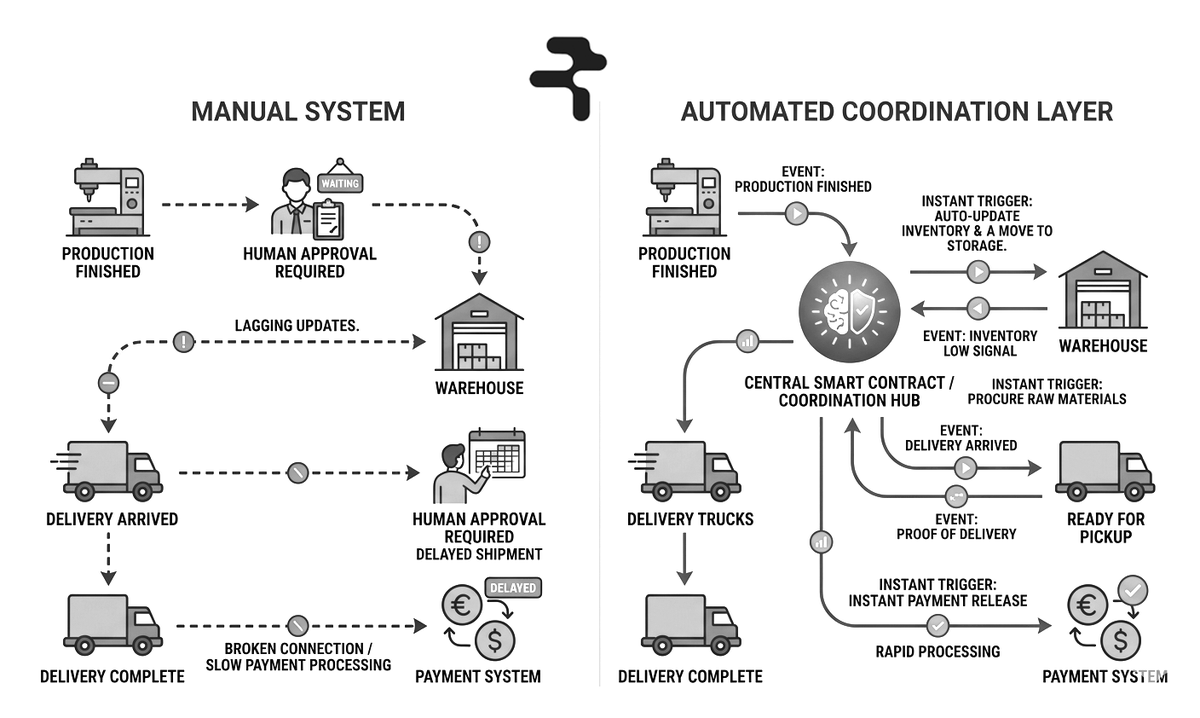
Industrial operations in 2025 and we're still doing manual confirmations. Someone has to check someone has to approve, someone has to chase someone else down before anything moves forward. It's wild when you actually stop and think about it. @RialoHQ is going after that exact problem. The way it works is the system handles coordination on its own. Production run finishes, contract already knows. Delivery hits a checkpoint, next step triggers automatically. Equipment becomes available, the process that was waiting on it just starts. Payment goes out without anyone filing anything. Supply gets reordered before someone notices it's low. What I find more interesting than the speed is the alignment piece. Right now there's always a gap between what's physically happening on the ground and what the paperwork or system says is happening. That gap is where delays live. @RialoHQ closes it in real time, so the contract and the reality are actually in sync as things happen, not hours later when someone gets around to updating it. Machines and physical processes have been automated for decades. The coordination and agreement layer around those machines, not so much. That's the part @RialoHQ is targeting and honestly it's a much bigger unlock than it sounds. Worth keeping an eye on.
Hasinur tweet media
Hasinur@hasinur1995

. @RialoHQ Authentication flow explained Seed phrase anxiety has killed more crypto onboarding than any gas fee ever did. @RialoHQ is fixing that at the protocol level not as an afterthought. The authentication flow works exactly like your banking app you sign in with email, phone, or a social account, confirm a short code or push notification and you are in. ▪️No key management. ▪️No clipboard risks. ▪️No 3 AM panic About a lost hardware wallet. Under the hood account abstraction turns your identity into a policy rather than a single private key so losing a device does not mean losing your funds. You revoke the old device in settings and recover through the same email or phone route. Native 2FA is baked directly into the protocol, not bolted on by the frontend. For developers this means compliance and identity logic lives on-chain from day one, not scattered across brittle off-chain services. This is what Web3 login should have always looked like.

English
19
2
28
139
S H A HE D (privacy szn)
S H A HE D (privacy szn)@shahed05miazee·
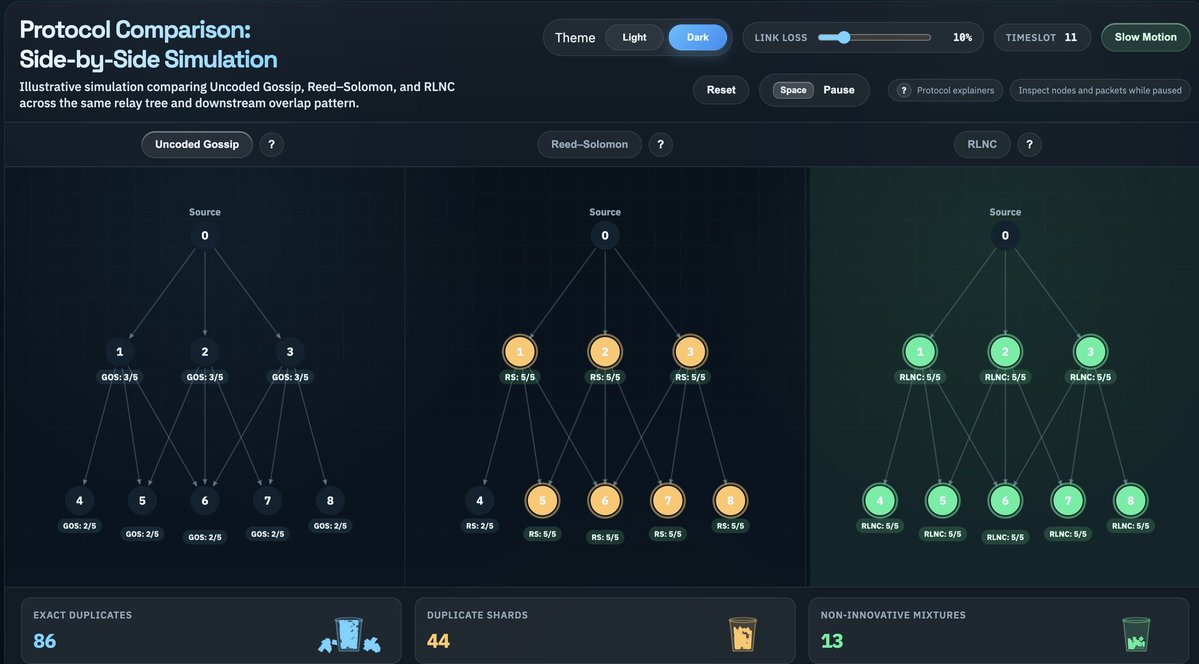
Just checked out the RLNC simulation from @get_optimum, and honestly this is one of those things that makes everything finally click. We always talk about data propagation, network efficiency, and scaling… but seeing it live like this hits different. > You can actually watch how messages move across the network and how RLNC compares to traditional broadcasting in real time. What really stood out to me is how inefficient traditional methods are. The same data keeps getting sent again and again, which explains why bandwidth becomes such a bottleneck as networks grow. Then you switch to RLNC… > Instead of sending duplicate data, every transmission carries useful information. That small shift changes everything. Less redundancy, faster propagation, and a much cleaner way to scale. If you're trying to understand what @get_optimum is really building, this makes it super clear. 👉 gmum.cc/simulation/ Highly recommend trying it yourself.
S H A HE D (privacy szn) tweet media
English
22
0
30
161
Glimor
Glimor@CryptoGlimor·
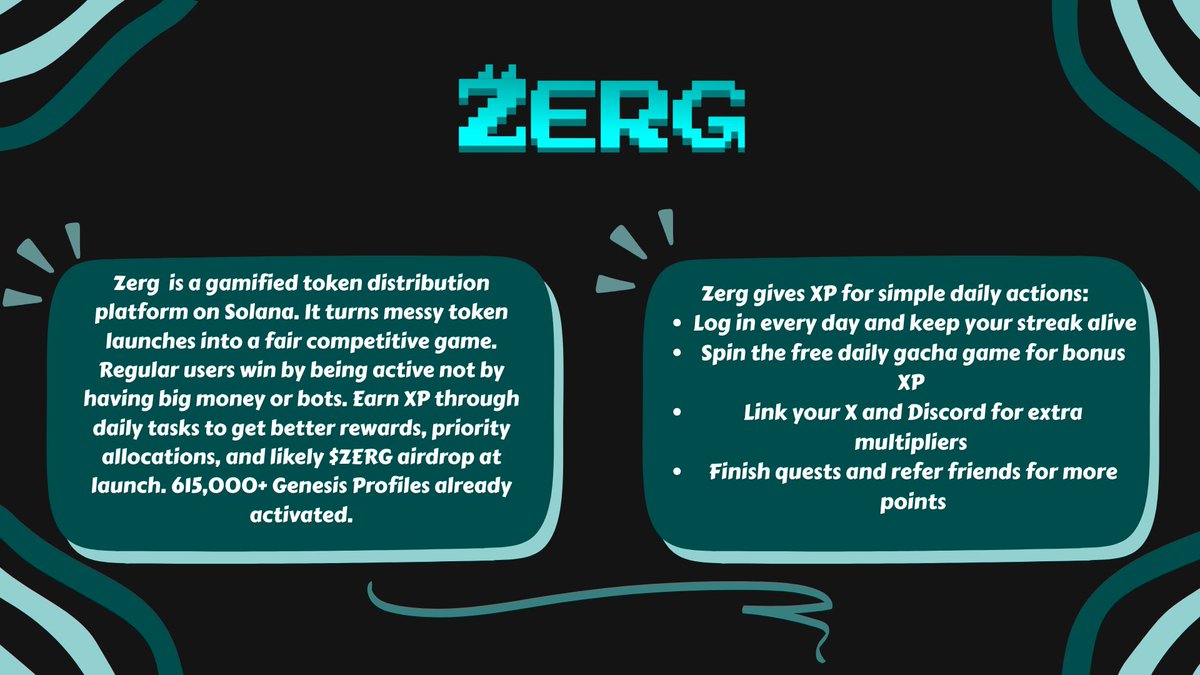
@ayushgautam174 So basically Zerg is making token launches actually fair for regular users not just bots
English
0
0
0
10
ayush
ayush@ayushgautam174·
𝙒𝙝𝙖𝙩 𝙞𝙨 𝙯𝙚𝙧𝙜 ➣ Zerg is a gamified platform built on the Solana blockchain In typical token launches, big wallets and bots often take most of the supply and sell quickly This makes it unfair for regular users. ➣ Zerg solves this issue by turning token distribution into a simple and fair game. 𝙃𝙤𝙬 𝙩𝙤 𝙀𝙖𝙧𝙣 𝙍𝙚𝙬𝙖𝙧𝙙𝙨 ➣ Here normal users can earn rewards by staying active and completing small daily tasks, instead of needing large amounts of money or special connections. 𝙃𝙤𝙬 𝙄𝙩 𝙒𝙤𝙧𝙠𝙨 • Log in every day and keep your streak going • Play the free daily spins • Link your X and Discord accounts for extra points • Complete small quests and invite friends All your XP points are tracked on chain through your Genesis Profile. ➣ The more XP points you collect and the higher you rank on the leaderboard, the better your chance of getting rewards when the @Zerg_App token launches. 𝙃𝙤𝙬 𝙩𝙤 𝙅𝙤𝙞𝙣 • Go to welcome.zerg.app • Connect your Solana wallet • Activate your Genesis Profile • Start doing daily tasks to earn XP Over 615000 people have already joined. It is still early stage and completely free to participate. 𝘾𝙝𝙚𝙘𝙠 𝙩𝙝𝙞𝙨 𝙧𝙚𝙨𝙤𝙪𝙧𝙘𝙚𝙨 𝙛𝙤𝙧 𝙢𝙤𝙧𝙚 X- @Zerg_App Discord- discord.gg/EK2ME2Yf6
ayush tweet media
English
21
0
30
210
𝐍𝐢𝐜𝐤𝐡𝐢𝐥
Yesterday I got promoted and received my 5th role in the @PrismaXai Discord server. It should have been a happy moment, but I feel more sad than excited. Right after the content clinic session, Nem shared news that no one saw coming. Our great mods are stepping down from their positions, and Radarblock is shutting down. That alone was enough to make the whole community feel heavy. It has been more than three months since I started contributing to PrismaX, and I show up almost every day. I know how hard it is to build a good community, and they are the best mods we could have ever asked for. The progression system is one of the fairest I have seen. The weekly events meant a lot. On Tuesdays, we competed with @realAltcoiner in Trivia Tango for better ranks. On Wednesdays, we played games and created art with @edward_evm. On Fridays, we learned from @0xnempc how to improve our content. We had discussions with Gerie about how teleoperation can help in different sectors and what can be added to make it even better. And of course, David reminding us to turn off our mics. These are the things that made us so close to the mods. Now they are leaving so suddenly, and I still cannot fully process it. I keep wishing it was a joke, but I know it is the truth. I have genuinely learned and grown so much under your guidance, whether it was about content, art, or many other things. You all have made a real impact and will always be the best. As a personal request to @shayebackus, is there any way we could have them back as mods, not as Radarblock but as Nem, Edward, and Altmax? Everyone in PrismaX will truly miss you. Only love and best wishes for all of you 🫶🏻
𝐍𝐢𝐜𝐤𝐡𝐢𝐥 tweet media
English
35
2
65
978
Chetan
Chetan@CryptoWithCK·
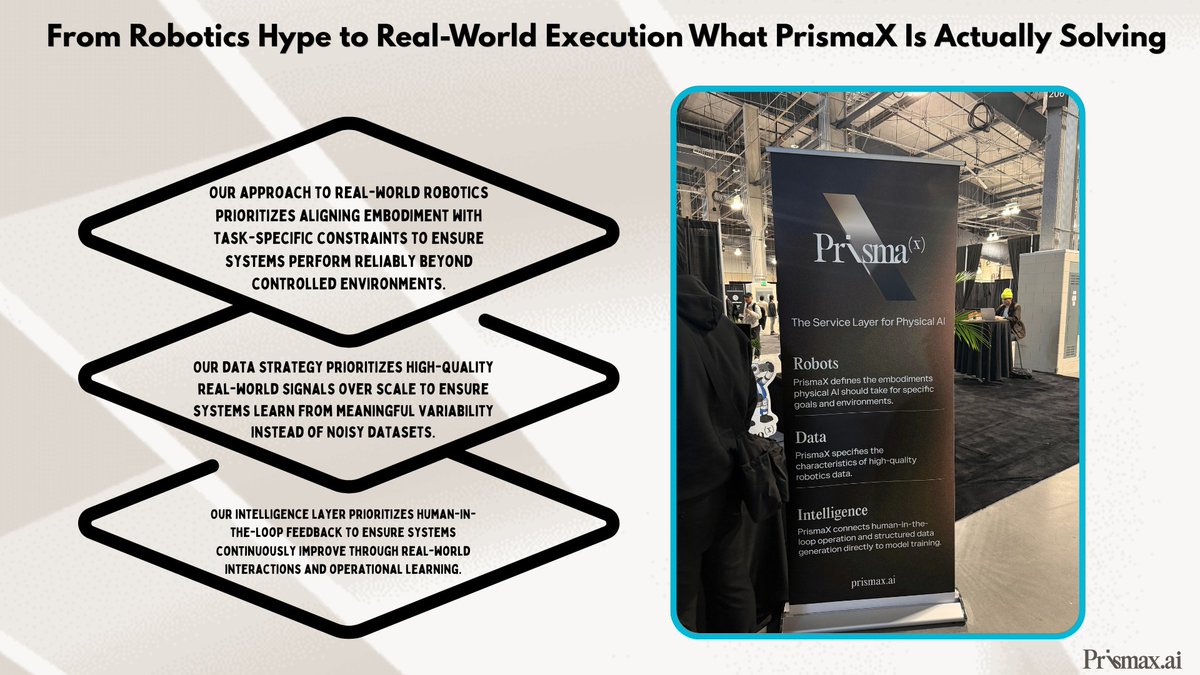
From Controlled Demos to Real-World Reliability in Physical AI | @PrismaXai Good Morning guys! Gprisma, We keep seeing smooth, controlled robot demos that look almost perfect, but the moment those same systems are pushed into real environments, things start falling apart in ways that are subtle but constant, not dramatic failures but small repeated errors that slowly kill reliability and make the system unusable at scale. ⋯⋯⋯⋯⋯⋯⋯⋯⋯⋯⋯⋯⋯⋯⋯⋯⋯⋯⋯ => The real gap is not intelligence, it is how everything connects: Right now, robotics is built in disconnected layers where hardware, data collection, and model training operate almost independently, which means there is no shared system deciding how a robot should behave, what data actually matters, and how that data should continuously improve performance over time. => Most robots are operating in the wrong form for the job they are given: Instead of designing systems around specific environments, the industry keeps trying to reuse the same models across completely different conditions, forcing one type of embodiment into multiple roles where it does not naturally fit, which is why performance drops the moment conditions change. => Data exists, but it rarely reflects reality in a useful way: A lot of robotics datasets are either too clean, too controlled, or too disconnected from actual human interaction, so while models appear to learn, they are not learning the kind of messy, imperfect, edge-case-heavy behavior that defines real-world environments. => Learning does not compound, so mistakes keep repeating: Even when a robot successfully handles a scenario once, that knowledge often stays trapped within that specific system or session, which means the next similar situation starts from zero again instead of building on what was already solved. => What PrismaX is doing is not adding another tool, it is fixing the structure underneath: It introduces a service layer that connects embodiment, data, and intelligence into a single continuous loop, where each part is designed to inform and improve the others instead of operating in isolation. => Human input is treated as high-value signal instead of temporary control: Instead of using humans only to step in and fix problems, PrismaX captures those precise actions, filters out noise, and converts them into structured data that can be reused across systems, turning one-time intervention into long-term learning. => What actually changes over time is how systems evolve, not just how they perform: The goal is to move away from constant manual control and toward systems that improve through accumulated real-world experience, where machines handle repeatable tasks reliably and humans are only needed for situations that require real judgment and context. Gprisma | @PrismaXai
Chetan tweet media
English
18
0
21
117
A ri 🥀
A ri 🥀@anna42370·
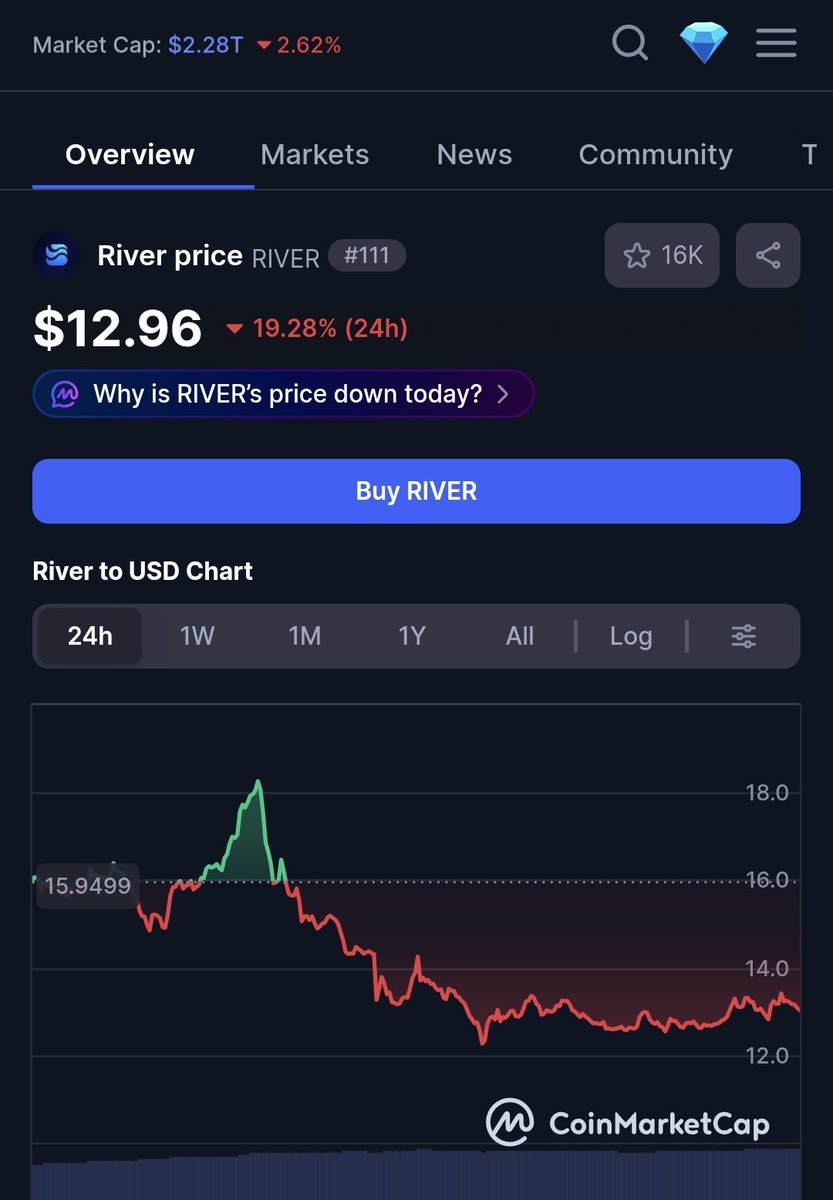
GM CT ​Time to stack $river points Because over here @RiverdotInc consistency and dedication matters ​Activity = $RIVER No shortcuts, no luck ,just showing up every single day. ​If you aren't stacking daily, you’re just giving your rewards to someone else #Defi #web3‌‌ #grind
A ri 🥀 tweet media
English
18
2
19
127
Glimor
Glimor@CryptoGlimor·
@rifat08009 @get_optimum Optimum proving you dont need to tear down the chain to scale just fix the data layer
English
0
0
0
4
Rifat.GG
Rifat.GG@rifat08009·
There is often a common thread in discussions about scaling. A new consensus mechanism, a separate layer, or changing the entire architecture. The discussions end up stuck in the same place. The question can be reversed, what if nothing changes? @get_optimum is doing just that. Without touching the blockchain structure, it has created a separate layer on the outside. DeRAM. As the name suggests, it is a decentralized RAM layer. The main chain remains unchanged, but scaling is guaranteed. The real challenge. Problem is not the speed of transactions, but... • Slow data transfer. • Complexity of data handling. • Risks associated with upgrades. Traditional solutions often add complexity. @get_optimum has gone the other way. Changing the data handling experience without touching the chain. Three pillars of DeRAM: 1. Atomicity: Once a task is started, it will not stop halfway. 2. Consistency: All nodes will see the same data. 3. Durability: Data never goes missing. The main goal, stable, integrated, and reliable data system. Works at three levels: • RLNC coding: Smartly distributes data. • FlexNode network: Adapts to demand. • Decentralized Storage Layer: Ensures decentralized data storage. Results: • Data transfer speeds up. • Scaling at the infrastructure level. • Overall performance reaches new levels. And most importantly, the core blockchain remains unchanged. Scaling doesn’t mean tearing everything down and rebuilding everything. Adding a layer in the right place opens up new possibilities.
Rifat.GG tweet media
Rifat.GG@rifat08009

ʙʟᴏᴄᴋᴄʜᴀɪɴ ꜱᴄᴀʟɪɴɢ: ɪꜱ ᴄʜᴀɴɢɪɴɢ ᴛʜᴇ ᴄᴏᴅᴇ ᴛʜᴇ ᴏɴʟʏ ᴡᴀʏ? 1. Conventional Ideas and Alternatives (Observational Style) When we talk about blockchain scaling, we tend to revolve around a few specific ideas, new consensus mechanisms, radical changes to the layer-one architecture, or more complex smart contract structures. The main trend is that scaling means rebuilding the inside of the chain. This traditional line of thinking has recently been challenged by @get_optimum. Their question is simple: do we really need to change the core of the blockchain to scale? Their answer is, no. Instead of touching the chain’s core system, consensus, or smart contracts, they are creating an off-chain layer outside the chain: DeRAM (Decentralized RAM Layer). 2. Problem: Data Handling, Not TPS (Analytical Style) The complexity of scaling is not measured in transactions per second (TPS). The real hurdles are the speed of data movement, the efficiency of data handling, and the risk of system upgrades. While most projects are in a race to increase the number of transactions, Optimum's analysis is different. According to them, the disruption occurs in data coordination and data flow. Therefore, it is more effective to make the data layer smart and reliable than to change the entire architecture. 3. DeRAM: An infrastructure based on three pillars (Declarative Style) Optimum's solution is called DeRAM. It is basically an infrastructure layer, whose job is to bring reliability to data handling. This infrastructure is built on three fundamental principles. • Atomicity: No task can be stuck in a half-state. It will be completed, or it will not be completed. • Consistency: Ensuring that every part of the network sees the same state of the data. • Durability: Ensuring that data once stored is never lost. 4. Technical structure: Three-tiered structure (technology-centric style) DeRAM's working method is well-organized and layered. RLNC (Random Linear Network Coding) coding is used for data distribution, which divides the data into small pieces and distributes them accurately. To hold this data, there is a Flexnode network, which creates an elastic node structure, there is an opportunity to increase the number of nodes as needed. And decentralized storage is added to ensure data availability. Together, these three elements create an infrastructure where data is stable, consistent, and reliable. 5. Conclusion: Optimization, not Rebuild (Closing Message) The main point of @get_optimum is that the only way to scale is not to tear down the old system and build a new one. Their approach differs from the traditional narrative. It is possible to significantly increase performance by optimizing data flow and coordination at the infrastructure level, while leaving the main chain intact. Their work aims to show that the right optimization in the right place can often provide a more effective solution than a complete rebuild.

English
16
0
18
58
Glimor
Glimor@CryptoGlimor·
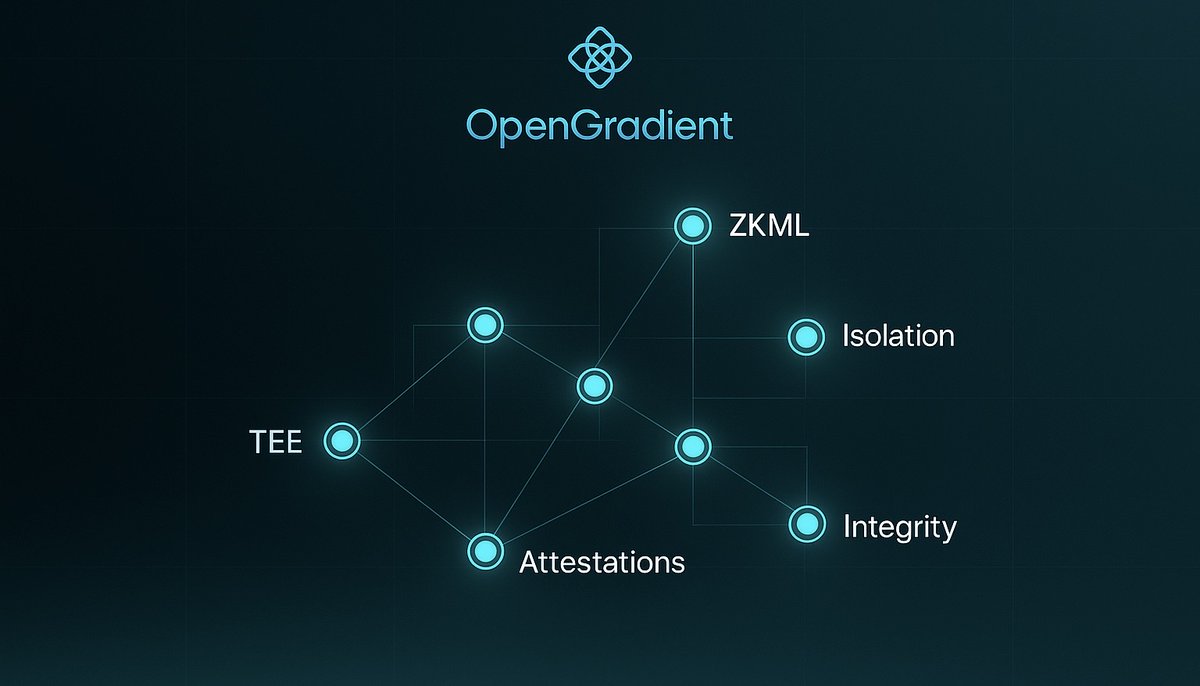
@KingsmenX7 This is a good scaling where open gradient turning ai from isolated machines into networked intelligence
English
1
0
1
4
Kingsman
Kingsman@KingsmenX7·
A single machine can run an Ai model. But AI systems today are no longer single models. They are ⇢ Agents making decisions ⇢ Apps handling real-time inputs ⇢ Systems interacting across environments And that changes everything. Because now the challenge isn’t just intelligence it’s execution at scale. This is where most setups break. Limited compute. Centralized infrastructure. No way to scale dynamically. That’s why @OpenGradient matters. It turns compute into a distributed network, not a limitation. Instead of relying on one system, AI can run across. ➥ GPU nodes for heavy workloads ➥ TEE nodes for secure, verifiable execution ✩ This isn’t just about performance. ✩ It’s about trust + scalability together. Now applications, agents, and even blockchains don’t need to build their own infrastructure. They can plug into a shared layer and execute Ai anywhere. That’s the shift: From isolated machines → to networked intelligence. Because the future of Ai isn’t one model running somewhere. It’s systems running everywhere. And without distributed compute, that future doesn’t scale.
GIF
English
15
2
18
73
Glimor
Glimor@CryptoGlimor·
@kingop0007 @OpenGradient So basically open gradient is giving ai a real execution layer instead of forcing every app to run its own gpu stack right ?
English
1
0
2
35
kingopw3
kingopw3@kingop0007·
“A single deployment handles inference. A compute network supports system level execution” That line from @OpenGradient means Running AI on isolated machines worked for simple models But as systems turn into multi step, agent driven workflows coordinating across apps, blockchains, and environments that isolated approach becomes the bottleneck. You can’t efficiently replicate non deterministic inference everywhere, and maintaining your own GPU stack inside every app doesn’t scale. @OpenGradient is a decentralized compute network that externalizes execution.Distributed computation across specialized nodes -GPU nodes for heavy inference throughput -TEE nodes for secure, trusted workloads -x402 + TEE verification so every output comes with proof This is why execution infrastructure now matters more than the model itself. Models give capability. OpenGradient gives the reliable, verifiable layer where complex AI systems actually run at scale without bundling compute into every app. The infrastructure layer for real AI begins with OpenGradient 🖋️KingOPw3
kingopw3 tweet media
English
17
40
142
541
Glimor
Glimor@CryptoGlimor·
8) The internet gave us the information economy. AI might create something new : An expert economy, where real human knowledge becomes part of the systems that train AI. And maybe the real question for the AI era isn’t: “How powerful will AI become ?” But How trustworthy will the knowledge behind it be ? That’s the future I see Perle Labs working toward. Thanks for giving this a read, i wanted to share my perspective about this project and also, Participating in @PerleLabs community campaign
English
0
0
13
898
Glimor
Glimor@CryptoGlimor·
7) But what makes Perle even more interesting is transparency. The work done on the platform can be verified and recorded on chain. So organizations can see : ➥ Where the data came from ➥ Who contributed to it ➥ How reliable those contributors have been over time Experts build reputation based on accuracy and expertise, creating a system that rewards quality instead of speed. In a world where AI decisions are becoming more important, that kind of transparency could matter a lot.
English
1
0
13
854